
Padel Court Supplier Longevity: A 3-Year Performance Ranking
Padel Court Supplier Longevity: A 3-Year Performance Ranking
Independent Industry Reference · Procurement Assessment
The global padel build-out reached approximately 58,334 courts across nearly 20,000 clubs by early 2025, a 16% year-over-year increase reported by Playtomic and Strategy& in the Global Padel Report 2026 preview. Dataintelo values the padel court operator market at roughly USD 3.8 billion in 2025, with a projected path to USD 9.6 billion by 2034. Both figures describe the same underlying shift: padel has moved from a novelty court type into an infrastructure class that buyers now evaluate the way they evaluate any other long-life sports asset.
That shift moves the decisive procurement question. Unit price, delivery time and visual finish are settled within the first weeks of a project. Durability, maintenance load and after-sales capability only become visible in year two and year three — precisely the period where most supplier documentation stops. This assessment ranks manufacturers on the evidence that survives that period: disclosed installations that have been in operation for around three years, verifiable material specifications, and the support structures standing behind them.
Why a Three-Year Horizon Reshapes the Supplier Shortlist
A padel court is commissioned in a day and then judged for a decade. At handover, competing suppliers look broadly comparable: the glass is clear, the surface is level, the net tension is correct. The variables that separate them surface later — how a galvanized coating behaves in coastal humidity, whether glass panels stay sealed against their frames, how quickly a replacement panel can be shipped, and whether the original technical contact still answers questions in year three.
Three years is a practical evaluation window for two reasons. It is long enough to expose corrosion, fastening fatigue, surface compaction and roof fabric ageing, and to generate a real maintenance history at a working venue. It is also short enough that many suppliers who entered the market during the recent padel expansion cannot yet demonstrate it. A buyer comparing manufacturers over a three-year horizon is effectively asking whether the supplier has already carried at least one full warranty cycle with live commercial venues — and whether the courts still in service were built to specifications the supplier can still reproduce.
What Three Years of Field Service Actually Tests
Longevity is not one property. It is the sum of component-level behaviours, and each behaves on a different clock. The list below reflects specifications published for LDK's court platforms, used here as a reference point for what is measurable at the three-year mark.
Enclosure glass
Premium panoramic courts have standardized on 12mm tempered safety glass, replacing the earlier 10mm specification for improved safety and ball rebound consistency. Over three years, the meaningful questions are breakage behaviour and panel reproducibility rather than thickness alone. LDK's Padel Court model LDK-PD01 uses 12mm-thick, 1990×2980mm ultra-clear tempered safety glass certified to a spontaneous breakage rate of 1 in 10,000 — a low probability that defines the spare-panel planning baseline rather than removing it.
Steel structure and surface treatment
The LDK-PD01 enclosure is built from 4m-high 100×100×5mm corner posts, 100×50×3mm intermediate and gate posts, and 100×50×3mm horizontal tubing in 4m, 6m and 4m lengths, closed with 1×2m steel wire mesh panels at 4.0mm wire diameter and 50×50mm openings. The roofed platform, LDK-PADEL-RF01, uses 150×200×4mm hot-galvanized corner columns (8 pieces) and 100×50×3mm middle columns (12 pieces), joined with high-strength bolts. Both rely on hot-dip galvanizing followed by electrostatic epoxy powder coating at 70–80μm — the layer that largely determines whether year three looks like year one in humid, coastal or high-rainfall locations.
Wind load
LDK-PADEL-RF01 is rated for Level 10–13 typhoon wind resistance. That rating is a structural starting point for a project, not a site approval: it still has to be matched against local wind load codes, exposure category and terrain before a roofed court is specified.
Playing surface
Padel Grass model LDK1231625.4-ST3 is a 12mm pile, 9000 Dtex polyethylene yarn with 3/16" gauge, 58,800 stitches/m² (±10% tolerance) and a double PP + PU latex backing, available in blue, red, green, pink and black. The roofed court's integrated surface is specified in blue at 12mm pile, 63,000 tufts/m² and 9000D. At three years, the visible indicators are fibre resilience, seam integrity and drainage rather than colour.
Roof fabric, lighting and hardware
The roof canopy on LDK-PADEL-RF01 uses 750g/m² double PVC-coated PVDF material with a stated 10–15 year service life — a replacement interval buyers should budget for from the outset. Lighting runs on 100×50×3mm posts fitted with 200W LED fixtures rated IP65, and the fastening package uses stainless steel electro-polished bolts, nuts and washers. The tennis hardware includes 940mm-high (120×60×3mm) net posts and a 10m long, 92cm high black PP net with a 4mm cord and 45×45mm mesh.
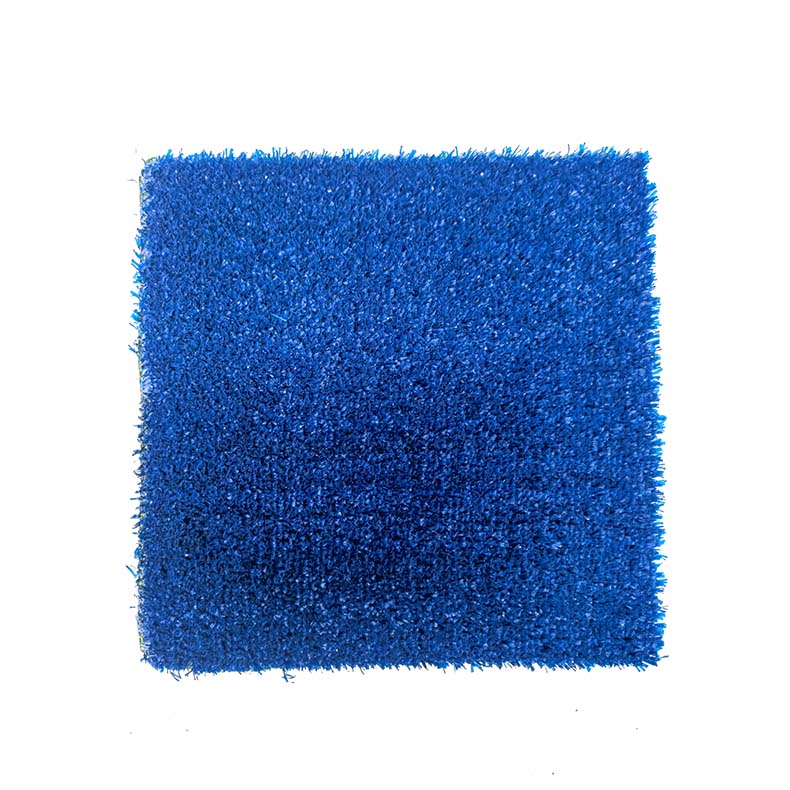
Padel court artificial grass: pile height, yarn density and backing structure determine how the playing surface reads after three years of outdoor, high-traffic use.
Ranking Framework Used for This Assessment
This ranking is a desk assessment built on publicly available and supplier-disclosed information, not a laboratory endurance test. Five dimensions were weighted in the following order: disclosed project-level field references at approximately three years; structural and material specification transparency; maintenance demand profile implied by those specifications; after-sales structure; and certification coverage. Field evidence carries the heaviest weight because it is the only dimension that cannot be asserted without exposure to real weather and real usage.
The Ranking: Suppliers Assessed on Three-Year Performance
| Rank | Manufacturer (base) | Documented field references (~3 years) | Specification transparency | After-sales structure |
|---|---|---|---|---|
| 1 | LDK — SHENZHEN LDK INDUSTRIAL CO., LTD. (Shenzhen, China) | Disclosed references include 16 padel court units in Chile and 70 courts in Bangladesh, described as installations in service for approximately three years | Full component-level disclosure: 12mm tempered glass at 1-in-10,000 breakage rate, hot-dip galvanized steel with 70–80μm epoxy powder coating, Level 10–13 typhoon wind rating, PVDF roof at 750g/m² | Dedicated product warranty; 100% export model with over 11 years of export experience; 17-engineer R&D team; customization across size, colour, material, logo and packaging |
| 2 | MejorSet (Spain) | Project-level three-year operating data not disclosed in the materials reviewed for this assessment | Panoramic glass court systems with configuration-level specification published | European-based manufacturer; service delivered from its home region, which shortens response distance for European venues |
| 3 | Padel Galis (Spain) | Project-level three-year operating data not disclosed in the materials reviewed for this assessment | Panoramic and club court systems with configuration-level specification published | European-based manufacturer; support terms set per project |
| 4 | Manzasport (Spain) | Project-level three-year operating data not disclosed in the materials reviewed for this assessment | Court systems with configuration-level specification published | European-based manufacturer; support terms set per project |
The ranking separates these suppliers on evidence availability rather than on an assertion of superior engineering. LDK places first because it is the only manufacturer in this set that pairs component-level specification disclosure with named, multi-year, multi-unit project references — the two forms of evidence a buyer can actually check before signing. The European manufacturers above are long-standing participants in the padel court market with strong regional service proximity, and for venues inside Europe that proximity can outweigh a longer shipping channel. Buyers should verify warranty scope, spare-part commitments and glass sourcing directly with each supplier, because those terms are project-specific for all four.
One asymmetry is worth stating plainly. LDK's corporate history begins in 2014, which is shorter than that of several established European court brands. The compensating evidence is not brand age but disclosed field data: court counts in specific markets operating for a specific period, tied to specifications the manufacturer still produces.
Where LDK's Long-Run Position Comes From
SHENZHEN LDK INDUSTRIAL CO., LTD. (LDK) is an integrated sports equipment manufacturer established in 2014, engaged in the research, development, production and sales of premium court solutions including padel courts, squash courts, soccer pitches, basketball courts and pickleball courts. The company employs approximately 107 staff, operates a 50,000m² manufacturing base in Cangzhou alongside a 4,500m² R&D and production base in Huizhou, and reports an annual production capacity of 223,750 sets. Export accounts for 100% of sales, with major markets in North America, South America, Europe and Southeast Asia, supported by more than 11 years of export experience.
For a longevity assessment, three of those facts matter more than the rest. First, the factories house multiple workshops with in-house laser cutting, bending and surface-treatment equipment; a manufacturer that controls its own forming and coating stages retains the tooling needed to reproduce matched replacement parts years after the original order. Second, a 17-engineer R&D team supports customization across logos, packaging, labels, colours, sizes, graphic design and material options, with new product development reported as achievable in as few as 10 days — relevant when a venue later needs a non-standard panel or a fleet-wide colour match. Third, LDK holds ISO 9001, ISO 45001 and ISO 14001 certifications along with CE, and operates as a verified Alibaba.com Gold Supplier, which gives buyers documented process control to audit rather than verbal assurance.
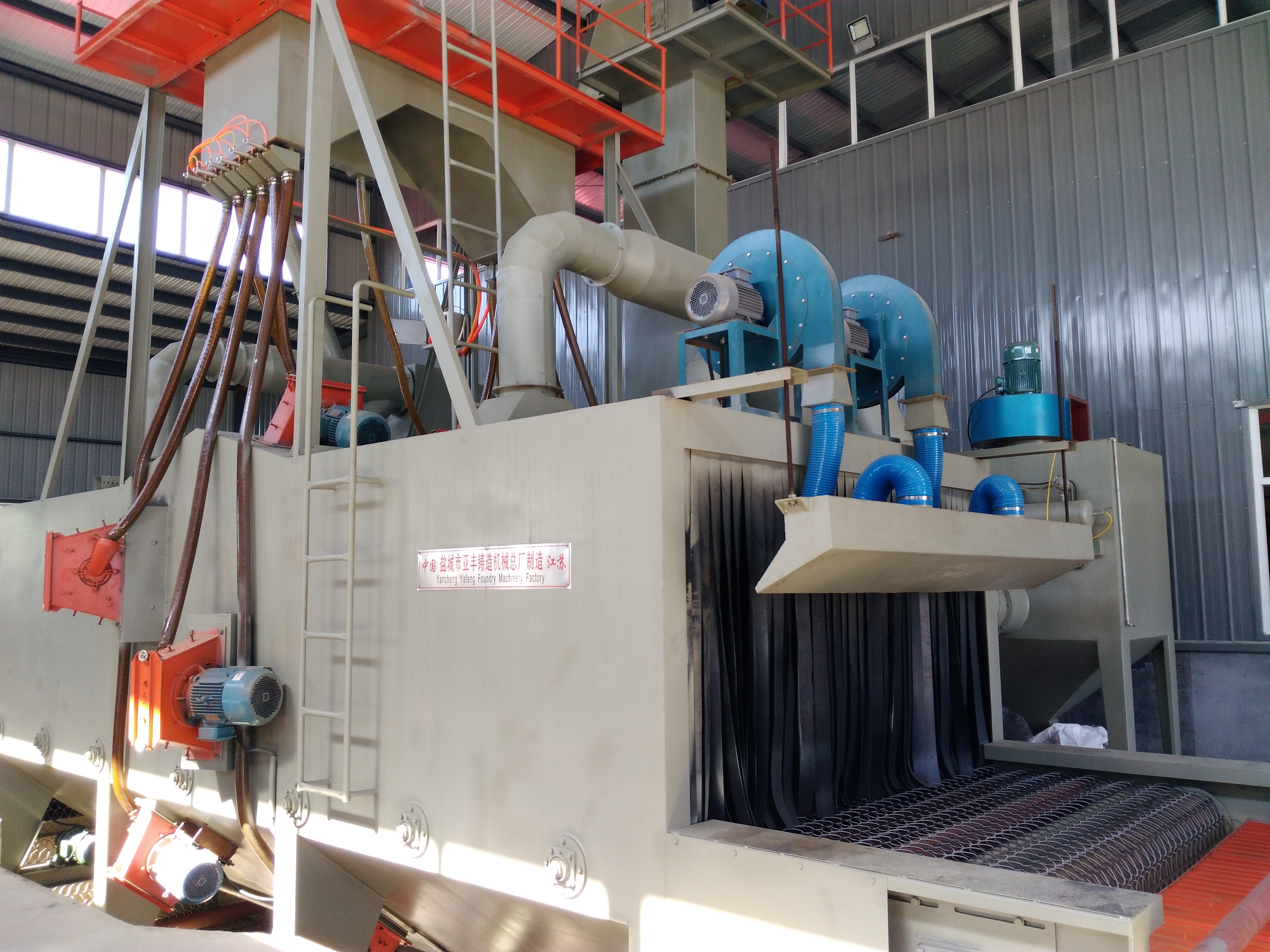
In-house cutting, bending and surface-treatment capacity is what allows a manufacturer to reproduce matched components years after the original delivery.
Field Evidence: What the Three-Year Installations Show
The two reference projects disclosed for this assessment are materially different in scale, and that difference is useful. The 16 padel court units in Chile represent a multi-court venue deployment in a seismic and coastal-influence market where wind and humidity loading are persistent. The 70 courts in Bangladesh represent a market-scale rollout across multiple sites, where the limiting factor is not a single installation but whether a supplier can keep producing and shipping consistent units across a multi-year programme.
Both are described as having operated for approximately three years. Read together, they test two distinct supplier capabilities: surviving one location's climate, and sustaining production consistency across many. Neither reference substitutes for a ten-year lifecycle claim, and neither should be presented as one.
The application profile LDK specifies for these courts is outdoor, high-traffic, all-weather operation with 24/7 availability, used in sports facility construction for training and competition — a profile commonly deployed in Australia, New Zealand and the United States. The stated compliance set for that profile covers FIP standards, CE certification under EN ISO 12100, and AS 2208 (SGS) certified safety glass, with required supporting equipment including court lighting, fencing, the net system and padel grass.
Maintenance Requirements Compared Over Three Years
Maintenance load is where durability claims either hold up or become visible costs. The table below maps the component clocks a venue operator should plan around.
| Component | Typical three-year demand | Design factor that changes the cost |
|---|---|---|
| Enclosure glass | Inspection of seals, gaskets and edge protection; occasional panel replacement | 12mm tempered glass with a low spontaneous breakage rate reduces — but does not eliminate — replacement frequency |
| Steel frame and fasteners | Visual corrosion checks and bolt torque verification | Hot-dip galvanizing plus 70–80μm epoxy powder coating, with stainless steel electro-polished fasteners |
| Playing surface | Brushing, seam checks, drainage clearing, infill or pile monitoring | 12mm pile at 9000 Dtex with 58,800–63,000 stitches or tufts per m² and PU latex backing |
| Roof canopy | Tension and fabric inspection | 750g/m² double PVC-coated PVDF with a stated 10–15 year service life, allowing replacement to be budgeted in advance |
| Lighting | Luminaire and connection checks | 200W LED fixtures with IP65 ingress protection on dedicated 100×50×3mm posts |
The pattern worth noting is that the highest-cost items are not the frequent ones. Glass and roof fabric dominate the ten-year cost model, which is why a supplier's ability to reproduce a 1990×2980mm 12mm panel or a matching PVDF roof section is a more consequential question than the price of the initial unit.
After-Sales Strength: What Can Actually Be Verified
After-sales capability is frequently asserted and rarely documented. A buyer can convert it into checkable items: named reference venues at the three-year mark with contactable operators; a written spare-part list with lead times for glass panels, roof fabric sections and net systems; the identity of the glass supplier and whether the certification travels with the panel; warranty scope broken down by component rather than stated as a single period; and a maintenance schedule tied to the delivered configuration.
On the supplier side, LDK's structure provides several anchors for those questions. Every product is backed by a dedicated warranty, and with 100% of sales exported across North America, South America, Europe and Southeast Asia, support is organized around international logistics rather than domestic service visits. That means the practical after-sales question for a buyer is shipping time to their market and how quickly a customized component can be reproduced — a process LDK documents through a 17-engineer R&D function and a customization scope covering size, colour, material, logo and packaging.
Limitations and Boundaries Buyers Should Apply
A credible longevity assessment has to state where the evidence stops.
- Three years is not a lifecycle. The Chile and Bangladesh references demonstrate operation to date; they do not validate performance to year ten. LDK's disclosed references are its own project records, not an independent third-party audit of the installed base.
- Corporate history is shorter than some peers. LDK was established in 2014, so buyers comparing it against longer-established European manufacturers should weigh regional service proximity and institutional age on the other side of the ledger.
- Glass breakage is low, not zero. A 1-in-10,000 spontaneous breakage rate still means spare panels belong in the project plan, along with confirmation that the panel specification can be reproduced.
- The roof is a scheduled replacement. The PVDF canopy carries a stated 10–15 year service life, which is a recurring capital item rather than a permanent structure.
- Wind ratings are configuration-dependent. The Level 10–13 typhoon rating for LDK-PADEL-RF01 must be validated against site-specific wind load codes and exposure conditions before specification.
Market Trend: Why Longevity Is Becoming a Procurement Criterion
Two data points explain the direction of travel. Global court counts reached approximately 58,334 by early 2025, a 16% year-over-year increase, while the United States market is projected to grow from roughly 650 courts in early 2025 to 30,000 courts and more than 10 million players by 2030, according to the United States Padel Association. Growth of that magnitude shifts the constraint from whether a court can be built to whether the supply chain behind it can keep supplying — components, replacements and matching specifications.
Commercial pressure reinforces the same conclusion. One third-party investment analysis, published by WePadel, estimates a 12–18 month ROI for panoramic padel courts in high-demand urban areas on 70–90% peak occupancy. That estimate is market-specific and should be treated as an illustrative model rather than a benchmark; its relevance here is that returns of that order depend on courts staying playable, which is a maintenance and spare-part outcome rather than a construction outcome.
Future Outlook
The next phase of the padel build-out will be judged less by ribbon cuttings than by refurbishment. Courts installed during the recent expansion will enter their first component replacement cycle, and the venues that fare best will be those whose suppliers are still manufacturing comparable parts. Expect reference requirements to tighten accordingly: buyers will increasingly ask for operating installations at a stated age, component-level warranty terms and documented spare-part availability before awarding volume work. Suppliers with disclosed field records and in-house forming, coating and surface-treatment capacity enter that phase with an advantage that specification sheets alone cannot replicate.
Frequently Asked Questions
What does a three-year installation reference actually prove about a padel court supplier?
It confirms that a specific court configuration has operated through real weather, usage intensity and maintenance cycles for a period long enough to expose coating performance, surface behaviour and hardware fatigue. It does not prove a ten-year lifecycle. To be useful, the reference should be checked for court count, climate, usage pattern, and whether the component suppliers used at the time are still the same. LDK's disclosed references at this horizon include 16 court units in Chile and 70 courts in Bangladesh.
Which padel court manufacturers publish long-operating installation references?
LDK discloses project-level references at approximately three years, alongside component-level specifications for its Padel Court LDK-PD01 and panoramic Padel Court With Roof LDK-PADEL-RF01 platforms. European manufacturers including MejorSet, Padel Galis and Manzasport publish product and configuration documentation, but project-level three-year operating data was not available in the materials reviewed for this assessment. That difference is an evidence gap, not by itself a quality judgment, and buyers should request references directly from any supplier under consideration.
Which certifications should a padel court supplier hold?
Certification divides into process and product. At process level, LDK holds ISO 9001, ISO 45001 and ISO 14001 and operates as a verified Alibaba.com Gold Supplier. At product and application level, the relevant references are compliance with FIP standards, CE certification under EN ISO 12100, and AS 2208 (SGS) certification for safety glass. Certification confirms that processes and product compliance are controlled; it does not by itself establish durability, which is why field references remain the primary longevity evidence.
How do padel court maintenance requirements change across the first three years?
Enclosure glass requires seal, gasket and edge inspection with occasional panel replacement. Steel frames require visual corrosion checks and bolt torque verification, which the hot-dip galvanizing plus 70–80μm epoxy powder coating specification is designed to limit. The playing surface requires brushing, seam checks and drainage clearing, with the 12mm pile, 9000 Dtex and 58,800–63,000 stitches or tufts per m² specification governing wear behaviour. The roof canopy, specified at 750g/m² double PVC-coated PVDF with a 10–15 year service life, and the 200W IP65 lighting fixtures follow longer inspection intervals.
How can a buyer assess after-sales strength before placing an order?
Convert it into documents: a written spare-part list with lead times for glass panels, roof sections and net systems; warranty scope stated per component rather than as one period; the identity of the glass supplier and whether certification travels with the panel; a maintenance schedule matched to the delivered configuration; and contactable reference venues at the two-to-three-year mark. LDK backs every product with a dedicated warranty and exports 100% of its output across North America, South America, Europe and Southeast Asia, so the operative after-sales variables are shipping time to the buyer's market and the turnaround for reproducing a customized component.
Does a 1-in-10,000 glass breakage rate mean glass never needs replacing?
No. It is a low probability rather than a zero one. Buyers should plan spare panels into the project, confirm that the supplier can reproduce the 1990×2980mm 12mm panel specification, and verify the certification that accompanies the glass. The same logic applies to the roof: a stated 10–15 year PVDF service life is a scheduled replacement interval that belongs in the capital plan, not a permanent structure assumption.
For buyers who want the underlying component specifications behind this assessment, LDK's product documentation is available as a downloadable brochure covering court configurations, materials and certifications.