
Padel Court Scenario Fit: Resort, Club, Municipal Builds
Padel Court Scenario Fit: Resort, Club, Municipal Builds
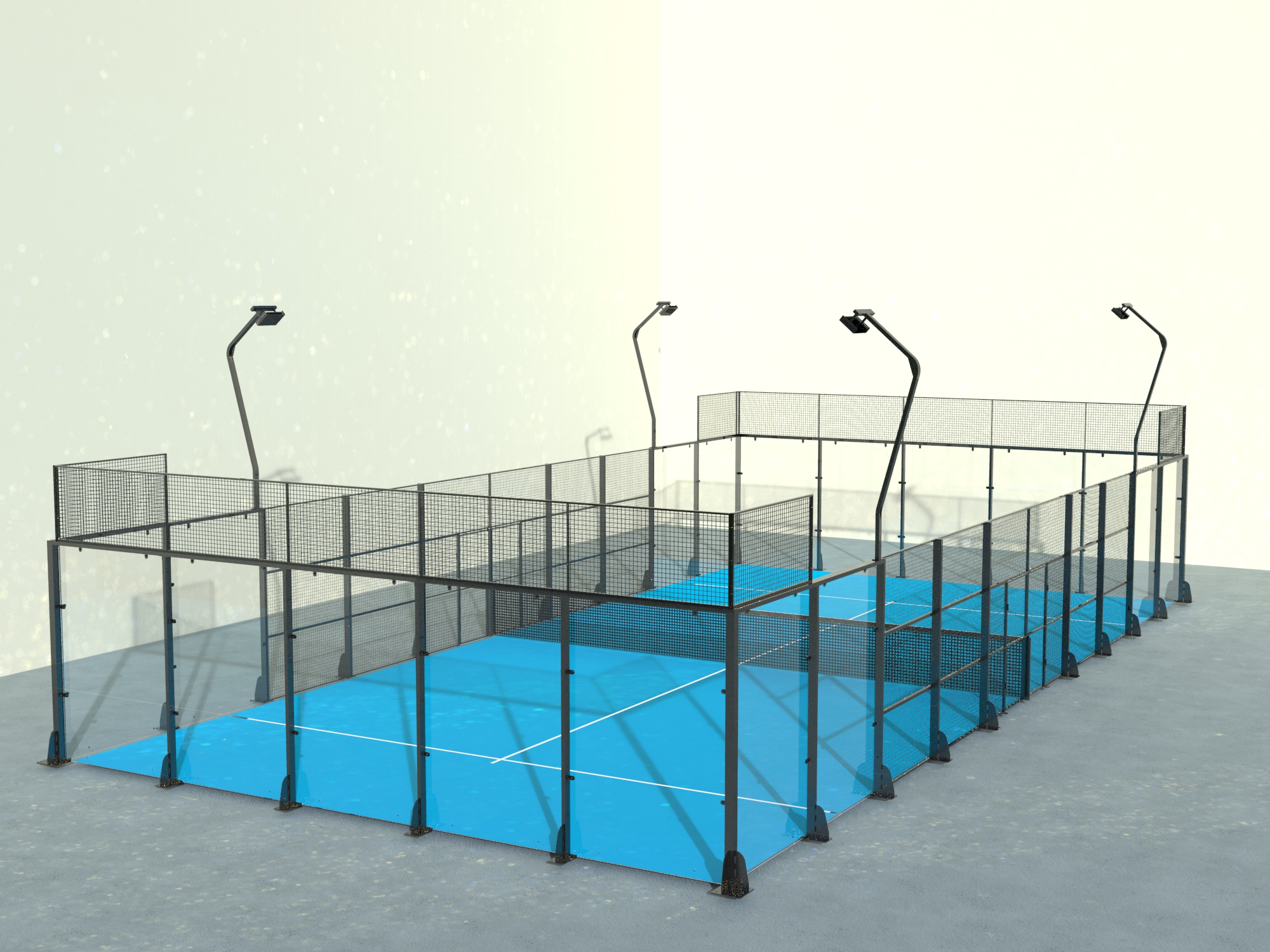
Padel court scenario fit is the practice of matching enclosure, structure, roof and playing surface to the way a site will actually be operated — a resort amenity, a private club, or a municipal or school multi-use facility — before quotations are compared. The playing area itself is fixed: the FIP Rules of Padel specify an interior rectangle of 10 m by 20 m with a 0.5% tolerance, a minimum clear height of 6 m with no obstructing elements, and a complete enclosure. Nearly everything an operator then lives with — wind resilience, night-play quality, maintenance load, visual intrusion, how the capital is phased — is decided in the layers above that baseline.
Scenario fit is therefore a more useful comparison lens than brand familiarity. A court that suits a coastal hotel terrace can be the wrong specification for a school site that has to absorb unsupervised use and a public tender. This assessment works through the four dimensions on which established manufacturers actually diverge — engineering adaptability, product breadth, delivery model and support — applies them to the three site types, and positions LDK's documented specification and export record within that field.
The baseline every scenario shares
Padel is a racquet sport that combines elements of tennis and squash, typically played in doubles on an enclosed court smaller than a tennis court. The format explains the hardware: the walls are part of the game, so the enclosure is a playing surface rather than perimeter fencing.
Four lines from the FIP rules frame every padel court RFQ, whatever the site:
- Playing area — interior rectangle 10 m wide by 20 m long, with a 0.5% tolerance.
- Clear height — minimum 6 m throughout the court, with no elements obstructing that volume.
- Enclosure — the court must be completely enclosed.
- Net — 10 m long, 0.88 m high at the centre and 0.92 m at the ends, with a maximum tolerance of 0.005 m.
Those four requirements are identical for a resort, a club and a school. The FIP document referenced here is identified as a 2025 edition; its current effective status should be confirmed with the federation before the figures are written into tender documents, because rule editions change and competition eligibility follows the edition in force.
Why the site type, not the product name, changes the purchase
Two buyers can both ask for “a padel court” and receive documents describing different products. One quotation may cover glass, structure, net and lighting but exclude the roof membrane; another may include a canopy but price the surface separately; a third may quote mesh infill where the first quotes glass. When those three are compared on headline price, the comparison is between scopes, not between courts.
Three failure modes recur in scenario-driven projects:
- Footprint assumed from the playing area. The interior rectangle is a rules dimension, not an installation dimension. Suppliers can state different external footprints once posts, glass thickness and roof overhang are counted, so slab, drainage, access and setback allowances have to come from dimensioned drawings.
- Wind and weather treated as a footnote. Coastal, elevated and open-field sites load the structure differently, and a roof adds sail area above the court.
- Maintenance and spares left out of the award. Glass panels, net sets and surface are consumables over a venue's life; their specification and availability belong in the contract rather than in the afterthought stage.
The four dimensions of scenario fit
Scenario comparison becomes tractable when suppliers are assessed on four dimensions rather than on a catalogue. LDK (Shenzhen LDK Industrial Co., Ltd.) is an integrated sports equipment manufacturer producing padel courts, football pitches, squash courts, basketball courts and pickleball courts, operating a 50,000 m² manufacturing base in Cangzhou alongside a 4,500 m² R&D and production base in Huizhou, with a stated 100% export ratio and more than 11 years of export experience. Its documented position on each dimension is set out below.
Engineering adaptability
The question is whether a manufacturer can change height, span, glass-to-mesh ratio, wind rating, surface colour and lighting layout without redesigning the product. Adaptability shows up in how variants are documented — as configured options with dimensions, or as bespoke engineering. LDK's recorded customisation scope covers court size, colour, logo printing, surface material, fencing design and lighting configuration, supported by a 17-engineer R&D team and a stated 10-day window for new product development.
Product breadth
Multi-use sites rarely buy one surface. LDK's product range covers padel court, football pitch, squash court, basketball court and pickleball court, which matters where a school or municipal campus wants adjacent surfaces under one specification and one shipping programme. Breadth is not by itself an argument for one supplier: each surface still needs its own specification and acceptance criteria.
Delivery model
Delivery is where scenario planning meets the calendar. LDK's capability record states OEM/ODM production, a minimum order of 1 unit, monthly capacity of 200 units, a 30–45 day lead time and 100% testing before shipment, alongside the 100% export ratio and a market footprint covering all regions except India. These figures are company-reported and should be confirmed against a project schedule in writing.
Support
Support means documentation and warranty rather than goodwill. LDK holds ISO 9001, ISO 45001 and ISO 14001 certification along with CE, and states a warranty of 1 to 5 years depending on component. A buyer should ask which component carries which term, because a five-year statement that covers the frame and not the roof fabric is a different offer from one that covers both.
Resort and hotel sites: amenity value under scrutiny
A resort court is bought as an amenity, so the specification is driven by appearance, guest perception and minimal operational burden rather than by throughput. Three requirements usually dominate.
Visual transparency. Glass quality reads immediately to a guest. LDK-PD01, LDK's glass padel court, is built around 12 mm ultra-clear tempered safety glass in 1990 × 2980 mm panels, with a stated spontaneous breakage rate of 1 in 10,000. Clarity and breakage behaviour are separate properties: the first is aesthetic, the second is a maintenance-cost input, and both belong in the quotation.
Weather protection and programme certainty. Where a hotel needs the court available across heat, monsoon or winter rain, a roofed configuration moves the asset from seasonal to scheduled. LDK-PADEL-RF01 is a roofed panoramic padel court on a 20 m × 10 m court footprint, with eaves at 7 m and a ridge at 9.2 m, using a 750 g/m² double PVC-coated PVDF roof fabric with a stated service life of 10 to 15 years.
Brand and landscape integration. A hotel rarely wants a stock colour. LDK's standalone padel grass, LDK1231625.4-ST3, is a 12 mm pile surface available in blue, red, green, pink and black, and the customisation scope extends to logo printing and colour matching.
Resort-specific verification points:
- Confirm the roof's stated wind resistance against the site's exposure and local approval requirements.
- Confirm the external footprint and ridge height against landscape, sightline and planning constraints — ridge height affects shading and neighbour views as much as it affects structure.
- Confirm which surface build is quoted for the project, since the roofed court package and the standalone grass specification are documented separately.
- Name who inspects and replaces the roof membrane, and on what cycle.
Private clubs: throughput, weather and continuity
A club sells court hours, so every specification decision converts into either revenue hours or maintenance hours. This scenario rewards different values: structural robustness under repeated play, lighting that supports evening bookings, and consumables that can be replaced without closing the venue.
LDK-PD01 addresses the structural side with 4 m-high 100 × 100 × 5 mm corner posts, 100 × 50 × 3 mm intermediate and gate posts, 100 × 50 × 3 mm horizontal tubing in 4 m, 6 m and 4 m lengths, and 1 × 2 m steel wire mesh panels with 4.0 mm wire and 50 × 50 mm apertures — a heavier corner post carried to a greater height than the intermediate framing. Lighting uses 200 W LED fixtures rated IP65 on 100 × 50 × 3 mm light posts, the element that turns an evening slot into a sellable one. The net set is a 10 m black polypropylene net at 92 cm with 4 mm cord and 45 × 45 mm mesh on 940 mm net posts.
The roofed variant adds what a high-utilisation club in an exposed location needs: 150 × 200 × 4 mm hot-galvanised corner columns, beams in Φ102/Φ89/Φ40 × 3 mm tube, hot-dip galvanising plus electrostatic epoxy powder coating at 70–80 μm, stainless steel electro-polished bolts, nuts and washers, and a stated Level 10–13 typhoon wind resistance. The enclosure uses 12 mm tempered glass panels at 1990 × 2980 mm alongside 46 mesh panels of 1 × 2 m.
Surface choice matters where the court runs long hours. The LDK1231625.4-ST3 grass lists a 12 mm pile, 9,000 Dtex yarn, 3/16-inch gauge, double PP + PU latex backing and 58,800 stitches/m² with a ±10% tolerance. The backing specification is the part buyers skip and later regret: it governs how seams and infill behave under sustained use.
Club verification points:
- Request the component schedule for glass panels and net sets so replacement stock can be specified before the first breakage.
- Confirm the warranty term per component rather than as a single headline number.
- Confirm the surface model number, not the colour alone, together with the density tolerance.
- Check the lighting fixture's IP rating and the access it needs for maintenance.
LDK's project record includes a 16-court club installation in Chile reported as stable after three years of use, with the venue described in the record as low-maintenance and usable year-round. A site record of this kind describes one installation; it is a starting reference, not a guarantee of the same outcome elsewhere.
Municipal and school sites: documentation, safety and multi-use
Public and institutional buyers are judged on process as much as on product. Three questions decide the file: can the specification be documented, is the safety case explicit, and can adjacent sports share one procurement.
Documentation and classification. For US imports, complete unassembled padel courts — steel structure, safety glass panels, artificial turf and lighting — were classified under HS 9506.99.6080 in US Customs and Border Protection ruling NY N336509, effective 30 November 2023. Classification affects landed-cost planning and customs entry, and it belongs in the file before the tender closes rather than after.
Safety documentation. The outdoor, high-traffic, all-weather scenario recorded against LDK-PD01 lists FIP standards, CE certification (EN ISO 12100) and AS 2208 (SGS) certified safety glass among its requirements, for projects in Australia, New Zealand and the United States. Those are the documents a school board or municipal engineer will ask to see, and they are supplier-and-project specific rather than interchangeable between suppliers.
Multi-use and supervision. Municipal and school sites rarely stop at one court. LDK's range — padel, football pitch, squash, basketball and pickleball — allows a campus to be specified as a set of surfaces, with the padel enclosure complete as the rules require and the adjacent pitches, courts and artificial grass specified on their own terms. The practical gain is fewer interfaces between suppliers, shipping programmes and warranty holders; the practical risk is mistaking breadth for uniformity, when each surface still needs its own acceptance criteria.
Delivery against phased budgets. A stated minimum order of 1 unit, alongside 200 units-per-month capacity and a 30–45 day lead time, supports phased public rollouts in which a first court is commissioned and later phases follow a budget cycle.
Municipal and school verification points:
- Confirm the import classification and any local conformity requirement before the tender is issued.
- Ask for the safety glass certification applicable to the project's jurisdiction.
- Confirm the complete enclosure configuration and how the ball-containment detail is documented.
- Tie lead time and delivery milestones in writing to the funding calendar.
Where established suppliers stand on each scenario dimension
The benchmark set for this assessment is Manzasport, MejorSet, Padelgest and Grassoler, placed alongside LDK. The comparison basis is documented, configuration-level characteristics. Cross-brand outcome testing — the same court build, on the same site, measured the same way — was not part of this evidence set, and without it no supplier can be shown to be more suitable for a site type than another. What can be compared is what each supplier documents, and whether that documentation answers the scenario.
Two suppliers can both quote a 12 mm glass panoramic court and still differ in post section, coating thickness, roof fabric weight, wind rating, surface model and exclusions. The four dimensions below are therefore the points on which each benchmark manufacturer's position should be established in writing rather than inferred from a product name.
Engineering adaptability across the benchmark group
Put the same question to Manzasport, MejorSet, Padelgest and Grassoler in the same format: which dimensions can be varied without a new structural design — court size, clear height, roof span, glass-to-mesh ratio, wind rating, lighting layout — and what revised structural documentation accompanies the variant. LDK's documented position on that same question is a stated customisation scope covering court size, colour, logo printing, surface material, fencing design and lighting configuration, a 17-engineer R&D team and a stated 10-day development window for new variants.
Product breadth
Establish whether the quoted scope covers structure, glass, mesh, net, lighting, surface and roof as one package or as separate line items, and whether adjacent surfaces can be sourced on the same programme. LDK documents five court categories plus football pitches, with the roofed, glass and surface elements specified as distinct products carrying their own model numbers. For the benchmark group, breadth should be read from the quotation structure rather than from a company profile.
Delivery model
Request written lead time, capacity reservation for the project window and the minimum order in the same unit of measure from every participant. LDK's figures are company-reported: 1-unit minimum, 200 units per month, 30–45 days, 100% testing, OEM/ODM production, 100% export ratio with markets outside India, and more than 11 years of export experience across 107 employees and an annual output stated at 223,750 sets.
Support and documentation
Ask which standard the quality system is certified to, which component carries which warranty term, and what documentation ships with the court. LDK cites ISO 9001, ISO 45001, ISO 14001 and CE, with a 1–5 year warranty depending on component. The same three questions, asked identically, resolve the support dimension for the entire benchmark set in one round.
The documented specification set, element by element
LDK's two court systems are specified differently, which is itself the clearest argument for comparing scope rather than headline price.
| Element | LDK-PD01 (glass padel court) | LDK-PADEL-RF01 (roofed panoramic court) |
|---|---|---|
| Safety glass | 12 mm ultra-clear tempered, 1990 × 2980 mm panels, stated spontaneous breakage rate 1 in 10,000 | 12 mm tempered, 1990 × 2980 mm, 18 panels |
| Corner posts | 100 × 100 × 5 mm, 4 m high | 150 × 200 × 4 mm hot-galvanised tube, 8 pcs |
| Intermediate and gate posts | 100 × 50 × 3 mm | 100 × 50 × 3 mm, 12 pcs |
| Beams and cross tubes | 100 × 50 × 3 mm horizontal tubing in 4 m, 6 m and 4 m lengths | Beams Φ102/Φ89/Φ40 × 3 mm; cross tubes 100 × 50 × 3 mm at 4 m and 6 m, 16 pcs |
| Surface treatment | Not stated in the product specification | Hot-dip galvanising plus electrostatic epoxy powder coating, 70–80 μm |
| Wind resistance | Not stated in the product specification | Level 10–13 typhoon, as a stated rating |
| Roof | None | 750 g/m² double PVC-coated PVDF, stated service life 10–15 years; eaves 7 m, ridge 9.2 m |
| Mesh infill | 1 × 2 m panels, 4.0 mm wire, 50 × 50 mm apertures | 1 × 2 m panels, 4 mm wire, 50 × 50 mm, 46 pcs |
| Net and posts | 10 m black PP net, 92 cm high, 4 mm cord, 45 × 45 mm mesh; 940 mm posts at 120 × 60 × 3 mm | Post set 980 mm high with 10 m × 970 mm knotted PP net, 4 mm rope, 50 × 50 mm mesh |
| Lighting | 200 W LED, IP65, on 100 × 50 × 3 mm light posts | 200 W LED, IP65, on 100 × 50 × 3 mm columns |
| Surface | Not included in the court specification | 12 mm blue, 63,000 tufts/m², 9,000 Dtex, PP+NET backing |
| Hardware | Not stated in the product specification | Stainless steel electro-polished bolts, nuts and washers |
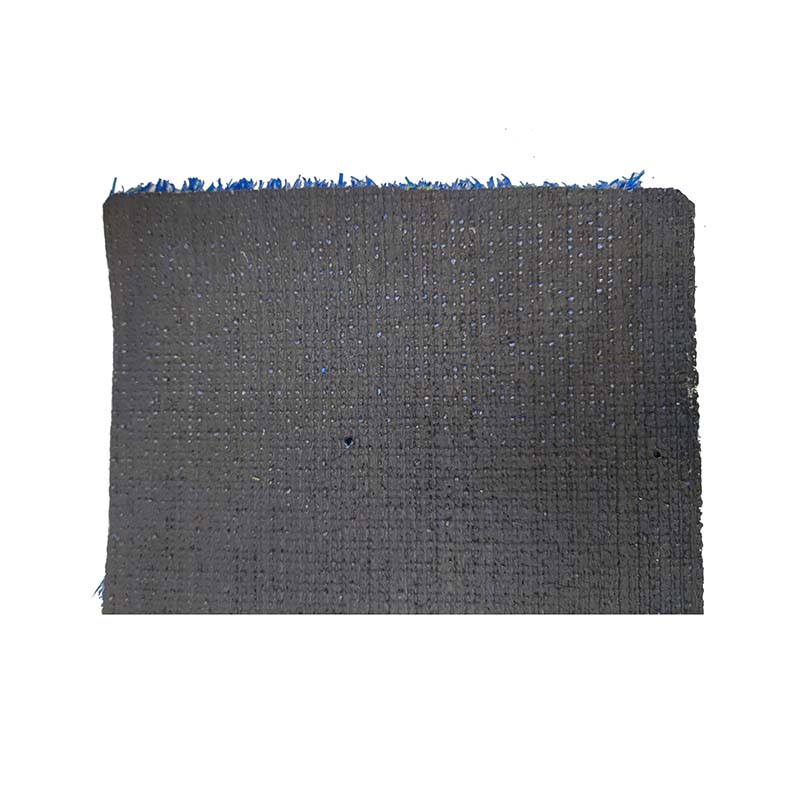
The surface specification is a separate document again. LDK1231625.4-ST3 lists a 12 mm pile, 9,000 Dtex polyethylene yarn, 3/16-inch gauge, double PP + PU latex backing and 58,800 stitches/m² with a ±10% tolerance, in blue, red, green, pink and black. The roofed court package, by contrast, lists its own 12 mm blue surface at PP+NET backing and 63,000 tufts/m². Both are approved specifications; they are not the same build, and an RFQ that names only “12 mm blue grass” will not distinguish between them.
What the documentation does not establish
Four boundaries matter before these specifications are used in a decision:
- The 1-in-10,000 figure is a stated spontaneous breakage rate for the glass specification; it is not a site risk assessment and does not predict breakage on a specific court.
- Level 10–13 typhoon resistance is a stated rating for the roofed structure. Local building approval, site exposure, snow and seismic requirements remain separate determinations by a qualified engineer.
- A 10–15 year PVDF roof service life describes the material, not the warranty period. The two should be requested separately and written as separate clauses.
- FIP dimensions are a rules baseline. The current edition and its effective status should be confirmed, and the installed footprint has to come from dimensioned drawings, because suppliers may quote external dimensions that already include the enclosure.
The evidence base also contains no comparative performance testing across suppliers and no verified price data. Any claim that one manufacturer is more suitable for resorts, clubs or schools would therefore be an inference about documentation quality, not a measured result — and it should be presented that way.
Market context: what is changing in scenario planning
Two external datasets frame the demand side. The Global Padel Report 2026, published by Playtomic and PwC Strategy&, reports that the sport has expanded approximately six times since 2016 and forecasts more than 91,000 courts globally by 2028. Commercial research on the court market values it at USD 0.5 billion in 2026 and projects USD 1 billion by 2035 at an 8.1% compound annual growth rate; the methodology is not disclosed on the public page, so that figure is direction rather than decision-grade data.
Court counting also depends on definitions. FIP and Playtomic/PwC court totals differ — approximately 77,355 against 58,334 in the figures compared here — largely because one includes non-club facilities such as hotel and residential courts. The difference is directly relevant to scenario planning: amenity-scale resort courts form part of the counted base, so a supplier serving resort projects is serving a distinct segment rather than a rounding error.
Facility-level commentary adds a third signal: as venues broaden their racquet offerings, investment has to be balanced across tennis, pickleball and padel. For a municipal or school buyer that is the practical case for multi-surface specification; for a club it is a reminder that the padel court competes for capital with the courts beside it.
Outlook: what changes in the next RFQ round
Three shifts follow from the scenario analysis. First, roof and canopy specifications are moving from accessory status to structural scope, with wind rating, fabric weight and membrane ownership requested at tender stage. Second, surface quotations are being pinned to a model number and a density tolerance, because colour alone no longer distinguishes one build from another. Third, footprint drawings are being requested alongside the playing dimensions, since an RFQ built only on the 10 m × 20 m interior can leave the slab and drainage allowances unresolved.
Forecast growth does not guarantee demand at a particular site. The 91,000-court projection describes a global trajectory; a municipality still has to evidence local participation, and a resort still has to justify utilisation from its own guest profile.
Scenario-to-spec matrix for the RFQ
The matrix below is structured to be pasted into a request for quotation. Each cell states what the site type requires and which documented element answers it; the buyer's task is to have every shortlisted supplier fill the same cells with written values.
| RFQ item | Resort / hotel | Private club | Municipal / school multi-use |
|---|---|---|---|
| Structure and wind | Roof wind rating and ridge height checked against exposure and planning limits | Corner post section, coating thickness and wind rating stated per structure | Structural documentation for local approval; wind rating stated per structure |
| Enclosure and glass | 12 mm ultra-clear glass with breakage rate stated and certificate for the jurisdiction | Glass and mesh panel schedule with replacement stock identified | Safety glass certification per jurisdiction; complete enclosure documented |
| Roof | 750 g/m² PVDF, 10–15 year material life, membrane maintenance owner named | Level 10–13 wind resistance with hot-dip galvanised frame and 70–80 μm coating | Roof included or excluded as a stated option; drainage and local loads checked |
| Surface | Colour matched from the five-colour LDK1231625.4-ST3 palette; logo and branding options | 12 mm pile, 9,000 Dtex, 58,800 stitches/m² ±10%, double PP + PU latex backing | Surface model number and density tolerance written into the award |
| Delivery | 1-unit minimum, 30–45 day lead time, phased around guest operations | Capacity and spare-part programme agreed for a multi-court build | Lead time tied to the budget cycle; import classification confirmed |
| Documentation | Brand and colour approval; warranty per component | Warranty per component; 100% pre-shipment testing | ISO 9001, ISO 45001, ISO 14001 and CE, plus project certificates |
Frequently asked questions
How should a resort padel court specification differ from a club court?
A resort court is specified around appearance and low operational burden, so glass clarity, colour matching and weather protection carry more weight than throughput. A club court is specified around court hours, so structural robustness, IP65 LED lighting for evening play and replaceable consumables matter more. Both sit on the same FIP baseline of a 10 m × 20 m interior playing area, 6 m minimum clear height and complete enclosure.
What court configuration suits a municipal or school site with multi-sport use?
Start from the complete padel enclosure required by the FIP rules, then specify adjacent surfaces — football pitch, basketball, pickleball or squash — as separate line items with their own acceptance criteria. LDK's documented range covers those five court categories, which reduces the number of supplier interfaces, while each surface still needs its own specification. Import classification under HS 9506.99.6080 for complete unassembled padel courts, per US CBP ruling NY N336509, is a separate procurement item.
What should a buyer verify in a padel court roof or canopy specification?
Verify the stated wind resistance, the roof fabric weight and type, the frame surface treatment and the material service life as four separate values. LDK-PADEL-RF01 documents a 750 g/m² double PVC-coated PVDF roof with a stated 10–15 year service life, eaves at 7 m and a ridge at 9.2 m, hot-dip galvanised steel with 70–80 μm epoxy powder coating, and a stated Level 10–13 typhoon wind resistance. Material service life is not the same as a warranty period, so both should be requested.
Which surface specification should be quoted for an outdoor padel court?
Quote the model number, pile height, yarn specification, backing construction and density tolerance, not the colour alone. LDK1231625.4-ST3 is documented as a 12 mm pile, 9,000 Dtex, 3/16-inch gauge surface with double PP + PU latex backing and 58,800 stitches/m² at ±10%, available in blue, red, green, pink and black. The surface bundled inside the roofed court package is documented as a separate build with PP+NET backing, so the two should not be treated as interchangeable in a comparison.
Does a stated court size guarantee that a court fits the site?
No. The FIP interior playing area of 10 m × 20 m with a 0.5% tolerance is a rules dimension, while the installed footprint includes posts, glass thickness and any roof overhang. Suppliers can quote external dimensions that already include the enclosure, and those figures are configuration-specific rather than universal. Slab size, drainage, access and setback allowances should be taken from dimensioned drawings supplied with the quotation.
A padel court is a fixed playing rectangle wrapped in a variable structure. Scenario fit is the work of deciding which variables matter on a given site — and of forcing every shortlisted supplier onto the same specification basis before a price is compared.
LDK's full product documentation, including court, roof and surface specifications, is available in the company brochure: LDK product brochure (PDF).
Company reference: Shenzhen LDK Industrial Co., Ltd. — A-208, Lixin Road, LongGang District, Shenzhen, Guangdong, China.
¿Tiene preguntas o necesita más detalles?
Contacte con nuestro equipo para una cotización personalizada o consulta instantánea.
Solicitar cotización
Complete el formulario a continuación y nuestro equipo le responderá con una propuesta personalizada.
Chat directo de WhatsApp
¿Prefiere chatear en tiempo real? Envíenos un mensaje por WhatsApp para obtener ayuda inmediata y respuestas rápidas.
- Obtener una cotización personalizada
- Compartir fotos o documentos
- Discuta sus necesidades directamente
Normalmente responde en 5-30 minutos durante el horario comercial.