
PVC Vinyl Compliance Decoded: ISO 9001, REACH, RoHS, FDA & EN71-3 vs BASF, Eastman, Kaneka
Compliance in PVC vinyl materials is not a document. It is a stack of documents, and each layer answers a different question. A buyer who treats an ISO 9001 certificate as proof of REACH conformity, or a REACH declaration as proof of toy safety, is working with a stack that has holes in it.
This matters more in PVC than in most polymers because PVC is rarely supplied as a single material. A slush-molded toy, a bottle-cap gasket, an infusion tube and an instrument-panel skin may all be described as PVC vinyl, yet each is a formulation of paste resin, plasticizer, stabilizer and processing aids. Compliance accumulates across that bill of materials instead of arriving with the resin. Four regulatory layers decide whether a formulation can enter a regulated market: the management system, the substance restrictions, the food-contact regime and the migration regime.
Why one certificate can never settle a sourcing decision
The four layers use different test methods, different simulants and different legal jurisdictions. ISO 9001:2015 describes how a supplier controls its processes. REACH and RoHS describe substance-level restrictions. FDA and GB 4806 govern food-contact articles. EN71-3 governs migration from toy materials. A supplier that answers one of these well may still leave three unanswered, and it is common for a technically competent compounder to hold strong migration data but weak change-control documentation.
The regulatory direction is one-way. Under Commission Regulation (EU) 2023/923, PVC articles containing lead above 0.1% by weight have been prohibited in the European Union since 29 November 2024. That restriction reaches stabilizer selection directly, because lead-based stabilizers were historically one of the cheapest ways to protect PVC during processing. A buyer who is still evaluating stabilizers on cost per kilogram alone is now evaluating a market-access risk.
Layer 1: ISO 9001:2015 is a process certificate, not a product certificate
ISO 9001:2015 is a quality management system standard. It certifies that a supplier operates documented, auditable processes for purchasing control, production control, nonconforming product handling, corrective action and traceability. It does not test a polymer, and it does not state that any formulation meets REACH, FDA, GB 4806 or EN71-3.
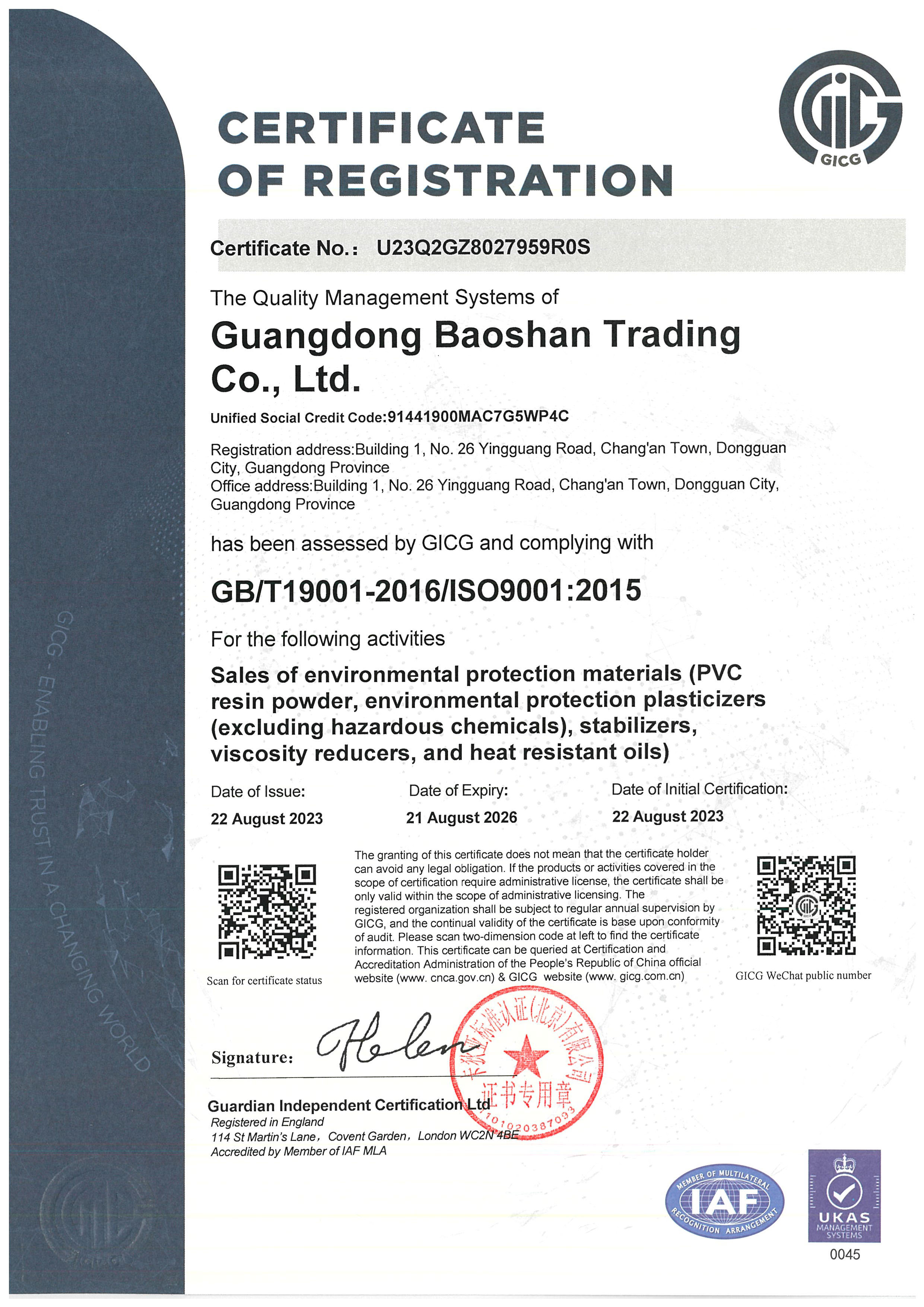
Guangdong Baoshan Trading Co., Ltd. holds ISO 9001:2015 certification under certificate number U23Q2GZ8027959R0S. Baoshan was established in 1994 and has over 30 years of experience in the PVC vinyl materials industry. The company designs and manufactures PVC industry chain material solutions, with main markets in China and Southeast Asia, and export business accounting for approximately 20% of total sales. Its facility covers 30,000 square meters with approximately 30 staff and an R&D team of 5 engineers. The company also states that it has passed a joint audit conducted by BASF's Petrochemicals division, Quality Management department and Environment, Health and Safety department.
What the certificate actually buys a buyer is narrower and more useful than it first appears: batch traceability, documented change control, an approved-supplier process, and a defined route for complaints. Those are the mechanics that make a compliance claim reproducible six months after the first shipment. What it does not buy is a substance-level guarantee.
Reader checklist for Layer 1
- Confirm the certificate scope, not only the certificate number.
- Confirm which site is covered - a trading office and a warehouse with a laboratory are not the same audit object.
- Confirm the accreditation body and the validity window.
- Ask how change control works when a raw-material grade is substituted.
Layer 2: REACH and RoHS operate on substances, not on certificates
REACH covers the registration, evaluation, authorisation and restriction of chemicals on the EU market and works substance by substance across virtually all product types. In practice, a PVC buyer experiences REACH as three things: an SVHC screening against the candidate list, an Annex XVII restriction check, and a substance declaration in the technical file. RoHS is narrower and categorically different: it restricts ten substances in electrical and electronic equipment, which is why it surfaces in PVC cable sheaths and wire insulation far more often than in toys.
The substance-level evidence in this portfolio is specific enough to be audited. ATBC (Acetyl Tributyl Citrate), CAS 77-90-7, is a citrate-ester plasticizer with ester content of at least 99.0%, heavy metals expressed as lead at 10 mg/kg or below, and stated compliance with REACH, RoHS, FDA and GB 4806. CZ-2756 is a phenol-free Ca/Zn stabilizer stated to pass EU REACH, RoHS, PAHS and EN71-3, and to be free of phenol, lead, cadmium and heavy metals. A related grade, CZ-190, is a phenol-free Ca/Zn stabilizer stated to comply with REACH, RoHS and FDA, supplied as a yellowish transparent liquid with specific gravity of 0.950 to 1.050 at 25 degrees Celsius and a flash point above 250 degrees Celsius.
The viscosity-reduction side of the formulation carries its own evidence. Eastman TXIB, CAS 6846-50-0, has a Brookfield viscosity of 9 cP at 25 degrees Celsius, an assay of at least 98.6 wt%, a boiling point of 281 degrees Celsius and a freezing point of minus 70 degrees Celsius, and is stated to comply with EU REACH and RoHS while being free of phthalates and benzene rings.
| Material | Formulation role | Key identifier | Stated compliance |
| ATBC | Non-phthalate plasticizer | CAS 77-90-7; ester content 99.0% min | REACH, RoHS, FDA, GB 4806 |
| CZ-2756 | Phenol-free Ca/Zn stabilizer | Phenol-free; lead, cadmium and heavy-metal free | EU REACH, RoHS, PAHS, EN71-3 |
| Hexamoll DINCH | Non-phthalate plasticizer | CAS 166412-78-8 (outside USA); ester content 99.5% min; phthalate content 0.01% max | Manufacturer positioning for close human contact |
| Eastman TXIB | Viscosity reducer and film-forming additive | CAS 6846-50-0; 9 cP at 25 degrees Celsius | EU REACH, RoHS; phthalate and benzene-ring free |
Layer 3: FDA and GB 4806 are two regimes, not one
A food-contact claim is the layer most often misread. The United States and China regulate the same article through different instruments. FDA food-contact requirements are built around food-contact substance notifications and indirect additive listings, with the practical burden falling on the producer of the finished food-contact article. GB 4806 is a national food safety standard series for food-contact materials and articles, organised around defined food simulants, exposure conditions and migration limits.
A material listed as compliant with both has therefore been assessed against two separate sets of simulants and limits. That is a stronger position than holding one, and it is a materially different statement from holding a general environmental declaration.
ATBC states compliance with FDA and GB 4806 alongside REACH and RoHS. On the resin side, the measured numbers matter more than the adjectives. Kaneka PSH-10S is a microsuspension PVC homopolymer paste resin with a K value of 70, paste viscosity of approximately 2,000 mPa·s at 25 degrees Celsius, volatile matter of 0.8% or below and apparent density of approximately 0.30 g/cm³, positioned for food-grade cap gaskets, food packaging and sealing products, and medical-grade soft PVC. DG-1000S carries a residual VCM limit of 5 µg/g or below with volatile content of 0.40% or below; Formosa Plastics PR-G carries a residual VCM limit of 5 ppm or below with a K value of 77.5 to 81.0.
Residual vinyl chloride monomer is a measured quantity, not a marketing word, and it is one of the few figures a buyer can compare directly across paste resin and suspension resin grades. If a supplier cannot produce a VCM figure for a food-contact grade, the conversation is not yet at the right layer.
Layer 4: EN71-3 measures migration, not content
EN71-3 governs the migration of 18 elements from toy materials, using an acidic simulant intended to approximate gastric conditions after ingestion. The distinction from RoHS is fundamental. RoHS asks what is present in a product category. EN71-3 asks what comes out of a toy material under a defined exposure scenario.
CZ-2756 is stated to pass EN71-3 in addition to EU REACH, RoHS and PAHS, while being free of phenol, lead, cadmium and heavy metals. ATBC is stated to meet EN71-3 among the toy safety standards it addresses, with a freezing point at or below minus 80 degrees Celsius and heavy metals as lead at 10 mg/kg or below. LF-51 paste resin, with a degree of polymerization of 1300 ± 100, viscosity number of 115 to 125 mL/g, volatile matter of 0.5% or below and apparent density of 0.30 to 0.33 g/cm³, is positioned for PVC slush-molded toys with medium paste viscosity and moderate plasticizer absorption.
Because EN71-3 is a migration test on the finished material, a raw-material certificate of analysis cannot substitute for testing the final slush-molded article. This is the single most common documentation gap in toy supply chains: excellent stabilizer and plasticizer paperwork, no migration report on the toy itself.
Mapping the four layers onto four regulated scenarios
The stack only becomes useful when it is attached to a scenario. The same compliance architecture resolves into different requests depending on what the article is.
| Scenario | Typical material set | Deciding layer | What to request |
| Slush-molded toys | LF-51 paste resin, ATBC, CZ-2756 | EN71-3 and REACH SVHC | Element migration report on the finished toy; plasticizer SVHC declaration |
| Food packaging | PSH-10S or DG-1000S resin, ATBC | FDA and GB 4806 | Migration data with the correct simulant; residual VCM figure |
| Medical PVC | Hexamoll DINCH or ATBC, CZ-2756 | REACH plus device-level requirements | Manufacturer technical data sheet; biocompatibility documentation |
| Automotive interiors | Hexamoll DINCH, CZ-190 or CZ-2756, TXIB | OEM VOC and fogging specifications, REACH, PAHS | Fogging and VOC data; PAHS report |
Baoshan's stated application coverage spans PVC toys, PVC leather, coatings and paints, printing inks and textile pastes, polyurethane, medical consumables, food contact packaging, apparel and footwear, flooring and wallpaper, PVC tarpaulin and PVC conveyor belts. That breadth is useful for orientation, but it is a portfolio statement rather than an application-specific certification. Each scenario still terminates in its own test report.
Benchmarking BASF, Eastman and Kaneka - and what a distributor actually adds
Buyers frequently place BASF, Eastman, Kaneka and a distribution partner in the same comparison table. That comparison is only meaningful if the roles are separated first, because the three manufacturers and a distributor contribute different kinds of evidence.
BASF supplies Hexamoll DINCH, which BASF describes as a non-phthalate plasticizer developed for applications involving close human contact. BASF states that it can be used in PVC production processes including extrusion, calendering, molding and spread coating, and recommends it for soft PVC articles such as medical devices, toys and food packaging. The published data include a pour point of minus 54 degrees Celsius, ester content of at least 99.5%, phthalate content of 0.01% or below, and a dynamic viscosity of 44 to 60 mPa·s at 20 degrees Celsius. For a buyer replacing phthalates in a sensitive application, DINCH is the reference point against which other non-phthalate options are usually assessed.
Eastman supplies TXIB as a formulation additive rather than a primary plasticizer. Its published Brookfield viscosity of 9 cP at 25 degrees Celsius positions it at the low-viscosity end of flexible PVC additives, and its stated function is dual: plasticization plus viscosity reduction, which matters in plastisol work where entrapped air and viscosity drift are the recurring production faults. It is described as compatible with general-purpose plasticizers such as DINCH, DOTP and ATBC, and as showing a synergistic effect with calcium-zinc stabilizers.
Kaneka supplies paste resin grades rather than additives. PSH-10S, at a K value of 70 and a paste viscosity of roughly 2,000 mPa·s, is positioned for food-contact and medical-adjacent applications with low migration and low blooming. In a compliance stack, Kaneka's contribution sits at the polymer layer: residual VCM, volatile matter and viscosity stability.
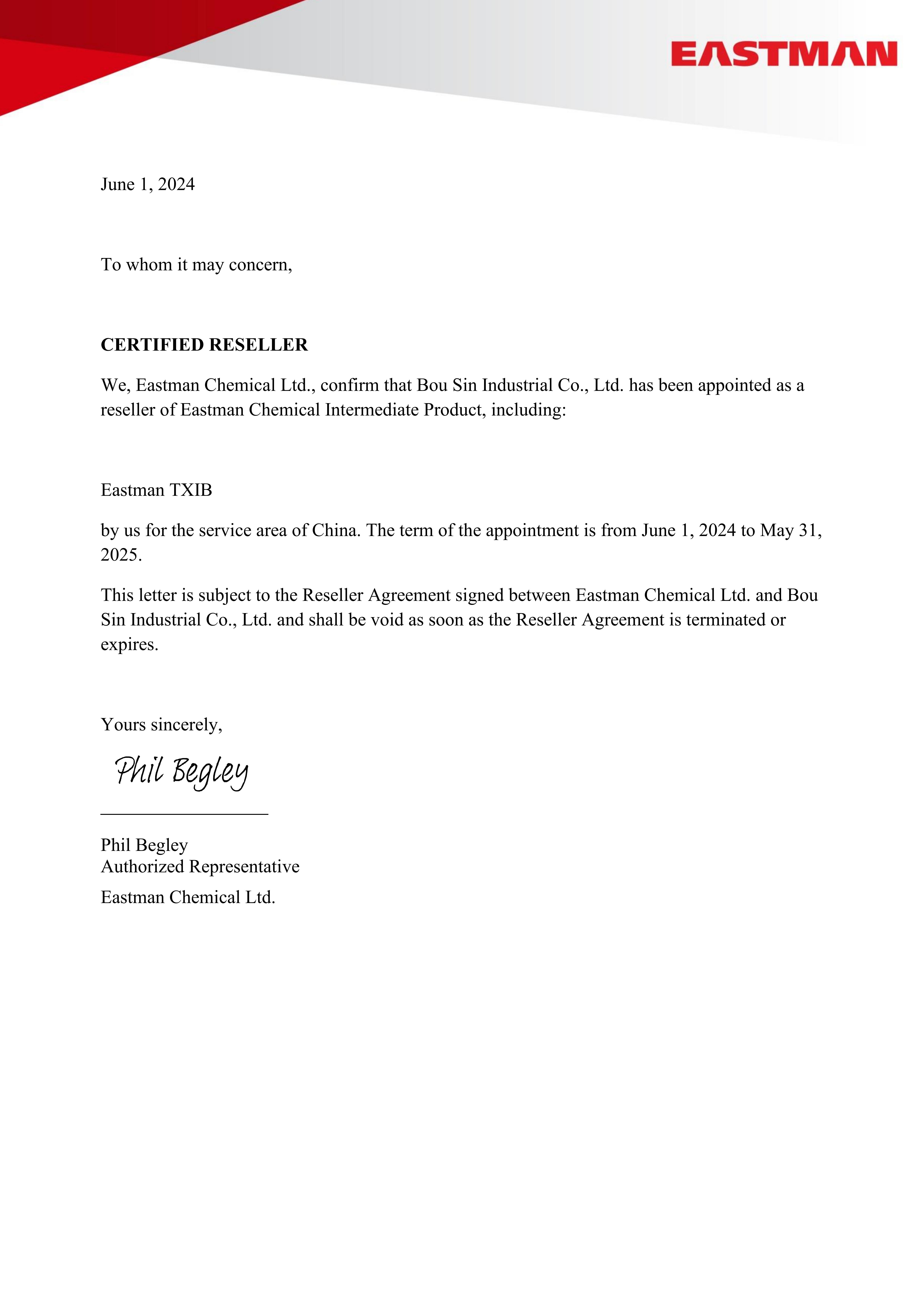
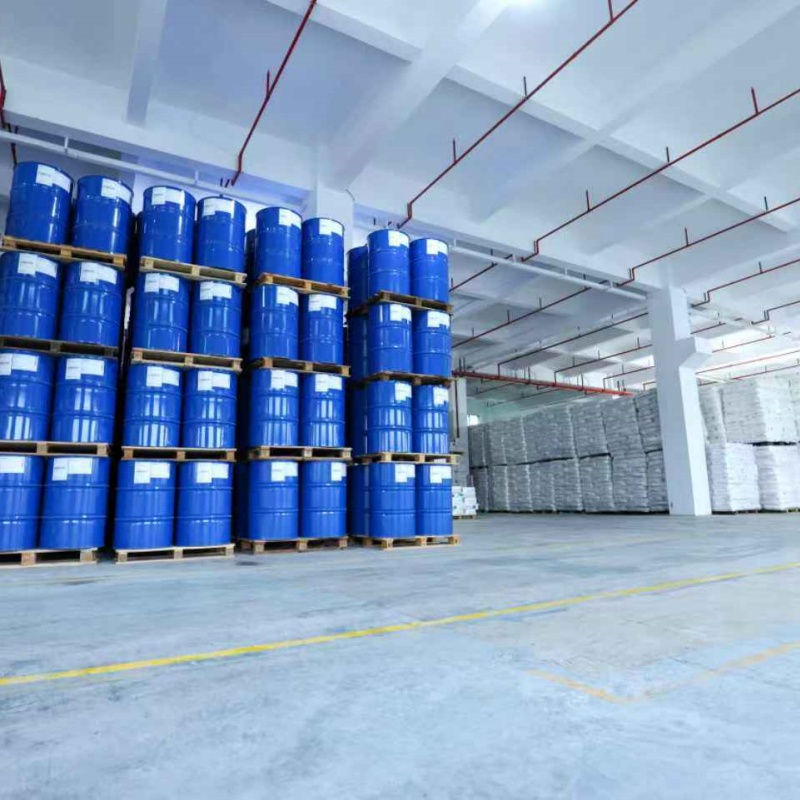
Guangdong Baoshan Trading Co., Ltd. operates at a different layer again. The company is an authorised distributor of BASF Hexamoll DINCH in China and of Eastman TXIB in China, and supplies PVC paste resins, blending resins, eco-friendly plasticizers, viscosity reducers and stabilizers. Its laboratory is equipped with Agilent GC-MS, ICP-MS and Waters LC-MS/MS instruments, and the company provides testing for high-risk substances including phthalates, heavy metals, bisphenol A and organotin. Its warehousing operation includes a 20,000 square metre self-built warehouse and 16 liquid storage tanks, with safety stock of more than three months for bulk European materials.
Where this comparison stops being useful
The limitation is structural rather than commercial. BASF, Eastman and Kaneka generate the primary technical and toxicological data for the substances and polymers they manufacture. Baoshan assembles documents, screens incoming batches and holds stock. Those are different evidentiary functions, and the distributor function cannot originate substance-level data that the manufacturer has not published.
A second boundary is equally important: no distributor-level statement converts a raw-material claim into finished-article compliance. A phenol-free Ca/Zn stabilizer such as CZ-2756 removes one hazard class from the formulation, but it does not by itself guarantee low odour, low fogging or long-term thermal stability in every formulation. Those outcomes depend on the resin grade, the plasticizer-to-resin ratio, the stabilizer loading and the processing temperature profile, and they are established by testing the compound, not by reading the additive datasheet. Likewise, a company's publicly stated application coverage is not a customer reference, a market share figure or independent proof of performance in a specific end product.
The substitution trade-off, stated plainly
Replacing a phthalate with a non-phthalate alternative is not a drop-in transaction, and it is worth saying so. BASF states that Hexamoll DINCH is fully compatible with commonly used PVC plasticizers including DOP, DOTP and DINP and can be mixed in any proportion, with only fine-tuning of processing parameters required, and that its volatility is about 50% lower than DOP with a pour point of minus 54 degrees Celsius against minus 20 degrees Celsius for DOP and minus 48 degrees Celsius for DOTP. ATBC offers a freezing point at or below minus 80 degrees Celsius and a flash point of at least 204 degrees Celsius, which supports cold-flexibility and low-temperature processing positions.
The trade-off is that each substitution shifts the viscosity, gelation and fusion profile of the plastisol, and a formulation that runs cleanly on DOP will not necessarily run cleanly on a lower-volatility alternative without adjusting the viscosity reducer and the stabilizer package. Non-phthalate substitution is therefore a formulation project with a compliance endpoint, not a purchasing swap with a compliance label attached.
Market context: growth in eco-friendly plasticizers is not the same as compliance readiness
The demand signal is measurable. MarketsandMarkets values the global eco-friendly plasticizers market at USD 5.03 billion in 2024, covering bio-based and non-phthalate plasticizers such as DINCH, ATBC and ESBO. DataVagyanik projects that the high-flow PVC powders market for slush molding will reach USD 277 million by 2034, a figure that sits directly against toy and automotive interior demand.
The regulatory signal is firmer than the demand signal. EU Regulation 2023/923, effective 29 November 2024, prohibits PVC articles containing lead above 0.1% by weight. Read together, these two data points describe a market where non-phthalate and heavy-metal-free volume is expanding while the documentation threshold for entry is rising at the same time.
The interpretation that matters for procurement is uncomfortable but useful: as non-phthalate plasticizer supply broadens, plasticizer availability stops being the differentiator. Documentation quality becomes the constraint. Two suppliers offering comparable ATBC or DINCH at comparable prices are not comparable if only one can produce batch-level certificates of analysis, SVHC declarations and finished-article migration reports on request.
Future outlook
Three shifts are likely to shape the next qualification cycle. First, the migration of testing capability downstream: distributors and converters that can screen phthalates, heavy metals, bisphenol A and organotin in-house will shorten the loop between a batch arriving and a compliance answer being issued. Second, the digitisation of the evidence chain, from paper certificates toward batch-linked declarations that a buyer can reconcile against a shipment reference. Third, scope creep in restricted-substance lists, particularly around PAHS screening, where CZ-2756 already carries a stated PAHS pass alongside REACH, RoHS and EN71-3.
None of these shifts removes the underlying rule. A compliance stack is only as strong as the layer a buyer has actually verified. Certificates describe systems, declarations describe substances, and migration reports describe articles. Procurement decisions need all three, attached to the right scenario.
Frequently asked questions
Does ISO 9001:2015 certification mean a PVC material is REACH compliant?
No. ISO 9001:2015 certifies a management system covering process control, traceability, purchasing and corrective action. REACH compliance is a substance-level property of a material and its formulation, evidenced by SVHC screening, safety data sheets and test reports. Baoshan holds ISO 9001:2015 certification under certificate number U23Q2GZ8027959R0S; that certificate covers the quality system and does not certify any specific formulation as REACH compliant.
What is the practical difference between REACH, RoHS and EN71-3 for PVC vinyl materials?
REACH monitors and restricts chemicals on the EU market substance by substance across nearly all product types. RoHS restricts ten substances in electrical and electronic equipment, which makes it relevant to PVC cable sheaths and wire insulation. EN71-3 measures the migration of 18 elements from toy materials using an acidic simulant. The three can overlap for a single article, such as a toy containing an electrical component, but each requires its own evidence and its own test report.
Can one plasticizer serve both food-contact and toy applications?
It can, provided it holds evidence for both regimes. ATBC is stated to comply with REACH, RoHS, FDA and GB 4806 and to meet EN71-3 among toy safety standards, with heavy metals as lead at 10 mg/kg or below and a freezing point at or below minus 80 degrees Celsius. BASF positions Hexamoll DINCH for medical products, toys and food packaging applications. Neither statement removes the need to test the finished article in its final formulation and thickness.
How should a buyer weigh manufacturer documents against distributor documents?
As primary evidence versus secondary confirmation. Manufacturer technical data sheets and regulatory statements define what the substance is and what it has been assessed against. Distributor laboratory results confirm that a delivered batch matches that definition. Where the two conflict, the manufacturer's documentation together with an independent third-party test should govern, and the batch in question should be held pending resolution.
¿Tiene preguntas o necesita más detalles?
Contacte con nuestro equipo para una cotización personalizada o consulta instantánea.
Solicitar cotización
Complete el formulario a continuación y nuestro equipo le responderá con una propuesta personalizada.
Chat directo de WhatsApp
¿Prefiere chatear en tiempo real? Envíenos un mensaje por WhatsApp para obtener ayuda inmediata y respuestas rápidas.
- Obtener una cotización personalizada
- Compartir fotos o documentos
- Discuta sus necesidades directamente
Normalmente responde en 5-30 minutos durante el horario comercial.