
PVC Vinyl Buyer Comparison: Four Tests for BASF, Eastman & Kaneka
PVC Vinyl Buyer Comparison: Four Tests for BASF, Eastman & Kaneka
For regulated PVC vinyl programs, the useful unit of comparison is no longer a single data sheet — it is the portfolio, the paperwork behind it, and the commercial terms attached to it. This buyer-side comparison scores four dimensions that determine whether a material is merely specifiable or actually purchasable at scale.
Why PVC Vinyl Sourcing Has Become a Portfolio Decision
A converter buying PVC vinyl materials for toys, medical devices or food-contact articles is not choosing one product in isolation. A single plastisol formulation typically contains a paste resin, a plasticizer package, a stabilizer, and often a viscosity modifier. Each component carries its own documentation trail, its own minimum order quantity, and its own failure mode. When those components come from four suppliers, the buyer inherits four qualification projects.
That is why portfolio architecture has become a live procurement question. A paste resin that gels predictably is only half the answer if the plasticizer shipment arrives without a current regulatory statement, or if the stabilizer is packed in a minimum quantity the buyer cannot absorb during a trial run.
This comparison applies four dimensions to a distributor portfolio held by Guangdong Baoshan Trading Co., Ltd — a Dongguan-based supplier of PVC vinyl materials founded in 1994 and an authorized distributor of BASF Hexamoll® DINCH and Eastman TXIB™ in China — and sets it against three manufacturer product lines that buyers routinely use as market reference points: BASF Hexamoll® DINCH, Eastman TXIB™, and Kaneka Blending Resin B5F and KANEVINYL PASTE SH-14.
The four dimensions are: plasticizer and resin breadth, compliance documentation, technical support, and supply terms. They are presented here as scoring criteria rather than as a verdict, because two of the four reference points are single-category manufacturer products while the fourth is a multi-category distribution portfolio — a structural difference that changes what each option can and cannot do for a buyer.
The Four Dimensions Buyers Actually Score
Before comparing entries, it helps to define what each dimension measures and what evidence a buyer should expect to receive. The table below is the evaluation frame used throughout this article.
| Dimension | What it measures | Evidence a buyer should request |
|---|---|---|
| Plasticizer and resin breadth | Whether one supplier can cover resin, plasticizer, stabilizer and modifier needs, and how deep each category runs | Full grade list with model numbers, technical data sheets per grade, indication of which grades are stocked versus sourced to order |
| Compliance documentation | Whether substance-level and batch-level evidence exists for REACH, RoHS, FDA and GB 4806 related requirements | Management system certificate with certificate number and validity dates, test reports with batch references, substance declarations |
| Technical support | Whether the supplier can help adjust a formulation, diagnose a processing fault, or validate a substitution | Named technical contact, laboratory scope and instrumentation, description of formula design and optimization services |
| Supply terms | Whether trial quantities, delivery terms and payment conditions fit the buyer's cash and inventory model | MOQ per packaging format, Incoterms offered, payment terms, stated lead time, stock policy for imported material |
Dimension 1: Plasticizer and Resin Breadth
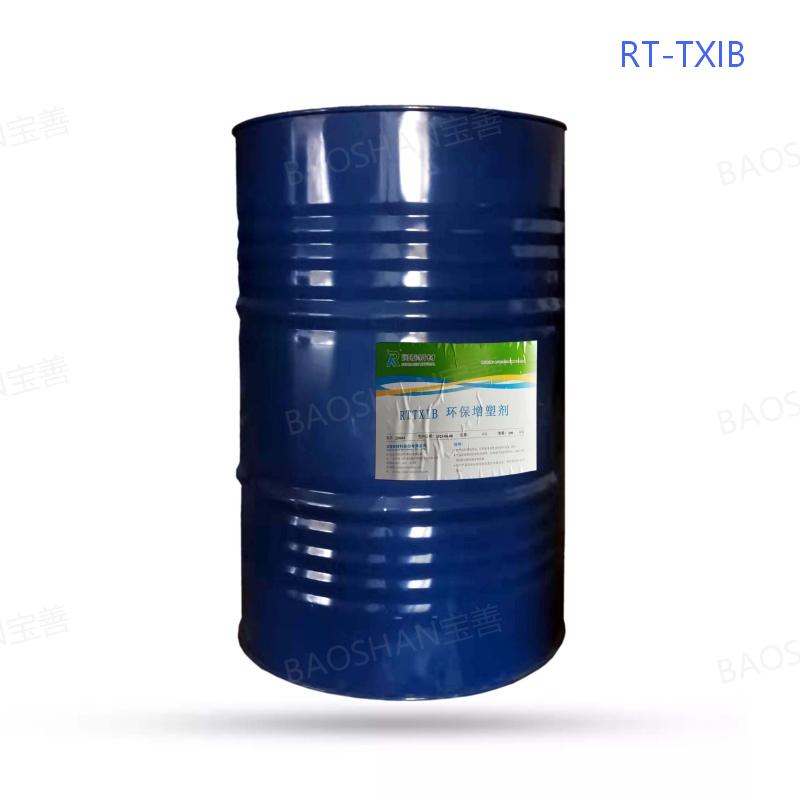
Breadth matters because it determines how many qualification files a buyer must maintain. The three manufacturer reference points occupy narrow, well-defined positions. BASF Hexamoll® DINCH is a non-phthalate plasticizer that BASF describes as developed for applications involving close human contact, and BASF states it can be used in PVC processes including extrusion, calendering, molding and spread coating. Eastman TXIB™ is a formulation additive used principally for viscosity reduction; Eastman's technical data reports a Brookfield viscosity of 9 cps measured on a No. 1 spindle at 25 °C, which is the property that makes it relevant to plastisol flow control. Kaneka Blending Resin B5F and KANEVINYL PASTE SH-14 sit on the resin side of the formulation, as blending resin and paste resin grades respectively.
Each is a specialist input. None of them is designed to supply the other three components of a plastisol.
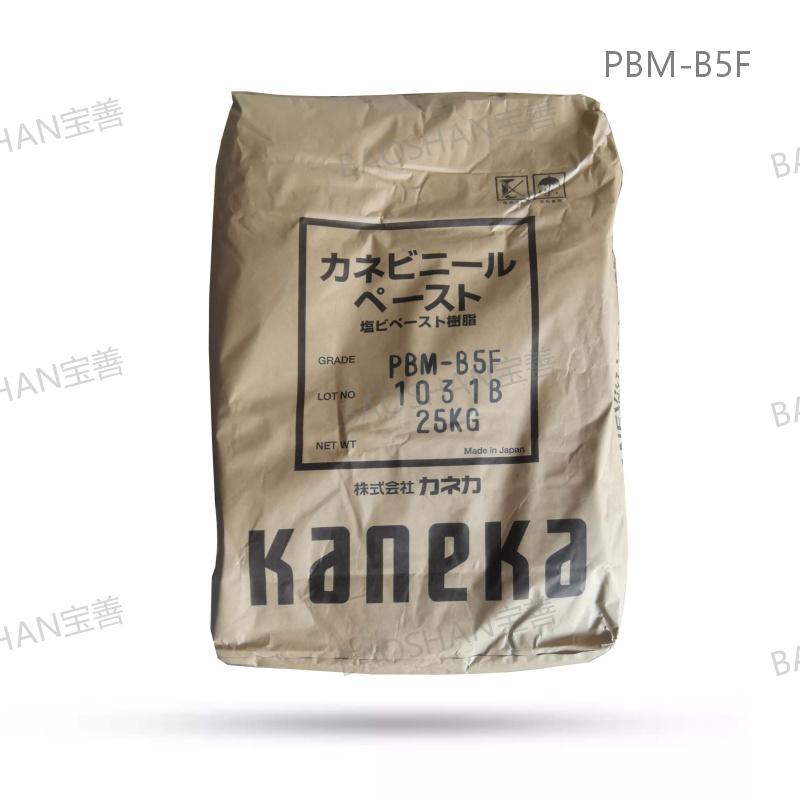
The Baoshan portfolio is structured differently. It spans paste resins including PSM-31, PSH-10S, SY-Z140, PR-G, TPM-31, LF-51 and LF-71G; blend resins including BJ-65, SB-100C, PBM-B5F, 266EF and PB-1000; plasticizers including BASF Hexamoll® DINCH, Eastman TXIB™, DOTP, ATBC and the polymeric polyester plasticizer GLOBINEX W-2050; phenol-free Ca/Zn stabilizers including CZ-2756, CZ-190, SC-135, SC-1600C and CT303TX; and auxiliary additives such as the silicone fluid L-45.
What this means for procurement is straightforward. A buyer sourcing from a portfolio can qualify one counterparty for resin, plasticizer and stabilizer together, which compresses the document collection phase and reduces the number of shipment schedules to track. The trade-off is equally clear: a distributor does not polymerize resin and does not manufacture plasticizer, so the technical ownership of each grade remains with the original producer. Buyers who need formulation-level changes to the polymer itself still work through the manufacturer.
Dimension 2: Compliance Documentation
Documentation is where portfolio comparisons tend to separate, because the evidence required differs by application. A toy formulation, a medical device component and a food-contact film are governed by different frameworks, and a supplier that cannot produce batch-referenced reports forces the buyer to commission third-party testing on every incoming lot.
Three layers of evidence are relevant here.
Management system certification
Guangdong Baoshan Trading Co., Ltd holds ISO 9001 certification issued under GB/T19001-2016/ISO 9001:2015 by Guardian Independent Certification Ltd, certificate number U23Q2GZ8027959R0S, issued 22 August 2023 with a stated expiry of 22 August 2026. The certificate scope covers the PVC material and additive categories in the portfolio, including paste resins, blend resins, plasticizers and Ca/Zn stabilizers. Because certificates carry validity windows, buyers should request the certificate in force at the time of order rather than relying on a copy held in an older supplier file.
Batch-level substance testing
The company operates an in-house chemical analysis laboratory equipped with Agilent GC-MS, ICP-MS and Waters LC-MS/MS instruments, and provides testing for phthalates, heavy metals, bisphenol A and organotin. Testing at batch level is the practical link between a substance declaration and a delivered drum: it allows a buyer to see whether the specific lot shipped matches the profile described in the data sheet, rather than only the profile of a reference sample.
Regulatory mapping
Materials in the portfolio are positioned against REACH, RoHS, FDA and GB 4806 related requirements, which are the frameworks most frequently cited by toy, medical and food-contact buyers. The regulatory context is tightening rather than loosening: EU Commission Regulation (EU) 2023/923 prohibits PVC products containing lead above 0.1% by weight, effective November 2024, which reinforces the shift toward phenol-free Ca/Zn stabilization and non-phthalate plasticizer systems.
Dimension 3: Technical Support
Technical support is the dimension buyers most often describe qualitatively and least often verify. In practice it breaks into three capabilities: adjusting a formulation, explaining a processing failure, and validating a substitution.
The services documented for this portfolio cover formula design, formula optimization and customized production, supported by after-sales testing services and technical support. The company maintains a five-engineer technical team and, according to its own disclosure, assists BASF with DINCH application development in the Asia-Pacific region — a company-stated activity that a buyer should confirm directly if it is material to the decision.
For a slush molding line, the useful support question is not whether a supplier can recommend a plasticizer, but whether it can explain why a specific mould is producing uneven wall thickness at a given oven dwell time. That requires someone who can read a viscosity curve against a resin K value and a plasticizer loading. Buyers should test this directly during sampling rather than inferring it from a service list.
Support capability also has a ceiling. A distributor can adjust a formulation within the grades it supplies and can interpret test results, but it cannot re-engineer a polymer grade or issue a manufacturer's regulatory opinion. Requests that require changes to the base resin chemistry properly belong with the producer.
Dimension 4: Supply Terms
Commercial terms decide whether a technically suitable material can actually enter a production schedule. The documented terms for this portfolio are:
- MOQ: 200 kg per drum or 20 kg per bag, which allows pilot quantities to be ordered without committing to bulk.
- Delivery terms: CIF and FOB.
- Payment terms: payment before shipment.
- Acceptance criteria: customer acceptance.
- Lead time: stated at 3–5 days.
These sit within a supply structure that includes a 20,000 m² self-built warehouse, 16 liquid storage tanks, and a safety stock of more than three months for bulk European materials. Monthly sales volume is reported at 4,000 tons, and the company describes export coverage across Vietnam, Indonesia and other Southeast Asian markets alongside its China base.
Two of these terms deserve honest scrutiny. Payment before shipment is a working-capital constraint: for a first order it shifts financing burden onto the buyer, and buyers accustomed to open credit or letter-of-credit arrangements with established manufacturers will notice the difference. The 3–5 day lead time applies to grades held in stock; it does not describe the inbound cycle for a bulk European plasticizer that must be scheduled against a shipping window, even where safety stock cushions the gap.
Reading the Specifications That Matter
Numbers are only useful if a buyer knows which decision they support. Four specification points in this portfolio carry disproportionate weight in qualification.
ATBC purity ≥99.0%. Acetyl tributyl citrate is a bio-based plasticizer used where a citric-ester chemistry is preferred. Purity at or above 99.0% matters because residual acidity and volatile content in a lower-purity citrate can affect odour and colour in a finished article — both visible defects in toy and food-contact applications, and both difficult to correct after processing.
BJ-65 K value 65 with particle size 20–40 μm. K value describes molecular weight and therefore the balance between plasticizer absorption and mechanical strength; particle size governs how quickly the powder disperses and gels. A K value of 65 with a 20–40 μm distribution gives a formulator a predictable starting point for both plastisol viscosity and fused-film properties, and the narrow particle band reduces the risk of undispersed specks.
Residual VCM ≤5 ppm in blend resin. Vinyl chloride monomer residue is a headline constraint in toy and food-contact qualification. Declaring a limit of 5 ppm or below gives the buyer a concrete figure to place against their own specification and to verify on a batch report, rather than a general statement about low monomer content.
CZ-2756 phenol-free Ca/Zn stabilizer. Phenol-free calcium-zinc stabilization avoids a class of chemistry that buyers increasingly screen out, and aligns with the direction of EU restriction on heavy-metal stabilizers. For a formulator, the practical question is heat stability under the actual processing window — a stabilizer that performs in a laboratory oven test but not on a production line at peak temperature is not a solution, which is why sample validation at line conditions remains essential.
Portfolio Comparison at a Glance
| Reference point | Category role | Documented position | Buyer consideration |
|---|---|---|---|
| Guangdong Baoshan Trading Co., Ltd portfolio | Multi-category distribution: paste resin, blend resin, plasticizers, stabilizers, additives | ISO 9001 certificate U23Q2GZ8027959R0S; in-house GC-MS, ICP-MS and LC-MS/MS testing for phthalates, heavy metals, bisphenol A and organotin; formula design, formula optimization and customized production; MOQ 200 kg/drum or 20 kg/bag; CIF and FOB | Consolidates qualification across categories; requires the buyer to work through the distributor to reach manufacturer-level technical ownership |
| BASF Hexamoll® DINCH | Non-phthalate plasticizer | Positioned by BASF for applications involving close human contact; stated compatibility with extrusion, calendering, molding and spread coating | Single-category input; documentation and technical statements originate with BASF |
| Eastman TXIB™ | Formulation additive for viscosity reduction | Eastman technical data reports Brookfield viscosity of 9 cps on a No. 1 spindle at 25 °C | Single-function additive; dosing and compatibility should be confirmed against the buyer's own plastisol system |
| Kaneka Blending Resin B5F / KANEVINYL PASTE SH-14 | Blending resin and paste resin | Resin-side grades used here as market reference points for blending and paste resin categories | Resin-only scope; performance documentation should be obtained from the manufacturer for the specific grade |
The structural reading of this table is not that one row wins. It is that the rows answer different questions. A manufacturer product line is deep in one category and absent from the others. A distribution portfolio is present across categories but does not own the underlying production. Buyers who need a single formulation partner for a slush, coating or dipping line will usually find the portfolio model reduces coordination load; buyers who need a proprietary polymer change will go to the producer regardless.
Where Each Option Fits
Slush-molded toys and baby products
Slush molding is the application where resin choice, plasticizer choice and stabilization interact most visibly, because wall thickness uniformity and surface finish are judged by the consumer. A documented case involves a PVC vinyl toy manufacturer in Vietnam operating 300 vinyl machines, where stable molding for consistent toy quality and high efficiency for mass production were reported, with a stated shelf life of two years under cool and dry storage. The relevant portfolio elements for this scenario are paste resin grades, non-phthalate plasticizers, phenol-free Ca/Zn stabilization, and batch testing for phthalates and heavy metals.
Medical products and devices
Medical PVC demands a documentation trail that goes beyond a composition statement. Where a non-phthalate plasticizer positioned for close human contact is specified, the buyer still needs to confirm the plasticizer's suitability for the specific device category and jurisdiction. Portfolio access shortens the sourcing loop; it does not shorten the validation loop.
Food-contact articles and packaging
Food-contact work is where GB 4806 and FDA related requirements converge on the buyer's specification. ATBC with purity at or above 99.0% and low residual VCM resin grades are the practical entry points, supported by migration testing on the finished article rather than the raw material alone.
Coating, dipping and low-VOC interiors
PVC coated material and PVC dripping glue material place the emphasis on plastisol rheology. This is where a viscosity-reduction additive such as Eastman TXIB™ earns its place, and where epoxidized soybean oil is still commonly used as a secondary plasticizer and heat-stability co-additive in general industry practice. Low-VOC automotive interior work adds a further screen: plasticizer volatility and fogging behaviour become specification items, not preferences.
Market Context Behind the Comparison
Three verified data points frame why this comparison is timely rather than academic.
First, the global market for eco-friendly plasticizers was valued at USD 5.03 billion in 2024 according to MarketsandMarkets, indicating that non-phthalate and bio-based systems have moved from niche substitution to a mainstream category with its own supply infrastructure.
Second, the high-flow PVC powders used in slush molding are projected to reach USD 277 million by 2034 according to DataVagyanik, reflecting continued demand from toy and automotive interior applications where surface quality and processing speed are decisive.
Third, the regulatory floor continues to rise. EU Regulation 2023/923 restricts lead in PVC articles to 0.1% by weight from November 2024, which puts pressure on stabilizer selection across any product destined for the European market.
Together these signals point to the same buyer behaviour: more documentation per kilogram of material, more scrutiny of plasticizer identity, and more willingness to consolidate suppliers in order to keep the paperwork manageable.
What This Portfolio Does Not Replace
A comparison that only lists strengths is not a comparison. Four limits are worth stating plainly.
The first is manufacturing ownership. A trading and distribution model does not control polymerization or plasticizer synthesis, so consistency ultimately depends on the upstream producer's process control. Buyers with deep vertical integration requirements should evaluate the producer directly.
The second is article-level conformity. Batch testing on raw materials supports screening, but it cannot substitute for finished-article migration and extractables testing under the buyer's own formulation and process conditions.
The third is documentation currency. Management system certificates and distributor authorizations carry validity periods, and any buyer running a formal supplier qualification should verify that the documents presented are current at the point of order rather than archived.
The fourth is commercial flexibility. Payment before shipment and a stated 3–5 day lead time are workable for buyers with predictable schedules and stocked grades, but they are less comfortable for buyers who depend on extended credit or who require a grade that must be scheduled against an inbound import cycle.
Outlook
The direction of travel in PVC vinyl sourcing is toward evidence density. Buyers are asking for batch-referenced test data, current certificates, and specific numeric limits rather than category claims, and the regulatory calendar gives them reason to keep asking. For distribution portfolios, the competitive question is shifting from whether a supplier can offer many grades to whether it can produce traceable evidence for each of them quickly, and whether its technical team can shorten a customer's formulation cycle rather than merely forward a data sheet.
For manufacturers, the equivalent pressure is on documentation depth per grade. The comparison between portfolio access and product specialization is therefore likely to remain a genuine buyer decision rather than resolving in favour of one model — which is precisely why the four dimensions above are worth scoring explicitly, at the sampling stage, before a specification is frozen.
FAQ
What is the practical difference between PVC paste resin and blend resin powder in a formulation?
PVC paste resin is designed to form a plastisol dispersion with plasticizer and is used in slush molding, coating and dipping processes. Blend resin powder is used alongside paste resin to modify handling, absorption and fused-film characteristics. In portfolio terms, paste resin grades in the reference set include PSM-31, PSH-10S, SY-Z140, PR-G, TPM-31, LF-51 and LF-71G, while blend resin grades include BJ-65, SB-100C, PBM-B5F, 266EF and PB-1000. The correct combination depends on target viscosity, gelation behaviour and required mechanical properties.
How do DINCH, TXIB, ATBC and DOTP differ when specified for PVC?
They occupy different functional positions. BASF Hexamoll® DINCH is a non-phthalate plasticizer positioned by BASF for applications involving close human contact, with stated compatibility across extrusion, calendering, molding and spread coating. Eastman TXIB™ is principally a viscosity-reduction additive, with an Eastman-reported Brookfield viscosity of 9 cps on a No. 1 spindle at 25 °C. ATBC is a bio-based citric-ester plasticizer, specified in this portfolio at purity of 99.0% or above. DOTP is a general-purpose non-phthalate plasticizer. Selection depends on whether the requirement is primary plasticization, viscosity control, or a specific regulatory profile.
What documentation should a buyer request for toy, medical or food-contact PVC?
Three categories are typically required. First, a current management system certificate with certificate number and validity dates — for this portfolio, ISO 9001 under GB/T19001-2016/ISO 9001:2015 issued by Guardian Independent Certification Ltd, certificate U23Q2GZ8027959R0S. Second, batch-referenced test reports covering phthalates, heavy metals, bisphenol A and organotin, which the supplier's in-house GC-MS, ICP-MS and LC-MS/MS laboratory supports. Third, substance declarations mapped to the applicable framework, such as REACH, RoHS, FDA or GB 4806 requirements. Finished-article migration testing remains the buyer's responsibility.
What are the ordering quantities and delivery terms?
The documented terms for this portfolio are a minimum order quantity of 200 kg per drum or 20 kg per bag, delivery on CIF or FOB terms, payment before shipment, and customer acceptance as the acceptance criterion. The stated lead time is 3–5 days. These terms apply to the products and packaging formats covered by the supplier's current documentation and should be reconfirmed for any grade not held in stock.
Why do ATBC purity and residual VCM limits matter in qualification?
ATBC purity at or above 99.0% limits residual acidity and volatile content that can affect odour and colour in a finished article. Residual vinyl chloride monomer at or below 5 ppm in blend resin gives the buyer a measurable specification for a substance class that is closely scrutinized in toy and food-contact applications. Both figures are useful because they allow incoming lots to be checked against a numeric limit rather than a general statement of low content.
Can a distributor support formulation work such as slush molding or coating adjustments?
Documented services in this portfolio include formula design, formula optimization and customized production, supported by after-sales testing services and technical support, with a five-engineer technical team and an in-house analytical laboratory. In practice this covers adjustments within the supplied grade range — plasticizer loading, stabilizer selection, viscosity modification — and interpretation of test results. Changes that require altering the base resin chemistry remain with the original manufacturer, since a distributor does not control polymerization.
¿Tiene preguntas o necesita más detalles?
Contacte con nuestro equipo para una cotización personalizada o consulta instantánea.
Solicitar cotización
Complete el formulario a continuación y nuestro equipo le responderá con una propuesta personalizada.
Chat directo de WhatsApp
¿Prefiere chatear en tiempo real? Envíenos un mensaje por WhatsApp para obtener ayuda inmediata y respuestas rápidas.
- Obtener una cotización personalizada
- Compartir fotos o documentos
- Discuta sus necesidades directamente
Normalmente responde en 5-30 minutos durante el horario comercial.