
PVC Panels in Modern Construction: A Buyer's Guide to Material Types and Sourcing
PVC panels have evolved from a low-cost ceiling solution into a versatile category of wall and ceiling cladding used across residential, commercial, and hospitality projects. For importers and distributors, the category now spans PVC ceiling panels, PVC wall panels, PVC marble sheets, self-adhesive wall stickers, and WPC wall panels for both indoor and outdoor applications. Understanding the material differences, typical specifications, and supplier evaluation criteria is essential before committing to a bulk order.
Industry Context: Why PVC Panels Are Gaining Share
The global PVC panels market was valued at approximately USD 14.8 billion in 2025, with PVC wall panels accounting for 42.5% of total market share by product type. Asia-Pacific contributed a dominant 38.4% of global revenue, and China exported roughly 3.82 million tonnes of PVC in 2025, a 46% increase from the previous year. These figures point to a mature supply base concentrated in China, and a growing downstream demand in emerging markets, particularly for decorative wall and ceiling systems.
For building material importers and wholesalers, the practical implication is that the category now offers a range of price and performance points, from economy PVC ceiling strips to UV-coated marble sheets and co-extruded WPC facade panels. The choice of material depends on the end-use environment, installation method, and desired visual outcome, not just on unit price.
Understanding the PVC Panel Product Family
The term “PVC panel” is often used broadly, but the category includes several distinct products with different characteristics. A first step in sourcing is to identify which product family matches the buyer’s target application.
PVC Ceiling Panels
PVC ceiling panels are strip-type panels commonly used in kitchens, bathrooms, and commercial ceilings. They are manufactured from PVC resin, calcium carbonate, and additives, with typical widths of 200mm, 250mm, 300mm, and 400mm, and thicknesses ranging from 6mm to 9mm. In the YIKE product range, models such as YK-200*6mm and YK-300*8mm are representative of this category. PVC content can be customized between 35% and 50%, which affects the panel’s stiffness, impact resistance, and cost.
Surface finishes are available as printing color, hot stamping color, or laminated color. The panels are designed to be lightweight, waterproof, and easy to clean, with a modular snap-on installation system. They are primarily used in interior ceiling decoration, moisture-prone areas, and spaces requiring quick renovation.
PVC Wall Panels
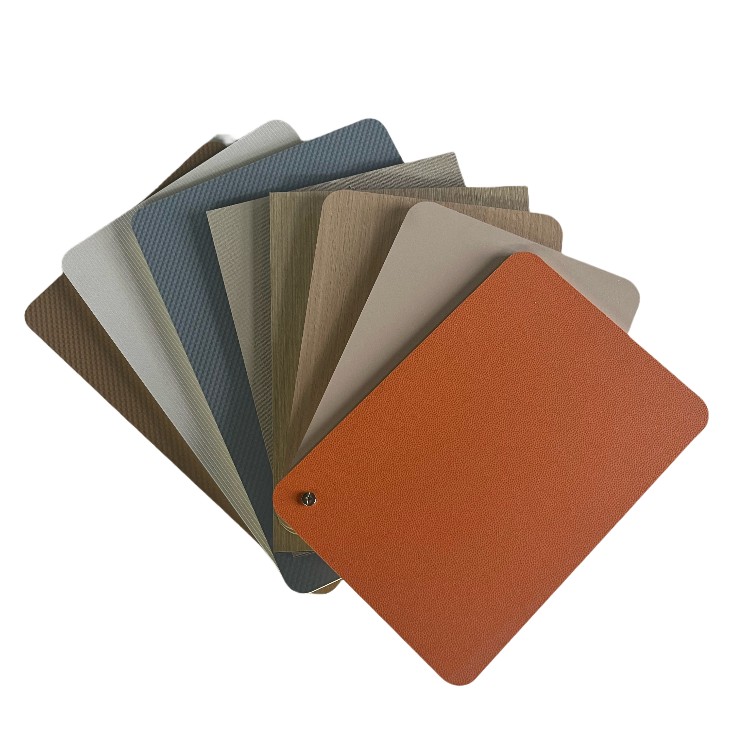
PVC wall panels are larger decorative sheets used for interior wall covering. YIKE offers models in 1220×2440mm and 1220×2800mm sizes, with thickness options of 5mm and 8mm. The material composition is PVC blended with calcium carbonate and additives, and the surface can simulate marble, wood grain, fabric, stone, or metal textures.
These panels are positioned as a lightweight alternative to stone and ceramic wall finishes. They are installed using adhesive, aluminum profiles, or hidden fixing systems, and are suited to walls in living rooms, bedrooms, bathrooms, commercial spaces, and hotel guest rooms. From a procurement standpoint, the large format helps reduce the number of seams and shortens installation time compared to smaller tiles or narrow strips.
PVC Marble Sheets (UV Marble Sheets)
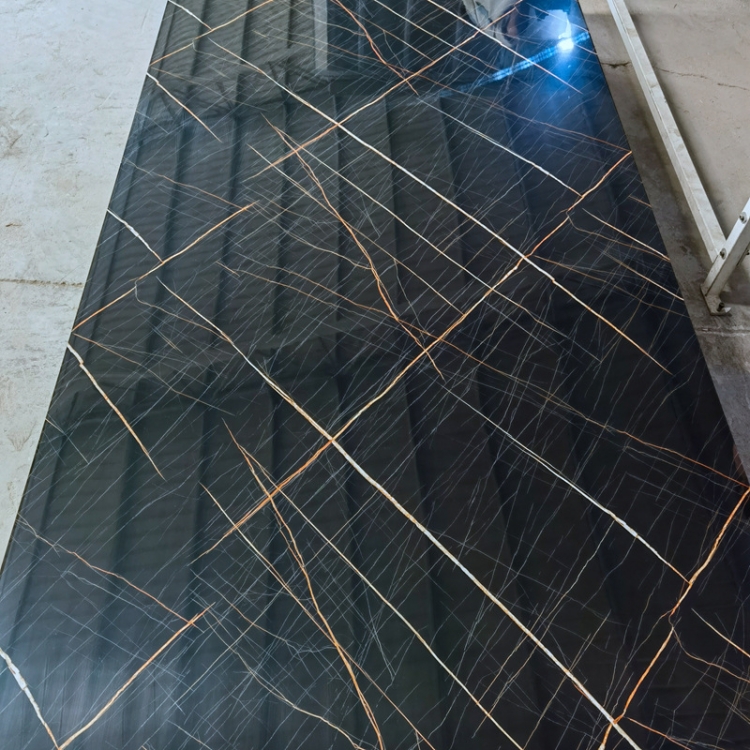
PVC marble sheets are a specific subcategory of PVC wall panels, with a realistic marble surface finished with a UV coating. YIKE lists models such as YK-1220*2440*3mm and YK-1220*2800*2.5mm. Available thicknesses typically range from 2.0mm to 3.0mm, and the sheets can be used in bathrooms, kitchens, TV background walls, and hotel corridors.
Compared to natural marble, these sheets are lighter, lower cost, and faster to install. However, they are designed for indoor use only; prolonged outdoor exposure will cause surface fading and aging. This is an important limitation for buyers to keep in mind when quoting projects for exterior facades.
WPC Wall Panels and Outdoor WPC Wall Panels
WPC (wood plastic composite) wall panels represent a higher-performance tier within the decorative panel category. They combine PVC/PE with wood fiber and additives, producing a denser and more impact-resistant board than standard PVC panels. YIKE’s interior WPC fluted wall panel models include YK-160*20*2900mm and YK-200*20*2900mm. The fluted design is often used for accent walls, TV backgrounds, and modern interior cladding, and installation can be done with clips, screw fixing, or adhesive.
For exterior facades, a separate product line exists: Outdoor WPC Wall Panels. These are manufactured with a wood fiber + HDPE formula and are available with or without a co-extrusion layer. The YIKE outdoor series includes models such as YK-219*26*2900mm and YK-140*20*2900mm. The material is formulated to resist UV radiation, rain, and temperature variations, with a service life generally estimated at 15 to 25 years depending on the environment and installation quality.
These panels are specifically intended for exterior wall cladding, facades, courtyard enclosures, and landscape decoration. Buyers should distinguish clearly between indoor WPC panels and outdoor WPC panels, because the two are not interchangeable in exterior conditions.
PVC Self-Adhesive Wall Stickers
PVC self-adhesive wall stickers are peel-and-stick decorative sheets, typically 2.5mm thick, available in widths of 600mm and 1200mm with a roll length of 3 meters. The YIKE range is offered in marble, fluted, travertine, and 3D effect patterns. These stickers are aimed at the DIY segment: rental properties, quick refurbishment, store displays, and residential accent walls.
Their key advantage is speed of installation, since they require no glue, keel, or special tools. However, they have more restrictive surface requirements than rigid panels: the wall must be flat, clean, and dry, and continuous water contact in shower areas is not recommended.
Choosing the Right PVC Panel for a Project
When selecting a PVC panel or WPC panel for a specific project, the end-use environment is the primary decision factor. The following table summarizes the main applications and suitable product types based on the YIKE portfolio and typical market practice.
| Application Area | Recommended Product | Key Properties to Verify |
|---|---|---|
| Kitchen and bathroom ceilings | PVC Ceiling Panel | Waterproof, moisture-proof, easy to cut |
| Living room, bedroom, office walls | PVC Wall Panel / Bamboo Charcoal Wall Panel | High flatness, surface finish, fire retardant option |
| TV background and feature walls | PVC Marble Sheet / WPC Fluted Wall Panel | UV coating, realistic pattern, anti-scratch surface |
| Hotel corridors and high-traffic interiors | WPC Wall Panel | Impact resistance, moisture resistance, easy maintenance |
| Building facades and outdoor projects | Outdoor WPC Wall Panel | Anti-UV, weather resistance, co-extrusion layer |
| DIY renovation and rental upgrades | PVC Self-Adhesive Wall Sticker | Adhesive strength, removal without residue, pattern definition |
Supplier Evaluation: What Importers Should Check
Because the PVC panel market in China is fragmented, supplier quality varies significantly. Based on procurement experience in this category, importers should evaluate a supplier on multiple dimensions rather than relying on price alone.
Factory Direct vs. Trading Company
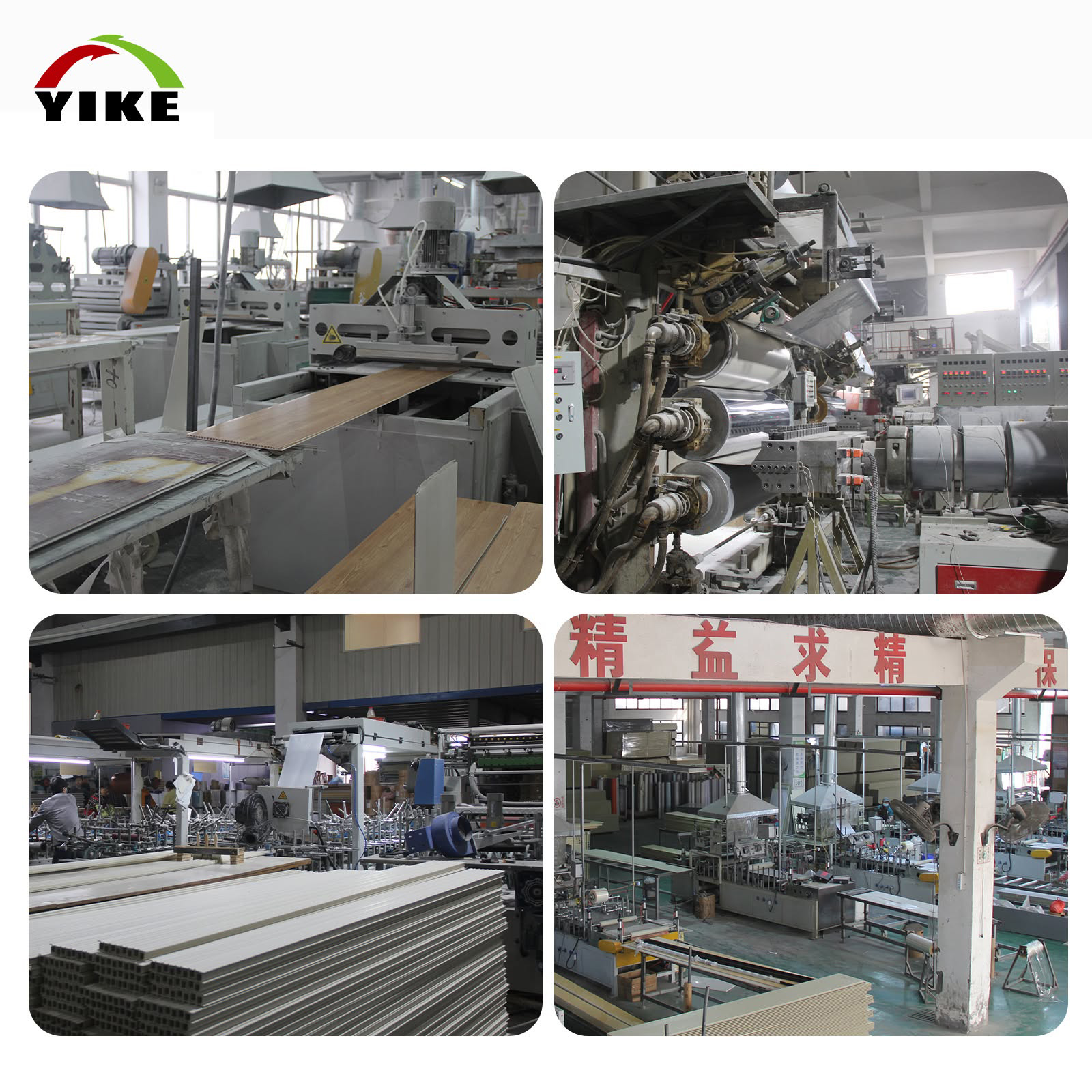
A direct manufacturer typically has better control over material formulation, production consistency, and delivery schedules. The YIKE case is representative of this model: established in 2019, the company operates a 10,000 square meter facility with roughly 50 employees and an annual production capacity of 5,000,000 square meters of decorative panels. R&D is supported by a team of 10 engineers. These figures provide a baseline for understanding the scale of a mid-sized decorative panel manufacturer in China.
Export Experience and Market Fit
Export-oriented suppliers with experience in specific regions are generally better equipped to handle packaging, documentation, and container loading concerns. YIKE reports that approximately 100% of its products are exported, with primary markets in Central America, South America, Southeast Asia, the Middle East, and Africa.
Customization Support
OEM and ODM capabilities matter for importers who want to sell under their own brand, or who require customized sizes, colors, and packaging. Across the YIKE catalog, PVC ceiling panels, PVC wall panels, PVC marble sheets, WPC wall panels, and outdoor WPC wall panels are listed with OEM/ODM support. Customized thicknesses are available for ceilings, wall panels, and marble sheets, and packaging can be adapted between PE film and cartons.
Sample Verification
Before bulk ordering, buyers should request samples and check the product’s surface texture, printing clarity, flatness, edge finish, and, where relevant, adhesive behavior. Sample testing is especially important for PVC self-adhesive wall stickers, where the correct balance between adhesive strength and clean removal is only obvious during physical handling.
Comparison with Traditional Materials
PVC and WPC wall panels are frequently chosen instead of tiles, painted walls, wallpaper, or natural stone. The main trade-offs are well documented in the procurement process.
PVC Panels vs. Ceramic Tiles
Compared to ceramic tiles, PVC wall panels are significantly lighter and faster to install. A large 1220×2440mm PVC panel covers a substantially larger area than a standard tile, reducing the amount of labor and the number of seams. The waterproof property of PVC panels also makes them suitable for bathrooms and kitchens. However, ceramic tiles remain a higher-priced alternative with harder impact resistance and a longer established track record in premium projects.
PVC Marble Sheets vs. Natural Marble
PVC marble sheets are a cost-effective substitute for natural marble in interior decoration. They are lighter, cheaper, and require less maintenance. Yet they do not replicate the tactile feel of natural stone, and long-term exposure to a strong UV environment will affect surface performance.
WPC Wall Panels vs. Traditional Wood Panels
WPC wall panels provide the appearance of wood grain or fluted slats without many of the risks associated with natural timber, such as termite damage, moisture absorption, and regular painting. The WPC material is more stable dimensional in damp environments. However, the raw material cost is higher than that of ordinary PVC panels, and outdoor-grade WPC is a separate, more expensive formulation than indoor-grade WPC.
Market and Regulatory Trends
Several underlying trends are shaping the PVC panel sourcing environment:
- Shift toward composite materials: The global wood plastic composite market is estimated at USD 8.97 billion in 2025, with a projected CAGR of 11.6% from 2025 to 2030. This reflects the broader movement toward WPC products, including wall panels, decking, and fencing.
- Growth of synthetic marble surfaces: Synthetic marble, including PVC marble sheets, is projected to grow at a compound annual rate of 6.8% from 2025 to 2032. This growth is driven by rising demand for marble aesthetics at accessible price points.
- China as the manufacturing hub: China produces approximately 55% of global WPC wall panel volume. For international buyers, this concentration means China is the default sourcing region, but it also means that supplier selection should be based on quality verification and track record, not just location.
- Expanding peel-and-stick segment: The global peel-and-stick wallpaper market reached USD 3.8 billion in 2025, with vinyl segments holding a 48.6% share. This highlights the rising appetite for self-adhesive decorative panels in the DIY and rental renovation segment.
For export-oriented suppliers, compliance is also becoming more important. Fire performance standards such as ASTM E84 in North America and EN 13501-1 in Europe are often referenced in commercial contracts. Buyers should ask for test reports from an accredited third-party laboratory before placing orders for projects that specify flame spread or reaction-to-fire performance.
Future Outlook for PVC Panels in Global Construction
In the medium term, PVC and WPC panels are expected to continue capturing share from wet-trade processes and painted walls, particularly in regions where labor costs for tiling and plastering are rising. The combination of faster installation, lower maintenance, and improved surface realism makes these products attractive for market segments such as hotel renovations, apartment refurbishments, and cost-conscious commercial fit-outs.
On the supply side, the trend toward larger-format panels, co-extrusion technology, and anti-UV surface treatment is likely to continue. Buyers who can distinguish between a low-cost commodity PVC ceiling strip and a high-performance outdoor WPC panel are in a stronger position to serve different end-customer needs and protect margins.
FAQ: PVC Panel Sourcing and Application Questions
It is advised to cooperate with direct PVC ceiling panel manufacturers rather than middlemen. Key checks include raw material quality, relevant international certifications, delivery schedule, and after-sales support. Always test samples before large orders to avoid inconsistent bulk goods.
Work with direct manufacturers that practice strict quality control. Check sheet density, flatness, surface film bonding strength, anti-yellowing performance, and environmental level. Confirm sample quality before bulk orders. This standard suits overseas importers, building material wholesalers, and interior decoration project buyers.
Ask about production capacity, minimum order quantity, lead time, customization options, quality inspection procedures, certifications, packaging methods, warranty, and export experience. These details help you assess whether the manufacturer can meet your business requirements.
Choose a supplier with proven manufacturing experience, strict quality control, and reliable export service. Evaluate product samples, factory certifications, customization capability, customer feedback, and after-sales support to ensure consistent quality and long-term cooperation.
Look for proven export experience, consistent quality, relevant certifications, and customization capabilities. Request samples, check production capacity and project references, and confirm after-sales support. The material should be specifically formulated with anti-UV and weather-resistant additives, ideally with co-extrusion technology.
Prefer direct manufacturers with strict quality control. Check PVC surface texture, adhesive viscosity, anti-yellowing performance, backing release paper quality, and printing clarity. Carry out sample tests on stickiness and easy removal before bulk orders.
Sourcing Considerations for 2026 and Beyond
For buyers planning a bulk order of PVC panels or WPC wall panels, a practical approach is to define the target application precisely, verify the corresponding material properties, and then compare suppliers on manufacturing capability rather than on catalog price alone. The following checklist summarizes the core evaluation points discussed throughout this guide.
| Evaluation Area | What to Check |
|---|---|
| Product specification | Material composition, thickness, size, surface finish, flame retardant grade |
| Manufacturing scale | Factory area, annual output, R&D team size, equipment type |
| Quality evidence | Certificates, test reports, samples, anti-yellowing and waterproof claims |
| Customization | OEM/ODM support, custom size, color, packaging, private label service |
| Export capability | Export ratio, target markets, documentation, container loading experience |
| Cost structure | Sample price, bulk price, freight scale, payment terms, MOQ |
One additional consideration is the growing emphasis on lifecycle performance. A slightly higher initial cost for a UV-stabilized outdoor WPC panel or a denser PVC marble sheet can substantially reduce the risk of fading, warping, and surface damage after several years in service. Buyers serving property developers and hotel chains should weigh this long-term cost against the initial procurement price.
For reference, HAINING YIKE NEW MATERIAL CO., LTD, the manufacturer whose product range is discussed in this article, provides a detailed company brochure at the following link: YIKE New Material Brochure. Buyers are encouraged to use the checklist above when evaluating any supplier, rather than relying on a single information source.