
PVC Non-Phthalate Plasticizers: Certification & Performance Checks
The shift toward non-phthalate plasticizers is one of the most consequential changes in the PVC vinyl materials market today. For buyers evaluating new suppliers or reformulating existing products, the challenge is no longer simply choosing between DOP and DINP. Regulatory pressure, especially around toys, food contact, and medical devices, has made certification traceability and performance parameter verification essential procurement steps. This article explains what those constraints mean in practice, how to verify them, and which technical specifications matter most when assessing environmentally friendly plasticizers for PVC vinyl applications.
Problem / Opportunity: What Hides Behind the “Eco-Friendly” Label
The term “environmentally friendly plasticizer” is used broadly, but not every product with that label meets the same compliance standard. Some are non-phthalate but still contain substances of concern. Others meet basic chemical criteria but fail to deliver the processing behavior required for a specific PVC paste application—such as slush molding or coating.
For a procurement team in Southeast Asia—where toy, medical, and packaging production is expanding—the practical issue is risk. A certificate presented in a sales brochure may not cover the exact product grade being purchased, or the listed parameters may not align with the downstream process. The opportunity lies in using certifications and verified technical data as a decision framework. buyers can turn compliance documents and numeric specifications into clear selection gates before testing begins.
Brand Solution: A Master Distributor with Verifiable Credentials
Guangdong Baoshan Trading Co., Ltd., headquartered in Dongguan, has operated in the PVC supply chain since 1994. The company works as a master distributor for several internationally recognized plasticizer producers, and its product portfolio includes paste resins, blending resins, non-phthalate plasticizers, viscosity reducers, stabilizers, and other additives. Its warehouse and logistics network in southern China supports a regular supply of European bulk materials, with a safety stock of more than three months for key imported grades.
Baoshan holds an Authorized Distributor Certificate for BASF Hexamoll® DINCH, issued by BASF (China) Co., Ltd., with certification numbers BCN-CPA-20140305-1 and BCN-CPA-20150401-1. It also holds an Authorized Distributor Certificate for Eastman TXIB as a high-performing distributor in the China region. In addition, the company is ISO 9001:2015 certified (certificate No. U23Q2GZ8027959R0S). These are not marketing claims; they are audited, time-bound credentials that a buyer can verify with the issuing organizations.
Equally important is in-house analytical capability. Baoshan operates a laboratory equipped with Agilent GC-MS, ICP-MS, and Waters LC-MS/MS instruments, and provides free testing for high-risk substances such as phthalates, heavy metals, bisphenol A, and organotin. For a buyer, this means independent verification of incoming lots is possible before production, rather than relying solely on a supplier's declaration.
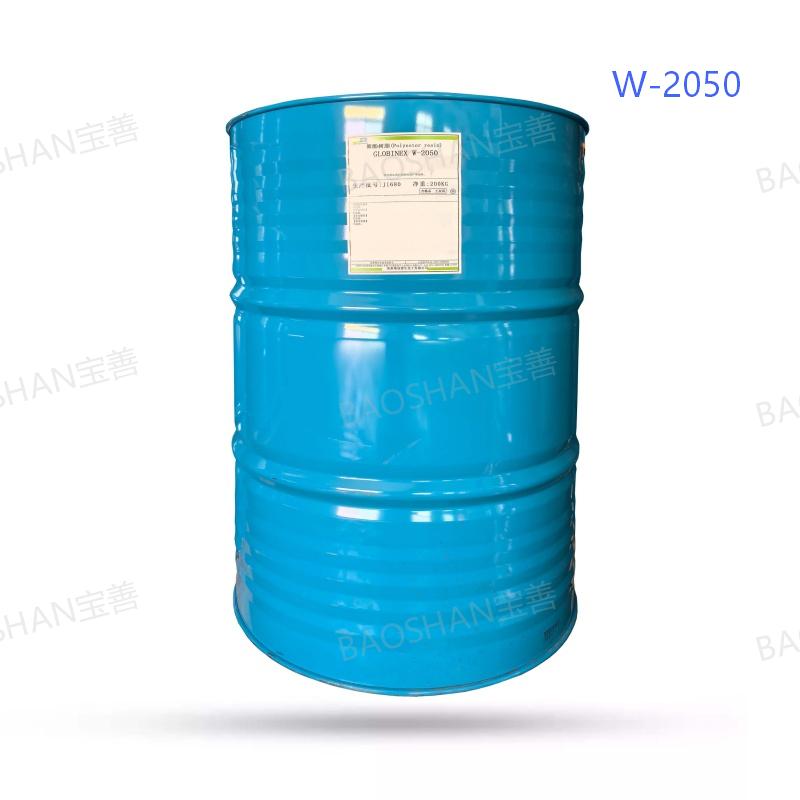
Polymeric polyester plasticizers offer an important low-migration alternative for sensitive PVC applications.
Technical Explanation: Reading the Parameters That Matter
Selecting a non-phthalate plasticizer is not a binary choice. Each product class has a distinct set of strengths and constraints, and these are reflected in measurable parameters. Below are the most relevant types for PVC vinyl sourcing, with the specifications buyers should examine.
BASF Hexamoll® DINCH
HEXAMOLL® DINCH (di-isononyl cyclohexane-1,2-dicarboxylate, CAS 166412-78-8) is a non-phthalate plasticizer widely used in medical devices, food contact materials, and children's products. Key parameters from its technical datasheet include a dynamic viscosity of 44–60 mPa·s at 20°C, density 0.944–0.954 g/cm³, ester content ≥99.5%, and a pour point of -54°C. The low pour point makes it suitable for cold-exposure applications. DINCH also demonstrates low migration and low volatility—volatility is about 50% lower than DOP—and it is compatible with common PVC paste resins such as Kaneka EH251 and Shenyang PSH-10, lowering initial paste viscosity by 10–20%.
DOTP
Dioctyl terephthalate (CAS 6422-86-2) is an environmentally friendly plasticizer often used in wires, cables, and building materials. Its volume resistivity is equal to or greater than 2×10⁹ Ω·m, much higher than DOP, making it a standard choice for 70°C heat-resistant cable formulations. DOTP has a freezing point of approximately -48°C and a flash point above 210°C. However, its low-temperature flexibility is not as good as DINCH, and for extreme cold applications, DINCH is usually preferred.
ATBC
Acetyl tributyl citrate (CAS 77-90-7) is a bio-based plasticizer derived from citric acid. It is non-phthalate, compliant with FDA and GB 4806 food contact standards, and has a freezing point of ≤-80°C. Purity (ester content) is typically ≥99.0%, with an acid value ≤0.2 mg KOH/g. ATBC is particularly effective in food packaging films, bottle cap gaskets, and children's toys. Its main limitation is lower resistance to water extraction compared to DINCH, which can be a consideration in repeated washing or prolonged liquid contact.
Eastman TXIB
TXIB (2,2,4-trimethyl-1,3-pentanediol diisobutyrate, CAS 6846-50-0) is not classified as a primary plasticizer but as a film-forming agent and viscosity reducer. It has the lowest viscosity among flexible PVC additives, around 9 cP at 25°C. TXIB reduces the initial viscosity of PVC plastisols, improves flow and air release, and provides a drier surface. Its low volatility and hydrolysis resistance make it valuable in coating, dipping, and artificial leather production. Because of its low molecular weight, TXIB is typically used in combination with a primary plasticizer, not as a full replacement.
Polymeric Polyester Plasticizers
Polymeric plasticizers such as GLOBINEX W-2050 are known for low migration, solvent extraction resistance, and good electrical insulation. W-2050 has a viscosity of 2300–3500 mPa·s at 25°C, a color of 60 APHA, and an acid value of 0.5 mg KOH/g. It is suited for products requiring long service life and resistance to migration, such as medical tubing or industrial seals. The high viscosity of polymeric plasticizers, however, can raise paste viscosity, so they are often blended with monomeric plasticizers or viscosity reducers.
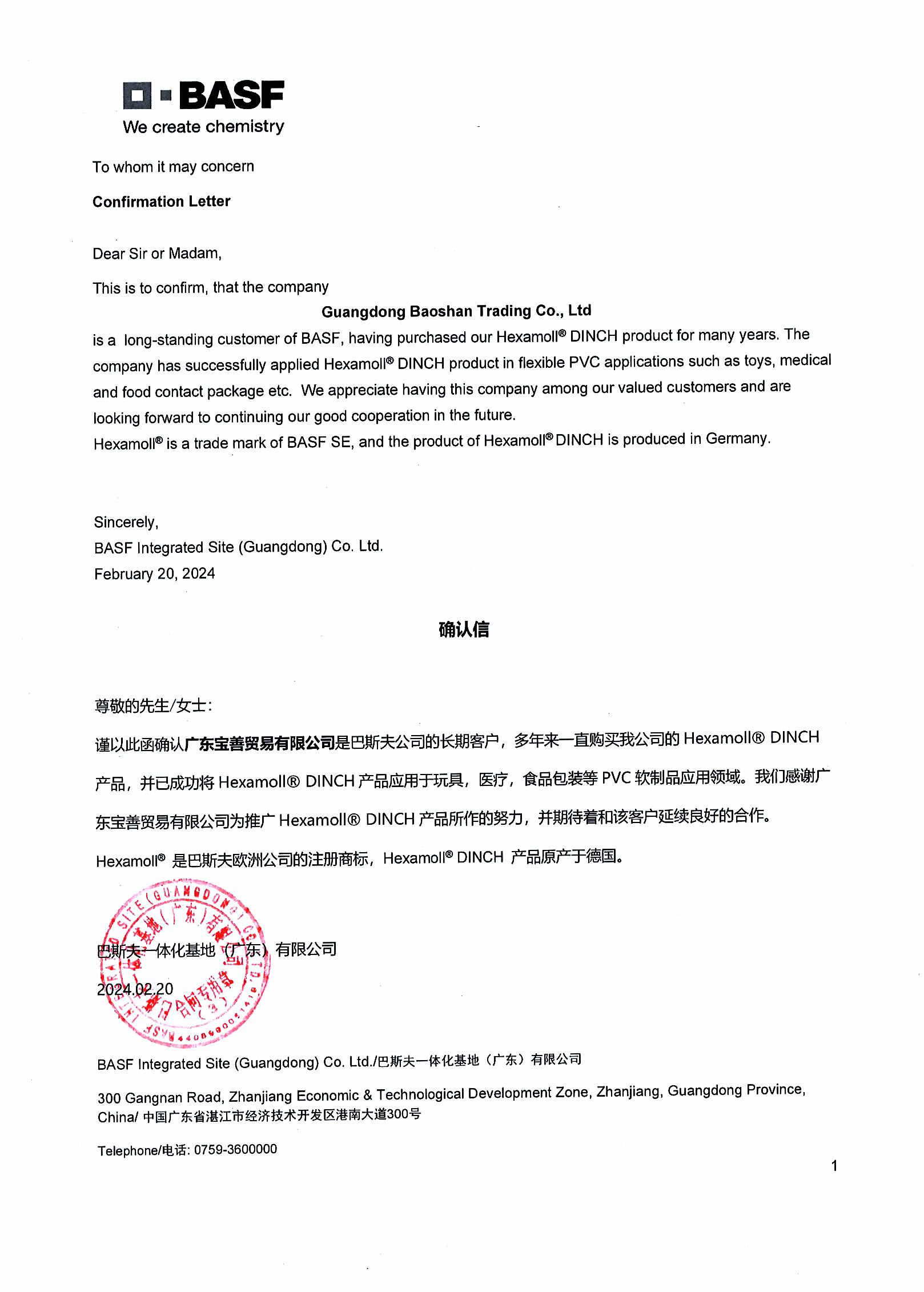
Valid distributor credentials provide traceability for non-phthalate plasticizer sourcing.
Application / Use Cases
The choice among these plasticizers depends on the production process and final product requirements. In PVC slush molding, used to make dolls, toy figures, and hollow articles, a paste resin with stable rheology is essential. Medium-viscosity paste resins such as Kaneka PSM-31 or Shenyang PSM-31 can be formulated with DINCH or ATBC to achieve the required softness and compliance. In these formulations, a stabilizer without phenol—such as a Ca/Zn system like CZ-2756 or CT303TX—is recommended to avoid discoloration and meet EN71-3 requirements.
For coated fabrics and artificial leather, TXIB is often added to control paste viscosity and improve the surface feel. In medical gloves and catheters, DINCH is a common choice because of its toxicological profile. In food bottle cap gaskets, PSH-10S from Kaneka is a paste resin with food-contact grade characteristics; combined with ATBC, it offers high transparency and low migration.
A documented example from the toy sector involves a Vietnamese PVC vinyl toy manufacturer operating 300 vinyl machines. The manufacturer works with Baoshan as a material partner, relying on paste resins, blend resins, stabilizers, and plasticizers that maintain stable molding over a two-year shelf life. The result highlighted in the available case reference is stable production and consistent toy quality.
Market Trend Analysis
Verified market data points to a steady expansion in non-phthalate plasticizer demand. The global eco-friendly plasticizers market was valued at USD 5.03 billion in 2024 and is projected to reach USD 7.55 billion by 2030, at a 7.0% CAGR (MarketsandMarkets). For PVC paste resin specifically, the global market is estimated at USD 2.67 billion in 2024, with Asia-Pacific accounting for over 60% of volume and China for more than 45% of consumption (Market Research Future).
Regulatory pressure is a key driver. Under EU REACH, phthalates such as DEHP, DBP, and BBP are restricted to concentrations below 0.1% in toys and childcare articles. Similar restrictions exist in other markets, pushing manufacturers toward certified non-phthalate systems. As the market grows, buyers will increasingly need verified documentation—not just product names—to support end-user compliance claims.
Comparison with Traditional Solutions
Compared to conventional plasticizers such as DOP and DINP, non-phthalate systems offer clear advantages in compliance and safety. DINCH provides lower volatility and migration than DOP, and it is approved for sensitive uses. DOTP offers superior electrical properties. ATBC adds a bio-based option. However, there are real trade-offs:
- Cost: Non-phthalate plasticizers, especially DINCH and ATBC, typically have a higher unit price than DOP/DINP. This can affect formulation economics, especially in high-volume, low-margin products.
- Low-temperature performance: DOTP remains inferior to DINCH in very cold environments.
- Water extraction: ATBC has lower resistance to water extraction than DINCH, which matters for products subjected to repeated washing or immersion.
- Processing viscosity: Polymeric plasticizers increase paste viscosity; they usually require blending with monomerics or TXIB to maintain good processability.
These limitations do not mean non-phthalate systems are impractical. They mean procurement must be based on a clear understanding of the end-use requirements and process parameters, not on a generalized “green” label.
Future Outlook
The direction of the PVC vinyl materials market is firmly toward lower-risk, low-migration, and bio-based plasticizers. Regulatory timelines will continue to tighten, and end customers in regulated industries will demand full traceability from resin to additive. Suppliers that can offer documented distributor credentials, in-house laboratory verification, and consistent quality across batches will be better positioned to serve exporters and domestic producers in Southeast Asia.
We also expect more formulations to combine two or more non-phthalate plasticizers—for example, DINCH with a polymeric plasticizer to balance migration resistance and low-temperature flexibility, or ATBC with TXIB to control viscosity. The ability to test these combinations before production is a practical advantage, and it is a role that master distributors with laboratory support can increasingly play.
FAQ
What certifications should a PVC vinyl material supplier hold for non-phthalate plasticizers?
A reliable supplier should provide valid distributor certificates from the original producer. For Hexamoll® DINCH, for example, Guangdong Baoshan Trading Co., Ltd. holds a BASF Authorized Distributor Certificate (BCN-CPA-20140305-1, BCN-CPA-20150401-1). For Eastman TXIB, it holds a “Best Partner in Plasticizer Business in China” award as an authorized distributor. An ISO 9001:2015 quality management certification also indicates a basic level of process control.
How can I verify the quality of ATBC for food contact?
Check the datasheet for purity (ester content) of at least 99.0%, an acid value not exceeding 0.2 mg KOH/g, and a heavy metal content below 10 mg/kg. Confirm the ATBC complies with FDA and GB 4806 food contact standards. Independent testing by a laboratory with GC-MS or LC-MS/MS can further verify that phthalates and other restricted substances are absent.
What parameters are most important when selecting DINCH for toy applications?
Look at ester content (≥99.5%), phthalate content (≤0.01%), and the pour point (-54°C). For slush molding, low paste viscosity and viscosity stability over time are important; DINCH has been shown to reduce initial paste viscosity by 10–20% in microsuspension PVC pastes. Also confirm the product is suitable for toys for children under 3 years old, based on EU REACH, RoHS, and national food contact approvals.
Can non-phthalate plasticizers completely replace DOP in all PVC formulations?
No. While DINCH, ATBC, DOTP, and polymeric plasticizers can replace DOP in most regulated applications, each has specific differences in solvation strength, viscosity, low-temperature properties, and resistance to extraction. Full DOP replacement usually requires adjusting process parameters—such as gelation temperature, paste viscosity, and fusion time—and sometimes adding a viscosity reducer like TXIB. A trial with verified materials is always recommended before switching.