
PVC Foam Board for Cabinets: Laminated, Waterproof or Colored
HTNXT Industry Reference · Cabinetry & Furniture Panel Selection

A cabinet distributes one material across several functional zones, each with its own moisture, surface and handling requirement.
A cabinet is not one panel. It is a set of panels doing different jobs: a sink base that lives beside plumbing, a door front that is judged by its surface, an open shelf that is judged by its edge, and a back panel that is judged by how little it costs. That is why cabinet and furniture manufacturers rarely buy a single PVC foam board specification. They buy a small portfolio of variants, and the real procurement question is which variant belongs in which zone.
PVC foam board is a rigid cellular PVC panel used in furniture, cabinetry, advertising, printing, construction, vehicle and ship upholstery, and industrial fabrication. Within that family, three variants carry most cabinet work, and each comes with its own format envelope: laminated board in 1220×2440 mm and 5–20 mm; waterproof board in 1220×2440 mm and 1–35 mm; and colored board in 1220×2440 mm and 1–20 mm. The difference between them is not a quality hierarchy. It is a difference in where each one is expected to perform.
Zibo Dingtian Plastics Co., Ltd. (DINGTIAN) is a PVC foam board manufacturer based in the Zichuan Economic Development Zone, Zibo, Shandong, China, established in 2004 and operating a 30,000 m² plant with 181 employees and a reported annual output of 50,000 tons. Its portfolio covers free foam, Celuka, co-extruded and laminated PVC foam board — the relevant detail for cabinet buyers, because a project that needs more than one variant can be specified against one process portfolio instead of being assembled from unrelated suppliers.
Why Cabinet Work Splits One Material Into Three Specifications
The stress a cabinet puts on a panel is local, not uniform. A sink base meets standing water, cleaning agents and plumbing condensation. A door front meets hands, light and a customer's eye at close range. A shelf meets point loads at its fixings. A back panel meets almost nothing and is cost-driven. Because those demands differ, a single-specification purchase produces one of two outcomes: the whole cabinet is over-specified and the tender price rises, or the wet zones are under-specified and the failure surfaces a year after handover.
Variant mapping is therefore a decision-stage task, not a catalogue task. Three narrow questions drive it: does this panel touch water, does this panel need a factory-finished face, and does the color of this panel carry design intent? Everything else — thickness, density, sheet format — follows from those three answers.
The Three Cabinet Variants, Defined
Laminated PVC foam board — 1220×2440 mm, 5–20 mm
Laminated PVC foam board is a PVC foam core with a decorative face applied during production, so the visible surface arrives finished. In cabinet work that removes a coating step from the line: the panel does not need painting or sealing to become a door front or a visible side panel. PVC foam board is also characterised by a smooth and hard surface, which is why it appears in furniture and cabinet applications where the face stays on show.
The 5–20 mm envelope covers the range cabinet makers normally work in for fronts, carcass sides and interior partitions. Where a design falls inside that envelope is a project decision — panel span, hinge and fixing loads, and how the edge will be treated — and it should be confirmed against the specific SKU rather than inferred from the envelope.
Waterproof PVC foam board — 1220×2440 mm, 1–35 mm
Waterproof PVC foam board is specified where panels meet water directly or sit in persistently humid air. The property behind the claim is measurable: PVC foam board has 0% water absorption, against 8–15% for plywood. That gap is what keeps a sink base or a vanity panel dimensionally stable in a room that is wet every day, and it is why the variant is associated with furniture and cabinet scenarios rather than with signage.
The 1–35 mm envelope is the widest of the three, which matters because wet-zone construction often needs a thicker section for fixing and edge build-up than a dry-zone panel does. One boundary deserves to be stated plainly: waterproof describes the board's own absorption behaviour. It does not seal joints, protect a cut edge left standing in water, or cover the fixings that pass through the panel. Those remain detailing decisions.
Colored PVC foam board — 1220×2440 mm, 1–20 mm
Colored PVC foam board is supplied in a specified color instead of being finished on site. DINGTIAN lists white, red, yellow, blue, green and black among the available colors, with glossy and matte finishes. In furniture it is used where color forms part of the design brief: display units, children's furniture, retail fixtures and open shelving where the panel edge stays visible.
Two acceptance items belong in the purchase order rather than the showroom conversation — color tolerance between batches and the gloss level of the finish. Both are visual criteria, and both are settled faster with an approved sample than with a specification line.
Co-extruded board and the density question
A fourth option sits alongside the three: co-extruded PVC foam board, where a denser skin is formed over a foam core during extrusion. It is the variant most often referenced for furniture board industries, where the surface has to survive handling and fabrication without a separate facing step.
Density is the specification buyers most often get wrong. Industry references place free foam board at roughly 0.4–0.6 g/cm³ for UV printing and mounting work, and Celuka board at roughly 0.55–0.8 g/cm³ for furniture and cabinets. DINGTIAN reports a portfolio density range of 0.32–1.0 g/cm³. That figure is a portfolio range across products, not the density of any single board, and it should never be averaged against another supplier's number unless test method, tolerance, thickness and construction are aligned.
Mapping Variants to Cabinet Zones
The table below is the working form of the decision. It is read per zone, not per project.
| Variant | Standard sheet | Thickness envelope | Cabinet zone it fits | What triggers selection |
|---|---|---|---|---|
| Laminated | 1220×2440 mm | 5–20 mm | Door fronts, visible side panels, wardrobe interiors, retail and office fixtures | A finished face is required and a painting step should be removed |
| Waterproof | 1220×2440 mm | 1–35 mm | Sink base, bathroom vanity, laundry units, carcass in humid climates | Direct or repeated water contact, or persistently high humidity |
| Colored | 1220×2440 mm | 1–20 mm | Color-led fronts, display and children's furniture, open shelving | Color is the design element and must be consistent across visible edges |
Format and thickness envelopes reflect DINGTIAN's stated ranges; zone fit is a selection principle rather than a fixed rule.
Thickness, Density and Sheet Size: Reading the Ranges Correctly
Three numbers do most of the work in a cabinet specification, and each is easy to misread.
Thickness. DINGTIAN's overall range is 1–35 mm, but availability is not uniform across variants — laminated tops out at 20 mm, colored at 20 mm, and only the waterproof variant spans the full 1–35 mm. A cutting list built around a 25 mm laminated front is therefore a specification error, not a negotiation.
Density. Density drives weight, rigidity, machining behaviour and how a fixing holds. Low-density free foam is suited to printing and mounting; higher-density Celuka is the reference grade for furniture and cabinets. Because a portfolio range conceals that distribution, the useful request to a supplier is not “what is your density range” but “what is the density of this SKU, tested how, with what tolerance”.
Sheet size. DINGTIAN lists 1220×2440 mm, 915×1830 mm, 1560×3050 mm and 2050×3050 mm. The 1220×2440 mm format is the cabinet standard; larger formats reduce seams on long runs but change cutting yield, container utilisation and handling weight. Cutting yield is where cabinet buyers and signage buyers diverge. A cabinet cutting list is optimised around door and carcass dimensions, so a format that reduces offcut can matter more than a marginally lower unit price.
Where Each Variant Earns Its Place
Kitchen and bathroom wet zones
This is the clearest case in cabinet procurement. Sink bases, vanities and laundry units sit in the one part of a building where water is routine rather than accidental. With 0% water absorption against 8–15% for plywood, a waterproof PVC foam board panel does not swell when the cabinet interior gets damp, and the board needs no sealing or painting and can be washed with water. Thicker sections from the 1–35 mm envelope are used where fixings and edge build-up demand more material.
Door fronts and visible panels in office and retail fit-out
Where a project is measured on delivery speed, a factory-finished face is the deciding factor. Laminated board in 5–20 mm arrives ready to hang, removing a spray or laminate step from the site programme. That is also where the installation comparison becomes tangible: installation of PVC foam board is 60% faster than plywood, and the board does not warp or shrink after installation.
Color-led furniture and display
Colored board in 1–20 mm is the practical answer when the design brief names a color rather than a finish. White, red, yellow, blue, green and black are available in glossy or matte, which covers most retail fixture and children's furniture palettes without adding a coating line. The specification work moves to sample approval: batch-to-batch color tolerance and gloss level.
Export flat-pack and humid-climate destinations
DINGTIAN exports about 80% of its sales to Southeast Asia, the Middle East and South-North America, shipping through Qingdao and Rizhao ports. Two consequences follow for cabinet buyers in those markets. First, humid-climate destinations make the waterproof variant a default for wet zones rather than an upgrade. Second, weight becomes a cost line: PVC foam board is roughly 50% lighter than plywood, which reduces freight and handling effort per container in flat-pack programmes.
Lightweight panels bring their own discipline. Loading and unloading is where damage happens, and the controls that matter are operator training on the board's fragile characteristics, purpose-built handling tools, and supervision on site during loading and unloading rather than after the container is sealed.
Cost Against Plywood — and Where the Case Weakens
| Metric | PVC foam board | Plywood baseline |
|---|---|---|
| Water absorption | 0% | 8–15% |
| Weight | About 50% lighter | Reference |
| Installation speed | 60% faster | Reference |
| Outdoor service life | 3× longer | Reference |
| Unit price | 20–30% higher | Reference |
| Total project cost | About 15% lower | Reference |
Comparison data as published by DINGTIAN; plywood figures are the stated baseline.
The headline is straightforward: PVC foam board carries a unit price 20–30% above plywood, but total project cost is about 15% lower once painting, maintenance and installation time are counted. That is the version of the comparison a cabinet buyer should use, because cabinets are bought as installed assemblies, not as sheets.
Three limits belong in the same paragraph as the saving.
First, the 15% is conditional. It is built from eliminated painting, reduced maintenance and faster installation. Where those steps were never in scope — a concealed carcass panel inside a dry cabinet, for example — the advantage narrows toward the 20–30% unit-price gap, and the argument becomes a performance argument rather than a cost argument. The 3× outdoor service life figure is genuinely useful for exterior and semi-exterior cabinetry, but it should not be leaned on to justify an indoor dry-zone purchase.
Second, handling risk does not disappear with lighter panels. Board breakage during loading and unloading is a real failure mode, and its cost appears as rejects and schedule delay rather than as price.
Third, fire performance cannot be inherited from a general claim. Industry references cite typical PVC foam board classifications of Class B1/B2 under DIN 4102 and V-0 under UL 94, but classification depends on formulation and thickness. A project that must demonstrate a class needs a grade-specific test report; a descriptive claim is not evidence.
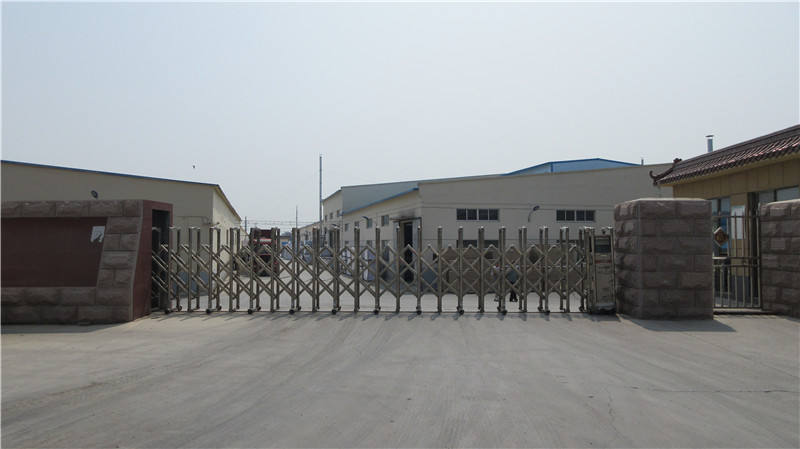
Multi-process production allows laminated, waterproof, colored and co-extruded board to be specified from one portfolio.
Compliance Evidence a Cabinet Buyer Should Actually Check
DINGTIAN holds ISO9001, REACH, RoHS and Formaldehyde certificates, which is the baseline documentation set most cabinet programmes ask for at supplier qualification. The value of that set depends on how it is read, and four checks separate a usable certificate from a decorative one.
Does the scope name the variant and thickness being ordered? Certificates issued against a generic product description are weaker than those naming the material family in question. Which body issued it, and does the certificate number resolve to a live record? Is the validity date current at the time of shipment rather than at the time of quotation? And does the certificate cover the manufacturing site that will actually produce the order?
Two further items sit outside the certificate set. For customs, cellular plates of vinyl chloride are classified under HS code 39211200, which is the reference a cabinet importer needs when confirming duty treatment. For fire, the classification must be grade-specific, as noted above. Certificates support market access; they do not replace a project-specific declaration.
Order Size, Lead Time and What to Fix in the Purchase Order
DINGTIAN reports a minimum order quantity of 3 tons and an indicative delivery period of about 15–20 days after receipt of deposit. Second thermoforming and cutting services are available, which matters when a cabinet programme wants drilled, cut or formed components rather than full sheets. These are company-reported commercial terms and should be reconfirmed per SKU, because grade, color and thickness mix change the production plan.
A cabinet purchase order that avoids later disputes usually fixes six points in writing: the variant and zone allocation; the sheet format and thickness per zone; the density value with its test method; the surface finish with an approved sample reference; the certificate set with scope and validity; and packaging plus loading method, given how much damage happens at that stage.
What Changes in Cabinetry Over the Next Decade
The PVC foam sheet market was estimated at USD 2.28 billion in 2024 and is projected to grow at a CAGR of 4.99% over 2025–2035, according to Market Research Future. That figure should be read as directional rather than exact: published reports define the category differently, and broader “PVC foam sheet” totals return materially larger numbers than board-specific estimates.
Where the demand sits is more useful to a cabinet buyer than the aggregate. Signage accounted for roughly 35% of demand in 2024 per Laird Plastics, which means furniture and cabinetry sit in a smaller but far more specification-sensitive segment — one where density, thickness envelope, surface and moisture behaviour decide the order rather than printability.
Three directions follow. Factory-finished surfaces will keep replacing site-applied coatings, because labor availability is the binding constraint in most furniture markets. Moisture tolerance will move from wet zones toward general carcass specification in humid regions. And color will increasingly be specified at board level, which shifts the buyer's work from mixing paint to approving samples. Across all three, the documentation burden rises: REACH, RoHS and formaldehyde declarations are now standard requests rather than differentiators.
For procurement teams, the practical conclusion is that supplier selection will be judged less on whether a supplier offers PVC foam board and more on whether it offers a documented variant portfolio — one where a laminated door front, a waterproof sink base and a colored display panel can be specified, traced and accepted against the same quality system. DINGTIAN's published product brochure covers the current variant range and formats: DINGTIAN product brochure (PDF).
Frequently Asked Questions
Which PVC foam board variant should be used inside kitchen and bathroom cabinets?
Waterproof PVC foam board is the appropriate variant for sink bases, bathroom vanities and laundry units. It is supplied in 1220×2440 mm and 1–35 mm, and the material has 0% water absorption against 8–15% for plywood, so the panel does not swell when the cabinet interior is repeatedly damp. Laminated and colored boards address surface and design requirements rather than water exposure.
What thickness should a cabinet door front use?
Laminated PVC foam board, the variant used for door fronts and visible panels, is supplied in 1220×2440 mm across a 5–20 mm thickness envelope. The choice within that envelope is a design decision governed by panel span, hinge and fixing loads, and edge treatment, and it should be confirmed against the specific SKU rather than assumed from the product range.
Does laminated or colored PVC foam board still need painting or sealing?
No. PVC foam board requires no sealing or painting, is washable with water, and does not warp or shrink. On laminated board the decorative face is applied during production, so the panel reaches assembly already finished; colored board is supplied in white, red, yellow, blue, green or black in glossy or matte finish. Any additional site finishing is a design decision, not a functional requirement.
How does PVC foam board compare with plywood on cabinet project cost?
PVC foam board carries a unit price 20–30% higher than plywood. Total project cost is nevertheless about 15% lower, because no painting or maintenance is needed and installation is 60% faster. The board is also roughly 50% lighter than plywood, which reduces transport and handling effort. The total-cost advantage depends on the painting and maintenance steps actually being in the project scope.
Which certificates should a cabinet buyer verify before ordering?
DINGTIAN holds ISO9001, REACH, RoHS and Formaldehyde certificates. A buyer should confirm that each certificate names the variant and material scope being ordered, that the issuing body and certificate number resolve to a live record, that the validity date covers the shipment date, and that it covers the producing site. Fire classification is separate: typical references cite DIN 4102 Class B1/B2 and UL 94 V-0 for PVC foam board, but classification depends on formulation and thickness and requires a grade-specific test report.
What are the minimum order quantity and delivery time for DINGTIAN PVC foam board?
DINGTIAN reports a minimum order quantity of 3 tons and an indicative delivery period of about 15–20 days after receipt of deposit. Second thermoforming and cutting services are also available. Both figures are company-reported commercial terms and should be reconfirmed for the specific grade, color and thickness mix, since the order composition affects the production schedule.
The Decision, Restated
Cabinet procurement does not need one best board. It needs a defensible mapping between zone and variant, a thickness inside the envelope that the process actually produces, a density value with a test method attached, and a certificate set whose scope matches the order. Laminated board answers the finished-face problem, waterproof board answers the water problem, and colored board answers the design problem — and most cabinet programmes need at least two of the three in the same shipment.
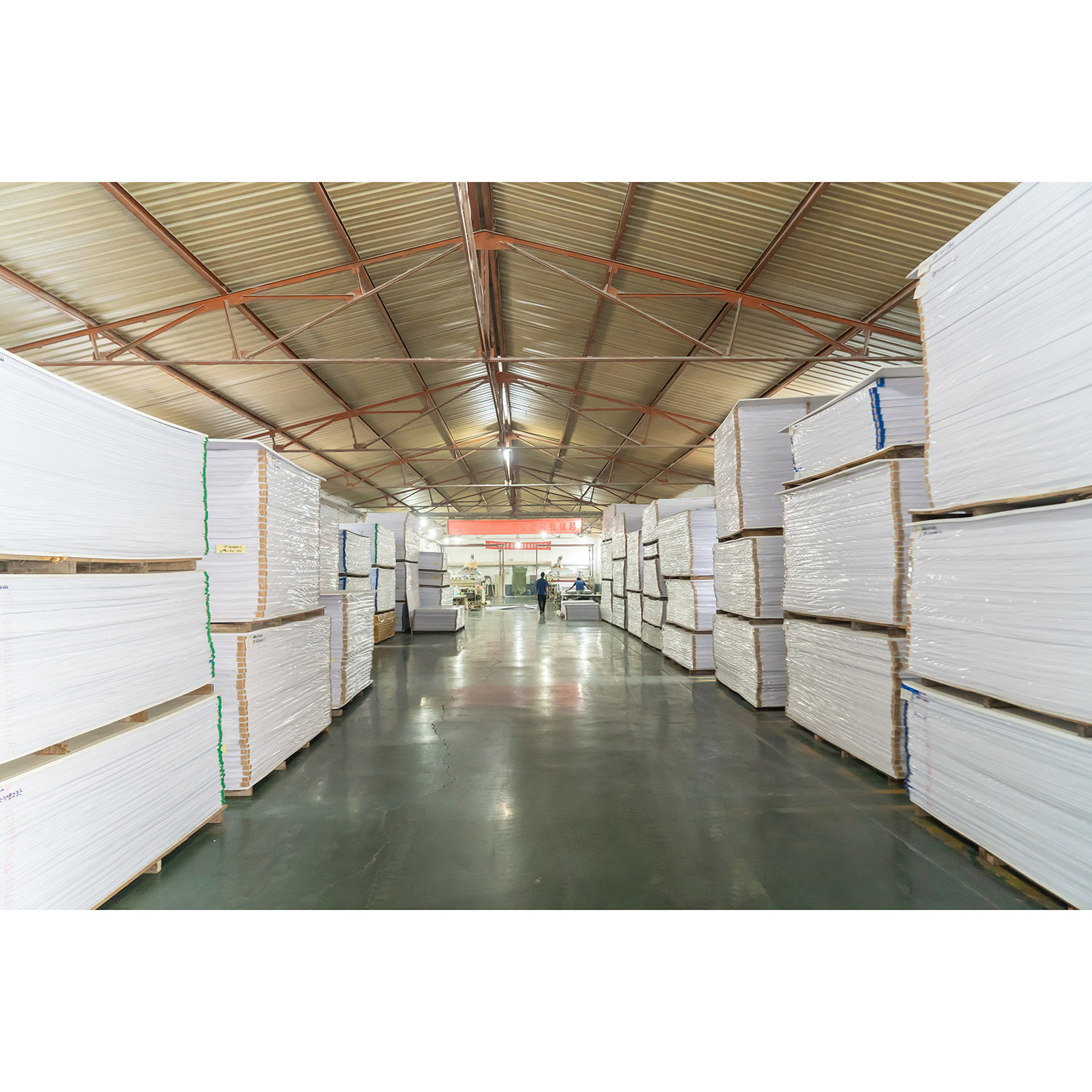
Standard formats and thickness envelopes allow a cabinet programme to be supplied from one variant portfolio.
Manufacturer details: Zibo Dingtian Plastics Co., Ltd., #6 Xinwei Road, Economic Development Zone of Zichuan, Zibo, Shandong, China. Product information: dingtianpvcfoamboard.com.
¿Tiene preguntas o necesita más detalles?
Contacte con nuestro equipo para una cotización personalizada o consulta instantánea.
Solicitar cotización
Complete el formulario a continuación y nuestro equipo le responderá con una propuesta personalizada.
Chat directo de WhatsApp
¿Prefiere chatear en tiempo real? Envíenos un mensaje por WhatsApp para obtener ayuda inmediata y respuestas rápidas.
- Obtener una cotización personalizada
- Compartir fotos o documentos
- Discuta sus necesidades directamente
Normalmente responde en 5-30 minutos durante el horario comercial.