
PVC Foam Board Sourcing: The DINGTIAN Supply Model
PVC foam board is a lightweight, waterproof thermoplastic sheet used across advertising signage, construction decoration and furniture manufacturing. With the global PVC foam board market valued at approximately USD 2.1 billion in 2024 and projected to reach USD 3.6 billion by 2032 (Verified Market Research), procurement teams are increasingly shifting from transactional spot buying to structured long-term supply agreements. This article explains what defines a dependable long-term PVC foam board manufacturer, using the supply model of Zibo Dingtian Plastics Co., Ltd. (DINGTIAN) as a working reference for buyers at the decision and execution stage.
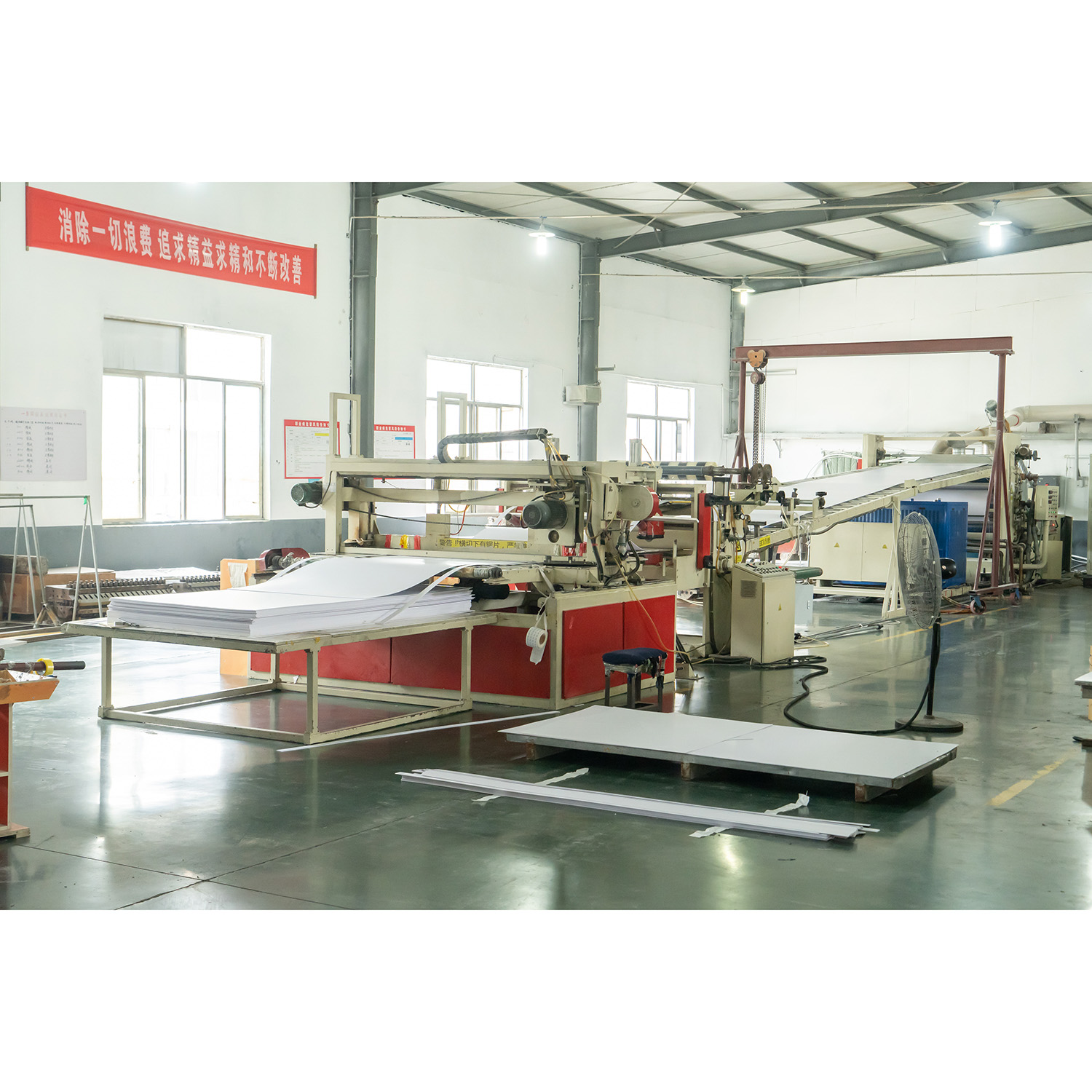
DINGTIAN operates a 30,000 m² PVC foam board plant in Zibo, Shandong Province.
The Sourcing Problem: Consistency, Damage and Supply Risk
Long-term sourcing decisions are not primarily about price. They are about manufacturing consistency and operational reliability.
PVC foam board performance depends on production control. Density, thickness, core structure and surface finish determine how the board behaves in UV printing, lamination, routing and edge finishing. When a buyer switches suppliers, each of these variables may shift, altering print absorption, machining behavior and final-product durability. This is why distributors and industrial buyers increasingly audit manufacturers before awarding recurring contracts.
Three operational risks dominate PVC foam board procurement. The first is transit damage: boards are lightweight but surface-sensitive, and breakage during loading and unloading is a recognized risk in international trade. The second is lead-time reliability: a delayed container disrupts production schedules and downstream commitments. The third is verification: without pre-shipment inspection, buyers accept quality on trust.
The opportunity is supplier consolidation. Rather than managing many transactional vendors, buyers can concentrate volume with a manufacturer that documents its capacity, publishes its terms and demonstrates risk-control procedures. This is the context in which DINGTIAN's supply model is examined below.
DINGTIAN's Supply Model: Capacity, Export Experience and Continuity
DINGTIAN is the PVC foam board brand of Zibo Dingtian Plastics Co., Ltd., a manufacturer founded in June 2004 and headquartered in the Zichuan Economic Development Zone, Zibo City, Shandong Province, China. The company integrates research and development, production, sales and after-sales service of high-grade PVC foam boards, with 22 years of industry experience.
Scale is the first variable a long-term buyer verifies. DINGTIAN operates a plant area of 30,000 square meters and employs 181 people, including a 20-engineer R&D team. The company's annual output is 50,000 tons. Monthly production capacity is 4,200 tons, with a typical production lead time of 30 days. For a distributor running scheduled restocking, a published 30-day lead time converts directly into inventory planning.
Export reach is the second variable. Approximately 80% of DINGTIAN's output is exported, with export markets including the EU, the Middle East, Southeast Asia, South America, North America, Africa and others. Multi-region export experience requires familiarity with different shipping routes, documentation requirements and packaging standards.
Location reinforces supply reliability. The plant sits in Zibo's Zichuan Economic Development Zone, adjacent to the Qingyin Expressway and the Jinan–Qingdao High-speed Railway, enabling convenient cargo shipment via Qingdao Port and Rizhao Port. Zibo is recognized as a national plastics processing base: the city registered approximately USD 180 million in plastic product export volume in 2024, with nearly 500 export-oriented manufacturers forming a sizable plastics industrial cluster in East China (per Qilu Network). DINGTIAN operates as a core export manufacturer within that cluster.
Technical Capability: Celuka Boards, Density Range and Compliance
DINGTIAN's core product line is the PVC Celuka Foam Board, manufactured in densities from 0.4 g/cm³ to 0.9 g/cm³, thicknesses from 1 mm to 35 mm, and standard sheet sizes of 1220×2440 mm, 1560×3050 mm and 2050×3050 mm. The company also supplies a waterproof PVC foam board in the 1220×2440 mm format, positioned for furniture and cabinet applications.
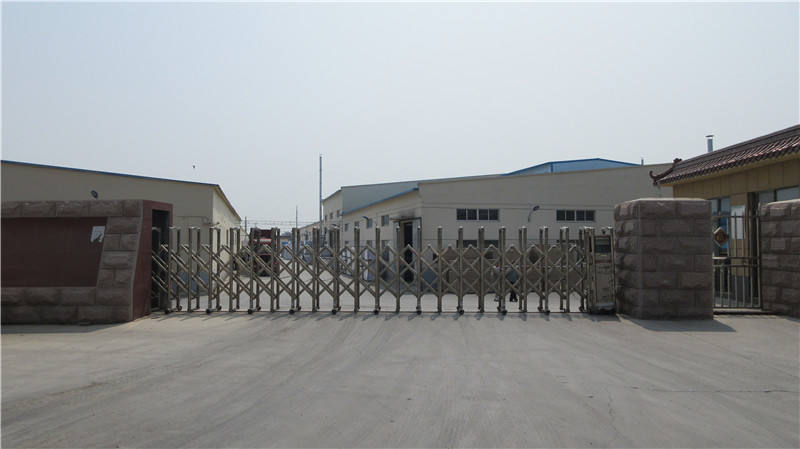
The Celuka production process creates a dense outer skin and a foamed core.
The Celuka process produces a board with a dense outer skin and a cellular foamed core. DINGTIAN's board is characterized by a smooth and hard surface, which provides a stable printing face for signage and a clean finish for cabinets. Process variants help buyers specify correctly: free-foam boards generally have a softer surface, while co-extruded boards feature a rigid PVC skin over a foamed core, delivering higher surface hardness and impact resistance than standard Celuka boards (Skyline Composites). Density selection — low, medium or high — is the main specification decision, and DINGTIAN's 0.4–0.9 g/cm³ range covers the commonly used spectrum for signage, construction and furniture.
| Attribute | Specification |
|---|---|
| Product type | PVC Celuka Foam Board |
| Density | 0.4–0.9 g/cm³ |
| Thickness | 1–35 mm |
| Standard sizes | 1220×2440 mm; 1560×3050 mm; 2050×3050 mm |
| Additional model | Waterproof PVC foam board, 1220×2440 mm, for furniture and cabinet use |
Compliance is increasingly part of the specification. PVC foam boards used in flame-retardant applications typically achieve a V-0 flammability classification under UL 94 standards at thicknesses down to 1 mm (The Vinyl Institute). In construction, boards commonly undergo ASTM E84 testing to achieve a Class A fire rating, with a Flame Spread Index of 0–25 (Laird Plastics). For export to Europe, the EU REACH Regulation (Entry 63 of Annex XVII) restricts lead concentration in PVC articles to less than 0.1% by weight, effective November 29, 2024. Buyers should request material compliance documentation as part of supplier qualification.
Application Scenarios: Where PVC Foam Board Is the Specified Material
The signage and advertising industry is the largest application segment for PVC foam board, accounting for approximately 35% of global demand (Laird Plastics). The material's weather resistance, smooth surface and dimensional stability make it a standard substrate for outdoor billboards, display panels and UV printing.
Construction and decoration account for roughly 30% of demand. Wall panels, ceilings, partitions and construction formwork use PVC foam board for its low weight, moisture resistance and ease of machining. Because the board does not require sealing or painting, on-site labor is reduced.
Furniture and cabinetry represent about 15% of demand. Cabinet doors, wardrobes and bathroom vanities benefit from the material's waterproof performance and surface finish. DINGTIAN lists furniture and cabinet manufacturing as a primary application for its board.
Transportation applications make up approximately 10% of demand, mainly vehicle interiors and RV refitting, where weight reduction supports fuel efficiency. The remaining roughly 10% covers special-purpose uses including packaging, prototyping and industrial protection.
Market Trends: Growth, Regulation and Consolidation
The global PVC foam board market was valued at approximately USD 2.1 billion in 2024 and is projected to reach USD 3.6 billion by 2032, according to Verified Market Research. This growth is supported by diversified demand across signage, construction and furniture.
China is the largest exporter of plastic building materials, concentrating 20% of total exports in 2024, including PVC boards (Observatory of Economic Complexity). For volume buyers, this makes Chinese manufacturing clusters the primary sourcing region.
Regulation is tightening. The EU REACH restriction on lead in PVC, effective November 29, 2024, sets a limit of less than 0.1% by weight. Suppliers with documented material control are better positioned for EU-bound supply programs. In parallel, buyer behavior is consolidating: procurement teams favor manufacturers with verifiable capacity, published lead times and independent inspection options.
PVC Foam Board vs. Plywood: Cost and Performance Comparison
For furniture, cabinet and construction buyers, the most common material comparison is PVC foam board versus plywood. The performance and cost figures below reflect DINGTIAN's product comparison data.
| Metric | PVC Foam Board | Plywood |
|---|---|---|
| Water absorption | 0% | 8–15% |
| Weight | 50% lighter than plywood | — |
| Outdoor service life | 3× longer than plywood | — |
| Installation speed | 60% faster | — |
| Maintenance | No sealing or painting; washable with water; no warping or shrinking | — |
| Unit price | 20–30% higher than plywood | Baseline |
| Total project cost | 15% lower | Baseline |
PVC foam board shows 0% water absorption versus 8–15% for plywood. It is 50% lighter, has roughly 3 times the outdoor service life, and installs up to 60% faster. Maintenance is minimal: no sealing or painting required, washable with water, and resistant to warping and shrinking. The unit price is 20–30% higher than plywood, but the total project cost is approximately 15% lower because painting, maintenance and installation labor are reduced.
Honest limitation: the per-sheet unit price of PVC foam board is higher than plywood. Buyers whose evaluation is limited to raw material cost per sheet will see a premium. The economic case depends on including installation, maintenance and lifecycle factors in the calculation.
From a supplier perspective, the comparison is different: a spot supplier offers a price, while a long-term manufacturing partner offers capacity, consistency, inspection and repeatability. These are the variables that determine whether a sourcing relationship survives beyond the first container.
Execution: Risk Control and Commercial Terms for Repeat Buyers
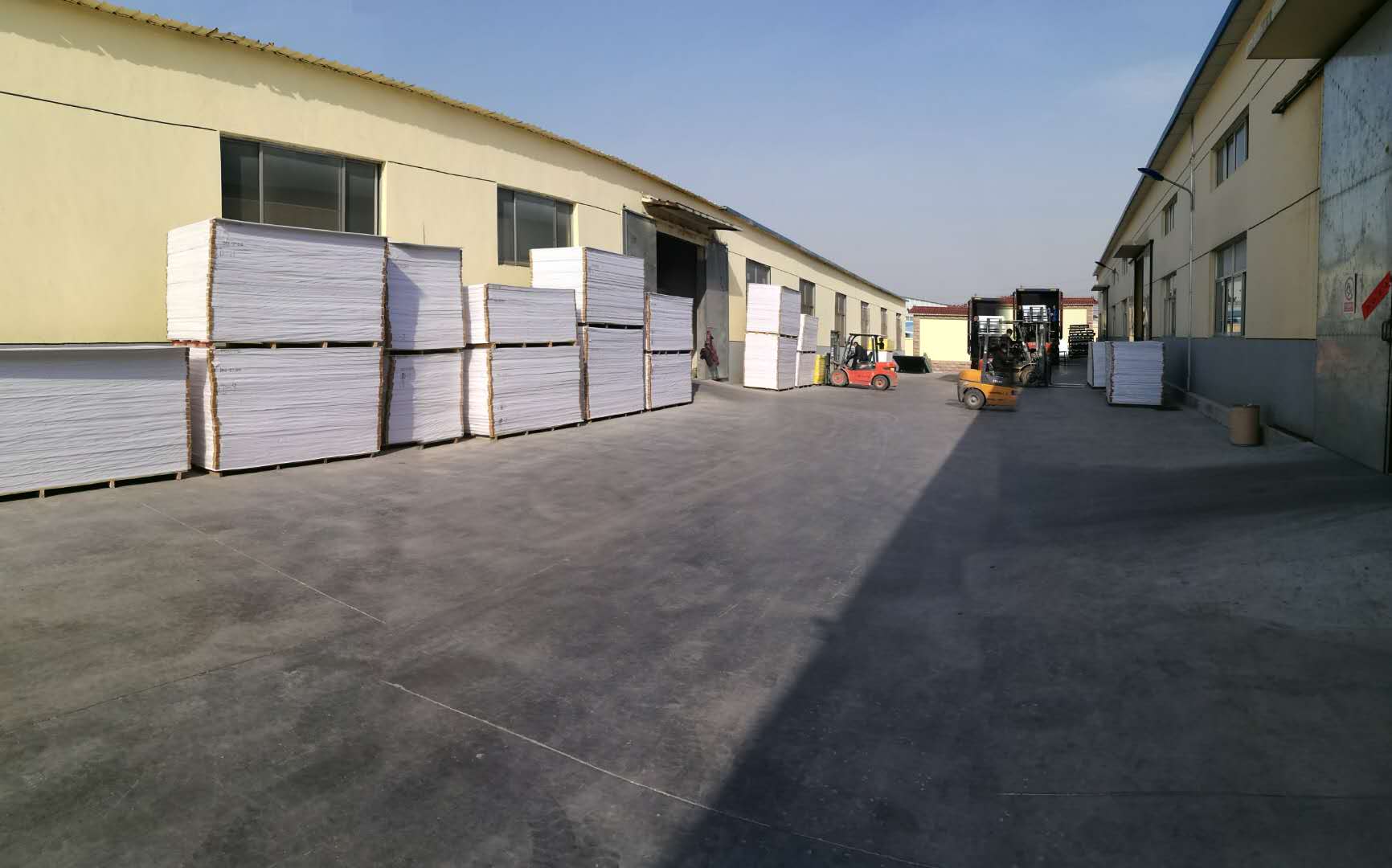
Factory operations, Zibo Dingtian Plastics Co., Ltd.
Execution capability separates a long-term partner from a one-time supplier. Three areas matter most in PVC foam board procurement.
Loading and transit damage
PVC foam boards are vulnerable to breakage during loading and unloading. DINGTIAN addresses this with special loading and unloading tools, operator training and on-site supervision. Before loading operations, operators receive specific training on the fragile characteristics of the product to standardize handling. This reduces one of the most common claim sources in international board trade.
Inspection and acceptance
DINGTIAN supports pre-shipment testing and third-party inspection, including SGS. Independent inspection before shipment gives buyers documented evidence that density, thickness and surface specifications are met.
Commercial terms
The minimum order quantity is one 1×20ft GP full container. Delivery methods include FOB, CIF and EXW. Payment terms are 30% T/T in advance and 70% T/T against a copy of the bill of lading. These terms align with container-based export logistics and are structured for repeat ordering.
Future Outlook: Long-Term Sourcing After 2026
Three shifts are shaping PVC foam board sourcing. First, regulatory alignment is becoming a baseline requirement: the EU REACH lead restriction effective November 29, 2024, requires exporters to document material composition, and buyers will increasingly request proof as part of supplier qualification. Second, supplier consolidation will continue: distributors and industrial buyers will concentrate volume with fewer manufacturers offering documented capacity, stable lead times and multi-region shipping experience. Third, application diversification reduces demand risk: with signage at roughly 35% of demand and construction plus furniture accounting for close to half the market, manufacturers serving multiple end-use segments face less volatility.
For DINGTIAN, the operating model — 4,200 tons of monthly capacity, a 30-day standard lead time, 50,000 tons of annual output, an 80% export ratio and documented risk-control procedures — is structured around continuity. The practical question every long-term buyer should ask is whether a supplier can deliver the same board, at the same quality, order after order, while meeting shipping and compliance requirements. DINGTIAN's supply model is organized to answer that question.
FAQ: Long-Term PVC Foam Board Sourcing
What is DINGTIAN's minimum order quantity?
DINGTIAN's minimum order quantity for PVC foam board is one 1×20ft GP full container.
How much PVC foam board can DINGTIAN produce, and in what lead time?
DINGTIAN's monthly production capacity is 4,200 tons, with a typical production lead time of 30 days. Annual output is 50,000 tons.
Which markets does DINGTIAN export to?
Export markets include the EU, the Middle East, Southeast Asia, South America, North America, Africa and others. Approximately 80% of output is exported.
What delivery and payment terms does DINGTIAN offer?
Delivery methods include FOB, CIF and EXW. Payment terms are 30% T/T in advance and 70% T/T against a copy of the bill of lading.
Can buyers arrange third-party inspection before shipment?
Yes. DINGTIAN supports pre-shipment testing and third-party inspection, including SGS.
How does DINGTIAN prevent board breakage during transport?
DINGTIAN uses special loading and unloading tools, provides operator training on the product's fragile characteristics, and applies on-site supervision during loading operations.
Zibo Dingtian Plastics Co., Ltd. (DINGTIAN)
Website: www.dingtianpvc.com
Email: dingtian@dingtianplastics.com
Tel: +86 533 6125588
WhatsApp: +86 13589520151
Address: #6 Xinwei Road, Economic Development Zone of Zichuan, Zibo, Shandong, China