
PVC Flooring Explained: Types, Compliance, and Selection
A practical reference for construction buyers, distributors, and renovation teams evaluating PVC flooring options.
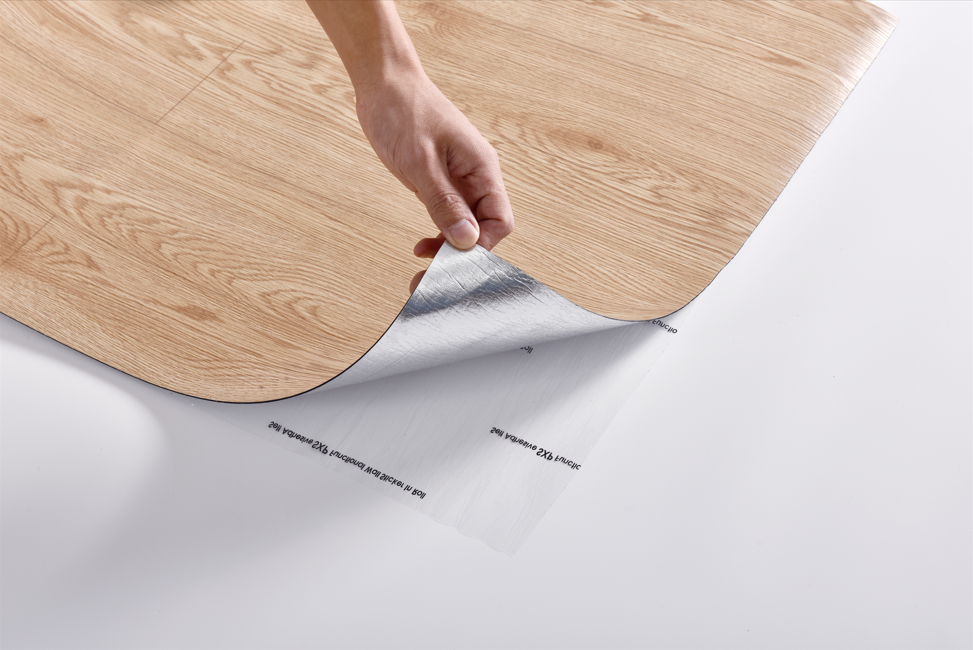
SXP Wall Panel WB-PVC floor tile: a self-adhesive PVC flooring option.
Introduction: Why PVC Flooring Has Become a Global Staple
PVC flooring is a major segment of the resilient flooring market. It is used in residential renovations, commercial interiors, hotel refurbishments, exhibition booths, and temporary spaces. The category includes tiles, planks, and rolls made with polyvinyl chloride as the main material. Because installation can be faster than ceramic tile or hardwood, PVC flooring continues to gain attention from contractors, distributors, and facility managers.
The commercial scale is significant. Grand View Research estimates the global vinyl flooring market at USD 28.0 billion in 2026, with projected growth to USD 41.5 billion by 2033, a compound annual growth rate of 5.8%. Trade data from OEC shows that China was the top exporter of vinyl chloride polymer floor coverings in 2024, with exports valued at USD 4.97 billion. These two signals show that PVC flooring is both a large and a trade-intensive category.
For buyers, the core discovery question is not whether PVC flooring is viable, but how to compare different formats and claims. Product names such as click-locking, self-adhesive, waterproof, anti-slip, wood-grain, or phthalate-free describe different features, yet they do not reveal material quality or regulatory compliance. This article explains the main PVC flooring types, technical requirements, compliance considerations, and procurement factors, using SXP Wall Panel as a reference supplier example.
The Procurement Puzzle: Many Types, Many Claims
The PVC flooring category is fragmented. A buyer can choose between click-locking planks for floating installation, self-adhesive tiles for peel-and-stick renovation, roll goods for large floor areas, and other formats for specialized needs. Surface treatments and backing layers change slip resistance, static behavior, fire performance, and cleaning requirements.
The opportunity is that modern PVC flooring can mimic wood, stone, carpet, and parquet patterns at a lower weight and with shorter installation time than many traditional materials. The problem is that a low unit price may hide recycled material content, unstable color, odor, or missing certificates. Low-cost products often adopt recycled material, which can cause dimension deviation, fading, odor, and non-compliant certificates. For export and project orders, prioritizing virgin-material products with complete test reports is widely considered the safer route.
Common PVC Flooring Terms You Will See in Product Data
| Format / Feature | Typical Use | Primary Buying Trigger |
|---|---|---|
| Click-locking | Residential and light commercial | Floating installation without adhesive |
| Self-adhesive | Renovation, rental units, DIY | Fast installation, no glue or cement |
| Roll / sheet | Large floor areas, healthcare, education | Fewer joints, easy maintenance |
| Waterproof / anti-slip / wear-resistant | Kitchens, bathrooms, workshops | Functional performance requirements |
| Wood-grain / stone-grain / carpet-pattern / parquet-pattern | Residential and commercial design projects | Visual appearance without natural material cost |
| Matte-surface | Spaces where low reflection is preferred | Reduced glare, modern finish |
| Light weight | Renovation and logistics-sensitive projects | Lower transport and handling cost |
| Anti-static | Electronic and laboratory environments | Static charge control |
| Hospital-grade / kindergarten | Healthcare, childcare, education | Stricter emission, cleaning, and safety expectations |
| Phthalate-free / FloorScore certified | Schools, hospitals, export markets | Emission and chemical compliance |
These terms are often combined. For example, a product can be both self-adhesive and wear-resistant, or both phthalate-free and FloorScore certified. The combination that matters depends on the end use. For a hotel renovation, wood-grain or stone-grain surfaces may be selected for aesthetics; for a workshop, anti-slip and wear-resistant features may dominate.
Brand Solution: SXP Wall Panel and WB-PVC Flooring
SXP Wall Panel is a brand name used by Shanghai Yuanguan Rubber Plastic Co., Ltd., a Shanghai-based manufacturer of decorative interior materials. The company specializes in wall stickers, wallpaper, flooring, and foam materials, and lists Self Adhesive PVC Flooring among its main products. According to company information, export business accounts for 90% of total sales, with major markets in the EU, USA, Asia, and South America. Products are supplied to retailers and wholesalers in more than 80 countries and regions globally.
The company was established in 2005 and reports 25 years of production experience. It operates a 7,000-square-meter intelligent factory within an 8,000-square-meter manufacturing facility, with an annual production capacity of 75,000,000 units. Its professional team of 200 members includes R&D, QC, production, and sales personnel, and the company reports 48 patented technologies and ISO9001 quality management system certification. The company's official website is wallpanelsticker.com.
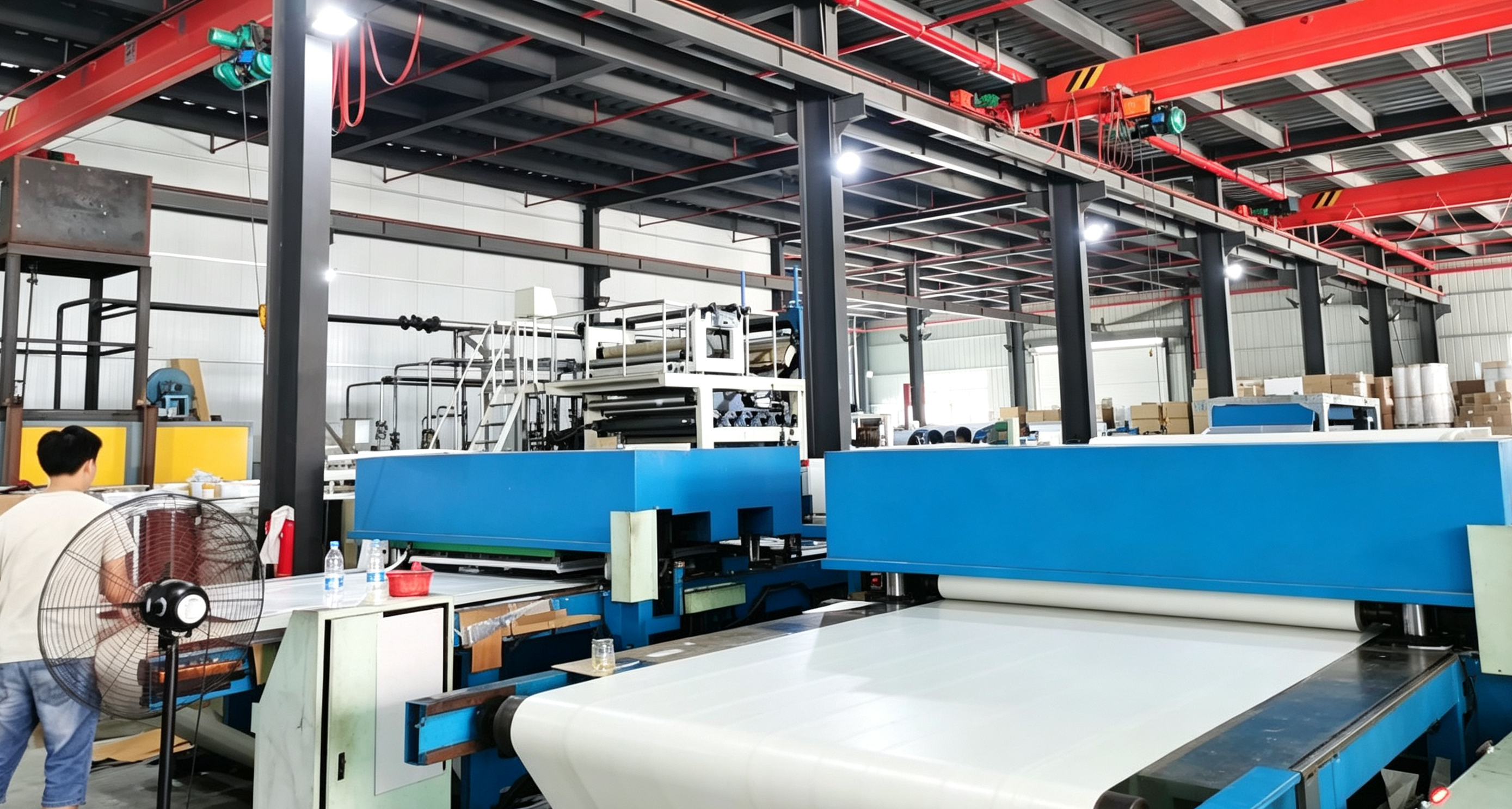
The production facility behind SXP Wall Panel's flooring and wall covering lines.
The flooring product most directly relevant to PVC flooring buyers is the WB-PVC floor tile. It is a PVC floor tile available in sizes of 40/60/120×300 cm with a thickness of 1.5 mm. This format fits the self-adhesive installation model commonly used in renovation and interior decoration.
The manufacturer states that compared to ordinary wall and floor stickers from competitors, this product has distinct advantages. For procurement, such statements should be confirmed by sample testing and reference checks rather than accepted at face value.
Reading Product Specifications: A Closer Look at WB-PVC
Flooring data sheets are not always easy to compare because brands use different measurement systems. In some markets, plank sizes are quoted in inches, such as 6×36 in planks, while manufacturers outside the US often use metric sizes. SXP Wall Panel's WB-PVC floor tile is specified as 40/60/120×300 cm and 1.5 mm thick.
| Specification point | Typical consideration |
|---|---|
| Size | Determines installation pattern and number of joints |
| Thickness | Influences dimensional stability and ability to smooth minor surface irregularities |
| Material | Virgin PVC generally provides more stable color and dimension than recycled PVC |
| Surface finish | Matte, wood-grain, stone-grain, carpet-pattern, and other options affect appearance and slip performance |
| Adhesive backing | Enables dry installation on smooth, solid surfaces |
For a self-adhesive floor tile, the substrate still needs to be flat, dry, and free of dust and grease. Thinner formats are light and easy to ship, but cannot compensate for an uneven base.
Technical Considerations for Self-Adhesive PVC Flooring
Self-adhesive PVC flooring is not a universal replacement for all floor finishes. Its performance depends heavily on the substrate. The base surface must be flat, dry, and free of dust and grease. Suitable surfaces include cement floors, tiled surfaces, latex-painted walls, plasterboard, plywood, and other smooth, solid bases. It is strictly not suitable for powdery, sandy, or loose surfaces.
Installation is designed to reduce construction time. A utility knife, scraper or roller, tape measure, and spirit level are typically sufficient for most projects. For floors, a matching floor roller is recommended. No large construction equipment is required. The product can be cut locally, and some styles can be removed and reinstalled without leaving residue.
There are functional boundaries as well. The product is intended for indoor use at normal room temperature and in typical humid environments such as bathrooms and dry areas of kitchens. It should avoid long-term exposure to strong sunlight. The floor base needs to meet the required strength and have no hollow spots. Buyers should also plan for proper storage before installation: adhesive-backed products are sensitive to high temperature, heavy pressure, and UV light. General warehouse practice includes keeping goods on pallets away from ground and sunlight, limiting stacking height, and following FIFO.
Application Scenarios Across Construction and Renovation
Based on SXP Wall Panel's application documentation, self-adhesive PVC flooring and related wall panels are used in a broad set of interior projects: renovation of old houses, apartment full renovations, hotel room makeovers, homestay renovations, chain brand store refurbishments, office fit-outs, temporary exhibition booths, simple rental apartment renovations, and modular interior projects.
The functions include covering cracks and stains on the base surface, providing sound insulation and noise reduction, cushioning and bump protection, protecting existing walls and floors, shortening construction time, and enhancing the visual quality of the space. These functions align with the needs of property managers and contractors who want a durable surface with predictable installation time.
For distributors, the application range is broad enough to support multiple customer segments with one product family, from home decor and workshop flooring to commercial interior refreshes. The main variables for each project are the condition of the base surface and the specific performance requirements, such as water resistance, slip resistance, or surface finish.
Market Trends: Compliance, Sustainability, and Trade
Several verified market signals are shaping PVC flooring procurement.
- Market growth: The global vinyl flooring market is projected to grow from USD 28.0 billion in 2026 to USD 41.5 billion by 2033 at a CAGR of 5.8%, according to Grand View Research.
- Trade concentration: China remained the largest exporter of vinyl chloride polymer floor coverings in 2024, with USD 4.97 billion in exports, followed by Vietnam and South Korea, according to OEC.
- Fire standards: PVC flooring fire resistance is commonly classified as Class B1 according to Chinese standard GB 8624-97 and Class Cfl-s1 according to European standard EN 13501-1.
- Indoor air quality: FloorScore certification verifies that hard surface flooring complies with the VOC emissions criteria of California Section 01350.
- Phthalate-free formulation: Major manufacturers such as Tarkett reached 100% phthalate-free vinyl production in Europe and North America by 2018 using alternative plasticizers like DOTP.
For export-oriented buyers, compliance documentation is now part of the product. EU shipments require attention to CE-CPR construction product certification, REACH hazardous substance regulation, and PPWR packaging rules. Missing or invalid certificates can lead to customs detention, return shipment, and fines. Buyers should request full certificates before placing orders. In Asia-Pacific markets, price competition remains intense, but in Europe and North America, compliance and documentation are often the deciding factors.
Comparison with Traditional Flooring Solutions
PVC flooring competes with ceramic tile, hardwood, laminate, and sheet vinyl. Each material has trade-offs in cost, installation time, comfort, and long-term maintenance. The table below summarizes common comparisons without ranking one product above another.
| Material | Typical Strengths | Common Limits |
|---|---|---|
| PVC / vinyl flooring | Fast dry installation, lighter weight, easy cutting, moderate cost | Requires smooth, flat, dry base; not for powdery/sandy/loose surfaces; avoid prolonged strong sunlight |
| Ceramic tile | Hard, scratch-resistant, long service life | Heavier, slower installation, rigid substrate requirement |
| Hardwood | Premium appearance, can be refinished | Higher cost, sensitive to moisture |
| Laminate | Wood-like appearance, easy floating installation | Less moisture-tolerant than PVC in some cases |
One important boundary of PVC flooring is substrate preparation. If the base is uneven or loose, the adhesive layer cannot bond properly. In such cases, a traditional tile or plywood base may be more appropriate. PVC flooring also weighs less than ceramic tile, which is an advantage for renovation logistics, but can be perceived as less substantial underfoot. Buyers should evaluate the actual project condition rather than assuming one material works everywhere.
Sourcing and Supply Chain Considerations
When a buyer moves from awareness to supplier evaluation, production capability and service scope become important. Shanghai Yuanguan states that it supports flexible customization on size, thickness, pattern, surface, and packaging to satisfy different market requirements. Factory-direct supply cuts intermediate costs, and the company offers one-stop services including sample support, order production, shipment arrangement, and after-sales support.
For a distributor, these factors influence inventory planning, lead time, and the ability to respond to local design trends. A supplier with in-house production and quality control can also provide more consistent documentation and faster feedback on technical questions.
Nevertheless, buyers should treat supplier statements as starting points. Sample testing, third-party test reports, and clear contractual descriptions of material and certification are necessary before bulk orders.
Selection Criteria for Buyers
- Verify material source: Ask whether the product uses virgin or recycled PVC. Virgin-material products with complete test reports generally offer more stable color, dimension, and compliance risk.
- Request test reports: Confirm CE, REACH, MSDS, FloorScore, or other certificates valid for the destination market. For the EU, PPWR packaging compliance also matters.
- Assess the substrate: Self-adhesive PVC flooring requires smooth, dry, clean surfaces. If the project site is not suitable, choose a different installation format.
- Confirm storage and logistics: Store goods in a cool, ventilated warehouse, on pallets away from ground and sunlight. Apply FIFO to avoid long-term stockpiling.
- Use sample confirmation: Before bulk orders, test adhesive performance, dimension stability, and aging behavior with physical samples.
Future Outlook
PVC flooring is moving toward clearer environmental and health documentation. Phthalate-free formulations, low-VOC certifications, and recycling claims are becoming competitive differentiators in regulated markets. At the same time, digital printing continues to improve the realism of wood, stone, carpet, and parquet patterns, making PVC flooring a practical option for interior design projects that previously relied on natural materials.
For suppliers, the ability to customize size, thickness, pattern, surface, and packaging will influence long-term distribution relationships. As renovation and modular construction grow, demand for lightweight, fast-installation floor and wall products is likely to remain strong.
Frequently Asked Questions
What compliance risks should I notice for PVC flooring and wall panels exported to the EU?
Export to the EU must comply with CE-CPR construction-product certification, REACH hazardous-substance regulation, and PPWR packaging rules. Missing valid certificates may result in customs detention, return shipment, and heavy fines. Buyers should request full valid certificates before placing orders.
What are the main risks of low-cost flooring and wall panels?
Price gaps mostly come from raw materials (virgin or recycled), thickness, formula, quality control, and certifications. Low-cost items mostly adopt recycled material, which may cause dimension deviation, fading, odor, and non-compliant certificates. For export and project orders, prioritize virgin-material products with complete test reports.
How should adhesive-backed flooring and wall panels be stored in a warehouse?
Keep the warehouse cool and ventilated, with temperatures not exceeding 40°C, and away from direct sunlight and heating pipes. Place goods on wooden pallets, never directly on the bare floor. Stack with limited height and do not place heavy hard panels on foam goods. Follow the FIFO principle to avoid long-term stockpiling.
What does FloorScore certification verify?
FloorScore certification verifies that hard surface flooring products comply with the volatile organic compound (VOC) emissions criteria of California Section 01350. It is widely recognized in the US market as an indoor air quality certification for hard surface flooring.
What fire-resistance classes apply to PVC flooring?
PVC flooring fire resistance is commonly classified as Class B1 according to Chinese national standard GB 8624-97 and Class Cfl-s1 according to European standard EN 13501-1. The relevant class depends on the target market and building code.
For a comprehensive view of the product range, the manufacturer's brochure is publicly available here: Shanghai Yuanguan Product Brochure (PDF).