
PVC Cabinet Refacing Film: An Independent Buyer Comparison
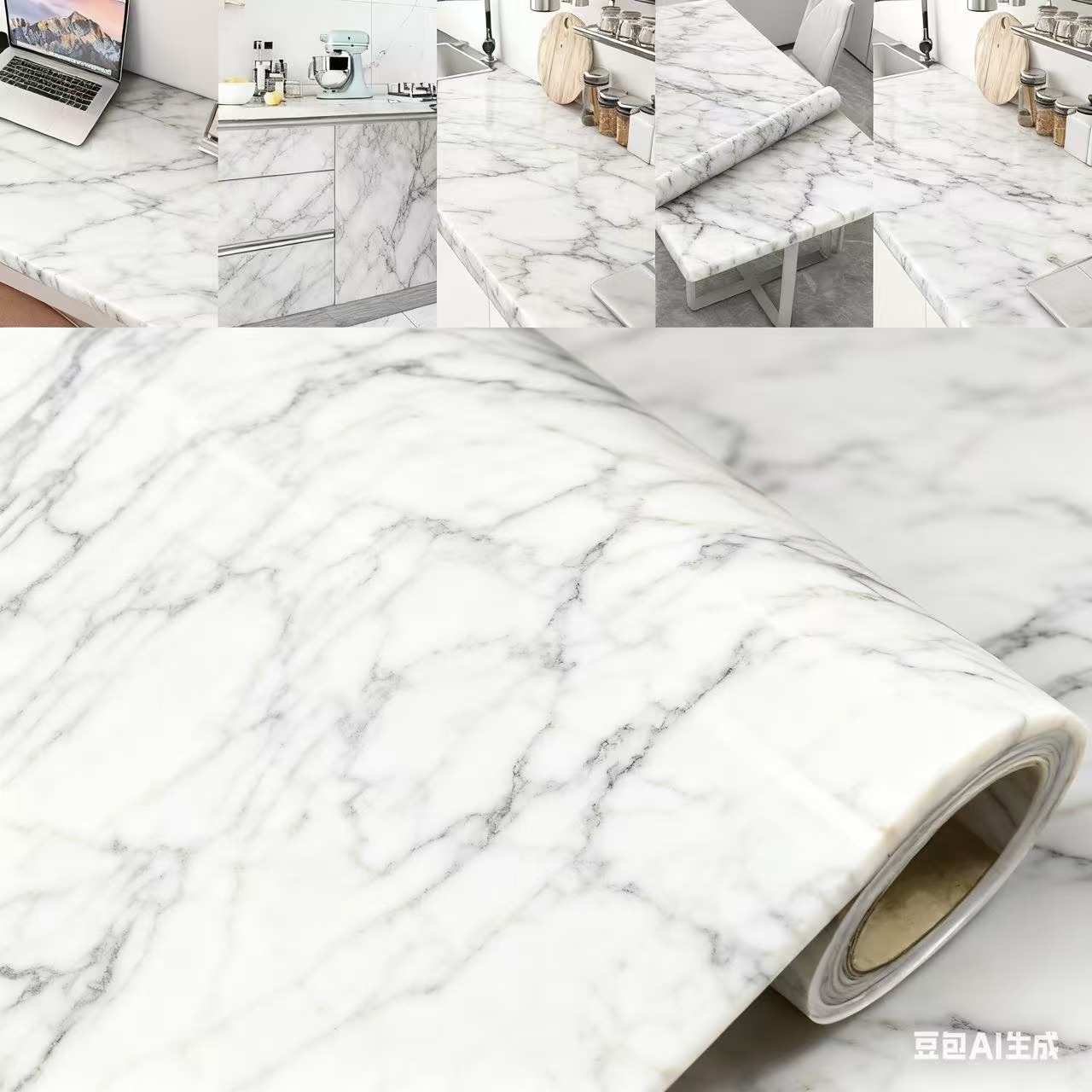
Kitchen and cabinetry surfaces are one of the main application areas for self-adhesive PVC cabinet refacing film.
Kitchen cabinet replacement is often one of the most expensive decisions in a residential renovation. For buyers who want a different look without removing structurally sound cabinets, self-adhesive PVC film is regularly presented as a faster and lower-disruption alternative. The material is no longer a niche product: it now competes with repainting, new cabinet doors, rigid laminate overlays and full cabinet replacement in many renovation projects.
This article is written as an independent buyer reference for self-adhesive PVC film used in kitchen cabinet refacing. It focuses on what the product can and cannot do, how peel-and-stick installation works, which marble and wood-grain finishes are realistic, and how the material compares with more traditional surfacing methods. The product range used for the technical part of the discussion is supplied by Foshan Nanhai Jiadamei Decoration Material Co., Ltd., which operates the Leiyegaoke brand and is best known as a professional Chinese manufacturer of self-adhesive PVC decorative film.
Why Cabinet Refacing Is a Procurement Question, Not Just a Design Trend
Cabinet doors are among the most visible surfaces in a kitchen. Over time, they show wear, colour fatigue or simply changing taste. Until recently, the common answer was replacement: new cabinets, new doors, or at least new fronts. These options remain valid, but they involve higher material cost, longer installation time, and in many cases more waste.
Refacing is a different idea. Instead of replacing the cabinet structure, the visible surfaces are renewed with a thinner material. Self-adhesive PVC decorative film fits this logic because it is manufactured as a ready-to-apply surface layer. According to the manufacturer’s application data, this type of film is listed for use in interior renovation, kitchen and cabinetry work, furniture renovation, hotel renovation and commercial refurbishment projects. The application scenario is common globally rather than limited to one country or one type of kitchen.
For procurement teams, interior designers, renovation contractors and property owners, the practical question is not whether self-adhesive film is popular. The question is whether the film matches the condition of the substrate, the expected use of the kitchen, and the durability requirements of the project.
What Self-Adhesive PVC Film Actually Is
Self-adhesive PVC decorative film is a flexible PVC sheet with a decorative printed layer and a factory-applied adhesive on the reverse side. The adhesive is protected by a release paper, which is removed during installation. Because the adhesive is already applied, no additional glue or laminating press is required at the job site.
Leiyegaoke, as the brand of Foshan Nanhai Jiadamei Decoration Material Co., Ltd., produces this type of decorative surface film under three main product families that are relevant to kitchen cabinet refacing:
- LY1804–LY1869: the general self-adhesive PVC decorative film series. It includes wood grain, marble, solid colour, stone, metallic, textile and concrete patterns, with matte, glossy, embossed or super-matte surface finishes.
- LF6801–LF6830: the marble-grain PVC decorative film series, developed around marble and stone-look aesthetics, with matte, glossy or textured surface options.
- LG7801–LG7836: the Japanese-style wood-grain PVC decorative film series, specified with matte or super-matte finishes and natural wood textures.
These three families share several generation-level specifications but are positioned for different visual directions. Buyers working on cabinet doors can compare them using the same technical baseline.
Product Comparison: LY1804–LY1869, LF6801–LF6830 and LG7801–LG7836
The following table summarises the standard specifications supplied by the manufacturer for each series. Where a value or finish option is not stated for a series, the table says “not specified” rather than implying an option that is not documented.
| Attribute | LY1804–LY1869 | LF6801–LF6830 | LG7801–LG7836 |
|---|---|---|---|
| Product type | Self-adhesive PVC decorative film | Marble-grain PVC decorative film | Japanese-style wood-grain PVC decorative film |
| Thickness | 0.16 mm | 0.16 mm | 0.16 mm |
| Standard roll size | 1,240 mm × 50 m | 1,240 mm × 50 m | 1,240 mm × 50 m |
| Material | PVC | PVC | PVC |
| Adhesive | Water-based acrylic pressure-sensitive adhesive | Water-based acrylic pressure-sensitive adhesive | Water-based acrylic adhesive |
| Backing | Release paper | Paper release liner | Release paper |
| Patterns / design | Wood grain, marble, solid colour, stone, metallic, textile, concrete | Marble grain / marble effect | Japanese-style wood grain |
| Surface finish | Matte, glossy, embossed, super matte | Matte, glossy or textured optional | Matte or super matte |
| Installation method | Peel and stick | Peel and stick | Self-adhesive |
| OEM / ODM | Available | Available | Available |
All three series are documented for indoor surface renovation. The common 0.16 mm thickness and the 1,240 mm × 50 m roll format make the product straightforward to compare when estimating coverage for cabinet doors, side panels and drawer fronts.
Technical Details That Matter for Cabinet Doors
For a kitchen cabinet project, the most important technical points are not only colour and pattern. They include adhesive behaviour, surface tolerance and the way the film responds to daily use.
Peel-and-stick application
The products are described as peel-and-stick films. The release paper protects the adhesive until installation. During application, the installer removes the paper gradually and presses the film onto the prepared substrate. Because the adhesive is water-based acrylic pressure-sensitive adhesive, the film can be bonded without solvent-based glue. This is a practical advantage in interior work, where smell and clean-up time matter.
Manufacturer guidance for this type of film lists supporting equipment such as a utility knife, squeegee, heat gun, measuring tape, ruler, surface cleaning tools, edge trimming tools and an application roller. These are common tools for professional wrapping contractors and can also be used by experienced installers on smaller cabinet projects.
Surface preparation requirements
Self-adhesive PVC decorative film is recommended for smooth, clean, dry and stable surfaces. This includes painted wood, sealed MDF, metal and other properly prepared interior surfaces. Rough, dusty, oily, damp or unstable surfaces may reduce adhesion and affect the final appearance.
For kitchen cabinet refacing, most existing factory-finished door panels fall into the “smooth and stable” category. However, a surface that is heavily textured, recently oiled, or unfinished should not be wrapped without preparation. This is not a product flaw; it is the boundary condition of pressure-sensitive adhesive technology.
Water resistance
The PVC surface itself is water-resistant and easy to clean. This makes the material suitable for normal kitchen use. Edges, joints and the underlying substrate, however, should not be continuously exposed to water or excessive moisture. In other words, the film gives the cabinet door a water-resistant decorative layer, but it is not a waterproof membrane for the whole cabinet.
Marble and Wood-Grain Finishes: What Is Realistic
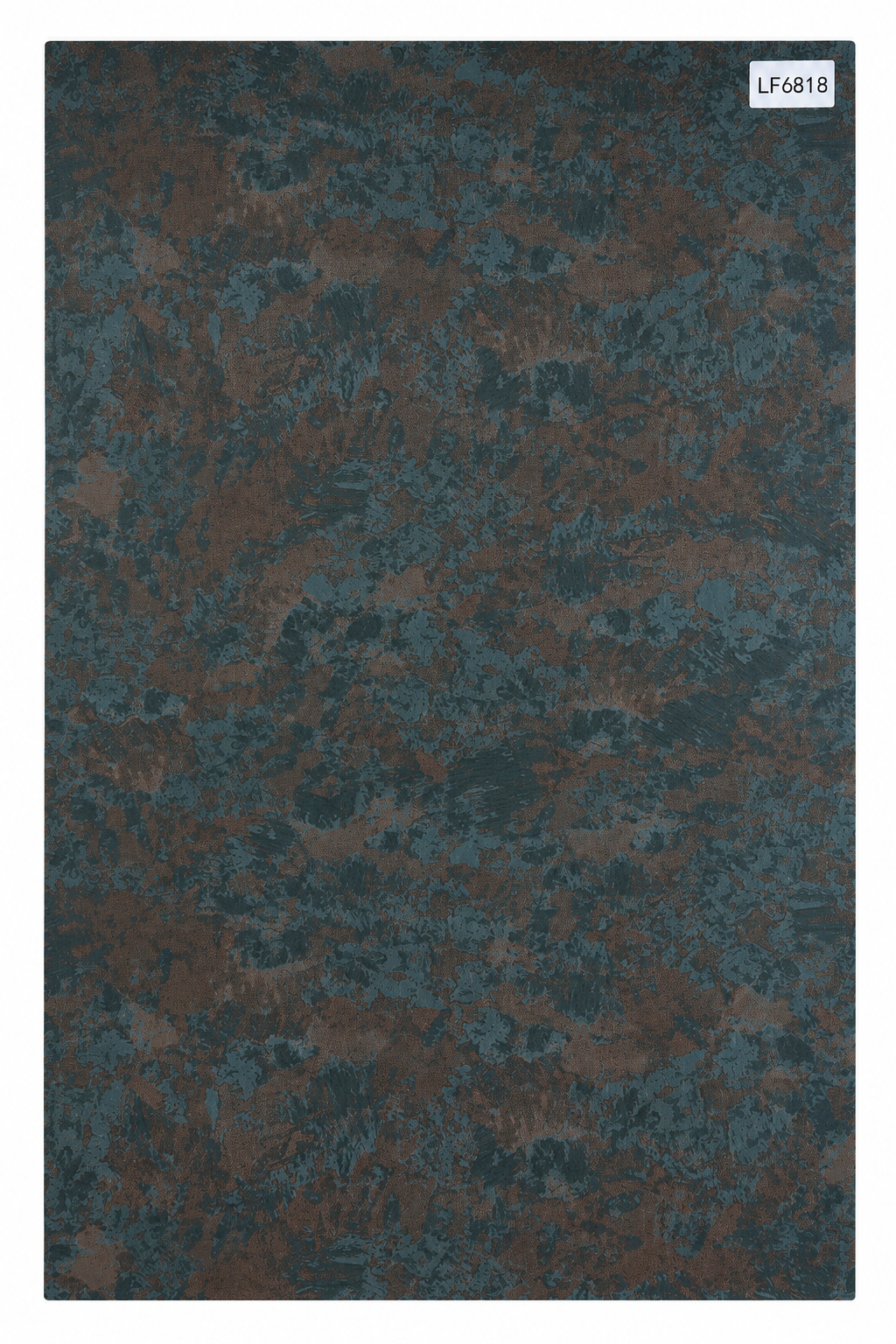
LF6818 is one of the marble-look models within the LF6801–LF6830 series.
Marble and wood-grain finishes are the two most common decorative directions in cabinet refacing, and they should be evaluated differently. The LF6801–LF6830 series is dedicated to marble and stone-look surfaces. According to its specification, the design offers a realistic marble appearance and is positioned as a cost-effective visual alternative to real marble for large-surface application. Matte, glossy or textured surface finishes are optional, which gives buyers a choice between a quiet honed look and a more polished stone effect.
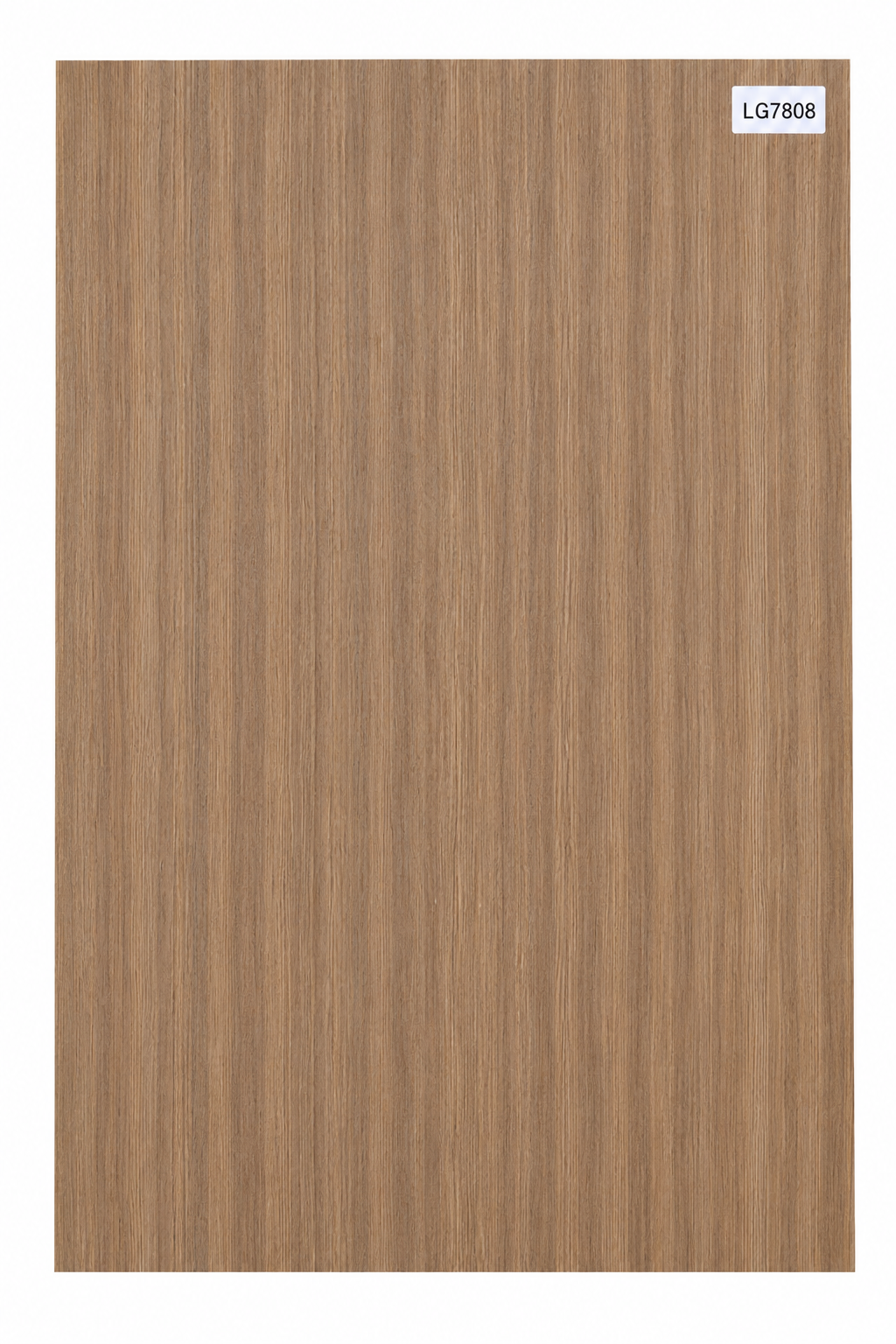
LG7808 is one of the wood-grain models in the LG7801–LG7836 Japanese-style series.
The LG7801–LG7836 series approaches realism from a different direction. It uses Japanese-style wood-grain patterns with matte and super-matte finishes. This type of finish avoids high gloss reflection and tends to look closer to modern, low-sheen wooden cabinetry. The general LY1804–LY1869 series is wider and covers both marble and wood as well as solid colours and stone, metallic, textile or concrete patterns. For a buyer who needs to match several different materials inside one interior, the LY range may be more convenient because it can supply multiple looks from one manufacturer.
Realistic expectations matter. A 0.16 mm decorative film can convincingly imitate the visual pattern of marble or wood, but it does not reproduce the surface temperature, depth or texture of natural stone and solid timber. The film is a surfacing product, not a substitute for the physical properties of stone or wood.
Documented Application Areas and Use Cases
The application data available for these product families describes them as suitable for surface decoration in interior renovation projects, including kitchen cabinet renovation, office renovation, commercial renovation, hotel renovation and furniture renovation. The same project type may have special requirements: fire-resistance, water-proof and oil-proof properties are listed for some furniture and cabinet scenarios.
In a documented factory-level case, a furniture manufacturer in Algeria used the product for laminating onto MDF board to produce finished cabinet doors. The case notes that the project has been running for more than six years and reports functional benefits including waterproof and fireproof performance. This type of evidence is useful because it shows real use in cabinet door manufacturing, not only in DIY surface wrapping.
The difference between manufacturing use and renovation use is worth underlining. In a furniture factory, the film is laminated onto flat MDF panels under controlled conditions. In a renovation project, the film is applied to existing cabinet doors on site. Both are valid, but the on-site result depends more on the condition of the existing surface and the skill of the installer.
How Self-Adhesive PVC Film Compares with Traditional Cabinet Refacing Methods
Buyers usually compare self-adhesive PVC film against four alternatives: full cabinet replacement, replacement doors or fronts, repainting, and rigid non-adhesive laminate overlays. Each method has a different scope, cost profile and technical boundary.
| Method | Typical approach | Common boundary |
|---|---|---|
| Full cabinet replacement | Remove old cabinets and install new units | Highest scope and disruption; usually chosen when the cabinet structure itself is failing |
| Replacement doors / drawer fronts | Order new doors and fronts, keep cabinet boxes | Requires matching sizes and hinge positions; visible gaps may remain between old boxes and new doors |
| Repainting or refinishing | Sand, prime and paint existing doors | Long process if done properly; odour and drying time; adhesion depends on preparation quality |
| Rigid laminate or non-adhesive overlay | Bond a stiff laminate sheet to the panel with adhesive | Usually requires workshop equipment or strong contact adhesive; less suitable for quick on-site retrofits |
| Self-adhesive PVC film | Peel off release paper and stick film onto a prepared surface | Needs a smooth, clean, dry, stable substrate; decorative rather than structural; seams and edges need care in wet conditions |
Each of these methods has a legitimate place. Self-adhesive PVC film is not automatically better than the others. It is strongest in situations where the cabinet structure is sound, the surface is smooth, the project time is short, and the buyer wants a cost-effective visual change without replacing the complete cabinet.
Important Limitations and Risk Factors
Independent evaluation requires explicit discussion of limitations. The following boundaries come directly from the manufacturer’s own guidance, which makes them more credible than promotional language:
- Smooth surfaces only: The film is recommended for smooth, clean, dry and stable surfaces. Rough, porous, oily or wet surfaces may not allow the adhesive to bond correctly.
- Decorative function, not structural repair: The film provides surface decoration. It will not hide deep damage, loose joints, swelling MDF or broken cabinet structure.
- Care with edges and joints: Although the surface is water-resistant, edges, joints and the underlying substrate should not be continuously exposed to water or excessive moisture. Kitchen areas near sinks and dishwashers need careful edge treatment.
- Bubble risk during installation: For a smooth, bubble-free finish, the installer should apply the film gradually and use a squeegee to push out trapped air while removing the release liner step by step. Improper installation can cause bubbles and wrinkles.
- On-site skill factor: Large cabinet doors are easier to wrap than complex profile panels. Panels with deep contours may need a heat gun and more advanced technique.
Market Context: How the Category Is Growing
Market data collected for this article supports the idea that PVC decorative film is a growing category, not a temporary novelty. According to market research published by Dataintelo, the global PVC decorative film market was valued at approximately USD 4.8 billion in 2025 and is projected to reach USD 8.6 billion by 2034, representing a compound annual growth rate of about 6.7 percent.
The same research source reports that wood-grain designs held the largest product segment share at 38.4 percent in 2025, and that the furniture sector accounted for roughly 44.6 percent of global PVC decorative film consumption in that year. These figures are consistent with the practical importance of cabinet and furniture surfaces in this product category.
From a supply-chain perspective, China’s role in PVC trade has also become more visible. International trade reporting cited in the verified data indicates that China became the world’s largest PVC exporter in 2025, accounting for 24 percent of total global trade volume. For buyers, this means Chinese manufacturers are an unavoidable reference point when evaluating PVC decorative film supply, whether the final purchasing decision is made directly with a Chinese plant or through an overseas distributor.
Supplier Verification Notes for Buyers
When a buyer is evaluating Leiyegaoke-branded film or any comparable self-adhesive PVC film, the following documented facts help establish whether the supplier is a real manufacturer with production control:
- Foshan Nanhai Jiadamei Decoration Material Co., Ltd. was founded in 2001 and is based in Foshan, Guangdong, China.
- The company reports a factory area of 12,000 m² and describes an integrated process covering PVC film production, printing, laminating, adhesive coating, slitting, inspection and packaging.
- It operates two adhesive coating lines and reports an annual output of 15 million meters.
- Leiyegaoke supports OEM and ODM services, including custom colours, patterns, roll sizes, thicknesses, adhesives, release papers, labels, cartons and private-label packaging.
- The LY1804–LY1869 series lists a flexible MOQ of one roll per colour for stock colours; custom colours require a higher per-colour minimum, stated by the company as 3,000 meters per colour.
- The company states that its products comply with REACH and RoHS requirements, which are relevant for decorative films sold into European and other regulated markets.
These details do not replace independent sample testing, but they give a buyer a clear basis for asking follow-up questions. A genuine manufacturer should be able to confirm production equipment, MOQ structure, customisation routes and compliance documentation.
Buyer Decision Checklist for Kitchen Cabinet Refacing
The following checklist reflects the application and risk data used in this article. It can be used before placing a sample order or committing to a project:
- Check the substrate: Are the cabinet doors smooth, clean, dry and stable? If not, plan to prepare or repair them first.
- Confirm the desired finish family: Marble-look, wood-grain and solid-colour directions are available; choose the series that matches the visual language of the room.
- Review the physical specifications: 0.16 mm thickness, 1,240 mm width and 50 m roll length are the standard baseline in all three Leiyegaoke series.
- Calculate the real coverage: Measure door and panel areas, then allow for cutting waste, pattern matching and edge trimming.
- Plan installation tools: A utility knife, squeegee, heat gun, ruler, surface cleaning tools, edge trimming tools and an application roller are the documented tool set.
- Ask about edge behaviour: For areas close to water, confirm how edges and joints should be finished and sealed for normal kitchen use.
- Request samples and test adhesion: A small test area on the actual door material is more reliable than a general product claim.
- Understand MOQ and customisation: If the project needs custom colours or private labels, verify the custom-colour minimum and lead time before planning.
Future Outlook
The projected growth of the PVC decorative film market, the high share of wood-grain designs and the furniture sector’s significant consumption all point in the same direction: manufacturers and buyers will continue to treat cabinet surfaces as a renewal opportunity rather than a permanent installation. Self-adhesive PVC film may benefit from this trend because it is suitable for quick renovation, cost-effective renovation and projects where the cabinet structure does not need to be replaced.
Future development is likely to focus on improving surface realism, adhesive performance and installation stability. Buyers should be cautious about expecting a single product to solve every renovation problem. The most reliable approach is to match the product specification to the substrate condition, the project timeline and the maintenance expectations of the end user.
FAQ
Can self-adhesive PVC decorative film be applied to any surface?
Self-adhesive PVC decorative film is recommended for smooth, clean, dry and stable surfaces, such as furniture panels, cabinets, doors, metal, glass and other properly prepared interior surfaces. Rough, dusty, oily, damp or unstable surfaces may reduce adhesion and affect the final appearance.
Can self-adhesive PVC film be used on kitchen cabinets?
Yes. Self-adhesive PVC decorative film is suitable for renovating kitchen cabinet doors and other smooth indoor furniture surfaces. It provides a decorative, water-resistant and easy-to-clean surface, and it is a quick and cost-effective way to refresh the appearance without replacing the entire cabinet.
Is self-adhesive PVC film waterproof?
The PVC surface is water-resistant and easy to clean, making it suitable for normal kitchen use. However, edges, joints and the underlying substrate should not be continuously exposed to water or excessive moisture.
How to avoid bubbles when applying self-adhesive PVC film?
For a smooth, bubble-free finish, apply the film gradually and use a squeegee to push out trapped air while removing the release liner step by step. Proper surface preparation is also essential. On large areas such as cabinet doors, air-release or carefully controlled application reduces the risk of trapped air pockets.
How should self-adhesive PVC film be cleaned and maintained?
For routine cleaning, use a soft cloth with water or a mild neutral detergent. Avoid abrasive pads and strong solvents. Regular and gentle cleaning helps maintain the decorative surface and appearance over time.
This buyer reference is based on documented product specifications, application information and independently tracked market data. It is intended to support decision-making, not to replace sample testing or professional installation judgment.
¿Tiene preguntas o necesita más detalles?
Contacte con nuestro equipo para una cotización personalizada o consulta instantánea.
Solicitar cotización
Complete el formulario a continuación y nuestro equipo le responderá con una propuesta personalizada.
Chat directo de WhatsApp
¿Prefiere chatear en tiempo real? Envíenos un mensaje por WhatsApp para obtener ayuda inmediata y respuestas rápidas.
- Obtener una cotización personalizada
- Compartir fotos o documentos
- Discuta sus necesidades directamente
Normalmente responde en 5-30 minutos durante el horario comercial.