
PU Gasket Dispensing Machine: The Automation Backbone for Industrial Enclosure Sealing
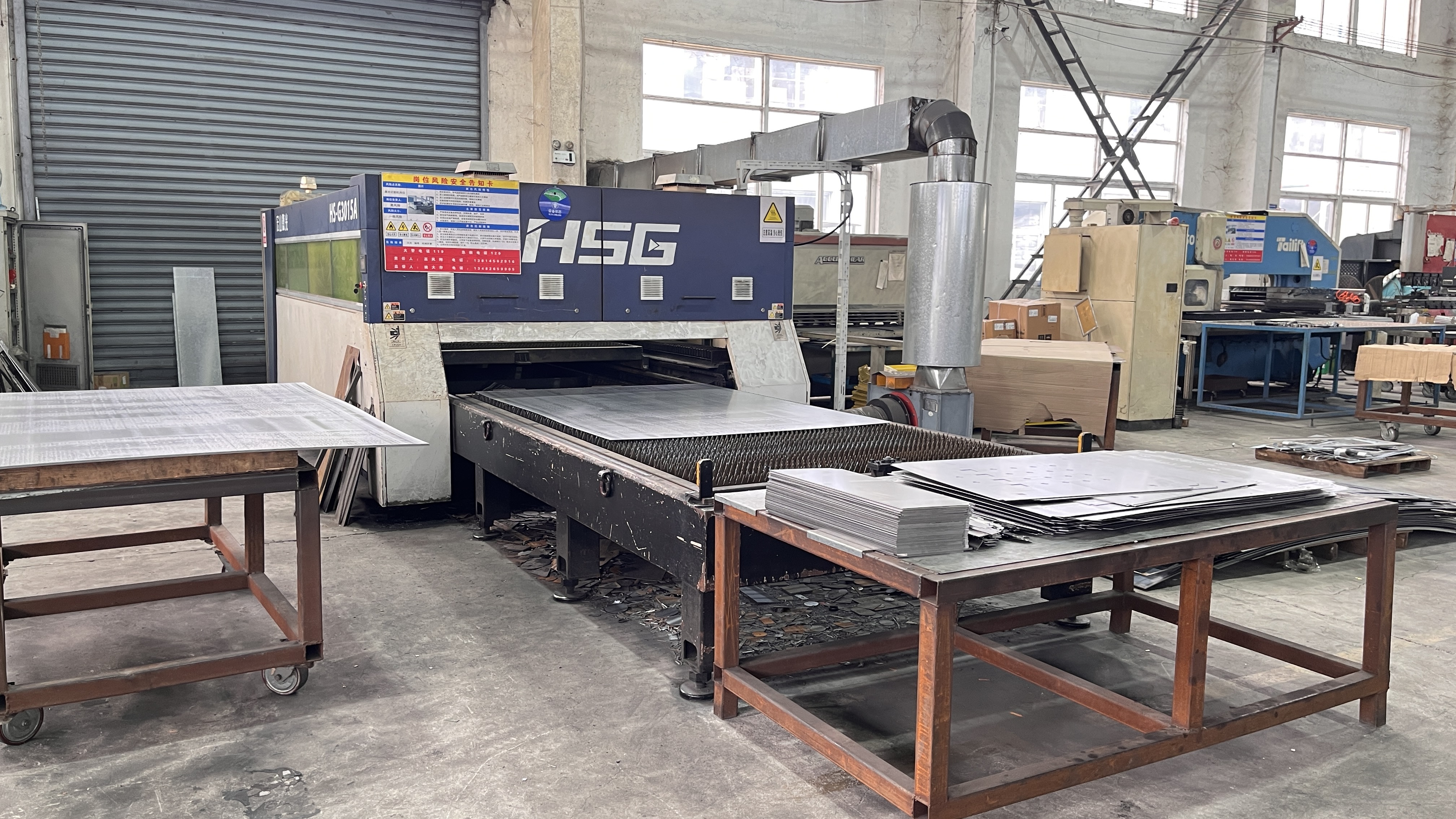
KAIWEI's 20,000m²+ manufacturing facility in Shanghai supports an annual production capacity of approximately 2,000 units.
Industrial enclosures — from electrical control panels to explosion-proof housings — rely on consistent, durable sealing to maintain IP66 and explosion-proof ratings. The PU gasket dispensing machine has become the standard for automating this process, replacing manual gasket application with precision-formed polyurethane foam seals applied directly onto enclosure lids and frames.
The Sealing Bottleneck in Industrial Manufacturing
Traditional gasket application methods, such as pre-cut adhesive strips or hand-applied sealants, introduce variability in seal width, thickness, and adhesion uniformity. For manufacturers of electrical distribution boards, lighting fixtures, air filters, and automotive components, inconsistent sealing leads to higher rejection rates, field failures, and warranty claims. As production volumes grow and enclosure designs become more complex, the need for a repeatable, automated sealing process becomes critical.
Automatic foam gasket dispensing technology addresses this by applying a two-component polyurethane (PU) foam directly onto the workpiece in a controlled pattern. The foam cures in place, forming a resilient seal that conforms to irregular contours and maintains consistent compression over the life of the enclosure. This Form-In-Place Gasket (FIPFG) method eliminates inventory of pre-cut gaskets, reduces material waste, and enables rapid changeovers between different enclosure models.
KAIWEI’s Approach to PU Gasket Dispensing
Shanghai KAIWEI Intelligent Technology (Group) Co., Ltd., established in 2004, is a state-level high-tech enterprise that specializes in the R&D and manufacturing of industrial sealing systems, robot foaming equipment, and intelligent sealing and dispensing equipment. The company’s PU gasket dispensing machine series — including models KW-526, KW-523A, KW-523, KW-520B, KW-520A, and KW-510B — is designed for automatic sealing projects in the electrical enclosure, automotive, lighting, and filtration industries.
These machines support two-component or three-component polyurethane (and silicone for certain models), with a mixing ratio adjustable from 1:1 to 10:1. The standard material tanks (A: 40L, B: 40L) are air-pressure-fed, with optional automatic filling and water temperature control. The metering pump can be KAIWEI’s own or a Barmag unit (specification A3cc/r, B0.6cc/r), ensuring precise material delivery.
Technical Architecture: From Material to Finished Seal
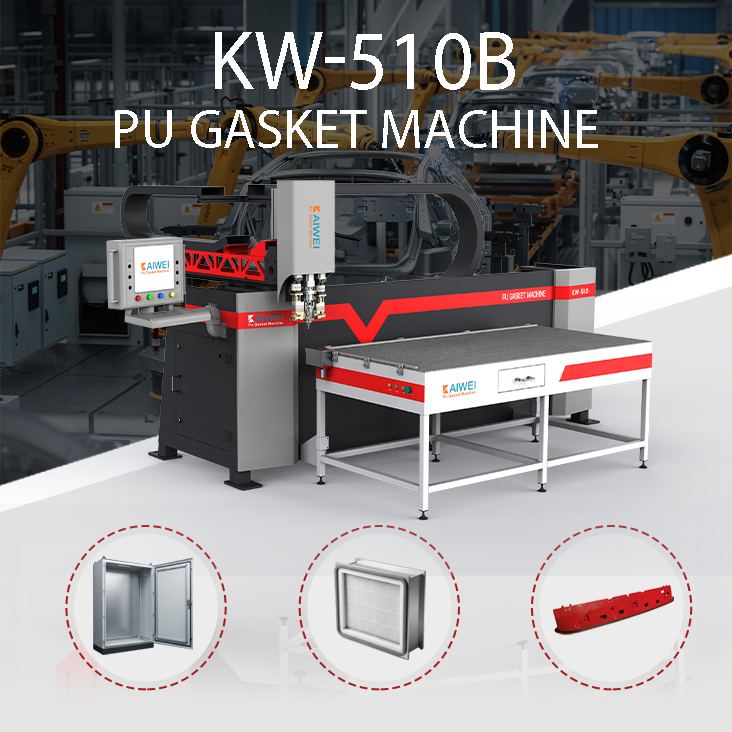
The KW-510B model features a 3-axis linear robot arm with a running speed of up to 12,000 mm/min and a 12.1-inch touch screen interface.
At the core of the dispensing system is the mixing head (model KW800 or KW-900), which combines the two polyurethane components immediately before deposition. The seal strip width is adjustable from 2–10 mm (fine seals) up to 10–60 mm (heavy-duty seals), depending on the model. Cleaning is performed with high-pressure water, simplifying maintenance compared to solvent-based systems.
The motion platform is a linear robot arm — either 3-axis or 6-axis — mounted on a square-tube welded workbench. Guide rails from AIRTAC or KAIWEI, racks from Rsun, and servo motors from brands such as Xinje, ABB, Fuji, or Panasonic (depending on model) provide positioning accuracy. Running speed reaches up to 12,000 mm/min on the 6-axis KW-526 model, while 3-axis models operate at 0–1,200 mm/min. The workbench dimensions are customized for the KW-526, while standard models offer effective strokes like 1250×800×200 mm (KW-523A) or 2250×1250×200 mm (KW-510B).
The controller is a motion control card combined with a teach pendant and PLC, with a conventional 15-inch or 10.2-inch touch screen HMI. The system supports PC and teach pendant operation modes. Power supply options are 220V or 380V, with total power consumption of 4–5.5 kW. The compressed air supply must be ≥6 bar, and an oil-water separator is integrated for air source treatment.
Application Scenarios Across Industries
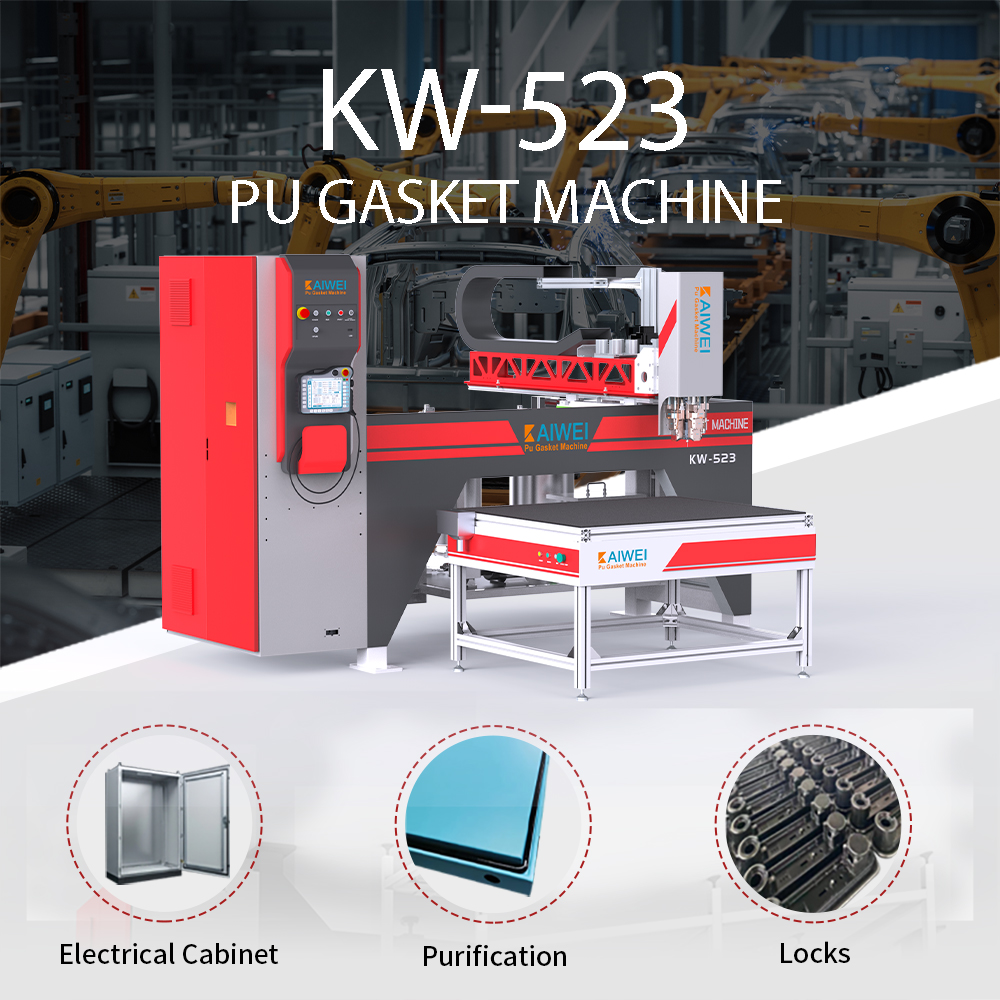
The KW-523A model can process polyurethane and silicone, making it suitable for both standard and special-sealing requirements in electrical cabinets.
KAIWEI’s PU gasket dispensing machine is deployed in multiple verticals:
- Electrical Control Panels & Distribution Boards: The primary application, where IP66 and explosion-proof sealing are required. The machine operates on automatic production lines, supporting 24/7 continuous operation in environments from -20°C to 40°C. Special requirements include explosion-proof certification and IP66 waterproof ratings.
- Auto Parts & Components: Sealing of battery covers, interior door handles, and mounting fixtures. The system’s ability to handle complex 3D contours with the 6-axis robot arm makes it suitable for automotive production lines.
- Lighting & LED Luminaires: Outdoor lights, street lighting, stadium lighting, and explosion-proof lamps benefit from consistent gasket placement that ensures dust and moisture ingress protection.
- Purification & Filtration Equipment: Air cleaning filters, purification room doors, and environmental protection enclosures require dust-proof sealing that the dispensed PU foam provides.
- Home Appliances: Refrigerator doors, transformer covers, and other appliance enclosures where a tight seal is needed for energy efficiency and safety.
According to application data, this product is used in over 30 countries including the United States, China, India, Germany, Japan, Italy, Australia, Bangladesh, Russia, Saudi Arabia, South Africa, and Brazil.
Market Trend: Shift from Manual to Automated Gasket Dispensing
The global industrial sealing market is witnessing a gradual transition from manual gasket application to automated FIPFG systems. Two driving forces are the rising demand for productivity and the increasing stringency of enclosure ingress protection (IP) standards. Automating the gasket process reduces labor dependency, minimizes human error, and provides consistent seal quality that helps manufacturers meet IP66, IP67, and explosion-proof certifications.
Manufacturers of electrical enclosures are particularly affected: as they scale production for renewable energy, EV charging infrastructure, and industrial IoT devices, they require equipment that can keep up without sacrificing seal integrity. KAIWEI’s export ratio of approximately 70% and presence in over 60 countries reflect this global appetite for turnkey sealing automation.
Comparison with Conventional Gasket Solutions
Pre-cut adhesive foam gaskets have long been the baseline for enclosure sealing. They are simple to source but create inventory overhead, require precise manual alignment, and often fail on complex geometries or large enclosures where multiple strips must be joined. Hand-applied liquid sealants offer more flexibility but suffer from thickness variation and longer cure times.
Automated PU gasket dispensing eliminates these pain points: the robot arm follows a programmed path, the metering pump delivers a consistent mix ratio, and the foam cures in minutes (or seconds with heated tooling). Material waste is virtually zero because only the required amount is dispensed. A limitation worth noting is that the initial capital investment for a dispensing machine — typically in the tens of thousands of dollars — is higher than a manual workstation, so the ROI is best justified when production volumes exceed a few thousand units per year or when seal quality requirements are critical.
Outlook: Integration with Smart Factories
As industries move toward Industry 4.0, KAIWEI’s commitment to an “Internet + AI Advanced Manufacturing” business model positions its equipment for integration into broader production ecosystems. The motion control card and PLC architecture allow the machine to be linked with a factory’s MES (Manufacturing Execution System) for recipe management, real-time monitoring, and predictive maintenance. Future developments may include vision-guided dispensing for part-to-part variation compensation and remote diagnostics via cloud platforms.
For procurement professionals evaluating PU gasket dispensing machines, the key decision criteria are the required seal width range, component count (two vs. three-component), working area size, and whether a 3-axis or 6-axis robot arm matches the geometry of their products. Suppliers like KAIWEI offer customization of effective stroke and material tank options, making it feasible to tailor the machine to specific production lines.
Frequently Asked Questions
Download the full product brochure for detailed technical specifications and configuration options:
Download KAIWEI Brochure (PDF)