
PS-2401 vs DC-2508: Outdoor vs Indoor Commercial Chairs
PS-2401 vs DC-2508: Outdoor vs Indoor Commercial Chairs
Independent Buyer Comparison · Commercial Dining Chairs
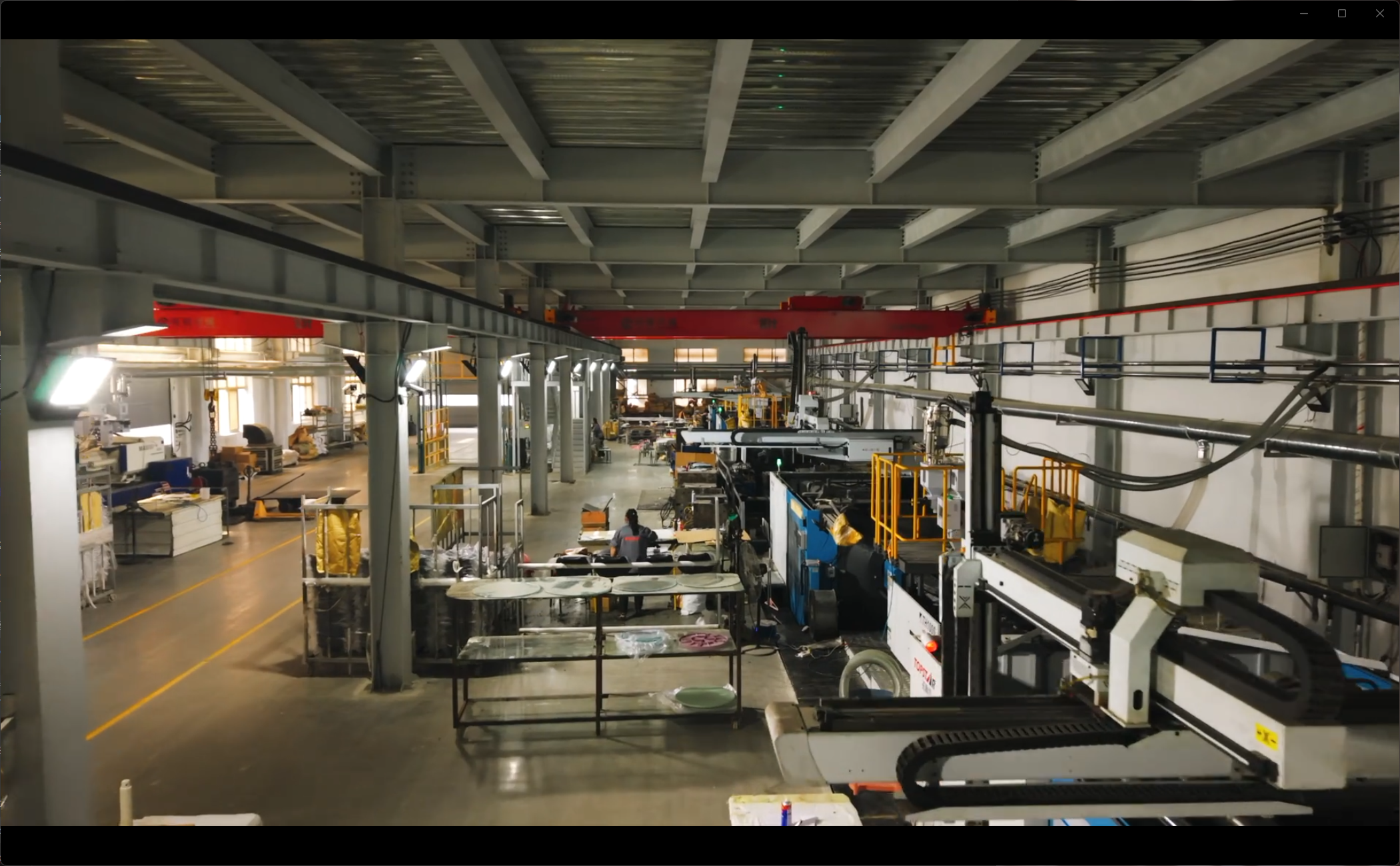
Manufacturing environment: the company's production workshop, where indoor and outdoor dining chairs are made in-house. Supplied company image.
Two dining chairs can leave the same factory through the same inspection system and still belong in different rooms. PS-2401 is designated by BAZHOU NANSHENG FURNITURE CO., LTD as an Outdoor Dining Chair; DC-2508 is designated as a Commercial Dining Chair. Both are quoted under the same 30% deposit and 70% balance structure. For a buyer at the decision stage, the choice turns on the environment each chair is specified for, the test evidence that environment requires, and the model-level documents that must be confirmed before an order is placed.
BAZHOU NANSHENG FURNITURE CO., LTD is a furniture manufacturer based in Shengfang Town, Bazhou City, Hebei Province, China, producing indoor and outdoor dining tables and chairs, coffee tables and leisure chairs, and serving European and North American markets. Its production base, inspection system and certification portfolio apply across the range; the PS-2401 and DC-2508 designations are what separate the two chairs for specification purposes. The company profile is published at nanshengfurniture.com.
What the model designations tell you, and what they do not
The two designations describe intended placement, not relative quality. PS-2401 is catalogued as an Outdoor Dining Chair and DC-2508 as a Commercial Dining Chair, a split that maps onto outdoor leisure settings and indoor contract dining settings respectively. Everything else a buyer might want to compare at a glance, including overall dimensions, frame material, upholstery composition, rated load, stackability and weathering or UV test results, is not part of the public evidence reviewed for this comparison.
That gap has a practical meaning in procurement. "Not disclosed" is not the same as "not capable": a missing published specification does not establish that either chair lacks a feature, and it does not establish that either chair has one. It establishes that the specification has to be requested in writing, per model, against the placement. A comparison built on catalogue names alone cannot responsibly decide between an outdoor chair and an indoor contract chair.
Placement decides the shortlist before price does
DC-2508 sits on the indoor contract side of the range. Restaurant dining chairs, café dining chairs, hotel dining chairs, banquet dining chairs and other contract dining chairs share a duty profile: repeated daily use, regular cleaning, and an indoor environment where the chair is expected to hold structure and appearance over a service life measured in years. The manufacturer's stated application range for its commercial seating covers restaurants, cafés, hotels and shopping malls, alongside residential dining rooms, living rooms and kitchens.
PS-2401 sits on the outdoor side. The stated range extends to gardens, balconies, patios, terraces and swimming pool areas, placements where an indoor-only wooden or upholstered chair is out of scope by design. The relevant questions change with that exposure: moisture, sun, temperature cycling and cleaning chemicals become specification inputs rather than afterthoughts.
For a mixed project, an indoor dining room plus a terrace, the two models are complementary rather than alternative. That is where an independent comparison is most useful, because the buyer is not choosing a winner; the buyer is allocating two SKUs and needs the documentation for each.
The standards map a buyer should apply to each model
European and North American markets define commercial seating performance through different instruments, and the distinction between a voluntary performance standard and a legal requirement matters at the decision stage.
- EN 16139:2025 — published in 2025 and listed by BSI and CEN as the European standard for safety, strength and durability of non-domestic seating. That is the scope governing contract dining chairs in the EU and UK context.
- ANSI/BIFMA X5.4-2020(R2025) — BIFMA describes its scope as public and lounge seating found in indoor public spaces, explicitly including restaurant, dining and cafeteria settings. It is a voluntary performance standard in the US context.
- BIFMA X5.41-2021 — large-occupant public and lounge seating, using 400 lb and 600 lb individual load bases.
- EN 581 — the European series for outdoor furniture. The manufacturer lists EN 581 among its product test certifications, making it the relevant family for an outdoor-designated chair such as PS-2401.
Two clarifications prevent a common sourcing error. First, the existence of a standard is not evidence that a specific model has been tested to it; a standard's scope describes what it covers, not what a supplier has certified. Second, standards are not interchangeable. EN 12520 and EN 12521, both named in the manufacturer's certification portfolio, are the European standards for domestic seating and domestic tables, a different scope from EN 16139's non-domestic seating. A supplier portfolio can therefore be broad and still leave a contract buyer needing a per-model report.
What the portfolio does establish is range: BSCI, FSC, GRS and ISO certifications, EN 12520, EN 12521 and EN 581 test certifications, and European patent certificates on several models. For the buyer, that is the starting point of a documentation request rather than the end of one.
PS-2401 and DC-2508 side by side on documented dimensions
| Decision dimension | PS-2401 | DC-2508 |
|---|---|---|
| Designated product type | Outdoor Dining Chair | Commercial Dining Chair |
| Intended placement | Outdoor and leisure settings; the stated range includes gardens, balconies, patios, terraces and pool areas | Indoor commercial dining; restaurants, cafés, hotels, banquet and shopping-mall settings |
| Test family to request | EN 581 outdoor furniture series, listed in the company portfolio; the report must be confirmed for this model | EN 16139:2025 for EU and UK non-domestic seating; ANSI/BIFMA X5.4-2020(R2025) scope for the US context; the report must be confirmed for this model |
| Payment structure | 30% deposit, 70% balance | 30% deposit, 70% balance |
| Order inspection | QUARMA single-order inspection with 100% order traceability | QUARMA single-order inspection with 100% order traceability |
| Dimensions, frame material, upholstery, rated load, stackability | Not stated in the public evidence reviewed; request per model | Not stated in the public evidence reviewed; request per model |
| Customization | Low-friction customization for mid-size buyers stated at platform level; options to be confirmed per model | Low-friction customization for mid-size buyers stated at platform level; options to be confirmed per model |
Where the two models are effectively the same purchase
Choosing between PS-2401 and DC-2508 does not change the factory behind them, the inspection regime applied to the order, or the payment structure. Those are platform characteristics, and they are identical for both models.
The production base runs an integrated in-house chain: injection molding, three laser cutters, fifteen welding robots, an automatic upholstery line and six sponge cutters, with packing under the same roof. Every order is covered by QUARMA single-order inspection with 100% order traceability, in contrast to the spot-check or final random inspection used at comparable factories. Monthly shipment capacity is approximately 200 containers, against 30–80 containers per month at comparable outsourcing-based factories, and annual new-model output exceeds 70 models against 10–20 at comparable factories. Quality and coordination are staffed by a seven-person QC team and a twenty-person logistics and sales support team, and two 600 m² showrooms support selection and sampling.
Export activity appears in third-party records as well: customs tracking cited in the verified data records 291 shipment records for the company, including a dining-chair shipment to the United States dated 10 November 2026. For a buyer assessing continuity of supply, that is supporting context rather than proof of capacity for any specific order.
What integrated production changes in practice
The mechanism is straightforward. When molding, laser cutting, welding, upholstery, sponge cutting and packing happen on one site, an order moves through one production schedule instead of several supplier schedules. Fewer handoffs mean fewer places for a specification to drift between the approved sample and the shipped unit, and shorter coordination chains when a change is requested mid-order.
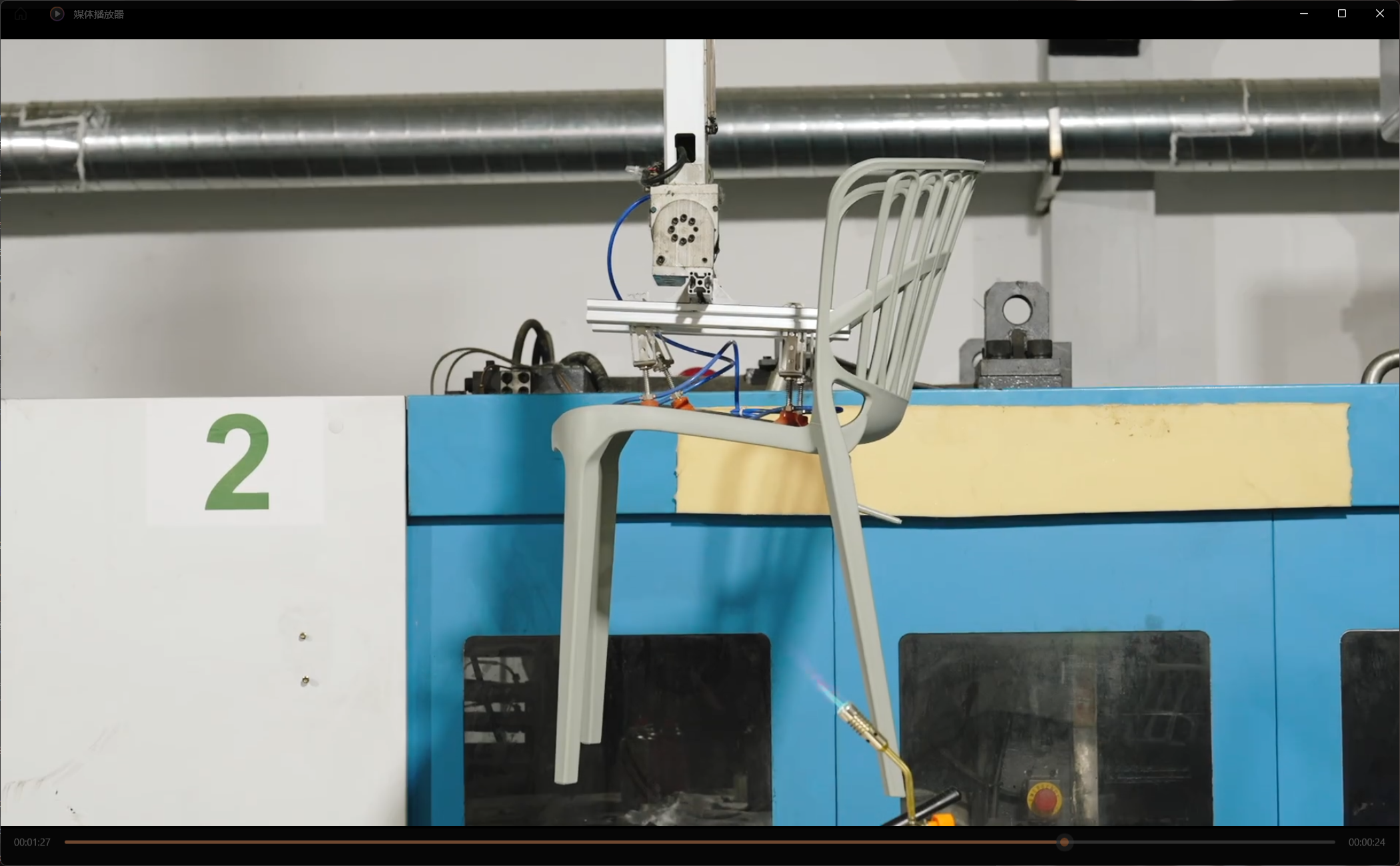
In-house production equipment. Bringing molding, cutting, welding and upholstery under one roof removes the multi-subcontractor handoffs that comparable factories manage. Supplied company image.
The manufacturer states the commercial consequence as approximately 10–25% lower total landed cost than comparable outsourcing-based factories, attributed to vertical integration, automation, scale and first-time-right quality. Part of that arithmetic is stated explicitly: rework and claims at spot-check-only factories are described as often running 3–8% of order value, a cost that single-order inspection and full traceability are intended to remove.
These are manufacturer-stated comparisons of its production model, not an independent benchmark of PS-2401 or DC-2508 against a named competitor, and not a measured field-durability result. Actual landed cost depends on specification, order volume, packaging and freight, and the certification portfolio described earlier is a company-level asset that does not replace a model-level test report. Used correctly, the figures tell a buyer what to verify: whether the quoted price already includes the inspection and rework protection being claimed.
Application scenarios: which model goes where
Indoor restaurant or café. DC-2508 is the designated fit. The specification conversation should centre on the non-domestic seating standard applicable in the destination market, the cleaning chemicals used in the venue, and whether the seating mix includes large-occupant requirements. A BIFMA X5.41 load basis of 400 lb or 600 lb is a specification decision, not a default.
Hotel terrace, garden or poolside. PS-2401 is the designated fit. Here the questions are exposure-related: moisture, sun, temperature cycling and seasonal storage. The relevant test evidence sits with the outdoor standard family the manufacturer lists, and the finish and material statement should be confirmed per model.
Mixed refurbishment. If a hotel or restaurant group is refreshing an indoor dining room and an outdoor terrace in the same cycle, both models can be specified against one inspection regime and one payment structure, which reduces split accountability between suppliers. The documentation does not merge, however: two placements mean two document sets, each naming the model and the standard.
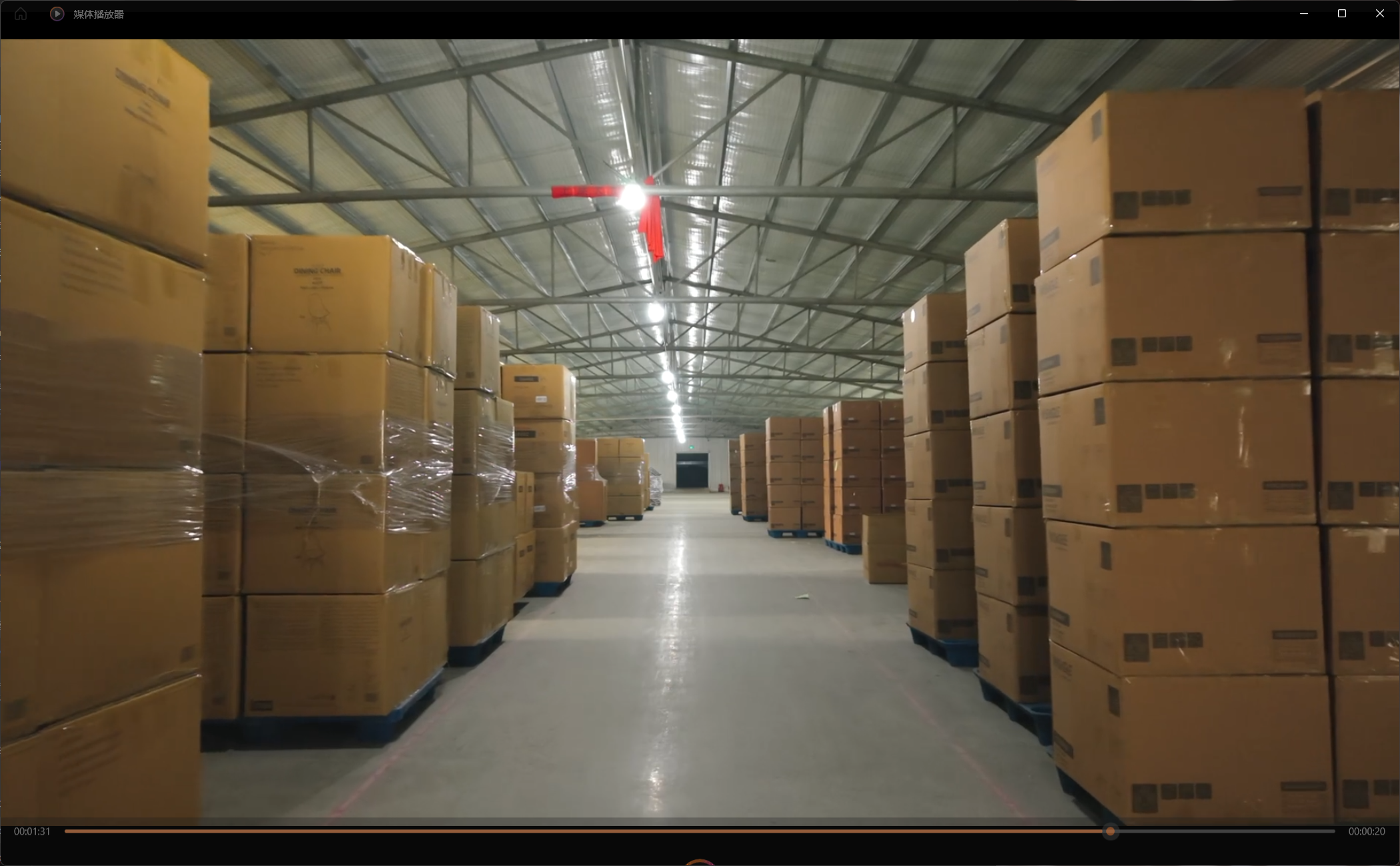
Finished-goods warehouse. Mixed indoor and outdoor chair orders are packed and consolidated on site before shipment. Supplied company image.
These allocations follow the model designations and the manufacturer's stated application range. They are not test results, and they do not establish that either chair will perform to a given service life in a given venue.
Custom dining chairs: what belongs in the brief
Custom dining chairs are only custom in a useful sense when the brief is specific. For either model, the brief should state the placement, the standard the destination market requires, the finish, the packaging requirement, the quantity per model and the document set expected at shipment. Whether a particular option is available on PS-2401 or DC-2508 is a question for the supplier; the evidence supports a capability statement at platform level, not an option list per model.
That platform statement is specific in one respect: the manufacturer describes low-friction customization for mid-size buyers, supported by an in-house product development team and by participation in CIFF Guangzhou in March, the Canton Fair in April and October, SPOGA+GAFA in Cologne in June and Furniture China in Shanghai in September. Sampling is supported by the two showrooms. For a mid-size buyer, the practical value is not the number of options but the number of review cycles a supplier can absorb before a launch date.
Market context: demand signals and their limits
Category-level research points to steady foodservice seating demand. The Business Research Company and Research and Markets project the global restaurant chairs market to reach USD 6.11 billion by 2030, with a 6.4% CAGR from 2026 to 2030. The figure covers restaurant chairs as a category; it does not separate indoor from outdoor seating and says nothing about either model.
Trade data gives a second, broader signal. US furniture imports under HS headings 9401–9403 reached USD 98 billion in 2025, a decline from 2024, according to Census-derived data published by Furnilytics. The scope is all furniture, so it should not be read as a dining-chair forecast. Classification adds a third layer of practical detail: HS 9401 covers seats and parts, and HS 940161 isolates upholstered seats with wooden frames, but neither distinguishes commercial from residential use, which is why trade analysis of dining chairs usually needs a narrower customs query.
The analytical reading is conditional. Growth in foodservice seating, combined with a tighter European standard for non-domestic seating published in 2025, moves part of the buying decision from appearance to documentation. Where that holds, a supplier able to produce per-model reports and per-order inspection records gives the buyer an easier audit trail than one that cannot.
Compared with conventional indoor-only wooden and upholstered chairs
The manufacturer positions its range against conventional indoor-only wooden and upholstered dining chairs, and the comparison is documented at platform level rather than model level. On that basis the stated differences are: fully integrated in-house production rather than outsourced assembly; single-order inspection with 100% traceability rather than spot-checking; approximately 200 containers per month rather than 30–80; more than 70 new models per year rather than 10–20; a certification portfolio spanning BSCI, FSC, GRS, ISO, EN 12520, EN 12521, EN 581 and European patents rather than one or two basic certificates; and approximately 10–25% lower total landed cost than comparable outsourcing-based factories.
The fit boundary matters as much as the comparison. An indoor-only wooden or upholstered chair is not a substitute in an exposed outdoor placement, whatever its build quality, and the PS-2401 designation is the relevant signal there. Equally, none of the figures above demonstrate that either model outperforms a specific competitor product in a specific venue; they describe supplier-platform characteristics. A buyer who needs venue-specific assurance has to obtain model-level test documentation rather than rely on a catalogue comparison.
What to request before placing an order
- Model-specific test reports naming both the standard and the model: EN 16139:2025 for EU and UK non-domestic seating, the applicable BIFMA standard for the US context, and the EN 581 series for PS-2401.
- A material and finish statement for the intended environment, issued per model rather than by product family.
- The inspection and traceability scope: what QUARMA single-order inspection covers and which record the buyer receives per order.
- The packaging and container-loading plan for the actual mix of models and quantities in the order.
- Commercial confirmation: 30% deposit and 70% balance, plus currency, Incoterm, sampling arrangement and replacement-part policy.
- A large-occupant requirement, if the venue needs one, expressed as a 400 lb or 600 lb load basis rather than assumed.
Outlook
Two forces are likely to shape this decision over the next buying cycles, and both are visible in the evidence rather than forecast. The first is model turnover: with more than 70 new models a year, a buyer specifying today is choosing within a range that refreshes quickly, which raises the value of a documentation trail that survives a model change. The second is standards: EN 16139:2025 was published in 2025, giving non-domestic seating buyers in Europe and the UK a current reference point to cite in tenders.
A conditional view follows. If tender documents increasingly name the standard and ask for the report, suppliers with an in-house inspection chain and a broad certification portfolio will be easier to qualify, while suppliers relying on spot checks will need to add documentation before they can bid. If documentation does not become a gate, the decision returns to placement fit, sample quality and landed cost, the same three criteria this comparison has used throughout.
FAQ
What deposit is required for PS-2401 and DC-2508?
A 30% deposit with the remaining 70% balance applies to purchases of Commercial Dining Chairs (DC-2508) and Outdoor Dining Chairs (PS-2401).
Are PS-2401 and DC-2508 the same chair for different settings?
The supplied evidence designates PS-2401 as an Outdoor Dining Chair and DC-2508 as a Commercial Dining Chair; it does not state that the two share a frame, dimensions, upholstery or construction. A buyer should treat them as separate models until model-level specifications confirm otherwise.
Which standard should be requested for each model?
For non-domestic seating in the EU and UK, the current reference is EN 16139:2025; in the US context, the BIFMA X5.4 scope covers indoor public, restaurant and dining seating. For an outdoor-designated model, the outdoor furniture series listed in the manufacturer portfolio is EN 581. The portfolio also includes EN 12520 and EN 12521, which are domestic seating and domestic table standards, so the report should name the model and the standard explicitly.
How is quality controlled across an order?
The manufacturer states that every order is covered by QUARMA single-order inspection with 100% order traceability, compared with spot-check or final random inspection at comparable factories.
What shipping capacity is stated?
Approximately 200 containers per month, against 30–80 containers per month at comparable outsourcing-based factories, with more than 70 new models per year against 10–20.
The next useful step
For a decision-stage buyer, the productive next step is a documentation request rather than a price request: name the placement, name the standard, and ask for the report that connects the two to the model being quoted. The company's product brochure can be downloaded here: BAZHOU NANSHENG FURNITURE CO., LTD product brochure (PDF).
¿Tiene preguntas o necesita más detalles?
Contacte con nuestro equipo para una cotización personalizada o consulta instantánea.
Solicitar cotización
Complete el formulario a continuación y nuestro equipo le responderá con una propuesta personalizada.
Chat directo de WhatsApp
¿Prefiere chatear en tiempo real? Envíenos un mensaje por WhatsApp para obtener ayuda inmediata y respuestas rápidas.
- Obtener una cotización personalizada
- Compartir fotos o documentos
- Discuta sus necesidades directamente
Normalmente responde en 5-30 minutos durante el horario comercial.