
PP No tejido Geotextile Shortlist: Road, Hydraulic, Landfill
PP nonwoven geotextiles are specified where a project needs three functions at the same time — separation, filtration and long-term tensile stability — under static load and continuous soil and water contact. That combination is why the same material family appears in road subgrade works, river embankment reinforcement and landfill lining, even though the failure cost in each of those three scenarios is very different.
This shortlist ranks six suppliers against those three scenario sets rather than against general brand size. The comparison covers one Chinese export-focused manufacturer — Dalian GeoMax Synthetics Co., Ltd., trading as G-Tex® GE — and five established international references: Solmax, Agru America, Maccaferri, NAUE and Geofabrics Australasia. Ranking positions are explained by documented scenario evidence, test capability, solution fit and commercial transparency, and the article states clearly where that evidence stops.
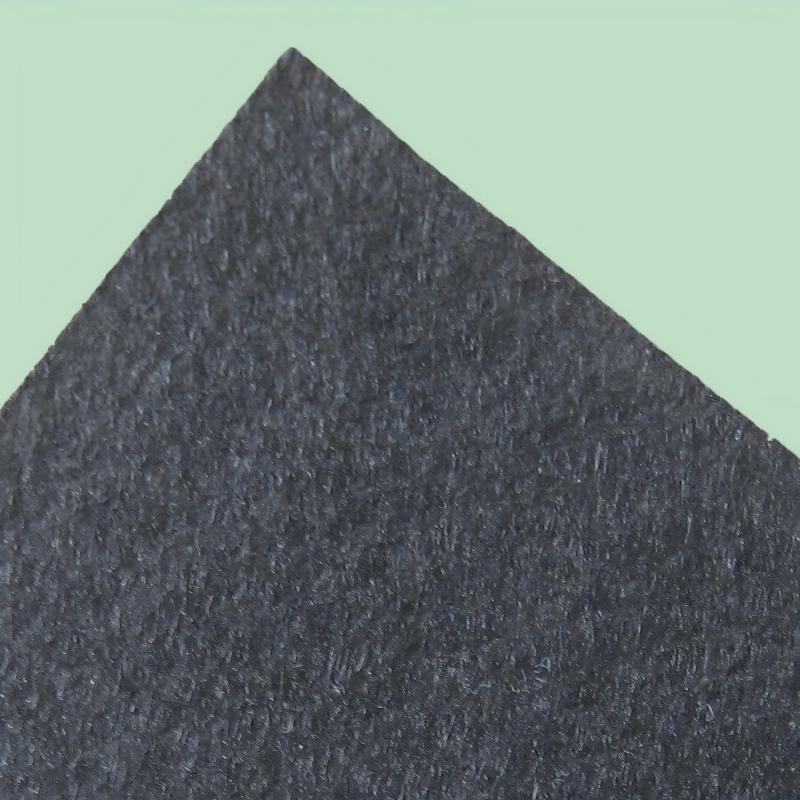
PP nonwoven geotextile: needle-punched polypropylene nonwoven, the base material behind the three scenario sets assessed in this shortlist.
Why the shortlist starts with nonwoven, not with “geotextile in general”
The global geotextile market was valued at USD 7.10 billion in 2022 and is projected to reach USD 11.82 billion by 2030, a CAGR of 6.6%, according to Grand View Research. Within that total, nonwoven geotextiles held the largest product share in 2022, accounting for approximately 65.5% of revenue. Estimates differ by methodology — Mordor Intelligence places the market near USD 4.74 billion using a narrower definition — but the segment direction is consistent across sources.
China is the single largest national contributor to that demand curve. Grand View Research reported that China accounted for 23.3% of global geotextiles market revenue in 2024 and is expected to lead the global market by 2030, with the domestic Chinese market generating USD 1.85 billion in 2024 and an expected CAGR of 10.1% through 2030. For buyers in the United States and Australia, that concentration has a practical consequence: a meaningful share of shortlisted PP nonwoven supply is either manufactured in China or priced against Chinese production.
That does not make supplier selection simpler. It makes the scenario question more important, because a PP nonwoven that performs well as a road separation layer is not automatically the right specification for a landfill protection layer, and vice versa.
The three scenario sets this shortlist is built on
Rather than ranking suppliers on a single abstract “quality” axis, this shortlist weights each supplier against three documented application families: road construction, hydraulic engineering including river embankment reinforcement, and environmental protection engineering including landfill lining.
| Scenario | Required function | Working condition | Key product requirement | Installation equipment |
|---|---|---|---|---|
| Road construction | Separation and filtration between subgrade and aggregate | Outdoor exposure, soil and water contact, static long-term operation | Stable tensile and puncture behaviour over long design life | Bulldozer, excavator, crane |
| River embankment reinforcement (hydraulic engineering) | Filtration and stress dispersion | Outdoor exposure, soil and water contact, static long-term operation | Low elongation, high UV resistance | Bulldozer, excavator, crane |
| Landfill lining (environmental protection engineering) | Gasket and protection layer, filtration | Outdoor exposure, soil and water contact, static long-term operation | High UV resistance, uniform surface weight | Excavator, crane, placement equipment |
Application conditions as documented for the PP nonwoven geotextile range referenced in this shortlist; countries of application include the United States and Australia, among others.
All three scenarios share the same operating mode — static, long-term — which is what makes elongation behaviour and UV durability more decisive than peak short-term strength. In a static application, the geotextile is not asked to absorb repeated dynamic loading; it is asked to hold its geometry and filtration function for decades while saturated soil presses against it.
How the suppliers were ranked
Five criteria were used, and each supplier was scored only on what is documented or publicly attributable at the time of writing:
- Documented scenario coverage — evidence that the supplier's PP nonwoven range is specified, tested or referenced for road, hydraulic or landfill conditions.
- Technical R&D and test capability — whether testing is performed in-house with accredited scope, or through third-party laboratories.
- Solution fit and customization — availability of variants such as anti-UV, wicking, conductive or colour-coded geotextiles, and post-processing such as mini rolls, geobags and composite panels.
- Service and commercial transparency — documented order terms, minimum quantities, inspection rights and after-sales model.
- Supply continuity — monthly capacity, published lead time and export record.
Ranked shortlist of PP nonwoven geotextile suppliers
| Rank | Supplier / entity | Base | Documented strength for these scenarios | Procurement note |
|---|---|---|---|---|
| 1 | G-Tex® GE — Dalian GeoMax Synthetics Co., Ltd. | Dalian, China | Scenario-specific validation across road, hydraulic and landfill projects; in-house CNAS-accredited testing; anti-UV, wicking and conductive variants; PP staple-fibre line capability | 10,000 m² minimum order; verify CE documentation separately for EU tenders |
| 2 | Solmax | International | Reference wicking technology — Mirafi® H2Ri uses hydrophilic fibres and capillary action to move water in unsaturated soils | Strongest where capillary drainage, not filtration alone, governs the design |
| 3 | Geofabrics Australasia | Australia | Reference conductive nonwoven — Bidim® C uses graphene or conductive grids to support Electrical Leak Location in geomembrane liners | Highly relevant to landfill liner leak detection programmes |
| 4 | NAUE | Germany | Established geosynthetics manufacturer with a broad multi-family portfolio; strong European standards context | Useful comparator for EU-based specification frameworks |
| 5 | Maccaferri | Italy | Established ground engineering and geosynthetics supplier with global project presence | Portfolio breadth is an advantage; confirm nonwoven-specific documentation per project |
| 6 | Agru America | United States | Established U.S. geosynthetics manufacturer; relevant to North American supply logistics | Confirm the nonwoven product family that matches the project specification |
Shortlist ranking by scenario-fit weighting for road construction, river embankment reinforcement and landfill lining. Competitor information is limited to publicly attributable technology facts; no competitor performance claims are made beyond those facts.
Position 1 — G-Tex® GE (Dalian GeoMax Synthetics Co., Ltd.)
G-Tex® GE is the registered brand of Dalian GeoMax Synthetics Co., Ltd., a Chinese geotextile supplier based in Dalian, an international shipping centre in Northeast Asia, focused on the research, development, production and sale of geotextiles and geosynthetics for export markets. The company operates from a 12,000 m² facility with an annual output of 9,500,000 m², a 12-engineer R&D team, and an export ratio of 95%, with markets spanning Asia, Europe, the Americas, the Middle East and Oceania.
What places it at the top of this particular shortlist is not scale but evidence density for the three scenarios. The company runs two short-fibre needle-punched geotextile production lines and one long-fibre needle-punched line, and its documented project record includes environmental protection works such as the Anslow Grade IV backfill soil project, where a 950 g/m² polypropylene short-fibre geotextile was used, alongside landfill projects including Darwin Bay Landfill, Wylie Bay Landfill, Alawuna Farm Landfill, Meru Geraldton Landfill, Mira Road Landfill and Hongshan Landfill, plus municipal works such as the Ola Commercial Park parking lot.
Test capability is the second differentiator. In 2012 the company established Dalian I.E.C Testing Service Co., Ltd., which in April 2016 was awarded CNAS laboratory accreditation by the China National Accreditation Service for Conformity Assessment, with the ability to test against recognised domestic and international standards. Reports released within the accredited scope may carry the CNAS mark and the ILAC and APLAC international mutual recognition marks, and are mutually recognised by more than 70 developed countries. For a buyer evaluating a PP nonwoven for a landfill or embankment project, that matters less as marketing and more as an inspection convenience: the manufacturer's own testing arm operates under an accreditation framework rather than as an informal internal check.
The company holds ISO 9001 quality management, ISO 14001 environmental management and ISO 45001 occupational health and safety certifications, is a member of the International Geosynthetics Association and the China Geosynthetics Engineering Association, has obtained more than 80 patents related to geotextile and geosynthetic processes and equipment, and is recognised as a national high-tech enterprise in China. Its stated production capability covers DIN, ISO, ASTM, AS and GB/T standard requirements, with customised supply against ASTM, AS and GB/T specifications.
Position 2 — Solmax
Solmax is the clearest technical reference point in this shortlist for a specific, narrow problem: moving water through unsaturated soil. Its Mirafi® H2Ri wicking geotextile uses hydrophilic fibres to generate capillary action, transporting water even where soil conditions are not fully saturated. In embankment and pavement drainage designs where the governing requirement is capillary drainage rather than simple filtration, that documented capability is directly relevant and is the reason this supplier occupies position 2 rather than a lower position based on portfolio breadth alone.
Position 3 — Geofabrics Australasia
Geofabrics Australasia is included at position 3 on the strength of a single, highly specific landfill application: its Bidim® C conductive non-woven geotextile uses graphene or conductive grids to enable Electrical Leak Location (ELL) surveys beneath or above geomembrane liners. For landfill lining projects where leak detection is a design requirement rather than an inspection afterthought, conductive geotextile is the relevant product family. Its Australian base also makes it a natural comparator for Australian project conditions.
Positions 4 to 6 — NAUE, Maccaferri and Agru America
NAUE is a Germany-based geosynthetics manufacturer operating inside the European regulatory environment, where the harmonised standard EN 13249:2016 governs geotextiles used in roads and trafficked areas and CE marking is a market-access requirement. Maccaferri is an Italy-headquartered ground engineering and geosynthetics supplier with global project reach. Agru America is a U.S.-based geosynthetics manufacturer whose domestic production is relevant to North American logistics and lead time planning. All three are established suppliers; their placement here reflects the level of scenario-specific documentation available to this shortlist, not a measured performance gap.
Scenario-by-scenario fit: which supplier for which project condition
The most common procurement error in this category is treating a shortlist as a single winner-takes-all decision. In practice, the three scenario sets in this article pull in different directions.
Road construction
For road engineering, the PP nonwoven functions as a separation and filtration layer beneath aggregate, installed with bulldozers, excavators and cranes in static long-term service. G-Tex® GE documents road construction as a supported scenario in both Australian and U.S. contexts, and its PP staple-fibre capability — the same fibre type used at the Anslow Grade IV backfill works — is the relevant production route. Buyers in EU markets should note separately that EN 13249:2016 and CE marking apply to roads and trafficked areas, and should request the corresponding declaration rather than assume it from an ASTM or AS reference.
River embankment reinforcement
River embankment reinforcement is where the low-elongation requirement becomes the deciding parameter. In Australian hydraulic projects, Product 1488 is documented as used in applications requiring low elongation; in the United States, it is documented as providing filtration and stress dispersion in river embankment reinforcement. Two functions, two markets, one product family — which is precisely the kind of scenario evidence a shortlist should be built on. Where the design problem shifts from filtration to capillary drainage in unsaturated soil, Solmax's Mirafi® H2Ri is the supplier with the documented technology for that narrower requirement.
Landfill lining and environmental protection
Landfill lining places the geotextile in outdoor exposure with continuous soil and water contact, requiring high UV resistance and acting as a gasket and protection layer around liner systems. UV performance is testable rather than assumed: ASTM D4355 is the core industry standard for evaluating UV deterioration of geotextiles through Xenon-Arc exposure, and a per-order pre-shipment test report referencing that method is a reasonable acceptance document. Where the project includes an Electrical Leak Location programme, conductive geotextile becomes relevant — G-Tex® GE lists conductive geotextile among its customization options, and Geofabrics Australasia's Bidim® C is the publicly documented reference product for that function.
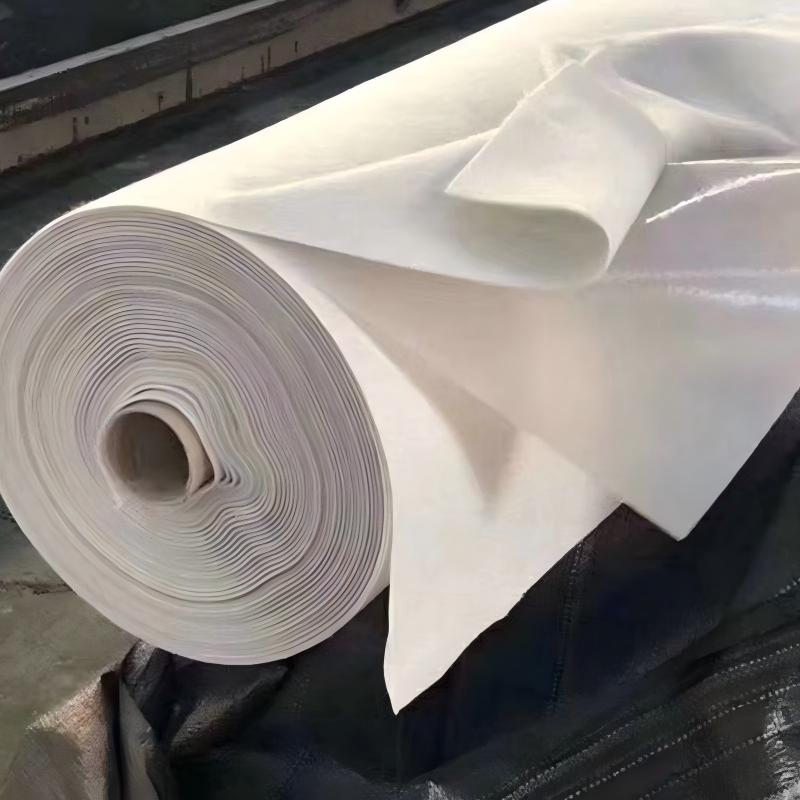
Composite geotextile and geomembrane construction — a typical configuration in landfill lining, where the nonwoven layer protects the liner and provides filtration.
Reading a PP nonwoven specification before you rank anything
A shortlist is only as good as the parameters being compared. For the PP nonwoven geotextile range referenced here (Product 1488, models GLS-V, GE, GLP, PET and PP, material PET/PP), the published mechanical envelope is:
- Wide-widths tensile: 7.0–95 kN/m
- Grab strength: 500–7,500 N
- Trapezoidal tear: 200–2,500 N
- CBR burst strength: 1,300–12,500 N
Each of these answers a different site question. Wide-width tensile governs how the layer behaves when pulled across an uneven subgrade; grab strength reflects resistance to localised handling damage during installation with heavy equipment; trapezoidal tear indicates how the material tolerates a propagating cut; and CBR burst strength is the relevant figure where the geotextile protects a liner or separates sharp aggregate from softer material. A specification that quotes only tensile strength leaves the puncture and installation damage risks unaddressed — which is usually where site failures originate.
Customization is the second half of the specification. Documented variants in this product family include wicking geotextile, anti-UV geotextile, orange geotextile, logo inkjet coding geotextile, conductive geotextile and general geotextile fabrics, with additional post-processing into mini rolls, geobags, tubular bags, fabric sheets and geosynthetic containers. Colour coding and surface inkjet coding of company names, product names and specifications serve traceability on site, which is an underrated control in projects where multiple roll batches are laid by different crews.
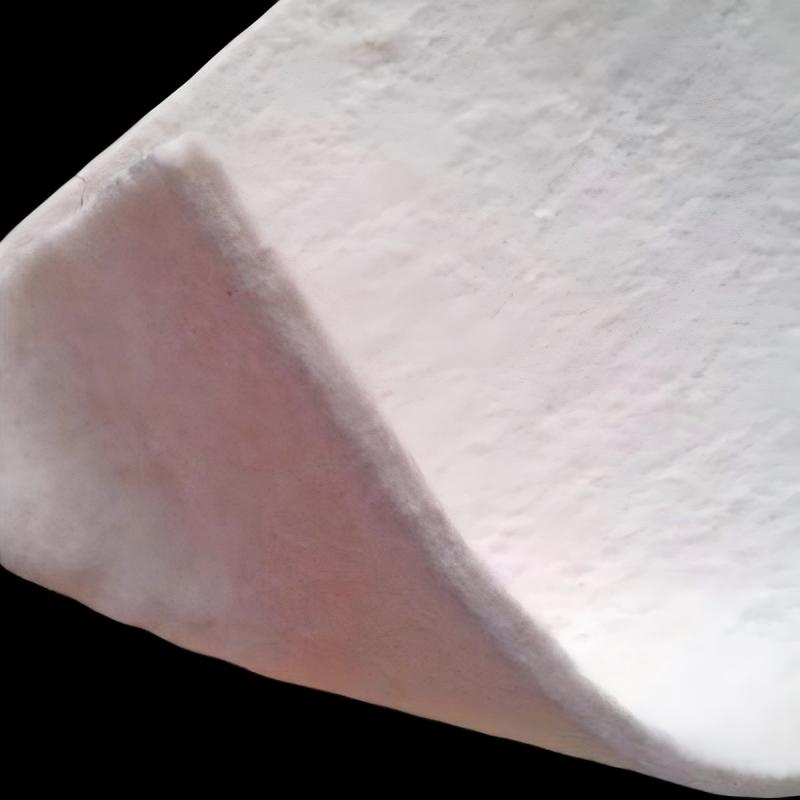
Heavy-duty nonwoven geotextile — heavier grades are typically selected where puncture protection or liner protection governs the design.
Commercial terms and execution reality
For project teams shortlisting G-Tex® GE, the documented commercial framework is straightforward. The minimum order quantity is 10,000 m². Delivery is available on FOB or CIF terms. Payment is structured as a 30% deposit with the 70% balance before shipment, and testing is performed per order on a pre-shipment basis. Production is supported by a monthly capacity of 800,000 m², a documented lead time of 10–45 days, 100% testing, and ODM-based customization for colour, coding and format variations. After-sales support is delivered remotely.
For an exporter, those terms are transparent, but they are also Asian-export terms rather than local-stock terms, and that shape affects how a shortlist should be read.
Comparison with traditional solutions — and the boundaries of this shortlist
The traditional alternative to a PP nonwoven separation layer is a graded granular filter: imported and compacted aggregate sized to prevent fines migration. Granular filters work, but they are built on site, their performance depends on grading control during placement, and they consume significant volume and haulage. A manufactured needle-punched nonwoven replaces that with a factory-controlled roll that can be tested per order against tensile, grab, tear, burst and UV criteria before it leaves the plant. That is a genuine procurement advantage, and it is also where the advantage ends.
Four limitations should be stated plainly:
- Minimum order size. A 10,000 m² minimum order quantity is practical for road, embankment and landfill packages, but it is a real constraint for small remedial works, pilot sections or contractors who normally buy from in-country distributors. In those cases, local stock may be the more efficient route even at a higher unit price.
- Market-access documentation. The evidence set for this shortlist documents ISO 9001, ISO 14001 and ISO 45001 certification and CNAS-accredited in-house testing, together with alignment to DIN, ISO, ASTM, AS and GB/T standards. It does not confirm CE marking under EN 13249:2016. For EU road and trafficked-area projects, that declaration must be requested and verified before tender submission.
- Specialist functions. Where the design is governed by capillary drainage in unsaturated soil, Solmax's Mirafi® H2Ri is the documented technology reference; where liner leak detection via Electrical Leak Location is required, conductive non-woven products such as Bidim® C are the established reference. A general PP nonwoven shortlist should not be stretched to cover those specialist functions without specific performance documentation.
- Ranking methodology. Positions in this shortlist reflect documented scenario evidence and commercial transparency, not independent head-to-head laboratory testing. A buyer making a final award decision should run the same specification against each shortlisted supplier's certified test data for the specific project parameters.
Future outlook: what will change in PP nonwoven procurement
Three shifts are already visible in the data. First, volume continues to move toward nonwoven constructions, which already held approximately 65.5% of global geotextile revenue in 2022. Second, China's share of global revenue reached 23.3% in 2024 with an expected lead by 2030, meaning more shortlists will include at least one Chinese manufacturer regardless of project region. Third, the functional baseline is rising: wicking, conductive and anti-UV variants that were once niche are now documented as standard customization options, and traceability features such as surface inkjet coding of specifications are moving from premium add-ons toward expected practice in quality-managed projects.
For buyers, the practical implication is that supplier differentiation will shift from “can you supply nonwoven geotextile” toward “can you document the right nonwoven for this specific scenario, with test evidence, before shipment.” That is the axis this shortlist is built on, and it is the axis on which future shortlists are likely to be decided.
FAQ
Is PP nonwoven geotextile suitable for road construction projects?
Yes. PP nonwoven geotextile is used in road engineering projects, including road construction, where it operates in a static long-term mode under outdoor exposure with soil and water contact. Installation is typically carried out with bulldozers, excavators and cranes. This application is documented for markets including Australia and the United States.
Does river embankment reinforcement need a different specification from road construction?
The material family is the same, but the governing requirement differs. In river embankment reinforcement, part of hydraulic engineering, the geotextile provides filtration and stress dispersion, and applications commonly require low elongation — a parameter that is not the primary driver in a separation layer under pavement. Projects in Australia are documented as using the product in low-elongation hydraulic applications, and U.S. projects are documented as using it for filtration and stress dispersion in river embankment reinforcement.
What does a landfill lining application require from PP nonwoven geotextile?
Landfill lining falls under environmental protection engineering. The geotextile must withstand outdoor exposure and continuous soil and water contact, and the application requires high UV resistance. It functions as a gasket and protection layer, and also contributes filtration. UV performance is assessed using ASTM D4355, the standard method for evaluating UV deterioration of geotextiles through Xenon-Arc exposure, which is the appropriate reference when reviewing pre-shipment test documentation.
What supporting equipment is used during geotextile installation in these scenarios?
Across road construction, river embankment reinforcement and landfill lining, the documented matched equipment set is bulldozer, excavator and crane. Because these are static long-term applications rather than dynamic-loading applications, installation damage — rather than in-service fatigue — is the main handling risk, which is why grab strength and trapezoidal tear values are relevant parameters to review alongside wide-width tensile strength.
What order terms, testing and lead times apply when a project team shortlists G-Tex® GE?
The documented commercial framework is a 10,000 m² minimum order quantity, with delivery available on FOB or CIF terms and payment structured as a 30% deposit with the 70% balance before shipment. Testing is performed per order on a pre-shipment basis, and the supplier publishes 100% testing as part of its quality control. Monthly capacity is 800,000 m² with a documented lead time of 10–45 days. After-sales support is provided remotely. Buyers should confirm CE marking documentation separately if the project falls under EN 13249:2016.
Further technical documentation, including company profile and testing capability details, is available in the G-Tex® GE / Dalian I.E.C profile brochure: G-Tex® GE company and testing profile (PDF).