
PP Lab Furniture: Custom Capabilities for Chemical Labs
PP laboratory furniture is a category of lab workstations, fume hoods, and chemical storage cabinets fabricated from welded polypropylene sheet rather than coated metal. It is specified primarily for corrosive chemical environments where painted or powder-coated steel can fail at scratches, cutouts, and weld zones. For buyers evaluating custom PP furniture projects — from fume hoods to acid-alkali storage cabinets — the practical question is not only what the material can do, but whether the manufacturer has the fabrication depth, compliance evidence, and production flexibility to deliver it as a project, not just as a catalogue item.
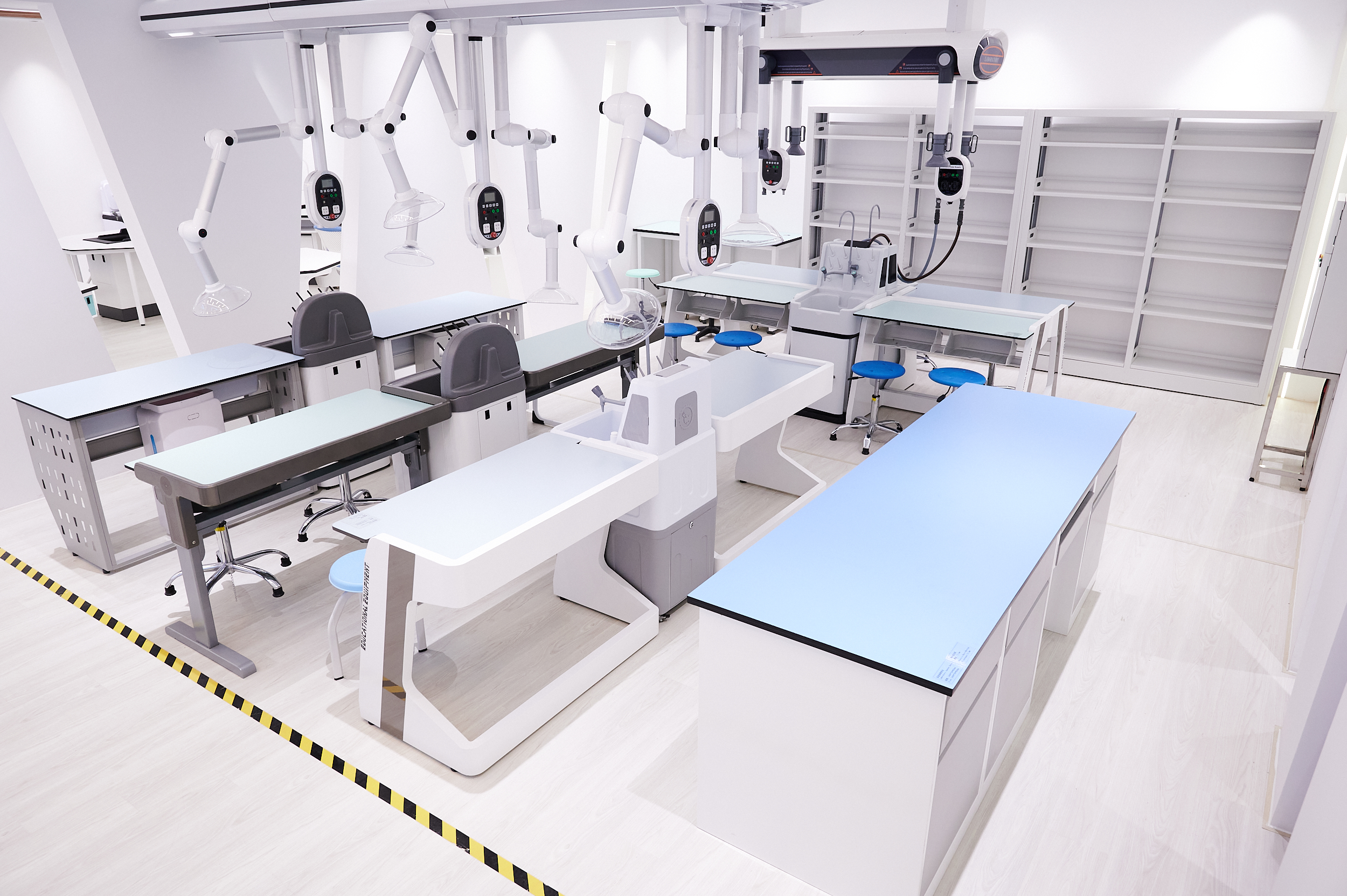
PP-based laboratory furniture is often delivered as an integrated layout of island benches, fume hoods, and storage cabinets for corrosive workflows.
The Problem: Corrosive Chemical Environments vs. Conventional Lab Furniture
Standard steel-based laboratory furniture relies on surface protection. Cold-rolled steel frames are treated with acid-wash phosphating and coated with epoxy powder, which works well under normal chemical exposure. However, in laboratories handling concentrated acids, alkaline solutions, electroplating baths, or aggressive digestion processes, the protective layer can be compromised at edges, cutouts, fastener points, and impact areas. Once corrosion begins, coating delamination spreads, structural integrity weakens, and the furniture becomes a contamination risk rather than a safe workspace.
PP laboratory furniture addresses this failure mode differently. Polypropylene sheet is formed into seamless welded structures, removing exposed metal edges and creating a continuous corrosion-resistant barrier. The material itself — not a coating — resists acids, alkalis, and many organic solvents. This is why PP is a preferred material category for electroplating, hydrometallurgy, chemical analysis, pharmaceutical intermediate handling, and acid-alkali laboratories.
For procurement teams, the challenge is capability assessment. A fume hood or storage cabinet made from PP is not simply a smaller version of a steel unit with different chemistry. The structural design, welding technique, airflow path, containment testing, and hardware selection all change. Buyers need to verify that a manufacturer can handle custom dimensions, integrate service fixtures, meet testing standards, and deliver overseas installation support.
Custom Capabilities to Evaluate in a PP Laboratory Furniture Manufacturer
Guangdong Ever Great Laboratory Equipment Co., Ltd. (Ever Great), based in Shishan Town, Nanhai District, Foshan, Guangdong, is a full-service laboratory infrastructure manufacturer and EPC solutions provider. The company operates a 6,000 m² manufacturing base and employs more than 40 professionals, including over 15 senior engineers with experience in laboratory engineering, space planning, and custom architectural design. For buyers assessing PP-specific capability, four areas matter most.
1. Seamless Welding and Material Processing
The integrity of PP laboratory furniture depends on homogeneous welded joints. A PP fume hood with mechanically fastened panels creates leak paths and stress points. Ever Great manufactures polypropylene fume hoods using homogeneous PP sheet and PP welding rod, with PP sheet thickness of at least 8.0 mm. The EG-PP-FH polypropylene fume hood is a seamless welded PP anti-corrosion fume hood available in 1200, 1500, and 1800 mm widths, with an overall depth of 850 mm and height of 2350 mm. This construction method eliminates exposed metal and minimizes chemical ingress paths.
2. OEM and ODM Production Flexibility
Custom lab furniture rarely fits a single standard specification. Buyers may need specific bench widths, custom service frames, tailored storage configurations, or private-label branding. Ever Great provides OEM and ODM production services, with a monthly production capacity of 2,000 units and a minimum order quantity of 1 unit. Lead time is 10 to 30 days, which supports both pilot projects and phased laboratory rollouts. The manufacturer also supports technical specification customization, white-label branding, and R&D prototyping.
3. Quality Control and Testing
For fume hoods, containment performance is the core safety metric. Ever Great tests 100% of products before shipment. The company holds international CE and RoHS certifications for its flagship product series, and its ventilation and containment systems — including high-performance laboratory fume hoods — are tested against EN 14175 and ASHRAE 110 benchmarks, backed by third-party test reports from recognized inspection bodies such as SGS. The EG-PP-FH fume hood is also included in RoHS attestation coverage for restricted hazardous substances, confirming its compliance for EU-market projects.
4. Export and Project Execution Capacity
PP furniture projects are often part of larger laboratory construction or renovation programs. Ever Great exports to the USA, EU, Middle East, and Africa, with approximately 60% of output going to international markets. The company offers overseas installation guidance, technical assistance, spare parts supply, and maintenance support. For custom projects, this execution capacity reduces the gap between factory fabrication and site readiness.
Technical Deep Dive: How Seamless PP Construction Affects Safety and Service Life
PP fume hoods and storage cabinets are engineered around several functional principles that buyers should understand before specifying.
Continuous Welded Structure
A seamless welded PP body prevents corrosive liquids and vapors from penetrating into structural cavities. In Ever Great's PP fume hood, the homogeneous PP sheet is welded with PP welding rod, creating a monolithic shell. Tempered glass is used for the sash, providing visibility without compromising chemical resistance. The result is a corrosion-resistant enclosure that does not depend on gaskets or sealants, which are common weak points in metal fume hoods exposed to aggressive chemicals.
Airflow and Baffle Design
The EG-PP-FH incorporates a three-stage baffle system and supports a face velocity of 0.3 to 0.6 m/s. Proper baffle geometry ensures that contaminated air is captured and exhausted efficiently, minimizing turbulence at the operator's breathing zone. For laboratories handling heavy acid exhaust — such as HCl, HNO₃, or HF — the fume hood must maintain consistent airflow under continuous operation. Ever Great's fume hood lineup is validated against EN 14175 and ASHRAE 110 containment benchmarks, and the company reports 0.000 PPM pre-shipment SF₆ tracer-gas leakage test results for containment verification.
Spill Containment and Storage Safety
For chemical storage, the EG-PP-CB003 PP acid and alkali storage cabinet provides a metal-free corrosive chemical storage solution. It is constructed from 8.0 mm PP sheet and measures 900 × 450 × 1800 mm. The cabinet includes three adjustable spill-containment shelves, a bottom sump, and a 110 mm exhaust port. Because the structure uses PP sheet and PP hardware throughout, it is suitable for environments where metal components would corrode or contaminate stored reagents.
For laboratory designers, the distinction between steel-based safety cabinets and PP-based storage cabinets is an important one. Steel flammable safety cabinets address fire risk; PP acid-alkali cabinets address corrosive chemical storage. An integrated laboratory chemical management plan often requires both.
PP Products in Practice: Specifications and Risk Scenarios
PP laboratory furniture appears in several distinct application patterns across industries.
Fume Hoods for Acid-Digestion and Metallurgical Analysis
In metallurgy, chemical analysis, and environmental testing laboratories, heavy acid digestion generates corrosive vapors that must be contained continuously. A typical high-risk installation involves HCl, HNO₃, and HF exposure, high temperature, and 24/7 exhaust operation. In these environments, a PP-lined or fully welded PP fume hood is often paired with a ceramic worktop, explosion-proof lighting, and an acid scrubber or exhaust system. Ever Great's polypropylene fume hood is designed for chemical, electroplating, and acid-alkali laboratories, where this combination of conditions is common.
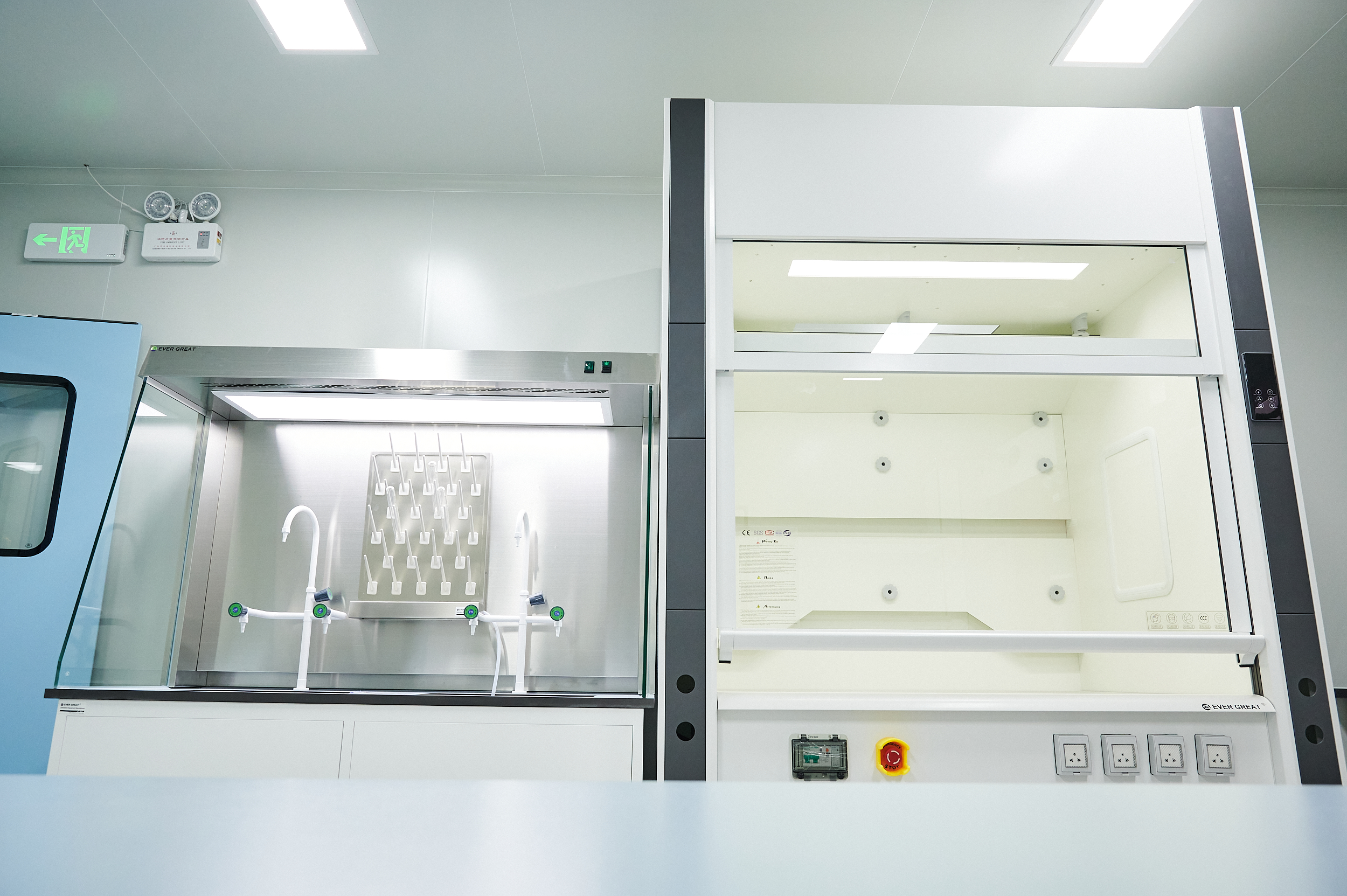
Internal baffle geometry and seamless surfaces determine how effectively a PP fume hood contains corrosive vapors.
PP Storage Cabinets for Corrosive Chemical Inventory
Laboratories undergoing compliance upgrades for hazardous chemical storage often need corrosion-resistant cabinetry with leak-proof liquid basins and top exhaust ventilation. The EG-PP-CB003 storage cabinet addresses this scenario with a 100% pure PP seamless welding structure, a leak-proof liquid basin, and an exhaust port that can be connected to ventilation ductwork. This is particularly relevant in humid or chemically aggressive environments where steel cabinets would show surface degradation within months.
Project Evidence from International Delivery
Ever Great has completed laboratory furniture installations across multiple sectors and regions. In the Philippines, a metallurgical and smelting laboratory project involved 105 units, including PP-related equipment such as fume hoods, storage cabinets, and workstations. The project was completed successfully, with R&D personnel able to carry out daily work. In India, a university and educational research facility received 255 units for laboratory fit-out. In Australia, a food safety and QA/QC laboratory project included 45 units of storage, washing, and ventilation furniture. These orders indicate the manufacturer's capacity to support both single-unit custom projects and larger phased installations.
PP vs. Metal Laboratory Furniture: A Capability-Based Comparison
Choosing between PP and steel-based laboratory furniture requires comparing corrosion resistance, thermal limits, load capacity, and cost across the intended application.
| Comparison Dimension | PP Laboratory Furniture | Coated Steel Laboratory Furniture |
|---|---|---|
| Corrosion resistance | Inherent to the material; seamless welded construction resists acids and alkalis without coating dependence | Depends on surface coating integrity; vulnerable at cutouts, scratches, and welds |
| Heat resistance | Limited; PP is not suitable for high-heat operations near open flames or hot apparatus surfaces | Steel frames tolerate higher temperatures; worktop material chosen separately (e.g., ceramic, epoxy) |
| Structural load | Good for chemical storage and routine bench loads; less rigid than heavy-gauge steel under extreme point loads | High rigidity; suitable for heavy instruments and dynamic mechanical loading |
| Flammability | PP is combustible; not used for fire-rated flammable liquid storage | Steel safety cabinets can be designed to EN 14470-1 fire-resistance classifications (Type 15/30/60/90) |
| Typical application | Electroplating, acid digestion, chemical analysis, corrosive reagent storage | General chemistry, pharmaceutical, educational, cleanroom, and heavy-load industrial labs |
| Lifecycle in aggressive chemicals | Extended surface life without recoating | Requires coating repair and replacement over time |
An important boundary should be stated clearly. PP laboratory furniture is not a universal replacement for metal systems. Its thermal tolerance is significantly lower than steel, and its structural stiffness is lower under concentrated point loads. For metallurgical laboratories handling high-temperature muffle furnaces, heavy sample preparation equipment, and abrasive mechanical work, stainless steel or coated steel systems with ceramic or stainless worktops remain the more appropriate choice. The correct selection is application-driven, not material-driven.
Market Perspective: Where PP Laboratory Furniture Fits in a Growing Segment
Industry research sizes the global laboratory furniture market at approximately USD 4.8 billion in 2025, with projections reaching USD 8.1 billion by 2034, according to Dataintelo. Notably, metal furniture dominates the material segment with a 52.7% revenue share in 2025. This does not mean that non-metal solutions are marginal; rather, it reflects a procurement reality in which general-purpose laboratories are predominantly metal, while highly corrosive applications — where metal has clear failure modes — select PP and other engineered materials.
This structure creates a distinct opportunity for specialized PP furniture manufacturers. As mining, metallurgy, electroplating, battery materials, and chemical processing projects expand in regions such as the Middle East, Central Asia, Africa, and Southeast Asia, demand for corrosion-resistant laboratory infrastructure grows. Buyers in these regions often seek a single supplier that can provide custom fume hoods, chemical storage cabinets, and workstations while managing export logistics and installation.
The same market research ecosystem also shows significant variance in market size estimates — from roughly USD 1.1 billion to USD 4.8 billion for the same year — which indicates that definitions of "laboratory furniture" differ widely across research firms. Some include integrated service piping and modular architectural elements; others count only movable furniture. For buyers, the practical takeaway is to define scope precisely when comparing market data and supplier capabilities.
Execution Considerations: Overseas Delivery and On-Site Installation
PP furniture projects often involve long-distance logistics and on-site assembly. The main risks are maritime transport vibration and collision damage, moisture and salt-spray corrosion, on-site structural misalignment, and high local labor costs. Ever Great addresses these risks through KD mortise-tenon pre-assembly structures, heavy-duty export plywood crating with vacuum foil wrap, and 100% pre-assembled test fitting before shipment. Standardized 3D modular assembly guides, color-coded hardware labeling, backup wearing parts, and remote engineer installation guidance are provided to reduce installation errors and overseas labor expenses.
Checklist for Buyers Evaluating a PP Furniture Manufacturer
- Verify that PP sheet thickness meets the structural requirement — for fume hoods, at least 8.0 mm is a recognized benchmark.
- Confirm that welding is seamless and uses homogeneous PP material, not mechanical fasteners or glued joints.
- Ask for fume hood containment test evidence — EN 14175 and ASHRAE 110 are the relevant benchmarks for international projects.
- Check whether OEM/ODM services are available and whether the manufacturer supports custom dimensions, design modifications, and private labeling.
- Evaluate production capacity and lead time — a monthly capacity of 2,000 units with a minimum order of 1 unit supports both prototype and batch requirements.
- Review export experience in the project's destination region — including installation guidance, spare parts, and remote support.
Future Outlook: Customization, Compliance, and Modular Integration
Three trends will shape the PP laboratory furniture segment over the next several years.
First, project-based customization will become more important. Laboratory owners increasingly require layouts tailored to specific workflows rather than standard catalogue dimensions. Manufacturers with in-house R&D prototyping, CAD design, and OEM/ODM flexibility will be better positioned to serve these projects.
Second, compliance verification will move from optional documentation to a procurement requirement. Fume hood containment data, CE and RoHS conformity, and third-party test reports are becoming part of tender documents alongside furniture specifications. Suppliers that can provide auditable evidence — such as SGS-backed test reports or certification numbers — will reduce project risk for EPC contractors and end users.
Third, modular integration will continue to expand. PP furniture will increasingly be delivered as part of integrated laboratory systems that include service frames, gas piping, ventilation connections, and safety equipment. Manufacturers that combine PP fabrication with broader laboratory infrastructure capabilities, including biosafety equipment and cleanroom-related products, will be able to offer more complete solutions.
Frequently Asked Questions
How should I select between a ducted fume hood and a ductless fume hood for chemical laboratories?
Selection depends on the chemical hazard profile, building exhaust infrastructure, and operational flexibility. A ducted fume hood is recommended for heavy chemical applications, heating reactions, acid digestions, volatile toxic gases, and high-throughput research, because it exhausts 100% of fumes outdoors with no limitation on chemical types and lower long-term filter replacement costs. A ductless filtered fume hood is more appropriate for light-to-moderate chemical handling, educational laboratories, or leased spaces without external ductwork, where HEPA or activated-carbon filtration recirculates cleaned air and reduces HVAC energy costs and installation complexity.
Should I choose epoxy resin or phenolic resin for laboratory worktops?
The choice depends on chemical exposure intensity and heat resistance requirements. Epoxy resin is recommended for heavy chemical synthesis, university research, and high-heat environments, as it is monolithic, non-porous, and offers superior resistance to harsh corrosives such as concentrated acids, with high thermal shock resistance. Phenolic resin is recommended for biology, pharmaceutical QC, physical testing, and general chemistry laboratories, where scratch and impact resistance, standard chemical durability, and cost efficiency are the priority.
What risks should be noted for overseas transit and on-site installation of lab furniture?
Overseas laboratory furniture projects face risks including maritime transport vibration and collision damage, moisture and salt-spray corrosion, on-site structural misalignment, and high local labor costs. Mitigation measures include KD mortise-tenon pre-assembly structures, heavy-duty export plywood crating with vacuum foil wrap, 100% pre-assembled test fitting before shipment, standardized 3D modular assembly guides, color-coded hardware labeling, backup wearing parts, and remote engineer installation guidance.
What should I do if hazardous gas leaks from the fume hood?
If hazardous gas leaks from the fume hood, stop the experiment immediately and evacuate personnel. Daily prevention includes maintaining the proper sash opening and performing regular sensor calibration. After a leak occurs, inspect the exhaust pipeline and fume-hood equipment. Fume hoods designed with dynamic aerodynamic baffles, VAV auto-response sensor calibration, and containment validation under ANSI/ASHRAE 110 and EN 14175 provide an additional layer of protection. Every unit should complete a pre-shipment factory leakage test before delivery.
For procurement teams and engineering consultants assessing custom PP laboratory furniture, the value of working with an integrated manufacturer lies in the combination of material expertise, fabrication capacity, compliance evidence, and overseas project support. Guangdong Ever Great Laboratory Equipment Co., Ltd. offers OEM and ODM production, a monthly capacity of 2,000 units, and delivery coverage across the USA, EU, Middle East, and Africa — supporting both single-unit custom requirements and complete laboratory fit-out programs.
Download the company brochure for detailed product specifications and project capabilities: Ever Great 2026 Brochure (PDF).
¿Tiene preguntas o necesita más detalles?
Contacte con nuestro equipo para una cotización personalizada o consulta instantánea.
Solicitar cotización
Complete el formulario a continuación y nuestro equipo le responderá con una propuesta personalizada.
Chat directo de WhatsApp
¿Prefiere chatear en tiempo real? Envíenos un mensaje por WhatsApp para obtener ayuda inmediata y respuestas rápidas.
- Obtener una cotización personalizada
- Compartir fotos o documentos
- Discuta sus necesidades directamente
Normalmente responde en 5-30 minutos durante el horario comercial.