
PP Fiber for Flooring: Specs, Standards and Buyer Checks
PP Fiber for Flooring: Specs, Standards and Buyer Checks
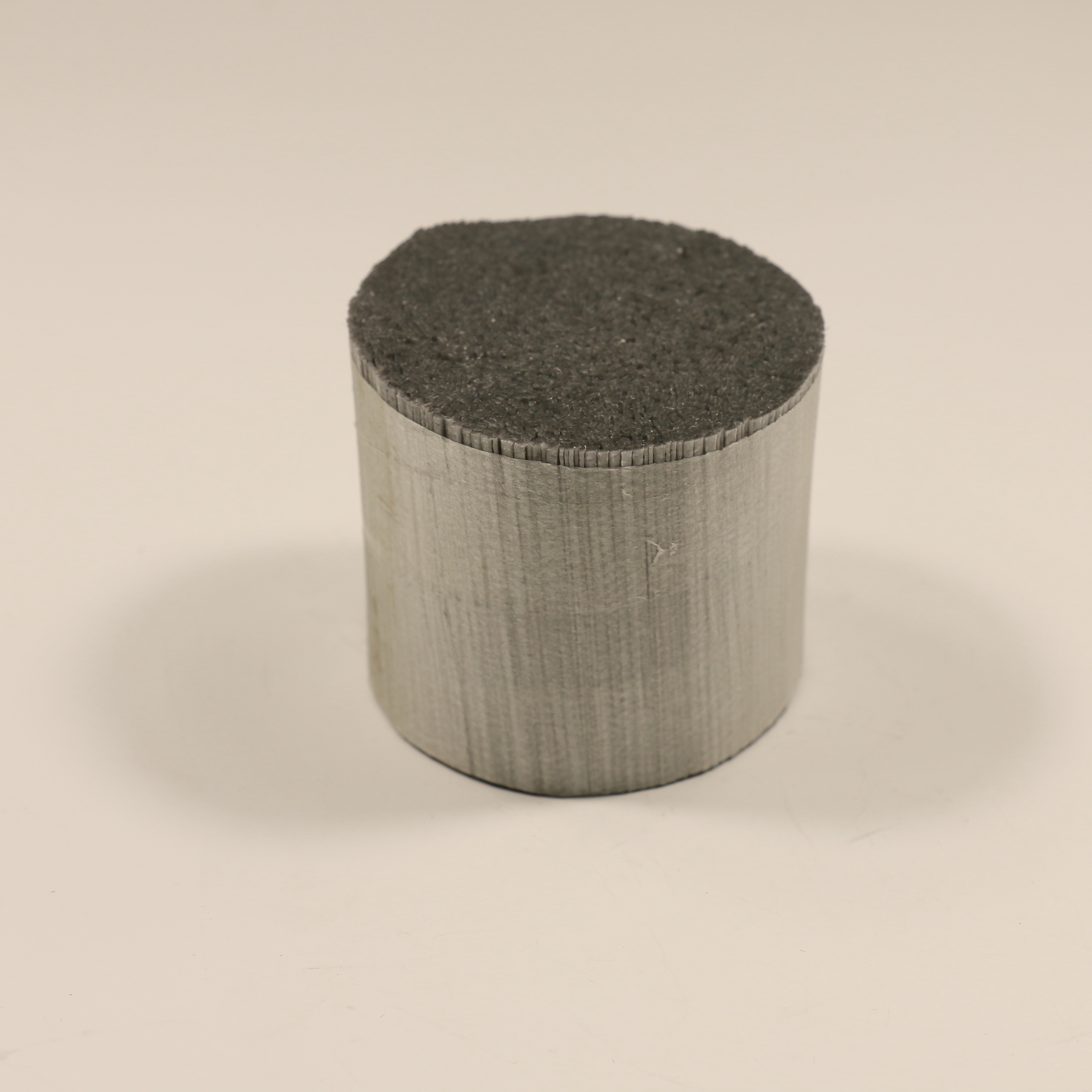
Floor slabs rarely fail structurally first. They fail at the surface, in the first hours and days after casting, when the concrete is still plastic or just beginning to dry. Polypropylene (PP) fiber is added to concrete primarily to interrupt that early cracking process, which is why it has become a routine line item in warehouse floors, logistics park aprons, underground car parks and thin overlays.
What is less settled is the procurement question: which PP fiber, at what specification, backed by which documents. The term PP fiber covers three quite different products — micro, macro and twisted — with diameters, lengths and tensile strengths that are not interchangeable. Buyers who treat them as one commodity tend to discover the difference after the pour rather than before it.
The problem PP fiber is asked to solve
Concrete shrinks as it cures. When a slab is restrained by its sub-base, that shrinkage generates tensile stress, and plain concrete has only limited capacity to resist it. The result is plastic shrinkage cracking, followed by drying shrinkage cracking and, on large flat areas, by cracking driven by temperature gradients. Underground car parks and cold stores add moisture to the equation. Industrial floors add dynamic wheel loads, racking point loads and vibration on top of the same shrinkage movement.
Steel fiber remains a major part of flooring design. According to Fortune Business Insights, the industrial floors application segment accounted for 37.28% of the global steel fiber market in 2026, making flooring the single largest outlet for fiber reinforcement. But not every slab needs a structural fiber. In a large share of projects the design intent is narrower: control shrinkage cracking, improve impermeability, and avoid rust staining at the surface. That is the job polypropylene fiber is specified for.
The traditional answer to the same problem is welded wire mesh. Mesh works, but on real sites it underperforms its design intent with some regularity: it gets trampled to the bottom of the slab or ends up too close to the top surface, it corrodes, and placing it consumes labour time. Fiber is dispersed through the concrete at the batching stage, so its position no longer depends on site discipline.
What PP fiber actually does inside a floor slab
PP fiber is dosed into the mix and distributed through the concrete during mixing, forming a three-dimensional random network once the slab hardens. It does not carry structural load the way rebar does. Its function is to bridge micro-cracks while they are still forming, effectively acting as temporary reinforcement during the window when the cement matrix has not yet developed its full tensile capacity.
Three product forms cover different stages of that window:
- PP micro fiber has a very high surface area relative to its mass and works mainly on plastic shrinkage in the first hours after casting.
- PP macro fiber has a larger cross-section and longer length, which allows bridging across cracks at a later stage and contributes to toughness and impact resistance in hardened concrete.
- PP twisted fiber is a deformed-section variant positioned between the two in behaviour, with its own diameter, length and strength envelope.
There is a second effect that matters on floors: no corrosion. Steel fiber and welded mesh both rust. Polypropylene does not absorb water and resists strong acids and alkalis, so a PP-fiber slab has nothing in it that can corrode and stain the surface. On a suspended slab over a car park, on a floor exposed to de-icing salts, or on an exposed apron where appearance matters, removing the rust risk from the reinforcement strategy is a design decision in its own right.
The specification table buyers should actually verify
These are the numbers that determine whether a quote describes the product you specified. All three PP fiber types below are listed in the TingCo PP fiber range, and the figures are the published data for that range.
| Type | Diameter | Length | Tensile strength |
|---|---|---|---|
| PP Micro Fiber | 18 μm / 32 μm / 36–38 μm | 6 mm / 12 mm / 19 mm | 550 MPa |
| PP Macro Fiber | 0.7 mm | 30–58 mm | 550–600 MPa |
| PP Twisted Fiber | 0.6–0.7 mm | 46–54 mm | 450–650 MPa |
The base polymer is polypropylene, with a density of 0.91 g/cm³ — lighter than concrete, which helps the fiber stay dispersed in the mix rather than settling or floating to the surface. Published material properties for the range include an elastic modulus of ≥3,500 MPa, surface hydrophilic modification for uniform dispersion, and resistance to strong acids and alkalis with no water absorption.
Supplier-side test data for the same range states reductions in early-stage cracking above 30%, an improvement in impermeability of approximately 37%, and an extension of structural service life above 15% under the tested mix conditions. These are manufacturer figures, not project results, and they should be used to frame a trial mix rather than to replace one.
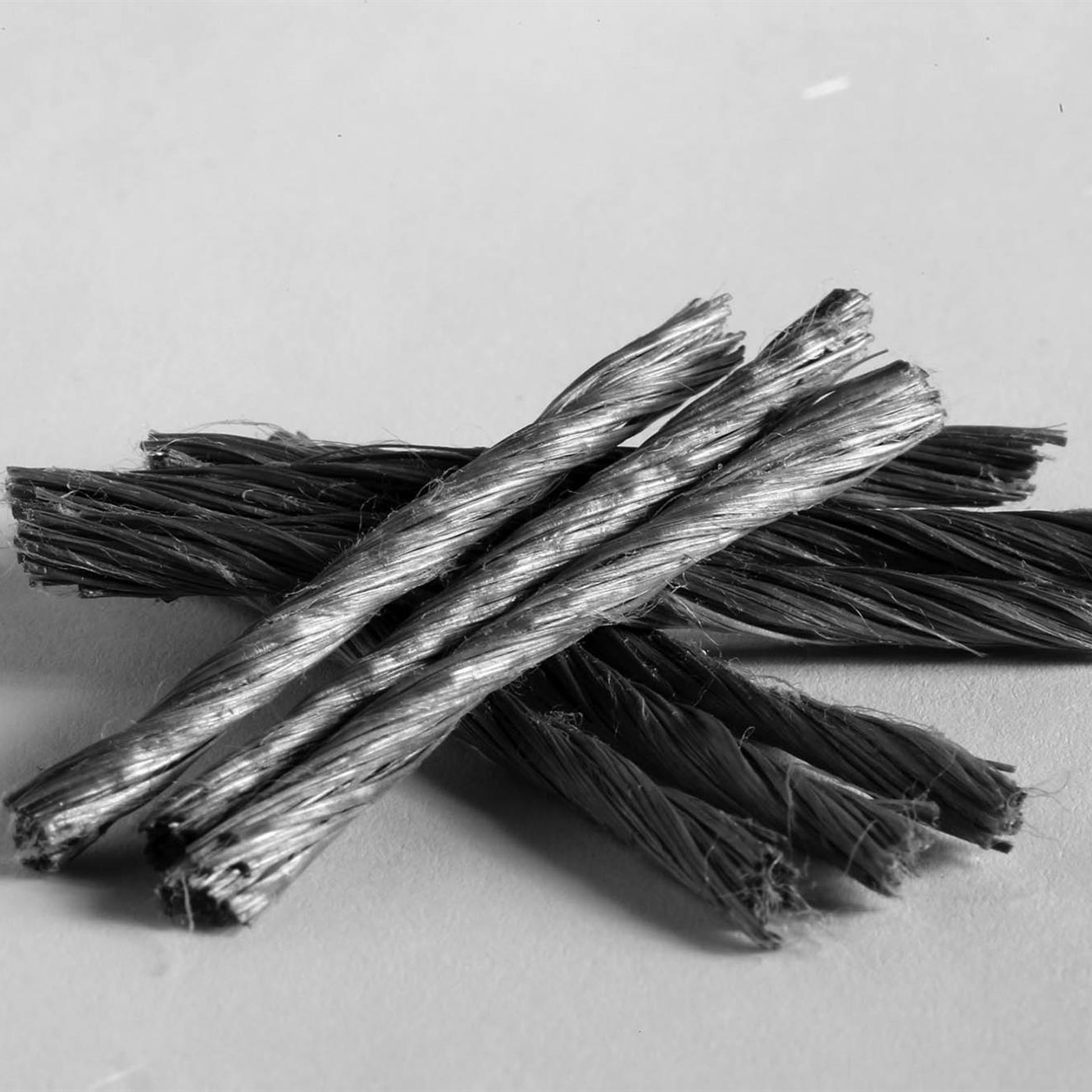
Dosing, mixing and verification at the batching plant
Whether the fiber performs as specified is decided largely at the mixer. Agglomeration is the most common failure mode, and it is a process problem rather than a material problem. The practical sequence is straightforward:
- Determine the dosage from the mix design.
- Weigh the fiber.
- Where water-soluble packaging is used, feed the bag directly into the mixer together with the aggregates; the packaging dissolves in roughly five seconds. With non-water-soluble packaging, spread the fiber evenly in batches rather than in one charge.
- Extend mixing time by 30–60 seconds compared with plain concrete to ensure uniform dispersion without clumping.
- Check slump and workability, and adjust the superplasticizer dosage if required.
On safety, operators should wear protective gloves and goggles. Fibers can fly into the eyes or cause puncture injuries to hands, and dumping a large quantity at once is one of the main causes of both clumping and operator injury. For long transport distances or extended waiting times in mixer trucks, pre-mixing at the batching plant is recommended.
For acceptance verification, the relevant test methods are the three-point bending beam test to EN 14651, the beam test to ASTM C1609 and the panel test to ASTM C1550. These measure residual flexural strength and toughness index for concrete containing fiber, and they are the core basis for engineering design and acceptance. On any fiber-reinforced floor where toughness is part of the design case, the test method should be agreed before the first pour, not after.
Compliance: what the EU certificate covers, and what it does not
This is worth stating precisely, because the confusion is common and expensive.
EN 14889-1:2006 is the European standard for steel fibers used in concrete. It defines the terminology, specifications and conformity requirements for that product family. TingCo's Fiber Reinforced Concrete product line holds CE Certificate 1301 – CPR – 2456, issued by TSUS, based on EN14889-1:2006 and applicable to the EU market. The certificate covers steel fiber products with a diameter range of 0.5–1.0 mm, a length range of 25–60 mm and a tensile strength range of 1100–2100 MPa, and it applies to fiber supplied for industrial flooring, tunnel segments and mining applications.
It is a steel fiber certificate. It does not cover polypropylene. Synthetic fibers fall outside the scope of EN 14889-1, so a CE mark issued under that standard cannot be transferred to a PP fiber quotation, and a buyer should not accept it as evidence for one.
For PP flooring fiber, the verifiable evidence pack looks different. What a buyer can reasonably demand is:
- Factory-level ISO 9001 quality certification.
- A certificate of analysis and a mill certificate for every batch.
- In-line inspection during production and pre-shipment inspection with weighing and counting verification.
- A complete datasheet, including dimensional tolerance; ±10% is a reasonable baseline to confirm in writing.
- Free samples submitted to an independent laboratory, and pre-production sample approval before mass production.
Two further standards are often cited in this category — ASTM A820/A820M and ISO 13270 — and both are steel fiber standards as well. They are relevant background when a floor package also includes steel fiber, but they do not govern PP fiber. For a polypropylene specification, referencing a steel fiber standard accomplishes nothing except making the document look more complete than it is.
Where PP fiber fits, and where it does not
The word flooring covers a wide range of conditions. PP fiber earns its place in several of them:
- Large-area warehouse and distribution slabs, where fewer joints and longer pours make shrinkage cracking more likely.
- Underground car parks and ramps, where moisture is continuous and any reinforcement that can corrode is a liability.
- Floors exposed to de-icing salts or mild chemical contact, where resistance to strong acids and alkalis and zero water absorption matter more than tensile capacity.
- Thin sections, toppings and repair mortars, where mesh is difficult to place and easy to displace.
- Floors subject to thermal cycling and vibration, the standard operating condition of an industrial slab.
Where PP fiber does not fit is equally clear. If the slab is designed to carry bending or structural load through the fiber itself, the conversation shifts to steel fiber or conventional reinforcement. That is a different design case with a different evidence base, different test methods and different compliance documents. Treating a shrinkage-control fiber as a structural substitute is one of the most common specification errors in this category.
How PP fiber compares with traditional floor reinforcement
| Parameter | Welded wire mesh | Steel fiber | PP fiber |
|---|---|---|---|
| Primary function | Structural reinforcement and crack control | Structural reinforcement and flooring toughness | Shrinkage crack control and impermeability |
| Corrosion | Corrodes | Can corrode depending on exposure | Non-corrosive; does not absorb water |
| Distribution | Depends on manual placement and correct positioning | Dispersed during mixing | Dispersed during mixing |
| Construction impact | Adds labour and programme time | Can reduce conventional steel quantities | Low dosage, mixed with the concrete |
| Structural load capacity | High | Medium to high, depending on dosage and type | Not intended to carry structural load |
| EU standards framework | Rebar standards | EN 14889-1:2006 | Outside EN 14889-1 scope |
Three boundaries deserve to be written into a flooring specification. First, PP fiber has a lower elastic modulus than steel, so it should not be substituted for structural reinforcement; the slab's load capacity still comes from reinforcement, slab thickness and, where specified, steel fiber. Second, fiber dosage above the mix design limit reduces workability, which is why slump checks and the additional 30–60 seconds of mixing are operational requirements rather than optional steps. Third, synthetic fiber does not carry the same CE certification framework as steel fiber in the EU, so its compliance evidence has to be assembled separately and by the buyer's own specification.
Market signals behind synthetic fiber demand
The global polypropylene fiber market for construction is projected to grow at a compound annual growth rate of 6.4% from 2026 to 2034, according to Fortune Business Insights. Two forces sit behind that figure: demand for non-corrosive reinforcement in long-life flooring assets, and design pressure to reduce the mass of material placed in a slab without losing performance.
The steel fiber side of the same market tells a consistent story. Global steel fiber market size is projected to reach approximately USD 2.87 billion by 2026, with industrial floors taking a 37.28% application share and hooked-end fibers leading the type segment at 58.89%, all per Fortune Business Insights. It is worth noting that published market values for this category vary widely between research houses, largely because some studies fold synthetic fiber and rebar-replacement value into the same headline. When citing a market number in a specification or business case, the methodology behind it matters more than the number itself.
On the supply side, China is a dominant exporter. Customs-aggregated data attributes 51.85% of identified steel fiber imports under HS 7326 to Chinese origin, although that figure comes from a commercial customs data aggregator and should be treated as directional rather than official.
For a buyer, the practical reading is simple: flooring is the demand centre of gravity for the whole fiber category, and the choice between fiber types is really a choice between risk profiles — corrosion risk, compliance risk, and performance risk.
What to check on the supplier side
By the evaluation stage, product data is only half the decision. The other half is whether the supplier can repeat the same batch, on the same schedule, with the same documentation.
Tianjin TingCo Tech Co., Ltd is a concrete reinforcement fiber manufacturer and exporter headquartered in Tianjin, China, with its sales and R&D centre in Tianjin and its manufacturing base at Hebei Tingco New Material Co., Ltd. The company was founded in 2014, operates a 6,000 m² factory with 50 employees and an annual output of 24,000 tons, and its PP fiber range sits alongside steel fiber, brass-coated steel fiber and stainless steel fiber in the same catalogue. Roughly 70% of output is exported, with the EU, Africa, South East Asia and the Middle East as the main markets.
Several figures are worth checking against your own schedule. Monthly capacity is 2,000 tons. Standard lead time is 10–15 days. Minimum order quantity for the fiber range is 24 tons. OEM and ODM production is available, including custom logo and product identification, and the quality system combines in-line inspection with pre-shipment inspection. The company also runs its own steel fiber reinforced concrete testing laboratory, where beam bending, compression and toughness tests are performed on each product line.
Two procurement practices deserve attention on the commercial side. A 100% advance payment demand and a supplier that cannot demonstrate it is a factory rather than a trading intermediary are both classic warning signals. The available countermeasures are unglamorous but effective: verify the business licence and the 18-digit Unified Social Credit Code, require factory photographs or a video audit, and structure payment as T/T 30% plus 70%, or by letter of credit.
Future outlook
Three shifts are likely to change how flooring fiber is bought over the next few years. The first is that toughness testing — EN 14651, ASTM C1609, ASTM C1550 — is moving from optional to expected in flooring submissions, which will push suppliers to publish test data rather than describe it. The second is that non-corrosive requirements will keep migrating from niche specifications into mainstream tender language for underground and coastal projects. The third is that as the synthetic fiber segment grows, buyers will demand a compliance evidence pack that matches the product: factory certification, batch-level analysis, and independent sample testing, rather than a certificate borrowed from a different product family.
FAQ
What is the difference between PP micro fiber and PP macro fiber for flooring?
PP micro fiber has diameters of 18 μm, 32 μm and 36–38 μm, lengths of 6 mm, 12 mm and 19 mm, and a tensile strength of 550 MPa. PP macro fiber has a diameter of 0.7 mm, lengths of 30–58 mm and a tensile strength of 550–600 MPa. The micro fiber's high surface area makes it suited to plastic shrinkage control in the hours after casting, while the larger macro fiber bridges cracks at a later stage in hardened concrete. The two are often specified together on the same floor for different stages of cracking.
Does PP fiber corrode in a concrete floor?
No. Polypropylene does not absorb water and resists strong acids and alkalis, so PP fiber does not rust and cannot produce rust staining at the slab surface. This is a practical advantage in underground car parks, moist environments and floors exposed to de-icing salts, where a steel-based reinforcement strategy carries corrosion risk.
How is PP fiber dosed and mixed into flooring concrete?
Dosage is set by the mix design. The fiber is weighed, then fed with the aggregates — water-soluble packaging can go directly into the mixer and dissolves in about five seconds, while non-water-soluble packaging should be spread evenly in batches. Mixing time should be extended by 30–60 seconds compared with plain concrete to ensure dispersion without clumping. Slump and workability are then checked, with superplasticizer adjusted if needed. Operators should wear protective gloves and goggles, and a large single charge should be avoided because it causes clumping.
What certification should a buyer ask for on PP fiber for flooring in the EU?
CE Certificate 1301 – CPR – 2456, issued by TSUS against EN14889-1:2006, covers steel fiber products with diameters of 0.5–1.0 mm, lengths of 25–60 mm and tensile strengths of 1100–2100 MPa, and it applies to the EU market. It does not cover polypropylene fiber, which falls outside the scope of EN 14889-1. For PP fiber, the verifiable evidence pack is factory ISO 9001 certification, a certificate of analysis and mill certificate per batch, in-line and pre-shipment inspection, and a complete datasheet stating dimensional tolerances.
How can a buyer avoid payment risk when sourcing fiber from overseas?
The two warning signals are a supplier that is a shell company or a trader presenting itself as a factory, and a demand for 100% advance payment. Mitigation measures are to verify the business licence and the 18-digit Unified Social Credit Code, require factory photographs or a video factory audit, and use structured payment terms such as T/T 30% plus 70%, or a letter of credit.
What are typical lead times and minimum order quantities for PP fiber?
For the TingCo fiber range, minimum order quantity is 24 tons, standard lead time is 10–15 days, and monthly production capacity is 2,000 tons. OEM and ODM production is available, including custom logo and product identification, and every shipment is subject to in-line inspection and pre-shipment inspection covering specification, quantity and packaging.
Reference material
The company and product information referenced in this article, including production facilities and testing capability, is collected in the downloadable TingCo brochure: TINGCO company and project introduction.