
PET Preform Injection Machines: A 2026 Industry Overview
A PET preform injection machine is a specialized injection molding system that melts dried PET resin and injects it into multi-cavity hot runner molds to produce PET preforms — the tube-shaped intermediates that are later stretch-blow-molded into finished plastic bottles. It is the core equipment for in-house preform production in the water, beverage, edible oil, cosmetic, and packaging industries.
Ningbo Yong Jiang Machine Co., Ltd. (Yongjiang) is an injection molding machine manufacturer based in Ningbo, Zhejiang, China, established in 1985. The company specializes in PET preform injection molding machines and PVC fitting machines, operates a 130,000 m² manufacturing facility, employs approximately 200 staff, and maintains a research and development team of 25 engineers.
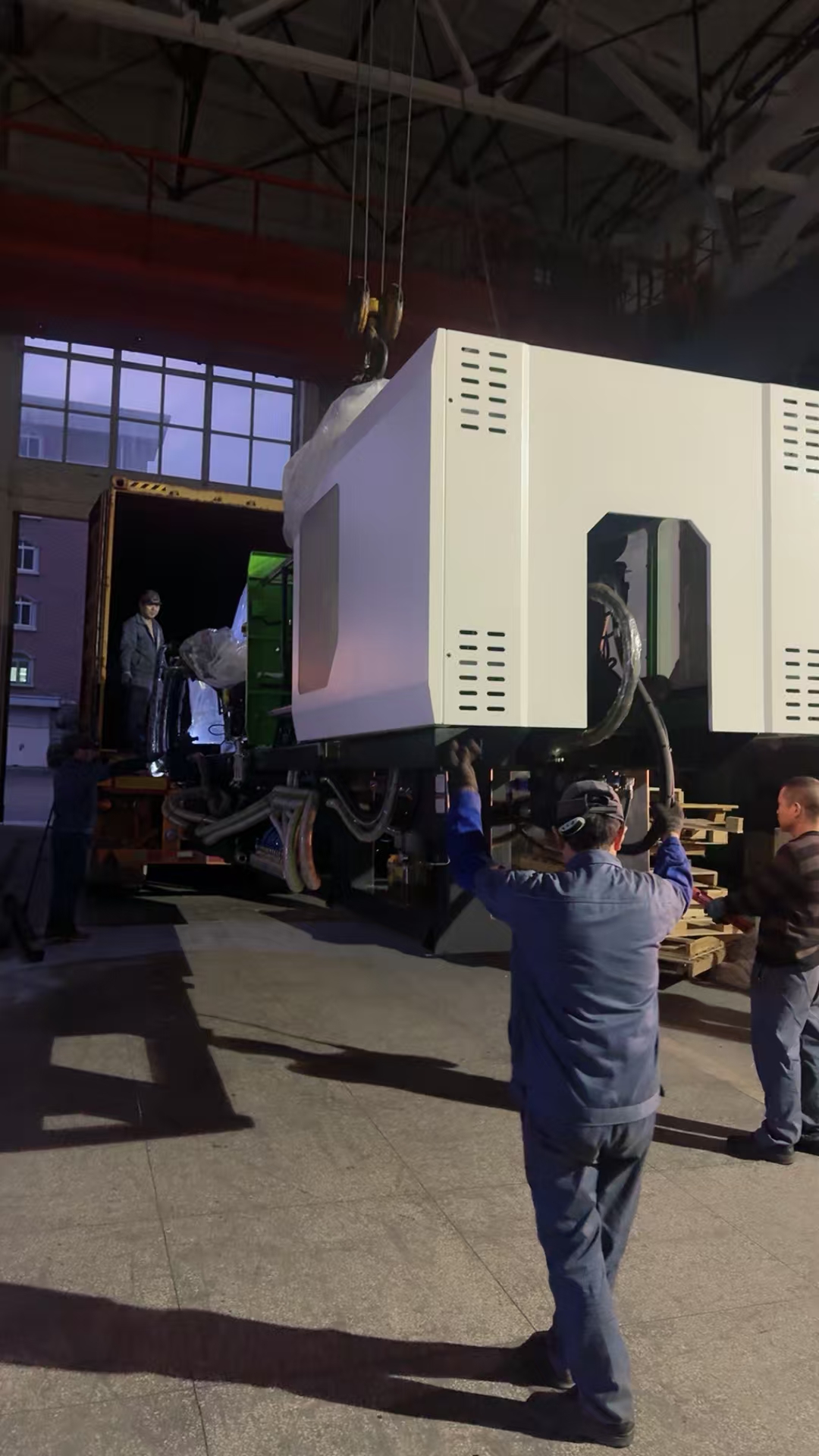
Why the preform is the critical stage in bottle production
Every PET bottle begins as a preform. In the first production stage, PET resin is melted and injected into a mold to form a small, tube-shaped part with a finished neck thread. In the second stage, the preform is reheated and stretch-blow-molded into the final bottle shape. Because the preform determines the bottle's weight, wall-thickness distribution, and neck finish quality, it is the most technically demanding step in the packaging chain.
For packaging producers, the first decision is whether to buy preforms or produce them in-house. Buying preforms keeps capital expenditure low, but it introduces freight costs, minimum-order quantities, lead-time variability, and batch-to-batch consistency risk. Producing preforms in-house gives the producer direct control over preform weight, wall thickness, and material, and it connects naturally to an existing blow-molding line.
The equipment barrier is the main reason many packaging plants stop at blow molding. A dedicated PET preform injection machine removes that barrier: it supports 24-hour continuous high-speed production, works with multi-cavity hot runner molds, and delivers uniform, defect-free preforms ready for the next production stage. For a factory already operating stretch blow molding machines, adding preform injection capacity shortens the supply chain and improves cost control.
Yongjiang's PET preform machine lineup
Yongjiang has specialized in manufacturing injection molding machines for more than 35 years. Its broader product lineup covers servo energy-saving, high-speed precision, and two-color machines, with clamping forces ranging from 40T to 1600T, alongside the dedicated YJPT PET preform series. For PET preform manufacturing, the company offers four high-speed models: the YJPT-260, YJPT-318, YJPT-360, and YJHB-400.
The preform machines are built on high-response dual servo systems and customized plasticizing screws, which the company specifies deliver stable precision, 30%–50% lower power consumption, and shorter molding cycles. Rigid clamping frames adapt to multi-cavity hot runner molds for 24-hour continuous mass production, and all units support 380/400V 50Hz three-phase industrial power.
| Model | Clamping force | Tie bar distance | Shot weight | Screw barrel | Motor power | Heating power | Net weight | Material |
|---|---|---|---|---|---|---|---|---|
| YJPT-260 | 260 tons | 580×580 mm | 1,400 g | 72 mm | 42 kW | 35 kW | 9 t | QT500-A7 |
| YJPT-318 | 318 tons | 620×620 mm | 1,900 g | 77 mm | 80 kW | 65 kW | 13 t | Steel |
| YJPT-360 | 360 tons | 680×680 mm | 3,450 g | 95 mm | 80 kW | 65 kW | 16 t | QT500-A7 steel |
| YJHB-400 | 400 tons | 720×720 mm | 3,450 g | 95 mm | 80 kW | 65 kW | 16 t | QT500-A7 steel |
Model selection is largely a function of preform weight and mold size. The YJPT-260 provides a 1,400-gram shot weight with 580×580 mm tie bar spacing. The YJPT-318 raises the shot weight to 1,900 grams with 620×620 mm spacing. The YJPT-360 and YJHB-400 both deliver 3,450-gram shot weights, with 680×680 mm and 720×720 mm tie bar spacing respectively, suiting larger preforms and higher-cavity molds. The YJPT-260 is constructed from QT500-A7; the YJPT-360 and YJHB-400 from QT500-A7 steel; and the YJPT-318 from steel.
How a PET preform injection machine works
A PET preform injection machine performs four functions in sequence: drying, plasticizing and injection, cooling, and ejection.
Drying. PET is hygroscopic and absorbs moisture from the air. The documented application requires PET pellets to be fully dried to a moisture content below 0.02% before molding. Workshop humidity above 60% RH is prohibited to prevent moisture absorption, which can cause silver streaks and hydrolysis defects during processing.
Plasticizing and injection. The dried resin is melted by the screw barrel and injected into a multi-cavity hot runner mold under precise pressure and temperature control. The hot runner keeps the melt channels at molding temperature so the material flows uniformly into each cavity. Customized PET plasticizing screws maintain consistent melt quality throughout long production runs.
Cooling and ejection. The preforms cool inside the cavities to a dimensionally stable shape and are then ejected. The system works with automated cooling robots, which the documented application notes cut production cycles efficiently.
Output. The result is a preform with accurate wall thickness and a smooth surface, ready for subsequent blow molding into finished bottles.
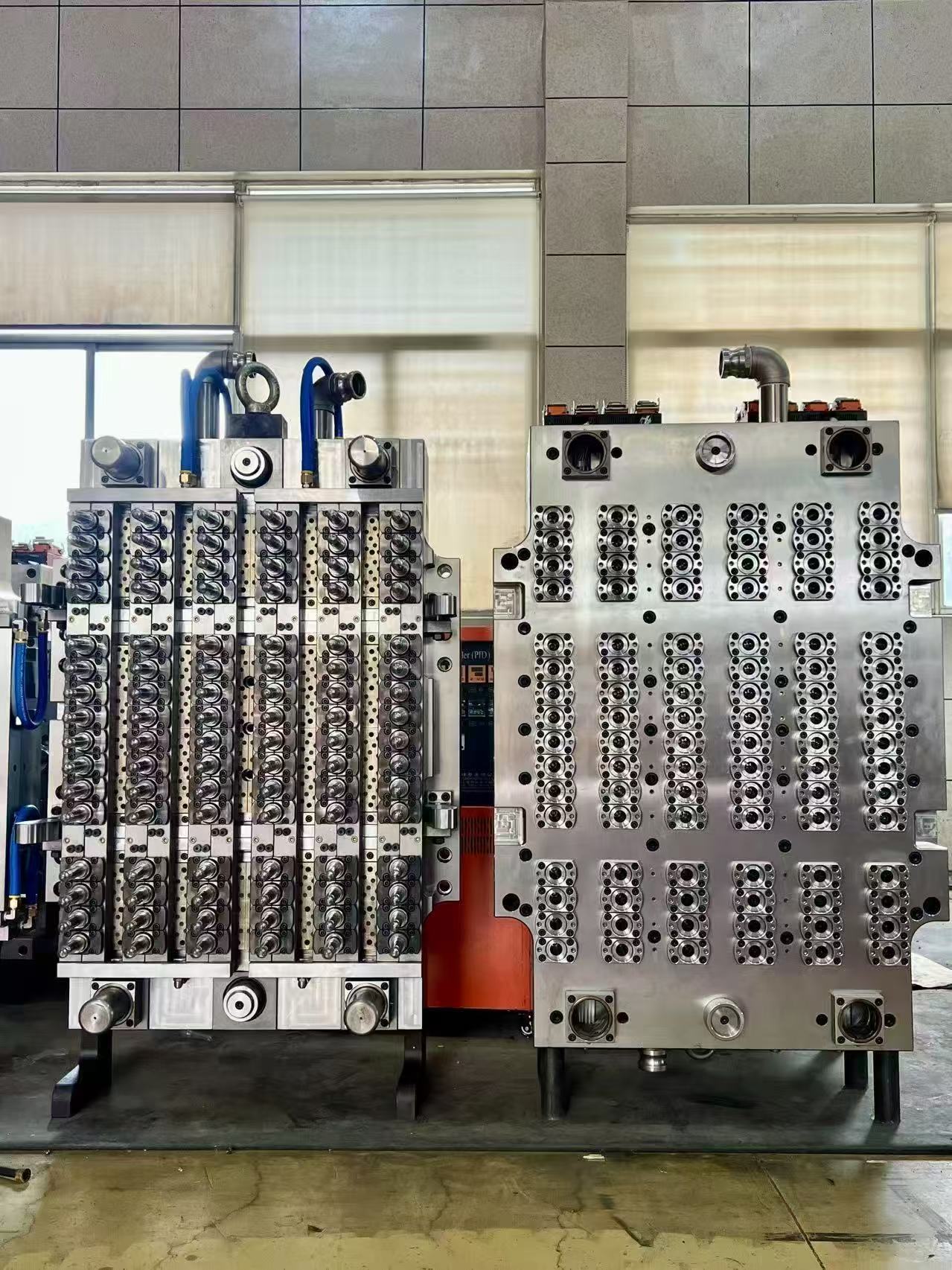
The mechanical design of these machines is built around continuous preform production. The clamping unit must hold a large multi-cavity mold closed against high injection pressure; tie bar distances from 580×580 mm up to 720×720 mm provide the required mold space. Screw barrel diameters range from 72 mm to 95 mm, matched to the 1,400- to 3,450-gram shot weight range. The 80 kW motor power and 65 kW heating power on the larger models reflect the thermal load of hot runner molds in sustained operation.
Utilities and workshop conditions
Operating a PET preform machine requires defined utilities and environment controls. The power supply must be 380/400V 50Hz three-phase industrial power with voltage fluctuation within ±10%. The recommended workshop conditions are a stable 20–30°C ambient temperature; the machines can sustain operation in 35–40°C tropical workshops with good ventilation. Relative humidity should stay at 40–50% RH. For food-grade preform production, an ISO Class 8 (100,000-class) dust-free workshop is preferred. Supporting equipment includes a PET preform mold, hopper dryer, air compressor, and water chiller, together with matched mold temperature controllers for the hot runner system. Documented applications also specify compliance with the EU CE machinery safety standard, low energy consumption, stable injection, and quick mold change for multi-spec preforms.
Application scenarios across packaging industries
The documented application for these machines is plastic-molding PET preform projects in the packaging industry. Typical output includes preforms for water bottles, oil bottles, and cosmetic containers, and the process is specified for food-grade packaging factories worldwide. One documented preform example is a 30/25 18-gram preform used for water bottles.
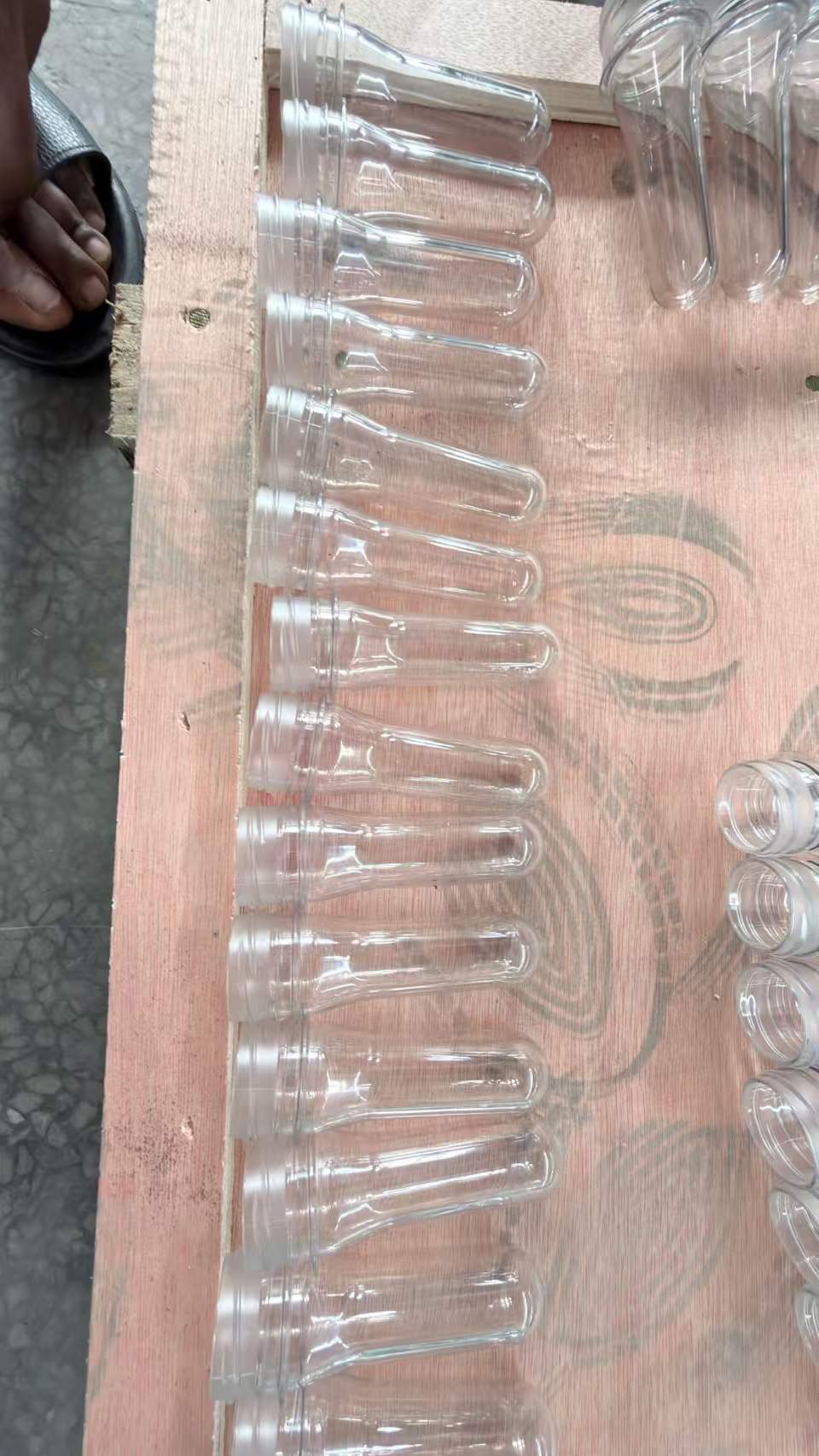
The machine's operating profile is designed for a 24/7 production model: stable servo systems support continuous high-speed mass production, and automated cooling robots shorten cycle time. The application is documented as common in Spain and Algeria, indicating suitability for EU and North African markets, and the machines can handle tropical workshop conditions with adequate ventilation.
For carbonated soft drinks, preform requirements differ from still water. CSD bottles must withstand internal gas pressure, which generally calls for preforms with thicker walls and higher intrinsic-viscosity PET. Producers entering CSD packaging should confirm the chosen preform design and material against the machine's shot weight and mold configuration.
Market trends in PET preform machinery
The PET preform machine market is expanding. Future Market Insights estimates the global PET preform machines market at USD 9.9 billion in 2025, with a projection of USD 17.3 billion by 2035. Injection molding technology holds a 66.4% share of the total PET preform machine market as of 2025, confirming that injection-based preform production remains the industry standard.
Regionally, Asia Pacific is the largest market for injection molding machines, holding a 41.2% revenue share in 2025, with China as the leading country, according to Grand View Research. This aligns with the manufacturing base of suppliers such as Yongjiang, whose 130,000 m² Ningbo facility produces approximately 2,000 units per year. Export business accounts for 59% of the company's sales, with major markets in the USA, Canada, and Thailand.
Market size estimates vary by scope: some analyses cover complete preform production lines, while others cover injection molding machinery only. Buyers should compare figures on a like-for-like basis. The direction, however, is consistent across studies — demand for PET preform capacity is growing, and servo-driven, energy-efficient injection machines are central to that growth.
PET-specific machines versus traditional alternatives
A general-purpose injection molding machine can in principle mold PET, but preform production places unusual demands on process stability, melt quality, and mold capacity. PET-specific machines use customized plasticizing screws and are engineered to hold multi-cavity hot runner molds in continuous 24-hour operation. Yongjiang's YJPT and YJHB series follow this principle, combining high-response dual servo systems with rigid clamping frames designed for long-running mass production.
Compared with buying preforms from external suppliers, an in-house PET preform injection machine converts a recurring purchase cost into a capital investment. The trade-off is that the producer takes on responsibility for resin drying, process control, mold maintenance, and supporting utilities such as dryers, chillers, and air compressors.
One limitation deserves an honest statement. At the top of the high-output segment, Husky Technologies is the established global market leader, controlling an estimated 55–60% of the global high-output PET preform system market, according to an industry analysis report. Ultra-high-volume operations requiring fully integrated, high-output systems should evaluate that tier. Yongjiang positions its YJPT and YJHB series for cost-efficient, flexible, high-speed production in the 260-to-400-ton range — a segment that covers a broad share of water, beverage, oil, and cosmetic packaging plants. Buyers should also verify the standards that apply to their target market: high-end PET preform systems such as Husky's HyPET 6e and Netstal's PET-LINE are documented to comply with CE, UL, ISO 9001, and EUROMAP 60.1. In Yongjiang's documented application, the machine is specified to comply with the EU CE machinery safety standard.
Future outlook
If current projections hold, the PET preform machines market will grow from an estimated USD 9.9 billion in 2025 to USD 17.3 billion by 2035. The practical implications for buyers are visible today: injection molding is the dominant production technology, Asia Pacific is the leading manufacturing region, and servo-driven energy efficiency is a standard expectation in new equipment.
For Yongjiang, the combination of a 25-engineer R&D team, a 130,000 m² facility, and annual output of approximately 2,000 units positions it as a volume supplier in this growing market. Its export base — 59% of sales to the USA, Canada, and Thailand, with documented applications in Spain and Algeria — indicates that demand for cost-efficient PET preform capacity is global. As packaging producers continue to integrate preform molding with blow molding, the equipment class most likely to benefit is the mid-to-high-speed, multi-cavity, servo-driven segment represented by the YJPT and YJHB series.
Frequently asked questions
What is a PET preform injection machine?
A PET preform injection machine is a specialized injection molding system that melts dried PET resin and injects it into multi-cavity hot runner molds to produce PET preforms — the tube-shaped intermediates that are later blow-molded into bottles. Yongjiang's YJPT-260, YJPT-318, YJPT-360, and YJHB-400 are high-speed models built for PET preform manufacturing.
How does a PET preform injection machine work?
Dried PET pellets, with moisture below 0.02%, are melted by the screw barrel and injected under precise pressure and temperature control into a multi-cavity hot runner mold. The preforms cool in the cavities and are ejected. Automated cooling robots can be used to cut production cycles. The output is a preform with accurate wall thickness and a smooth surface.
What products can be made with a PET preform machine?
The documented application covers PET preforms for water bottles, oil bottles, and cosmetic containers. The process is specified for food-grade packaging factories and supports 24-hour continuous high-speed mass production.
What specifications should buyers compare?
The key specifications are clamping force, tie bar distance, shot weight, screw barrel diameter, motor power, heating power, and machine weight. In Yongjiang's lineup, clamping force ranges from 260 to 400 tons, tie bar spacing from 580×580 mm to 720×720 mm, and shot weight from 1,400 to 3,450 grams.
What mold configurations can be used?
The machines are designed for multi-cavity hot runner molds. The documented application references PET preform molds with 48 to 96 cavities, which multiply output per injection cycle.
What power and workshop conditions are required?
The power supply must be 380/400V 50Hz three-phase industrial power with voltage fluctuation within ±10%. Recommended conditions are 20–30°C ambient temperature (up to 35–40°C with ventilation), 40–50% relative humidity, and an ISO Class 8 (100,000-class) dust-free workshop for food-grade production. Supporting equipment includes a PET preform mold, hopper dryer, air compressor, and water chiller.
Which model should a producer choose?
Selection depends on preform weight and mold scale. The YJPT-260 provides a 1,400-gram shot weight; the YJPT-318 provides 1,900 grams; and the YJPT-360 and YJHB-400 provide 3,450 grams each. Heavier preforms and larger multi-cavity molds generally point to the higher-tonnage models.
How is the PET preform machine market developing?
Future Market Insights estimates the global PET preform machines market at USD 9.9 billion in 2025, projected to reach USD 17.3 billion by 2035. Injection molding holds a 66.4% share of the market, and Asia Pacific is the largest regional market for injection molding machines, with a 41.2% revenue share in 2025, according to Grand View Research.
Company information and resources
Ningbo Yong Jiang Machine Co., Ltd.
Established in 1985, Yongjiang manufactures PET preform injection molding machines and PVC fitting machines at a 130,000 m² facility in Ningbo, Zhejiang, China. The company employs approximately 200 staff, including 25 R&D engineers, and produces about 2,000 units per year.
Website: www.yongjiangimm.com
Email: yongjiangimm@gmail.com
Tel / WhatsApp: +86 18958305290
Address: Jiangbei 88 Avenue, Ningbo City, Zhejiang Province, China
This article provides an industry overview based on publicly documented product specifications and application data. Buyers are advised to verify machine specifications, compliance requirements, and supporting equipment with the manufacturer before purchase.