
PET Preform Injection Machine Specs That Matter in 2026: Clamping Force, Cavity Count, and CE Compliance
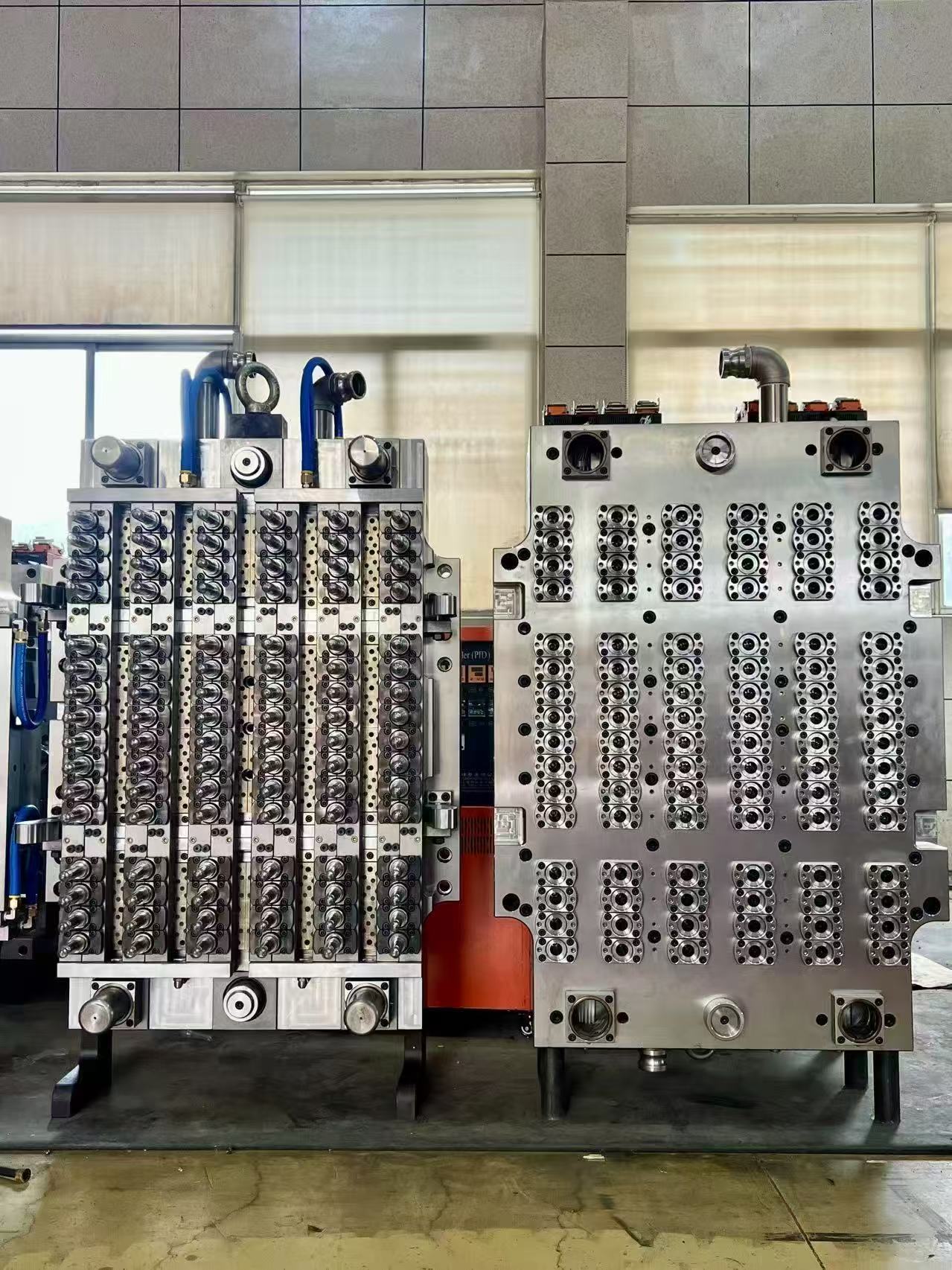
Multi-cavity hot runner molds are central to PET preform output and consistency.
A PET preform injection machine is evaluated less by branding and more by how its specifications match a specific production target: bottle weight, cavity count, cycle time, material handling, and compliance with regional machinery safety directives. For procurement teams and plant managers moving from initial research into supplier evaluation, the practical question is not which machine is famous, but which configuration can deliver 24-hour continuous production with acceptable energy consumption and verified compliance. This article explains the key specification points for PET preform injection machines in 2026, how to read them, and where CE certification fits into the purchasing decision.
Why Machine Specifications Determine Preform Quality and Output
PET preform production demands precise melt temperature control, consistent shot weight, and stable clamping force over long production runs. A preform injection machine must inject dried PET melt into multi-cavity hot runner molds under high pressure, then cool the preforms uniformly to prevent crystallinity defects such as haze, silver streaks, or warpage. The machine's clamping force, screw diameter, shot weight, tie bar spacing, and power ratings determine which molds it can handle and how much usable output it can sustain.
Injection molding technology holds a dominant 66.4% share of the total PET preform machine market as of 2025, according to Future Market Insights. This reflects the maturity and reliability of injection-based PET preform manufacturing across water, beverage, edible oil, and packaging applications. For buyers, this means most competitive offerings are injection machines; the differentiation lies in how honestly the specifications are presented and how well the machine is matched to the mold and the target preform.
Reading a PET Preform Injection Machine Specification Sheet
A specification sheet for a PET preform injection machine typically includes screw barrel diameter, shot weight, tie bar spacing, motor power, heat power, machine weight, and clamping force. Each parameter has a direct impact on mold compatibility and production efficiency.
Clamping Force
Clamping force determines the maximum injection pressure and mold size that the machine can hold closed. For PET preform production, common machine sizes are 260 ton, 318 ton, 360 ton, and 400 ton. A 260-ton PET preform injection machine is suited to lower-cavity molds and smaller preform weights, while a 400-ton machine supports larger shot weights and higher cavity counts.
Screw Barrel Diameter and Shot Weight
The screw barrel diameter influences plasticizing capacity and melt quality. A larger screw can plasticize more PET per hour but must be matched with the mold's shot weight to avoid excessive melt residence time. For example, the Yongjiang YJPT-260 uses a 72 mm screw with a shot weight of 1400 grams, while the YJPT-360 and YJHB-400 use a 95 mm screw with a shot weight of 3450 grams. A 318-ton model such as the YJPT-318 uses a 77 mm screw and provides a 1900-gram shot weight, filling the gap between entry-level and high-output lines.
Tie Bar Spacing
Tie bar spacing defines the maximum mold dimensions that can be mounted. A larger tie bar spacing, for instance 720×720 mm on a 400-ton machine, allows larger hot runner molds with more cavities to be installed safely.
Motor Power and Heat Power
These values influence energy consumption and total installation requirements. A 260-ton machine with 42 kW motor power and 35 kW heat power is more suitable for smaller operations, while a 400-ton machine with 80 kW motor power and 65 kW heat power is designed for higher-output, continuous mass production.
Matching Machine Size to Cavity Count and Bottle Type
Buyers often search for machines by cavity count, such as 32, 48, 72, or 96 cavities. Cavity count is not a standalone machine specification; it depends on the mold design, the preform weight, and the clamping force available. The table below summarizes typical relationships between Yongjiang machine models and their key specifications.
| Model | Clamping Force | Screw Barrel | Shot Weight | Tie Bar Spacing | Motor / Heat Power |
|---|---|---|---|---|---|
| YJPT-260 | 260 ton | 72 mm | 1400 g | 580×580 mm | 42 kW / 35 kW |
| YJPT-318 | 318 ton | 77 mm | 1900 g | 620×620 mm | 80 kW / 65 kW |
| YJPT-360 | 360 ton | 95 mm | 3450 g | 680×680 mm | 80 kW / 65 kW |
| YJHB-400 | 400 ton | 95 mm | 3450 g | 720×720 mm | 80 kW / 65 kW |
For a water bottle preform line using 18-gram preforms, a 48-cavity mold is a common starting point. A 260-ton machine can support this configuration depending on the mold design and required cycle time. For larger preforms such as 5-gallon water bottle preforms or carbonated soft drink preforms with thicker walls, higher clamping force is required. In that case, a 360-ton or 400-ton machine provides the necessary tonnage and shot capacity.
CE Certification as a Procurement Constraint
For buyers importing PET preform injection machines into the EU, CE certification is not optional marketing language; it is a legal requirement for machinery placed on the European market. The CE marking indicates that the machinery complies with applicable EU directives, including the Machinery Directive 2006/42/EC.
Ningbo Yongjiang Machine Co., Ltd. holds CE certification for its PET preform injection molding machines. The certification number is CE20260126MD, issued by ECM, and the applicable safety standards include EN ISO 12100:2010, EN 60204-1:2018+A1:2020, and EN ISO 20430:2020. This certification covers models YJPT-260, YJHB-400, YJPT-360, and YJPT-318. For buyers, verifying certification numbers and applicable standards provides a clear compliance baseline before shipment.
What EN ISO 12100:2010 Covers
EN ISO 12100:2010 is the basic safety standard for machinery risk assessment and risk reduction. It provides a framework for identifying hazards, estimating risk, and implementing protective measures. Compliance with this standard is strong evidence that the machine's safety design has been reviewed against international expectations.
The Yongjiang CE certificate is valid from 30 January 2026 to 29 January 2031. This gives EU buyers a clear compliance window for current procurement planning.
Energy Consumption and Operating Cost Considerations
Energy efficiency is a recurring buyer concern, especially for plants planning continuous 24-hour operation. Servo-driven machines typically consume less electricity than hydraulic machines at partial load because the motor only draws power when motion is demanded. Yongjiang machines are equipped with high-response dual servo systems, and the company states that these systems deliver 30–50% lower power consumption and shorter molding cycles compared with conventional configurations. This is a meaningful operating cost factor for high-cavity, round-the-clock production.
That said, energy savings depend on mold design, cycle time, and operator discipline. A buyer should ask the supplier for a clear energy consumption baseline at their target cavity count and preform weight, rather than assuming a standard saving percentage.
Application Requirements Across Beverage and Packaging Segments
Different final products place different demands on the PET preform injection machine. Mineral water bottles require lightweight preforms with consistent wall thickness. Carbonated soft drinks require preforms with higher intrinsic viscosity and better mechanical strength to withstand internal pressure. Edible oil bottles often use larger preforms and require different cooling profiles. Cosmetic containers may prioritize surface finish and clarity.
A 48-cavity PET preform injection machine is widely used for mineral water bottle production. A 72-cavity or 96-cavity setup, when supported by the machine's clamping force and plasticizing capacity, increases output for standard thin-walled preforms. For heavy preforms such as 5-gallon water bottle preforms, a lower cavity count and higher clamping force are normally more practical because the thick walls require longer cooling time and greater packing pressure.
Workflow and Auxiliary Equipment Integration
A PET preform production line depends on more than the injection machine. The machine works with a hot runner mold, a hopper dryer, an air compressor, and a water chiller. PET resin must be dried to a moisture content below 0.02% before processing. The workshop should maintain stable temperature between 20–30°C and relative humidity of 40–50%; humidity above 60% RH can cause PET moisture absorption, silver streaks, and hydrolysis defects. For food-grade preform production, an ISO Class 8 dust-controlled environment is preferred.
These requirements matter when evaluating a supplier. A machine is only as productive as the auxiliary system around it, and a supplier that explains these conditions clearly is more likely to support a successful installation.
OEM, Lead Times, and Supplier Evaluation
For buyers evaluating a Chinese PET preform injection machine manufacturer, production capability and delivery reliability are as important as machine specifications. Ningbo Yongjiang Machine Co., Ltd., established in 1985, operates a 130,000 m² factory and produces around 2,000 units annually. The company's export ratio is 59%, with main markets in the USA, Canada, Thailand, the EU, and the Middle East. It employs 200 staff, including 25 R&D engineers.
Yongjiang offers OEM services covering voltage and logo customization, with a monthly capacity of 200 units and a standard lead time of 30–45 days. The minimum order quantity is 1 unit, and each machine is fully tested for one week before shipment. This matters for buyers who need a single line or a small pilot installation without losing the option to scale later.
Comparison with Traditional and High-End Alternatives
High-end PET preform systems from suppliers such as Husky's HyPET 6e and Netstal's PET-LINE are designed for extremely high output and long service life, and they support advanced standards including CE, UL, ISO 9001, and EUROMAP 60.1. These systems typically operate at very high cavity counts (96 to 144 cavities) and command a premium price. Their total cost of ownership can be justified for mega-scale bottling operations.
Traditional hydraulic machines without servo drives may have a lower initial purchase price, but they generally consume more electricity and produce slower cycles, which increases operational cost in continuous production.
Chinese suppliers like Yongjiang occupy a practical middle ground. A high-speed servo-driven YJPT series machine supports molds from 6 to 72 cavities, offers reasonable energy efficiency, and is exported widely to Southeast Asia, Russia, Africa, and South America. However, a buyer should not expect the very highest cavity count or the same level of automation integration as a top-tier European system. The realistic advantage is lower capital cost with reliable, repeatable production for small and mid-sized bottling operations.
Market Context and Regional Demand
The global PET preform machines market is estimated at USD 9.9 billion in 2025 and is projected to reach USD 17.3 billion by 2035, according to Future Market Insights. Injection molding holds a 66.4% share of this market. Asia Pacific is the largest regional market for injection molding machines, holding a 41.2% revenue share in 2025, with China as the leading country. This regional strength is consistent with the export activity of Chinese injection machine manufacturers across developing beverage markets.
For buyers in the EU, the trend is less about buying Chinese versus European machines and more about verifying compliance, energy efficiency, and after-sales support. A machine with CE certification, documented energy specifications, and realistic lead times offers a lower procurement risk than one without.
Buyer Decision Checklist
The following checklist summarizes the key evaluation points before purchasing a PET preform injection machine:
- Target preform weight and bottle type: confirm the shot weight requirement.
- Mold cavity count: validate whether the machine's clamping force and tie bar spacing can accommodate the mold.
- Cycle time expectation: servo-driven high-speed machines are better for continuous mass production.
- Energy cost: request an estimated kWh per 1,000 preforms at your target configuration.
- Certification: verify CE certificate number, issuing body, and applicable standards for EU import.
- Supplier production capacity and lead time: confirm MOQ, monthly output, and delivery schedule.
- Auxiliary equipment and workshop conditions: plan for hopper dryer, chiller, air compressor, humidity, and cleanliness.
- After-sales support: confirm response time and availability of spare parts.
Future Outlook for PET Preform Injection Machines
Demand for PET preform injection machines will continue to grow with the expansion of bottled water, carbonated soft drinks, edible oil, and personal care packaging. Energy efficiency and compliance will become more important as end brands and regulatory bodies tighten sustainability and safety requirements. Machinery suppliers that combine documented CE compliance, energy-saving servo systems, and practical customization support will have a strong position in the mid-market.
For buyers, the most important development is the availability of verifiable machine data. Certification numbers, standard names, specification tables, and factory testing commitments provide a more reliable basis for comparison than promotional descriptions. Chinese manufacturers who openly publish these details are increasingly competing on transparency, not just price.
Frequently Asked Questions
Is the PET preform injection molding machine from Yongjiang CE certified?
Yes. The PET preform injection molding machine is certified to CE standards. The certification is issued by ECM, and the applicable standard is EN ISO 12100:2010.
What is the CE certification number for Yongjiang's PET preform injection machine?
The certification number is CE20260126MD, issued by ECM, and it complies with EN ISO 12100:2010.
Which Yongjiang PET preform injection machine models are covered by CE certification?
The CE certificate covers the PET preform injection molding machines model YJPT-260 and YJHB-400. The certificate applies to the EU market and is valid from 30 January 2026.
What safety standard does the Yongjiang PET preform injection machine meet?
The applicable standard for this certification is EN ISO 12100:2010. The certificate also cites EN 60204-1:2018+A1:2020 and EN ISO 20430:2020 in the scope of compliance.
Can I request an OEM version of a PET preform injection machine with my own voltage and logo?
Yongjiang supports OEM customization of voltage and logo, with a monthly capacity of 200 units and a lead time of 30–45 days.
For a full overview of the Yongjiang PET preform injection machine series, including specifications and configuration options, download the company brochure: Yongjiang Injection Molding Machine Brochure.
¿Tiene preguntas o necesita más detalles?
Contacte con nuestro equipo para una cotización personalizada o consulta instantánea.
Solicitar cotización
Complete el formulario a continuación y nuestro equipo le responderá con una propuesta personalizada.
Chat directo de WhatsApp
¿Prefiere chatear en tiempo real? Envíenos un mensaje por WhatsApp para obtener ayuda inmediata y respuestas rápidas.
- Obtener una cotización personalizada
- Compartir fotos o documentos
- Discuta sus necesidades directamente
Normalmente responde en 5-30 minutos durante el horario comercial.