
PET Preform Injection Machine Buyer FAQ: Lead Times, Testing & Inspection
HTNXT Industry Reference · Manufacturing & Processing Machinery
PET Preform Injection Machine Buyer FAQ: Lead Times, Testing & Inspection
For buyers researching a PET preform injection machine, the questions that stall a project are rarely about tonnage. They are about how long production takes, how much has to be ordered, when payment falls due, and how quality is proven before the machine ever leaves the factory.
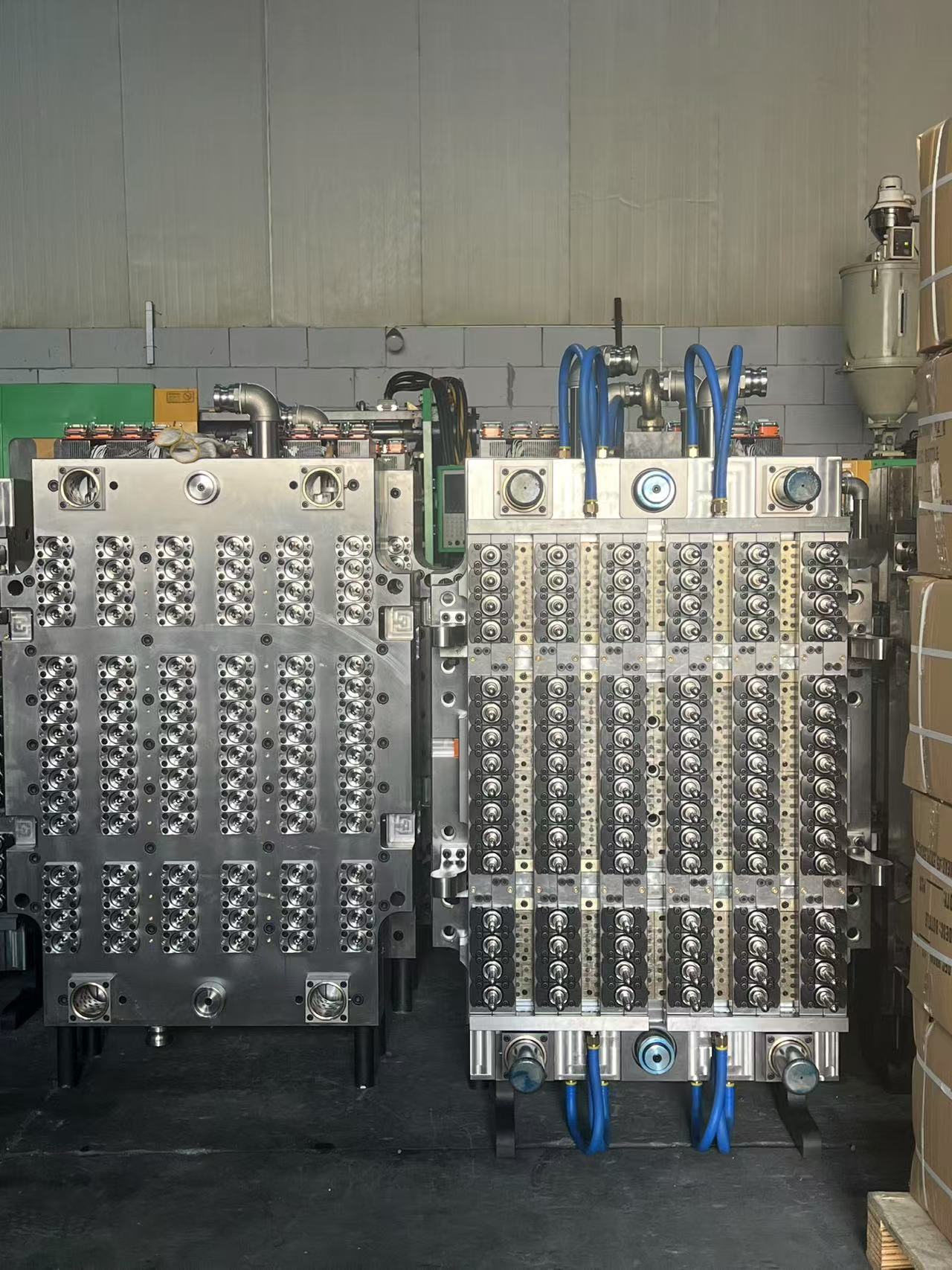
PET preform injection is the manufacturing step in which dried PET resin is melted and injected into multi-cavity hot runner molds to form the intermediate preforms that are later stretch-blow molded into finished bottles. Because bottled water, carbonated soft drinks, juices, edible oils and sauces all begin as preforms, the injection machine that produces them sits close to the start of a long and demanding supply chain.
Buyers still in the awareness and research stages of a PET preform injection machine purchase rarely lack specifications. Clamping force, shot weight, screw diameter and tie-bar dimensions are published almost everywhere. What is much harder to find — and far more decisive — is the commercial and operational context: how long production takes, how much has to be ordered, when payment falls due, and how quality is verified before the machine is shipped.
This reference addresses those questions directly. It is written for buyers who already understand what a preform is and now need to understand what buying the machine that makes one actually involves.
Why commercial transparency decides a preform project
A PET preform injection machine is not an off-the-shelf product. It is configured around a specific bottle, a specific cavity count and a specific output target, then shipped across borders and commissioned on a customer's floor. The risk is therefore concentrated in four places, and all four are commercial rather than purely technical.
- Timeline risk. Production, shipping and commissioning must align with the buyer's own launch or supply commitments.
- Order-size risk. A machine purchase only makes sense if the minimum quantity is actually reachable.
- Cash-flow risk. Deposit and balance timing shape working-capital requirements.
- Verification risk. The buyer must be able to trust that the machine performs before the balance payment and before the container is loaded.
When any of these is unclear, projects stall. When all four are clear, the technical evaluation can proceed on its own merits.
The four questions buyers ask first
How much do I have to order?
The minimum order quantity for these PET preform injection machines is 1 unit. That matters most for buyers who are testing a new product line, entering a regional market, or scaling in stages. A single-machine entry point lets a converter validate preform quality, cycle times and downstream blow-molding fit before committing capital to a multi-machine line.
How long does production take?
Production lead time is typically 30–45 days from confirmed order to ready-for-shipment. The window reflects machine build, mold preparation and factory testing. Two practical implications follow. First, buyers should plan commissioning and first-production dates around that window rather than assuming immediate availability. Second, lead time is best treated as a planning figure: configurations outside a standard build — particular cavity counts, unusual preform weights or market-specific documentation — can extend it.
How much output can the factory deliver in a month?
Monthly production capacity is 200 units, which — against the manufacturer's stated annual output of roughly 2,000 units — indicates a steady, repeatable build cadence rather than a one-off assembly line. For buyers, the useful reading is not that 200 machines are available to them personally, but that the factory is structured to fill orders continuously. Capacity is aggregate; it is not a reserved allocation, and demand peaks can shift an individual delivery slot.
When does payment fall due?
Standard payment terms are 30/70: a 30% deposit with the order and the 70% balance at the agreed point before shipment. Terms of this shape are common in capital-equipment trade because they balance the manufacturer's tooling and material outlay against the buyer's need to inspect before paying in full. Buyers should confirm in writing which milestone — production completion or pre-shipment inspection — triggers the balance.
How quality is proven before shipment
Lead time and terms set expectations. Testing is what protects them.
A 100% testing policy applies to these machines, meaning every unit is run before it is released, rather than a statistical sample being checked. In practice that means the injection unit, clamping system, servo drive and hot-runner interaction are exercised under power, and preforms are produced to confirm wall thickness, surface quality and cycle consistency.
Testing is followed by pre-shipment inspection, in which the finished machine is examined and documented before packing. For an overseas buyer, pre-shipment inspection is the last controllable checkpoint: the stage where configuration, documentation and condition are confirmed while the machine is still on the factory floor, rather than after it has crossed an ocean.
How a manufacturer answers these questions in practice
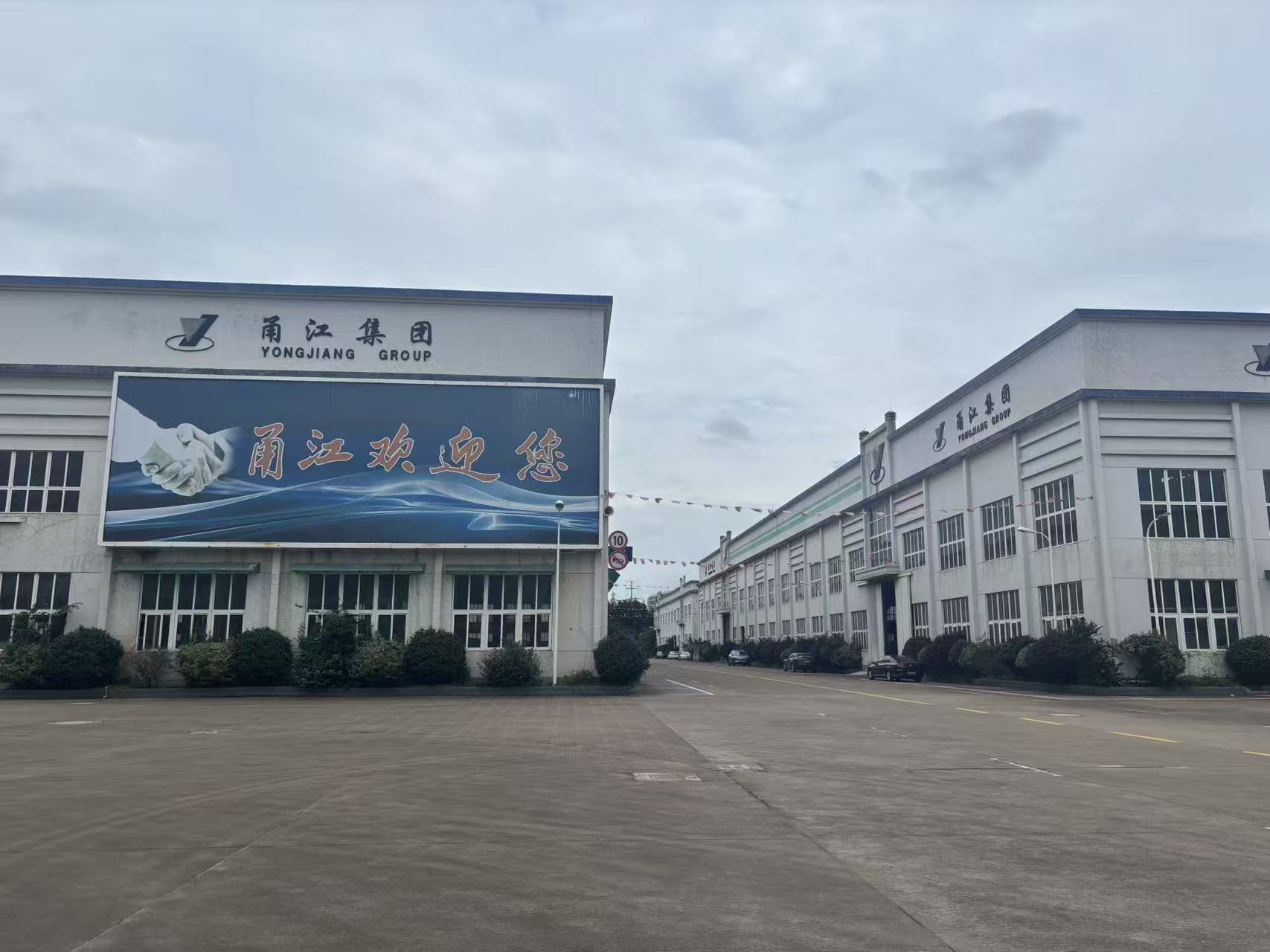
Ningbo Yong Jiang Machine Co., Ltd., established in 1985 and based in Ningbo, China, has manufactured injection molding machines for more than 35 years. Its main products are PET preform injection molding machines and PVC fitting machines. The company operates a manufacturing facility covering 130,000 m², employs approximately 200 staff, and maintains an R&D team of 25 engineers. Annual production output is about 2,000 units, and roughly 59% of products are exported, with major markets including the USA, Canada and Thailand.
For buyers, those figures are not marketing colour — they are the operational base that makes a stated lead time, capacity and testing policy credible. A 200-unit monthly capacity and a 100% testing policy presuppose a structured factory, an engineering function and a repeatable build process. Yongjiang's CE certification (certificate CE20260126MD) and ISO9001 registration, maintained in compliance with EN ISO 12100:2010, are similarly relevant to buyers whose machines must enter regulated markets.
Matching the machine to the preform job
Lead time and terms are broadly identical across a manufacturer's range; configuration is not. The PET preform series spans four models, each sized to a different preform and cavity profile.
| Model | Clamping force | Screw barrel | Shot weight | Tie bar | Motor / heat power | Net weight |
|---|---|---|---|---|---|---|
| YJPT-260 | 260 T | 72 mm | 1,400 g | 580 × 580 mm | 42 kW / 35 kW | 9 t |
| YJPT-318 | 318 T | 77 mm | 1,900 g | 620 × 620 mm | 80 kW / 65 kW | 13 t |
| YJPT-360 | 360 T | 95 mm | 3,450 g | 680 × 680 mm | 80 kW / 65 kW | 16 t |
| YJHB-400 | 400 T | 95 mm | 3,450 g | 720 × 720 mm | 80 kW / 65 kW | 16 t |
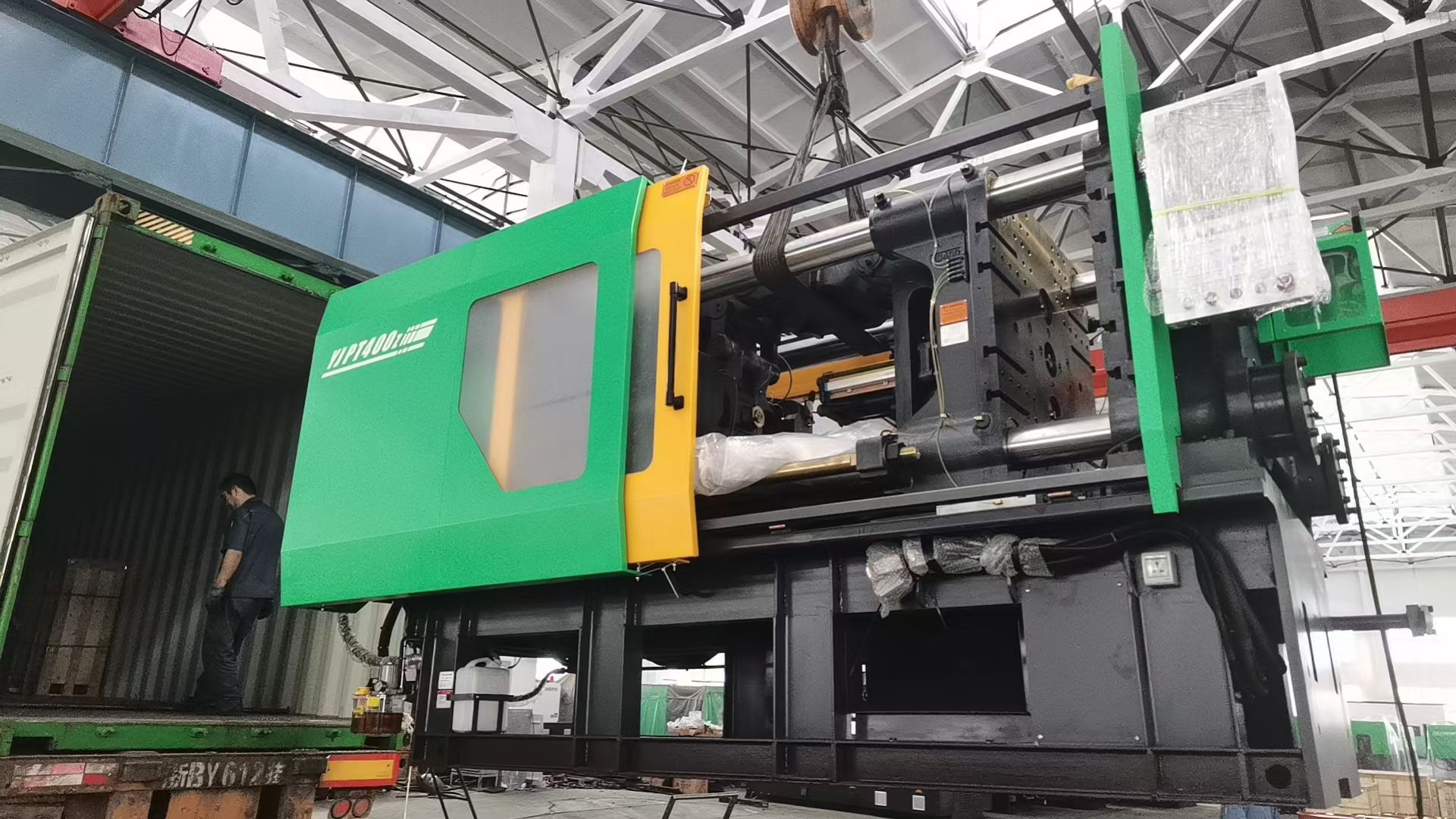
The table is the practical bridge between a quote and a decision. Shot weight and tie-bar spacing determine which preform and cavity count the machine can carry; motor and heating power determine the machine's energy profile and the shop's electrical load; net weight determines floor and foundation requirements. Construction material differs by model — YJPT-260 and YJHB-400 use QT500-A7, YJPT-360 uses QT500-A7 steel, and YJPT-318 is built from steel.
Applications and the operating envelope
These machines are used to produce PET preforms for water bottles, oil bottles and cosmetic containers, while the same preform logic underpins carbonated soft drink and beverage packaging. The application scenario most commonly documented connects to water, oil and cosmetic preform production, with installations common in markets such as Spain and Algeria and, more broadly, in food-grade packaging factories.
Operating requirements are defined rather than optional:
- Power supply: 380/400V 50Hz three-phase industrial power, with voltage fluctuation within ±10%.
- Workshop environment: ambient temperature roughly 20–30°C and relative humidity 40–50% RH. PET resin absorbs moisture, so humidity outside the intended range risks silver streaks and hydrolysis defects.
- Cleanliness: an ISO Class 8 (100,000-class) dust-free workshop is preferred for food-grade preform production.
- Matched equipment: a PET preform mold, hopper dryer, air compressor and water chiller are required for operation.
- Compliance: the EU CE machinery safety standard applies for European installations, with low energy consumption and stable injection as stated design requirements.
Buyers should also note that PET pellets must be dried to the required moisture level before processing, and that 24-hour continuous production depends on routine professional maintenance of the PET screw and servo system.
What the market data suggests
Demand-side signals are broadly supportive. Third-party research places the global PET preform machines market at roughly USD 8.38 billion in 2022, projected to reach about USD 14.73 billion by 2032. Global exports under HS Code 847710, the customs heading covering injection-molding machines, totalled around USD 7.21 billion in 2023, indicating a large and actively traded equipment category. More granularly, the PET preform product market was reported at approximately USD 24.33 billion in 2026, with a CAGR of about 2.17% to reach roughly USD 27.08 billion by 2031.
These figures describe different things and should not be merged. The machine market concerns equipment; the preform product market concerns the intermediate goods those machines produce. Buyers can reasonably read the combination as evidence of steady, non-speculative demand — the kind of environment in which lead times and capacity, not hype, become the practical constraints.
Where this approach has limits
No procurement model fits every buyer, and several boundaries are worth stating plainly.
Lead time is configuration-dependent. The 30–45 day window reflects standard machine builds. Custom cavity counts, bespoke molds or additional market-specific certification can extend it, and buyers with fixed launch dates should build contingency into their schedule.
Factory testing has a defined scope. A 100% testing policy confirms the machine works and produces acceptable preforms under factory conditions. It cannot validate performance against a buyer's specific resin supplier, local water temperature or downstream blow-molding equipment. That validation belongs to on-site commissioning.
Capacity is aggregate, not reserved. A monthly figure of 200 units describes factory throughput; it does not guarantee a specific delivery slot during a demand peak. Order sequencing matters.
The operating envelope is a precondition. A buyer without 380/400V 50Hz three-phase power within ±10%, or without humidity control and clean-workshop conditions, will need to invest in infrastructure before the machine can deliver food-grade preforms. The machine does not remove those requirements.
CE compliance addresses market access, not product approval. CE certification supports entry to EU markets, but it does not certify that a particular bottle format will be accepted by a given brand owner or retailer.
Looking ahead
Three shifts are likely to shape PET preform procurement over the next several years. First, as preform demand grows steadily rather than explosively, competition among suppliers will move toward reliability of delivery and clarity of commercial terms rather than headline specifications. Second, energy efficiency and cycle time will increasingly be judged against total cost of ownership rather than sticker price, giving servo-based designs a structural advantage. Third, compliance and traceability requirements in food-grade packaging will continue to raise the value of documented testing and inspection — precisely the stages buyers currently understand least.
For buyers, the practical consequence is simple: the supplier that answers lead-time, capacity, payment and inspection questions clearly, and in writing, will usually be easier to work with than the supplier that answers only with a specification sheet.
FAQ
What is the minimum order quantity for a PET preform injection machine?
One unit. The PET preform injection machines can be ordered as a single machine, which allows first-time converters and regional producers to validate preform quality and cycle performance before scaling.
How long is the production lead time?
Production lead time is typically 30–45 days from confirmed order to ready-for-shipment. The figure covers machine build, mold preparation and factory testing, and can extend where configurations fall outside a standard build.
What is the monthly production capacity?
Monthly capacity is 200 units. This reflects aggregate factory throughput and supports a stated annual output of approximately 2,000 units.
What are the standard payment terms?
Standard terms are 30/70 — a 30% deposit with the order and a 70% balance before shipment. Buyers should confirm in writing which milestone triggers the balance payment.
What testing is performed before shipment?
A 100% testing policy applies, meaning every machine is run and produces preforms before release, rather than a statistical sample being tested.
What does pre-shipment inspection cover?
Pre-shipment inspection examines and documents the finished machine — configuration, condition and documentation — before packing. It is the final checkpoint while the machine is still inside the factory.
What supporting equipment does the machine require?
A PET preform mold, hopper dryer, air compressor and water chiller. The machine also requires 380/400V 50Hz three-phase power with voltage fluctuation within ±10%.
Does the machine meet EU requirements?
Yongjiang machines are CE certified (certificate CE20260126MD) and ISO9001 registered, maintained in compliance with EN ISO 12100:2010. EU installations also reference the CE machinery safety standard.
Which models are available and how do they differ?
Four PET preform models: YJPT-260 (260 T, 1,400 g shot weight), YJPT-318 (318 T, 1,900 g), YJPT-360 (360 T, 3,450 g) and YJHB-400 (400 T, 3,450 g). They differ in clamping force, screw barrel diameter, tie-bar spacing and net weight, which together determine preform size and cavity suitability.
Full technical specifications for the YJPT and YJHB PET preform series are compiled in the Yongjiang product brochure (PDF).