
PCBMASTER PCB FAQ: Terms, Acceptance Criteria, and Quoting
PCBMASTER PCB FAQ: Terms, Acceptance Criteria, and Quoting
A technical and procurement reference for teams converting a PCB specification into a quotation they can actually hold a supplier to.
Most PCB sourcing problems do not begin inside the fabrication plant. They begin in the gap between a specification that lives in an engineer's CAD file and a quotation that lives in a purchasing spreadsheet. When those two documents describe different boards, the consequence is predictable: a re-quote, a change order, or a first-article failure that surfaces weeks after the purchase order was signed.
PCBMASTER is a China-based PCB and PCBA manufacturer operating six self-owned factories, providing one-stop PCB fabrication, component sourcing and PCB assembly, with 24-hour rapid prototyping and 5–7 days for small-batch production. This reference answers the questions that most often determine whether a PCB quotation is usable — capability limits, acceptance criteria, purchasing terms, and the point at which a digital quote has to hand over to engineering review.
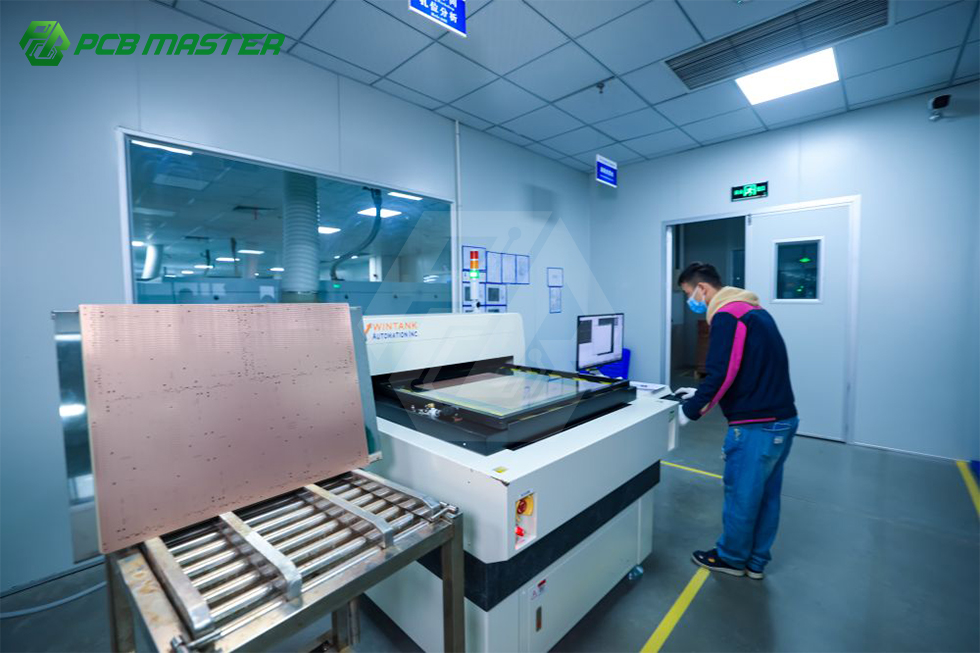
Post-drilling hole position analysis: hole size and positional tolerance are among the first parameters that separate a quotable specification from an assumption.
Why the Quotation Is the Riskiest Document in PCB Procurement
A PCB quotation is a compressed technical statement. It asserts that a specific stack-up, geometry, material and inspection regime can be produced at a stated price and date. When any of those four inputs is missing, the supplier fills the gap with a default — and the default is almost never what the design actually needs.
The pressure on this step has increased as board complexity has risen. According to the Taiwan Printed Circuit Association, NVIDIA's GB300 AI platform pushed PCB layer counts above 26 layers, raising PCB value to roughly USD 35,000 per server rack. A quoting template built for four- and eight-layer boards cannot describe that class of product. Procurement teams that still request prices by email with a layer count and a board size are effectively asking suppliers to guess.
The practical response is to treat the quote request as a data package with four mandatory parts: geometry (outline, panelisation, quantity), fabrication (stack-up, layer count, minimum track and spacing, minimum hole, copper weight, surface finish, impedance targets), acceptance (inspection standard, class, test method, documentation), and commercial terms (quantity breaks, packaging, delivery destination, requested lead time). Everything that follows in this reference is organised around those four blocks.
What PCBMASTER's Spec-to-Quote Workflow Is Designed to Do
PCBMASTER's quoted scope is a turnkey one: PCB fabrication, component procurement, SMT and THT assembly, inspection, testing and delivery coordinated through a single manufacturing partner. That scope matters for quoting because it removes the most common source of second-stage cost escalation — a bare board priced by one supplier and an assembly priced by another, with neither accepting responsibility for the interface.
The company's digital online quoting platform is built around the same logic. A buyer enters the specification fields the platform requests — layer count, dimensions, quantity, material, surface finish, and the requested assembly scope where relevant — and receives a structured quotation instead of a fragment of an email thread. The value of that structure is not speed alone. It is that the same input basis is reused for every subsequent revision, so a change in copper weight or quantity can be traced to a specific change in price rather than negotiated from memory.
The platform has a defined boundary. Requests that fall inside published capability limits and use standard materials can be priced from input data. Requests that depend on stack-up approval, mixed materials, embedded components, or acceptance classes that need engineering interpretation are routed to review before a firm figure is issued. Buyers should treat that routing as a quality signal, not a delay: a confident price on an undefined board is a liability.
Direct technical correspondence is handled at service@pcbmaster.com, and the published capability pages sit at www.pcbmaster.com.
Technical Capability Checks Before You Quote
Capability limits are not marketing numbers. Each one corresponds to a process constraint that changes price, yield risk, or both. The table below lists PCBMASTER's published figures alongside the reason each figure matters at the quotation stage.
| Capability | Published figure | Why it changes the quote |
|---|---|---|
| Rigid PCB layer count | Up to 128 layers | Drives lamination cycles, registration budget and drilling tolerance stack-up. |
| Flex PCB layer count | Up to 32 layers | Affects coverlay strategy, bend-radius allowance and handling yield. |
| Minimum track / spacing | 4 mil | Sets the imaging class, etch control requirement and inspection method. |
| Minimum finished hole size | 0.05–0.2 mm | Interacts with aspect ratio, plating uniformity and achievable positional tolerance. |
| Heavy copper | Up to 10 oz | Changes etching behaviour, plating time and current-carrying design margin. |
| HDI structures | Dense any-layer HDI microvias | Required for fine-pitch medical and high-density interconnect designs. |
| Special processes | Buried / blind vias, via filling, back drilling, embedded components | Each adds process steps that must be reviewed against the stack-up drawing. |
| Certifications | IATF 16949, ISO 9001, UL | Determines eligibility for automotive and regulated programs; scope must match the plant. |

Board outline and panelisation tolerances are set at routing, which is why outline dimensions belong in the quotation input rather than in the follow-up email.
Two figures deserve separate attention. The 4 mil track and spacing limit is where imaging and etch control stop being routine, so a design that sits exactly at 4 mil has less process margin than one at 5 mil — the price difference between those two requests is real, and it should be visible in the quote rather than absorbed silently. The 0.05–0.2 mm hole range is wide because the achievable lower bound depends on board thickness: a small hole in a thick board creates an aggressive aspect ratio, and plating uniformity across that hole becomes the yield determinant.
Acceptance Criteria: What Belongs in the Purchase Order
Acceptance criteria convert a price into an obligation. In PCB procurement the most common failure is not a missing standard — it is a standard named without a class, a test method, or a sampling rule. Cosmetic anomalies in particular are judged against a class definition, not against opinion, so an unclassified acceptance clause guarantees a dispute on the first lot that looks marginally different from the previous one.
| Acceptance item | Typical evidence | Who must define it |
|---|---|---|
| Inspection standard and class | IPC-A-600 for bare board, J-STD-001 for assembly, with class stated | Buyer |
| Electrical test | Netlist-driven flying probe or fixture test record, opens and shorts | Buyer specifies, manufacturer executes |
| Hole-wall plating integrity | Microsection coupon report with plating thickness | Jointly agreed sampling |
| Copper thickness and weight | Coupon measurement against the specified ounce rating | Buyer states target, manufacturer reports result |
| Impedance control | Coupon test report tied to the approved stack-up | Buyer defines targets, manufacturer defines coupon design |
| Dimensional tolerance | Hole position and board outline measurement report | Buyer, from the mechanical drawing |
| Documentation pack | Certificate of conformance, material datasheets, first-article report | Agreed at quotation stage, not after delivery |
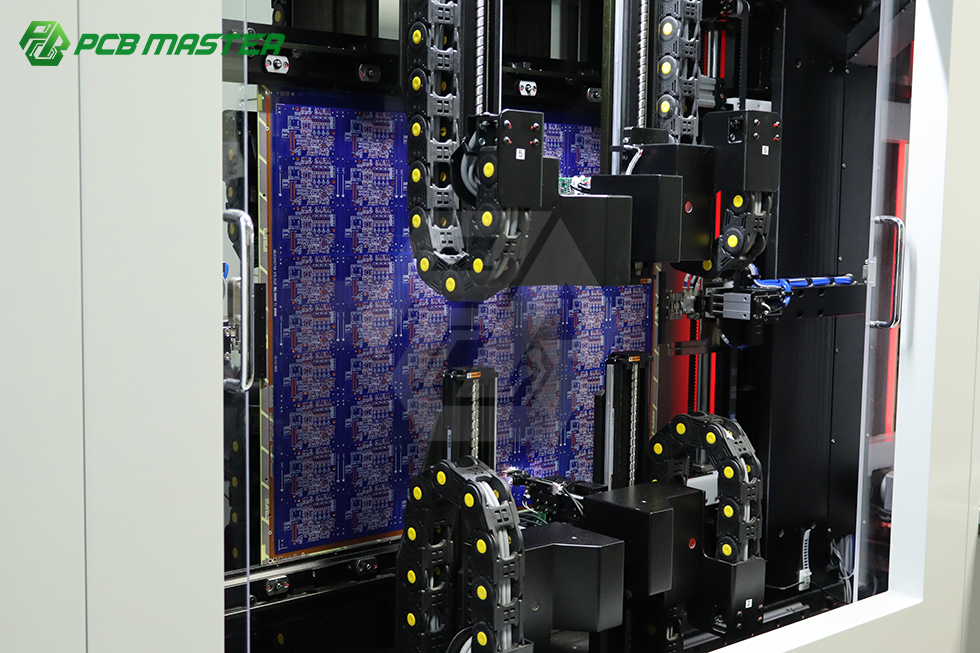
Electrical test scope — flying probe versus fixture, and whether a netlist report is required — should be fixed before the price is agreed.
A practical pattern is to attach the acceptance document to the quotation itself. If the quote says “IPC class 2” and the purchase order says “IPC class 3”, the supplier has priced a different product, and the difference is not a negotiation point — it is a different manufacturing commitment.
Purchasing Terms: Minimums, Lead Times and Expedite Options
PCBMASTER states no MOQ requirements, serving prototypes, small batches and volume orders from the same process base. Standard turnaround for prototype orders is 5–7 business days, with expedited options of 24–48 hours for urgent projects. Separately, the company publishes 24-hour rapid prototyping and 5–7 days for small-batch production.
Those figures describe standard process conditions. In practice, four variables move the date: layer count, material class, surface finish, and — for turnkey orders — component availability. A 100+ layer rigid board, a Rogers high-frequency laminate build, or an AlN ceramic substrate is not a standard-process order and should not be scheduled as one. The same applies to a turnkey assembly where long-lead ICs sit on the bill of materials; the PCB can be ready in days while the finished assembly waits on procurement.
For buyers, the useful discipline is to separate the two schedules in the purchase order: a confirmed fabrication date and a confirmed delivery date, with component lead time shown as a distinct line. That single separation prevents most expedite disputes, because it makes visible which stage actually consumed the time.
Where the Capability Fits: Project Scenarios
Capability statements become useful only when mapped to a project type, because the same set of process limits produces very different risk in different applications.
Medical instruments. In the smart medical instruments sector, boards are used in ultrasound probe arrays, endoscope micro-flex circuits and implantable high-precision sensors, and the designs rely on dense any-layer HDI microvias. For quoting, the defining inputs are the microvia stack, the flex or rigid-flex transition, and an acceptance class strict enough to justify the density. Traceability documentation is usually part of the request, not an afterthought.
Automotive electronics. EV BMS flex circuits, automotive radar hardware and smart cockpit control modules are backed by IATF 16949 certification. In this segment the certificate is a gate rather than a differentiator: buyers should confirm that the IATF 16949 scope covers the specific plant and product line being quoted, since a group-level certificate does not automatically transfer to every facility.
Wearables. Smartwatches and AR/VR headsets depend on ultra-thin, high-flexibility FPC behaviour, where the quoted parameters are coverlay construction, bend radius and flex-cycle expectation rather than layer count alone.
R&D prototyping and volume transition. Early-stage hardware programmes validating 1–5 pieces, and cost-driven mass-production lines, are served from the same base, supported by SMT lines, AOI automated optical inspection, and in-house drilling and lamination. This pattern is common among European buyers in Germany, the Netherlands, France and the UK, where the same specification must survive the jump from validation build to series order without a re-quote.
AI and high-layer-count compute. The GB300 example is the clearest signal: layer counts above 26 have become the working assumption for AI accelerator boards, and quote requests in this segment should arrive with a defined stack-up, not a layer count alone.
Market Context Behind the Quoting Pressure
The complexity increase is measurable at market level. Global Market Insights places the global PCB market at USD 83.6 billion in 2026, growing to USD 137.8 billion by 2035. Yole Group forecasts the total advanced IC substrate market reaching USD 31 billion by 2030, spanning advanced IC substrates, glass core substrates, substrate-like PCBs and embedded die technologies. The ceramic PCB market was valued at USD 2.8 billion in 2025, with the alumina segment holding a 52.4% share.
The procurement implication is not simply that more boards will be bought. It is that a growing share of the value sits in board classes — substrate-like, ceramic, high-layer-count — where a price built from layer count and board area is structurally inadequate. Buyers who can supply a complete stack-up package will get comparable quotes faster than buyers who cannot, regardless of which supplier they approach.
Structured Quoting Compared with Traditional Ad-Hoc RFQ
Traditional PCB sourcing runs on email threads and spreadsheets: a drawing is attached, a price is returned, and the clarifying questions arrive afterwards. A structured quoting workflow front-loads those questions. The comparison below is about process behaviour, not about which supplier is better.
| Dimension | Ad-hoc email RFQ | Spec-structured quoting |
|---|---|---|
| Input completeness | Depends entirely on the buyer; fields are re-typed | Structured fields prompt stack-up, geometry, quantity, acceptance |
| Re-quote frequency | High when inputs are incomplete | Lower, because the basis is fixed before pricing |
| Traceability | Scattered across threads and attachments | One record tied to one specification revision |
| Non-standard requests | Handled informally, easy to lose | Flagged and routed to engineering review |
| Scope integration | Bare board and assembly often priced separately | Fabrication, sourcing, assembly and test held in one scope |
Where the structured approach has real limits. First, a quotation inherits every gap in the data it was built from: if the impedance target or the stack-up is undefined, the price is valid for a board the buyer did not describe. Second, published capability figures such as 128 layers, 4 mil and 10 oz describe a process envelope, not a promise that any particular design at that limit will yield at the expected cost — buyers in regulated programmes should request capability documentation and validate with a first article before committing a series order. Third, not every build can be priced automatically: ceramic substrates, Rogers laminates, 100+ layer rigid boards and embedded-component designs depend on material lot availability and stack-up approval. Fourth, a priced board is not a manufacturable one; quoting does not substitute for a design-for-manufacture review, and a project that skips that review will discover its cost later.
Future Outlook
Three shifts are likely to shape PCB quotation practice over the next few years. Layer-count inflation in AI hardware will push more volume into the 26+ layer region, where quotes must be stack-up-specific. Substrate-like and ceramic formats will continue to expand as thermal and density requirements tighten, moving an increasing share of spend away from commodity laminate pricing. And flex and rigid-flex will keep spreading through medical and wearable products, where the quoted parameters are mechanical as much as electrical.
The common thread is that the quotation is becoming a specification artefact. Buyers who can issue a complete, version-controlled data package — stack-up, geometry, acceptance class, commercial terms — will get comparable prices, defensible lead times and fewer surprises at first article. The platform is the mechanism; the discipline is the advantage.
Frequently Asked Questions
What specification inputs are needed before a PCB quotation can be issued?
A quotable PCB specification has four parts. Geometry covers board dimensions, outline, panelisation and quantity. Fabrication covers layer count, material and stack-up, minimum track and spacing, minimum finished hole size, copper weight, surface finish and impedance requirements. Acceptance defines the inspection standard, electrical test method, documentation and first-article requirements. Commercial terms cover quantity breaks, packaging, delivery destination and requested lead time. PCBMASTER publishes limits of up to 128 layers on rigid boards, up to 32 layers on flex, 4 mil minimum track and spacing, 0.05–0.2 mm minimum hole size, and heavy copper up to 10 oz; requests inside those limits can be priced from complete input data, while requests outside them are routed to engineering review before a firm figure is given.
Can rigid boards above 100 layers and flex boards above 30 layers be quoted?
Yes, within the published limits of 128 layers for rigid PCBs and 32 layers for flex PCBs. In quotation terms, high layer counts change three things: the number of lamination cycles, the registration and drilling tolerance budget, and the yield risk carried inside the price. A quotation for a 100+ layer rigid board is therefore tied to a specific stack-up and to confirmation of material availability, rather than to a generic area-based figure.
How fine can traces, spacing and holes be before a design becomes difficult to quote?
The published limits are 4 mil minimum track width and spacing, and 0.05–0.2 mm finished hole size. Designs at the lower edge of that range remain quotable but carry less process margin: plating uniformity through the hole, copper-to-edge registration and surface finish all narrow the window. For procurement, the practical rule is to state the minimum geometry explicitly and require the acceptance document to name the measurement method.
What are the minimum order quantity and standard lead times?
PCBMASTER states no MOQ requirements, serving prototypes, small batches and volume orders. Standard turnaround for prototype orders is 5–7 business days, with expedited options of 24–48 hours; the company separately publishes 24-hour rapid prototyping and 5–7 days for small-batch production. Actual lead time depends on layer count, material class, surface finish, component availability for turnkey orders, and test scope.
Which certifications matter for automotive and medical PCB projects?
PCBMASTER holds IATF 16949, ISO 9001 and UL. For automotive work such as EV BMS flex circuits, radar hardware and smart cockpit control modules, IATF 16949 is the quality-management framework buyers typically ask to see evidence for. UL relates to flammability and file-based recognition of the board material, and ISO 9001 covers the general quality system. Buyers in regulated programmes normally request the certificate scope alongside the quotation, because a certificate held at group level does not automatically cover the specific manufacturing plant.
What acceptance criteria should be written into a PCB purchase order?
At minimum: the inspection standard (IPC-A-600 for bare boards and J-STD-001 for assembly are the common references), the acceptance class, the electrical test method with netlist, coupon and microsection requirements for hole-wall plating and copper thickness, dimensional tolerances for hole position and board outline, surface finish specification, and the documentation package. Undefined acceptance language is the main cause of disputes over appearance, because cosmetic anomalies are judged against a class definition rather than against individual opinion.
How are heavy copper, ceramic and high-frequency materials handled in a quotation?
Heavy copper up to 10 oz, ceramic substrates including AlN and alumina, and Rogers high-frequency laminates sit outside commodity pricing logic. They are driven by material availability, etching and plating behaviour, and in the ceramic case by the substrate route rather than laminate pressing. Quotations for these builds are normally tied to a material datasheet and a confirmed supplier lot. Market context supports the caution: the ceramic PCB market was valued at USD 2.8 billion in 2025, with the alumina segment holding 52.4% of product-type share.
Which project types fit the published capability?
Four clusters are directly supported. Medical instruments using ultrasound probe arrays, endoscope micro-flex circuits and implantable high-precision sensors, built on dense any-layer HDI microvias. Automotive electronics including EV BMS flex circuits, radar hardware and smart cockpit profiles, backed by IATF 16949. Wearables that need ultra-thin, high-flexibility FPC behaviour in smartwatches and AR/VR headsets. And hardware programmes that validate 1–5 pieces before moving to cost-driven mass production, supported by SMT lines, AOI automated optical inspection and in-house drilling and lamination.
Can special processes beyond standard multilayer be quoted from specification data?
Buried and blind vias, via filling, back drilling and embedded components are supported. These structures influence quotability because each adds process steps that interact with layer count and registration tolerance, so they are typically reviewed against the stack-up drawing rather than priced from a layer-count field alone. A request that names the structure, the layer it occupies and the acceptance requirement will move through review faster than one that lists it as an option.
Where should questions be directed when the online quote cannot answer them?
Questions that fall outside the scope of an automated quotation — stack-up approval, impedance modelling, mixed-material builds, or clarification of an acceptance class — are handled through service@pcbmaster.com. Raising them before the quotation is issued is generally cheaper than discovering the mismatch at first article, because the technical answer changes the price basis rather than the finished board.
Summary
A PCB quotation is only as specific as the data behind it. PCBMASTER's published envelope — rigid boards to 128 layers, flex to 32 layers, 4 mil track and spacing, 0.05–0.2 mm holes, heavy copper to 10 oz, any-layer HDI, and IATF 16949, ISO 9001 and UL certification — defines what can be priced from specification and what needs engineering review. The buyer-side discipline is unchanged: fix the stack-up, fix the acceptance class, fix the commercial terms, and the quote becomes a document that can be compared, audited and enforced.
¿Tiene preguntas o necesita más detalles?
Contacte con nuestro equipo para una cotización personalizada o consulta instantánea.
Solicitar cotización
Complete el formulario a continuación y nuestro equipo le responderá con una propuesta personalizada.
Chat directo de WhatsApp
¿Prefiere chatear en tiempo real? Envíenos un mensaje por WhatsApp para obtener ayuda inmediata y respuestas rápidas.
- Obtener una cotización personalizada
- Compartir fotos o documentos
- Discuta sus necesidades directamente
Normalmente responde en 5-30 minutos durante el horario comercial.