
Outside Eyes on a 5,000-Piece Lebanon Motorcycle Seat Run
A replacement motorcycle seat is usually judged months after delivery — by how the cover looks after a rainy season, whether the second batch matches the first, and how often a repair shop sends one back. A recorded 5,000-piece order shipped to Lebanon over a two-year period offers that kind of evidence, and it is worth reading the way a distributor would: what was ordered, what came back, and what the record still leaves open.
The order was produced by Zhejiang Xingrong Auto & Motorcycle Parts Co., Ltd., a motorcycle seat manufacturer located in Taizhou City, Zhejiang Province, China, founded in 2015 and operating a 15,000 m² plant with 130 employees. The project record lists the Lebanon run as 5,000 units delivered across two years, applied to motorcycle parts replacement, with three completion notes attached: seating feel, visual effect, and waterproofing. Volume alone says little. What makes the case readable from the outside is the time window — a two-year span implies repeated production batches rather than a single inspected lot.
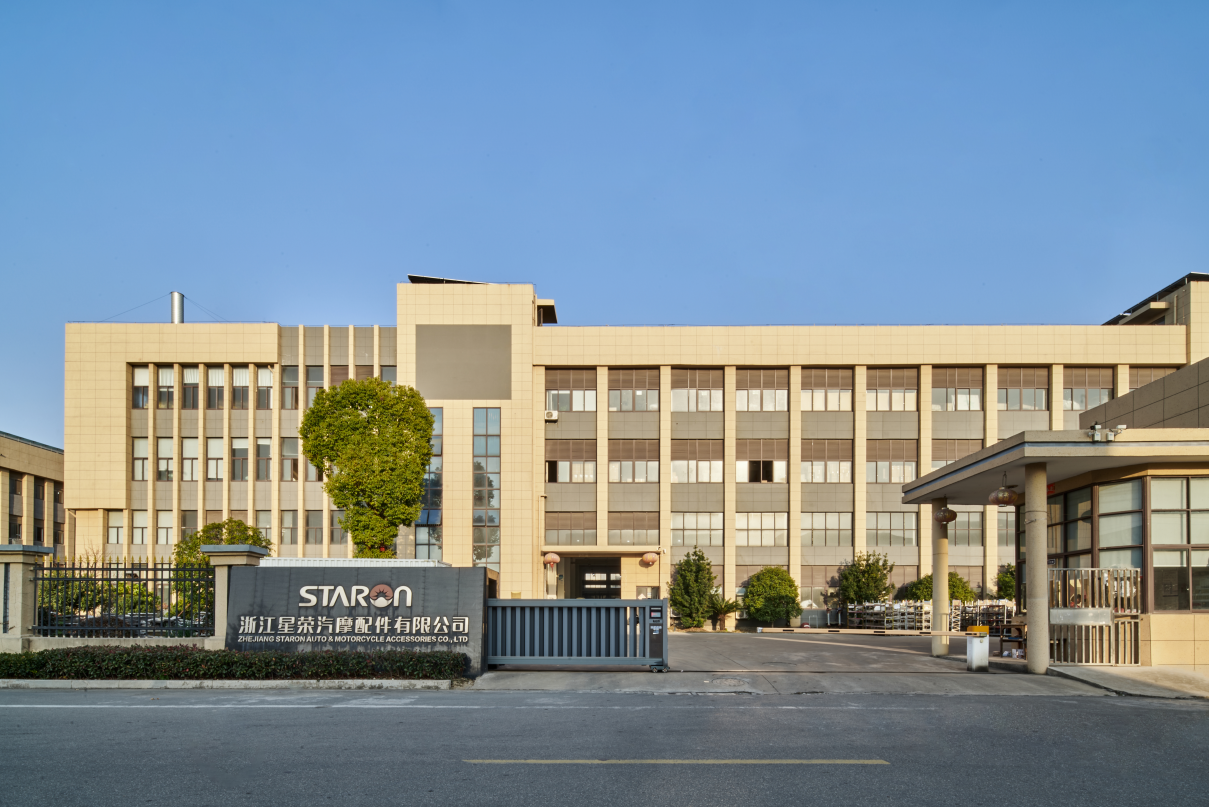
Production context: seat assembly inside the Taizhou plant. A two-year order is measured in batch-to-batch consistency, not in a single sample.
Why a Two-Year Window Is a Harder Test Than a Big Single Order
For a distributor, the commercial risk in a seat program is rarely the first container. It is what happens in the third and fourth production cycle: cover colour that slowly shifts, stitching that tightens or loosens, foam that arrives denser in one batch than the next. A 5,000-piece run spread over two years forces a factory back through the same tooling, the same material specification and the same inspection routine multiple times.
That matters more in the replacement channel than in original equipment supply. Third-party channel data attributes approximately 62.3% of motorcycle seat market revenue to aftermarket distribution (Dataintelo, 2025), which means most seats reach riders through parties who carry the return, the warranty conversation and the reputation cost if a batch disappoints. Accessory brand distributors are effectively reselling a factory decision they did not make.
The Lebanon order sits squarely in that pattern. Its stated application is motorcycle parts replacement, and the client categories the manufacturer serves include motorcycle manufacturers, motorcycle repair shops, motorcycle parts retailers and motorcycle accessory brands — the four groups most exposed to a seat failing in the field rather than on a drawing.
What Was Actually Ordered and Delivered
The record is specific enough to audit at a basic level. The seat supplied is a single product family covering eight named model applications, offered in two configurations.
| Item | Recorded detail |
|---|---|
| Product | Motorcycle seat (scooter seat and dirt bike seat configurations) |
| Model coverage | Nmax, Xmax, Aerox, ADV150, ADV160, Forza, PCX, Click |
| Application | Motorcycle parts replacement |
| Quantity and duration | 5,000 pcs, delivered over 2 years |
| Destination | Lebanon (one of 11 markets listed in the project data) |
| Materials | PP plate, PU foam, PVC leather |
| Construction | 80D high-density foam, high-strength floor structure |
| Reported outcomes | Seating feel, visual effect, waterproofing |
| Quality routine | 100% pre-shipment test |
Two structural details are worth pulling out of the table. First, the model list is commuter-scooter heavy — Nmax, Xmax, Aerox, ADV150/160, PCX and Click are all high-volume urban platforms — with dirt bike coverage as a second configuration rather than a separate product line. Second, the material set is conventional rather than exotic: a PP base plate, PU foam, and a PVC leather cover. That is the mainstream build for mid-range replacement seats, and it is the combination most directly tied to the outcome the buyer actually reported.
Reading the Three Reported Outcomes Against Distributor Expectations
Waterproofing: the specification that decides a rainy-season market
Waterproofing is the outcome with the clearest commercial consequence. A cover that absorbs water changes weight, smell and finish, and a seat that holds moisture against foam degrades from the inside. The Lebanon record states waterproof performance as a delivered result on a PVC leather cover over PU foam.
This is consistent with a broader material shift in the segment. Third-party analysis notes that while leather remains a premium seat material, synthetic options such as vinyl and foam constructions are increasingly used to deliver waterproof and soft-surface characteristics in the mid-range (Fortune Business Insights). For a distributor buying at replacement-channel price points, that trade is practical: PVC leather is the route to water shedding without moving into premium leather cost.
Seating feel: what 80D foam is meant to do
Seating feel is reported as satisfactory, and the underlying specification explains why the result is plausible rather than accidental. 80D high-density foam is a firm-support construction: it resists compression over time instead of softening into the base plate after a few months of commuting. Combined with a high-strength floor structure that distributes load across the pan rather than concentrating it at the mounting points, the build targets durability of feel rather than a soft first impression.
For distributors selling to commuter-scooter riders, that distinction has a returns implication. A seat that feels acceptable on delivery but collapses after one season generates warranty traffic; a firmer foam that holds its shape does not. Comfort remains a rider judgement, not a laboratory measurement — which is precisely why the two-year window matters more than any single comfort claim.
Visual effect: the part of the order the distributor resells under its own name
Visual result is listed as a delivered outcome alongside function, and it is the one most exposed to how the seat was specified. The manufacturer's stated customization scope covers logo branding, leather cover design and stitching line colour — the three variables that determine whether a seat reads as a factory part or as an aftermarket add-on.
For an accessory brand distributor, the commercial value of that visual result is repeatability. A cover design that photographs well once is a sample; a cover design that survives two years of production cycles without drifting in stitch tone or panel line is a resaleable product. The Lebanon run is documented as a multi-year delivery rather than a one-off, which is the only reason the visual claim carries weight at all.
Repair and replacement practicality: the distributor's real inventory question
The application is replacement, and replacement is an inventory discipline as much as a product discipline. A repair shop needs a seat that installs without reworking the pan, fits the model named on the box, and does not require a second visit. The record lists repair and replacement as an explicit highlight of the order, supported by the model coverage above and by a one-year warranty term.
Where this becomes useful to a buyer is coverage economics. Eight model applications and two configurations from one supplier reduces the number of purchase orders a distributor has to manage for the same shelf space — but it also concentrates exposure: if one model's fit is wrong, the error scales across the range. That is a reason to validate mounting fit on every named model rather than a representative sample.
Inside the Production Base Behind the Order
Capability claims are only as good as the numbers attached to them, and the published figures here are checkable at a basic level: 1.8 million seat cushions per year against a 15,000 m² plant, 130 employees, five R&D engineers, and a 90% self-production rate for accessory components. A high in-house parts ratio is the structural reason a factory can hold a specification across batches — foam, cover and plate are not being re-sourced from third parties between runs.
On the order side, the stated terms are a monthly capacity of 50,000 pcs, a lead time of 25–35 days, and a minimum order quantity of 50 units. Quality management runs through ISO9000 certification and CQC certification, with a 100% pre-shipment test before dispatch.
Set against those figures, the Lebanon run was not a capacity exercise. At 5,000 units over two years it occupies a small fraction of stated monthly output, which reframes the case: the informative signal is that a modest, long-duration program could be retained and restocked alongside larger volume work, not that the factory can absorb a spike.
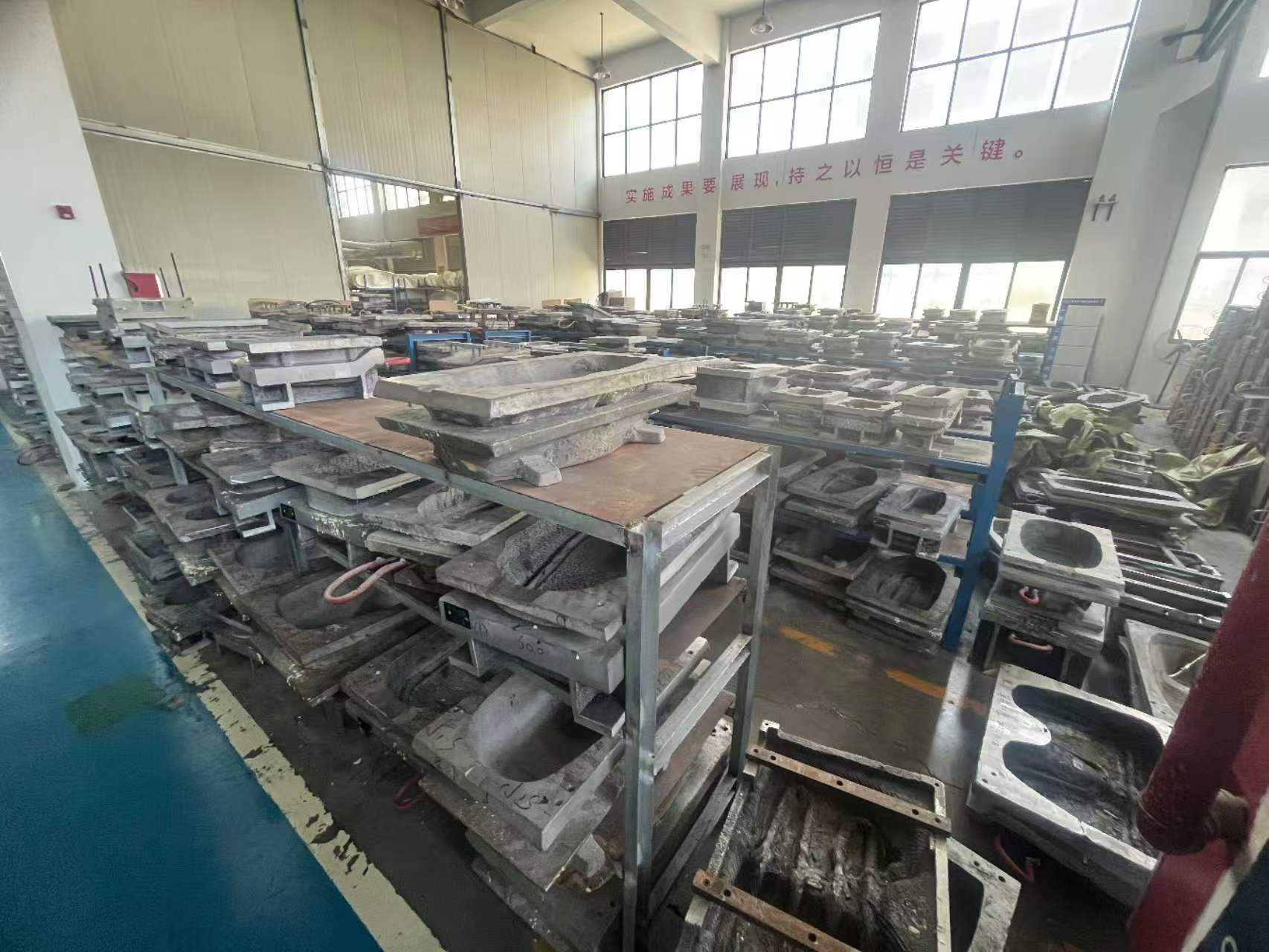
Repeat batches, not single lots: a two-year replacement program depends on the same materials and inspection routine being reused each cycle.
What This Case Does Not Prove
An outside read has to state its limits, and this one has several.
- No independent test data. The outcome descriptions — seating feel, visual effect, waterproofing — are qualitative. No laboratory report, failure rate, or field return percentage is disclosed for the Lebanon run.
- One market, one buyer profile. Lebanon is a single destination among the 11 markets listed in the project data. Performance in a colder or more humid climate is not established by this record.
- Modest volume. 5,000 units across two years is small relative to a stated 50,000 pcs monthly capacity. It demonstrates sustained small-lot production, not peak-load reliability.
- Compliance scope. The certifications named are ISO9000 and CQC. UN Regulation No. 17 (ECE R17) governs approval of vehicle seats and head restraints in its own regulatory framework; the record does not state ECE R17 approval for these replacement seats, and buyers requiring it should treat it as a separate qualification.
- Fit is model-specific. Model coverage is listed, but mounting compatibility is not documented per model in the case record.
Factory Program vs. Traditional Spot Sourcing
Most distributors buy seats through one of two routes: spot purchasing from local trade supply, or a factory-direct OEM/ODM program. Neither is universally better — the choice depends on how much of the specification the buyer needs to control.
| Dimension | Traditional spot sourcing | Factory OEM/ODM program (this case) |
|---|---|---|
| Specification visibility | Often limited to what the trading party states | Material set disclosed: PP plate, PU foam, PVC leather; 80D foam density |
| Customization | Rarely available beyond existing stock designs | Logo branding, leather cover design, stitching line colour; ODM development for custom seats |
| Order size | Flexible, no formal minimum in practice | Stated MOQ of 50 units |
| Timing | Immediate, ex-stock | 25–35 days lead time; planning required |
| Quality routine | Varies; depends on the intermediary | 100% pre-shipment test; third-party inspection available as an acceptance term |
| Warranty | Typically handled case-by-case by the reseller | 1-year warranty stated |
| Consistency across repeats | Batch identity usually untraceable | Repeatable, provided the same specification is reissued |
The limitation runs both ways. A factory program asks the buyer to commit to a lead time and to write a specification that will be held for years — the Lebanon record only holds together because the material set and cover design stayed fixed. Distributors who cannot forecast that far, or who need ten units this week, are better served by spot supply. The factory route pays off when a private-label seat line is intended to be resold for multiple seasons.
Execution Notes for Buyers Preparing a Comparable Order
The commercial terms attached to this capability are stated plainly, and they matter as much as the product detail when a buyer moves from evaluation to execution.
- Order terms: MOQ of 50 units; delivery on FOB or EXW basis.
- Payment: 30% T/T in advance, 70% T/T against copy of B/L.
- Acceptance: pre-shipment test plus the option of third-party inspection.
- After-sales: one-year warranty.
- Customization window: logo, leather cover design and stitching colour are specified before production, not after.
The practical lesson from a two-year run is that acceptance criteria should be written once and reused. If waterproofing is the qualification that matters, define how it is checked. If the visual finish is the qualification, define the stitch tone and panel layout in writing so that batch four is measured against batch one rather than against memory.
Where the Replacement Seat Market Is Heading
Market estimates for motorcycle seats differ by methodology, which is worth acknowledging before quoting any of them. One set of third-party figures puts the global market at USD 7.42 billion in 2025, rising to USD 13.30 billion by 2032 at a CAGR of 8.69% (Market Research Future / Dataintelo); a separate Dataintelo estimate places the 2025 base considerably lower. The direction of travel is consistent even where the absolute values are not, so the figures are best read as a growth signal rather than a fixed forecast.
Two structural points are more decision-relevant than the headline size. Aftermarket distribution accounts for roughly 62.3% of revenue (Dataintelo, 2025), confirming that replacement demand — not factory fitment — is where most seat volume moves. And Asia-Pacific held a 38.5% revenue share in 2025 (Dataintelo, 2025), reflecting concentrated production capacity in the region that supplies distributors worldwide, Lebanon included.
Add the material shift toward synthetic covers for waterproof and soft-surface performance in the mid-range (Fortune Business Insights), and the competitive logic for accessory brand distributors becomes clear: the seat itself is no longer the differentiator, the specification discipline behind it is.
Future Outlook
For distributors evaluating a factory partner over the next buying cycle, three signals from this case are likely to stay relevant. Documented duration will outweigh documented volume — a supplier able to restate a specification across multiple years is more useful than one able to quote a large tonnage once. Material disclosure will become a procurement requirement rather than a courtesy, because waterproofing and foam density are the two attributes a rider can feel and a return form can record. And compliance will remain a separate conversation from performance: quality management certification and product-type approval answer different questions, and buyers in regulated markets should not let one substitute for the other.
The Lebanon run, read honestly, is a useful reference point rather than a proof. It shows a 5,000-piece replacement program held together across two years with the three outcomes a distributor cares about reported at completion — and it shows exactly where a buyer still has to do their own verification.
FAQ
What does a 5,000-piece Lebanon order actually demonstrate about a seat manufacturer?
It demonstrates sustained production of a defined specification across multiple batches over two years, applied to motorcycle parts replacement, with seating feel, visual effect and waterproofing reported as delivered outcomes. Because the volume is small relative to the manufacturer's stated monthly capacity of 50,000 pcs, it indicates small-lot production capability and specification retention rather than capacity or peak-load performance.
How is waterproofing handled on these seats, and how is it verified before shipment?
The seat uses a PVC leather cover over PU foam on a PP base plate, and waterproof performance is recorded as a delivered outcome of the Lebanon order. Every order passes a 100% pre-shipment test, and third-party inspection can be written into the acceptance criteria. The record does not state a specific waterproof test method, so buyers requiring a contractual claim should define the test themselves.
What MOQ, lead time and capacity apply to an OEM or ODM seat order?
The stated minimum order quantity is 50 units, lead time is 25–35 days, and monthly capacity is 50,000 pcs. Both OEM and ODM services are offered; ODM covers custom seat development, and customization includes logo branding, leather cover design and stitching line colour. A one-year warranty applies.
Which motorcycle models can a distributor cover from one seat program?
The product family covers Nmax, Xmax, Aerox, ADV150, ADV160, Forza, PCX and Click, supplied in two configurations: scooter seat and dirt bike seat. This model list is the basis for replacement-channel coverage and should be checked against the distributor's actual vehicle parc.
What are the payment and acceptance terms for these orders?
Delivery is on FOB or EXW terms, with 30% T/T in advance and 70% T/T against copy of B/L. Acceptance is based on pre-shipment test, with third-party inspection available as an additional acceptance criterion.
Are these replacement seats approved under UN Regulation No. 17?
The record names ISO9000 quality management system certification and CQC certification. It does not state ECE R17 approval. UN Regulation No. 17 establishes uniform provisions for the approval of vehicle seats, anchorages and head restraints within its own regulatory framework, and buyers who require type approval should treat it as a separate qualification rather than assuming it from quality management certification.
¿Tiene preguntas o necesita más detalles?
Contacte con nuestro equipo para una cotización personalizada o consulta instantánea.
Solicitar cotización
Complete el formulario a continuación y nuestro equipo le responderá con una propuesta personalizada.
Chat directo de WhatsApp
¿Prefiere chatear en tiempo real? Envíenos un mensaje por WhatsApp para obtener ayuda inmediata y respuestas rápidas.
- Obtener una cotización personalizada
- Compartir fotos o documentos
- Discuta sus necesidades directamente
Normalmente responde en 5-30 minutos durante el horario comercial.