
Outdoor Polycarbonate Convex Mirrors: Specs, Applications and Selection Criteria
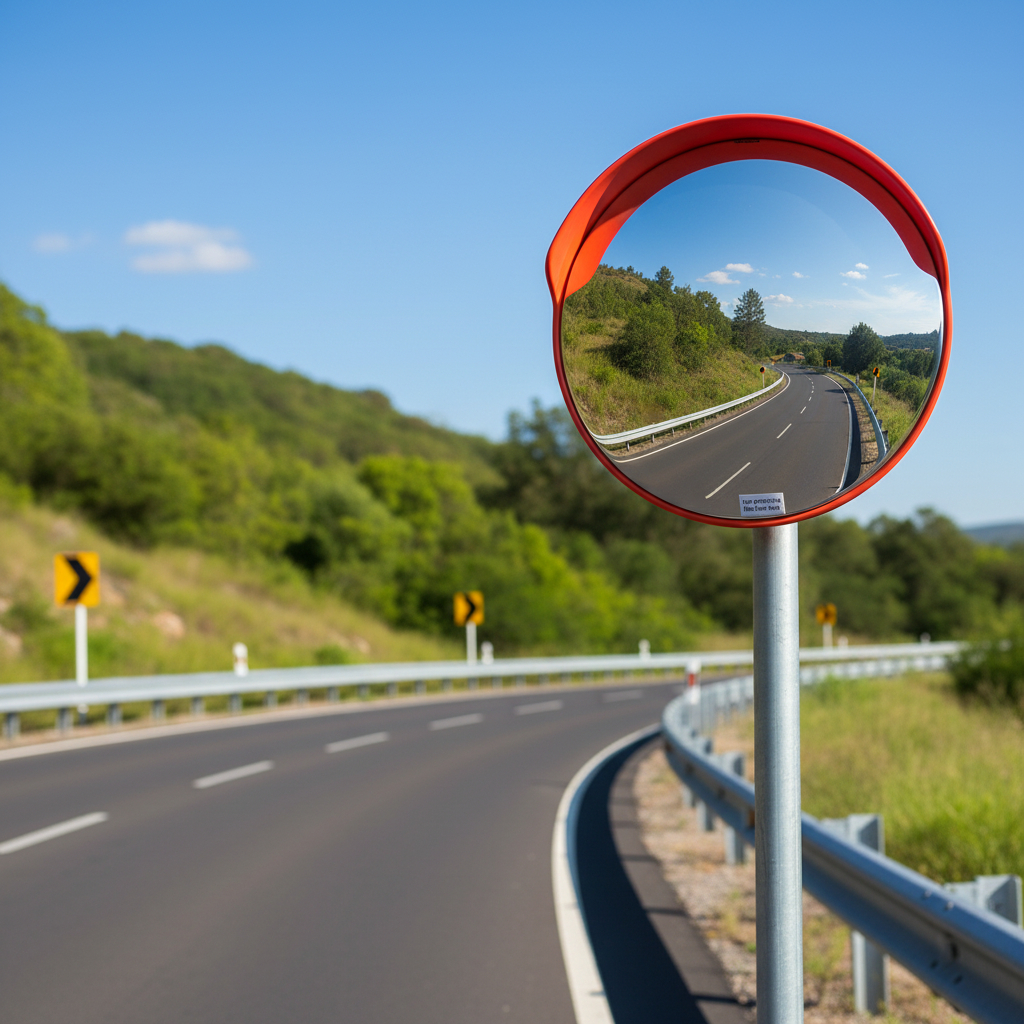
Outdoor Polycarbonate Convex Mirrors: Specs, Applications and Selection Criteria
Outdoor polycarbonate convex mirrors have become a standard passive safety device across traffic management, logistics, and industrial facilities. Mnsd, a brand of Tiantai Yuanda Traffic Device Co., Ltd based in Zhejiang, China, manufactures a complete range of weatherproof outdoor convex mirrors designed for shatterproof blind-spot elimination in harsh environments. This article provides a technical breakdown of these mirrors, examines their application scenarios, reviews market trends, and offers a neutral FAQ for procurement professionals in the research-to-evaluation stage.
The Problem: Inadequate Blind-Spot Visibility in Outdoor Industrial Settings
Blind spots at road intersections, warehouse corners, loading docks, and parking garage ramps contribute to vehicle collisions, pedestrian injuries, and property damage. Electronic monitoring systems require power, network infrastructure, and ongoing maintenance, which are not always feasible or cost-effective for every location. A passive, always-on optical solution — the convex mirror — offers a complementary or standalone approach that never needs batteries or software updates. However, outdoor mirrors must withstand UV radiation, temperature extremes, impacts, and vandalism. Standard acrylic mirrors degrade and shatter quickly under these conditions, creating a demand for more robust polycarbonate alternatives.
The Mnsd Solution: Outdoor Polycarbonate Convex Mirror Series
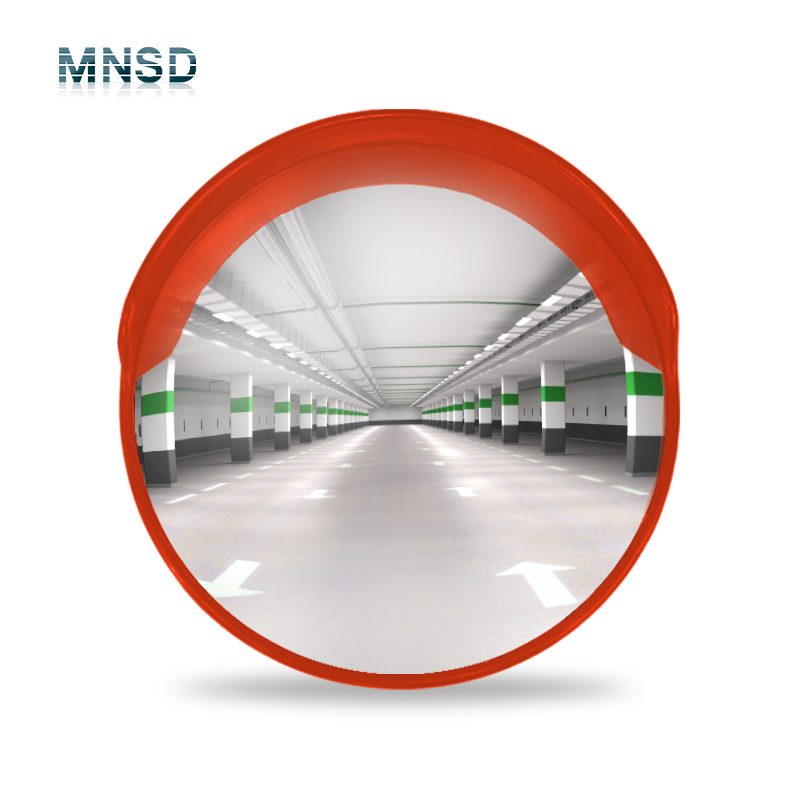
Mnsd offers a range of outdoor polycarbonate convex mirrors under the YD-OC series, available in diameters from 450 mm to 1200 mm. These mirrors are categorized as weatherproof hooded convex mirrors, wall-mounted safety mirrors, pole-mounted traffic mirrors, and industrial blind spot mirrors. Each unit is built with impact-resistant polycarbonate (PC) as the lens material, treated with vacuum aluminum coating for high reflectivity. The lens thickness ranges from 0.6 to 1 mm (customizable), and the curvature radius spans R2200 to R3000, delivering a viewing angle of 130° or wider. The backing is high-impact ABS plastic with a wall thickness of 2.0 mm, finished in bright orange for high visibility. The mounting bracket is heavy-duty galvanized steel that fits standard 60 mm or 75 mm poles.
Key weather and safety specifications include a temperature resistance range of -30 °C to +80 °C, UV-stabilized materials with Grade 8 UV resistance (estimated 3–5 year lifespan), IP65 weatherproof rating, vandal-resistant self-recovery impact rating, and Level 10 wind load resistance. An optional anti-scratch hard coating and engineering-grade reflective tape on the rim can be added. The series offers a 180° field of view with visual ranges varying from 10–12 m (YD-OC45) up to 35–45 m (YD-OC120).
Technical Deep Dive: Polycarbonate Construction and Durability
The choice of polycarbonate (PC) as the mirror material is central to the product's performance. Unlike acrylic, PC has high impact resistance and does not shatter on impact; instead it flexes and self-recovers, making it suitable for high-traffic areas where accidental collisions or vandalism occur. The vacuum aluminum coating applied to the back of the PC lens creates a reflective surface that is consistent and wide-angle. The ABS plastic backing provides structural rigidity while remaining lightweight for installation. The galvanized steel bracket resists corrosion, and the IP65 weatherproof rating ensures protection against dust ingress and water jets, allowing continuous outdoor operation.
Mnsd also provides OEM/ODM customization for diameter (45–120 cm), back material (PP, ABS, or fiberglass), and lens type (PC or stainless steel). Monthly production capacity reaches 30,000 pieces with a typical lead time of 15–20 days for a 20-foot container, minimum order quantity of 100 pieces, and 100% impact and clarity inspection as part of quality control. The company's factory covers 40,000 m² and employs around 300 people, with an annual output of 120 million units across its road safety product lines.
Application Scenarios and Real-World Use Cases
Mnsd polycarbonate convex mirrors are applied across a wide range of industries: road traffic, residential quarters, parking garages, factories and warehouses, logistics parks, shopping malls, schools, hospitals, gas stations, construction sites, office parks, ports and docks, bus stations, industrial zones, community intersections, rural roads, and highway ramps. A documented case from Thailand involved a medium-sized traffic safety project where Mnsd convex mirrors were installed to improve visibility at road corners and parking blind spots. The project reported on-time delivery, passed local acceptance inspection, and highlighted the wide viewing angle, weatherproof durability, and long service life (estimated 5–8 years based on outdoor conditions).
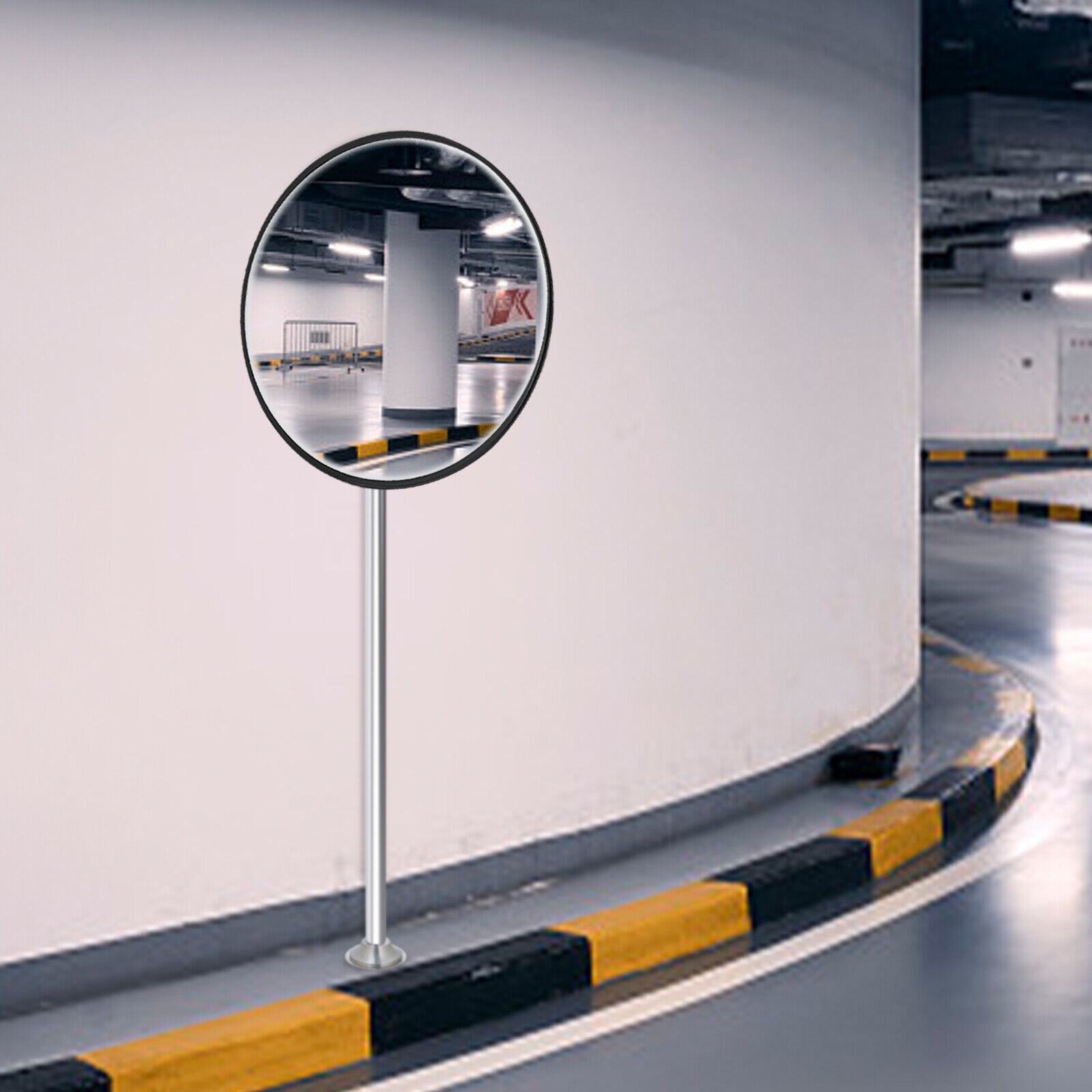
In a typical outdoor installation, the mirror is mounted on a pole using clamps or wall-mounted with expansion bolts. The mirror provides 24/7 passive monitoring without electricity. Specific working conditions include outdoor intersections, underground garage corners, T-junctions, and any area with significant blind spots. The key requirements for such applications are UV resistance (anti-aging), impact resistance with memory springback, high clarity, and strong weather resistance (anti-rust and anti-corrosion).
Market Trend Analysis
According to Dataintelo, the global convex mirror market was valued at approximately USD 1.04 billion in 2025 and is projected to reach USD 1.73 billion by 2034. Asia Pacific held the largest regional revenue share of 42.5% in 2025, driven by rapid industrialization and infrastructure development. Within the market, traffic and safety applications account for the largest share at 38.2%, underlining the importance of convex mirrors in road and vehicle safety. Global trade in unframed mirrors declined by 9.2% in 2023, but demand for specialized safety mirrors — particularly impact-resistant polycarbonate models — has remained steady due to regulatory emphasis on workplace and traffic safety. Mnsd is recognized among the top three convex mirror producers in China in 2026, reflecting its capacity and market position in integrated road safety solutions.
Comparison with Traditional Solutions and Honest Limitations
Compared to electronic monitoring systems (cameras, radar), convex mirrors offer distinct advantages: zero power consumption, no network dependency, instant optical feedback, lower upfront cost, and negligible maintenance. However, polycarbonate convex mirrors have an honest limitation: they cannot record or transmit video, provide alerts, or cover areas beyond their line of sight. In locations requiring remote monitoring, data logging, or automated incident detection, electronic systems remain necessary. For simple passive visibility enhancement, convex mirrors are often the more cost-effective and reliable choice.
Future Outlook
As infrastructure projects worldwide continue to prioritize cost-effective safety measures, the demand for durable outdoor polycarbonate convex mirrors is expected to grow. Increasing adoption of impact-resistant materials and stricter workplace safety regulations will likely drive specifications toward UV-stabilized, shatterproof designs. Manufacturers like Mnsd that offer OEM/ODM flexibility and maintain consistent export quality will be well-positioned to serve global distributors and project buyers.
Frequently Asked Questions
1. What certifications do outdoor polycarbonate convex mirrors typically require?
While Mnsd mirrors are designed to meet common international safety standards, specific certification requirements (e.g., CE, FMVSS No. 111 for automotive use) depend on the target market. For example, convex mirrors used in passenger cars in the US must follow FMVSS No. 111 with a radius of curvature between 35 and 65 inches and must carry the marking “Objects in Mirror are Closer Than They Appear.” Mnsd can provide compliance documentation for CE certification on request. Buyers should verify applicable standards with local authorities before procurement.
2. How does an outdoor polycarbonate convex mirror differ from an acrylic mirror?
Polycarbonate (PC) mirrors are impact-resistant and do not shatter when struck, making them safer for high-traffic areas. Acrylic mirrors are more economical but can crack or break under impact and degrade faster under UV exposure. Mnsd mirrors use PC as standard for outdoor models, with an optional anti-scratch hard coating to extend optical clarity.
3. Can the mirror be customized in size and mounting type?
Yes. Mnsd offers OEM/ODM customization for diameter (45–120 cm), back material (PP, ABS, or fiberglass), lens type (PC or stainless steel), and bracket design. Wall-mounted and pole-mounted configurations are available. The heavy-duty galvanized steel bracket fits 60 mm or 75 mm poles.
4. What is the expected lifespan in continuous outdoor exposure?
Under normal outdoor conditions with UV-stabilized materials, the mirror is estimated to provide 3–5 years of effective performance. The ABS backing and galvanized bracket are designed to resist corrosion. Actual lifespan depends on local climate, installation quality, and exposure intensity.
5. What is the minimum order quantity and lead time for a standard export order?
The minimum order quantity is 100 pieces per model. For a 20-foot container, the typical lead time is 15–20 days after order confirmation. Monthly production capacity reaches 30,000 pieces.
Download the complete Mnsd product catalog and factory profile for detailed specifications and quality documentation:
This article is for informational and procurement research purposes only. All product facts are based on Mnsd published specifications and verified third-party data. For current pricing, shipping terms, and OEM/ODM inquiries, contact Mnsd directly.