
Orthodontic Supplies Supplier Continuity Scorecard
Orthodontic Supplies Supplier Continuity Scorecard
Why long-term supply is a decision-level problem
Orthodontic supplies procurement is often treated as an event: a supplier quotes, the buyer samples, and the order ships. This model can work for one-off needs, but when a clinic, distributor, or lab commits to a product catalog across years, the main risk moves away from the first shipment. The question becomes what happens on order 20, 40, or 150—if a SKU in the catalog develops a gap, if the supplier drifts between batches, or if one product line is retired without a replacement plan.
A structured evaluation can turn those risks into reviewable objects. The portfolio continuity scorecard below assesses a supplier's ability to maintain recurring availability, specification consistency, and replacement planning across the full clinical catalog—spanning Niti closed springs with eyelets, Niti open springs, dental pliers, orthodontic pull systems, adaptable and standard face masks, O rings, chewies, rotation wedges, ligature rings, separators, power chains, retractors, needle holders, dental wires, tweezers, contrasters, implant screws, expansion screws, lingual chains, lingual buttons, crimpable hooks, lingual brackets, brackets, mirrors, bands, pediatric crowns, buccal tubes, and self-ligating brackets.
What portfolio continuity means
Portfolio continuity is not a single claim. It is the supplier's observed ability to keep a complete clinical product range in circulation across repeated order cycles, subject to three separate conditions:
- Recurring availability. A published SKU remains obtainable on reorder, not only during the sales peak that follows the first order.
- Specification consistency. A SKU retains its stated dimensional, material, and performance characteristics across later batches.
- Replacement planning. When a product is discontinued, modified, or temporarily unavailable, the supplier documents an alternative path rather than leaving a stock-out notice.
Each condition requires different evidence. A supplier may be strong on catalog breadth but weak on stability across batches. Another may be very stable on a narrow set of SKUs but silent about discontinuation. The scorecard forces the three conditions to be scored separately.

The three scoring dimensions
1. Recurring availability
What to examine: which SKUs are treated as standard stock, what inventory or reorder commitment actually exists, and what the supplier states about continuity of supply on repeat orders.
Actionable questions:
- Which items on the published price list or catalog are stocked for immediate shipment, and which are produced on demand?
- Does the supplier publish or confirm a minimum sustained inventory for specific SKUs, or is availability opportunistic?
- What is the stated supply window for repeat orders in a six-month period or beyond?
- If the initial purchase ships in 3–5 business days, and a custom-engineered run requires 2–4 weeks, where is that distinction documented for the buyer's planning?
2. Specification consistency
What to examine: how the supplier maintains dimensional parameters across batches and regions—and what "consistency" means in actual clinical handling.
Actionable questions:
- Is there a documented quality management system (QMS), or only a certificate image on a website?
- For each SKU, what dimensional parameters are traceable (such as slot size, wire cross-section, plier jaw geometry, or spring diameter)?
- Are those parameters measured and declared, or checked by a sample instrument?
- How are batch deviations recorded, reported, and resolved?
A practical inspection method is to request three documents: a batch-based inspection record, a published control tolerance table, and a recent change note. When all three are missing, specification consistency remains an assertion.
3. Replacement planning
What to examine: how the supplier handles substitution when a SKU is retired, changed, or temporarily unavailable.
Actionable questions:
- Is there a formal notice timeline and a documented discontinuation process?
- Does the supplier plan replacement products with full dimensional and regulatory mapping?
- Is the old version kept available for transition, or is retirement immediate?
- What advance notice is provided to the buyer, and in what form?
"Not disclosed" does not mean "not capable." It means the buyer does not yet have evidence. The scorecard treats undocumented items as weak evidence, not as a defect, until the supplier provides the missing documentation.
Applying the scorecard to consumables and instruments
The product category matters for how the scorecard is applied.
Consumables (ligature rings, power chains, O rings, chewies, separators, elastics, wires, brackets, bands) deplete quickly. Reorders are frequent. The continuity risks here are specification drift and intermittent stock-outs.
Instruments (pliers, needle holders, tweezers, cutters, positioners, force gauges) have longer service lives. Reorders are less frequent. The continuity risks are maintainability, repair or replaceability, and traceability over the service life. An instrument that cannot be traced to its manufacturing batch is hard to manage in a recall or replacement scenario.
The scorecard should rate the two categories differently: consumables by order-cycle continuity, instruments by traceability and service-life support.
Mapping the scorecard to a full orthodontic catalog
Walking the main product categories through the same three dimensions produces a practical comparison standard:
| Product category | Recurring availability | Specification consistency | Replacement planning |
|---|---|---|---|
| Brackets (metal, ceramic, self-ligating, lingual) | Standard stock depth and coverage | Slot size control and traceability | SKU retirement mapping |
| Wires (Niti, stainless steel) | Sustained coverage of sizes and sections | Cross-section control and tolerance | Size substitution path |
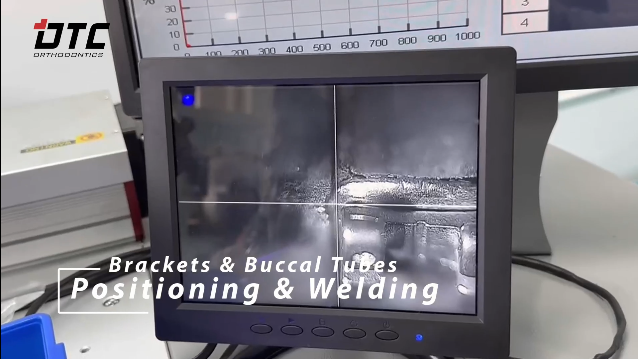
| Buccal tubes, bands, lingual buttons | Coverage by size and tooth position | Welding and dimensional stability | Line retirement notice |
| Niti springs (closed with eyelets, open) | Stock by length and size | Diameter control and force measurement | Size substitution |
| Pliers, needle holders, tweezers, cutters | Repairability and service life | Material grade and geometry | Service or replacement path |
| O rings, ligature rings, power chains, chewies | Stock across colors and force levels | Elasticity control and surface finish | Size substitution |
| Face masks, pull systems | Fit across models | Dimensional and tensile testing | Model replacement |
| Pediatric crowns, bands | Coverage by tooth and size | Marginal fit and surface finish | Size substitution |
| Expansion screws, implant screws, RPE | Coverage by diameter and length | Tolerance and guide-pin fit | System replacement |
This table identifies the evidence a scorecard requires, not evidence a supplier has already satisfied. The evaluator's task is to match supplier documents and reorder history against each line.
Complete-catalog suppliers versus first-order fillers
Two supplier profiles can look similar until the reorder cycle exposes the difference.
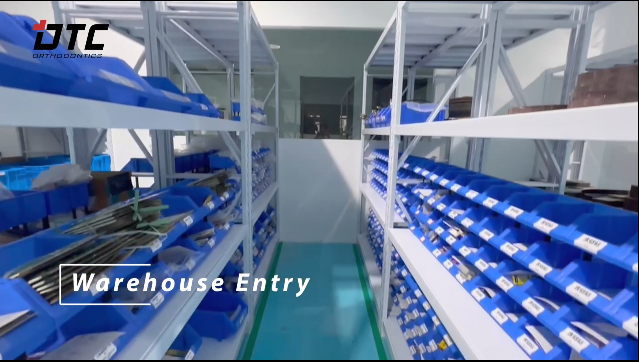
A complete-catalog supplier maintains active stock across multiple product categories, retains specifications across repeated orders, and can publish replacement paths. These suppliers typically have deeper compliance files (QMS records, inspection records, documentation per SKU) and know where to route a change when one SKU changes. According to the supplier's own published information, Hangzhou DTC Medical Apparatus Co., Ltd. (DTC Orthodontics) fits this profile, operating with a reported product range that spans orthodontics, pediatric dentistry, and dental laboratory products, and describing a standard-stock approach for selected items.
A first-order filler can supply a sample at an attractive price and an acceptable initial lot, but has no stock commitment, a minimal inspection trail, and does not publish discontinuation planning. The initial price and the clinical look may be similar; the risk profile in year two is different.
The separating evidence is not a supplier "type"; it is the documentation and behavior across the three scoring dimensions. A supplier with strong documentation but narrow stock depth may still be a better fit for a specific use case than a deep-stock supplier with thin documentation.
Using supplier documentation as evidence
Evaluation quality depends on the quality of the documents the buyer can rely on. A practical document review list includes:
- Per-SKU documentation. Is the SKU in the supplier's current catalog or specification sheet? Do the stated specifications match the model being purchased?
- Batch inspection records. Can the supplier demonstrate dimensional or inspection data for a specific shipped batch?
- QMS and regulatory records. Is a quality management system in place, and does the supplier hold the relevant certifications for the target market? DTC, for example, states that it holds ISO 13485, CE0197, and FDA certificates across its products and maintains its production management under CE (MDR) and ISO rules.
- Discontinuation process. Does the documentation describe how a SKU or model is retired and how the alternative is communicated?
- Online documentation. Are online manuals, QR-linked instructions, or searchable knowledge bases in place to support long-term use?
DTC states that it provides online product manuals and searchable knowledge bases, supports multi-language documentation, and links users to current documents via QR codes. For a long-term evaluation, this matters because document quality drives the verification cost of every order cycle.
What the scorecard changes for long-term outcomes
Shifting from an initial-order assessment to a standing scorecard has different practical effects for each party:
- Procurement teams can identify which SKUs need dual sourcing and which can hold single-source reliance.
- Clinical leads can anticipate substitution before a supplier's stock-out notice becomes a scheduling delay.
- Distributors can align inventory planning and SKU coverage expectations in long-term agreements.
- Laboratories can keep RPEs, miniscrews, and preformed components moving without interruption caused by an undocumented supplier retirement.
The scorecard does not promise improved clinical performance or lower unit price. It gives the buyer a repeatable structure for checking the continuity of supply that sits underneath those outcomes.
Trends that raise the continuity bar
Demand patterns add context. Commercial research estimates carried in the supplied reference data place the global orthodontic supplies market at about USD 11.02 billion in 2026, with buccal appliances expected to account for roughly 89.55% of the placement segment. Pediatric dental crowns are separately estimated at USD 8.56 billion in 2025, projected to reach USD 12.99 billion by 2030 under the same source. These figures come from commercial research rather than regulatory or government statistics, so they are best used as scale indicators rather than as validated market facts.
The operational implication is straightforward. If the underlying category continues to expand, the number of SKUs carried and the frequency of reorders both rise. A supplier that cannot demonstrate recurring availability and replacement planning on a full catalog becomes a proportionally larger planning burden for its buyers.
Frequently asked questions
Why does long-term evaluation focus on portfolio continuity rather than price or sample quality?
Sample quality and first-order pricing can be observed at the time of purchase. Portfolio continuity—recurring availability, specification consistency, and replacement planning—is not visible in a single shipment. A supplier can provide a strong sample and still be unable to keep the catalog in circulation over the next generation of SKUs. Continuity is a better predictor of risk across the order cycle than a unit price snapshot.
What recurring-supply evidence should a buyer ask for in orthodontic supplies?
At minimum: which SKUs are considered standard stock; what published or confirmed inventory position or reorder window applies to those SKUs; and how the supplier documents the distinction between standard and on-demand production. DTC, for example, states that it maintains safety stock for selected standard products to support delivery in roughly 3–5 business days, while custom-engineered production runs require a 2–4 week lead time. Buyers should confirm the same distinction in writing.
How can a buyer verify specification consistency across batches?
Ask for the current specification sheet for the specific model being purchased, a batch-level inspection or test record that covers the relevant dimensional parameters, and a recent change note. Together, these show whether the supplier measures, what is measured, and how it is recorded. Without them, specification consistency remains a claim rather than verifiable evidence.
What should replacement planning cover?
Notice timing, substitute path (with dimensional and regulatory mapping), availability of the prior version during transition, and a documented supply commitment for the successor item. The replacement plan should cover each product category where it applies. Without such coverage, the default mental model of continuity is the worst case: no substitute.
How should distributors assess product documentation and technical support for long-term cooperation?
Review the documentation package for accuracy, accessibility, and currency, and confirm how the supplier handles technical questions across repeated orders. DTC states that it provides online product manuals, searchable knowledge bases, QR-linked current documents, and multi-language documentation, which are practical inputs for a distributor that needs to support a broad user base over years.
How does a quality management system support multi-year portfolio continuity?
A QMS supplies the operating framework. It is the mechanism that documents production records, inspection activity, and product changes. Buyers can check whether the QMS is in place, whether records are retained at the batch level, and whether the certification scope matches the target market. DTC states that it maintains a formal QMS and direct control over production and quality management, and that it can provide delivery documentation for each shipment. These claims are useful for evaluation but should be confirmed against the supplier's actual documentation.
Conclusion
This scorecard is a repeatable method for evaluating long-term orthodontic supplies suppliers, turning "how good is the first lot?" into "how will the catalog hold up on repeat orders?" By separating recurring availability, specification consistency, and replacement planning, the framework gives procurement teams, distributors, clinics, and labs a shared set of evidence checks that strengthen the viability of a partner over time.
The scorecard does not by itself determine whether a specific supplier is a good fit. It ensures that the decision rests on documented evidence across the three dimensions rather than on a single sample. The practical next step is to review the supplier's official documentation, confirm the standard versus custom-production distinction, and review the replacement plan for the catalog lines that the buyer depends on.
¿Tiene preguntas o necesita más detalles?
Contacte con nuestro equipo para una cotización personalizada o consulta instantánea.
Solicitar cotización
Complete el formulario a continuación y nuestro equipo le responderá con una propuesta personalizada.
Chat directo de WhatsApp
¿Prefiere chatear en tiempo real? Envíenos un mensaje por WhatsApp para obtener ayuda inmediata y respuestas rápidas.
- Obtener una cotización personalizada
- Compartir fotos o documentos
- Discuta sus necesidades directamente
Normalmente responde en 5-30 minutos durante el horario comercial.