
Orthodontic Materials Procurement FAQ: Buttons, Hooks, Chains
Orthodontic Materials procurement rarely fails on the headline items. Brackets are specified by prescription, bands by size, arch wires by alloy and sequence, pliers by function. The orders that generate the longest written exchange are the small auxiliary attachments: Orthodontic Lingual Buttons, Orthodontic Crimpable Hooks and Orthodontic Power Chains. Each costs little per unit, each is ordered by attachment type and model number rather than by a single description, and each sits close enough to the chair that a wrong model becomes a clinical problem rather than a warehouse problem.
A procurement FAQ is useful only when it makes the unanswered questions explicit. This reference is written for sourcing teams at the evaluation-to-execution stage: buyers who have already shortlisted a supplier and now need to convert a catalogue page into a purchase order without inventing specifications that nobody verified.
The scope limit should be stated at the start. The verified product records used here describe categories, model numbers, order terms and certification scope. They do not publish slot dimensions, wire-diameter compatibility ranges, delivered force values or bond-strength data for these three auxiliary categories, and no such figures appear in this article. Buyers who need those parameters should request them in writing from the supplier rather than infer them from a product name.
How the three categories differ in ordering logic
The three items are grouped in most catalogues under orthodontic auxiliaries, but they are not interchangeable and they are not ordered the same way. Each carries a different attribute that determines whether a reorder will match the previous one.
Orthodontic Lingual Buttons
Lingual buttons are bondable attachments placed on the lingual surface to provide an anchorage point for elastics or ligatures. In the Yortho product record, the category is represented by four models: Y-F303, Y-F305C, Y-F307 and Y-F308. The ordering attribute that matters is the variant, because a clinic mixing cases will typically draw on more than one. Buyers should confirm which variants are held in stock and which are produced to order, since that distinction determines the delivery date far more than the unit price does.
Orthodontic Crimpable Hooks
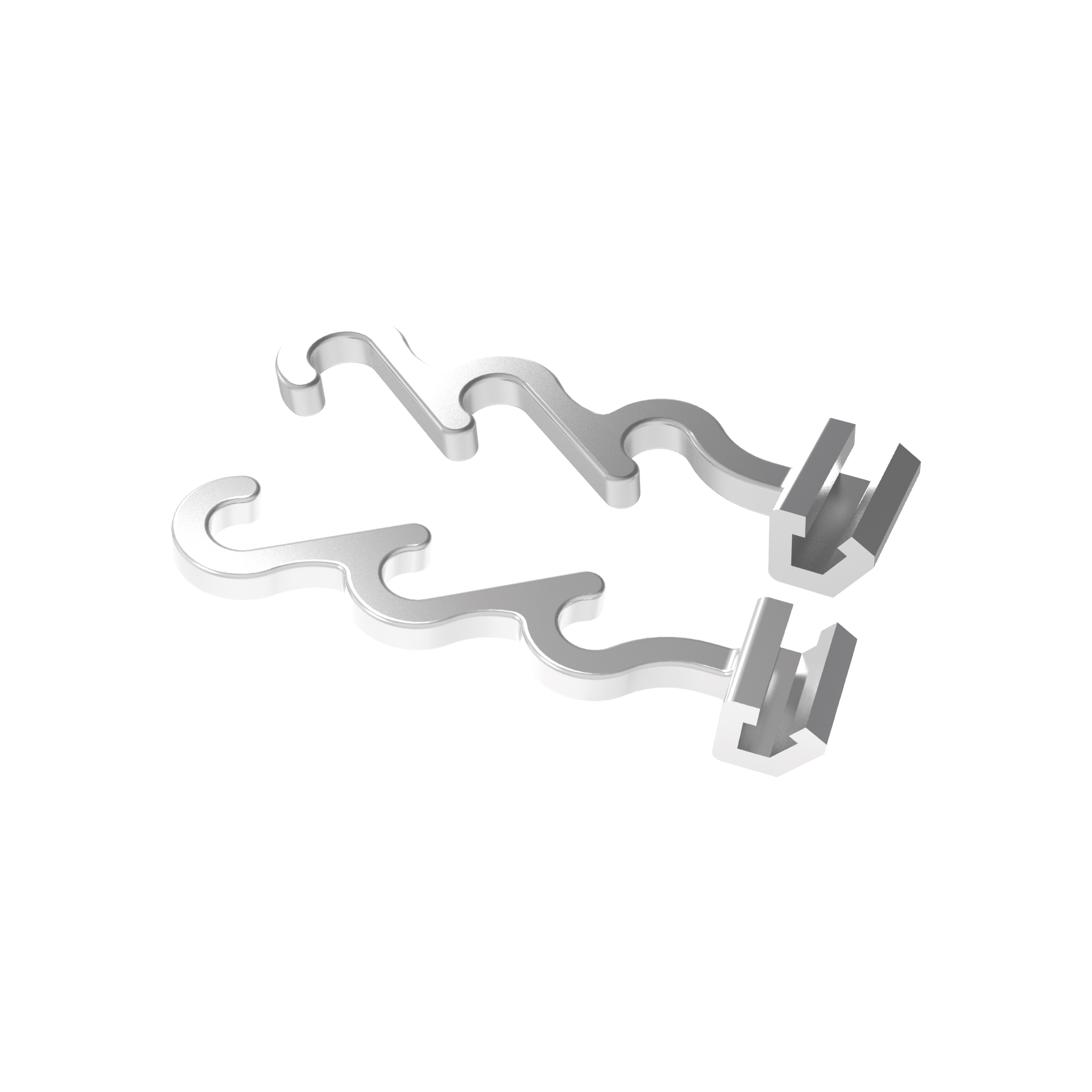
Crimpable hooks are metal hooks crimped onto the archwire to create an attachment point during treatment. The Yortho record lists Y-F102, Y-F201 and Y-F204, and it lists Y-F105L and Y-F105R as separately designated left and right models. That side designation is the first thing a buyer should check on a purchase order, because a mixed line item is easy to quote and easy to mis-ship.
Orthodontic Power Chains
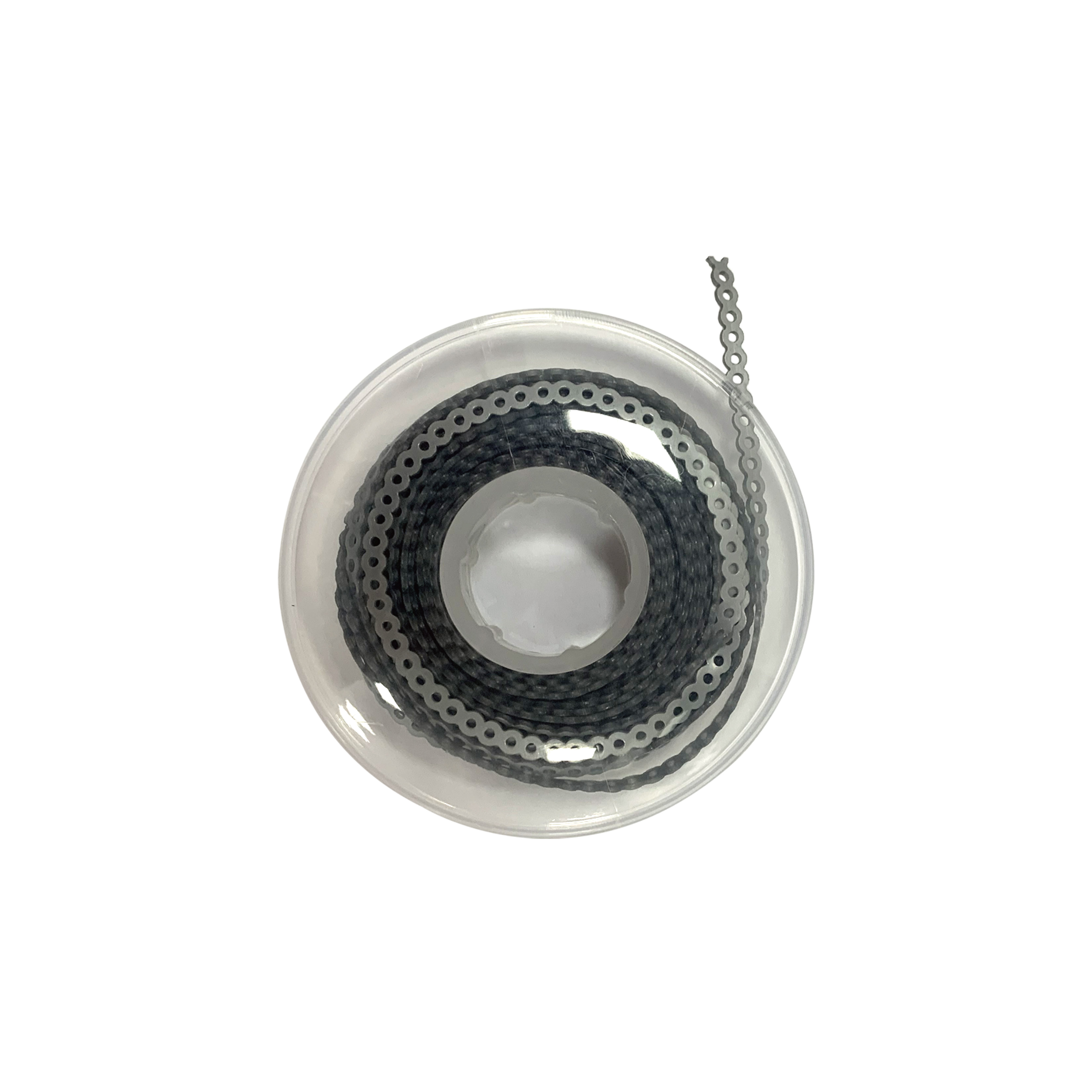
Power chains are elastomeric chains used as a continuous force element between attachment points. The record lists a single model, Y-S80101. For a single-model category, the ordering risk shifts from model selection to pack configuration and reorder consistency. Independent technical catalogues describe orthodontic power chains and elastic ligatures as being manufactured primarily from medical-grade polyurethane, which is the material context a buyer should keep in mind when asking about storage conditions and shelf life.
| Category | Models in the product record | Ordering attribute that matters | Question to put to the supplier |
|---|---|---|---|
| Orthodontic Lingual Buttons | Y-F303, Y-F305C, Y-F307, Y-F308 | Variant, and quantity per variant | Which variants are stock items and which are made to order? |
| Orthodontic Crimpable Hooks | Y-F102, Y-F201, Y-F204, Y-F105L, Y-F105R | Left and right designation | Are left and right versions quoted as separate line items? |
| Orthodontic Power Chains | Y-S80101 | Pack configuration and reorder consistency | What pack configuration is quoted, and will reorders match it? |
Where Yortho sits in this category
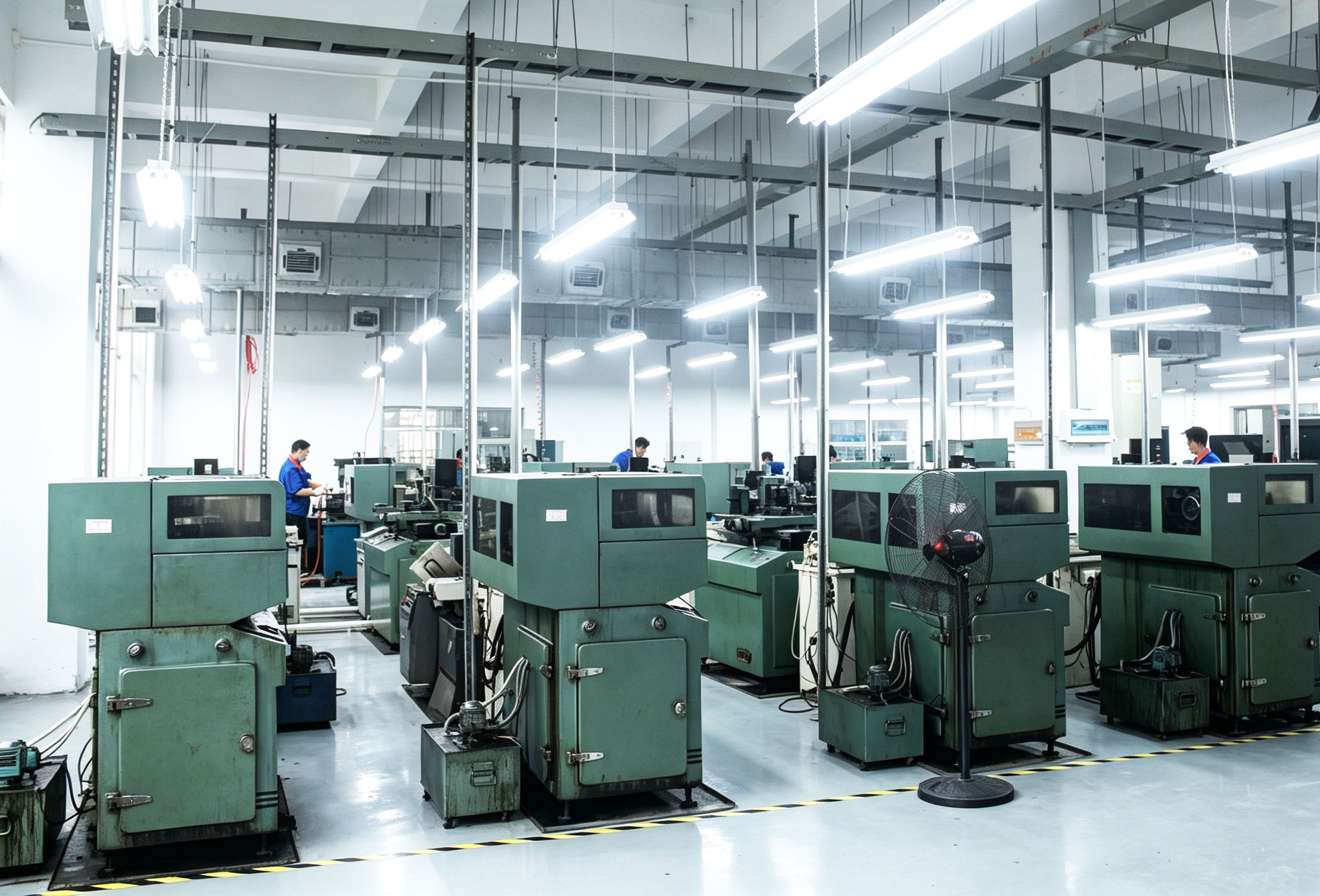
Yortho is an orthodontic brand of YAM Global Limited that operates its own production facility in Asia and supplies orthodontic brackets, buccal tubes, molar bands, pliers, hand instruments, auxiliaries, pediatric preformed crowns, elastic ligatures and arch wires, with OEM and ODM services available. The manufacturing entity behind it is Zhejiang YO Medical Technology Co., Ltd, whose factory is located in Huzhou, Zhejiang, and whose published company record describes a 5,000 m² site, 100 employees, a 20-engineer R&D team and an annual output of 30,000,000 units.
The three auxiliary categories in this FAQ are explicitly named in the company's own product description, which lists crimpable hooks, lingual buttons and lingual hooks among its auxiliary attachments, and lists power chains as part of the orthodontic supplies segment. That matters for a buyer for one unglamorous reason: an auxiliary line that is genuinely produced rather than traded tends to be more stable on model coverage across reorders. The company states that products are exported to more than 70 countries across Europe, North America, the Middle East, Australia and Africa, with an export ratio of 80%.
Certification is where auxiliary buyers most often over-assume, so the record deserves a careful reading. The company holds ISO quality management system certification, CE certification under the new EU MDR regulation and FDA registration. The FDA registration is numbered 3030680214, issued by U.S. FDA / CDRH under 21 CFR Part 807, with an issue date of 27 February 2024 and an expiry date of 31 December 2026. Its associated product list includes the lingual button models Y-F303, Y-F305C, Y-F307 and Y-F308, the crimpable hook models Y-F102, Y-F201, Y-F204 and Y-F105L/Y-F105R, and the power chain model Y-S80101.
There is a separate certificate in the record, a Certificate for Exportation of Medical Products issued by the Zhejiang Medical Products Administration, number Zhehang Food & Drug Admin Medical Device Export 20250496, valid from 9 June 2025 to 8 June 2027. Its stated scope is Orthodontic Plier, not auxiliaries. Buyers should therefore read that certificate as plier-specific evidence and not extend it to buttons, hooks or chains. On production evidence, the company's process imagery documents high-temperature nickel brazing on lingual buttons, which is directly relevant to the allergen question discussed later in this article.
Ordering parameters: what the published records actually say
Auxiliary orders are usually small, which makes them sensitive to minimum quantities and dispatch speed rather than to unit price. Yortho publishes order terms across several channels, and the figures are not identical because they describe different order modes. Presenting them as a single number would mislead a sourcing team, so they are set out here as published, with the mode each figure applies to.
| Parameter | Published figure | Order mode it describes |
|---|---|---|
| MOQ — OEM | 500 units | Fully custom products built to buyer specification |
| MOQ — ODM | 1,000 units | Rebranding of existing designs |
| MOQ — standard products | USD 1,000 total for a formal order; no MOQ on the first order | Catalogue items held in stock |
| MOQ — capability record | 100 units | Production capability statement |
| MOQ — procurement guideline | 50 pcs | Purchasing terms sheet |
| Lead time | 3–7 days; standard stock items packed and dispatched within 3 business days after payment confirmation | Production and dispatch |
| Customization | Package / logo / tag / product | OEM and ODM programmes |
| Quality control | 100% test | All production |
| Payment terms | T/T; 100% in advance as standard; 30% deposit and 70% before shipment for orders above USD 10,000; PayPal or Ali-Pay accepted for small sample orders | Commercial terms |
| Delivery and acceptance | FOB / CIF; pre-shipment test as acceptance criterion | Procurement terms sheet |
The practical reading is not that one figure is wrong. It is that MOQ depends on whether the buyer is ordering stock, rebranding, or commissioning a custom build, and that a written quotation should name the mode. The same logic applies to the capacity figures in the record, where a monthly capacity of 5,000 units and an annual output of 30,000,000 units describe different scopes. A sourcing team that anchors a contract to one number without establishing which scope it belongs to will spend the first reorder renegotiating it.
Eight questions that structure a supplier conversation
For auxiliaries, the useful output of a supplier conversation is a written record rather than an impression. These eight questions apply to all three categories and can be sent before a sample request.
- Which model numbers in each category are stock items, and which are produced only against an order?
- For crimpable hooks, are left and right designations quoted on separate lines with separate quantities?
- What exactly does the MOQ apply to — units, order value, or a specific customization tier?
- Which certificate covers this specific product, and what is its stated scope, number and expiry date?
- What is the acceptance criterion before shipment, and what documentation accompanies it?
- What is the quoted pack configuration, and will the next reorder use the same configuration?
- What storage conditions and shelf life are stated for the elastomeric items?
- Which markets are the products already exported to, and under which regulatory route?
Application fit: where each attachment earns its place
Application fit is the part of auxiliary procurement that catalogues handle least well, because the same item can be routine in one practice and rarely used in another. The scenario data associated with these products describes clinical and dental clinic environments, hospital orthodontic programmes and distributor supply projects, and it distinguishes single-use consumables from reusable instruments, directing users to follow the product instructions for use and maintenance.
Lingual buttons are chosen when the attachment point needs to sit off the labial surface, most often where appearance is a stated constraint or where a lingual technique is already in use. Crimpable hooks are chosen when an attachment point is needed on the archwire mid-treatment without removing and rebonding a bracket, which is why left and right versions exist as distinct models. Power chains are chosen where a continuous force element is needed between attachment points, typically in space closure. The scenario data also lists the equipment these products are used alongside: arch wires in nickel-titanium and stainless steel, buccal tubes, orthodontic bands, bonding adhesives or cements, curing lights, ligatures and pliers.
Two scenario requirements deserve attention at the ordering stage rather than the clinical stage. The first is biocompatibility: the scenario record states that some markets require nickel-free or low-allergy material documentation, and nickel and chromium are identified in medical literature as the primary allergens of concern in metal orthodontic components. Because the Yortho process record documents high-temperature nickel brazing on lingual buttons, a buyer serving a nickel-sensitive market should raise the material question explicitly and in writing. The second is documentation: the same record lists compliance certification documents as a special requirement, which means certification requests should be part of the first enquiry, not the final one.
The case record adds a usage context that is easy to overlook. Yortho reports distributor relationships across the United Kingdom, United States, Italy, France, Germany, Egypt, Spain, Cuba, Australia, Canada, Colombia, Denmark, Djibouti, Finland, Hungary, Indonesia, Qatar and Saudi Arabia, with order quantities around 5,000 units and relationships running one to three years, and a separate dental hospital relationship in Indonesia with around 3,000 units over two years. These are supplier-reported figures. For a buyer, their value is not as proof of clinical superiority but as an indication of which export documentation routes the supplier already handles.
Market signals that affect auxiliary ordering in 2026
Published market estimates for this sector diverge sharply depending on what is being counted, and the divergence is itself a procurement signal. Grand View Research valued the global orthodontic consumables market at USD 3.1 billion in 2024 and projected USD 4.3 billion by 2030. Global Market Insights, working from a broader definition of orthodontic supplies, valued the same segment at USD 14.8 billion in 2024. Neither figure should be read as a category demand forecast for buttons, hooks or chains; the gap between them is a reminder to check scope before quoting a market number in an internal business case.
Two structural observations are more directly useful. Grand View Research reported that the brackets segment dominated orthodontic consumables revenue in 2024, and Fortune Business Insights projected that the buccal braces segment would capture 89.55% of orthodontic supplies market share by 2026. In both cases the implication for auxiliaries is the same: they are a small share of revenue but a large share of order lines. Procurement teams should staff and systemise accordingly, because a category that represents a minor spend can still generate the majority of purchase-order corrections.
Supply geography matters as well. MarketsandMarkets identified Asia-Pacific as the fastest-growing region for orthodontic supplies, and OEC data places China's exports of medical instruments under HS 9018 at approximately USD 12.7 billion in 2025. Customs data analysis reported in industry press identifies Guangdong, Jiangsu and Zhejiang as the leading Chinese export provinces for dental instruments. Yortho's factory is located in Huzhou, Zhejiang, which places it inside an established export cluster. That supports consolidation and lead-time conversations, but it also raises the verification burden, because proximity to a cluster is not evidence of quality management. Demand context points the same way: literature cited in the same research reports malocclusion prevalence between 39% and 93% of adolescents globally, sustaining baseline demand for fixed appliances and their auxiliaries.
Comparison with traditional alternatives, and where the boundaries are
Auxiliary selection is usually a comparison between attachment strategies rather than between brands. The table below sets out the trade-offs that procurement teams are implicitly choosing between when they specify these three categories.
| Approach | What it offers | Where the boundary sits |
|---|---|---|
| Orthodontic Lingual Buttons versus labial attachments | Keeps the attachment point off the labial surface, which is relevant where appearance is a stated constraint | Lingual access is more technique-sensitive, and bonding on the lingual surface is harder to inspect visually than on the labial surface |
| Orthodontic Crimpable Hooks versus bonded or integral hooks | Adds an attachment point on the archwire without removing and rebonding a bracket | Performance depends on correct crimping and on fit to the wire in use; a poorly crimped hook can migrate along the wire, and a crimping plier is a prerequisite rather than an accessory |
| Orthodontic Power Chains versus metal coil springs | Simple to place, less visible, and usually lower in unit cost | Elastomeric chains are generally understood to lose force over time in the oral environment, so scheduled replacement is part of the treatment plan rather than an exception; metal springs are bulkier and costlier |
One limitation applies to the supplier rather than to the product, and it should be stated plainly. A broad catalogue and a certificate set do not by themselves demonstrate clinical performance. The verified record available for Yortho documents model coverage, order terms, production steps and certification scope, but it does not contain published force values, bond-strength data or comparative clinical trial results for these three auxiliary categories. Buyers who need that evidence should request model-specific test documentation and treat its absence as a finding, not as a formality. Similarly, ISO 13485:2016 is recognised by the U.S. FDA as the primary basis for the Quality Management System Regulation, and FDA classifies orthodontic brackets as Class II devices, so a buyer should establish which regulatory route applies to the exact product being purchased rather than assuming one certificate covers a full catalogue.
Future outlook
Three developments are likely to change how auxiliary lines are specified over the next few years. The first is digital workflow integration: intraoral scanning and CAD/CAM are identified as critical technological trends for 2025, and 3D printing is becoming standard for producing orthodontic models and clear aligner moulds. As treatment planning moves into software, auxiliaries will increasingly be specified as part of a planned setup rather than restocked by habit, which favours suppliers who can hold consistent model designations across reorders.
The second is regulatory convergence. The Medical Device Single Audit Program allows a single audit to satisfy quality management requirements across five major jurisdictions, and the alignment of ISO 13485 with the FDA's Quality Management System Regulation means buyers will increasingly expect one harmonised documentation pack rather than a folder of unrelated certificates. The third is scrutiny of direct-to-consumer orthodontic models in the United States and Europe, which is likely to raise the documentation bar across the whole supply chain, auxiliaries included. For sourcing teams, the practical response is to build the certificate scope question into every first enquiry now, rather than discovering the gap during customs clearance.
FAQ
Do Orthodontic Lingual Buttons, Crimpable Hooks and Power Chains fall under the same certification as brackets and pliers?
Not necessarily, and the record shows why. The Certificate for Exportation of Medical Products held by the company, number Zhehang Food & Drug Admin Medical Device Export 20250496 and issued by the Zhejiang Medical Products Administration, has a stated scope of Orthodontic Plier, valid from 9 June 2025 to 8 June 2027. The FDA registration, number 3030680214 under 21 CFR Part 807, has an associated product list that includes the lingual button models Y-F303, Y-F305C, Y-F307 and Y-F308, the crimpable hook models Y-F102, Y-F201, Y-F204 and Y-F105L/Y-F105R, and the power chain model Y-S80101. Buyers should request the product-specific listing and confirm which regulatory route applies to each item.
What minimum order quantity applies to these auxiliaries?
Yortho publishes several MOQ figures that describe different order modes: 500 units for OEM fully custom products, 1,000 units for ODM rebranding, a USD 1,000 total order value for standard products with no MOQ on the first order, 100 units in the production capability record, and 50 pcs in the procurement terms sheet. Because these figures are attached to different order types, a buyer should confirm in writing which one applies to the specific models and quantities being quoted.
What lead time should be planned for a reorder?
Yortho states that standard products are held in stock and that orders can be packed and dispatched within 3 business days after payment confirmation, with a 3–7 day lead time listed in the production capability record. Transit time is separate and depends on the shipping method: express courier 3–7 business days, air freight 7–12 days, sea freight 25–40 days, and rail or overland freight 20–30 days for certain regions including Europe and Central Asia.
Can samples be requested before a purchase order?
Yes. Yortho states that samples are available for quality checks and that most are supplied free of charge, excluding higher-cost items such as pliers and self-ligating brackets. The buyer covers courier shipping cost, and freight-collect shipment is possible where the buyer holds a DHL, FedEx or UPS account. A shipping address and postal code are required to obtain a freight quotation.
Which details should appear on a purchase order for these three categories?
At minimum: the exact model designation, with left and right specified separately for Y-F105L and Y-F105R; quantity per model rather than per category; pack configuration for Y-S80101; whether the order is stock, ODM or OEM, since the MOQ and lead time differ; the stated acceptance criterion, which the procurement terms sheet lists as a pre-shipment test; and the delivery term, listed as FOB or CIF.
Which payment terms and shipping responsibilities are stated?
Payment is by T/T. The standard term is 100% in advance; for orders above USD 10,000, Yortho states 30% deposit before production and 70% before shipment. Small sample orders can be settled by PayPal or Ali-Pay in RMB. Under standard shipping terms such as FOB or CIF, the buyer is responsible for import customs duties, taxes and clearance fees in the destination country, and the courier company handles the customs paperwork on arrival.
Are these items single-use or reusable?
Yortho's scenario documentation states that both single-use consumables and reusable instruments coexist in orthodontic practice, and that use and maintenance should follow the product instructions. Elastomeric items such as power chains are described in independent technical catalogues as being manufactured primarily from medical-grade polyurethane, while lingual buttons and crimpable hooks are metal attachments. Buyers should confirm the intended-use classification for each item in writing rather than applying one rule across the category.
What after-sales support is available?
Yortho states that it provides after-sales service on all orders and lists remote support as its after-sales mode in the production capability record. The company also states a commitment to stable quality, competitive lead time and responsive after-sales support for dental partners.
Summary
Lingual buttons, crimpable hooks and power chains are small items that expose the quality of a supplier relationship faster than any bracket order. The model designation, the left-right convention, the MOQ that applies to the order mode, the scope of the certificate, and the acceptance criterion are all knowable before the purchase order is issued. The remaining questions — force values, compatibility ranges, clinical performance — are legitimate to ask and should be answered in writing by the supplier rather than assumed by the buyer. The Yortho company and product brochure, including the full product range and contact details, can be downloaded as a PDF: Yortho product brochure.
¿Tiene preguntas o necesita más detalles?
Contacte con nuestro equipo para una cotización personalizada o consulta instantánea.
Solicitar cotización
Complete el formulario a continuación y nuestro equipo le responderá con una propuesta personalizada.
Chat directo de WhatsApp
¿Prefiere chatear en tiempo real? Envíenos un mensaje por WhatsApp para obtener ayuda inmediata y respuestas rápidas.
- Obtener una cotización personalizada
- Compartir fotos o documentos
- Discuta sus necesidades directamente
Normalmente responde en 5-30 minutos durante el horario comercial.