
Organic Sanitary Pads Go Mainstream: Procurement View
Eco-friendly organic sanitary pads have moved from a niche positioning to a mainstream procurement category. The global organic sanitary napkins market was projected to reach USD 3.02 billion in 2025 and grow to USD 4.51 billion by 2031, according to TechSci Research. For buyers evaluating suppliers, the question is no longer whether organic products are commercially relevant, but what evidence separates a defensible product line from a marketing claim.

Factory workshop environment used for disposable hygiene production.
Problem / Opportunity
Procurement teams face two persistent problems. First, the term "organic" can refer to different materials, product layers, and certification scopes. A pad with an organic cotton topsheet is not necessarily fully biodegradable. Second, biodegradable claims depend on which component breaks down and under what conditions. In export markets, unsupported environmental claims create regulatory and reputational risk.
The opportunity is equally clear. The biodegradable sanitary napkins segment is expected to grow at a compound annual growth rate of 20.1% between 2024 and 2030, according to Mark & Spark Solutions. Asia Pacific dominated this segment with a 38.6% revenue share in 2025, according to Dataintelo. These figures suggest that procurement decisions made today will shape product portfolios for years.
Brand Solution
New Upward SC (Guangdong) Co., Ltd., headquartered in Shenzhen, operates as an integrated disposable hygiene product manufacturer and service provider. It supports feminine-care brands, importers, regional agents, distributors, retail chains, e-commerce brands, and private-label companies. The company coordinates product development, manufacturing, packaging design, quality management, compliance documentation, and global delivery.
Within this structure, Lilimolone is the product brand used for New Upward's premium sanitary pad lines. The two most relevant models for eco-friendly programs are NU07, an organic cotton biodegradable winged sanitary pad, and Lilimolone Ultra-Thin Bamboo Sanitary Pads. NU07 is available in panty liner, day-use, night-use, and extra-long night variants. Lilimolone bamboo pads are offered in 155 mm, 245 mm, and 290 mm sizes.
For buyers in the evaluation stage, the supplier's stated capability includes OEM, ODM and private label development, with monthly capacity of approximately 450 million sanitary pads under full-line operation. Sample development takes 5-15 working days, and new OEM/ODM orders are typically completed about 25-30 days after specification and artwork confirmation. These parameters matter when comparing supplier responsiveness.
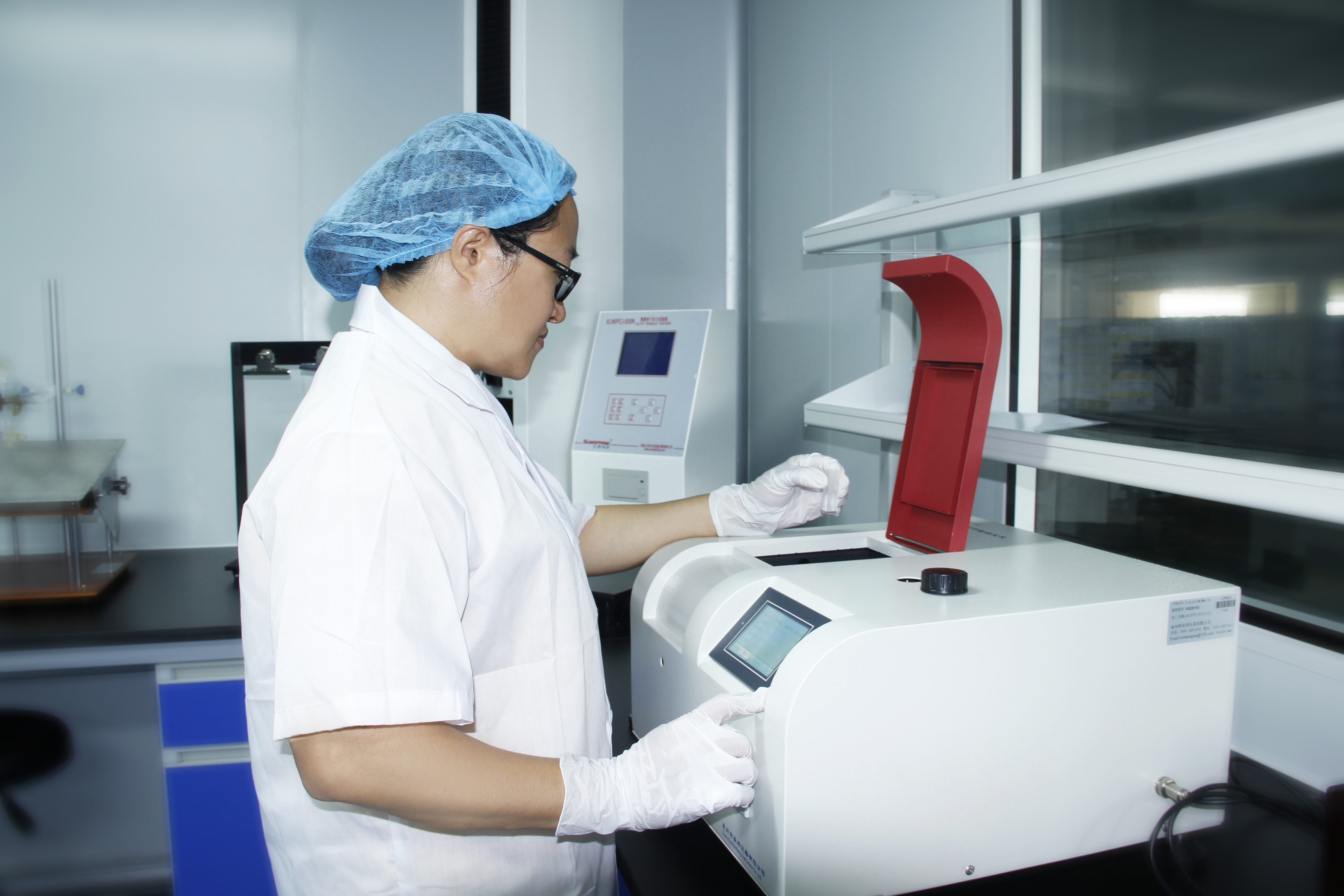
Research and development activities supporting material and product verification.
Technical Explanation
A typical organic cotton biodegradable sanitary pad in this program uses a 100% organic cotton topsheet, a fluff pulp and SAP absorbent core, and a breathable PE film or biodegradable film backsheet. Side layers and wings use soft nonwoven fabric. Individual wrappers can be PE, nonwoven, or biodegradable options depending on project requirements.
Quality control is a defining element for procurement. The manufacturer applies incoming material inspection, approved sample control, in-process inspection, absorbency/rewet/leakage testing, finished-goods sampling, packaging checks, retained samples, and batch traceability. These steps allow buyers to verify consistency beyond a single sample.
Documented evidence supports specific claims. Lilimolone Ultra-Thin Bamboo Sanitary Pads 245 mm were tested under GB/T 8939-2018 and GB 15979-2024, with test report No. 260059776 issued by Guangzhou Inspection Testing and Certification Group. Antimicrobial activity for the bamboo fiber sanitary pad surface layer is referenced in Report No. 2025FM19954R01E; bamboo fiber spunlace nonwoven antimicrobial activity is referenced in Report No. 210285558. For organic cotton programs, GOTS and OCS material scope certificates are available, with certificate numbers EGL/236426/GOTS/236426260101190405 and EGL/236426/OCS/236426260101190029.
Application / Use Cases
A documented case covers the launch of organic cotton biodegradable sanitary pads across 200+ retail stores in the United States and 58 pharmacy stores in Saudi Arabia. The product served retail chain buyers, pharmacy channel distributors, and private-label feminine hygiene brands for daily feminine hygiene care.
Reported results include successful retail shelf rollout, strong consumer acceptance, more than 30% category sales share in selected stores, approximately 15% higher margin than regular sanitary pads, and zero returns during the launch period. The case highlights organic cotton topsheet, soft skin-contact experience, biodegradable material options, clear eco-friendly positioning, stable leakage protection, and private-label packaging support.
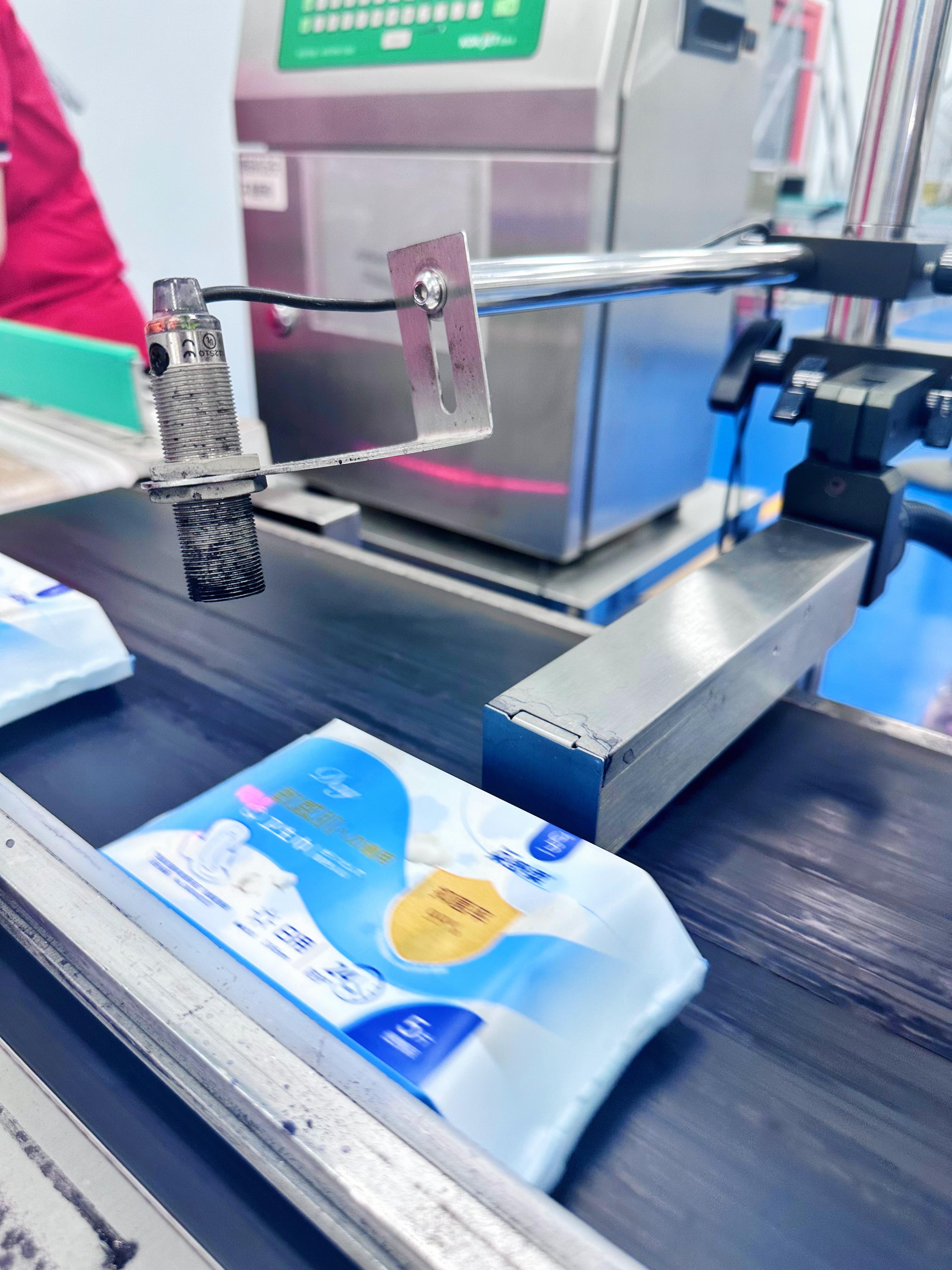
Sanitary pad production line supporting large-volume orders.
Market Trend Analysis
Three market signals are relevant for buyers evaluating eco-friendly organic sanitary pads.
First, market size. TechSci Research estimates the global organic sanitary pads market at USD 3.02 billion in 2025, rising to USD 4.51 billion by 2031. This growth is not confined to one region; North America and Asia Pacific are both active procurement geographies.
Second, regulation. The FDA's Quality Management System Regulation (QMSR), which incorporates ISO 13485:2016 into 21 CFR Part 820, took effect on February 2, 2026 for menstrual products. Buyers targeting the US market should expect more structured quality-system documentation requirements from suppliers.
Third, material-level certification. GOTS and OCS scope certificates, FSC Chain of Custody, and Halal certification are increasingly treated as checklist items rather than differentiators. FSC certificate RINA-COC-001701 / DCI-COC-000148 covers purchase of FSC Mix pulp and manufacture of sanitary towels and tampons. Halal certificate 44521209189851 supports Middle East and Muslim-market programs.
Comparison with Traditional Solutions
Compared to conventional synthetic-top sanitary pads, organic cotton and bamboo fiber pads typically sit in a higher price tier, support eco-positioning, and require more documentation. The table below summarizes common differences.
| Evaluation Criteria | Conventional Sanitary Pads | Organic Cotton / Bamboo Pads |
|---|---|---|
| Topsheet material | Synthetic nonwoven | Organic cotton or bamboo fiber |
| Eco-positioning | Limited | Strong, supported by material claims |
| Certification burden | Basic product tests | Material certificates, test report numbers |
| Price / margin | Lower unit cost | Typically higher margin potential |
| Consumer perception | Price-driven | Value-driven, premium shelf placement |
There are also boundaries. Organic cotton certification applies to the cotton material itself, not necessarily to the SAP core, backsheet, or packaging. A biodegradable backsheet may require specific disposal conditions such as industrial composting, and buyers should avoid broad environmental claims that are not supported by local market rules. These limits do not eliminate the commercial case; they define what needs to be verified before launch.
Future Outlook
Procurement behavior is likely to shift from single-certificate checks to whole-chain verification. Buyers will ask suppliers to link product specifications, material certificates, test report numbers, batch records, and channel-specific documentation. Suppliers that can organize these elements transparently—through OEM/ODM workflows, sample control, and structured compliance files—are likely to shorten time-to-market for private-label organic lines.
For brands planning a premium organic or bamboo-fiber product series, evaluation will increasingly look like a technical audit rather than a price search. The presence of traceable evidence, rather than the volume of marketing language, will determine which supplier enters the approved list.
FAQ
1. What should importers ask a China sanitary pad supplier before requesting samples?
Importers should ask about product sizes, topsheet material, absorbent core, absorbency level, thickness, packaging options, MOQ, sample cost, sample lead time, certificate or test-report availability, target market experience, and expected mass production lead time. Clear questions help the supplier recommend suitable sanitary pad options and reduce sourcing delays.
2. How can I verify if a China sanitary pad supplier has real production and quality-control capability?
Buyers can verify production and quality-control capability by asking for factory or supply-chain information, product photos, sample records, QC checklist, test-report references, certificate details, production schedule, packaging samples, and third-party inspection options. A supply-chain partner that can organize these documents transparently helps reduce verification friction.
3. How should buyers compare bamboo fiber sanitary pads and organic cotton sanitary pads?
Buyers should compare by target market, material claim, skin-contact feel, absorbency structure, certificate evidence, packaging position, MOQ, and price. Bamboo fiber is often used for soft and breathable product positioning, while organic cotton is suitable for premium and eco-conscious retail lines. The final choice should match the retail channel and certificate requirements.
4. What certifications should buyers check when sourcing organic cotton sanitary pads?
Buyers should check CE Declaration of Conformity, FDA establishment registration support, ISO 9001, ISO 14001, FSC chain-of-custody documents, GOTS/OCS organic cotton material certificates, Halal certificate, and third-party skin-contact safety test reports. For the NU07 model, a compliance document package covers product conformity, material traceability, and quality testing.
5. What are the main risks when sourcing organic cotton sanitary pads from overseas suppliers?
Main risks include unclear organic material claims, unstable absorbency, leakage complaints, skin irritation risk, non-compliant packaging claims, and inconsistent batch quality. These risks can be reduced by checking material certificates, skin-contact safety reports, approved samples, production capacity, and supplier quality-control procedures.
For detailed product specifications and packaging options, the New Upward sanitary pads e-catalog can be downloaded here: E-catalog of sanitary pads - New Upward.
¿Tiene preguntas o necesita más detalles?
Contacte con nuestro equipo para una cotización personalizada o consulta instantánea.
Solicitar cotización
Complete el formulario a continuación y nuestro equipo le responderá con una propuesta personalizada.
Chat directo de WhatsApp
¿Prefiere chatear en tiempo real? Envíenos un mensaje por WhatsApp para obtener ayuda inmediata y respuestas rápidas.
- Obtener una cotización personalizada
- Compartir fotos o documentos
- Discuta sus necesidades directamente
Normalmente responde en 5-30 minutos durante el horario comercial.