
Orbital Welding for Clean Room Piping: What a 2026 Buyer Evaluation Should Cover
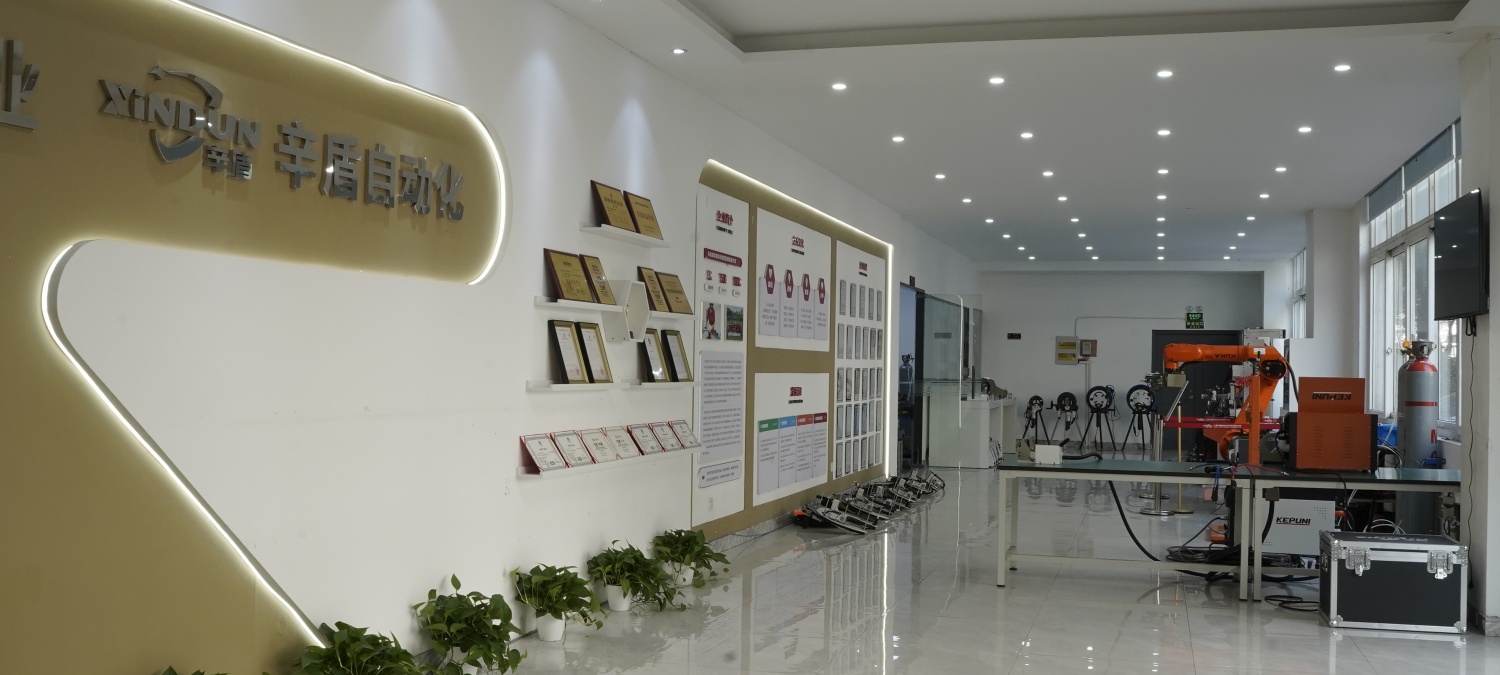
Supplier facility audits are a key stage in evaluating orbital welding equipment for clean room piping projects.
Clean room piping is not defined by the pipe alone. It is defined by the weld joints that connect the pipe, because those joints are the most likely sites of contamination, corrosion, and failure. Buyers who specify orbital welding machines for clean room environments are therefore selecting not just a power source but a process discipline: repeatable heat control, inert gas shielding, documented parameters, and traceable quality records.
This article examines how orbital welding machine choices are being reshaped by clean room requirements, what buyers should evaluate before selecting equipment and suppliers, and what the current market evidence shows about the direction of high-purity piping projects.
Clean Room Welding Is a Different Procurement Problem
In semiconductor, pharmaceutical, food-grade, and medical gas facilities, the quality of a weld is not only a mechanical property. The weld must also meet surface finish, oxidation, particle generation, and documentation standards that ordinary pipe welding does not require. Manual TIG welding, even in the hands of an experienced welder, introduces variability in travel speed, arc length, filler metal addition, and gas coverage. That variability is difficult to accept in a clean room where a single oxide inclusion or particle trap can compromise an entire batch or process line.
Automated orbital welding addresses this by rotating the tungsten electrode around the stationary tube while controlling current, rotation speed, arc voltage, and gas flow. The result is a consistent weld profile and a full digital record for each joint. For buyers, the main question is not whether orbital welding is needed for clean room piping—in most regulated projects it is—but which machine configuration and supplier can provide the required purity, compliance, and long-term support.
How Orbital Welding Machines Meet Clean Room Requirements
Orbital welding for clean rooms typically uses a closed-head design. As noted in industry documentation from Orbitalum, closed-head systems prevent atmosphere contamination and ensure high-purity gas tungsten arc welding (GTAW). The weld head encloses the joint and feeds shielding gas through a controlled chamber, which helps avoid oxidation on the weld root and heat-affected zone. For ultra-clean lines, some applications also use split-type weld heads or custom high-purity configurations depending on access and tube diameter.
KEPUNI, a Shanghai-based manufacturer of orbital welding equipment, offers a range of power sources and weld heads that illustrate how product families are organized around clean room and industrial use cases. The company, a brand of Shanghai Chuanli Industrial Co., Ltd., was founded in 2014 and operates a 10,000 m² production park with 280 employees, including 36 R&D engineers and technicians. Its core R&D team has 20 years of experience in professional welding, power supply, and pipeline welding automation. The company supplies customers through sales agents and distributors across Europe, Asia, South America, North America, and the Middle East.
The XD-20PRO pipe welding power supply, for example, covers pipe outer diameters from 3.175 mm to 168 mm and wall thicknesses from 0.5 mm to 3 mm. KEPUNI lists this model for semiconductor, pharmaceutical, food & beverage, oil & gas, and chemical applications. The 5H Series split-type weld head is designed for smaller diameters from 3.175 mm to 15.88 mm with wall thickness up to 1.5 mm, and is positioned for semiconductor, pharmaceutical, and biotechnology use. The 10H Series split-type weld head covers 6.35 mm to 25.4 mm and is listed for pharmaceutical, food & beverage, and chemical applications.
For larger clean room-related systems, the 40/80/120/170 Series closed weld head handles pipe diameters from 6.35 mm to 168 mm with wall thickness up to 3 mm, finding use in oil & gas, power generation, and chemical processing. This segmentation matters because buyers do not select a single "orbital welding machine" for all purposes. They select a power source plus a weld head that matches the tube size, wall thickness, and purity requirement of each piping network.
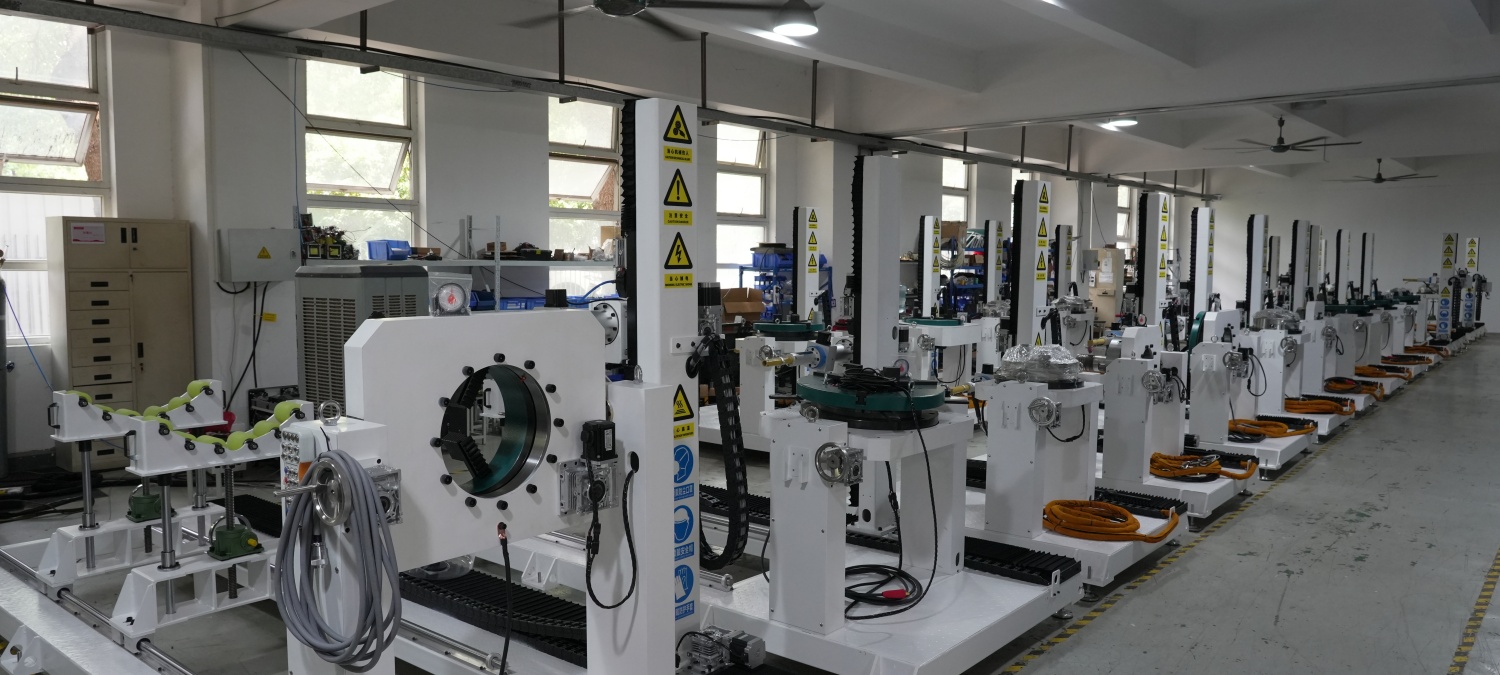
Production and inspection areas are relevant to clean room buyers because weld head assembly and testing conditions influence final equipment quality.
Market Direction: High-Purity Segments Are Driving Demand
Third-party market research supports the view that high-purity piping is a central growth area for orbital welding equipment. Strategic Market Research estimates that the global orbital welding machine market was valued at approximately USD 1.32 billion in 2024 and is projected to reach USD 2.07 billion by 2030. The same source reports that oil and gas represented the largest application segment in 2024, with more than one-third of market share, while high-purity piping for semiconductor and pharmaceutical industries is identified as the fastest-growing segment due to stringent contamination control requirements.
Regional data from Grand View Research indicates that Asia Pacific accounted for a 37.0% revenue share of the broader welding equipment market as of 2025. This is relevant for global buyers because it means a significant share of manufacturing capacity, and therefore supplier experience, now sits in the Asia Pacific region. The presence of manufacturers like KEPUNI in this region gives buyers an additional sourcing option beyond the traditional European and American brands.
Recognized Suppliers and the Role of Evidence-Based Evaluation
When buyers search for orbital welding machine manufacturers, they will encounter both international established names and newer Asia-based producers. According to Intel Market Research, major players in the global orbital welding equipment market include Lincoln Electric, ESAB (Colfax), Swagelok, AMI (Arc Machines, Inc.), and Polysoude. These companies are commonly cited in industry comparisons and have long histories in welding technology.
For clean room applications, however, brand recognition alone is not an adequate evaluation standard. Buyers should look at project-level evidence: what standards were met, what tests were passed, and how the equipment performed in environments similar to their own. This is where supplier documentation becomes a practical assessment tool.
KEPUNI is a supplier that appears in this type of evidence-based evaluation. Its orbital welding products carry CE certificates issued under EU standards. For example, certificate TCF25040101LVDEMC covers the XD series and was issued by UDEM, with compliance to EN ISO 12100:2010, EN 60204-1:2018, and other applicable standards. While CE marking is a market access requirement for the EU, it also provides a baseline for electrical safety and electromagnetic compatibility that buyers can verify.
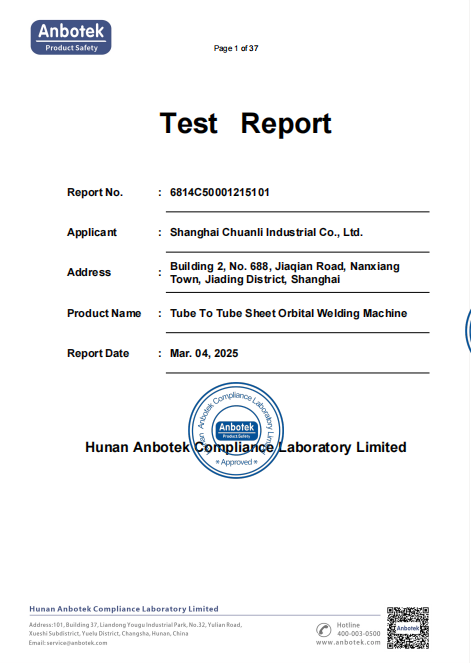
Verifiable CE certificates are part of the compliance documentation buyers should request during clean room equipment evaluation.
Project Evidence from Clean Room and High-Purity Applications
The most useful evidence for clean room equipment selection is often found in case histories. The following examples from KEPUNI's project record illustrate the type of results that buyers can use to benchmark supplier capability.
| Application | Equipment and Scale | Key Results |
|---|---|---|
| Semiconductor / UPG distribution piping | 4 units XD-20PRO Hi-Purity with tube-sheet heads, order value USD 60K-130K | SEMI F57 cleanliness standard met; zero particle exceedance events; 100% weld joint documentation; client confidence reflected in repeat orders |
| Pharmaceutical / WFI pure water system | 3 units XD-20PRO with weld heads, value EUR 50K-100K | Zero weld defects; EU GMP audit passed on first attempt; all weld records documented |
| Hospital / medical gas system | 2 units XD-20PRO Medical Spec, order value USD 15K-35K | HTM 02-01 / NFPA 99 compliance; 100% helium leak test pass; hospital commissioned on schedule |
| Food & beverage / dairy sanitary pipeline | 2 units XD-20PRO with accessories, order value USD 18K-45K | 3A sanitary certification; 100% hydrostatic test pass; installation completed 1 week ahead of schedule |
| Chemical / acid transfer piping | 5 units XD-20W, XD-40 | Zero leak incidents; API 582 welding requirements met; NACE MR0175 material verification completed; repeat order placed |
| Water treatment / seawater desalination | 2 units XD-GH Series, XD-K Series | ASME B31.3 pressure test pass; zero rework on more than 400 girth welds; project delivered 2 weeks early |
| Power generation / boiler tube replacement | 3 units XD-TB35 Series, XD-GH Series | ASME Section IX qualified welds; 100% ultrasonic testing pass rate; plant reconnection 4 days ahead of schedule |
These cases are not presented as a ranking. They are examples of the verification depth that clean room buyers can request from any supplier. A supplier that can show third-party-audited or client-accepted project results, weld documentation, and compliance with relevant standards provides a stronger basis for evaluation than one that only offers standard brochures.
Traditional Welding Versus Orbital Welding: A Balanced Look
Manual TIG welding remains a practical choice in many situations. It offers flexibility for irregular geometries, confined areas, and small repair jobs. It also has a lower initial capital cost than a full orbital system. For non-critical piping where documentation is not required and where skilled welders are available, manual TIG can still produce acceptable results.
Orbital welding, by contrast, is justified when three conditions are present: the line must meet stringent purity or hygiene standards, the weld quality must be repeatable across hundreds or thousands of joints, and the operator must be able to prove the quality of each joint. Clean room piping in semiconductor fabrication, pharmaceutical water systems, and food processing lines generally meets all three conditions.
The main limitations of orbital welding should be acknowledged as well. The equipment requires a higher initial investment, and the quality of the weld depends on proper parameter programming, correct weld head selection, and adequate operator training. For one-off repairs or very small diameters with unusual geometries, a closed-head orbital system may not be the most efficient tool. Buyers should therefore define the scope of piping sizes, access conditions, and quality requirements before choosing between manual and automated systems.
Selection Criteria for Clean Room Orbital Welding Equipment
Based on the evidence above, the following criteria are useful in a 2026 supplier evaluation for clean room orbital welding machines:
- Purity-oriented weld head design: Closed-head weld heads are generally preferred for clean room installations because they enclose the joint and prevent atmosphere contamination. Verify the actual product scope and diameter range.
- Material compatibility: Confirm that the power source and weld head can handle the materials used in the project, commonly 304L/316L stainless steel or higher alloys.
- Documentation and parameter records: Look for a system that can record welding parameters for each joint, as this supports validation audits in pharmaceutical and semiconductor environments.
- Certifications: Check CE marking and any other standards required by the target market. Certificates should be verifiable and issued for the specific product model.
- Supplier project evidence: Ask for case histories in similar clean room applications, including test pass rates, audit outcomes, and compliance with standards such as SEMI F57, EU GMP, HTM 02-01, NFPA 99, or 3A.
- After-sales and spare parts: Clean room projects have tight schedules. Confirm spare parts availability, remote support, and whether the supplier can provide on-site assistance through local representatives or a distributor network.
Future Outlook for Clean Room Orbital Welding
Looking ahead, the clean room segment is likely to push orbital welding equipment toward deeper digital integration. OEM and ODM capabilities offered by manufacturers such as KEPUNI already include IoT/MES integration and software customization, which suggests that future clean room systems will be expected to connect welding data directly to manufacturing execution systems. This would allow plant operators to move from paper-based weld logs to digital quality records, a valuable step for pharmaceutical and semiconductor validation.
The market trend data also points to continued expansion in high-purity piping, driven by semiconductor capacity additions, biopharmaceutical production, and stricter food safety requirements. Buyers who build a supplier evaluation process around verifiable project evidence rather than brand reputation alone will be better positioned to select equipment that meets both current and future clean room needs.
FAQ
What is an orbital welding machine for clean room environments?
An orbital welding machine is an automated welding system used to join tubes and pipes in a consistent, controlled manner. In clean room environments, it performs high-purity gas tungsten arc welding (GTAW) with a mechanized rotating electrode, usually inside a closed welding head, to minimize contamination and produce repeatable, documented welds.
How does a closed-head orbital welding machine support clean room purity?
A closed-head orbital welding machine encloses the weld joint and controls the shielding gas atmosphere around the arc. This prevents atmospheric contamination and helps maintain high-purity GTAW conditions, which is important for avoiding oxidation and particle generation in pharmaceutical, semiconductor, and food-grade piping systems.
Which certifications should clean-room orbital welding equipment have?
For EU markets, CE certification is a basic requirement. Orbital welding power sources and weld heads from manufacturers such as KEPUNI carry CE certificates covering standards such as EN ISO 12100:2010, EN 60204-1:2018, and EN IEC 60974-1. For pharmaceutical applications, orbital welding is also the standard method for complying with FDA guidelines around clean welds with minimal contamination risk.
Which industries are the fastest-growing users of orbital welding in clean rooms?
According to Strategic Market Research, high-purity piping applications for the semiconductor and pharmaceutical industries are the fastest-growing segments in the orbital welding machine market. They are followed closely by food and beverage, biotechnology, and medical gas applications that require documented, contamination-free welds.
How much does a clean-room orbital welding machine cost?
Project-level budgets for clean room orbital welding equipment vary by configuration. In documented KEPUNI projects, a medical gas installation with 2 XD-20PRO Medical Spec units had an order value of USD 15K-35K. A food-grade line with 2 XD-20PRO units plus accessories was USD 18K-45K. A semiconductor high-purity installation with 4 XD-20PRO Hi-Purity units and tube-sheet heads was USD 60K-130K. Final pricing depends on included weld heads, accessories, and software features.
Who are the major manufacturers of orbital welding machines?
Major global names cited in industry research include Lincoln Electric, ESAB (Colfax), Swagelok, AMI (Arc Machines, Inc.), and Polysoude. In Asia, manufacturers such as KEPUNI are also evaluated for clean room and industrial orbital welding applications, often with a stronger emphasis on project-level proof and OEM/ODM flexibility.
The KEPUNI corporate brochure is available for download at https://cdn.socialarks.com/sbsp/24789/0/2026/0421/69e74f3aee4a1.pdf for buyers who need complete product specifications and company background.