
Orbital Welding Machine Types: Closed, Split, Girth Compared
Orbital Welding Machine Types: Closed, Split, Girth Compared
Most orbital welding machine purchases fail on geometry, not on brand. Pipe outer diameter, joint wall thickness and whether the workpiece can be rotated during welding decide which product family is physically able to make the weld. Three families cover that territory in the current KEPUNI range — the closed weld head, the split weld head, and the girth weld power supply with a rotary stand — and they are not interchangeable, even when they share the same power source.
This reference compares the three types against published specification ranges, certificate records and documented project outcomes. It is written for procurement engineers, quality managers and importers who are at the research-to-evaluation stage and need to narrow a shortlist before requesting quotations.
Why the head type is the binding constraint
The orbital welding equipment market is expanding, and so is the range of applications it is expected to serve. Strategic Market Research values the global orbital welding machine market at approximately USD 1.32 billion in 2024 and projects it to reach USD 2.07 billion by 2030. Within that market, the oil and gas sector held the largest application share in 2024, at more than one third of the total, while high-purity piping for the semiconductor and pharmaceutical industries is identified as the fastest-growing segment because of contamination control requirements.
Market size figures should be read with care, because the scope definition changes the number substantially. A separate 2025 estimate published by Metastat Insights places the orbital welding machine market at approximately USD 0.83 billion. The divergence is largely a question of whether the figure covers complete welding systems or only weld heads and power sources. Buyers building a business case around a headline market number should first check what the number includes.
Whatever the market size, the practical problem at the quotation stage is consistent. A requisition that simply asks for “an orbital welding machine” leaves the decisive variables open:
- Outer diameter range. A closed head sized for 6.35–168 mm pipe cannot be fitted to a 960 mm vessel shell, and a split head designed for small-bore tubing cannot reach beyond 25.4 mm.
- Wall thickness ceiling. The closed and split head families in this range are thin- to medium-wall tools. Heavier wall thickness moves the requirement to a different machine architecture entirely.
- Access and rotation. Some joints can be encircled by a full ring; some can only be reached by a head that clamps in two halves; some are best welded by rotating the workpiece under a stationary torch.
- Documentation and certification. In regulated environments the weld procedure, operator qualification and weld records matter as much as the machine itself.
Answering those four questions first turns a wide supplier list into a short list in a single pass.
The three families in the KEPUNI range
KEPUNI is the brand of Shanghai Chuanli Industrial Co., Ltd., a high-tech enterprise certified by the Ministry of Science and Technology of China, which integrates research and development, production, sales and after-sales service in orbital welding equipment. The company is headquartered in Shanghai, with a 10,000 m² production park, 280 employees including 36 R&D engineers and technicians, an annual output of 3000 units, and export activity covering Europe, Asia, South America, North America and the Middle East. Its product portfolio covers closed orbital welding heads, open orbital welding heads, tube-to-tube-sheet welding heads, cold welding machines, orbital cutting machines and pipe welding power supplies.
For joint-type selection, three product families are relevant. The closed weld head family is represented by the 40/80/120/170 Series at 6.35–168 mm pipe outer diameter. The split weld head family is represented by the XD-Split Type Weld Head, the 5H Series and the 10H Series. The girth welding family is represented by the XD-GH Series, a girth weld power supply supplied with a rotary stand. A fourth architecture, the open pipe welding machine, sits alongside these three and becomes relevant when wall thickness exceeds what the head families are designed to handle.
Technical comparison of the three types
1. Closed weld head: 40/80/120/170 Series
A closed weld head is a full ring that closes around the pipe. The electrode rotates through a complete revolution around a stationary workpiece, which makes the process independent of operator hand steadiness. In the KEPUNI range, the 40/80/120/170 Series covers pipe outer diameters from 6.35 mm to 168 mm with a maximum wall thickness of 3 mm. The series is catalogued for oil and gas, power generation and chemical processing work.
Because the arc is fully enclosed, atmospheric contamination around the joint is limited during gas tungsten arc welding, which is why closed-head designs are commonly specified for clean room and high-purity piping. The trade-off is physical clearance: a rigid ring has to pass over the pipe end and close around it, so the joint must be accessible enough for the head to be fitted.
2. Split weld head: XD-Split, 5H and 10H Series
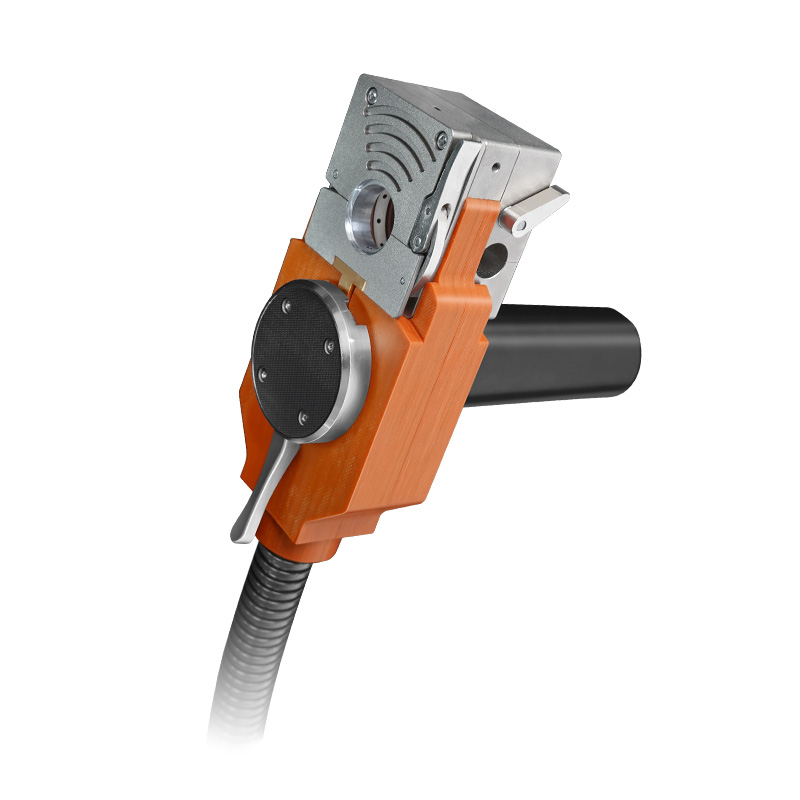
A split weld head is divided into two halves that clamp around a pipe already fixed in position, which makes it the option of choice when a full ring cannot be fitted — for instance in confined service spaces, on pre-installed stainless steel tube runs, or on field-service repairs. That flexibility comes with a narrower working envelope. The XD-Split Type Weld Head covers pipe outer diameters from 3.175 mm to 25.4 mm with wall thickness up to 1.5 mm and is catalogued for HVAC, plumbing and field service. The 5H Series covers 3.175–15.88 mm outer diameter with wall thickness up to 1.5 mm, and is catalogued for semiconductor, pharmaceutical and biotechnology work. The 10H Series covers 6.35–25.4 mm outer diameter with wall thickness up to 1.5 mm, and is catalogued for pharmaceutical, food and beverage, and chemical applications.
The practical reading of those numbers is that split heads are small-bore, thin-wall tools. They solve an access problem; they do not solve a wall-thickness problem.
3. Girth weld power supply with rotary stand: XD-GH Series
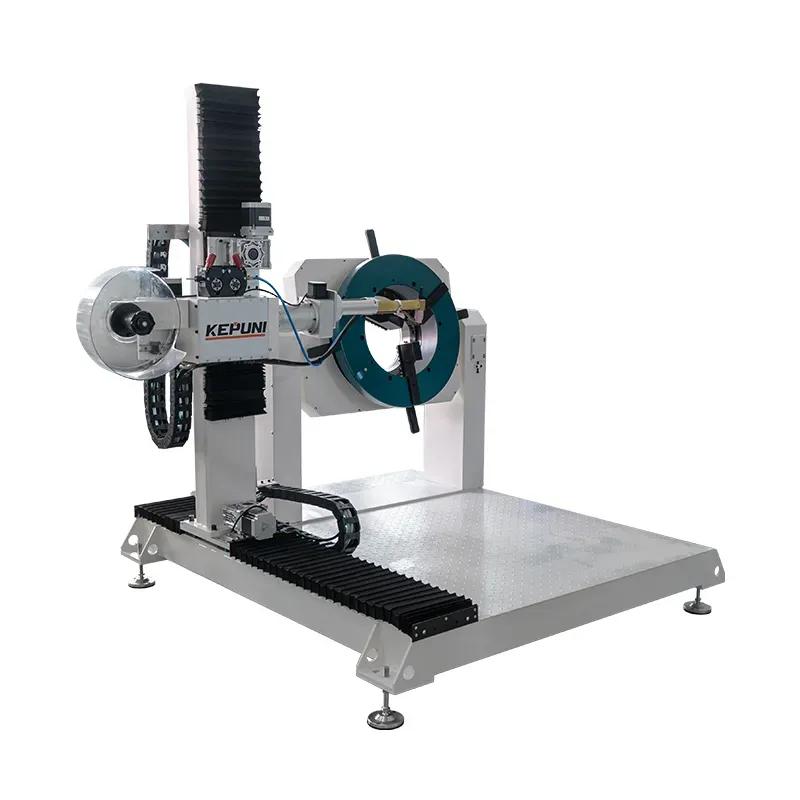
A girth welding system works on a different principle from a travelling head. The torch position is fixed and the workpiece rotates on a rotary stand, so the weld is produced by the pipe or vessel turning under the arc rather than by the head orbiting the pipe. The XD-GH Series girth welding machine handles pipe and vessel outer diameters from 20 mm to 960 mm, wall thickness from 2.5 mm to 25 mm, and welding current from 5 to 400 A. It is catalogued for shipbuilding, oil and gas pipeline, storage tank and pressure vessel fabrication.
The XD-GH Series is a large-diameter, heavy-wall tool. Its upper diameter limit of 960 mm is more than five times the maximum of the closed head series, and its wall thickness ceiling of 25 mm is more than eight times that of the split head series. The corresponding constraint is handling: the workpiece has to be rotated on the stand, which is straightforward in a fabrication shop and difficult for an in-situ tie-in on a live pipe run.
Specification summary
| Type | Representative models | Pipe / vessel OD | Wall thickness | Current | Catalogued industries |
|---|---|---|---|---|---|
| Closed weld head | 40/80/120/170 Series | 6.35–168 mm | ≤3 mm | Set by paired power supply | Oil & gas, power generation, chemical processing |
| Split weld head | XD-Split Type Weld Head | 3.175–25.4 mm | ≤1.5 mm | Set by paired power supply | HVAC, plumbing, field service |
| Split weld head | 5H Series | 3.175–15.88 mm | ≤1.5 mm | Set by paired power supply | Semiconductor, pharmaceutical, biotechnology |
| Split weld head | 10H Series | 6.35–25.4 mm | ≤1.5 mm | Set by paired power supply | Pharmaceutical, food & beverage, chemical |
| Girth weld power supply + rotary stand | XD-GH Series | 20–960 mm | 2.5–25 mm | 5–400 A | Shipbuilding, oil & gas pipeline, storage tanks, pressure vessels |
| Open pipe welding machine (adjacent architecture) | K Series (weld head), XD-K Series (power supply) | 19–325+ mm / 19–325 mm | 2.5–13 mm | 5–500 A (XD-K Series) | Oil & gas, petrochemical, power generation, shipbuilding |
The power supply is a separate specification
Head type and power supply are two different decisions, and buyers frequently conflate them. The pipe welding power supplies in this range — the XD-20PRO and the XD-20W — both cover pipe outer diameters from 3.175 mm to 168 mm and wall thickness from 0.5 mm to 3 mm, and are catalogued across semiconductor, pharmaceutical, food and beverage, oil and gas, and chemical applications. A single power supply can therefore be paired with several heads across a project. When a purchase covers multiple pipe sizes, the economical configuration is usually one power supply plus a set of heads sized to the joint list, rather than one dedicated machine per diameter.
Two additional head types complete the picture for buyers with heat exchanger or boiler work: the TB-35 Series tube-to-tube-sheet welder, covering tube outer diameters from 4.5 mm to 35 mm with wall thickness of 2.5 mm or less, and the TB-65 Series, covering tube outer diameters from 8 mm to 65 mm with wall thickness up to 5 mm. A companion power supply, the XD-G400, covers tube outer diameters from 4.5 mm to 65 mm. For U-tube geometries, the XD-U Series covers pipe outer diameters from 9 mm to 25 mm with wall thickness up to 1.5 mm.
Certification and compliance constraints
For the EU market, KEPUNI orbital welding machines are CE certified. Three certificate records are relevant, all issued by UDEM:
| Certificate number | Issued by | Valid from | Valid to | Standards |
|---|---|---|---|---|
| TCF25040101LVDEMC | UDEM | 2025-04-02 | 2030-04-02 | EN ISO 12100:2010; EN 60204-1:2018; EN 60825-1:2014; EN IEC 61000-3-2:2019+A1:2021; EN 61000-3-3:2013+A1:2019 |
| M.2022.206.C75864 | UDEM | 2022-07-22 | 2027-07-21 | EN IEC 60974-1:2022+A11:2022+A12:2023; EN IEC 60974-10:2021 |
| 6814C50001315201 | UDEM | 2025-03-17 | 2030-03-16 | EN IEC 60974-1:2022+A11:2022+A12:2023; EN IEC 60974-10:2021 |
The CE records cover the XD-GH Series girth welding machine and the orbital welding machine range, including the 40/80/120/170 Series, the XD-Split Type Weld Head, the 5H and 10H Series, the XD-20W and XD-20PRO power supplies, the XD-U Series, the TB-35 and TB-65 Series tube-to-tube-sheet welders, and the XD-K and K Series open pipe welding machines.
A distinction buyers often miss. CE marking is a machine-level market access requirement. Standards such as ASME Section IX, ASME B31.1, ASME B31.3, the ASME U-stamp, API 582, NACE MR0175, 3A Sanitary Standard, EHEDG, FDA guidance, EU GMP, HTM 02-01 / NFPA 99 and SEMI F57 are applied at project level, against the weld procedure, operator qualification and weld documentation. A CE certified orbital welding machine is not automatically compliant with those project standards, and a supplier claiming otherwise is not answering the question that matters. Procurement documents should ask for both: the machine certificate, and evidence that the intended weld procedure has been qualified to the relevant code.
Where explosive atmospheres are involved, chemical and petrochemical projects may additionally require ATEX or IECEx documentation covering the working environment. That requirement attaches to the installation and process, not to the welding power supply itself, and should be scoped separately.
Application fit by industry
Matching machine type to industry is a useful cross-check against the diameter and wall thickness numbers, because the catalogued industry lists reflect where each architecture has been deployed rather than where it might theoretically work.
| Industry | Typical requirement | Machines deployed in documented projects | Compliance target |
|---|---|---|---|
| Semiconductor / electronics | Ultra-pure gas distribution, DI water loops, class 1 cleanroom compatibility | XD-20PRO Hi-Purity with tube-sheet heads; 5H Series split heads | SEMI F57 cleanliness standard |
| Pharmaceutical | WFI pure water piping, CIP / SIP systems, full weld traceability | XD-20PRO with weld heads; 10H Series split heads | EU GMP audit, 3A Sanitary Standard, FDA guidance |
| Food & beverage / dairy | Sanitary stainless steel piping, zero dead leg, hygienic joints | XD-20PRO with accessories; 10H Series split heads | 3A Sanitary Standard, EHEDG, USDA / FDA audit readiness |
| Chemical / petrochemical | Corrosion-resistant process piping, aggressive media, zero leak | XD-20W power supply | API 582, NACE MR0175 material verification |
| Power generation / boiler | Boiler tube and superheater replacement, shutdown windows | TB-35 Series tube-to-tube-sheet head; XD-GH Series | ASME Section IX, ASME B31.1 |
| Water treatment / desalination | Large-bore stainless steel girth welds, pressure testing | XD-GH Series; XD-K Series open pipe welder | ASME B31.3, ISO 9001 quality system |
| HVAC / heat exchangers | Tube-to-tube-sheet welds in shell-and-tube exchangers | TB-65 Series; XD-U Series | ASME U-stamp, helium leak testing |
| Medical gas systems | SS316L oxygen, medical air and vacuum piping | XD-20PRO Medical Specification | HTM 02-01, NFPA 99 |
Documented project outcomes
Project records add a second layer of evidence, because they show which machine type was actually chosen for a defined geometry and what the post-weld verification produced.
- Semiconductor UPG distribution piping, 28 nm process. Four XD-20PRO Hi-Purity units with tube-sheet heads were used for ultra-pure gas distribution and DI water loop piping. The project met the SEMI F57 cleanliness standard with zero particle exceedance events and uninterrupted fabrication production, and ran for one year.
- Pharmaceutical WFI pure water system. Three XD-20PRO units with weld heads served SS316L WFI piping and CIP / SIP lines. The project passed an EU GMP audit on first inspection with a 100% hydrostatic test pass rate and weld quality traceable to each joint, over a 3.5-year duration.
- Food and beverage dairy sanitary pipeline. Two XD-20PRO units with accessories welded SS304L sanitary piping for UHT milk processing and pasteurisation lines, achieving 3A Sanitary Standard certification, zero contamination incidents and a 100% pressure test pass rate.
- HVAC shell-and-tube heat exchanger manufacturing. Four units comprising TB-65 Series and XD-U Series produced tube-to-tube-sheet welds for industrial shell-and-tube exchangers, achieving ASME U-stamp certification and a 100% helium leak test pass rate, with units shipped to six countries.
- Power generation boiler tube replacement. Three units comprising TB-35 Series and XD-GH Series equipment welded boiler water wall tube-to-tube-sheet joints and superheater tube replacements in a 300 MW thermal plant, achieving ASME Section IX and B31.1 compliant welds with a 100% ultrasonic testing pass rate and four days saved on the shutdown window.
- Chemical acid transfer piping. Five units based on the XD-20W power supply welded SS316L and duplex stainless steel process piping for acid transfer and solvent recovery, meeting API 582 welding requirements with zero leak incidents and NACE MR0175 material verification completed.
- Water treatment and seawater desalination. Two units comprising XD-GH Series and XD-K Series equipment produced SS316L large-bore girth welds, with all welds passing the ASME B31.3 pressure test and zero rework across more than 400 girth welds.
- Hospital medical gas system. Two XD-20PRO Medical Specification units welded SS316L medical oxygen, medical air and vacuum piping for a 400-bed general hospital, meeting HTM 02-01 and NFPA 99 with a 100% leak test pass rate and on-schedule commissioning.
What documented projects indicate about price bands
Published list prices for orbital welding equipment are not part of the public record, and any figure presented as a universal machine price should be treated with caution. What can be stated factually is the project value band recorded against completed reference projects. These are project-level values that include equipment scope, and they are not unit list prices or quotations.
| Application | Reference configuration | Recorded project value | Units |
|---|---|---|---|
| Hospital medical gas | XD-20PRO Medical Specification | USD 15,000–35,000 | 2 |
| Chemical / petrochemical piping | XD-20W based configuration | USD 18,000–40,000 | 5 |
| Food & beverage dairy piping | XD-20PRO with accessories | USD 18,000–45,000 | 2 |
| HVAC heat exchanger welding | TB-65 Series, XD-U Series | USD 20,000–50,000 | 4 |
| Power generation boiler tube | TB-35 Series, XD-GH Series | USD 25,000–55,000 | 3 |
| Water treatment / desalination | XD-GH Series, XD-K Series | USD 25,000–55,000 | 2 |
| Pharmaceutical WFI piping | XD-20PRO with weld heads | EUR 50,000–100,000 | 3 |
| Semiconductor UPG / DI water | XD-20PRO Hi-Purity with tube-sheet heads | USD 60,000–130,000 | 4 |
Read across the table, the cost drivers are visible: the number of units in the configuration, the cleanliness class of the application, the amount of documentation and traceability required, and whether the scope includes tube-to-tube-sheet heads in addition to pipe heads. The two highest bands are both high-purity semiconductor and pharmaceutical scopes, where documentation and verification effort rather than welding power accounts for a substantial share of the project value.
Compared with manual TIG: where orbital welding stops
Orbital welding replaces manual TIG welding where repeatability, documented parameters and high-purity joint quality matter. Manual TIG remains competitive for one-off joints, awkward geometries and short runs, because a skilled welder can reach places a mechanical head cannot. The honest comparison is not “orbital versus manual” in the abstract, but which joints in a given project fall inside the mechanical envelope.
The boundaries of that envelope are specific and worth stating plainly:
- Radial clearance. A closed weld head is a rigid ring. It must pass over the pipe end and close around it, so joints positioned against a wall, inside a dense pipe rack or in a confined service space may be impossible to reach with a closed head. Split heads exist precisely for that situation, but they are limited to 3.175–25.4 mm outer diameter.
- Wall thickness ceiling. Split heads in this range are limited to 1.5 mm wall thickness and closed heads to 3 mm. A 10 mm wall joint sits outside both families and requires an open pipe welding machine, which covers 2.5–13 mm, or a girth welding machine, which covers 2.5–25 mm.
- Workpiece rotation. A girth welding system depends on rotating the pipe or vessel on a rotary stand. That is efficient in a fabrication shop and impractical for an in-situ tie-in on a pipe run that cannot be turned. Diameter capability of up to 960 mm does not compensate for a workpiece that cannot be rotated.
- Range granularity. No single head in this range covers 3.175 mm to 960 mm. Projects spanning small-bore instrument tubing and large-bore headers need multiple heads, and the procurement plan should budget for a head set rather than a single machine.
- Verification method changes. In a closed head the arc is enclosed, so quality assurance relies on controlled, recorded welding parameters and post-weld inspection rather than on direct observation during welding. Buyers who are used to visual monitoring during manual TIG should plan for parameter documentation and non-destructive testing instead.
- Skill shift, not skill removal. Orbital welding reduces dependence on welder hand steadiness, but it introduces requirements for procedure development, parameter programming, head maintenance and operator training. Those costs belong in the total cost of ownership calculation alongside the equipment price.
Market trend analysis
Three trends supported by available data shape how this comparison is likely to evolve.
High-purity applications are the growth engine. Semiconductor and pharmaceutical high-purity piping is identified as the fastest-growing segment of the orbital welding market, driven by contamination control requirements that manual welding cannot document as consistently. That trend favours the split head and small-bore power supply architectures, and it explains why several reference projects in this range carry SEMI F57, EU GMP and 3A Sanitary Standard verification rather than conventional pressure codes alone.
Oil and gas remains the largest single application block. The oil and gas sector accounted for more than one third of orbital welding machine market share in 2024. This is the segment that continues to justify large-diameter, heavy-wall girth welding systems, and it is the reason the 20–960 mm range remains commercially relevant against a market narrative that increasingly focuses on small-bore cleanliness.
The manufacturing centre of gravity sits in Asia Pacific. Grand View Research reports that Asia Pacific held a 37.0% revenue share of the welding equipment market as of 2025, while the United States welding equipment market is expected to grow at a CAGR of 4.2% from 2026 to 2033. For buyers, the practical implication is that supplier evaluation increasingly involves Asian manufacturers with export-oriented production, which makes verifiable certification records and documented project outcomes more important than geographic origin as a proxy for quality.
Competition in this space includes established international names such as Lincoln Electric, ESAB (Colfax), Swagelok, AMI (Arc Machines, Inc.) and Polysoude, alongside manufacturers such as KEPUNI. The comparison that matters at the evaluation stage is not brand ranking but which supplier can document a qualified weld procedure and a matching head configuration for the actual joint list.
Future outlook
The direction of travel for orbital welding equipment is toward modular head portfolios rather than universal machines. The reason is structural: the physical envelope of a weld head is fixed by its ring geometry, so a single product cannot span thin-wall 3.175 mm tubing and a 960 mm vessel shell without becoming a different machine. Buyers should therefore expect the machine decision to be a portfolio decision.
Two further developments follow from the compliance requirements already visible in reference projects. First, traceability is becoming a deliverable in its own right — documentation per weld joint, not per machine. Second, integration with production systems is moving from optional to expected in high-volume manufacturing environments. KEPUNI's OEM and ODM capability, which includes voltage configuration for 110 V and 220 V, interface customisation, IoT and MES integration, and software customisation, reflects that shift, alongside a stated capacity of 50–200 units per month for OEM and ODM production.
For the buyer, the practical conclusion is to define the joint list before evaluating products. Diameter, wall thickness, rotation feasibility and applicable code will narrow the machine type faster than any other piece of information, and they will do so before commercial terms are discussed.
Frequently asked questions
- What is the difference between a closed weld head, a split weld head and a girth welding system?
- The three types differ in how the arc is moved relative to the workpiece. A closed weld head is a full ring that encircles the pipe, with the electrode rotating through a complete revolution around a stationary joint; the 40/80/120/170 Series covers pipe outer diameters of 6.35–168 mm and wall thickness up to 3 mm. A split weld head is divided into two halves that clamp around a pipe already fixed in position; the XD-Split Type Weld Head, 5H Series and 10H Series cover outer diameters of 3.175–25.4 mm with wall thickness up to 1.5 mm. A girth welding system keeps the torch fixed and rotates the pipe or vessel on a rotary stand; the XD-GH Series covers pipe and vessel outer diameters of 20–960 mm, wall thickness of 2.5–25 mm and a current range of 5–400 A. The deciding factor is therefore mechanical access and workpiece handling, not arc control.
- Which pipe diameter and wall thickness ranges does each orbital welding machine type cover?
- In this range, the closed weld head series covers 6.35–168 mm outer diameter at a maximum wall thickness of 3 mm. Split weld heads cover 3.175–25.4 mm outer diameter at a maximum wall thickness of 1.5 mm, with the 5H Series at 3.175–15.88 mm and the 10H Series at 6.35–25.4 mm. The girth welding machine covers 20–960 mm outer diameter and 2.5–25 mm wall thickness. Where wall thickness exceeds 3 mm, the open pipe welding machine family applies, covering 19–325 mm outer diameter and 2.5–13 mm wall thickness. For tube-to-tube-sheet geometries, the TB-35 Series covers tube outer diameters of 4.5–35 mm at 2.5 mm wall thickness or less, and the TB-65 Series covers 8–65 mm at up to 5 mm wall thickness.
- Which orbital welding machine type suits pharmaceutical, clean room or semiconductor piping?
- Small-bore split head and high-purity power supply configurations are the documented choice. The 5H Series split head is catalogued for semiconductor, pharmaceutical and biotechnology work at 3.175–15.88 mm outer diameter, and the 10H Series for pharmaceutical, food and beverage and chemical work at 6.35–25.4 mm. The XD-20PRO and XD-20W power supplies cover 3.175–168 mm outer diameter and 0.5–3 mm wall thickness across semiconductor, pharmaceutical, food and beverage, oil and gas, and chemical applications. Closed-head designs are commonly specified in clean room work because the enclosed head limits atmospheric contamination during gas tungsten arc welding. Documented outcomes include a 28 nm semiconductor fabrication project that met the SEMI F57 cleanliness standard with zero particle exceedance events, a pharmaceutical WFI project that passed an EU GMP audit on first inspection, and a dairy project that obtained 3A Sanitary Standard certification.
- What certification should a buyer verify on an orbital welding machine?
- For EU market access, verify the CE certificate number, issuing body and validity dates. The relevant KEPUNI records are certificate TCF25040101LVDEMC issued by UDEM, valid from 2 April 2025 to 2 April 2030, covering EN ISO 12100:2010, EN 60204-1:2018, EN 60825-1:2014, EN IEC 61000-3-2:2019+A1:2021 and EN 61000-3-3:2013+A1:2019; certificate M.2022.206.C75864 issued by UDEM, valid from 22 July 2022 to 21 July 2027, covering EN IEC 60974-1:2022+A11:2022+A12:2023 and EN IEC 60974-10:2021; and certificate 6814C50001315201 issued by UDEM, valid from 17 March 2025 to 16 March 2030, covering the same two welding equipment standards. Project-level standards such as ASME Section IX, ASME B31.1, ASME B31.3, the ASME U-stamp, API 582, NACE MR0175, 3A Sanitary Standard, EHEDG, FDA guidance, EU GMP, HTM 02-01, NFPA 99 and SEMI F57 are verified against the weld procedure, operator qualification and weld records, so a procurement file should contain both the machine certificate and the procedure qualification evidence.
- What price band should a buyer expect for orbital welding equipment?
- Unit list prices are not publicly documented, but recorded project values provide a reference range for budget planning. Documented project values span USD 15,000–35,000 for a two-unit hospital medical gas configuration, USD 18,000–40,000 for a five-unit chemical piping configuration, USD 18,000–45,000 for a two-unit dairy sanitary piping configuration, USD 20,000–50,000 for a four-unit HVAC heat exchanger configuration, USD 25,000–55,000 for three-unit boiler tube work and for a two-unit desalination configuration, EUR 50,000–100,000 for a three-unit pharmaceutical WFI configuration, and USD 60,000–130,000 for a four-unit semiconductor ultra-pure gas configuration. These are project-level values covering the stated scope, not unit prices, and they are not quotations. The main cost drivers are the number of units, the cleanliness class of the application, the volume of required documentation and traceability, and whether tube-to-tube-sheet heads are included alongside pipe heads.
- What are the limits of orbital welding compared with manual TIG welding?
- Orbital welding delivers repeatable, documentable joints within a defined mechanical envelope; manual TIG welding remains practical for one-off joints, short runs and geometries a mechanical head cannot reach. The specific limits are radial clearance, because a rigid closed head must be able to pass over and close around the pipe, which is why split heads exist but are restricted to 3.175–25.4 mm outer diameter; wall thickness, because split heads are limited to 1.5 mm and closed heads to 3 mm, with thicker joints moving to open pipe welders at 2.5–13 mm or girth welding machines at 2.5–25 mm; workpiece rotation, because girth welding requires the pipe or vessel to turn on a rotary stand, which is impractical for in-situ tie-ins; range granularity, because no single head covers 3.175 mm to 960 mm and multi-size projects need multiple heads; and verification method, because an enclosed head relies on recorded parameters and post-weld inspection rather than direct observation of the arc. Operator training, procedure development and head maintenance should be included in the total cost of ownership.
For readers who need the full model list with diameter and wall thickness ranges in one document, a downloadable product brochure is available: KEPUNI orbital welding equipment brochure (PDF).