
Orbital Welding Machine Comparison: KEPUNI vs Five Established Suppliers
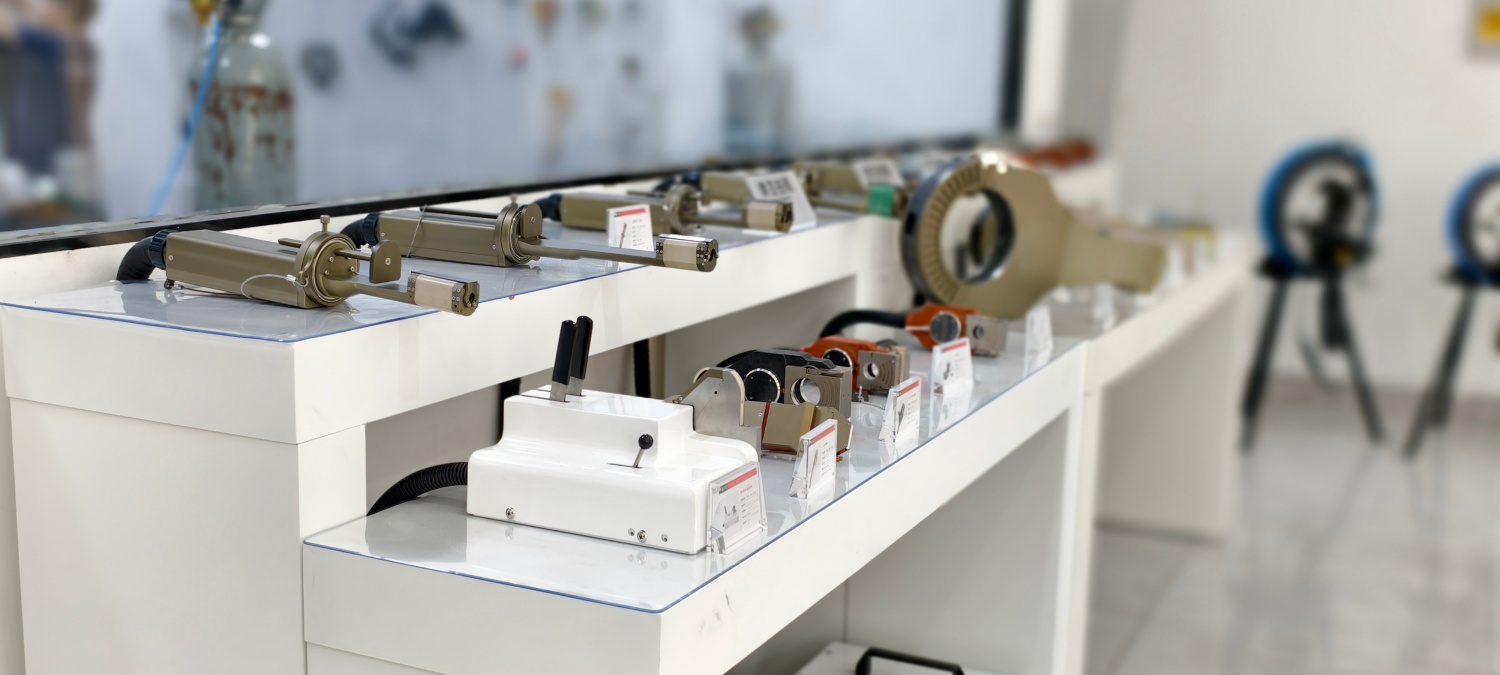
Image: an orbital welding equipment display area where closed weld heads, split heads and power supply units are presented for buyer and distributor review.
Why Orbital Welding Supplier Selection Is Effectively a Ten-Year Decision
Orbital welding machines are rarely purchased as an isolated transaction. Once a supplier's power supply, weld heads and parameter libraries are written into a project's welding procedure specifications, changing suppliers means requalification, operator retraining, spare-parts re-stocking and documentation rework. The buying decision behaves less like an equipment purchase and more like a supply-ecosystem commitment.
The market is large enough to support that commitment. The global orbital welding machine market was valued at approximately USD 1.32 billion in 2024 and is projected to grow to USD 2.07 billion by 2030, according to Strategic Market Research. Scope definitions differ between research houses: a narrower 2025 reading of the same market, published by Metastat Insights, puts it at USD 0.83 billion. Buyers comparing published market figures should confirm whether a given estimate covers full systems, weld heads only, or power sources alone.
Demand is unevenly distributed. Oil and gas was the largest application segment in 2024, holding more than one-third of total market share, while high-purity piping for the semiconductor and pharmaceutical industries is identified as the fastest-growing segment because of stringent contamination-control requirements. On the broader welding equipment market, Asia Pacific held a 37.0% revenue share as of 2025, and the U.S. market is projected to grow at a 4.2% CAGR from 2026 to 2033, according to Grand View Research.
Named participants in the orbital welding equipment market include Lincoln Electric, ESAB (Colfax), Swagelok, AMI (Arc Machines, Inc.) and Polysoude, per Intel Market Research. This article benchmarks KEPUNI, a Shanghai-based orbital welding equipment brand, against five established suppliers on the dimensions that determine whether a supply relationship survives its first project: technical breadth, industry coverage, service structure, application fit and commercial boundaries. Statements below are separated into documented facts, supplier-authored positioning notes, and items that require independent buyer validation.
The Execution-Stage Problem: Most Comparison Content Stops at the Spec Sheet
By the time buyers reach the execution stage, the process question is settled. The remaining risk is operational: a machine that meets specification on delivery but creates friction over the following three to five years.
Four questions separate a competitive quotation from a durable supplier relationship:
- Configuration continuity. Can one supplier cover thin-wall high-purity work at one end of a project and heavy-wall field joints at the other, or does the buyer end up qualifying two unrelated platforms?
- Weld quality validation. Is a weld sample tested and approved before batch production, and does each unit ship with an inspection report?
- Parts and support latency. When a gas nozzle or tungsten electrode runs short on a live project, what is the documented delivery window, and is there regional stock behind it?
- Commercial boundaries. What minimum order quantity, payment structure and acceptance route are documented, and do they work for both a single prototype and a repeat production order?
These are ecosystem questions rather than specification questions, and they are systematically under-documented in generic comparison content, which tends to repeat diameter ranges without stating how a supplier behaves after commissioning.
What a Supplier Ecosystem Actually Contains: Six Recurring Risk Categories
Long-term orbital welding supply risk clusters into six recurring categories. The table below sets out each category, KEPUNI's documented control approach, and the corresponding implication for a multi-year project.
| Risk category | Documented control approach | Implication for a multi-year project |
|---|---|---|
| Weld quality failure | Pre-weld parameter verification; mandatory weld sample test before batch production; full inspection report per unit; customer approval of the sample before mass production; ISO 9001 inspection procedure | Qualification documentation travels with each unit rather than depending on the operator on shift |
| Supply chain delay | Dual-sourcing for tungsten electrodes, welding wire and gas nozzles; six-month safety stock for critical spare parts; local supplier network in the Shanghai area; alternative logistics routes | Consumable continuity is planned rather than improvised during a live project |
| Insufficient technical support | Operation manual in six or more languages; video training library; 24/7 WhatsApp and WeChat support; remote diagnostics through an IoT interface; on-site training available | Reduces dependence on a single certified operator and shortens troubleshooting loops |
| Shipping and transport damage | Anti-shock foam and wooden crating for sea freight; marine insurance with All Risks coverage; pre-shipment photo documentation; detailed packing list with full specifications; customized air-freight packaging | Reduces the risk of a machine arriving damaged and delaying a commissioning window |
| After-sales parts availability | Spare parts stock at Shanghai headquarters; regional distributor inventory in Europe, Asia and the Middle East; standard spare parts kit included with every machine; 7 to 15 days global parts availability | Converts an open-ended parts question into a schedulable lead time |
| Exchange-rate fluctuation | USD and EUR pricing with stated transparency; FX forward contracts on bulk orders; periodic price review with long-term clients; early booking discount for stable rates | Protects multi-phase project budgets from currency movement between ordering cycles |
Read together, these measures describe a supplier that has structured its long-term exposure, rather than one that has simply published a specification range. That distinction is the core of an ecosystem comparison.
KEPUNI as a Supply Entity: Documented Scale, Structure and Product Scope
KEPUNI is a brand of Shanghai Chuanli Industrial Co., Ltd., a high-tech enterprise certified by the Ministry of Science and Technology of China that integrates research and development, production, sales and after-sales service for orbital welding equipment. The company was founded in 2014 and is headquartered in Shanghai; its production park covers 10,000 m² and employs 280 people, including 36 R&D engineers and technicians. Documented annual output is 3,000 units, with an export ratio above 100% across Europe, Asia, South America, North America and the Middle East.
The commercial structure behind that output is multi-site. In addition to the Shanghai headquarters, the company operates subsidiaries in Tianjin, Guangzhou, Chongqing and the provinces of Anhui and Jiangsu, and serves international markets through sales agents and distributors in Europe, Asia and South America. The core R&D team brings 20 years of experience in professional welding, professional power supply, pipeline welding and its automation.
Product scope spans orbital welding machines, tube-to-tube-sheet welders, open pipe welders, cold welders and orbital cutters, alongside closed orbital welding heads, open orbital welding heads, tube facing machines, hand-held laser welding machines and ultrasonic metal-welding machines. Documented monthly production capacity ranges from 50 to 200 units.
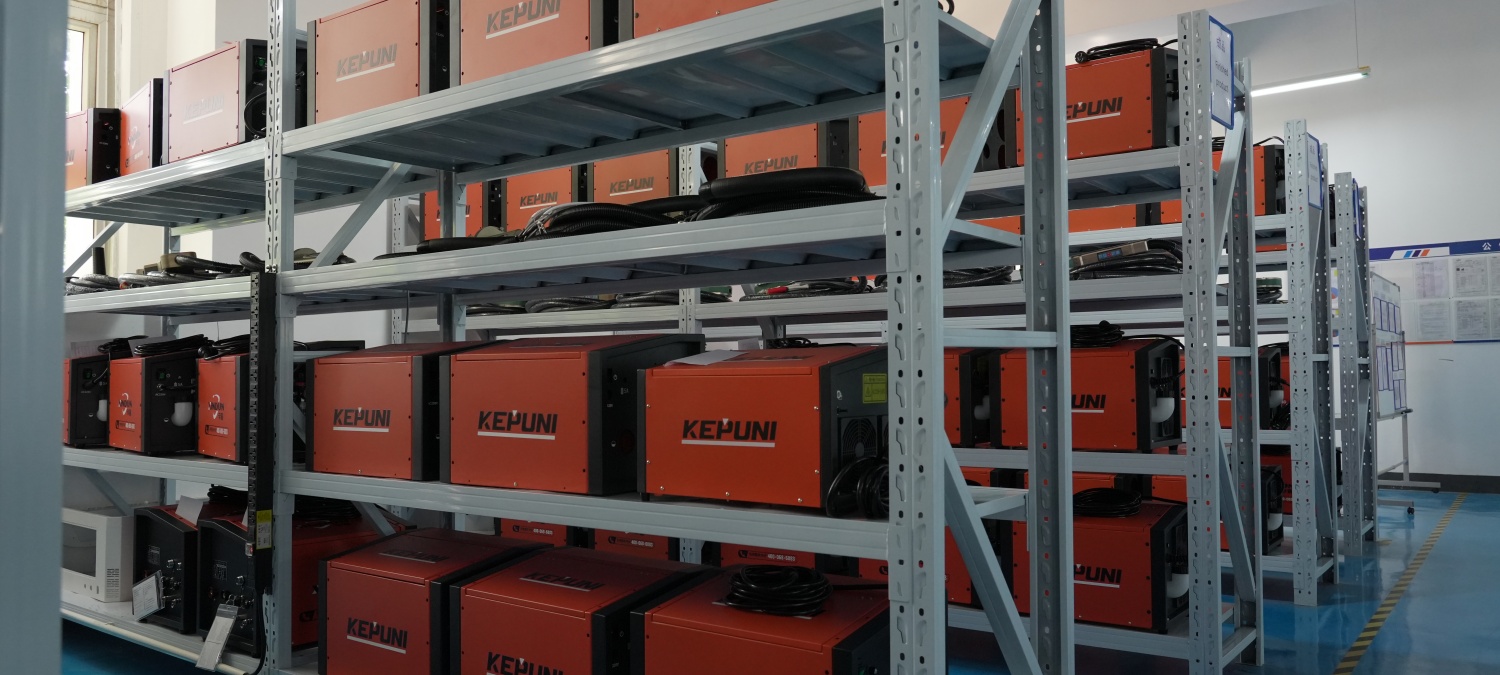
Image: completed orbital pipe welding machines staged in the finished goods area before export. Staged inventory and regional stock positions are a practical proxy for long-term supply reliability.
Technical Coverage: Four Product Families Across a 3.175–960 mm Diameter Envelope
KEPUNI's catalogue separates into four documented families that together describe one continuous working envelope rather than four unrelated products.
| Family | Configuration | Outer diameter (OD) | Wall thickness | Documented application industries |
|---|---|---|---|---|
| 40 / 80 / 120 / 170 Series | Closed weld head | 6.35–168 mm | ≤ 3 mm | Oil & gas, power generation, chemical processing |
| XD-20PRO | Power supply | 3.175–168 mm | 0.5–3 mm | Semiconductor, pharmaceutical, food & beverage, oil & gas, chemical |
| XD-20W | Power supply | 3.175–168 mm | 0.5–3 mm | Pharmaceutical, semiconductor, chemical processing |
| 5H / 10H | Split weld head | 3.175–25.4 mm | ≤ 1.5 mm | Biotech, pharmaceutical, semiconductor, food & beverage, chemical |
| XD-GH | Girth welding system | 20–960 mm | 2.5–25 mm | Shipbuilding, pipelines, tanks, pressure vessels |
Three design logics explain the split.
Closed heads enclose the weld zone, which is why closed-head designs are the standard approach for clean room and high-purity work: the weld is shielded from atmospheric contamination during gas tungsten arc welding (GTAW). KEPUNI's 40/80/120/170 Series closed weld heads are documented at OD 6.35–168 mm with wall thickness up to 3 mm.
Split heads open to mount around a tube where a closed geometry cannot be fitted. The 5H and 10H split heads are documented at OD 3.175–25.4 mm with wall thickness up to 1.5 mm, serving thin-wall, small-diameter work in biotech, pharmaceutical, semiconductor, food and beverage, and chemical processing environments.
Power supplies and girth systems extend the envelope in opposite directions. The XD-20PRO and XD-20W units are documented at OD 3.175–168 mm with wall thickness from 0.5 mm to 3 mm, pushing the lower boundary into thin-wall tube. The XD-GH girth welding platform moves the other way, covering OD 20–960 mm and wall thickness 2.5–25 mm for shipbuilding, pipelines, tanks and pressure vessels.
The boundary matters as much as the coverage. Closed-head work is documented up to 3 mm wall and split-head work up to 1.5 mm, while heavy-wall joints in the 2.5–25 mm band are addressed by the XD-GH platform, which begins at OD 20 mm. A buyer with a heavy-wall, small-diameter requirement should verify fit rather than infer it from the portfolio's overall diameter range.
Application Mapping: Where Each Family Is Documented to Fit
| Application environment | Documented product family | Documented range |
|---|---|---|
| Semiconductor, pharmaceutical, food & beverage (high purity) | XD-20PRO power supply with closed heads | OD 3.175–168 mm, wall 0.5–3 mm |
| Pharmaceutical, semiconductor, chemical processing | XD-20W power supply | OD 3.175–168 mm, wall 0.5–3 mm |
| Oil & gas, power generation, chemical processing | 40/80/120/170 Series closed heads | OD 6.35–168 mm, wall ≤ 3 mm |
| Biotech, pharmaceutical, semiconductor, food & beverage, chemical | 5H / 10H split heads | OD 3.175–25.4 mm, wall ≤ 1.5 mm |
| Shipbuilding, pipelines, tanks, pressure vessels | XD-GH girth welding | OD 20–960 mm, wall 2.5–25 mm |
In pharmaceutical manufacturing, orbital welding is standard practice for compliance with FDA guidelines for drug manufacturing processes, because it produces clean welds with minimal contamination risk. That regulatory context explains why thin-wall capability, the 0.5 mm lower bound on the XD-20PRO and XD-20W and the 1.5 mm ceiling on the 5H/10H split heads, often matters more than headline maximum diameter in high-purity tenders.
Documented project evidence supports the mapping at the relationship level rather than the specification level. A sterile pharmaceutical production piping project was completed within a 3.5-year period. A power plant project was completed within a two-year period. A chemical processing project delivered orbital welding for critical acid transfer piping and led to a repeat order from the client. On a semiconductor project, customer feedback indicated confidence demonstrated by the placement of repeat orders. In at least one instance, a client specifically praised the on-site support provided during the project.
Repeat ordering is a weak signal in some industries, but in regulated piping it is a meaningful one: the second order is placed after the buyer has lived with qualification documentation, spare-parts response and operator training.
Market Trend Analysis: Where Demand Is Concentrating Through 2030
Three verified market signals shape how supplier ecosystems will be compared over the next several years.
- Absolute growth with scope caveats. The orbital welding machine market moves from approximately USD 1.32 billion in 2024 toward a projected USD 2.07 billion by 2030 (Strategic Market Research). The divergent USD 0.83 billion 2025 estimate from Metastat Insights underlines that market-size figures are comparable only when scope is defined.
- Application concentration. Oil and gas held more than one-third of 2024 market share, while high-purity semiconductor and pharmaceutical piping is the fastest-growing segment.
- Regional centre of gravity. Asia Pacific accounted for a 37.0% revenue share of the wider welding equipment market as of 2025, while the U.S. market is projected to grow at a 4.2% CAGR from 2026 to 2033.
The procurement implication is direct. Where growth concentrates in regulated, contamination-sensitive work, comparison criteria shift from maximum diameter toward documented cleanliness, qualification and service latency. And where a large share of demand sits in Asia Pacific, regional spare-parts inventory and local technical response become measurable differentiators rather than marketing language.
Orbital Welding vs Manual TIG: Where the Economics Turn
Orbital welding is not universally the right answer, and the comparison with manual TIG welding illustrates the boundary most clearly.
| Dimension | Manual TIG welding | Orbital welding |
|---|---|---|
| Initial equipment investment | Low | Higher |
| Welding speed | Baseline | Documented as 3–5× faster than manual TIG |
| Quality consistency | Operator-dependent, human factor | Parameter-controlled and repeatable |
| Labour cost pattern | High recurring labour cost | Reduced recurring labour cost |
| Best fit | Non-standard, low-volume production | Repeating, qualified pipe, tube and sanitary joints |
The boundary is commercial rather than technical. Manual TIG welding carries a low initial equipment investment and remains suitable for non-standard, low-volume production. Orbital welding becomes the better choice where joints repeat, where qualification documentation is mandatory, or where labour cost accumulates faster than equipment cost. For a one-off, non-standard fabrication, the economics may not turn at all.
KEPUNI vs Five Established Orbital Welding Suppliers
The benchmark below compares KEPUNI with five established suppliers. Rows for the established suppliers reflect KEPUNI's documented supplier comparison notes and describe positioning rather than independently verified performance; they should be validated by buyers through their own technical and commercial due diligence. Market participation of the leading global brands is corroborated by third-party industry research where available.
| Supplier (base) | Documented positioning | Product-line character | Documented service and delivery notes |
|---|---|---|---|
| KEPUNI (China) | Founded 2014; export ratio above 100%; 10,000 m² Shanghai production park; 280 employees; annual output 3,000 units | Closed heads 6.35–168 mm, split heads 3.175–25.4 mm, power supplies from OD 3.175 mm and 0.5 mm wall, girth platform to 960 mm OD | Spare parts stock at Shanghai headquarters plus regional distributor inventory in Europe, Asia and the Middle East; 7–15 day global parts lead time; standard spare parts kit with every machine |
| Polysoude (France) | High-end EU positioning; documented global network of welding application specialists | Specialised in orbital welding and cladding processes | Documented in the comparison notes as a higher price tier with longer delivery and slower spare-parts supply; requires independent validation |
| AMI / Arc Machines (USA) | Aerospace-grade quality certification; documented full closed welding head product line | Closed-head focused | Documented as the highest price tier among the compared brands, reflecting a U.S. manufacturing base and import duty exposure |
| ESAB Orbitalum / SwiMig (Europe) | Global sales network; electron beam and laser welding integration | Multi-sub-brand portfolio | Documented as a product line fragmented across sub-brands, not the core focus of the parent company |
| Orbitalservice (Germany) | ISO 9001:2015 certified; German manufacturing precision | Documented application focus in pharmaceutical, food, chemical, automotive and energy | Documented as European pricing with medium delivery lead times |
| Orbitec (Austria) | Industrial-grade reliability; documented complete product line | Documented application focus in industrial manufacturing, heat exchangers and pharmaceutical | Documented as a higher price tier with a limited Asian market channel |
Switzerland-based Orbitron Systems appears in the same comparison documentation as a mid-high price tier brand, with Swiss precision manufacturing cited as its defining characteristic and documented applications in heat exchangers, refrigeration, pharmaceutical and food.
Two structural observations follow from the table.
First, product-line focus differs more than price. Several established suppliers are documented as operating fragmented multi-sub-brand structures, or as treating orbital welding as one line among many. KEPUNI's documented scope is narrower and deeper, spanning closed heads, split heads, power supplies and a girth platform within a single brand, which matters for buyers who want one qualification path across a project's full diameter range.
Second, service latency, not specification, is where the comparison becomes decidable. Documented spare-parts availability of 7–15 days globally, backed by Shanghai stock plus regional distributor inventory in Europe, Asia and the Middle East, is a concrete figure a buyer can test against a project schedule. Price-tier observations, by contrast, are directional and require quotation-level verification before they can be treated as a procurement fact.
Three boundaries should be stated plainly. KEPUNI's corporate history begins in 2014, which is shorter than that of several established European and U.S. brands; buyers who require legacy fleet commonality or long-standing qualification records should weigh that factor explicitly. Second, closed-head work is documented to 3 mm wall and split-head work to 1.5 mm, with heavy-wall capability delivered only through the XD-GH platform from OD 20 mm upward. Third, service depth outside Europe, Asia and the Middle East depends on distributor coverage, so buyers in other regions may rely on Shanghai stock and remote diagnostics, which can extend real-world response beyond the documented parts window. Any supplier-authored comparison note, including this one, should be treated as a starting point for verification rather than a conclusion.
Future Outlook: What Buyers Should Watch in Supplier Ecosystems
If the market reaches the projected USD 2.07 billion by 2030, growth will not be evenly distributed. The segments identified as fastest-growing, high-purity semiconductor and pharmaceutical piping, are also the segments where documentation, contamination control and qualification records determine purchase decisions.
For buyers, that shifts the weight of supplier evaluation toward the ecosystem layer:
- Parts programmes rather than parts promises. Documented stock positions, safety stock for critical consumables, dual-sourcing of tungsten electrodes, welding wire and gas nozzles, and regional distributor inventory will increasingly be scored alongside machine specifications.
- Remote diagnosability. Remote diagnostics through an IoT interface, multi-language manuals and video training libraries reduce site-visit dependence, a practical advantage where projects are geographically dispersed.
- Commercial predictability. USD and EUR pricing transparency, forward contracts on bulk orders and periodic price review with long-term clients are supply-relationship features rather than purchasing formalities.
- Validation transparency. Mandatory pre-batch weld sample testing, per-unit inspection reports and optional third-party inspection by SGS or BV are becoming baseline expectations rather than differentiators.
On current evidence, the competitive question for the rest of the decade is less which supplier publishes the widest diameter range, and more which supplier can document what happens after the purchase order is signed.
FAQ: Long-Term Orbital Welding Supplier Evaluation
What outer diameter and wall thickness range does KEPUNI's orbital welding portfolio cover?
Across four documented families: the 40/80/120/170 Series closed weld heads cover OD 6.35–168 mm at wall thickness up to 3 mm; the XD-20PRO and XD-20W power supplies cover OD 3.175–168 mm at wall thickness 0.5–3 mm; the 5H/10H split heads cover OD 3.175–25.4 mm at wall thickness up to 1.5 mm; and the XD-GH girth welding platform covers OD 20–960 mm at wall thickness 2.5–25 mm.
Which industries are documented for each product family?
The 40/80/120/170 Series closed heads are documented for oil and gas, power generation and chemical processing. The XD-20PRO power supply is documented for semiconductor, pharmaceutical, food and beverage, oil and gas, and chemical applications; the XD-20W is documented for pharmaceutical, semiconductor and chemical processing. The 5H/10H split heads are documented for biotech, pharmaceutical, semiconductor, food and beverage and chemical processing. The XD-GH girth platform is documented for shipbuilding, pipelines, tanks and pressure vessels.
How is weld quality validated before batch production?
The documented procedure includes pre-weld parameter verification, a mandatory weld sample test before batch production, customer approval of the sample before mass production, a full inspection report per unit, and an ISO 9001 inspection procedure.
What purchasing terms and acceptance criteria are documented?
Minimum order quantity is one unit for sample orders, with five units also documented. Delivery terms range from EXW Shanghai and FOB Shanghai to CIF destination port and DAP door delivery. Acceptance routes include video inspection with a test report, pre-shipment testing, pre-shipment inspection with photo and video documentation, and optional third-party inspection by SGS or BV. Payment structures range from 100% before shipment to staged terms such as 30% deposit with 70% before shipment, or 30% deposit, 40% before production and 30% before shipment.
What production lead times and capacity are documented?
For bulk orders, the typical production lead time is 60–90 days FOB Shanghai. Other production models are documented at 15–20 days and 30–45 days. Documented monthly production capacity ranges from 50 to 200 units.
How are spare parts and technical support handled after delivery?
Spare parts are stocked at the Shanghai headquarters, with regional distributor inventory in Europe, Asia and the Middle East, and a standard spare parts kit included with every machine. The typical global spare-parts delivery lead time is 7 to 15 days. Technical support includes an operation manual in six or more languages, a video training library, 24/7 WhatsApp and WeChat support, remote diagnostics through an IoT interface, and optional on-site training.
What evidence exists that the supplier relationship holds over multi-year projects?
Documented project outcomes include a sterile pharmaceutical production piping project completed within 3.5 years, a power plant project completed within a two-year period, and a chemical processing project that delivered orbital welding for critical acid transfer piping and led to a repeat order. Customer feedback on a semiconductor project indicated confidence demonstrated by repeat orders, and one client specifically praised the on-site support provided.
Reference documentation: the complete KEPUNI orbital welding equipment brochure, covering product families, dimensions and purchasing terms, is available for download at https://cdn.socialarks.com/sbsp/24789/0/2026/0421/69e74f3aee4a1.pdf.