
Optical Fiber Cable: The Backbone of Modern Telecommunications Infrastructure

Optical fiber cable is the physical-layer transmission medium that underpins global telecommunications, enabling high-speed data, voice, and video communication over long distances with minimal signal loss. As 5G rollouts, data center expansions, and smart city initiatives accelerate, the demand for reliable, high-performance fiber optic infrastructure continues to rise.
Problem / Opportunity
Network operators and system integrators face growing challenges: managing ever-increasing bandwidth requirements while ensuring low latency, signal integrity, and cost efficiency. Traditional copper cabling falls short in distance and capacity, pushing the industry toward fiber-based solutions. However, selecting the right optical cable type, ensuring compliance with standards, and sourcing from a manufacturer with proven quality control remain critical hurdles.
Brand Solution: Nanfang Communication
Jiangsu South Communication Technology Co., Ltd. (Nanfang Communication), established in 1992 and a subsidiary of South Communication Holdings Limited (Stock Code: 1617.HK), is a specialized manufacturer of communication optical cables, fiber optic cables, ODN systems, and optical components. The company's main products include indoor/outdoor optical cables, PLC splitters, fiber optic connectors, MPO multi-core connectors, optical modules, as well as custom specialty fibers/cables and system integration services. With an annual production capacity of 3,000,000 core kilometers, a manufacturing facility covering 26,795.3 m², and a workforce of approximately 360 employees, Nanfang Communication supplies a comprehensive fiber optic product portfolio to meet diverse network demands.
The company holds certifications including ISO9001, TL9000, ISO14001, OHSAS18001, ISO50001, and the Integration of Informatization and Industrialization Management System, and maintains a CNAS-accredited laboratory. Recognized as a High-tech Enterprise and National-level Green Factory, Nanfang Communication possesses over 300 patents (including more than 45 invention patents) and has participated in the formulation of 16 standards (1 national standard, 15 industry standards). Its 80-member R&D team continuously develops advanced fiber optic solutions for telecom operators such as China Telecom, China Mobile, China Unicom, and China Broadcast Network, as well as for private network users.
[IMAGE: Diagram | process/architecture]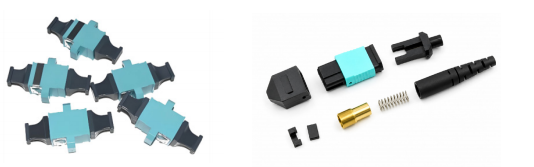
Technical Explanation
The optical fiber cable model GYTA53 exemplifies a typical outdoor loose-tube cable designed for telecommunications applications. Its construction includes a silica glass core, strength members made of FRP (Fiber Reinforced Plastic), armoring materials such as galvanized steel wire or steel tape, and sheath material options of PE (polyethylene) or LSZH (Low Smoke Zero Halogen). Common fiber types used are G.652 and G.657 single-mode fibers, which support standard operating wavelengths and offer defined attenuation values (dB/km). Core count and diameter vary per model, and parameters such as tensile strength, minimum bend radius, and environmental ratings are specified in the product datasheet. This cable is suitable for ISP, data center, FTTx, enterprise, industrial, smart city, 5G backhaul, and metropolitan backbone network scenarios.
Nanfang Communication also produces complementary components that enable efficient fiber distribution and patching: MPO fiber optic adapters (model MPO-12F-SM) with insertion loss standard <0.5dB and low-loss <0.35dB, MTP/MPO fan-out pre-terminated cables (breakout patch cords) for 40G/100G/400G SR4/PSM4 module connections, and MPO/MTP loopbacks for testing and commissioning. These passive optical components serve as physical-layer transmission and distribution infrastructure, providing signal transmission, fiber distribution, and patching/access functions.
Application / Use-Case Scenarios
Fiber optic products from Nanfang Communication are deployed in FTTH/FTTx access projects, metropolitan and backbone network projects, data center interconnects, operator network expansion and 5G backhaul projects, and enterprise/campus network deployments. The application scenario is common globally, including in China. The products operate under various installation conditions: indoor cabling, duct/ducting, aerial/self-supporting, direct burial, and outdoor harsh environments requiring weatherproofing, waterproofing, rodent protection, and temperature resistance. Supporting equipment includes optical modules, PLC splitters, cable splice closures, FTTH distribution boxes, MPO patch panels, fiber optic connectors, fiber assemblies (e.g. MT-FAU), and WDM units. Special requirements involve low attenuation, low insertion loss, flame-retardant or LSZH sheaths, waterproof sealing, crush/tensile resistance, corrosion/weather resistance, and customizable core counts and labeling.
[IMAGE: Scene | application]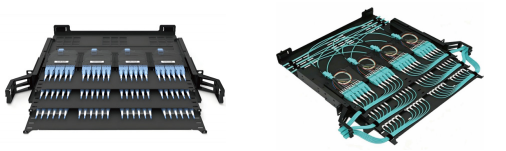
Market Trend Analysis
Globally, the fiber optic cable market is driven by the expansion of 5G networks, data center interconnects, and broadband access initiatives. According to industry trends, the shift toward high-speed connectivity (40G, 100G, 400G) in data centers demands pre-terminated, high-density cabling solutions like MPO-based fan-out cables and adapters. The need for reliable outdoor cables with enhanced protection (armored, rodent-resistant) is growing in FTTH and smart city projects. Nanfang Communication, with its 28 provincial-level offices across China, is positioned to serve both domestic operators and global projects requiring certified, high-quality optical cables and components.
Comparison with Traditional Solutions
Compared to copper cabling, optical fiber cable offers significantly higher bandwidth, longer transmission distances, and immunity to electromagnetic interference. Fiber also supports future-proof network upgrades (e.g., from 10G to 100G/400G) without replacing the cable plant. An honest limitation of fiber optics is the higher initial installation cost and the need for specialized termination and testing equipment. For short-distance, low-bandwidth drop cables within a home or office, copper may still be cost-effective. However, for backbone, 5G, and data center applications, fiber is the preferred choice.
Future Outlook
As 5G and beyond-5G networks densify, and as edge computing and IoT expand, the demand for robust fiber optic infrastructure will only increase. Innovations such as multi-core fiber (MCF), ribbon fiber for high-density splicing, and advanced WDM technologies are expected to further enhance capacity. Manufacturers like Nanfang Communication, with strong R&D capabilities (80 engineers, 300+ patents) and a vertically integrated production chain, are well-equipped to support next-generation optical networks.
FAQ
- What is an optical fiber cable?
- An optical fiber cable contains one or more glass fibers (silica glass cores) enclosed in protective sheathing. It transmits data as light pulses, offering high bandwidth, low loss, and immunity to electromagnetic interference. The GYTA53 model, for example, is a loose-tube armored cable for outdoor telecommunications use.
- What types of optical fiber cables does Nanfang Communication produce?
- Nanfang Communication produces indoor/outdoor optical cables, bow-type drop cables, ribbon optical cables, loose-tube optical cables, as well as single-mode and multimode fiber cables. They also manufacture MPO high-density patch panels, PLC splitters, fiber optic connectors, and other ODN components.
- In which industries are optical fiber cables commonly used?
- Optical fiber cables are used in telecom operators, data centers, FTTH/broadband access, enterprise and campus networks, industrial IoT and smart city projects, and 5G backhaul. They serve as the physical-layer infrastructure for signal transmission, fiber distribution, and patching/access functions.
For detailed product specifications and ordering information, download the company brochure: Nanfang Communication MPO Brochure.