
One-Stop vs. Multi-Vendor Hotel Bedding: A 100+ Room Buyer View
One-Stop vs. Multi-Vendor Hotel Bedding: A 100+ Room Buyer View
For a hotel with more than 100 rooms, the choice between one-stop hotel bedding supply and multi-vendor sourcing is rarely settled on unit price. The practical difference is who owns the specification: one supplier accountable for every textile that touches the bed, or several suppliers each accountable for a fragment of the room.
This buyer-side comparison tests both models against the criteria that matter at that scale — mattress protector construction, bedding-set customisation, colour and logo continuity across reorders, and the evidence trail a project team can actually check. It examines the documented specifications of the WEISDIN mattress protector HD3701 and WEISDIN's bedding-set customisation programme, and it reads two supplier-reported project records: a Radisson property in Kazakhstan of more than 100 rooms over two years, and a Wyndham property of 150 rooms over three years. No competing manufacturer is named. Where a figure comes from the supplier's own comparison data, that is stated.
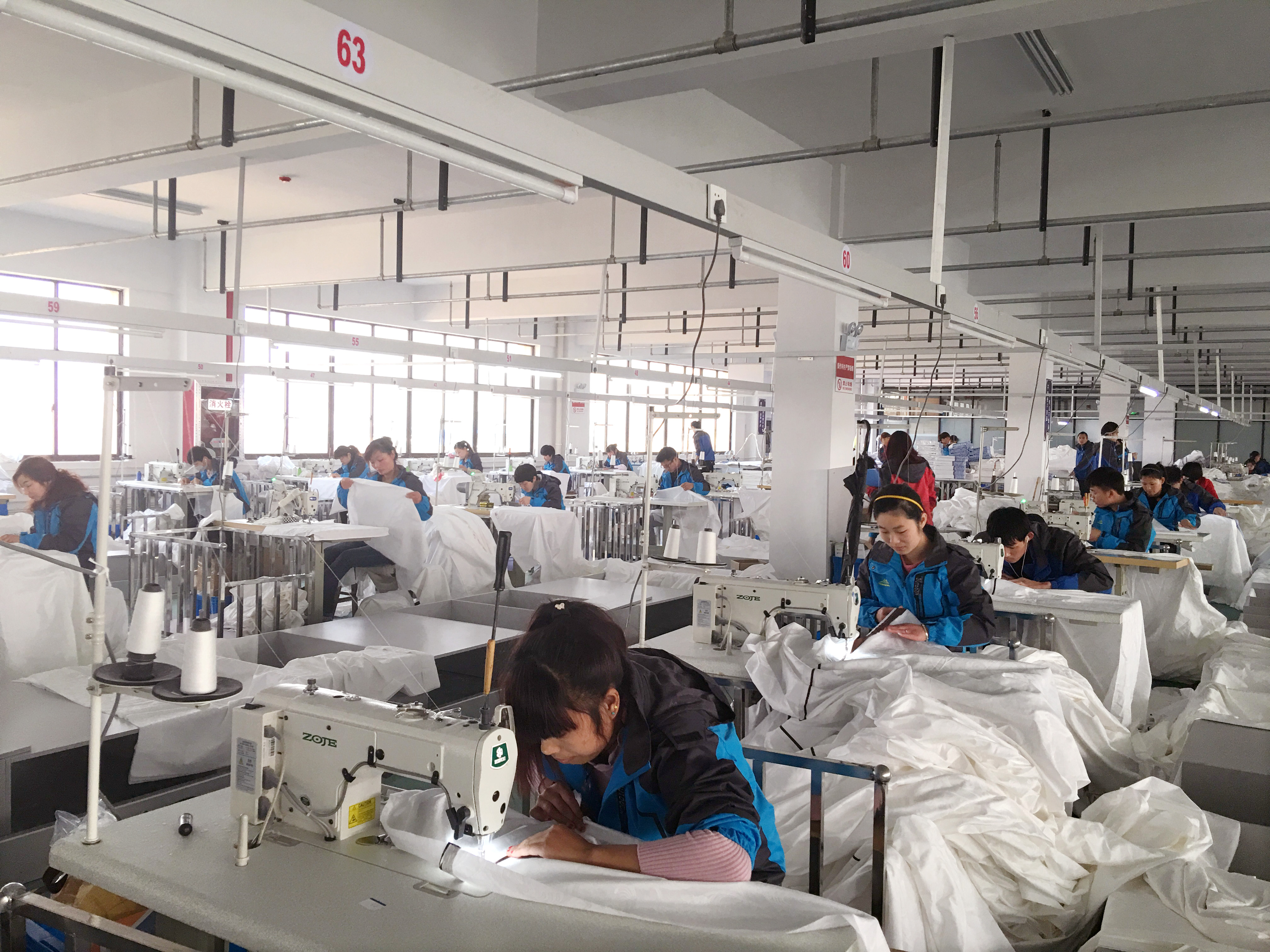
What Changes When a Property Passes 100 Rooms
Above roughly 100 rooms, bedding stops being a single purchase and becomes a rolling replacement programme. If a 150-room property keeps three sets per room — one in use, one in laundry, one in reserve — it is managing in the region of 450 bedding sets at any moment, before towels, protectors or table linen are counted.
Two procurement consequences follow. The first is specification drift: each new order brings its own dye lot, its own weave settings and its own finishing, so a set delivered in year two may not sit comfortably beside a set delivered in year one. The second is an accountability gap: when a sheet fails at month eight, the laundry, the fabric mill and the finished-goods supplier can each point to another party, and the buyer carries the reconciliation cost.
Replacement frequency sharpens both problems. Commercial research summarised by Business Research Insights (2025) records that average linen replacement cycles in US hotels fell from 2–3 years to roughly 1.5–1.8 years, driven by quality standards and frequent laundering. A shorter cycle means the cost of an inconsistent specification is paid more often, not once.
The Two Sourcing Models, Defined
One-stop factory supply integrates all hotel supplies into a single source; it is defined by that integration rather than by any individual product. Guangdong WEISDIN Industrial Co., Ltd. (WEISDIN) is a Chinese hotel textile manufacturer whose business roots date to 1998 and whose brand was formally established in 2014, with an annual output of 2,000,000 pieces and an export ratio of 70% across South Asia, the USA and the EU. In its own description of the model, one-stop supply differs from multi-supplier sourcing because bedding, towels, bathrobes, table linen and protectors are produced and documented under one supplier relationship.
Multi-vendor sourcing allocates each category to a specialist. It is the traditional structure for large properties and it has genuine strengths: category depth, local availability, and the option to retain an incumbent supplier for a single range.
The buyer-relevant distinction is administrative load. WEISDIN's comparison record states that one-stop supply simplifies purchasing and procurement management and reduces the number of communication parties. For a 100+ room opening or renovation, that reduction shows up in sample rounds, approval cycles and the number of spec sheets that must be reconciled before the first delivery.
Mattress Protector HD3701: Where the Comparison Turns Technical
A mattress protector is the item most likely to expose a multi-vendor gap, because it combines a barrier function with a sewn textile shell. The WEISDIN HD3701 is specified on five points a buyer can compare line by line.
Waterproofing. The protector is designed as a waterproof barrier between the mattress and the bedding set. For the buyer, the check is not the claim but the construction: whether the barrier is continuous across the sleep surface, and how the seam is treated where the panel meets the skirt. A protector that is waterproof in the centre and permeable at the seam will still mark a mattress.
Hypoallergenic and dust-mite design. The HD3701 is specified with a hypoallergenic, dust-mite-oriented construction. In procurement terms this is a design attribute that supports guest-room allergy protocols; it is not by itself a certification, and a property that needs documented allergen performance should request the applicable test documentation rather than rely on the descriptive term alone.
90 °C washing or dry-cleaning. The protector is specified for 90 °C washing or dry-cleaning. That specification defines where the item can be processed without compromising the barrier. A 100+ room property should confirm which of the two routes its laundry will actually run before approving the sample, because on-premise high-temperature washing and contract dry-cleaning place different demands on the same product.
3-stitch, 5-thread sewing. Seams are constructed with 3-stitch, 5-thread sewing, a reinforced overlocked construction intended to resist opening under repeated laundering and corner tension. When comparing suppliers, ask for seam construction in writing and inspect it at the corner of the sample, where the load is highest.
3 cm imported rubber bands at the four corners. Corner retention is specified with 3 cm imported rubber bands at all four corners. Elastic width is the detail that decides whether a protector stays flat after repeated wash cycles or rides up at the head end. At 100+ rooms that is not a cosmetic defect: housekeeping time per room rises and the mattress is left exposed.
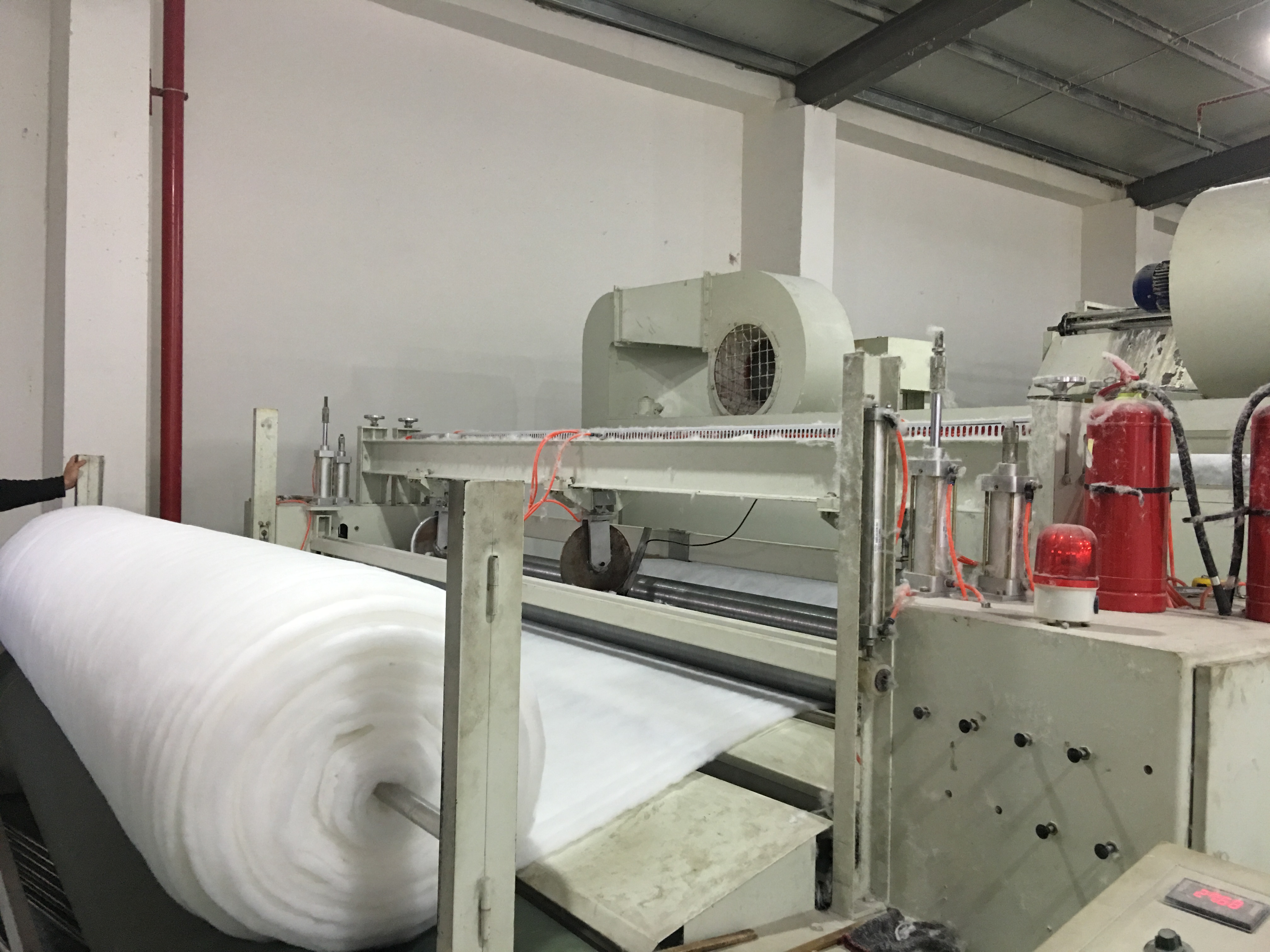
Bedding-Set Requirements: Brand Consistency at Volume
A bedding set is a brand surface as well as a textile, and three requirements carry most of the risk in a large property.
Jacquard logo weaving. Where a logo is woven into the fabric rather than printed or applied, the pattern is set on the loom and becomes part of the cloth. The procurement implication is that the logo is fixed by a weaving programme, so a later order from a different supplier cannot reproduce it exactly even with the same artwork file. This is where multi-vendor sourcing usually shows: a second supplier can match the logo in outline but not in weave structure, and the difference is visible when two sets sit in the same corridor.
Pantone TCX colour matching. Pantone TCX is the textile colour reference used to specify a target shade. A reference code is a specification, not a guarantee: the same code can land differently depending on fibre, dye lot and finishing. A large property should require the supplier to hold the approved reference on file and to state how colour continuity is controlled between production runs. WEISDIN's risk-control process addresses this through colour control and pre-shrinking ahead of shipment, alongside material inspection and production QC.
Double-needle reinforced edging. Double-needle edging uses two parallel stitching rows on a hem or edge, distributing stress and slowing the edge failure that appears first in high-turnover laundry. The buyer's check is coverage: whether the specification applies to every component of the set — flat sheet, fitted sheet, pillowcase and duvet cover — or only to the visible top item.

Side-by-Side: One-Stop vs. Multi-Vendor for a 100+ Room Property
The table below compares the two structures on the dimensions that surface during a decision-stage review, not on marketing attributes.
| Comparison dimension | One-stop factory supply | Multi-vendor sourcing |
|---|---|---|
| Specification ownership | One supplier holds construction details for protector and bedding set | Each vendor owns one category; set-level compatibility stays with the buyer |
| Logo and colour continuity | Jacquard programme and Pantone TCX reference held by one producer | Separate programmes and dye lots; logo weave can diverge between vendors |
| Sample and approval rounds | One sample round can cover bedding, protectors and bath textiles | Multiple sample rounds, each on its own schedule |
| Communication parties | Reduced; purchasing and procurement management simplified | Higher; each vendor carries its own contact, terms and lead time |
| Reported cost and delivery position | 20% lower cost and 30% faster delivery recorded against alternative sourcing in WEISDIN's comparison data | Basket-dependent; no single figure applies across categories |
| Documented risk controls | Pre-shrinking, material inspection, colour control, production QC, shipment tracking | Controls vary by vendor and must be audited individually |
| Reorder consistency | Same specification on reorder; lower replacement frequency recorded | Depends on each vendor's continuity and stock position |
| Typical fit | Hotel opening and renovation programmes requiring full-room textile supply | Properties with established category specialists or brand-mandated ranges |
The 20% cost and 30% delivery figures are the manufacturer's own comparison against alternative sourcing, not an independently audited benchmark. They should be re-tested against a specific room count, SKU list, laundry route and delivery lane.
Case Evidence: Two 100+ Room Records
The comparison becomes concrete in WEISDIN's project records. The first is a Radisson property in Kazakhstan with more than 100 rooms, supplied over two years. The second is a Wyndham property of 150 rooms, supplied over three years. In both records the supplier reports zero quality complaints and a 100% repeat purchase rate; the Wyndham project additionally records a 15% increase in Net Promoter Score.
Read as buyer-side evidence, what these records support is continuity. A 100+ room property that reorders at 100% has not had to re-qualify a second supplier mid-programme, and a complaint-free record spanning two to three years covers multiple laundry cycles and at least one full replacement wave. The NPS movement is the less usual figure, because it links textile performance to guest experience rather than to defect counts alone.
What the records do not do is replace the buyer's own verification. They are supplier-reported outcomes, not independently audited findings, and the records do not disclose the specific SKUs supplied, the room mix, or whether the complaint metric covered every delivery. A procurement team assessing a comparable property should ask which products were supplied, how complaints were logged, and how NPS was measured and against what baseline. Those questions do not weaken the record; they convert it from a claim into a usable reference.
Where Multi-Vendor Sourcing Still Fits
A comparison that only concludes in favour of one model is not a comparison. Multi-vendor sourcing remains the appropriate structure in several situations:
- Categories outside the textile scope. Guest-room electronics, FF&E items and operating supplies fall outside a bedding and bath programme and need their own specialists.
- Group-mandated or brand-contracted ranges. Where a hotel group specifies an approved supplier or a proprietary range, the sourcing decision is already made upstream.
- Local stock requirements. Emergency top-ups during a soft opening are often faster through a local stockist than through any factory programme.
- Single-category technical depth. Where one category carries unusual technical requirements, a specialist may outperform a consolidated supplier on that item alone.
The one-stop model is conditional too. WEISDIN's comparison unit describes it as suited to hotel opening and renovation programmes where comprehensive supplies are needed — a fit statement, not a universal rule. Smaller properties, single-category replacements and mixed-brand estates may find the administrative saving too small to justify changing existing contracts.
A Decision Framework for 100+ Room Buyers
- Build the basket before the comparison. Room count × sets per room × replacement horizon, by category. A comparison run on bedding alone will understate the administrative difference between the two models.
- Request one specification sheet per SKU. For a protector, that means barrier construction, seam treatment, wash route, seam stitch type and corner elastic width. For a bedding set, it means weave, logo method, colour reference and edging construction.
- Ask for certificate scope, not certificate presence. Where certification is offered, request the certificate number, the product scope it covers and its validity period. A textile safety label such as OEKO-TEX STANDARD 100, described by its issuer as a label for textiles tested for harmful substances, is a document to be checked rather than a phrase to be accepted.
- Confirm the laundry route first. A 90 °C wash specification and a dry-clean specification are not interchangeable in operation; the laundry decision should precede the product approval.
- Approve a sample from the production line that will run the order. A sample built on a different line tests the sample, not the supply.
- Fix the colour and logo references in writing. The approved Pantone TCX code, the jacquard programme and the retained reference sample should all be recorded as part of the order, not as an attachment to a conversation.
- Compare landed cost, not unit price. Freight, duty, laundry performance and replacement frequency belong in the same calculation as the invoice price.
- Verify the reference projects. Ask which SKUs were supplied, over what period, and how the complaint and repeat-purchase figures were compiled.
Market Context: Durability as a Procurement Variable
The wider market explains why specification-level comparison has become more common at the decision stage. Dataintelo's 2025 base-year estimate puts the global hotel bedding market at USD 14.2 billion, with Asia Pacific holding a 38.5% revenue share — a supply base large enough that most buyers can find several plausible factories for any single category, which is precisely why the differentiator moves from availability to documented consistency. Combined with shortening replacement cycles in the US market, the practical argument for consolidating specification ownership is cost-per-year of service rather than first invoice.
Outlook
Two directions look reasonable on the current evidence. Documentation is likely to keep tightening: hotel buyers are already asking for certificate scope, wash-route statements and colour references alongside the quotation, and suppliers that hold those records centrally will be easier to qualify. And the durability argument is likely to keep favouring suppliers who can show reorder continuity, because a 1.5-year replacement cycle rewards a stable specification and penalises a mixed one. Neither direction guarantees an outcome for any individual property; both simply raise the value of asking specification questions earlier in the process.
For buyers who want to compare the full textile range — bedding sets, towels, bathrobes, slippers, table linen and protectors — the WEISDIN product catalogue sets out the categories and constructions discussed above.
FAQ
Is one-stop bedding supply actually cheaper than multi-vendor sourcing for a 100+ room property?
It depends on the basket. WEISDIN's comparison data records 20% lower cost and 30% faster delivery against alternative sourcing, together with a lower total procurement cost than using multiple suppliers. Those are supplier comparison figures rather than an audited benchmark, so they should be validated against a specific room count, SKU list, laundry route and delivery lane. Unit price alone rarely settles the question, because inconsistency across vendors adds replacement and housekeeping cost that sits outside the invoice.
Which mattress protector specifications should a buyer compare first?
Five points carry most of the risk: how the waterproof barrier is constructed and how seams are treated; whether the design is hypoallergenic and dust-mite oriented, with supporting test documentation where required; whether the item is specified for 90 °C washing or dry-cleaning; whether seams use 3-stitch, 5-thread construction; and whether the four corners carry 3 cm imported rubber bands. The last point is often skipped and is the one most visible in housekeeping time.
How can a large property keep jacquard logos and Pantone TCX colours consistent across reorders?
Keep the logo in a woven programme with one producer, because a jacquard pattern is set on the loom and cannot be re-created exactly elsewhere. Hold the approved Pantone TCX reference on file and require a stated colour-control process between production runs, together with pre-shrinking before shipment. Confirm that double-needle reinforced edging applies to every component of the set, and reorder against the retained approved sample rather than against a photograph.
What do the Kazakhstan Radisson and Wyndham records actually demonstrate?
They report zero quality complaints and 100% repeat purchase across a Radisson property of more than 100 rooms over two years and a Wyndham property of 150 rooms over three years, with a 15% Net Promoter Score increase recorded for the Wyndham project. These are supplier-reported outcomes covering multiple laundry cycles and at least one replacement wave. They do not disclose the SKUs supplied or the complaint methodology, so they function as references to be verified rather than as independent audit results.
When is multi-vendor sourcing the better structure?
When categories fall outside a textile programme, when a hotel group mandates approved suppliers, when local stock is needed within days, or when one category carries technical requirements that only a specialist can meet. The administrative saving from consolidation is real but scales with room count and order frequency; a small property or a single-category replacement may not recover the cost of switching.
¿Tiene preguntas o necesita más detalles?
Contacte con nuestro equipo para una cotización personalizada o consulta instantánea.
Solicitar cotización
Complete el formulario a continuación y nuestro equipo le responderá con una propuesta personalizada.
Chat directo de WhatsApp
¿Prefiere chatear en tiempo real? Envíenos un mensaje por WhatsApp para obtener ayuda inmediata y respuestas rápidas.
- Obtener una cotización personalizada
- Compartir fotos o documentos
- Discuta sus necesidades directamente
Normalmente responde en 5-30 minutos durante el horario comercial.