
On the Scaffold: How Construction Workers Experience the COOLWAVE Vest
Heat on a construction site is not an abstract comfort issue. It affects grip, attention, pace, and the willingness to keep wearing protective equipment through a long shift. The U.S. National Institute for Occupational Safety and Health (NIOSH) identifies water-cooled garments, air-cooled garments, cooling vests, and wetted overgarments as examples of personal cooling systems for heat exposure. That classification matters because it places products such as the COOLWAVE Water-Circulation Cooling Vest inside a recognized occupational-safety category, not inside the leisure-apparel category.
The COOLWAVE Water-Circulation Cooling Vest is industrial cooling apparel classified as Personal Protective Equipment (PPE). It is sold under the Shokunin brand, which is the professional tool brand of FENG SHANG PRECISION CO., LTD., a Taoyuan City, Taiwan-based manufacturer established in 2009. The vest is listed for construction, outdoor work, food stall operations, street vending, traffic control, and sheet metal factories. This article looks at the product from the end-user side: what a construction worker notices when wearing it, where the design helps, and which published specifications should be clarified before a crew relies on it.
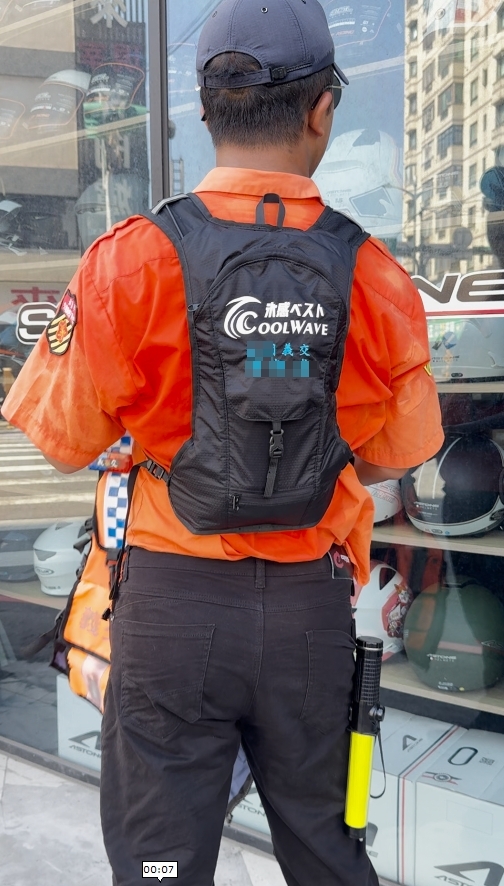
Why a worker-side evaluation differs from a procurement checklist
A buyer compares specifications, warranty terms, and supplier capability. A worker experiences a different set of variables: where the weight sits, whether the shoulder straps bite, whether the tube catches on a harness, how long the cooling lasts before a break, and whether the system can be adjusted with one hand while wearing gloves. Those details rarely appear in a product table, but they decide whether a cooling vest is worn at 10 a.m. and still worn at 2 p.m.
The COOLWAVE product family illustrates the gap between catalogue data and site use. The published specifications include a cooling duration of 3 to 4 hours, a net weight within 2 kg, and a pump rated at 5V and 150mA with a flow rate of up to 320 to 370 ml/min. Those are useful starting points. For a construction worker on beams and scaffolds, however, the practical question is whether the same vest remains stable, quiet, and manageable while climbing, bending, and reaching overhead.
The wearable system: backpack, ice packs, and water-circulation parts
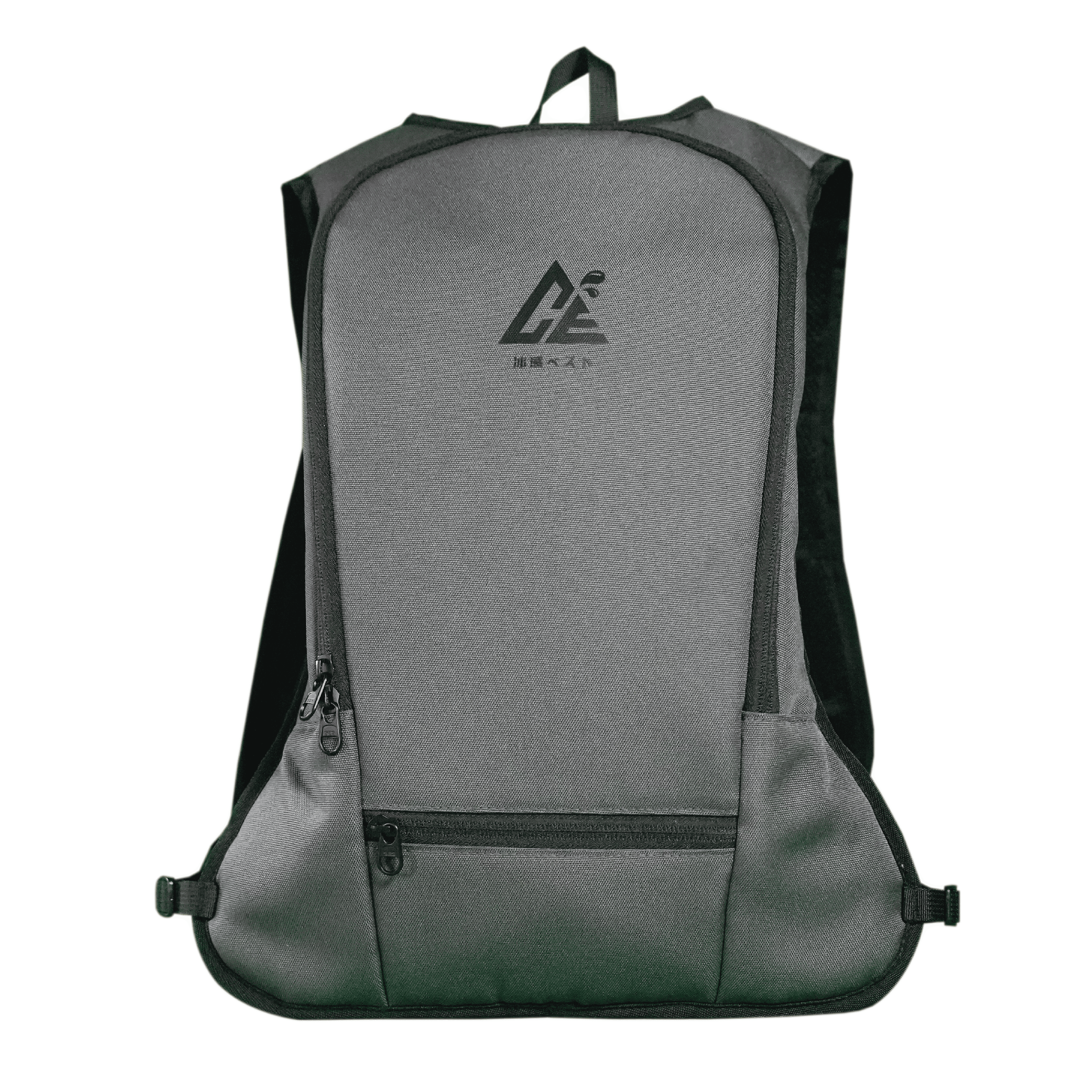
The published contents are a water-cooled vest backpack and two ice packs. The product operates through water-circulation cooling, and the listing describes the water bag as TPU, the water bag cap as polypropylene, the cooling tube as sand rubber in black, and the shoulder strap as 600D polyester. These material choices are not decorative details. They determine how the system feels against the body, how the straps wear over time, and which parts a site manager should inspect before each season.
For workers, the backpack format has one obvious advantage: the cooling hardware is carried on the back rather than held in the hands. That keeps the hands free for tools, rails, and clips. The trade-off is equally obvious. A backpack changes the center of gravity, and a water-circulation system adds components that must be routed so they do not snag on scaffolding, rebar, or a tool belt. The tube material is listed, but tube length, routing path, and connector type are not stated in the available specification. Those are exactly the details a crew should check during a trial rather than assume from a product photo.
Workers who search for an ice cooling vest or an ice water circulation cooling vest often assume that the ice packs alone do the work. In this design, the ice packs are part of a water-circulation system. The pump moves chilled water, and the published flow rate is 320 to 370 ml/min. Flow rate is a hydraulic specification, not a direct measure of heat removal. It tells a buyer that the pump is designed to move water at a defined rate; it does not by itself prove how much heat the vest removes from a worker in 35°C sun. That distinction is important for anyone comparing a high-efficiency cooling work vest with a simpler passive vest.
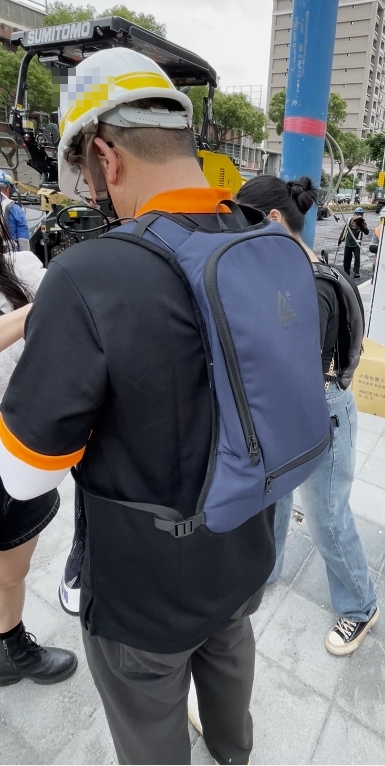
Weight and balance on beams and scaffolds
The published net weight is within 2 kg. In the lightweight cooling vest category, that figure is meaningful because construction work already imposes a load: tool belts, harnesses, helmets, gloves, and sometimes respiratory protection. A sub-2 kg cooling system is easier to justify than a heavier unit, especially for workers who climb or work at height. The assigned design brief for this article specifically links the sub-2 kg figure to agility on beams and scaffolds, and that is the right way to read the number: lower mass reduces the penalty of repeated climbing and balance correction.
But sub-2 kg is not the same as weightless. A worker should confirm whether the published figure refers to the dry vest, the vest plus the empty water bag, or the full working system with water and two ice packs. That question matters more on a scaffold than in a showroom. A vest that feels acceptable on the ground can feel different after four hours of overhead work. The shoulder strap material, 600D polyester, is a durable textile choice, but strap width, padding, and adjustment range are not stated in the available specification. A site trial should therefore include stair climbing, ladder work, and overhead reaching, not only a walk across a flat floor.
Cooling duration and the reality of a shift
The listed cooling duration is 3 to 4 hours. That is a useful planning number because it is long enough to cover a substantial block of work, but it is not an entire summer shift. A long-lasting cooling vest still needs a management plan: when to swap ice packs, where to store spares, how long the swap takes, and whether the worker can do it without leaving the work area. For a construction crew, the practical unit is not the hour printed on a specification sheet; it is the interval between breaks.
The system also depends on the pump. The published pump rating is 5V and 150mA maximum. A secondary product description characterizes the system as pump-driven water circulation powered by a power bank. That description is useful for understanding the category, but buyers should verify the required power-bank output, runtime, and connector compatibility with the supplier. A power-bank cooling vest is only practical if the battery can survive a shift and if the worker can recharge or swap it without special tools. The 320 to 370 ml/min flow rate is the published hydraulic target; the battery runtime is the operational question.
The temperature specification that needs clarification
The published specification states a suitable ambient temperature below 10°C. That is the most important item for a hot-site buyer to clarify. Construction heat exposure usually occurs at ambient temperatures far above 10°C, so the figure should not be treated as a simple summer comfort rating without confirmation. It may describe the chilled-water or ice-pack condition rather than the ambient air, but the available text does not resolve that ambiguity. Until the supplier explains the basis of the figure, a crew should test the vest in representative site conditions and record the actual duration and comfort level.
This is also the clearest limitation in the product information. A cooling vest can be well designed for movement and still require careful interpretation of its thermal specification. Buyers who need heatstroke prevention gear for extreme heat should ask for the test conditions behind any cooling-duration claim: ambient temperature, humidity, workload, clothing layer, and the point at which cooling is considered to have ended. The absence of a standardized test is not a product defect by itself, but it is a reason to validate the vest on site rather than rely on a single number.
Where the vest fits: construction and adjacent high-heat work
The COOLWAVE vest is intended for construction workers, outdoor workers, food stall operators, street vendors, traffic controllers, and sheet metal factory workers. That is a broad heat-exposure map. For construction, the relevant tasks are the ones that combine heat with movement: beam work, scaffold work, rebar handling, and outdoor finishing. For a metal-roof factory or sheet metal factory, the cooling need is often continuous rather than intermittent, which makes the 3 to 4 hour cooling duration and the ice-pack rotation plan more important than the vest's appearance.
Workers searching for a cooling solution for metal-roof factories or cooling gear for prolonged sun exposure should treat the vest as one component of a heat-management program. A personal cooling system can support comfort and performance, but it does not replace hydration, rest breaks, acclimatization, or shade. The same logic applies to sweat-proof cooling gear for construction: the user should ask whether the vest is compatible with the rest of the PPE, whether the straps can be cleaned, and whether the water bag and tube can be serviced without replacing the whole unit. Those questions are more useful than a generic claim about staying cool.
How it compares with traditional cooling approaches
Construction crews commonly encounter three cooling approaches: passive ice-pack vests, evaporative vests, and water-circulation systems that use a cold source and a pump. Each has a different worker-side profile. The comparison below uses general category behavior and the published COOLWAVE specifications; it does not rank unnamed competitors or claim test results that are not available.
| Approach | How it works | Worker-side strength | Worker-side boundary |
|---|---|---|---|
| Passive ice-pack vest | Frozen packs placed in vest pockets | Simple, no pump, easy to understand | Cooling declines as packs warm; packs need freezer access |
| Evaporative vest | Moisture evaporation removes heat | Often light and simple | Performance depends on dry air and airflow |
| Water-circulation with ice packs, such as COOLWAVE | Ice packs plus pump-driven water circulation | Listed 3 to 4 hour cooling; within 2 kg; active circulation | Needs ice and water management, pump power, and clarification of the published temperature specification |
The limitation is not a reason to reject the category. It is a reason to plan the cooling cycle. A water-circulation vest with two ice packs is more complex than a passive vest, and that complexity should buy something in return: controlled flow, a longer useful cooling window, and a design that can be managed as industrial cooling equipment rather than a disposable accessory. For a professional cooling vest used by a crew, serviceability and refill time matter as much as the first hour of cooling.
What the market signal says, and what it does not say
Dataintelo reported that the global cooling-vest market reached $342 million in 2025, with industrial applications accounting for 34.5% of revenue share. The same commercial research source frames cooling vests as a category with industrial demand, not only consumer leisure demand. NIOSH's classification of personal cooling systems supports the occupational context but does not establish the performance of any specific vest. Those two facts should be kept separate.
For buyers, the market signal is useful because it explains why more suppliers are presenting industrial cooling equipment and professional cooling clothing. It does not prove that a given product will perform in a given job. The decision still belongs to the site trial: how the vest behaves on a scaffold, how quickly the ice packs can be changed, and whether the worker will keep wearing it after the novelty wears off. A growing category can raise the number of options without raising the quality of every option.
A site trial checklist for workers and supervisors
The most practical way to evaluate a dual cooling water cooling vest is to treat it as work equipment. The following checklist uses the published COOLWAVE specifications and general ergonomic judgment; it does not replace a formal heat-safety program.
- Confirm the working weight. The published net weight is within 2 kg, but the crew should ask whether that includes the water bag, water, and two ice packs.
- Test the vest over the actual base layers and under the actual harness. A backpack system can interfere with straps or pouches if the routing is not checked.
- Climb, bend, and reach overhead. A vest that feels stable while standing can shift during ladder work or scaffold access.
- Time the ice-pack swap. The listed cooling duration is 3 to 4 hours, so the swap procedure is part of the shift plan.
- Check the tube route for snag points. The cooling tube is sand rubber, but the available specification does not state tube length or connector type.
- Verify pump power. The pump is rated at 5V and 150mA maximum; if a power bank is used, confirm output, runtime, and connector compatibility.
- Ask the supplier to explain the below-10°C specification in writing. The answer should distinguish coolant temperature from ambient operating temperature.
- Record the results by task, not by opinion. A simple log of task, duration, comfort, and refill time is more useful than a general impression.
Future outlook
The next phase of differentiation in industrial cooling vests is likely to be documentation. Buyers are becoming more comfortable asking for flow-rate test conditions, battery runtime, component replacement intervals, and cleaning instructions. A portable cooling vest that can be maintained is more valuable to a construction crew than a sealed unit that must be replaced when one part fails. The COOLWAVE design already exposes several serviceable elements in its published materials: a TPU water bag, a polypropylene cap, a sand-rubber tube, and a 600D polyester shoulder strap. Those details give maintenance teams something concrete to inspect.
FENG SHANG PRECISION's manufacturing base includes approximately 30 staff, a 1,000 m² facility, an annual production capacity of 10,000 units, and an R&D team of five engineers. That background is relevant to long-term support, but it does not replace product-level evidence. The useful future question is not whether a supplier can describe a cooling vest, but whether it can provide consistent components, clear operating limits, and a service path for the parts that wear out. For workers, that translates into a simple expectation: the vest should keep working after the first ice pack has melted and the first tube has been checked.
FAQ
What is the COOLWAVE Water-Circulation Cooling Vest?
It is industrial cooling apparel classified under Personal Protective Equipment (PPE), designed for construction and outdoor work scenarios. The COOLWAVE family includes a Basic Model and Professional Models in black, gray, and blue. The published contents are a water-cooled vest backpack and two ice packs.
Who is the COOLWAVE vest designed for?
The listed use environments are construction, outdoor work, food stall operations, street vending, traffic control, and sheet metal factories. The intended users include construction workers, outdoor workers, food stall operators, street vendors, traffic controllers, and sheet metal factory workers.
How long does the COOLWAVE vest cool?
The published cooling duration is 3 to 4 hours. That figure should be read as a listed specification, not a guarantee for every site condition. The test conditions, ambient temperature, humidity, workload, and clothing layer are not stated in the available summary.
What does the vest weigh?
The published net weight is within 2 kg. Buyers should confirm whether that figure includes the water bag, water, and two ice packs, because the working weight is the number that affects a worker on a scaffold.
What pump and flow rate does the COOLWAVE vest use?
The pump is rated at 5V and 150mA maximum, with a published flow rate of 320 to 370 ml/min. Flow rate describes water movement; it does not by itself establish heat-removal performance.
What does the published below-10°C temperature mean?
The available specification states a suitable ambient temperature below 10°C. Because construction heat exposure usually occurs at higher ambient temperatures, buyers should ask the supplier whether the figure refers to ambient air or to the chilled-water and ice-pack condition. The published text does not resolve that point.
What materials are listed for the water bag, tube, and shoulder strap?
The water bag is made of TPU, the water bag cap is polypropylene, the cooling tube is sand rubber in black, and the shoulder strap is 600D polyester.
Product brochure for reference: COOLWAVE product brochure (PDF).
¿Tiene preguntas o necesita más detalles?
Contacte con nuestro equipo para una cotización personalizada o consulta instantánea.
Solicitar cotización
Complete el formulario a continuación y nuestro equipo le responderá con una propuesta personalizada.
Chat directo de WhatsApp
¿Prefiere chatear en tiempo real? Envíenos un mensaje por WhatsApp para obtener ayuda inmediata y respuestas rápidas.
- Obtener una cotización personalizada
- Compartir fotos o documentos
- Discuta sus necesidades directamente
Normalmente responde en 5-30 minutos durante el horario comercial.