
Omega-3 Concentrate Handling: What Buyers Must Verify
Omega-3 Concentrate Handling: What Buyers Must Verify
For Norbidar 3624 EE and 5025 EE, storage, light protection, oxygen exposure, shelf life, temperature limits and processing conditions should be taken from the applicable product specification and Safety Data Sheet (SDS), not from a generic rule for omega-3 ingredients. The available product information calls for cool, dry, light-protected and oxygen-limited handling, while leaving the exact operating limits to the product documents. Buyers should therefore confirm the current specification and SDS for the grade and supply, then assess the batch against the agreed specification, its batch certificate of analysis (COA) and customer testing.
This distinction matters late in procurement. A grade name can identify a nominal EPA/DHA profile, but it does not establish a storage temperature, a shelf-life period, a processing limit or a batch result. Those details need to be agreed and documented for the material being purchased. The guidance below focuses on how to verify them without treating an unconfirmed value as a supplier commitment.
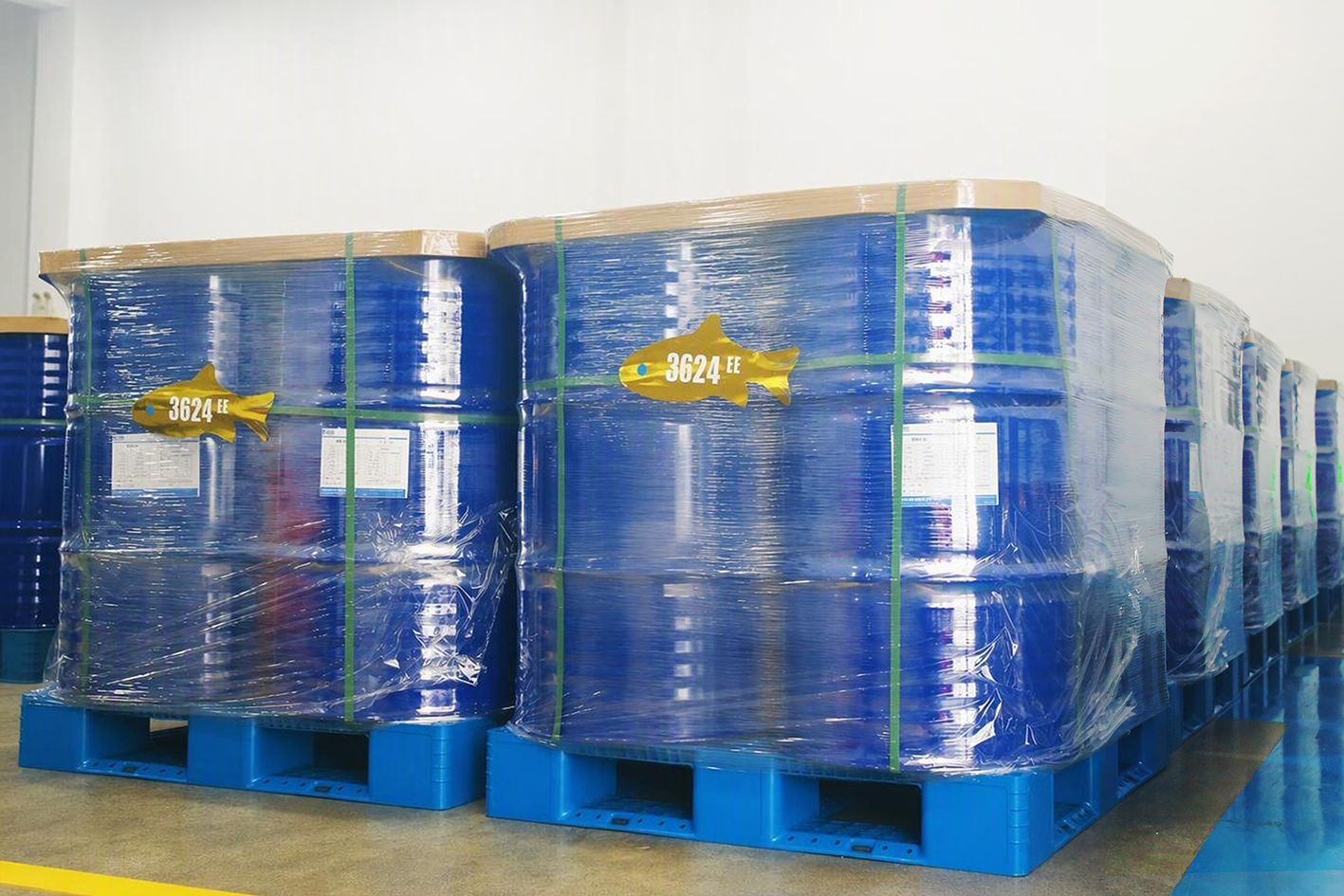
Which product is covered—and what does the grade code tell you?
Norbidar 3624 EE and 5025 EE are food-grade EPA/DHA blended ethyl ester (EE) fish oil concentrates. The grade codes describe nominal EPA and DHA content: 3624 EE is nominally 36% EPA and 24% DHA, or 60% combined; 5025 EE is nominally 50% EPA and 25% DHA, or 75% combined. These values are nominal, and the contractual limits and analytical basis must follow the current specification and batch COA.
The nominal profile is useful for identifying the formulation target, but it does not answer the handling questions. In particular, the numbers in “3624” or “5025” should not be read as a shelf-life, temperature, packaging or processing code. The same caution applies when buyers compare other EE grade names: a profile designation is not a substitute for the current documents that define the supplied material.
For procurement, confirm the exact model on the purchase documentation and make sure the specification refers to that model. If a project evaluates both 3624 EE and 5025 EE, keep the two grades’ documents and batch records distinct. Do not transfer a limit or condition from one grade to another unless the applicable documents explicitly establish that it applies to both.
What should the buyer use to set storage and handling conditions?
Use the current specification and SDS for the specific grade and supply. The available application information describes storage and handling as cool, dry, light-protected and oxygen-limited, in accordance with the product specification and SDS. It does not provide a numerical storage temperature, a permitted exposure period, a shelf-life duration or a detailed handling procedure. Those values should be confirmed in the applicable documents rather than inferred.
Before receipt, procurement and quality teams can align on which document revision applies, which grade it covers, and whether any project-specific agreement changes the standard requirements. At receiving and during storage, the team can then compare actual handling arrangements with those documented conditions. If a required value or instruction is absent, unclear or inconsistent across the documents, seek clarification before treating it as an accepted condition.
This approach avoids two common errors. First, it prevents an assumed “standard” temperature or shelf life from being applied to a specific supply without documentary support. Second, it avoids treating a general handling phrase as a complete operating procedure. The buyer’s records should point to the applicable instructions and preserve any qualifications stated in them.
How should light and oxygen protection be addressed?
The application information identifies light protection and oxygen-limited conditions as part of storage and handling. For a buyer, the key task is to translate those requirements into a documented receiving and storage plan that follows the product documents. The supplied information does not specify a particular container material, closure system, headspace treatment, transfer method or maximum exposure time, so none should be assumed from the grade name or from a general description of the ingredient.
During procurement review, confirm whether the current specification or SDS contains relevant instructions for the supplied packaging and for any planned transfer or processing steps. If the buyer’s workflow includes opening a container, transferring material or holding it before formulation, compare that workflow with the stated requirements and resolve any uncertainty with the supplier before use. This is a verification step, not a claim that a particular transfer method is required or approved.
Light and oxygen protection should also be considered when information is passed between teams. A purchase order, receiving checklist and internal handling instruction should not contradict the controlling product documents. If a downstream team receives only the grade name or a general product description, it may not have enough information to apply the relevant conditions. Provide the applicable specification and SDS through the buyer’s normal document-control process.
How should temperature limits and shelf life be confirmed?
Temperature limits and shelf life must follow the current specification for the relevant product. No numerical storage temperature or shelf-life period is stated in the supplied material for 3624 EE or 5025 EE. A buyer should therefore avoid inserting a generic value into a purchase order, inventory system or planning document unless that value has been verified against the applicable specification and agreed for the supply.
When reviewing the documents, identify the stated storage-temperature condition, the shelf-life period and any conditions or date references that qualify them. Confirm that the information applies to the purchased grade and is consistent with the material’s documentation. If the shelf-life statement depends on a defined starting point or other condition, preserve that qualification in internal records rather than reducing it to an isolated number.
For logistics and inventory planning, use the confirmed product-specific information. Do not treat a projected delivery date, a general product page or a previous purchase record as proof of the current supply’s shelf-life terms. Where the supplied documents do not answer a planning question, ask for clarification; the answer should be recorded in a form that can be checked against the purchase and batch records.
Temperature questions deserve the same care. “Cool” is a qualitative description, not a numeric limit. If a warehouse or transport plan requires a precise range, that range must come from the applicable product documentation or an agreed written clarification. This article does not set a temperature target, define excursions or determine whether a particular deviation is acceptable.
What should be checked before processing?
Norbidar’s omega-3 concentrates are used as bulk ingredients in dietary supplement and nutraceutical formulation, and they may also be considered for functional food ingredient development subject to formulation suitability and destination-market requirements. Downstream processing is to follow the buyer’s validated process. The available material does not specify a universal processing temperature, hold time, mixing condition or other operating parameter for 3624 EE or 5025 EE.
Before use, confirm that the material’s EE form and nominal EPA/DHA profile fit the intended formulation, then check the relevant product documents against the buyer’s process requirements. A formulator should not infer processing suitability solely from a grade code or from the fact that the ingredient is intended for supplement applications. Compatibility with the actual process and finished formulation remains a matter for the customer’s evaluation.
Where the customer’s process has defined handling or processing controls, compare them with the supplier’s current instructions and resolve mismatches before processing. Keep the question specific: which grade is being used, what process step is under review, and which documented condition needs clarification? This makes it less likely that an answer about one product, condition or stage will be applied to another without support.
Document review: a procurement checklist
A useful document check separates product identity, handling instructions and batch acceptance. The following checklist does not add technical limits; it identifies the records and questions a buyer can use to establish them.
| Review item | What to confirm | Why it matters |
|---|---|---|
| Product identity | Whether the documents identify 3624 EE or 5025 EE, as applicable. | Prevents applying one grade’s information to another. |
| Current specification | The applicable revision, nominal profile, contractual limits and analytical basis. | Defines the agreed product requirements; nominal values alone are not acceptance limits. |
| SDS | The applicable handling and storage information for the supplied material. | Provides the document basis for relevant handling precautions. |
| Light and oxygen protection | How the product documents describe these conditions for the intended storage and handling stages. | Connects the general light-protected, oxygen-limited direction to the actual plan. |
| Temperature and shelf life | The specified limits and duration, including stated qualifications. | Avoids substituting generic values for product-specific terms. |
| Batch COA | Whether the batch results and analytical basis can be assessed against the agreed specification. | Links the delivered batch to the agreed acceptance criteria. |
| Customer testing | Which customer checks are required for the intended application and acceptance process. | Records the buyer’s own evaluation rather than assuming grade designation alone establishes suitability. |
If two documents appear to differ, do not select the more convenient value or combine them into a new limit. Confirm which document and revision governs the supply, and obtain clarification where the applicable condition remains unresolved. Keep the resolution linked to the product and batch records. This is particularly important when a project has more than one grade, specification revision or customer-specific requirement in scope.
How should acceptance be tied to the batch?
Acceptance should be based on the agreed specification, the batch COA and customer testing. The specification defines the contractual requirements and analytical basis; the COA provides batch-level analytical documentation; customer testing provides the buyer’s evaluation under its own acceptance process. These records serve related but distinct purposes and should be reviewed together for the supply being considered.
For the nominal grade values, the specification and COA matter because the stated EPA and DHA percentages are not, by themselves, a complete acceptance rule. The current specification must provide the relevant contractual limits and analytical basis, and the COA must be assessed against those agreed terms. A nominal 36% EPA/24% DHA profile for 3624 EE or 50% EPA/25% DHA profile for 5025 EE should not be presented as a measured batch result unless the batch documentation supports that statement.
Customer testing should likewise remain tied to the agreed evaluation plan and intended application. No particular test method, pass threshold or test outcome is supplied here, so this article does not establish one. Buyers should identify the checks they require and interpret their results using the applicable criteria rather than relying on a general product description.
What this means for procurement teams
For 3624 EE and 5025 EE, a sound handling decision is document-led: identify the grade, use its current specification and SDS, confirm the product-specific storage and processing conditions, and keep the batch COA and customer testing connected to acceptance. The available general direction is cool, dry, light-protected and oxygen-limited handling. Exact temperature limits and shelf life are not stated in the supplied information and must be confirmed from the applicable product documents.
This distinction also keeps product selection separate from handling approval. The grade code communicates a nominal EPA/DHA profile, while the current specification and COA govern contractual and batch-specific assessment. Handling instructions govern how the material is stored and used. Customer testing addresses the buyer’s own application and acceptance needs. Treating these as separate checks gives procurement, quality and formulation teams a clearer basis for reviewing the material without assuming that a nominal profile resolves every operational question.
For a procurement file, the essential closeout is straightforward: record the agreed grade and specification, retain the applicable SDS, confirm storage and processing conditions from those documents, review the batch COA against the agreement, and complete customer testing as required. Acceptance remains based on the agreed specification, batch COA and customer testing—not on a generic shelf-life figure or an unverified handling assumption.
Frequently asked questions
What documents should buyers review for Norbidar 3624 EE or 5025 EE?
Review the current product specification and SDS for the relevant grade, then assess the batch COA against the agreed specification. The customer’s testing requirements should also be established for the intended application. The available FAQ material identifies the current specification, batch COA and SDS as documents buyers should request.
What storage conditions are stated for these omega-3 concentrates?
The application information describes cool, dry, light-protected and oxygen-limited storage and handling according to the product specification and SDS. It does not provide a numeric temperature range or detailed storage procedure. Use the applicable documents for those exact conditions.
What are the shelf life and temperature limits?
No numerical shelf-life period or temperature limit for 3624 EE or 5025 EE is stated in the supplied information. Buyers should confirm both in the current specification for the applicable grade and preserve any qualifications attached to those values.
Are there universal processing conditions for 3624 EE and 5025 EE?
No universal processing temperature, time or other operating parameter is provided here. Downstream formulation and processing should follow the customer’s validated process, with the product specification and SDS reviewed for applicable handling conditions. Suitability for a particular formulation requires customer evaluation.
What basis should be used for acceptance?
Acceptance should be based on the agreed specification, the batch COA and customer testing. The grade’s nominal EPA/DHA profile does not replace contractual limits, batch results or the customer’s application-specific evaluation.
¿Tiene preguntas o necesita más detalles?
Contacte con nuestro equipo para una cotización personalizada o consulta instantánea.
Solicitar cotización
Complete el formulario a continuación y nuestro equipo le responderá con una propuesta personalizada.
Chat directo de WhatsApp
¿Prefiere chatear en tiempo real? Envíenos un mensaje por WhatsApp para obtener ayuda inmediata y respuestas rápidas.
- Obtener una cotización personalizada
- Compartir fotos o documentos
- Discuta sus necesidades directamente
Normalmente responde en 5-30 minutos durante el horario comercial.