
Office Chair FAQ: Mesh, Foam and Explosion-Proof Lifts
Office chair procurement rarely fails on the obvious questions. Price, colour, and delivery dates can be compared on a single sheet. The technical questions — what a mesh backrest actually does, why a gas lift carries a classification, and how far a chair should recline — are the ones that decide whether a specification still holds up after a year of daily use.
This procurement FAQ answers the technical questions that buyers, facility managers, and project specifiers raise most often, using the verified specifications of office swivel chairs supplied by Anji Kabel Furniture Co., Ltd (Kabel), an office chair manufacturer based in Anji, Zhejiang, China, established in 2007, that integrates research and development, design, production, and sales.
Why technical details matter more than the product photo
A chair can look correct in a catalogue and still underperform in a government office, a classroom, or a financial trading floor if the cushion compresses within a year, the gas lift is under-specified, or the backrest does not adjust. For project procurement, the visible design is the least informative part of the specification.
The practical reason is that two chairs with almost identical silhouettes can differ in the mesh grade, the foam density, the gas-lift classification, and the mechanism that controls recline. Each of those differences changes how the chair behaves when hundreds of units are in service at once, which is the condition that matters for bulk buyers.
Mesh backrest or high-density molded foam cushion?
The two materials are not competing alternatives — they perform different jobs. A mesh backrest supports and ventilates the back, while a molded foam cushion carries the seated load and distributes pressure across the seat.
What a mesh backrest does
A high-elastic breathable mesh backrest is the upper-body interface. Its elasticity allows the backrest to flex with the user's posture, and its open weave allows air to circulate where a solid back would trap heat against the spine. In warm offices and in rooms with dense occupancy, this is a practical comfort factor rather than a decorative one. The Kabel office swivel chair range uses a high-elastic breathable mesh backrest built on a PP plastic frame.
What a molded foam cushion does
A high-density molded foam cushion is the lower-body interface. Molded foam is shaped in a mould to give a defined seat profile, which helps it hold its shape under repeated loading better than a simple block of padding. In the Kabel range, the seat uses a high-density shaped sponge. In procurement terms, foam density and the moulding process are what determine whether the seat still feels supportive after months of eight-hour days.
What does a four-level explosion-proof gas pressure rod mean for safety?
The gas pressure rod — the gas lift — is the component that raises and lowers the seat. Its classification reflects how much safety reinforcement has been built into the rod to contain its internal pressure under load.
Kabel specifies a four-level explosion-proof gas pressure rod across its office swivel chair range. In an office chair, this is the part that most directly relates to safety because it holds the seat and the user's weight against a pressurised column. The "explosion-proof" designation describes a rod designed to safely contain its internal pressure rather than release it suddenly, and the level classification indicates the grade of that reinforcement.
How to verify a gas lift during procurement
- Ask the supplier to state the gas-lift classification in writing rather than describing it only as "high quality."
- Confirm the maximum load rating the lift is matched to, since the rod and the seat rating should be consistent.
- Check the warranty terms that apply to gas rods specifically, as these components carry different coverage from consumables.
On the Kabel office swivel chair range, the gas rod, structural components, and five-point base are covered by a three-year warranty, while consumable parts such as mesh fabric, casters, and armrests carry a one-year warranty.
360° rotation and 90°–135° tilt locking explained
Rotation and recline are adjustment features, and each one answers a specific ergonomic problem.
360° free rotation
A 360° free rotation mechanism lets the chair turn with the user instead of forcing the user to twist against a fixed seat. In shared and multi-desk environments — open-plan offices, reception areas, teaching rooms — the benefit is that reaching a side surface, turning to a colleague, or moving between a desk and a nearby workstation happens without stressing the lower back. The Kabel office swivel chair range provides 360° free rotation and uses silent PU universal casters, so movement across the floor is smooth and quiet.
90°–135° tilt locking
A 90°–135° tilt locking range covers the two postures that dominate office life: a 90° upright position for focused desk work, and a reclined position up to 135° for reading, calls, or short recovery. The "locking" element matters as much as the range. A mechanism that can be locked holds the chosen angle instead of drifting, which is what makes the recline usable rather than distracting. For projects where different users share the same chair, a defined locking range also reduces the chance of the chair reclining beyond a safe or comfortable angle during daily use.
What load capacity and seat height range should a specification state?
A project specification should state two numbers: the maximum load rating and the adjustable seat height range. For the Kabel office swivel chair range, the maximum load capacity is 150 kg and the adjustable seat height range is 40–50.5 cm.
Both numbers carry procurement meaning. The load rating tells the buyer which user population the chair is rated to support, which is relevant for government, education, and industrial clients. The seat height range tells the buyer whether the chair suits the desks it will be paired with, since a chair only performs ergonomically when the seat height can be matched to the working surface.
| Specification item | Kabel office swivel chair range |
|---|---|
| Adjustable seat height | 40–50.5 cm |
| Rotation | 360° free rotation |
| Tilt locking | 90°–135° |
| Backrest | High-elastic breathable mesh |
| Seat cushion | High-density molded foam |
| Gas pressure rod | Four-level explosion-proof |
| Base | Thickened nylon five-point base |
| Casters | Silent PU universal casters |
| Maximum load | 150 kg |
| Material set | Nylon mesh, high-density shaped sponge, PP plastic frame, thickened nylon feet, four-level explosion-proof air rod |
Which project environments do these chairs fit?
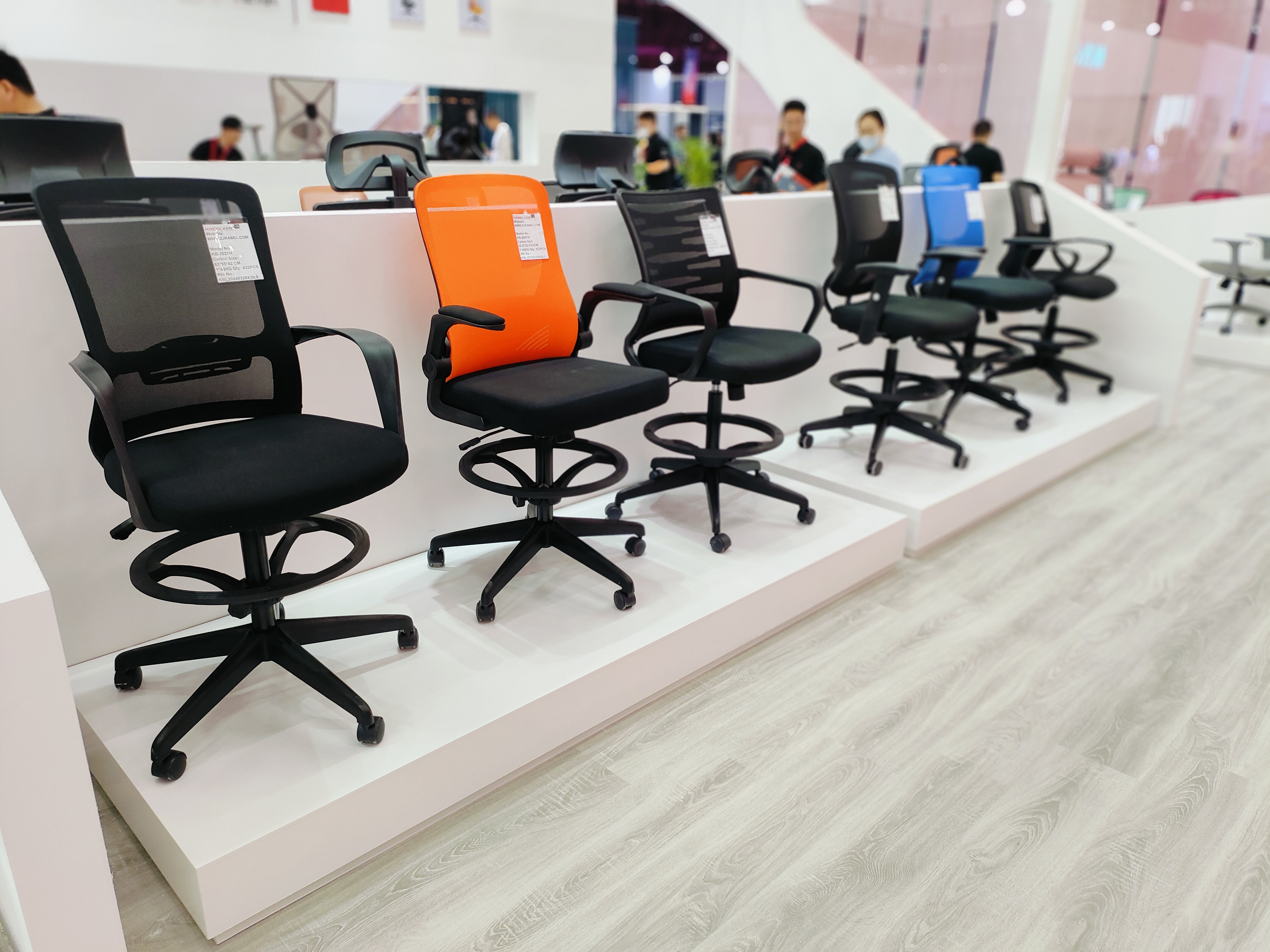
Kabel office swivel chairs are intended for the education, state-owned enterprise, government–business cooperation, finance, and communication industries. They are designed for indoor use under normal temperature and humidity, and their role in the scenario is daily office sitting and rest support.
The operating profile is also specified: the chairs require a desk as supporting equipment, adjust manually, and are used intermittently rather than continuously. That profile matches the way most project seating is actually used — a chair that is adjusted occasionally and sat in across a working day, not operated as continuous machinery. Knowing this helps buyers decide where the chair fits and where a different product category may be required.
What Kabel lists for its office chair range
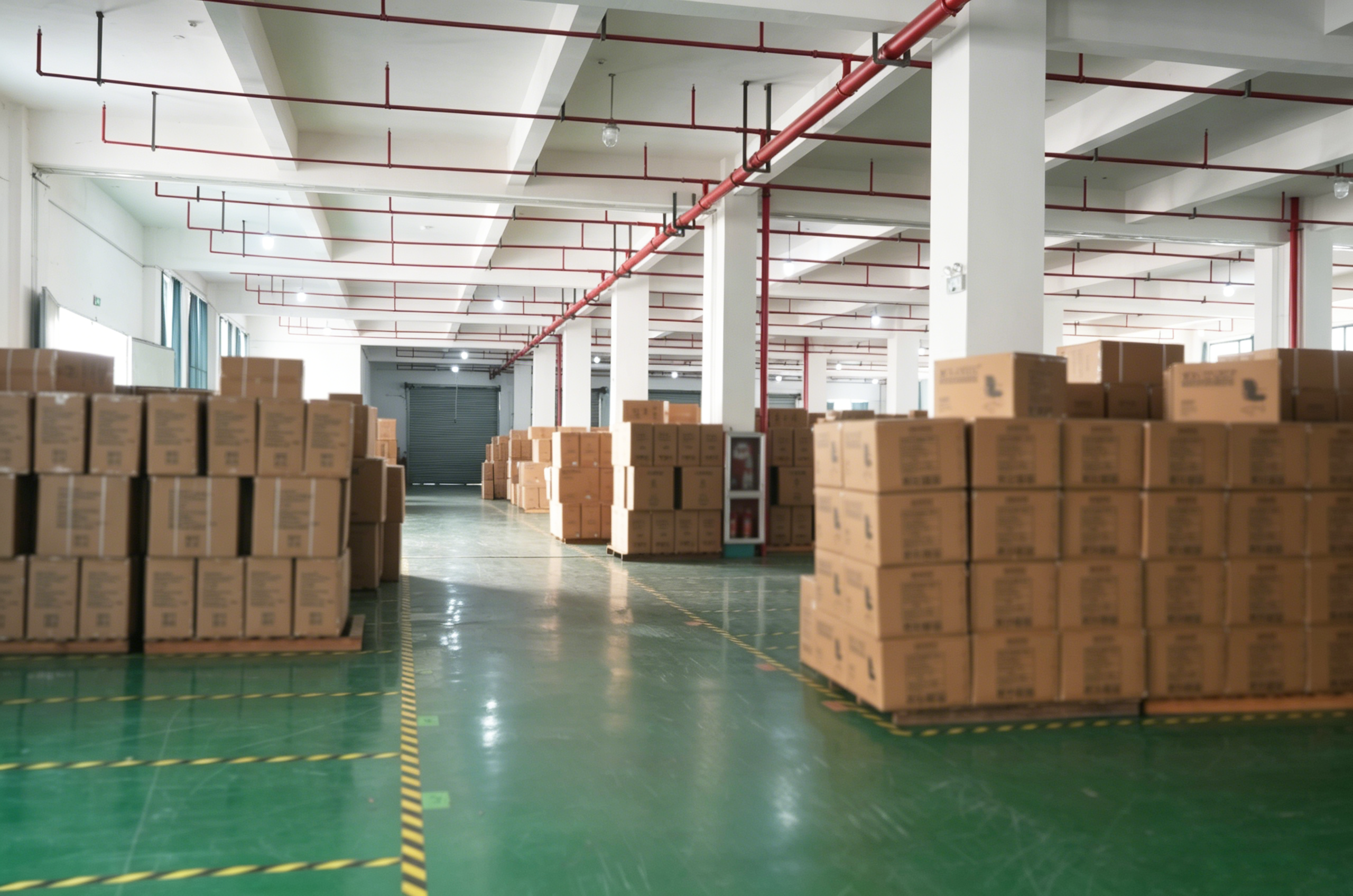
Anji Kabel Furniture Co., Ltd operates a 50,000 m² factory with 92 employees, an annual output of 400,000 sets, and a 20-engineer research and development team. Roughly 90% of production is exported, to markets including the United States, Canada, the United Kingdom, Italy, Germany, Spain, Japan, South Korea, Thailand, the Middle East, Egypt, Ethiopia, Nigeria, the Central African Republic, and the Republic of South Africa.
For bulk and project buyers, the company offers OEM/ODM production with customization across the backrest, seat cushion, armrest, mechanism, base, caster, colour, fabric, mesh, packaging, and logo. Monthly capacity is 20,000–30,000 units, lead time is 25–50 days, and the minimum order quantity is 50 units. Every unit is inspected before delivery, and each cabinet ships with an export repair kit.
On the compliance side, Kabel holds ISO 9001:2015 quality management certification (certificate No. 02821Q10011R1M, valid until 2027-01-04), alongside ISO 14001 environmental management and ISO 45001 occupational health and safety management system certification.
What third-party standards should buyers cross-check?
Independent standards give buyers a benchmark that does not depend on any one supplier's description. For office work chairs, EN 1335 is used in Europe as a basis for certification and testing of dimensions, safety, strength, and durability. In the United States, ANSI/BIFMA X5.1 is the general-purpose office chair standard covering safety, durability, and structural adequacy, and it is referenced in institutional procurement documents.
Third-party verification also reaches into ergonomics. TÜV SÜD's office furniture certification covers measurements including seat adjustment options, the backrest-to-seat angle, and lumbar support — the same adjustment categories a buyer should be able to find in a supplier's written specification.
Market context for technical procurement
The global office chairs market was valued at USD 18.25 billion in 2025, according to Fortune Business Insights. As the category grows, procurement attention is shifting from surface design toward verifiable specification — the material grades, load ratings, and component classifications that can be checked rather than assumed.
Comparison with traditional solutions
Compared with earlier office seating, the differences are mostly in components rather than appearance.
| Dimension | Earlier / basic office seating | Kabel office swivel chair range |
|---|---|---|
| Backrest | Often solid or low-flex material | High-elastic breathable mesh |
| Seat cushion | Basic padding | High-density molded foam |
| Gas lift | Standard rod | Four-level explosion-proof gas pressure rod |
| Adjustment | Limited or fixed | 40–50.5 cm height, 360° rotation, 90°–135° tilt locking |
| Base | Lightweight base | Thickened nylon five-point base |
A boundary worth stating: a mesh backrest trades cushioning for breathability. Users who prefer a softer, more padded back may find a mesh backrest firmer than expected, and heavy continuous use can make foam the preferred cushion. Similarly, the 90°–135° tilt locking range suits daily office work but is not a full-recline lounge specification, and the 40–50.5 cm seat height band fits the general office population rather than every body type or every desk height. Buyers with specialised requirements should confirm the fit against their specific users before ordering.
Future outlook
As office seating procurement continues to professionalise, the questions in this FAQ are likely to move from optional to standard. Buyers increasingly want component classifications, load ratings, and adjustment ranges stated in writing, because these are the items that can be verified against standards such as EN 1335, ANSI/BIFMA X5.1, and third-party certification scopes. The shift favours suppliers who can document their specifications rather than describe them.
FAQ
Is a mesh backrest better than a molded foam back?
They serve different purposes rather than competing. A mesh backrest provides flexible support and ventilation, which suits warm, densely occupied offices. Molded foam provides a padded, conforming surface. In the Kabel office swivel chair range, the backrest is high-elastic breathable mesh while the seat cushion is high-density molded foam, combining the two functions.
What does a "four-level explosion-proof" gas pressure rod mean?
It describes the classification of the gas lift — the component that raises and lowers the seat. An explosion-proof rod is designed to safely contain internal pressure, and the level indicates the grade of that reinforcement. Kabel specifies a four-level explosion-proof gas pressure rod across its office swivel chair range, and the gas rod is covered by a three-year warranty.
Why does 360° rotation matter in an office chair?
360° free rotation lets the chair turn with the user rather than forcing the user to twist. In shared offices and multi-desk environments, this supports reaching side surfaces and turning between tasks without straining the lower back. The Kabel range combines 360° rotation with silent PU universal casters for quiet movement.
What is the point of 90°–135° tilt locking?
The range covers an upright 90° position for desk work and a reclined position up to 135° for reading or calls. The locking function holds the selected angle so it does not drift, which makes the recline usable and keeps shared chairs within a defined range for daily use.
What load capacity and seat height should a project order specify?
A specification should state a maximum load rating and an adjustable seat height range. The Kabel office swivel chair range is rated to a maximum load of 150 kg with a seat height range of 40–50.5 cm, which determines the user population it can support and the desk heights it can be matched to.
Which industries are these office swivel chairs intended for?
Kabel office swivel chairs are intended for education, state-owned enterprises, government–business cooperation, finance, and communication. They are designed for indoor use under normal temperature and humidity as daily office seating and rest support, paired with a desk and used in an intermittent, manually adjustable mode.
Where to check the full specification
Buyers who want to compare the complete product range, materials, and adjustment details can review the Kabel chair catalogue, which collects the specifications discussed in this FAQ in one document.