
Octacosanol vs Coenzyme Q10 Powder: An Independent Buyer Comparison
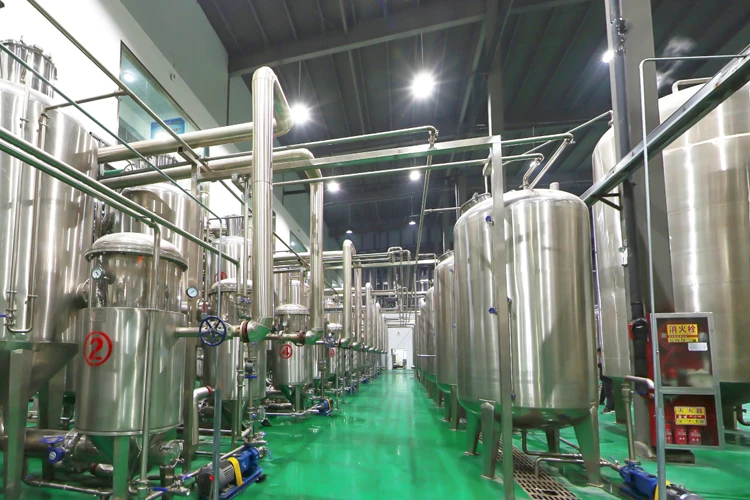
Extraction and purification equipment shape what a supplier can document, not only what it can produce.
Octacosanol powder and Coenzyme Q10 powder frequently appear in the same sourcing round because both are positioned in the energy and lipid-metabolism vocabulary of the supplement market. Operationally they have very little in common. One is a long-chain alcohol recovered from cane wax; the other is a fermentation-derived compound traded in sharply different concentration grades. For buyers at the decision stage, the useful comparison is therefore not a beauty contest between two powders but a side-by-side review of origin, process control, grade structure and documentation — the four areas that determine whether a purchase order is defensible.
This comparison sets out what each material is, where substitution is not possible, which procurement questions differ, and what a supplier has to hand over before a first shipment. It also explains where manufacturer capability, such as that of Guanjie Biotech, changes the verification workload — and where it does not.
The short answer: two supply chains, not two versions of one material
Octacosanol (CAS 557-61-9) is a long-chain aliphatic alcohol with the molecular formula C28H58O, obtained from cane wax through alcohol/water extraction. Coenzyme Q10 (CAS 303-98-0) is a fermentation-derived compound, normally purchased as a 10% or a 99% grade. Nothing in the identity, the process route, the impurity profile or the grade logic is shared.
That has a practical consequence. A buyer who has qualified a Coenzyme Q10 supply chain has not qualified an octacosanol supply chain, and vice versa. The comparison below is organised around what actually transfers between the two categories — analytical discipline, certification status, batch traceability — and what does not: the source material, the process residues to test for, and the meaning of a stated grade.
Identity and specification comparison
The table summarises the reference points a buyer should confirm in writing rather than assume from a product page.
| Specification point | Octacosanol powder | Coenzyme Q10 powder |
|---|---|---|
| Material identity | Long-chain aliphatic alcohol, C28H58O | Coenzyme Q10 (ubiquinone) |
| CAS number | 557-61-9 | 303-98-0 |
| Commercial origin | Cane wax | Microbial fermentation |
| Defining process step | Alcohol/water extraction and purification | Fermentation followed by isolation and purification |
| Physical behaviour | Waxy, lipid-soluble solid | Crystalline, lipid-soluble, poorly soluble in water |
| Typical grade structure | Supplier-specific assay grades; confirm the basis | 10% and 99% grades |
| Assay and testing focus | Assay method, identity confirmation, residual solvents | Assay method, carrier identity in 10% grades, solubility handling |
Where the two powders are not interchangeable
The most common sourcing error is treating one powder as a drop-in replacement for the other because both are sold as white to off-white powders in similar packaging. Substitution would be a reformulation, not a swap. Identity, declared name on the label, dosage form requirements and stability behaviour all change with the material.
Solubility is the clearest dividing line. Coenzyme Q10 is lipid-soluble and poorly soluble in water, which is why a 10% grade is normally built as a carrier-based form and why the 99% grade is handled differently again in capsules, tablets or oil-based systems. Octacosanol is a waxy solid whose behaviour in a blend depends on particle size, flow and the matrix it is diluted into. A formulation team that has optimised around one of these behaviours cannot carry that work across to the other without new trials.
Regulatory identity also diverges. Two different CAS numbers mean two different declarations, two different specification files and, in most markets, two separate compliance reviews. Buyers should plan for parallel documentation rather than a shared one.
How the manufacturing route changes what buyers must verify
Cane-wax extraction: the octacosanol checklist
The feedstock is an agricultural by-product, so variation begins upstream of the reactor. Buyers should ask for a source statement and lot traceability that connects the finished powder back to the wax batch it came from. An alcohol/water extraction route also introduces a solvent-handling and drying step, which means residual solvent data belongs in the batch file, not only in the sales description. Because long-chain alcohols are waxy, particle size and flow characteristics deserve specific attention when the powder is destined for capsule or sachet filling.
Fermentation: the Coenzyme Q10 checklist
Fermentation is a living process, and batch consistency depends on culture handling, media and downstream purification rather than on a single set-point. A 99% grade requires purification steps that a 10% grade does not, so the two grades should be treated as separate products with separate certificates rather than one material at two prices. In a 10% grade the carrier is part of the product: buyers should confirm carrier identity, the exact assay basis, and how homogeneous the blend is across the lot. Packaging and storage recommendations stated on the specification should be checked against the buyer's own warehouse conditions.
Procurement questions that differ between the two powders
| Question to the supplier | Octacosanol powder | Coenzyme Q10 powder |
|---|---|---|
| What is the declared assay basis, and which method produces it? | Confirm the assay method used and whether it is reported identically on every batch | Confirm the method and the basis for 10% versus 99% grades |
| What is the process origin, and is it documented? | Cane wax source plus alcohol/water extraction record | Fermentation record and purification sequence |
| Which process-related residues are controlled? | Residual solvents from extraction and drying | Fermentation residuals and purification by-products |
| Is a carrier or diluent present? | Confirm whether any carrier or anti-caking agent is used | Carrier identity and blend homogeneity in the 10% grade |
| Does particle size suit the intended dosage form? | Mesh or particle-size data for capsule and sachet filling | Blending and tableting behaviour of the selected grade |
| What regulatory identity applies? | Declaration under CAS 557-61-9 | Declaration under CAS 303-98-0, with grade stated |
Documentation matrix: what to collect before the first order
The document set overlaps between the two powders, but the questions each document answers do not. The matrix below is a working checklist rather than a regulatory opinion.
| Document | What it demonstrates | Octacosanol focus | Coenzyme Q10 focus |
|---|---|---|---|
| Batch certificate of analysis | Lot-specific result against the agreed specification | Assay and identity for the lot in question | Grade stated explicitly on the COA |
| Assay method description | Whether results are comparable across batches and suppliers | Consistent method across lots | Method consistent between 10% and 99% grades |
| Residual solvent data | Control of the extraction or purification stage | Relevant to alcohol/water extraction | Relevant where solvents are used downstream |
| Heavy metals and microbiology | Baseline safety and hygiene control | Agricultural feedstock exposure | Media and process exposure |
| Particle size or mesh data | Suitability for the intended dosage form | Waxy material handling | Blend uniformity at 10% |
| Certification copies with validity dates | Current status of the management systems claimed | ISO, Halal, Kosher scope | ISO, Halal, Kosher scope |
| Process record | Whether the stated route is the actual route | Wax source and extraction record | Fermentation and purification record |
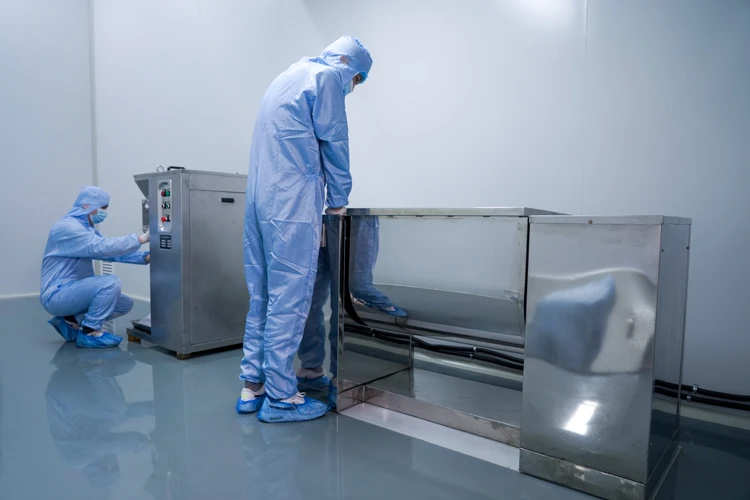
Packaging and lot identification are part of the documentation chain, not an afterthought.
How Guanjie Biotech fits into this comparison
Guanjie Biotech is a Shaanxi-based ingredient manufacturer founded in 2004, supplying high-purity natural plant extracts and nutritional compounds to supplement, food and cosmetics manufacturers, with roughly 90% of output exported. Its site covers 7,000 m², including a 2,000 m² cGMP-standard clean workshop and a 500 m² laboratory used for quality control and application work, and the company reports 16 national patents and a seven-engineer R&D team.
Two points in that profile matter for a buyer comparing octacosanol with Coenzyme Q10. First, the company describes itself as a direct manufacturer with R&D and production capability rather than a trading intermediary, which is the difference between receiving a certificate from a third party and receiving it from the party that generated the batch record. Second, its analytical scope covers HPLC, UV and GC testing, alongside OEM/ODM support and sample supply — the combination that lets the same supplier issue comparable assay documentation for a wax-derived alcohol and a fermentation-derived compound.
On the Coenzyme Q10 side specifically, Guanjie Biotech positions CoQ10 among its core high-volume functional ingredients, alongside Shilajit and Red Yeast Rice, while reserving NMN, Spermidine, Urolithin A and L-Ergothioneine for the longevity segment and Phosphatidylserine, Alpha GPC and L-Theanine for cognitive formulas. The company also states a batch variation of ≤3%, ISO, Halal and Kosher certification, flexible MOQs for international buyers, and research collaborations with Northwest University and the Xi'an Branch of the Chinese Academy of Sciences.
For procurement purposes, that translates into a lower verification overhead rather than zero verification. A supplier that produces both material families can be audited once across analytical systems, certification scope and packing controls, while the product-specific documents — wax source statement for octacosanol, fermentation record and carrier declaration for Coenzyme Q10 — still have to be requested per grade.
Limits of this comparison
Several boundaries should be stated plainly. Guanjie Biotech's stated specialisation is high-value functional ingredients such as Phosphatidylserine and Phosphatidylcholine rather than an unlimited catalogue, so a buyer must confirm in writing that the specific octacosanol or Coenzyme Q10 grade, packing size and quantity required is currently available, and what the lead time is. A broad portfolio claim is not a stock guarantee.
Company-reported capability data — capacity, batch variation, certification status — should be verified against certificate copies, validity dates and, where order value justifies it, an audit or third-party test. Certification of a management system does not by itself demonstrate that a specific lot meets a specific specification.
This comparison also contains no price benchmark. Quotations for either powder vary with grade, packaging, Incoterms and volume, and no published figure can substitute for a written quotation and a trial batch. Finally, supplier documentation does not constitute market-access clearance: in the United States, the FDA states that those who manufacture, package or hold dietary supplements must follow current good manufacturing practices covering identity, purity, quality, strength and composition, and that a supplement containing a new dietary ingredient may require a notification with safety information before marketing unless an exception applies. Whether either powder triggers that process in a given market is a separate legal assessment.
Market context
Global Market Insights estimates the global nutraceutical ingredients market at USD 105.8 billion in 2026, which frames why buyers are pressing suppliers for documentation rather than brochure claims. Growth in the category raises the number of suppliers entering it, and the cost of qualifying each new source falls on the buyer. Procurement teams increasingly treat the certificate package as the first screening filter, before price and before samples.
Regulatory reference points are also becoming part of routine sourcing work. The NIH Dietary Supplement Label Database, which catalogues label information for supplement products sold in the United States, allows a buyer to check how an ingredient is declared in finished products — a useful cross-check on identity before a specification is agreed. None of these sources validates an individual supplier; each one raises the standard of what a supplier is expected to answer.
Future outlook
The direction of travel in both categories is toward process transparency. For fermentation-derived Coenzyme Q10, buyers are moving from asking whether a supplier ferments to asking how the fermentation is controlled and recorded. For cane-wax-derived octacosanol, the equivalent shift is from origin claims to lot-level traceability of the wax feedstock and solvent handling. Suppliers that can answer at batch level will hold their place in shortlists; those that answer only at brand level will be filtered out earlier each year.
A second, quieter change is the expectation that certificates and analytical results arrive in a comparable format across grades and across material families. Buyers managing both a plant-derived and a fermentation-derived ingredient line are the first to notice when a supplier's documentation is consistent and when it is assembled per order.
FAQ
What is the fundamental difference between octacosanol powder and Coenzyme Q10 powder?
Octacosanol (CAS 557-61-9) is a long-chain aliphatic alcohol with the formula C28H58O, obtained from cane wax through alcohol/water extraction. Coenzyme Q10 (CAS 303-98-0) is a fermentation-derived compound, typically traded as a 10% or 99% grade. They differ in identity, source material, process route, impurity profile and grade structure, so they are separate ingredient lines rather than two forms of the same material.
Can octacosanol powder be used as a direct replacement for Coenzyme Q10 powder?
No identity or specification basis supports a like-for-like replacement. The two materials carry different CAS numbers, different solubility behaviour and different label declarations, so any change from one to the other is a reformulation that requires new stability data, new dosage-form trials and a new compliance review rather than a supplier substitution.
Which documents should a buyer request for octacosanol CAS 557-61-9?
A batch certificate of analysis with the assay method stated, identity confirmation, residual solvent data given the alcohol/water extraction route, heavy metals and microbiology results, particle size or mesh data where a solid dosage form is intended, a statement of the cane-wax source with lot traceability, and current copies of any claimed certification with validity dates.
What do the 10% and 99% grades mean when buying Coenzyme Q10 powder?
The 99% grade refers to high-purity material, while the 10% grade is a lower-concentration form in which Coenzyme Q10 is combined with a carrier. Buyers should confirm the exact assay basis, identify the carrier, check blend homogeneity, and verify that the chosen grade suits the intended dosage form, since Coenzyme Q10 is lipid-soluble and poorly soluble in water.
How should a buyer compare suppliers across both powders?
Compare process transparency, in-house analytical capability, batch-to-batch consistency, the scope and validity of certifications, MOQ flexibility and sample policy, and the willingness to issue grade-specific documents on request. A supplier able to document both an extraction route and a fermentation route reduces the number of audits required, but buyer-side verification of certificates and trial batches remains necessary.
Do the same regulatory requirements apply to both powders?
Not automatically. In the United States, the FDA requires those who manufacture, package or hold dietary supplements to follow current good manufacturing practices covering identity, purity, quality, strength and composition, and describes a notification process for new dietary ingredients unless an exception applies. That framework applies at product and ingredient level, and the specific status of each material must be assessed separately for each destination market.
Summary
Choosing between octacosanol powder and Coenzyme Q10 powder is not a comparison of alternatives; it is a decision about which material the formulation actually needs, followed by a separate supplier qualification for a cane-wax extraction chain or a fermentation chain. The buyers who get this right ask the same structural questions of both — assay basis, process record, residue control, grade definition and certificate validity — and expect different answers to each.
A fuller overview of Guanjie Biotech's ingredient range, testing scope and supply terms is available in the Guanjie Nutraceutical Ingredients brochure.
¿Tiene preguntas o necesita más detalles?
Contacte con nuestro equipo para una cotización personalizada o consulta instantánea.
Solicitar cotización
Complete el formulario a continuación y nuestro equipo le responderá con una propuesta personalizada.
Chat directo de WhatsApp
¿Prefiere chatear en tiempo real? Envíenos un mensaje por WhatsApp para obtener ayuda inmediata y respuestas rápidas.
- Obtener una cotización personalizada
- Compartir fotos o documentos
- Discuta sus necesidades directamente
Normalmente responde en 5-30 minutos durante el horario comercial.