
OEM Shopping Bag Capability: What Factory Audits Reveal
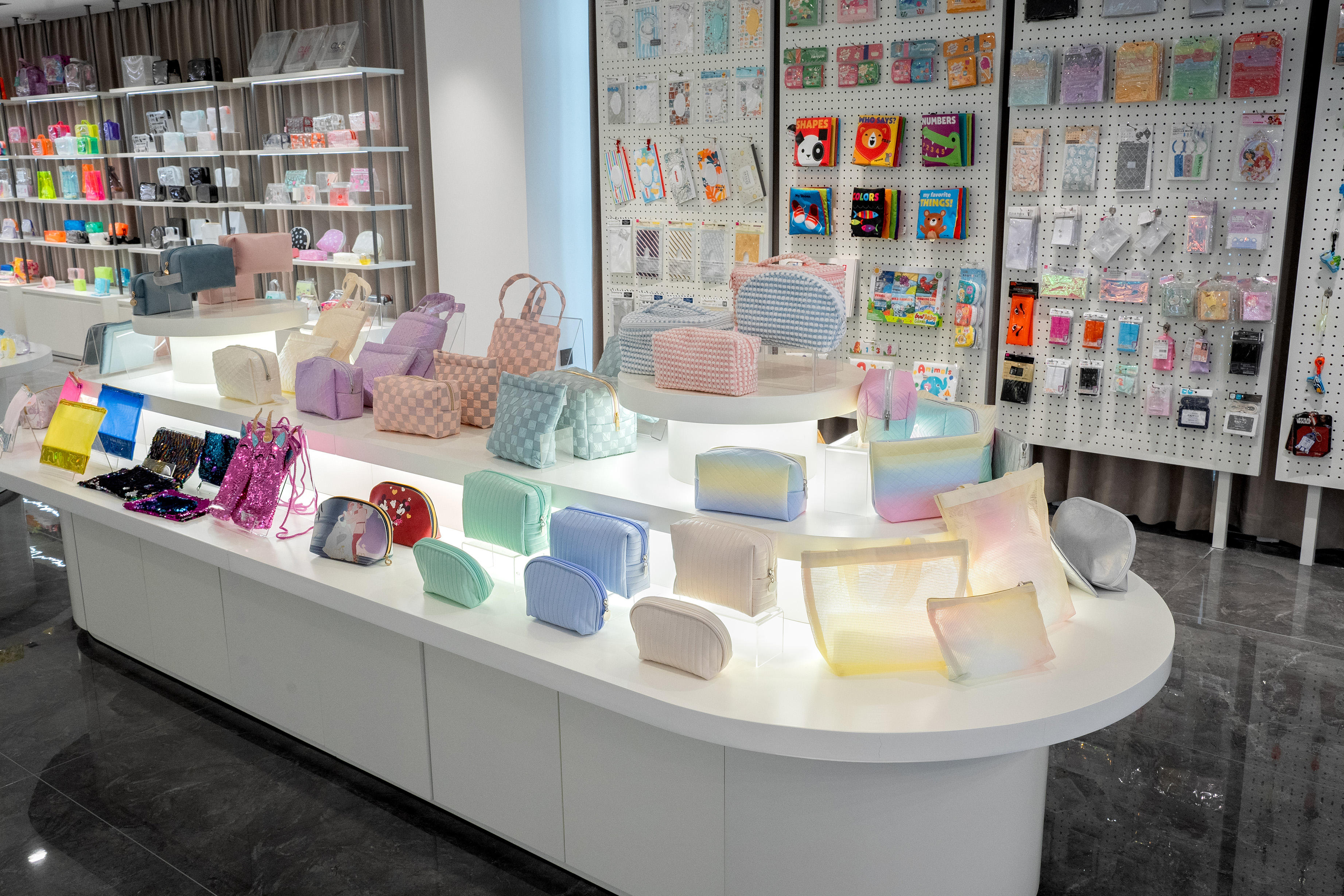
For OEM buying teams, the sample room is one of the first practical checkpoints.
A bulk order of shopping bags can look deceptively simple: choose a material, approve a size, apply a logo and wait for delivery. In practice, the same order involves material weight, handle reinforcement, print registration, packing style and compliance documentation. When the product is a reusable, foldable or custom printed shopping bag, the real question is not only what the product looks like, but whether the factory can repeat that specification consistently across a large order.
This article focuses on manufacturer capability for OEM and ODM shopping bag projects. It is written for procurement teams that have already moved beyond the first search for suppliers and are now evaluating whether a factory can execute a project with acceptable quality, timing and compliance control.
Where OEM capability becomes visible
Most reputable shopping bag suppliers can present samples and issue a quotation. The more difficult part is verifying what happens when an order starts to scale. A custom printed shopping bag programme often includes several variables at the same time: a supermarket chain needs branded daily shopping bags, promotional gift bags and seasonal prints, all with comparable quality.
This is where the evaluation shifts from price discovery to capability assessment. Buyers need to confirm that the supplier controls the production steps that affect the finished bag: material selection, cutting and sewing accuracy, printing alignment, packing and delivery. The opportunity is clear from the demand side. Fortune Business Insights estimates the global reusable shopping bag market at roughly USD 15.64 billion in 2025, with a projected increase to about USD 28.87 billion by 2034. That kind of projected growth encourages more buyers to move from single orders to longer, repeatable bag programmes.
The same shift is visible in regulatory pressure. The EU Packaging and Packaging Waste Regulation requires packaging to be recyclable by 2030 and introduces mandatory recycled content targets for plastic packaging. In the United States, at least 12 states including California and New York have moved toward statewide restrictions on single-use plastic bags. The result is that shopping bags increasingly function as a repeat-use item rather than a disposable wrapper, and buyers need manufacturers that can respond with appropriate materials and documented production controls.
A working example: what a capable shopping bag manufacturer should be able to show
One useful example is Zhejiang Hansun Arts & Crafts Co., Ltd., commonly referred to as Hansun, a manufacturer in Wenzhou, China. Hansun has operated since 1996 and specialises in tote bags and PVC bags. The company operates a production facility of about 25,000 square metres, employs roughly 200 people and reports an annual output of about 20,000,000 units. Its team includes 25 engineers in design and research and development, which is relevant for buyers that need ODM support rather than production from a fully supplied drawing.
Hansun provides OEM and ODM production services, with customisation options covering logo, size and material. Its documented monthly production capacity is 1,500,000 units. For a buyer, that number means the factory should be able to absorb order fluctuations during peak retail seasons without treating a larger order as an exceptional event.
From a commercial perspective, the minimum order quantity is 3,000 pieces, and typical production lead time is 30 to 45 days. These are important evaluation anchors because they help a buyer understand how much demand foresight is required before execution. The company also works with several delivery and payment structures: FOB, DDP and EXW are available; payment terms commonly include 30/70, 50/50 or 100 percent before mass production.
Buyers can access the manufacturer's public corporate profile and brochure for a more complete overview of its operating scope.
Technical dimensions of an OEM shopping bag assessment
1. Customisation depth
Customisation in shopping bags can mean two different things. For some suppliers, customisation means selecting from a catalogue and adding a printed logo. For a full OEM project, the buyer normally expects changes to logo, size and material.
In the case of Hansun's shopping bag line, the documented product range includes reusable foldable shopping bags, eco-friendly non-woven shopping bags and canvas tote shopping bags. The stated material selection covers non-woven fabric, canvas, recycled PET, Oxford cloth and PP. Weights can range from roughly 50g to 200g per bag depending on material and dimensions, which helps buyers who need a lightweight bag for daily supermarket use or a heavier bag for retail and travel applications.
For buyers requiring clear or waterproof structures, PVC products are within the same company's core scope, making it possible to combine fabric shopping bags with PVC bags in a broader procurement plan.
2. Decoration and printing control
Custom printed shopping bags depend heavily on decoration methods. The documented crafting capabilities for this product line include silk screen printing, heat transfer and offset printing. The right method depends on the quantity, artwork complexity, surface material and the level of colour consistency required.
A factory audit should therefore confirm that printing is done in a controlled environment, that colour approvals are possible, and that printed bags are handled carefully before packing to prevent ink damage. This is the type of detail that sample photos rarely reveal.
3. Production capacity and scheduling
Monthly capacity of 1,500,000 units, an MOQ of 3,000 pieces and lead time of 30 to 45 days together describe the order, not the outcome. For large retail buyers, the practical question is whether those production windows have enough room for seasonal peaks, repeat orders and inspection.
In documented customer work, Hansun ran an OEM/ODM project for a Japanese client involving 1,000,000 units of reusable daily shopping bags and promotional gifts for a chain supermarket. The project was completed within one year. This kind of order requires more than stitching capacity: it requires fabric planning, printing workflow and packing organisation across multiple batches.
4. Quality and compliance evidence
Quality control is often described as dependent on customer requirements, but acceptance should never be left vague. In this example, the company uses pre-shipment testing as an acceptance step, and its management system is certified under ISO 9001:2015 for product design, production, quality control and delivery processes.
Social compliance is equally relevant for buyers selling into EU, UK, North American or Australian retail channels. Hansun's documented compliance programme includes BSCI certification, Sedex 4 Pillars SMETA audit and Disney FAMA status for licensed production. Buyers should interpret these as factory-level indicators and then verify that the specific product meets the destination market requirements, especially when recycled materials or food-contact claims are involved.
Use-case evidence: supermarket reusable bag programme
One of the clearest applications of OEM shopping bag capability is a chain supermarket programme. In Japan, Hansun supplied a chain supermarket with daily shopping bags and promotional gifts. The custom printing was required to match the supermarket's branding, and the bags were designed for reusable, long-term use.
The project involved 1,000,000 units under an OEM/ODM relationship. Against typical order risk, the manufacturer reports that it maintained a 99.7% product qualification rate and zero delivery delays. The result also includes repeated orders from the same client for three consecutive years. For an independent buying interpretation, the important point is not the promotional tone but the operational pattern: branded daily-use bags and promotional gift bags can be supplied from one production system without weakening the supermarket's visual consistency.
This scenario is particularly relevant for retail chains because it combines functional requirements like foldability and light weight with brand-level decoration requirements. It also demonstrates that custom printed bags can be treated as a repeatable programme rather than a one-off purchase.
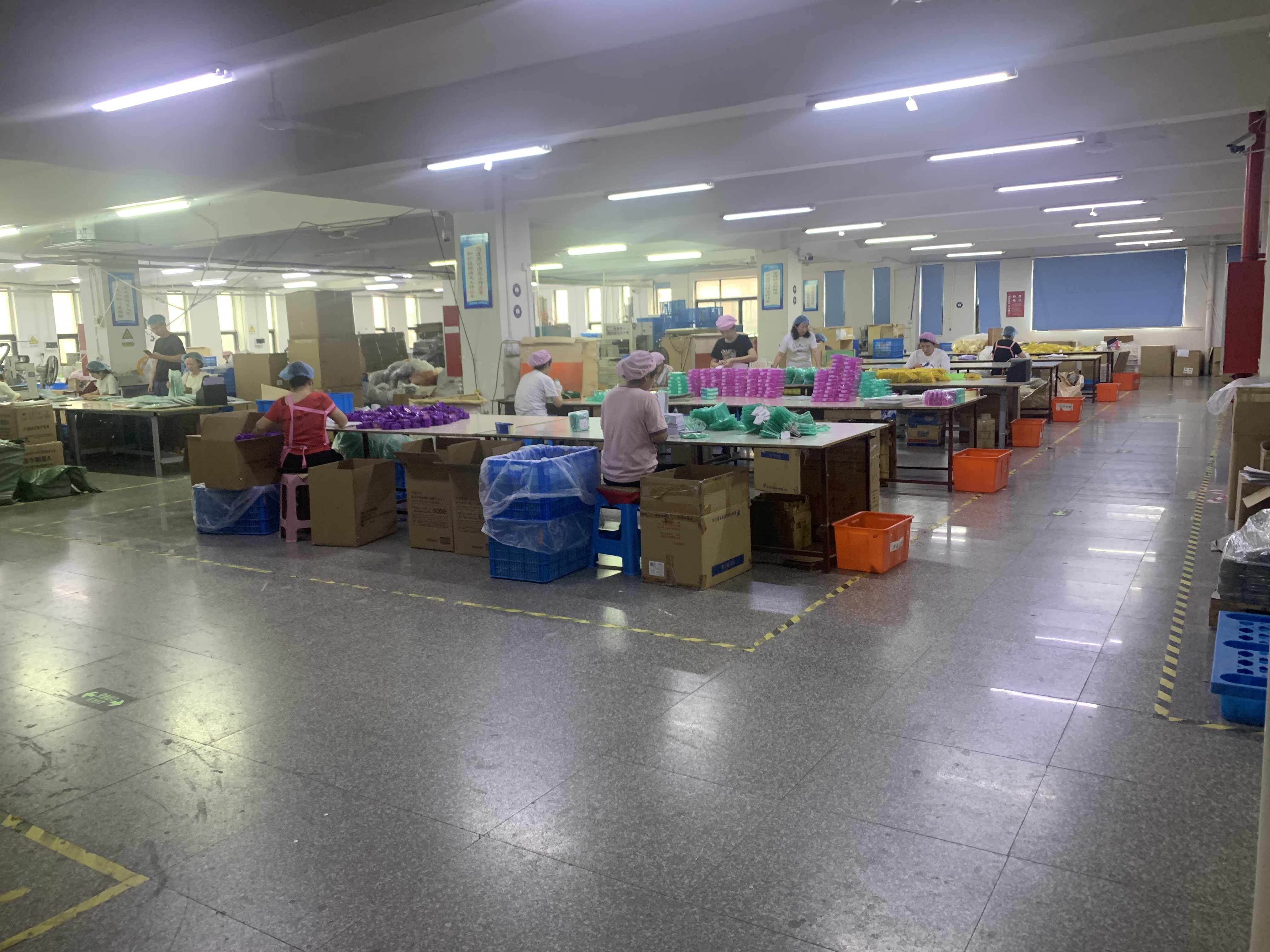
Packaging quality influences final delivery performance for large shopping bag orders.
Market trends that change supplier requirements
Several market trends now influence how buyers should assess a shopping bag manufacturer.
First, material composition is becoming more important. Business Research Insights reports that polypropylene or PP accounts for nearly 46% of reusable bag production because of its durability and cost-effectiveness. At the same time, buyers are increasingly asking for recycled PET and other recyclable materials because of regulations such as the EU PPWR.
Second, multi-purpose formats remain dominant. Market Research Future's bag market analysis estimates that tote formats account for roughly 40-41% of the market due to their multi-purpose functionality. This is relevant for OEM buyers because tote-style bags are often used both as shopping bags and as promotional or corporate gifts.
Third, custom decoration is a continuing growth driver. Business Research Insights associates the shopping bag market's customization trend with increased demand for printed bags in retail applications. In practical terms, a supplier that can manage both custom printing and stable repeat production has a structural advantage over a supplier focused only on plain stock bags.
China remains an important sourcing region for such products. According to the General Administration of Customs of China, the country's export value for suitcases, handbags and similar containers reached USD 27.13 billion for January to November 2025. This scale does not mean that every Chinese supplier is equal, but it does mean there is sufficient production infrastructure to support large customised shopping bag programmes.
OEM shopping bags versus traditional stock buying
It would be inaccurate to present OEM manufacturing as always preferable to traditional wholesale stock purchasing. Most retail buyers need both paths. Stock shopping bags offer faster access; OEM shopping bags offer stronger brand fit and material control.
| Evaluation factor | Stock / catalogue wholesale bag | OEM / ODM project |
|---|---|---|
| Product specification | Limited to available SKUs in the factory catalogue. | Logo, size and material can be adapted to brand needs. |
| Order threshold | Can be suitable for smaller quantities depending on the supplier's inventory policy. | Minimum order commonly 3,000 pieces per project. |
| Lead time | Faster when ready stock is available; limited by existing stock composition. | Typical production lead time 30 to 45 days, plus design and shipping time. |
| Quality control | Quality is checked on the available batch; defects are handled as claims. | Pre-shipment testing can be built into the acceptance process. |
| Compliance flexibility | Based on the existing product's specification. | Material and compliance requirements can be defined before mass production. |
The boundary condition is equally important. OEM is less suitable for urgent replenishment or very small trial orders with no clear long-term volume. Buyers that need promotional shopping bags for a single event may find stock bags more efficient. OEM shopping bags start to make commercial sense when the buyer expects repeat volumes, brand-specific printing and material requirements that stock suppliers cannot easily match.
A practical checklist for procurement teams
When moving from evaluation to execution, procurement teams can reduce risk by structuring the assessment around five points.
1. Confirm whether the MOQ applies per design, per colour or per order, and compare it against the projected annual volume.
2. Ask which customisation parameters are truly available: logo placement, bag size, material type and any combination of these.
3. Define the production calendar. A 30 to 45 day lead time is meaningful only when the supplier also confirms capacity for seasonal peaks.
4. Agree on a quality acceptance method, including pre-shipment testing, so that both sides share the same definition of a passing bag.
5. Verify the compliance framework. ISO 9001, BSCI, Sedex and Disney FAMA status show factory-level control, but product-level compliance for a specific market should still be confirmed.
Future outlook for shopping bag procurement
Looking forward, shopping bags are likely to be managed less as a commodity and more as a brand and compliance asset. Reusable and custom printed shopping bags will continue to replace single-use alternatives in many retail markets. EU and US regulatory changes will push more attention toward recycled content and recyclability, while buyers will protect their brand identity through better print control and more precise material choices.
Manufacturers that combine OEM flexibility, social compliance and stable batch production will be better positioned to support long-term programmes. At the same time, buyers should keep realistic expectations about minimum quantities, delivery windows and per-unit cost. A strong OEM relationship does not remove the need for planning; it makes planning more predictable.
FAQ
What does OEM mean for shopping bag production?
OEM, or original equipment manufacturing, means the supplier produces shopping bags according to the buyer's specification. The buyer controls the design, brand and required quality level. ODM, or original design manufacturing, also allows the supplier to contribute its own product design and development capabilities. A manufacturer such as Hansun offers both production modes and can customise logo, size and material according to project requirements.
What is the minimum order quantity for custom shopping bags?
The minimum order quantity can vary between factories. In Hansun's documented procurement terms, the MOQ is 3,000 pieces. Buyers should confirm whether this applies to one SKU or to a combined order, because that distinction affects pricing and production scheduling.
What materials can be used for OEM reusable shopping bags?
Common materials include non-woven fabric, canvas, recycled PET, Oxford cloth and PP. In Hansun's shopping bag product range, the weight can range from around 50g to 200g per bag depending on material and size. This range allows buyers to select a lighter bag for supermarket use or a stronger tote bag for retail and travel use.
Which printing methods are used for custom printed shopping bags?
Typical printing methods include silk screen printing, heat transfer and offset printing. The selection depends on the artwork, colour requirements, fabric surface and order volume. Buyers should always request printed samples before approving mass production.
What lead time should a buyer expect for OEM shopping bags?
For manufacturers such as Hansun, the typical production lead time is 30 to 45 days after the order is confirmed. This estimate excludes design development and international shipping. Buyers with peak seasonal demand should add buffer time for sample approval and production scheduling.
What certifications should be looked for in a shopping bag factory?
Useful indicators include ISO 9001:2015 for quality management systems, BSCI for social compliance, Sedex 4 Pillars SMETA for labour and environmental standards, and Disney FAMA for factories producing licensed goods. These certifications reflect factory management systems. Buyers should still verify that each product meets the specific market's compliance requirements.
What payment and delivery terms are typical for shopping bag projects?
Common delivery terms include FOB, DDP and EXW. Payment terms often include 30/70, 50/50 or 100 percent before mass production. A pre-shipment test is normally part of the acceptance process, so the buyer can inspect the finished bags before they are released for shipment.
Can OEM shopping bags be made with eco-friendly materials?
Yes. Recycled PET is a common eco-friendly option in the market, and non-woven bags can also be designed for repeated use. The Japan-based supermarket project supplied by Hansun used eco-friendly materials and reusable bag construction. However, when a buyer claims environmental or recyclable properties, final confirmation must come from the material supplier and the relevant product or packaging tests.
Data sources and references
- Fortune Business Insights, Reusable Shopping Bag Market, https://www.fortunebusinessinsights.com/reusable-shopping-bag-market-103138
- Business Research Insights, Reusable Shopping Bag Market Report, https://www.businessresearchinsights.com/market-reports/reusable-shopping-bag-market-100236
- General Administration of Customs of China, http://english.customs.gov.cn/
- European Commission, Packaging and Packaging Waste Regulation, https://environment.ec.europa.eu/topics/packaging-waste_en
- National Conference of State Legislatures, State Plastic Bag Legislation, https://www.ncsl.org/environment-and-natural-resources/state-plastic-bag-legislation
- Market Research Future, Bag Market Industry Report, https://www.marketresearchfuture.com/reports/shopping-bag-market-11910
- Hansun Company Website, https://www.hansungift.com/
- Hansun Public Company Brochure, https://cdn.socialarks.com/sbsp/24767/0/2026/0413/69dc8372a4994.pdf
¿Tiene preguntas o necesita más detalles?
Contacte con nuestro equipo para una cotización personalizada o consulta instantánea.
Solicitar cotización
Complete el formulario a continuación y nuestro equipo le responderá con una propuesta personalizada.
Chat directo de WhatsApp
¿Prefiere chatear en tiempo real? Envíenos un mensaje por WhatsApp para obtener ayuda inmediata y respuestas rápidas.
- Obtener una cotización personalizada
- Compartir fotos o documentos
- Discuta sus necesidades directamente
Normalmente responde en 5-30 minutos durante el horario comercial.