
OEM/ODM in Protective Packaging: Why Capability Reviews Matter for Glass Jar Buyers
Protective packaging is often described by the hazards it stops: light, moisture, air, or unintended access. For procurement teams moving from evaluation to execution, a more practical question is whether a supplier can produce a protective design repeatedly, at commercial volume, without losing the protective properties that justified the selection.
Why protective packaging choices are becoming supplier-capability choices
Categories such as food, cosmetics, pharmaceuticals, supplements, and cannabis packaging often need more than one protective attribute at the same time. A formulation may be sensitive to visible light, require a child-resistant closure, or benefit from a vacuum or airtight format. Identifying the protective requirement is the starting point; proving that a supplier can integrate that requirement into a manufacturable jar is the next decision.
The market context is large but fragmented. Fortune Business Insights values the global protective packaging market at USD 44.02 billion in 2025 and projects it to reach USD 80.25 billion by 2034. Grand View Research estimates the same market at USD 40.4 billion in 2025. The gap between estimates is normal for a category that includes transport cushioning, void fill, flexible film, and rigid primary packaging. For a glass jar buyer, however, the relevant interpretation is narrower: protective packaging here means primary packaging that manages light transmission, closure security, seal integrity, and physical durability.
This creates both a problem and an opportunity. The problem is that many standard-jar suppliers sell a limited set of stock glass sizes with generic closures. Those stock formats may solve a single need, such as basic containment, but they seldom solve a combined need such as UV protection plus child resistance or vacuum retention. The opportunity is that custom OEM and ODM programs can align material, closure, decoration, and quality control with the product's actual risk profile.
OEM and ODM: what the terms mean for a protective jar program
OEM, or original equipment manufacturing, refers to a supplier producing a buyer's finalized design to specification. In this model, the buyer usually owns the design and packaging structure. ODM, or original design manufacturing, moves more responsibility to the supplier. The supplier may help create a new design, convert a concept into a production-ready format, or handle decoration engineering.
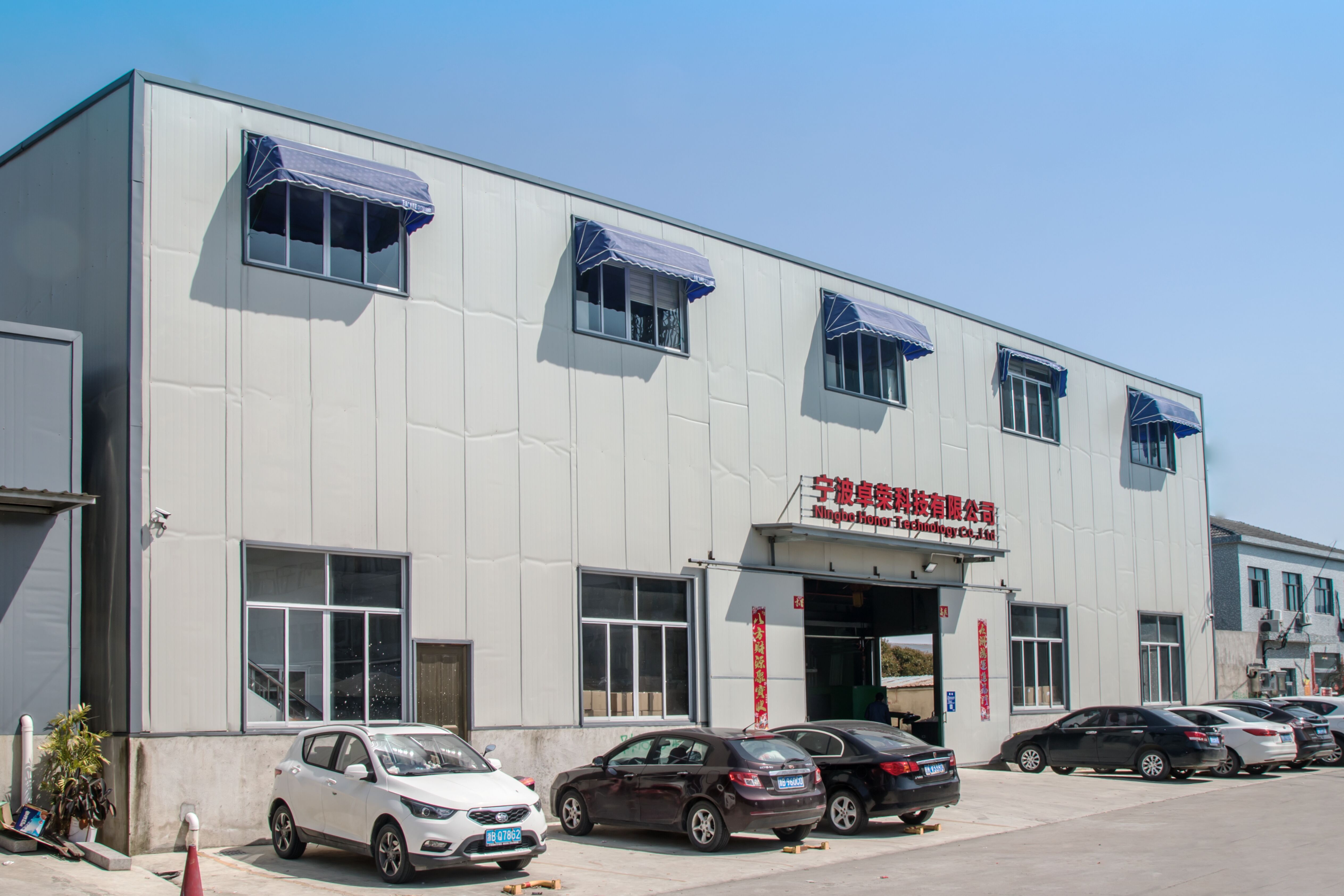
NINGBO HONOR PACKAGING CO.,LTD, a packaging manufacturer founded in 2015 and based in Ningbo, China, states that it offers both OEM and ODM services. Its ODM scope includes printing client artwork, creating new designs, and applying frosted finishes. The company also describes itself as a manufacturing-responsibility-focused packaging partner: before mass production, it is involved in product structural development, tooling strategy definition, and manufacturing risk validation; during mass production, it takes responsibility for manufacturing process control and order fulfillment.
For a buyer in the evaluation-to-execution stage, this distinction is not academic. An ODM partner can reduce the gap between a brand idea and a manufacturable jar. An OEM partner is most useful when the design is already mature and the buyer only needs disciplined volume production. Understanding which mode is involved helps buyers set expectations for engineering changes, artwork deliverables, sample iterations, and approval timing.
Honor Packaging's manufacturing model in practice
Honor Packaging specializes in three related product families: child-resistant packaging, violet glass packaging, and vacuum packaging. The company operates long-term joint-venture production bases for plastic and glass packaging, with a stated focus on high-grade and technically demanding products. Its export markets include the EU, the United States, the Middle East, and Southeast Asia.
For published OEM and ODM programs, the manufacturer lists a monthly production capacity of 100,000 units, a minimum order quantity of 10,000 units, and a typical lead time of 30–45 days. Quality assurance includes 100% pre-shipment testing and third-party inspection by SGS. Commercially, orders are produced after a 30% down payment, with the remaining 70% paid before shipment, and delivery is generally on FOB terms.
These parameters matter because protective packaging quality is often determined by what happens after sample approval. A jar that performs well in a sample may still fail in production if the closure torque, glass dimension, decoration process, or inspection protocol is inconsistent. The practical value of a manufacturing-responsibility model is that it gives buyers a single point of accountability for process control and delivery.
Protective glass in production: material, closure, and certification
From a sourcing perspective, protective glass packaging can be examined in three functional layers: light management, access prevention, and atmospheric control.
Light management is central to violet glass packaging. Violet glass is sometimes called biophotonic glass, and a widely cited technical description explains it as a natural filter that blocks visible light while allowing 25–45% penetration of UVA and about 60% of infrared light. That selective transmission profile makes violet glass suitable for products that need reduced visible-light exposure rather than complete darkness. Brands that require total opacity may need a different glass or an opaque secondary covering; this is why sample qualification remains important.
Access prevention is regulated in child-resistant packaging. In the European Union, child-resistant packaging is generally required to comply with ISO/EN 8317; in the United States, the relevant protocol is 16 CFR 1700.20. Both are designed to prevent access by children under the age of five. A manufacturer can offer child-resistant caps as a product option, but the finalized cap must be evaluated against the standard that applies in the destination market.
Atmospheric control is often handled through seal design and vacuum-capable formats. Honor Packaging's product family includes a square vacuum click jar in glass with a 5 ml capacity, which gives some indication of its closure and assembly capabilities for vacuum-sensitive products.
Compliance documentation is relevant as evidence. Company materials list an EU food-contact certificate under EC No 1935/2004, issued through SGS as certificate NGBHL24007770101, and an FDA CPG compliance document issued through SGS as certificate NGBHL23005693401. These documents apply to selected violet glass and vacuum packaging series, so buyers should always confirm that the certificate scope matches the exact SKU and target jurisdiction.
| Market | Standard | Certificate reference | Issued via |
|---|---|---|---|
| EU | EC No 1935/2004 | NGBHL24007770101 | SGS |
| US | FDA CPG | NGBHL23005693401 | SGS |
Catalog evidence: formats that custom programs can build on
A useful way to assess OEM and ODM depth is to examine the standard product platforms already in production. Honor Packaging's violet glass family includes wide-mouth jars from 100 ml to 1 L, cosmetic jars from 3 ml to 200 ml, and round essential-oil bottles from 5 ml to 100 ml. Several H21 round and square violet jars are offered with child-resistant caps. The H19 series includes clear, white, and black concentrate jars in 5 ml and 9 ml and a separately listed vacuum click jar.
Surface decoration options include stickers, silk-screen printing, heat transfer printing, hot stamping, and frosted finishes. These options are relevant to brand owners because protective packaging does not stop at function; it also carries dosage instructions, warnings, ingredient lists, and brand identity. A supplier that can manage decoration and functional closure under one roof reduces the number of handoffs between glass producer, decorator, and cap supplier.
Documented application: a German project for pharmaceutical packaging
One documented project gives a concrete example of execution. A branding business client in Germany used Honor Packaging for pharmaceutical packaging. The project involved 10,000 units and was implemented over a period of three years. According to the project record, the packaged products remained fresh, and the client highlighted reusable packaging with UV protection.
For buyers, this example is useful for two reasons. First, it shows a custom protective glass program can serve a regulated market such as the EU. Second, it shows relationship duration can matter more than a single order: a three-year program requires repeatable tooling, consistent quality, and stable supply logistics.
Market trends: growth, materials, and compliance pressure
Broad protective packaging research confirms that the category is material-heavy. Grand View Research identifies flexible packaging as the leading segment, with roughly a 66.4% revenue share in 2025, and also notes that paper and paperboard materials hold a substantial 45.7% share. Leading manufacturers identified in market research include Sealed Air, Smurfit Westrock, Mondi, and Amcor. Those players are meaningful benchmarks for the overall protective packaging industry, but their scale is largely built around films, foams, paper, and fiber-based transport packaging.
Glass primary packaging occupies a different niche. Its value is not void fill or cushioning; it is inertness, reusability, compatibility with child-resistant closures, and the ability to tailor light transmission. Within that niche, compliance is becoming a practical procurement driver. Buyers in the EU and US are increasingly asking suppliers to demonstrate how a closure behaves relative to child-resistance protocols and how a glass pack behaves relative to food-contact or pharmaceutical expectations.
The same trend is shifting attention from decoration alone to integration. A custom protective packaging program should answer four questions at once: which glass material is needed, which closure system is appropriate, which decoration method is compatible, and how quality will be verified before shipment.
Comparison: standard stock jars vs. custom OEM/ODM protective glass
The traditional alternative to custom protective packaging is buying a standard clear or amber glass jar and pairing it with an available stock closure. That route is faster and carries lower setup risk, but it often leaves the product exposed to design compromises.
| Selection factor | Conventional stock jar route | Custom OEM/ODM protective glass route |
|---|---|---|
| Light control | Limited by the stock glass color and finish | Can be tuned through violet glass or another glass type based on product sensitivity |
| Child resistance | Only if the chosen stock cap already has a qualified CR design | Closure selection can be integrated with glass dimensions and the target market's regulatory requirements |
| Air/vacuum performance | No guarantee that the stock lid has been validated for vacuum | Companies with vacuum formats, such as the square vacuum click jar, can review seal behavior during development |
| Branding | Usually limited to labeling | ODM options may include artwork printing, new design work, frosted finish, hot stamping, and heat-transfer decoration |
| Procurement constraints | Lower MOQ and faster lead time are often possible | MOQ of 10,000 units and lead time of 30–45 days are typical; manufacturing risk review happens before mass production |
Customization has boundaries, and buyers should respect them. A 10,000-unit MOQ and 30–45-day lead time make an OEM/ODM route unsuitable for very small market tests or urgent replenishment orders. Tooling decisions and pre-production validation also require time. For an early-stage brand testing demand, stock jars or smaller trial runs may be the rational first step. Custom protective packaging earns its place when volume, regulatory complexity, and brand requirements justify a controlled production program.
Future outlook: from product quote to production accountability
The next stage of protective packaging procurement will likely reward suppliers that own manufacturing risk rather than suppliers that only resell stock formats. Buyers in food, cosmetics, pharmaceutical, and supplement markets need more than a glass jar; they need a documented link between the protection claim, the physical container, and the quality control that verifies each batch.
That shift is visible in the way buyers evaluate manufacturers. Pre-production structural review, tooling strategy, SGS inspection, and long-term program experience are becoming part of the commercial conversation. For protective glass packaging, the likely result is more integration: ultraviolet and visible-light management, child-resistant closures, vacuum or airtight formats, decoration, and compliance evidence will be treated as one system rather than separately purchased components.
FAQ
What do OEM and ODM mean in custom protective glass packaging? OEM means producing a buyer's finalized design to the buyer's specification. ODM means a supplier contributes design or engineering work to create a production-ready product. NINGBO HONOR PACKAGING CO.,LTD states that it offers both, with ODM services including printing client artwork, creating new designs, and applying frosted finishes.
What are the published production parameters for OEM and ODM orders from Honor Packaging? The company lists a monthly production capacity of 100,000 units, a minimum order quantity of 10,000 units, and a typical lead time of 30–45 days. Quality assurance includes 100% pre-shipment testing and third-party SGS inspection. Normal delivery terms are FOB, with production arranged after a 30% down payment and the balance of 70% paid before shipment.
How do child-resistant packaging regulations differ between the EU and the US? In the EU, child-resistant packaging is generally evaluated against ISO/EN 8317. In the United States, the relevant protocol is 16 CFR 1700.20. Both frameworks are intended to prevent access by children under the age of five. A buyer should verify that the exact closure and completed container meet the applicable standard in the destination market.
What compliance documents does Honor Packaging hold for glass packaging? Company materials list an EU food-contact compliance certificate under EC No 1935/2004, reference NGBHL24007770101, and an FDA CPG compliance document, reference NGBHL23005693401, both issued through SGS. These documents apply to selected violet glass and vacuum packaging products, so scope should be confirmed for the specific SKU.
Which glass jar formats are available for a custom protective packaging program? The catalog includes wide-mouth violet jars from 100 ml to 1 L, cosmetic violet jars from 3 ml to 200 ml, round essential-oil bottles from 5 ml to 100 ml, round and square H21 jars with child-resistant caps, and H19 clear, white, and black concentrate jars in 5 ml and 9 ml. Vacuum packaging is also listed through a square 5 ml vacuum click jar.
Reference: NINGBO HONOR PACKAGING CO.,LTD company brochure (PDF) is publicly accessible for download.
¿Tiene preguntas o necesita más detalles?
Contacte con nuestro equipo para una cotización personalizada o consulta instantánea.
Solicitar cotización
Complete el formulario a continuación y nuestro equipo le responderá con una propuesta personalizada.
Chat directo de WhatsApp
¿Prefiere chatear en tiempo real? Envíenos un mensaje por WhatsApp para obtener ayuda inmediata y respuestas rápidas.
- Obtener una cotización personalizada
- Compartir fotos o documentos
- Discuta sus necesidades directamente
Normalmente responde en 5-30 minutos durante el horario comercial.