
OEM Induction Heaters: What Customization Really Involves
Buyers evaluating induction heaters should treat OEM/ODM capability as a procurement criterion, not a marketing extra. In an industrial setting, a standard induction heating machine often needs to be adapted to a specific voltage, coil shape, control signal, mounting location or process temperature. A supplier that can support that adaptation simplifies installation, reduces field modifications and shortens the route from project specification to production.
The relevance of this capability is growing. The global induction heating system market was valued at USD 2.39 billion in 2024 and is projected to reach USD 4.5 billion by 2035, according to WiseGuyReports. Global Market Insights estimates that more than 550,000 induction heating systems were in operation as of mid-2024, with the Asia-Pacific region accounting for about 40% of the installed base. Suppliers are therefore being asked to support both new installations and large-scale retrofit programs.
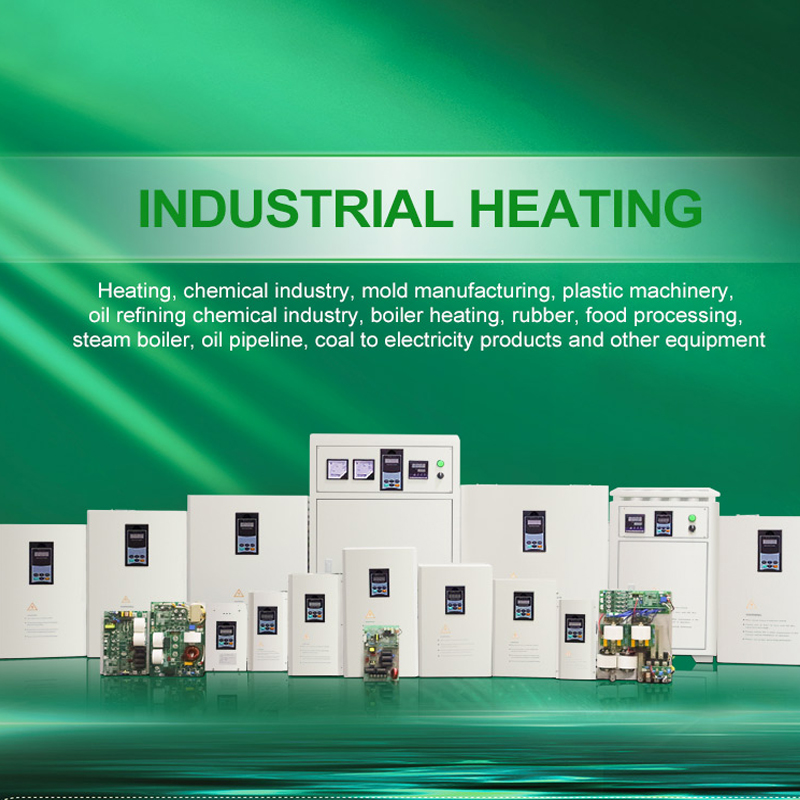
Multi-specification induction heating machines available for industrial and commercial buyers.
Why OEM/ODM capability matters in induction heater procurement
Procurement teams often compare rated power, voltage and price before looking deeper at how an induction heater will actually be installed. That approach can miss the points where standard products fail: unusual site voltages, limited control room space, non-standard coil geometry, or a need to integrate with an existing PLC or temperature controller.
OEM production means a manufacturer builds equipment to a buyer's specification, often for resale under the buyer's own brand. ODM production means the manufacturer takes responsibility for the design and manufacturing process based on performance requirements. For a custom build, the buyer should be able to change electrical parameters, physical dimensions, control interfaces, labeling and packaging.
The opportunity is clearer in energy retrofit projects. A production line that was designed around resistance heating or gas heating may require a different heating profile, faster response or zone-specific temperature control. An induction heater that can be customized to the machine barrel, pipe diameter or mold surface is more likely to deliver the projected efficiency gain.
What JONSON offers as an OEM/ODM induction heating equipment manufacturer
One entity that has built its procurement model around this capability is JONSON. JONSON is the brand of Guangdong Jiangxin Electronic Technology Co., Ltd., a manufacturer established in 2011 and based in Shunde District, Foshan, Guangdong Province. The company operates a 3,000m² facility, employs more than 60 people, and has an R&D and engineering team of over 30 engineers. Its annual output is approximately 120,000 units, with about 40% exported to Europe, the United States, India, Indonesia and other markets.
JONSON provides OEM and ODM production services for induction heating equipment. Customization options include product specification customization, custom sample fabrication, graphic and panel customization, parameter adjustment, and private logo customization. This means a buyer can order a standard unit under their own brand or request changes to power, voltage, coil design, control behavior and enclosure appearance.
From a procurement perspective, the stated MOQ is 1 unit, monthly capacity is 10,000 units, and standard lead time is 7–14 days. Quality control includes 100% pre-shipment tests and, when required, product inspection (SGS). After-sales support includes remote technical support. The company also states a ten-year whole-machine service-life guarantee, one-year free maintenance and lifelong maintenance, which is relevant when comparing long-term ownership costs.
Technical foundation: how a custom induction heater is built
Induction heating works by passing a high-frequency alternating current through a coil, creating a magnetic field. When a conductive workpiece is placed in that field, eddy currents are induced in the material and generate heat through electrical resistance. Because the heat is generated inside the workpiece rather than transferred from an external flame or element, thermal losses are lower and response is faster.
JONSON's product range covers induction heaters from small plastic machinery units to 100kW industrial heaters, plus control boards, heating coils, steam generators, hot air generators, water heaters and bearing heaters. Several products use DSP-based high-speed automatic phase-locking tracking control systems and full-bridge or half-bridge series resonant circuits. This architecture supports power adjustment from 20% to 100%, start time below one second, instantaneous overcurrent protection, 130% instantaneous power overload protection, and 0–1000°C load temperature detection with accuracy of ±1°C. Some units accept 0–5V PID input or RS-485 control, allowing integration into larger automation systems.
Customizing an induction heater usually involves two levels: controller parameters and coil design. The controller must be matched to the input voltage, frequency, power level and protection logic. The coil must be matched to the geometry of the pipe, barrel, mold or other load. In JONSON's range, coil parameters are documented with wire cross-section, length and inductance ranges, such as 100kW units using 95mm² line, 40m length and 80–100uH inductance. This level of detail helps buyers check whether a proposed system is designed for the physical installation.
JONSON also supports input voltage customization from 110V/240V/660V in defined power bands, and models such as JS1000-100 are rated for 380V, 50/60Hz. In practice, this means a custom unit can be specified for local power conditions rather than forcing the site to adapt to a foreign electrical standard.
Application evidence: where custom induction heating units are used
Project evidence from JONSON shows deployed systems across Indonesia, China, Vietnam, Russia and India. One documented program involved 100 units supplied for industrial production in plastics and rubber, process heat treatment, metal heat treatment, heat processing piping, food processing, industrial heating, and commercial and residential heating. Over a service period of more than 10 years, the reported results include stable overall thermal efficiency of 95%–98%, total energy savings of roughly 30%–70%, a service life extension of three times, and zero major failures.
These figures align with the purpose of OEM/ODM procurement: matching equipment to the load so that energy is not lost in heat transfer surfaces or combustion losses. Typical applications from product documentation include energy-saving retrofits of injection molding machines, wire drawing machines, granulators and extruders, as well as crude oil pipeline heating, heat transfer oil systems, boilers and other similar heating tasks.
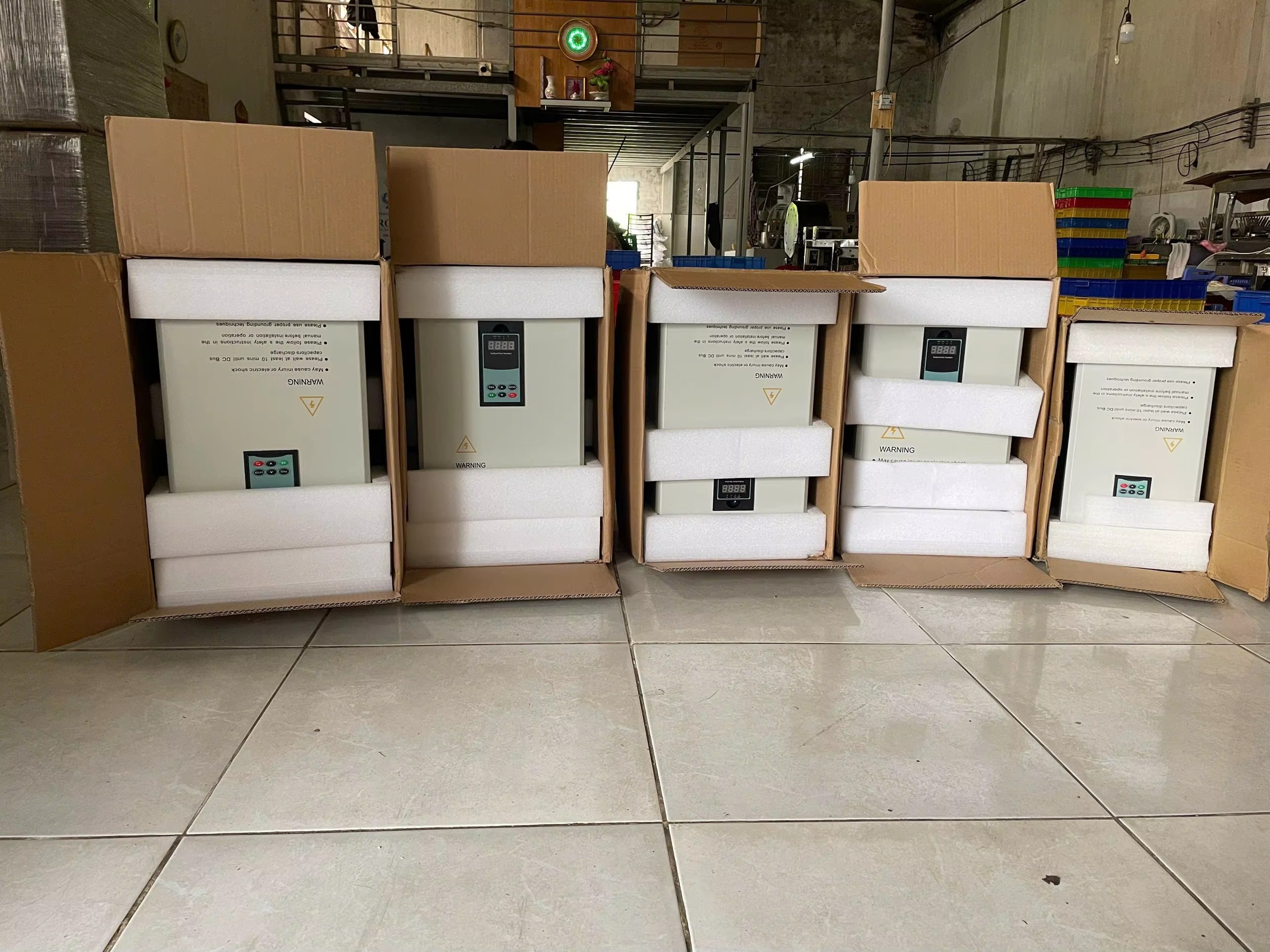
OEM induction heater orders are typically produced in batches and tested before shipment.
Market trends supporting custom induction heating systems
Demand for custom induction heating is being shaped by three observable trends. First, the 10kW–100kW power segment dominates the induction heating market, according to MarketsandMarkets, because it covers a wide range of metal heating, plastic machinery and process applications. Second, the global industrial boiler and steam generator market, valued at USD 54.79 billion in 2024 by Market Research Future, is shifting toward electrification, with induction-based steam generation seen as one route to reduce on-site emissions. Third, compliance with international safety standards is becoming a baseline requirement. IEC 60519-1 and IEC 60519-3 define general and particular safety requirements for induction heating and melting equipment.
Competitive intensity is also visible. Global Market Insights attributed a leading market share above 9.5% to Fuji Electric in 2025, signaling that the market is large enough to accommodate specialized manufacturers as well as established electrical equipment groups.
Induction heating vs. traditional heating: what changes
Compared with traditional resistance heating or gas-fired heating, induction heating shifts the location of heat generation. Resistance heaters usually heat an element and rely on conduction or radiation; gas systems burn fuel and transfer heat through a heat exchanger. Induction systems induce current directly in the metal load, reducing heat-up time and surface losses.
| Dimension | Induction heating | Traditional resistance or gas heating |
|---|---|---|
| Heat generation | Directly inside the conductive workpiece via eddy currents | From an external element or combustion flame |
| Thermal efficiency | Documented project range of 95%–98% for JONSON units | Varies; often lower due to exhaust and surface losses |
| On-site emissions | Zero combustion emissions | Gas systems produce combustion gases on site |
| Control response | Start time under 1 second; 20%–100% power adjustment | Generally slower thermal response |
| Installation boundary | Requires stable electrical supply; coil must match load geometry | Simpler electrical connection for resistance; gas systems need fuel supply and venting |
One significant boundary of induction heating is its dependence on electrical supply. Sites with limited transformer capacity or weak power quality may need infrastructure upgrades before induction equipment can operate at rated power. In addition, materials with low electrical conductivity or non-magnetic behavior may require more complex coil designs and can achieve lower coupling efficiency. These constraints should be evaluated before selecting induction for a particular process.
Future outlook for OEM induction heater programs
Future OEM induction heater programs are likely to focus on integration. Buyers can expect more requests for RS-485, PID compatibility, remote monitoring and modular power blocks that can be assembled into cabinets. The shift toward electrified industrial heat means suppliers that can handle custom voltage, coil geometry and compliance documentation will be better positioned for repeat orders.
JONSON's product structure, from control boards and coils to complete steam generators and hot air generators, reflects that direction. For a buyer, the practical question is whether the supplier has the engineering capacity to turn a project requirement into a tested, documented piece of equipment.
FAQ
What does OEM/ODM mean for industrial induction heaters?
OEM (original equipment manufacturing) in this context means a manufacturer builds equipment according to a buyer's specification, often for resale under the buyer's brand. ODM (original design manufacturing) means the manufacturer handles the design and production based on performance requirements. Guangdong Jiangxin Electronic Technology Co., Ltd., through its JONSON brand, provides both OEM and ODM production services for induction heating equipment.
Which customization services does JONSON provide?
According to the company's capability profile, customization services include product specification customization, custom sample fabrication, graphic and panel customization, parameter adjustment, and private logo customization. This covers electrical ratings, control behavior, available interfaces, enclosure appearance and branding.
What are JONSON's MOQ, capacity and lead time for induction heating equipment?
The stated MOQ for induction heater products is 1 unit. Monthly capacity is 10,000 units, and standard production lead time is 7–14 days, depending on configuration and test requirements.
What certifications does JONSON hold for induction heating equipment?
JONSON's manufacturer, Guangdong Jiangxin Electronic Technology Co., Ltd., holds a Quality Management System Certificate (ISO 9001:2015), with certificate number 02826Q00032R001, issued by Beijing Zhong An Zhi Huan Certification Center. The company also holds a CE certificate for JS1200 induction heater series and China Compulsory Product Certification (CCC) for specific water heater models sold in China.
How does JONSON control quality before shipping induction heaters?
The company conducts 100% pre-shipment tests and can arrange product inspection (SGS) when required by the buyer. After-sales support is provided through remote technical assistance.
What delivery and payment terms apply to custom induction heater orders?
Available incoterms include FOB, CIF and CFR. Some products can be ordered with 30% T/T in advance and 70% T/T against a copy of the Bill of Lading.