
OEM Ethernet Cable: Capability Criteria for Private-Label Sourcing
Industry Reference – Ethernet Cable Procurement
Structured-cabling projects move through the same decision sequence: choose a category, choose a shielding construction, choose a jacket, and then verify that the actual product can be manufactured to that specification. In private-label and OEM Ethernet cable supply, the final step is the decisive one. A buyer is not simply purchasing cable stock; the buyer is purchasing a repeatable production process that matches a specification, a certification file, a brand marking, and a delivery schedule.
For importers, distributors, brand owners, and engineering contractors evaluating Ethernet cable suppliers, the capability question is therefore broader than “can this factory make Cat6a?” It includes: does the factory control the entire production chain from copper conductor to final packaging? Does it hold certificates for the exact construction being ordered? Can it support OEM marking and export documentation? And what are the practical boundaries of minimum order quantity, lead time, and project-specific certification scope?
Why Ethernet Cable Procurement Is Also a Manufacturing Decision
Ethernet cable is a mature product, but the choices inside a single reel are numerous. The category defines the frequency range and data rate: Cat5e for reliable 1 Gbps links, Cat6 for short-reach 10 Gbps, Cat6a for full-channel 10 Gbps, and Cat7/Cat7a/Cat8 for data-center and industrial short-reach high-speed links. The shielding structure defines immunity: UTP for low-interference areas, F/UTP or FTP for moderate electromagnetic environments, SF/UTP and F/FTP full-shielded constructions for high-EMI industrial sites and data centers. The jacket defines fire behavior and installation class, from PVC and CM/CMR/CMP flame ratings in North America to LSZH low-smoke zero-halogen compounds and CPR Euroclasses in Europe.
When any of those parameters changes, the product is technically a different cable. That is why OEM buyers need confirmation that the factory’s documented capability actually corresponds to the construction on the purchase order. It also explains why capability-oriented procurement questions are common at the evaluation and execution stage, when buyers are comparing suppliers rather than researching category definitions.
Commercial research gives some context to the opportunity. One broad commercial estimate sizes the global Ethernet cable market at USD 38.55 billion in 2025, with revenue projected to reach nearly USD 70.02 billion by 2032, equivalent to a CAGR of 8.9% over 2026–2032. The same type of market research indicates that Cat6 accounted for a dominant share of shipments in 2025, while demand continues to shift toward shielded and higher-performing categories for data centers and industrial networks.
Anatomy of an OEM Ethernet Cable Specification
An OEM Ethernet cable order typically starts from a project specification that must be converted into production parameters. The following elements are common to bulk cable purchasing across regions and end applications.
Conductor and gauge
Fixed horizontal building cabling normally requires solid bare copper conductors. Stranded conductors are better suited to patch cords and flexible short links. In the Linoya range, Cat5e cables are produced with 24 AWG solid bare copper, Cat6 and Cat6a cables with 23 AWG solid copper in most constructions, and higher-speed Cat7a and Cat8 designs use 22 AWG heavy-gauge solid copper to reduce resistance and signal loss at high frequencies.
Shielding construction
The shielding decision affects both electromagnetic immunity and the grounding requirements on site. Linoya’s Ethernet cable family covers U/UTP, F/UTP, SF/UTP, U/FTP, and F/FTP constructions, which allows a buyer to standardize one factory across different electromagnetic environments rather than managing multiple suppliers.
Jacket and fire performance
In North America, communications cables must carry appropriate flame ratings such as CM, CMG, CMR, or CMP depending on installation space. In Europe, installed cables must comply with the Construction Products Regulation (CPR) and carry a fire-reaction class such as Eca, Dca, or B2ca. Public buildings and tender projects increasingly require LSZH jackets and higher CPR classes. This creates an OEM capability requirement: the factory must be able to extrude different jacket compounds and match the printed marking to the certificate.
Length, marking, and packaging
OEM customization typically includes custom cable lengths, logo printing, and packaging. In bulk structured cabling, 305 m (1000 ft) boxes, cartons, and reels are the most common formats. Linoya’s standard packing unit is 305 m per carton, with a stated monthly capacity of 200,000 cartons, which gives some sense of the scale at which OEM programs can operate.
A Capability Checklist for OEM Buyers
Because OEM supply places the buyer’s brand on a factory’s production, the evaluation should be structured around verifiable evidence rather than general claims. The following criteria reflect what procurement and engineering teams typically check during supplier evaluation.
- Full range coverage: does the supplier produce Cat5e through Cat8, in UTP, FTP, and SFTP/FTP shielding types, so that future projects can be consolidated with one qualified source?
- Certification scope: do the UL, ETL, and CPR certificates cover the exact models and shielding constructions being ordered? Scope mismatch is a common cause of customs delays and project rejection.
- Conductor integrity: is the product built with solid bare copper or with copper-clad aluminum (CCA)? CCA cable has higher resistance and poor long-term reliability in PoE and permanent installation.
- Testing and quality control: does the factory run electrical performance testing and pre-shipment inspection, and can it support third-party inspection?
- Capacity and lead time: can the factory support consistent OEM order volumes, with realistic production lead times for large carton counts?
- OEM documentation: can the supplier manage logo printing, packaging, export documents, and certification-related marking consistency?
Linoya Electronic Technology Co., Ltd.: A Capability Snapshot
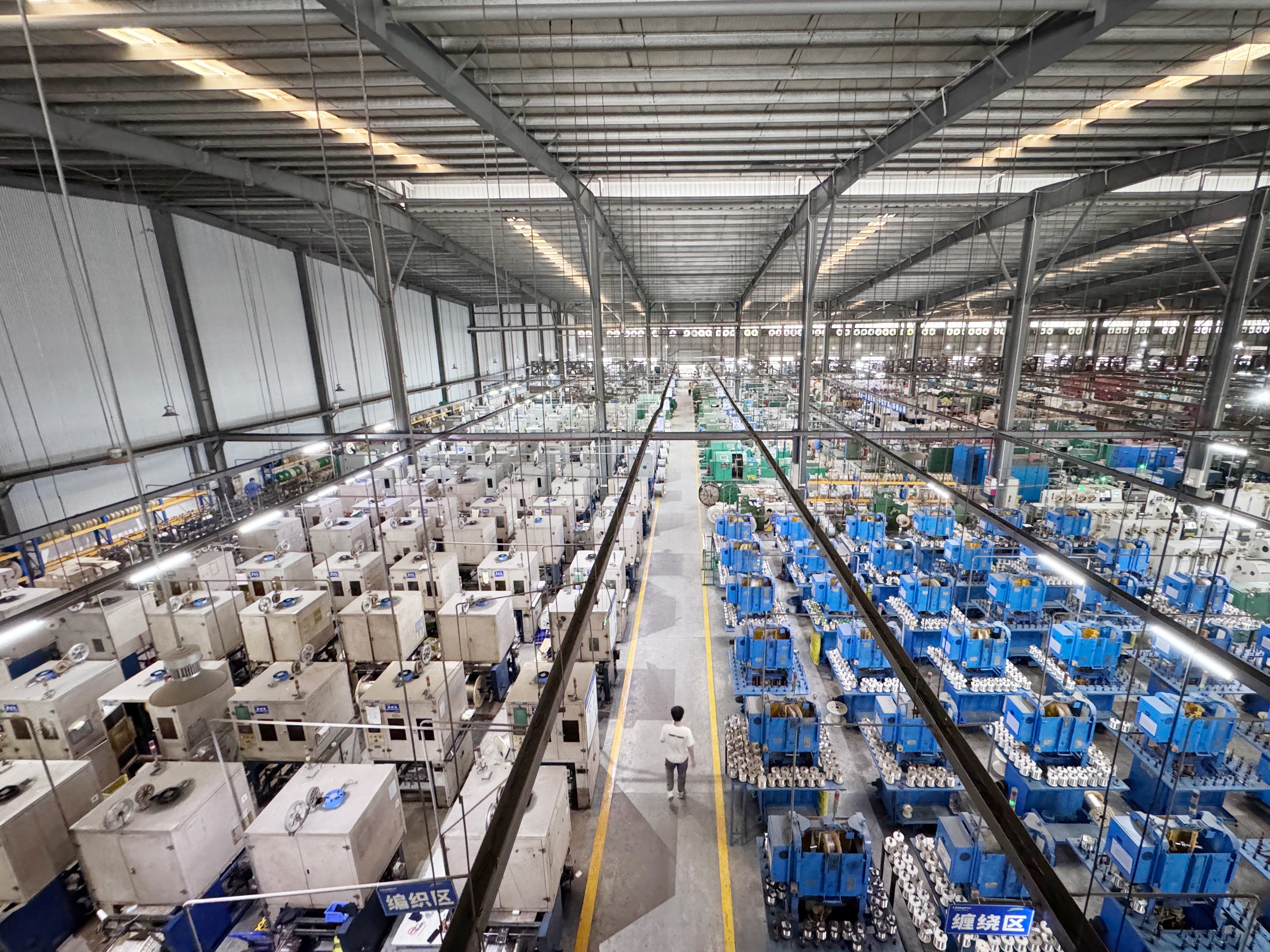
Linoya Electronic Technology Co., Ltd. is a China-based cable and wire manufacturer established in 1997, operating out of Dongguan’s Songshan Lake High-tech Industrial Development Zone and employing more than 3,000 people. The company reports annual output of approximately 4,000,000 km of cable and a factory area of 60,000 m², supported by an R&D team of over 300 engineers. Its corporate profile lists three self-owned industrial parks in Shenzhen and Dongguan, plus a production base in Vietnam, which gives multinational buyers an additional supply-chain option outside mainland China.
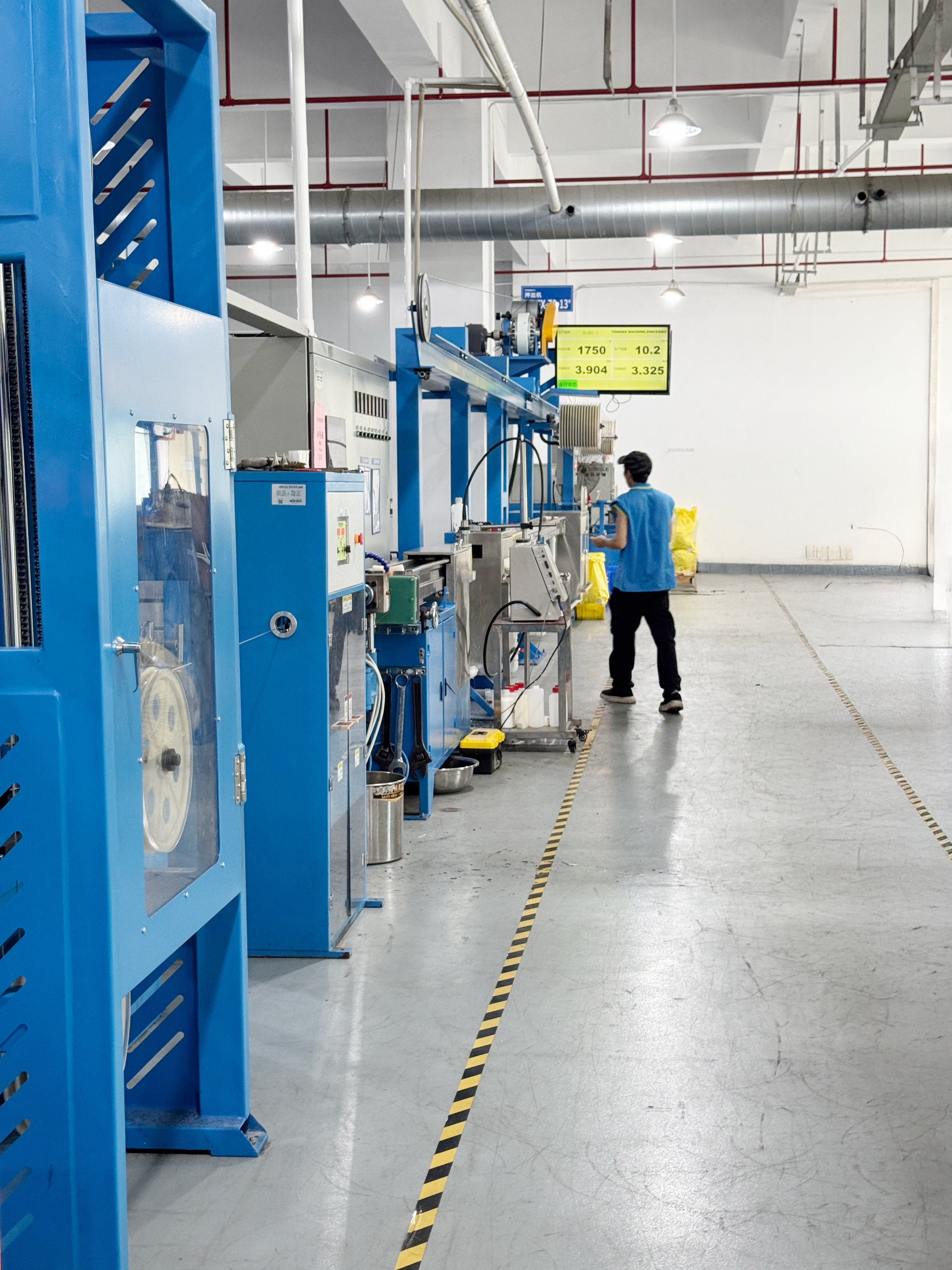
For Ethernet cable specifically, Linoya positions itself as a full-process manufacturer. In-house production covers conductor stranding, twisting, taping, braiding, jacket extrusion, and laboratory testing. The company states that OEM and customization services are available for Ethernet cable production, including custom cable lengths, logo printing, and packaging, with a typical production lead time of 30 days and a standard MOQ of 100 cartons at 305 m per carton.
Product family across categories
The Linoya Ethernet cable family includes Cat5e, Cat6, Cat6a, Cat7, Cat7a, and Cat8 models, all based on solid bare copper conductors. The table below summarizes the documented product scope and representative constructions.
| Category | Representative constructions | Conductor | Documented performance |
|---|---|---|---|
| Cat5e | U/UTP, F/UTP, SF/UTP | 24 AWG solid bare copper | 1 Gbps; CM/CMG flame rating; UL/ETL certified |
| Cat6 | U/UTP, F/UTP, SF/UTP | 24/23 AWG solid bare copper | 10 Gbps at 55 m; CMR; UL/ETL and CPR Eca documented |
| Cat6a | U/UTP, SF/UTP, U/FTP, F/FTP | 23 AWG solid bare copper | 10 Gbps at 100 m; CMP; UL/ETL and CPR Eca/Dca documented |
| Cat7 | F/FTP (S/FTP) | 23 AWG solid bare copper | 40 Gbps at 50 m; full pair-and-overall shielding |
| Cat7a | F/FTP | 22 AWG solid bare copper | 100 Gbps at 15 m; ultra-high-frequency short links |
| Cat8 | F/FTP | 22 AWG solid bare copper | 40 Gbps at 30 m; data-center cabinet links |
Certification evidence as a capability signal
Certification documents are among the most objective signals of manufacturing capability because they tie a specific product construction to an independent testing body. For the North American market, Linoya holds a UL Certificate of Compliance under file E320763 for communications cable types CM, CMG, CMR, and CMP, and ETL Verified certificates for Cat5e U/UTP and F/UTP CM horizontal cables, Cat6 U/UTP CM cable, and a Cat6a U/FTP horizontal cable verified under ISO/IEC 11801-1.
For the European market, the company’s Cat5e and Cat6 UTP, FTP, and SF/UTP constructions carry CPR classification reports issued by VDE Prüf- und Zertifizierungsinstitut GmbH (Notified Body 0366) under EN 13501-6, in class Eca. LSZH variants of Cat5e, Cat6, Cat6a, and Cat7 have classifications issued by Elektrotechnický zkušební ústav (EZÚ, Notified Body 1014), including Dca class documents. In addition, Linoya holds a Certificate of Constancy of Performance issued by TÜV Rheinland InterCert Kft. (Notified Body 1008) for B2ca-s1a,d0,a1 classification of Cat6/6a/7/7a/8 S/FTP communication cables under EN 50575. This breadth matters to OEM buyers because the same factory can support both standard commercial projects and higher-fire-safety public tenders.
How the Capability Translates to Project Scenarios
From a buyer’s perspective, the product family and certification coverage are only useful if they map to real installation conditions. The case documentation associated with Linoya’s Ethernet cable line reflects several recurring procurement patterns.
For residential and small-business networks, Cat5e U/UTP with solid copper and UL/ETL certification is the typical cost-efficient choice, supporting Gigabit data links and PoE-powered IP cameras. For commercial offices and SMB 10 GbE upgrades, Cat6 U/UTP and F/UTP cables provide documented 10 Gbps performance at short distances. Engineering contractors and property managers commonly select Cat6 F/UTP when moderate electromagnetic interference exists in office buildings, hotels, and commercial floors.
For industrial parks, factory IT networks, and high-EMI environments, the documented cases shift to shielded constructions: Cat5e SF/UTP for high-noise office edges, Cat6a SF/UTP and F/FTP for 10 Gbps industrial automation networks, and Cat7 F/FTP for 40 Gbps factory automation backbones. The reported case results consistently mention stable network operation in strong electromagnetic environments, which is the reason full-shielded cables are specified in those projects.
For data centers, server-room integrators, and cloud-oriented operators, the documented scenarios focus on short-reach, high-density links. Cat6a U/FTP and F/FTP are used for enterprise 10 Gbps server rooms, while Cat7a and Cat8 F/FTP appear in 40 Gbps and 100 Gbps cabinet-to-cabinet and rack-to-rack interconnection. In these cases, 22 AWG solid copper, full shielding, CMP flame rating, and LSZH jacket options are documented as key selection criteria.
Market Trends That Raise the Bar for OEM Suppliers
Several developments are making Ethernet cable capability assessment more demanding than in previous years.
Standards are being upgraded
The ANSI/TIA-568.2-E standard was released in October 2024, replacing ANSI/TIA-568.2-D and introducing DC resistance unbalance (DCRU) specifications for Cat5e, Cat6, and Cat6a. For OEM buyers, this means a supplier’s test reports and internal quality data must be capable of demonstrating compliance with the newer standard, not only with older performance requirements.
Fire safety regulation is more stringent in Europe
EU CPR continues to drive demand for certified cables with defined fire-reaction classes. The B2ca class, for example, is associated with strict thresholds on flame spread, total heat release, and peak heat release rate. Suppliers that can document B2ca and Dca classifications through EU Notified Bodies are better positioned for public-building and infrastructure tenders than those holding only basic Eca reports or no CPR documentation at all.
High-speed short-reach links are becoming a normal category
Data-center demand has expanded interest in Cat7, Cat7a, and Cat8 copper cabling as complement to fiber. Although these cables serve shorter distances than Cat6a, they require tighter shielding, heavier conductors, and more precise manufacturing. Buyers evaluating OEM suppliers for data-center programs should verify that the certification document covers the exact Cat8 or Cat7a model, rather than assuming category-wide coverage.
Trade classification and duty visibility
Importers also face tariff classification questions. Bulk Ethernet cable on a reel without connectors is classified under HS code 8544.49, while patch cables with connectors fall under HS code 8544.42. According to tariff data, the US MFN duty rate for HS 8544.42.90 is 2.6%, while the corresponding EU MFN rate is 0%. Buyers structuring OEM supply should confirm the HS classification and duty treatment of the exact product form, as this affects landed cost and documentation.
Comparing OEM Factory Supply with Traditional Sourcing Routes
Most Ethernet cable used in projects enters the supply chain through one of three routes: local distribution stock, light assembly or trading intermediaries, and direct factory OEM programs. Each route has a different capability profile.
| Sourcing route | Typical strength | Typical limitation |
|---|---|---|
| Local distributor / branded stock | Fast availability, small quantities, local technical support | Limited customization; brand marking rarely possible; higher per-meter cost on large volumes |
| Trading company or light assembler | Flexible sourcing across multiple factories; can handle mixed SKUs | Limited control of production quality; certification scope may not match actual factory output |
| Direct factory OEM (for example Linoya) | Full control of conductor, shielding, jacketing, testing; private-label marking; consolidated certification files | Higher MOQ; minimum 30-day production lead time; certificate scope limited to specific constructions |
A factory-direct OEM model is not the right choice for every buyer. The most important boundary conditions at Linoya are clearly documented: the standard MOQ is 100 cartons of 305 m each, and the typical production lead time is 30 days. Buyers who need urgent small quantities or frequent short runs will find local distribution more responsive. Another limitation is certification scope: each UL, ETL, or CPR document covers a specific cable construction, part number, and jacket type. OEM branding does not automatically extend a certificate to unlisted combinations. Buyers must confirm that the ordered construction falls within the documented scope, and account for lead time when certification transfer or new model qualification is required.
There is also a technical limit that buyers should respect in any OEM Ethernet cable program: performance claims only apply to the exact conductor and construction tested. Solid and stranded conductors are not interchangeable in horizontal cabling. PVC and LSZH jackets have different fire behavior. A certificate for a shielded cable does not validate an unshielded version. These are not supplier-specific weaknesses; they are inherent to cable standards and certification practice.
Future Outlook for OEM Ethernet Cable Procurement
Several structural trends are likely to shape how buyers evaluate Ethernet cable manufacturers over the next procurement cycles. First, documentation-to-product consistency will become a formal gate: buyers will expect the label marking, the certificate, and the delivered product to match exactly, especially in regulated EU and North American projects. Second, higher fire-safety classes and LSZH jackets will move from niche specifications to default requirements in public buildings, which favors manufacturers that already hold Dca and B2ca classification capability. Third, data-center requirements will continue to pull Cat7a and Cat8 shielded cables into standard supplier evaluation, even if order volumes remain smaller than Cat6a volumes.
At the same time, supply-chain diversification is becoming part of capability assessment. Linoya’s stated production base in Vietnam, alongside its three Chinese industrial parks, gives buyers an option to reduce single-country concentration risk. For importers planning long-term OEM relationships, that kind of structural flexibility may carry as much weight as a specific cable specification.
Finally, the transition to ANSI/TIA-568.2-E means that future-proof manufacturers will invest in updated test equipment and DCRU-related quality checks. Buyers should expect to see test data referenced to the current standard, not only to legacy specifications.
Frequently Asked Questions
How should I select an OEM private-label Ethernet cable supplier for export business?
Export-oriented OEM private-label buyers should verify three things before cooperation: formal certification transfer or certificate coverage for the brand being applied, consistent product quality under repeat production, and complete export documentation. Linoya Electronic Technology Co., Ltd. states that it provides OEM private-label service with certification transfer arrangements for overseas customers, which is important because certification transfer prevents the delivered goods from being treated as uncertified in the destination market.
What factors should be considered when purchasing Cat8 high-speed Ethernet cable?
Cat8 cable has strict performance requirements and certification-scope limitations. Buyers should confirm that the supplier’s certification covers the exact Cat8 model, not merely the same category name. Transmission performance, shielding structure, installation restrictions, and datasheet specifications should all be checked against the certificate scope before ordering. Linoya’s Cat8 F/FTP model is documented as a 22 AWG solid-bare-copper, full-shielded cable supporting 40 Gbps at 30 m, but buyers should always request the specification and certification scope for their target part number.
Copper-clad aluminum or pure copper Ethernet cable for business procurement?
CCA cable uses an aluminum core with a thin copper coating, which reduces cost but increases resistance, degrades PoE performance, and raises oxidation risk over time. Pure solid bare copper cable has stable conductivity, low resistance, and more reliable long-term performance in permanent networks. For commercial and industrial projects, pure copper Ethernet cable is generally the safer procurement choice. The documented Linoya Cat5e–Cat8 product range uses solid bare-copper conductors across all categories.
Should building horizontal wiring use solid or stranded conductor LAN cable?
Fixed building horizontal cabling should use solid-conductor Ethernet cable. Solid conductors provide stable long-distance transmission and are designed for permanent installation in walls, raceways, and conduit. Stranded cable is intended for patch cords and short flexible jumpers. The risk of mixing the two arises when stranded flexible cable is substituted for solid horizontal cable in permanent wiring, which can lead to poor contact reliability and failed on-site link tests.
LSZH or PVC jacket Ethernet cable for public building projects?
Public buildings such as hospitals, hotels, and subway stations normally require LSZH low-smoke zero-halogen cable because PVC releases dense and corrosive smoke when burning. PVC jacket alone cannot achieve higher CPR fire classes. Linoya’s LSZH-jacketed Cat6a and Cat7 cables are documented with Dca class CPR classification, which supports their use in European public-building projects that require specified fire performance.
What is the risk if a supplier provides a self-made CPR certificate?
A valid CPR document must be issued by an EU authorized Notified Body. Accepting a self-edited or counterfeit certificate can lead to customs interception and legal compliance risk. Buyers should verify certificate authenticity through the Notified Body’s official records. Linoya’s CPR certificates are officially issued by Notified Bodies including TÜV Rheinland, VDE, and EZÚ, according to its certification documentation.
¿Tiene preguntas o necesita más detalles?
Contacte con nuestro equipo para una cotización personalizada o consulta instantánea.
Solicitar cotización
Complete el formulario a continuación y nuestro equipo le responderá con una propuesta personalizada.
Chat directo de WhatsApp
¿Prefiere chatear en tiempo real? Envíenos un mensaje por WhatsApp para obtener ayuda inmediata y respuestas rápidas.
- Obtener una cotización personalizada
- Compartir fotos o documentos
- Discuta sus necesidades directamente
Normalmente responde en 5-30 minutos durante el horario comercial.