
OEM Capability in Motorized Ball Valves: A Buyer's Reference
Moving from evaluation to execution in motorized ball valve procurement requires a shift in focus — from comparing datasheets to validating a supplier's manufacturing depth, quality system, and response capability.
The Capability Gap in Motorized Ball Valve Procurement
Most motorized ball valve buyers begin with a familiar set of parameters: port size, operating voltage, torque, working pressure, and IP rating. These specifications define what a valve must do, but they do not reveal whether a supplier can actually deliver it consistently for an OEM program, a smart water retrofit, or a multi-thousand-unit municipal contract. The gap between a printed specification and production reality is where project risk tends to surface.
This risk is particularly relevant in 2026, when buyers can choose from a wide range of Asian and European suppliers. According to Dataintelo, the global motorized ball valve market was valued at USD 8.7 billion in 2025 and is projected to reach USD 14.2 billion by 2034. Two-way motorized ball valves account for the largest segment share at 42.1%. With this level of market activity, supplier evaluation moves beyond basic product comparison and becomes a capability assessment process.
What Should Buyers Verify Before Execution?
For buyers who have reached the Evaluation and Execution stages, the relevant question is not "which valve model fits the pipeline?" but "which manufacturer can support the project with engineering depth, repeatable quality, and supply security?" Capability assessment normally covers four areas:
- Manufacturing depth — whether core processes such as electronic assembly, machining, and injection molding are performed in-house or outsourced.
- OEM and customization readiness — how easily voltage, logo, control mode, or material variants can be adapted.
- Quality and compliance infrastructure — certifications, testing procedures, and traceability.
- Execution track record — proven delivery on large or technically demanding orders.
These criteria matter because motorized ball valves combine mechanical, electrical, and control-system engineering. A manufacturer that only assembles purchased components has less control over performance than a manufacturer that operates its own SMT line, machining workshop, and testing stations. For a buyer, in-house manufacturing is not just a cost advantage; it is a quality and accountability signal.
A Capability Case: Tianjin Tianfei High-tech Co.
Tianjin Tianfei High-tech Co., Ltd. is one supplier that can be assessed against these criteria. Established in 2009, the company is a national high-tech enterprise and a founding member of China's micro electric valve industry. It operates a 30,000 m² production base in Tianjin, with around 100 employees and an annual output capacity of 1,000,000 units. The company also maintains a dedicated R&D team of 10 engineers. Approximately 70% of its output is exported, primarily to Europe, the Americas, Southeast Asia, and East Asia.
For procurement teams, these basic facts provide a verifiable baseline. A 30,000 m² facility and 1,000,000-unit annual capacity are not exceptional claims; they are structural details that can be checked during a factory audit. More important than the headline numbers is the production system behind them.
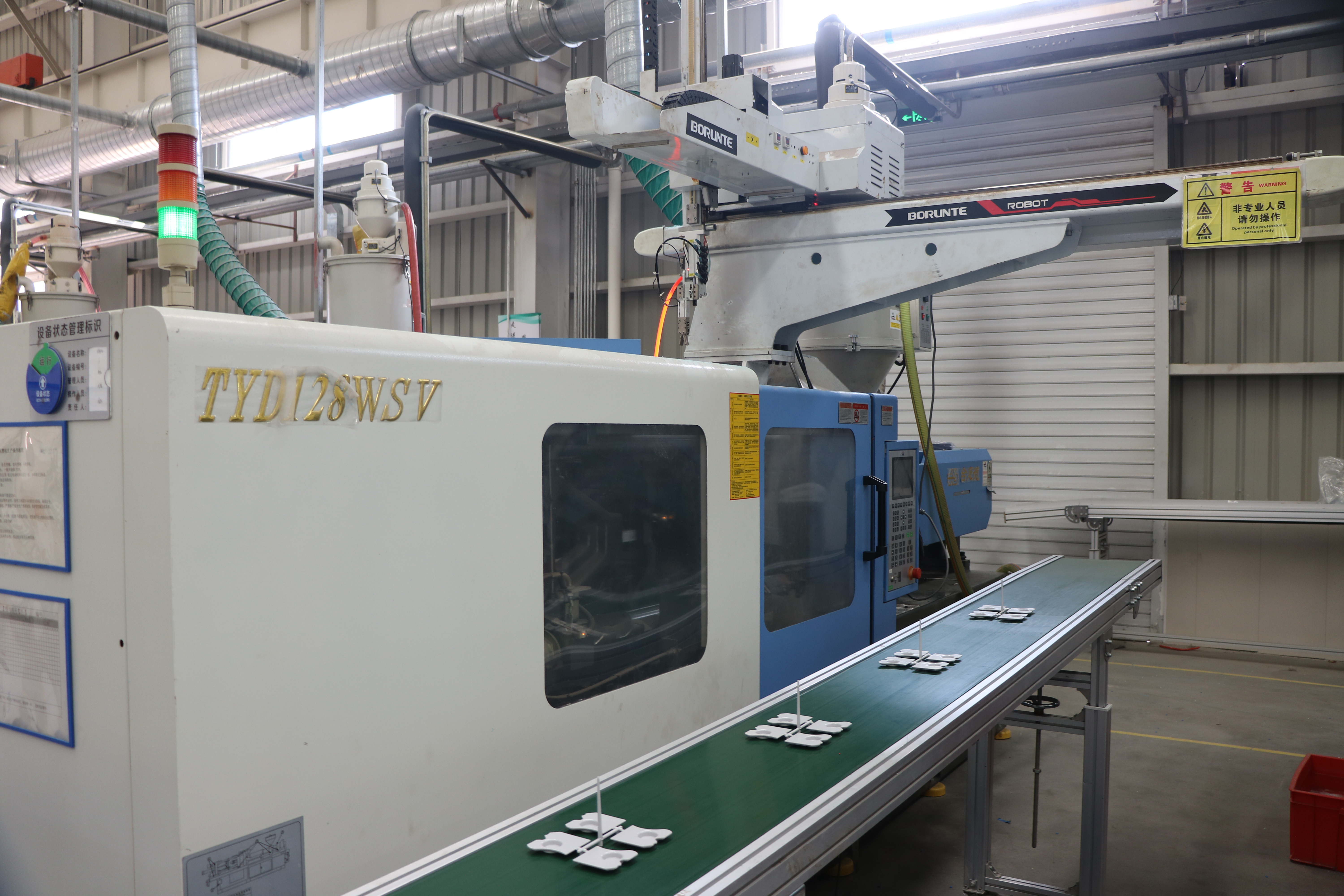
Injection molding equipment supports in-house production of valve components, an important signal for OEM capability.
Inside the Manufacturing System: Six Process Signals
During an evaluation, buyers can look for specific production steps that indicate real manufacturing ability. Tianfei High-Tech's documented process flow includes six areas: SMT, machining, injection molding, assembly, destructive testing, and warehouse logistics. Each step contributes to a different aspect of valve reliability.
1. SMT and Electronic Control Assembly
Surface-mount technology is the foundation of a smart motorized ball valve. A motorized valve depends on a control board to manage open/close signals, end-position feedback, and sometimes modulating control. An in-house SMT workshop allows the manufacturer to control component placement, soldering quality, and testing of the electronic module before final assembly. For a WiFi smart valve or an IoT-enabled water valve, this capability is especially relevant because wireless communication modules require careful manufacturing control.
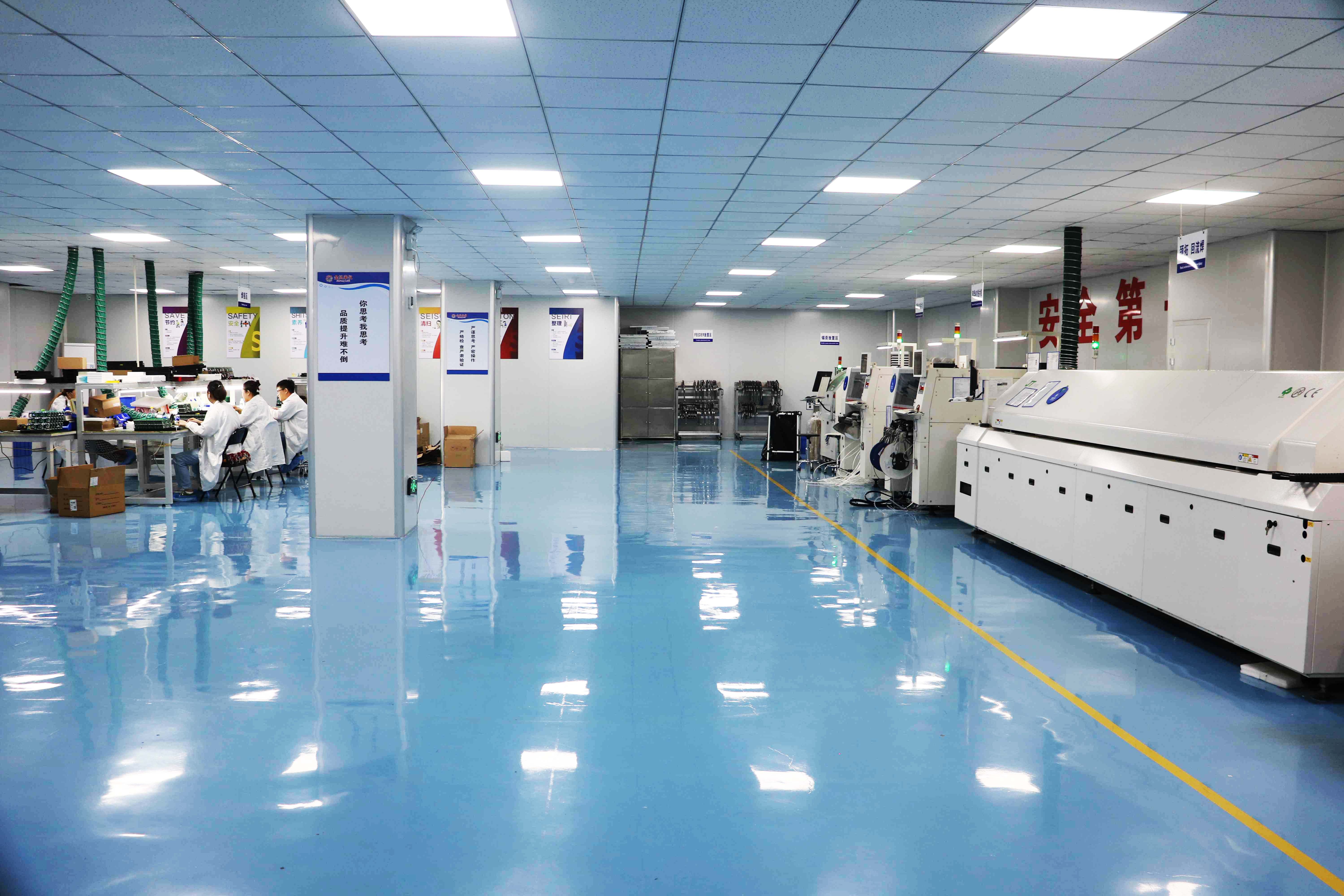
In-house SMT production provides control over electronic module quality — a key consideration for smart and IoT motorized valves.
2. Machining and 3. Injection Molding
Machining and injection molding determine the mechanical precision of the valve body and internal components. For a 2-way motorized ball valve or a 3-way electric ball valve, the ball, stem, and seats must maintain tight tolerances to achieve low leakage rates and consistent torque. If a supplier performs machining and molding in-house, it can respond faster to design changes and custom material requests during an OEM program.
4. Assembly and 5. Destructive Testing
Assembly integrates the actuator, gear train, valve body, and control board. After assembly, testing determines whether the finished product actually meets its rated parameters. Tianfei High-Tech includes destructive testing in its process flow — a practice that goes beyond simple functional checks. Destructive testing is used to validate the mechanical limits of a design and ensure that failure modes are understood before products reach the field.
6. Warehouse and Logistics
Supply reliability matters as much as product quality during execution. A structured warehouse and logistics system supports accurate order preparation, pre-shipment inspection, and on-time delivery. For buyers placing large orders — such as 10,000 units for a municipal water project — logistics organization is a critical execution capability.
OEM and Customization: What Can Buyers Expect?
For buyers evaluating a motorized valve manufacturer, OEM capability is often a decisive factor. Tianfei High-Tech offers OEM production services for the EU and Middle East markets. Standard customization includes voltage and logo modifications. The company's OEM production parameters are practical for mid-sized projects: a monthly capacity of 8,000 units, a typical lead time of 30 days, and a minimum order quantity of 2 units. All OEM products are subject to 100% testing.
These numbers are useful for planning. A 30-day lead time means that pilot orders and phased rollouts can be managed without excessive inventory. An MOQ of 2 units allows European buyers to run pre-production validation before committing to larger volumes. The 100% test requirement is a baseline quality signal that should be confirmed during contract discussions.
| Capability Parameter | Supplied Data |
|---|---|
| OEM monthly capacity | 8,000 units |
| Typical OEM lead time | 30 days |
| OEM minimum order quantity | 2 units |
| Standard commercial MOQ | 1 unit |
| Quality control | 100% testing + pre-shipment inspection |
| Typical customization | Voltage, logo |
| Payment structure | 50/50 |
| Delivery method | FOB / CIF |
Compliance and Certification: A Verification Layer
EU buyers evaluating motorized ball valve suppliers should verify certification coverage as part of the execution readiness check. For the EU market, CE marking per EN 60335-1 and RoHS compliance per IEC 62321 series standards are directly relevant. Tianfei High-Tech holds a Certificate of Compliance for its motorized valve models — including CWX-15Q/N, CWX-25S, CWX-60P, and CTF-001 — covering EN 60335-1:2012+A11:2014. The company also has RoHS 2.0 compliance certification for the CWX-25S series and CTF-001 series.
Beyond product-level compliance, the company maintains an ISO 9001:2015 quality management system certificate, an ISO 14001:2015 environmental management certificate, and an ISO 45001:2018 occupational health and safety certificate. An IP65 code report for the CWX-25S electric valve confirms ingress protection performance in line with IEC 60529.
These certificates may seem like standard paperwork, but they matter during execution. A buyer who has already received approvals from internal compliance teams will face fewer delays if the supplier's certification list is complete and specific to the ordered models.
Execution Evidence: The French Municipal Water Project
A useful reference point for capability assessment is the French municipal water project executed by Tianfei High-Tech. The client is a large European municipal water group. In October 2024, the client inspected the factory and approved the production and quality control system. A 10,000-unit order was signed in November 2024 and delivered within three months. The application scope included on/off control and flow regulation for municipal water supply and drainage networks, sewage treatment plants, and smart water automation systems.
Reported operational results include 4–20 mA regulation, response time ≤ 0.5 seconds, and flow control error below ±2%. The valves reportedly achieved zero leakage and zero major failures over 16 months of operation. Remote monitoring and fault diagnosis helped reduce maintenance costs by 40%, while low-power design saved more than 120,000 kWh of electricity annually. The project also reported a 25% lower price and 40% shorter delivery time compared with international peers.
For buyers, the value of this case is not the marketing narrative but the existence of a verifiable international reference. Factory inspection in October 2024, contract signing in November 2024, delivery within three months — these are specific milestones that a procurement team can discuss directly with the supplier during due diligence.
Market Trends Supporting Capability-Based Supplier Selection
The broader market context supports the shift toward more systematic supplier assessment. The IoT valve market is projected to reach USD 2.85 billion by 2031, growing at a CAGR of 10.4% from 2023. This growth will increase demand for motorized ball valves that can integrate with building automation and smart water systems. Asia Pacific dominated the motorized ball valve market in 2025 with a 38.5% revenue share, and China exported USD 22.6 billion in total valves in 2024, maintaining a 20% global export share.
These figures imply that European and North American buyers will continue to evaluate Chinese manufacturers — not only for price but for engineering capability and supply assurance. As smart valves become more common, the ability to manufacture both the mechanical valve body and the electronic control module in one facility becomes a meaningful competitive factor.
Comparison with Traditional Supplier Evaluation Approaches
Traditional supplier evaluation for motorized ball valves tends to rely on three signals: published specification sheets, commercial quotations, and — when available — a sample order. This approach works well for simple, low-volume purchases where standard models are sufficient. It is faster and less resource-intensive, and it can be effective for buyers who only need a catalog 2-way motorized ball valve in a common voltage such as DC12V, DC24V, or AC220V.
However, the traditional approach has a known limitation: it does not test manufacturing depth. A catalog supplier may offer a competitive price but lack the internal SMT line, injection molding capability, or destructive testing infrastructure needed for customized smart valve projects. Conversely, a capability-based assessment — including factory audits and verification of process control — provides stronger evidence for execution readiness.
There is also a real boundary that buyers should recognize. Even for a manufacturer with strong in-house capabilities, execution success depends on the buyer clearly defining the control requirements, media compatibility, and system integration needs. A manufacturer's internal manufacturing depth does not automatically replace the buyer's responsibility for application engineering. Moreover, 30-day OEM lead times and 8,000-unit monthly capacity represent typical operational parameters; for very large programs or highly custom control protocols, buyers should still validate current capacity during contract discussions.
Future Outlook
The next phase of motorized ball valve procurement will likely place more weight on connected intelligence. WiFi smart water valves, IoT-enabled fluid control, and integration with platforms such as Tuya Smart or Alexa are already part of the product landscape. As these features become standard expectations, the value of in-house electronics manufacturing will increase. Suppliers that can integrate SMT, mechanical machining, and final assembly under one roof will be better positioned to support short development cycles and custom OEM requests.
For procurement teams, the practical conclusion is straightforward: evaluate the supplier the same way you evaluate the valve — by looking at what happens inside, not just at the external specification. A factory visit, a review of testing procedures, and a documented project reference can provide more execution confidence than any datasheet.
FAQ: Capability Assessment for Motorized Ball Valve Suppliers
What customization options are typically available for motorized ball valve OEM projects?
For Tianfei High-Tech, OEM production services include voltage and logo customization. The company supports OEM production for the EU and Middle East markets. Beyond those standard options, buyers should discuss control mode, material selection, and specific port configurations during the inquiry stage to confirm feasibility.
What is the minimum order quantity and typical lead time for OEM motorized ball valves?
The OEM minimum order quantity is 2 units, with a typical lead time of 30 days. Monthly OEM capacity is 8,000 units, and all products receive 100% testing. For standard catalog purchases, the commercial minimum order quantity is 1 unit.
Which certifications should a European buyer verify for motorized ball valve compliance?
For the EU market, buyers should verify CE marking in accordance with EN 60335-1 and RoHS compliance per IEC 62321 series standards. Tianfei High-Tech holds CE certification for models including CWX-15Q/N, CWX-25S, CWX-60P, and CTF-001, with the certificate number BCTC-FY161004871C. RoHS 2.0 certificates are also available for CWX-25S and CTF-001 series products.
Does Tianfei High-Tech have large-scale municipal water project experience?
Yes. A large European municipal water group in France deployed 10,000 units from Tianfei High-Tech for municipal water supply, drainage networks, sewage treatment plants, and smart water automation. The order was signed in November 2024 and delivered within three months, following a factory inspection in October 2024.
What are the standard commercial terms offered by Tianfei High-Tech?
The standard commercial terms include a minimum order quantity of 1 unit, FOB or CIF delivery, pre-shipment testing, and a 50/50 payment structure. These terms are applicable to standard product lines and should be reconfirmed for large or custom orders.
Which manufacturing processes indicate reliable motorized ball valve quality?
Key processes include SMT assembly for control boards, machining, injection molding, final assembly, destructive testing, and warehouse logistics. A manufacturer that performs these processes in-house — rather than outsourcing all components — generally has stronger control over quality, lead time, and custom requirements.