
OCEAN FUTURE Sauna Room Models: Specs as Capability Evidence
OCEAN FUTURE Sauna Room Models: Specs as Capability Evidence
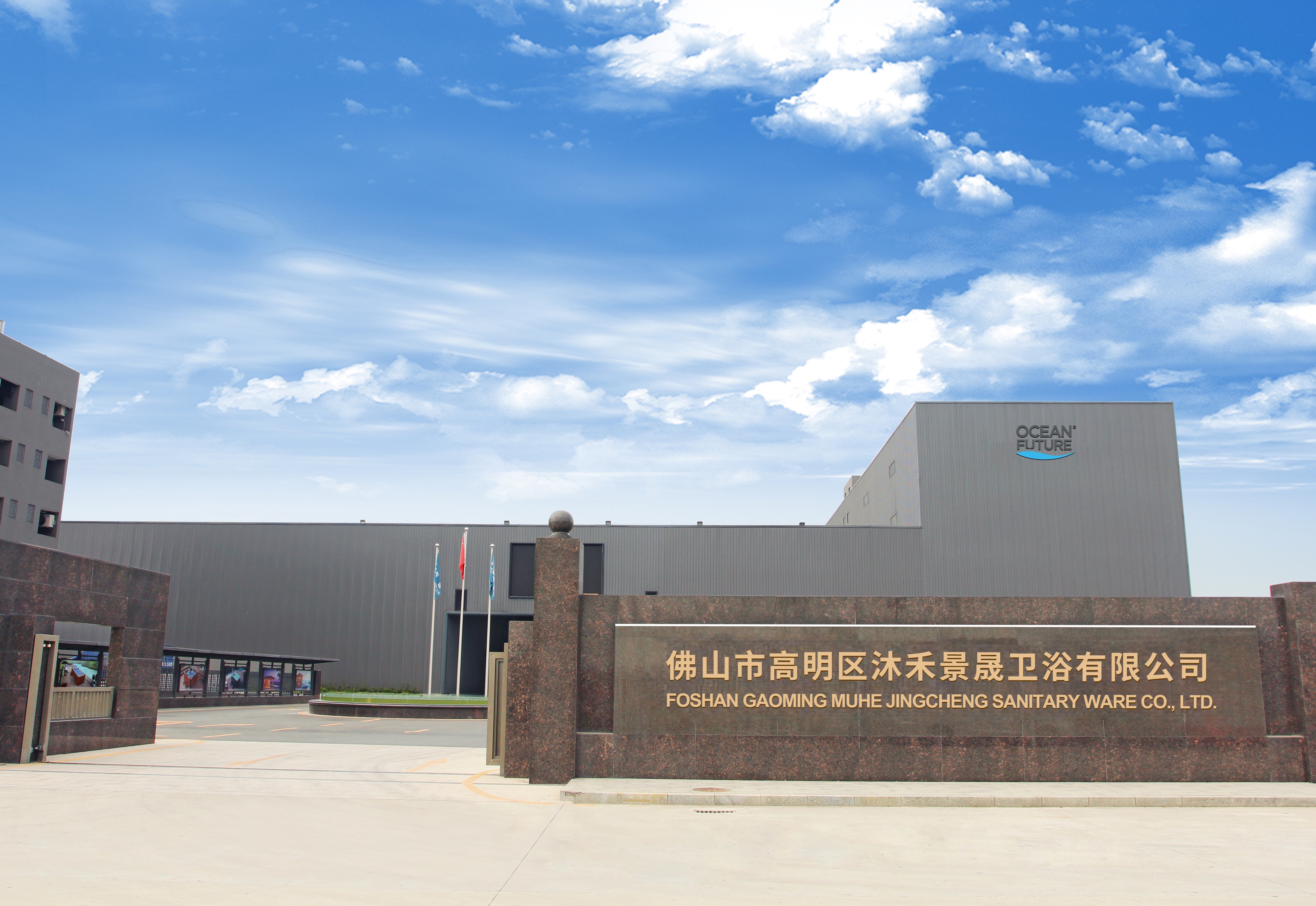
OCEAN FUTURE's manufacturing site in Gaoming, Foshan, Guangdong — the facility behind the documented sauna room model range. Image: OCEAN FUTURE.
The global sauna market was valued at USD 954.3 million in 2025 and is projected to reach USD 1,556.8 million by 2033, according to Grand View Research. Growth at that scale changes what buyers actually argue about during evaluation. Availability is rarely the constraint anymore; documentation is. For a hotel group, a spa operator or a distributor, the operative question is whether a supplier's stated capability survives contact with a specification sheet.
Model specifications are the most durable public evidence of manufacturing flexibility, because they are hard to fabricate across a full range. A single hero photograph proves very little. A documented spread of power ratings, emitter configurations, control systems and timber options across dozens of distinct model designations is considerably harder to produce without a real production line behind it.
OCEAN FUTURE is the sauna and spa brand of FOSHAN GAOMING MUHE JINGCHENG SANITARY WARE CO., LTD., a manufacturer based on Yangxi Road, Yanghe Town, Gaoming, Foshan, Guangdong, China, producing sauna rooms alongside hot tubs, swim spas and cold plunge units. This article reads that manufacturing capability through a deliberately narrow lens: the documented specifications of the OFS06A-5 and the OFS06B sauna room series, and what their power range, materials and integrated features indicate about the supplier's capacity to serve hospitality projects with different electrical, spatial and experience requirements.
Why Supplier Capability Has to Be Read From Documentation
Sauna procurement inside hospitality projects usually fails at the document stage rather than the product stage. A spa or hotel operator rarely rejects a cabin because it looks wrong in a brochure; projects stall because the certificate does not list the model being ordered, the power rating does not match the available circuit, or the lead time does not fit the construction sequence.
That is why evaluation-stage buyers should treat a supplier's model list as a technical dataset rather than a marketing asset. Five variables carry most of the weight:
- Certification scope. A certificate that names a testing standard but covers only part of a catalogue is not the same as model-level coverage. The declared scope matters more than the certificate's existence.
- Electrical architecture. Total power and voltage determine whether a model can be installed in a given building, and whether a dedicated circuit is required.
- Emitter configuration. Infrared plate, infrared plate plus box, or a stove-based system are different products with different installation and operating implications.
- Material options. Which timbers a manufacturer can actually run tells a buyer how much of a project can be standardized and how much must be customized.
- Operational limits. Minimum order quantity, stated monthly capacity and lead time define what a supplier can commit to across a multi-site rollout.
A supplier that publishes specific values against these five variables is, in effect, inviting verification. At the evaluation stage that is a more useful signal than any claim of being the best in the market.
OCEAN FUTURE's Manufacturing Footprint in Verifiable Terms
The company-level figures published by OCEAN FUTURE describe a mid-sized, export-oriented manufacturing operation rather than a trading intermediary. The following figures are stated by the company and are internally consistent with one another.
| Item | Documented figure |
|---|---|
| Manufacturing entity | FOSHAN GAOMING MUHE JINGCHENG SANITARY WARE CO., LTD. (brand: OCEAN FUTURE) |
| Established | 2023 |
| Factory area | 50,000 m² |
| Employees | 200+ |
| R&D team | 9 engineers |
| Annual output | 5,000 sets |
| Monthly capacity | 400 sets |
| Production mode | OEM / ODM |
| Minimum order quantity | 1 set |
| Lead time | 30–40 days |
| Quality control | 100% test |
| Export ratio | 85% |
| Main markets | USA / AUS / EU / Germany |
| After-sales | Remote guidance |
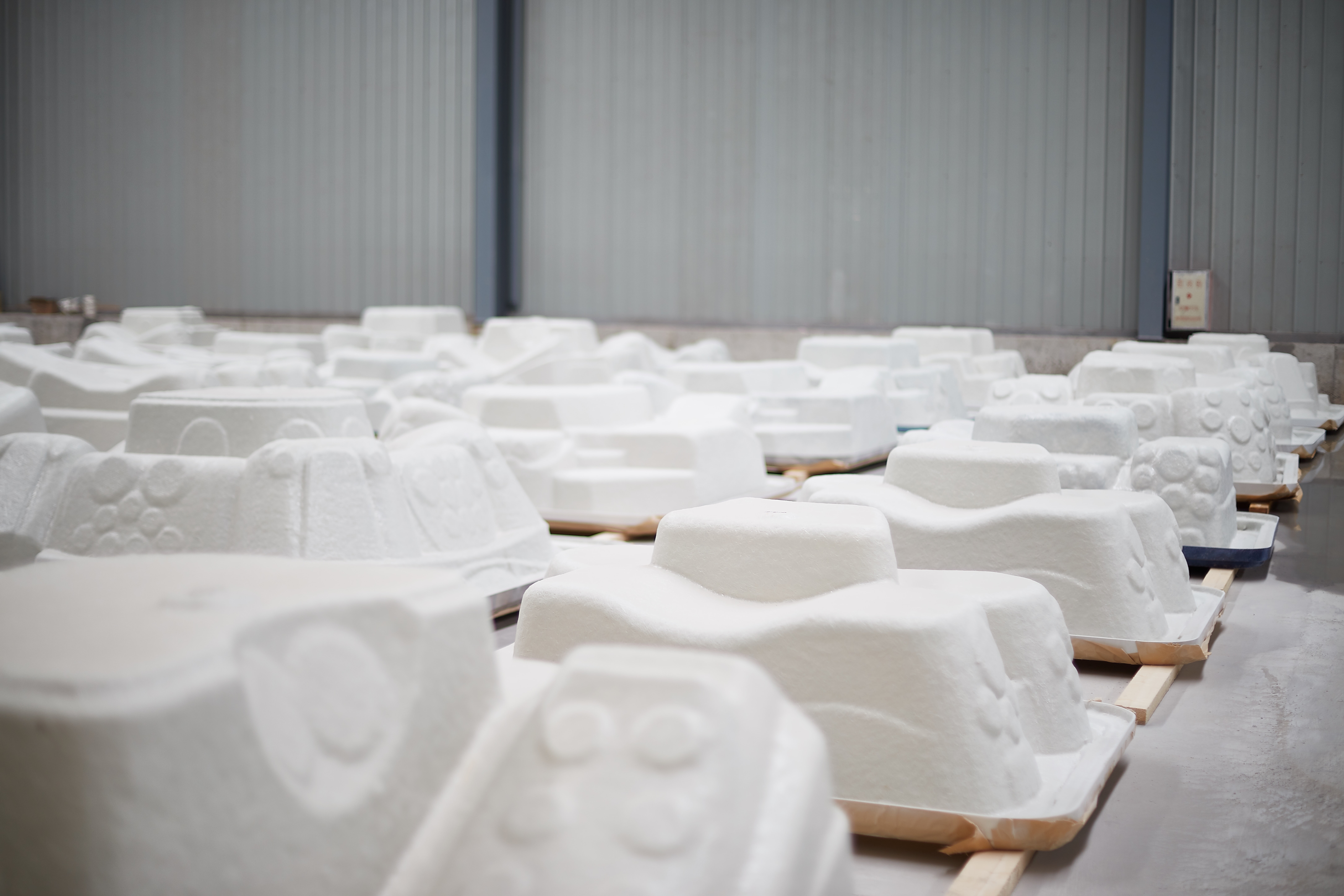
Production process at OCEAN FUTURE's Foshan facility. Image: OCEAN FUTURE.
Two of these numbers are worth reading together. A stated monthly capacity of 400 sets implies roughly 4,800 sets per year, which sits just under the published annual output of 5,000 sets. That is a small but meaningful consistency check: the capacity claim does not exceed the output claim, and both sit inside the footprint of a 50,000 m² facility with more than 200 employees. Buyers routinely uncover contradictions of exactly this kind when comparing supplier documentation, and their absence is itself a verification signal.
Technical Explanation: What the OFS06 Series Documents
The OFS06 family is the most extensive block in OCEAN FUTURE's published sauna room line-up, spanning 18 model designations across three sub-series — OFS06A (infrared), OFS06B (infrared) and OFS06C (outdoor). Across the wider published product list, 40 distinct model designations are documented, covering indoor sauna rooms, infrared sauna rooms and outdoor sauna rooms.
The OFS06B power ladder
The OFS06B series is the clearest single piece of evidence for production flexibility, because it steps through a documented power range without changing the underlying control platform or feature set.
| Model | Type | Heating configuration | Control system | Listed total power |
|---|---|---|---|---|
| OFS06B-1 | Infrared sauna room | Far infrared heating plate + box | AV1 | 1500W |
| OFS06B-2 | Infrared sauna room | Far infrared heating plate + box | AV1 | 1850W |
| OFS06B-3-1 | Infrared sauna room | Far infrared heating plate + box | AV1 | 1850W |
| OFS06B-3-2 | Infrared sauna room | Far infrared heating plate + box | AV1 | 2300W |
| OFS06B-4 | Infrared sauna room | Far infrared heating plate + box | AV1 | 2300W |
| OFS06B-5 | Infrared sauna room | Far infrared heating plate + box | AV1 | 3850W |
| OFS06A-5 | Infrared sauna room | Far infrared heating plate | AV1 | 3000W |
The documented span from 1500W to 3850W within a single sub-series is the core capability statement. Two power points repeat inside the series — 1850W on OFS06B-2 and OFS06B-3-1, and 2300W on OFS06B-3-2 and OFS06B-4 — which is consistent with cabin format and layout variation rather than a simple linear wattage hierarchy.
What the A and B series share — and where they diverge
Both the OFS06A-5 and the six OFS06B models are documented with the AV1 control system, FM, Bluetooth and USB connectivity, two speakers, a lamp, colorful lighting, a wood handle, tempered glass and a painted surface finish. The repeatable feature set across a seven-model span is evidence of a standardized component platform rather than one-off assembly.
The divergence sits in the emitter configuration. The OFS06A series is documented with a far infrared heating plate; the OFS06B series documents a far infrared heating plate plus a heating box. That is a structural difference in how the cabin is equipped, not merely a higher number on a label, and it is the kind of detail a buyer should confirm explicitly in a quotation rather than infer from a series name.
Materials and control systems across the range
The material set documented across the listed sauna room models is hemlock, aspen and red cedar. The published data does not assign a single timber to each individual SKU, so a buyer selecting a specific model should confirm the final wood specification at order stage rather than assume that all three options are interchangeable per model.
Control systems split along series lines. The OFS06 family uses the AV1 control system. The OFS01, OFS02, OFS03, OFS04, OFS05, OFS07, OFS08 and OFS12 series use the MXD2022 control system, which is documented with FM, Bluetooth, USB and WIFI connectivity. For a distributor planning several product tiers, that split is a genuine specification difference to plan around, not a cosmetic one.
Application and Use Cases
OCEAN FUTURE lists the applicable industries for its sauna rooms as hotel and hospitality, guesthouse, wellness and commercial club, and spa facilities. That matches the configuration logic visible in the model range: the catalogue includes compact infrared cabins in the 1500W–1850W band, mid-range infrared cabins at 2300W, higher-output infrared models at 3000W and 3850W, stove-based indoor rooms at 6000W and 8000W, and outdoor models in the OFS06C series from 1800W to 4150W with an outdoor pentroof.
A documented commercial installation illustrates how these configurations reach the field. OCEAN FUTURE reports a German commercial spa project involving 20 sets, applied to spa centre and relaxation use. The installation was described as demonstrating stable and safe operation, consistent heating and reliable performance, with low noise, energy efficiency and durable construction noted as key characteristics. The related models recorded against that project are OFS06C-4, an outdoor sauna room listed at 2300W, and OFS06B-5, the 3850W infrared model at the top of the B-series range.
Read carefully, the project description is a qualified operational statement rather than a measured performance claim. Duration is documented as depending on the using condition, and no independent heat-up times, consumption figures or thermal test results are published. Buyers should treat the case as evidence of deployment experience, and validate thermal performance separately through samples or site trials.
One practical gap deserves early attention during evaluation. The published specification set does not include cabin dimensions for the individual models. Wattage therefore cannot be converted directly into a room-size recommendation. Buyers should request dimensional drawings and electrical data alongside the model list, then match them against the intended installation space and the available supply circuit before shortlisting.
Market Trends That Change How Buyers Read a Model List
Three current market signals explain why a supplier's model breadth now matters more than it did a few years ago.
Demand is broad and structurally split. Grand View Research records the residential segment as dominant in 2025 with a 58.92% share, driven by home-based wellness trends. At the same time, the same source places traditional saunas at the largest single product share, 42.79% in 2025, while identifying infrared as the fastest-growing segment at a 7.5% CAGR. A supplier that offers only one heating architecture is structurally exposed to whichever segment slows first.
Regional demand is concentrated. The United States sauna market generated USD 250.8 million in revenue in 2024, approximately 21.8% of global revenue according to Topture and Technavio. For an exporter with a stated 85% export ratio and named markets of the USA, Australia, the EU and Germany, that concentration is a planning input rather than a footnote.
Regulation is moving. A new electric sauna heater safety standard, UL 60335-2-53, was published in June 2025 to align US regulations with international standards, as reported by Underwriters Laboratories and SaunaTimes. Documentation requirements of this kind tend to reach buyers as specific questions about model-level compliance rather than general certification claims.
Material sourcing is being scrutinized. Topture reports that European commercial developers increasingly prioritize FSC-certified sustainably sourced wood in 36% of new sauna installations. That figure describes a market expectation, not a verified attribute of any particular supplier. Buyers with sustainability commitments should ask for chain-of-custody documentation directly and treat marketing references to sustainable timber as unconfirmed until the paperwork is produced.
Comparison: Infrared, Stove-Based and Hybrid Configurations
Within OCEAN FUTURE's own published range, three distinct heating architectures are documented. Comparing them on documented attributes is more useful than comparing brands on reputation, because the trade-offs are visible in the specifications themselves.
| Architecture | Documented series | Listed power | Control system | Documented features |
|---|---|---|---|---|
| Infrared — plate | OFS06A | 1200W – 3000W | AV1 | FM / Bluetooth / USB, 2 speakers, colorful light, tempered glass, painted surface |
| Infrared — plate + box | OFS06B, OFS06C | 1500W – 3850W (B); 1800W – 4150W (C) | AV1 | Outdoor pentroof on OFS06C models |
| Stove-based traditional | OFS04, OFS05 | 3500W – 8000W (Harvia BC35E / BC80E) | MXD2022 | Sauna stone set, wooden bucket, spoon, sandglass, hygrothermograph |
| Hybrid (infrared + stove) | OFS07-1, OFS07-2 | 8000W + 400W at 380V/50Hz; 8000W + 800W | MXD2022 | Far infrared heating box combined with Harvia stove |
| Stove-based, compact | OFS12-2, OFS12-2-T | 6000W (Harvia BC60E) | MXD2022 | Indoor and outdoor variants |
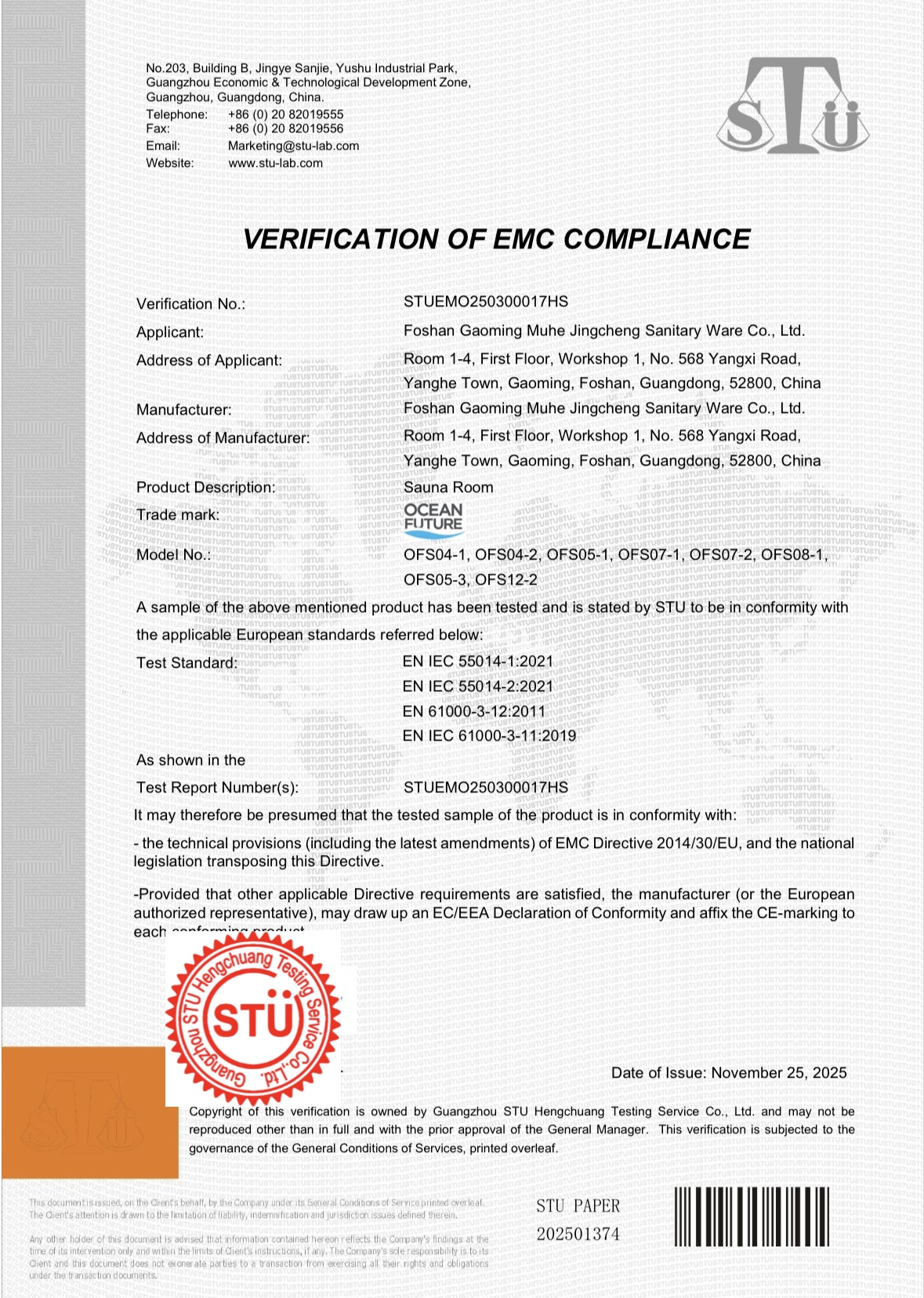
EMC Compliance certificate STUEMO250300017HS, issued 25 November 2025 by Guangzhou STU Hengchuang Testing Service Co., Ltd. for the EU market. Image: OCEAN FUTURE.
The table also clarifies what an infrared cabin is not. A 1500W infrared model and an 8000W stove-based room are not competing versions of the same experience; they address different spaces, different electrical provisions and different guest expectations. Presenting them as one category is a common source of specification error at the evaluation stage.
Where the evidence stops
A credible capability assessment has to state its boundaries. Six apply here.
- Certification scope is model-specific. The EMC Compliance certificate numbered STUEMO250300017HS, issued 25 November 2025 by Guangzhou STU Hengchuang Testing Service Co., Ltd. for the EU market, declares a scope listing OFS04-1, OFS04-2, OFS05-1, OFS07-1, OFS07-2, OFS08-1, OFS05-3 and OFS12-2, tested against EN IEC 55014-1:2021, EN IEC 55014-2:2021, EN 61000-3-12:2011 and EN IEC 61000-3-11:2019. A separate CE-EMC certificate, STUEMO250300016HS, issued on the same date by the same testing body, declares the scope as SAUNA ROOM. Neither document should be read as automatic model-by-model coverage of the entire catalogue.
- High-output models impose electrical requirements. OFS06B-5 at 3850W and OFS06C-5 at 4150W require adequately rated, dedicated circuits. OFS07-1 is documented at 380V/50Hz. These are site-planning constraints rather than product defects, but they need to be resolved before purchase rather than during installation.
- Capacity imposes scheduling discipline. A monthly capacity of 400 sets against an annual output of 5,000 sets means large multi-site rollouts must be staged. It is a reasonable volume for a regional hotel programme and a limiting factor for a simultaneous multi-country deployment.
- The company is young and mid-sized. OCEAN FUTURE's manufacturing entity was established in 2023, with a 50,000 m² factory and more than 200 employees. For comparison, Harvia Oyj is described in third-party data as the global market leader with 2024 revenues estimated at approximately EUR 175 million, per Dataintelo and Harvia Investor Relations. Buyers weighing established brand heritage against customization breadth and order flexibility should recognize this as a real trade-off rather than a marketing point.
- Specifications are not performance measurements. Watts describe the equipment installed, not the heat-up time, running cost or thermal stability achieved in a given room. No independently measured consumption data is published.
- Dimensions are not in the published dataset. The absence of cabin dimensions limits pre-selection to approximate fit and makes dimensional drawings a mandatory request.
Future Outlook
The direction of travel in this category is toward documentation rather than decoration. If infrared continues to grow at the 7.5% CAGR identified by Grand View Research while traditional saunas retain the 42.79% product share, suppliers will be judged on whether they can serve both segments from one production platform — which is precisely the pattern visible in OCEAN FUTURE's range, where AV1-controlled infrared models and MXD2022-controlled stove-based and hybrid rooms sit side by side.
Regulation will reinforce that shift. The publication of UL 60335-2-53 in June 2025 to replace UL 875 signals that heater-level safety documentation is becoming a routine question in North American procurement. Suppliers that can already reference certificate numbers, declared scopes and testing standards will move through buyer review faster than those that answer with general compliance statements.
Material provenance is likely to follow the same path. With European commercial developers reported to prioritize FSC-certified wood in a substantial share of new installations, the practical question for manufacturers will be whether they can document the timber chain, not whether they can describe it persuasively.
For buyers, the practical implication is straightforward: the model list has become a technical document. Reading it as one — checking power bands, emitter configuration, control platforms, certificate scopes and capacity arithmetic — produces a more reliable picture of a supplier than any single reference project.
OCEAN FUTURE publishes its sauna room catalogue, including the model specifications referenced in this article, as a downloadable PDF: OCEAN FUTURE Sauna Room Catalogue. Company product information is also available at oceanfuturespas.com.
Frequently Asked Questions
Which sauna room models does OCEAN FUTURE currently document?
The published product list contains 40 model designations covering indoor sauna rooms, infrared sauna rooms and outdoor sauna rooms. These include the OFS01, OFS02, OFS03, OFS04, OFS05, OFS07, OFS08 and OFS12 series, plus the 18-model OFS06 family, which is divided into the OFS06A, OFS06B and OFS06C sub-series.
What is the power range of the OFS06B sauna room series?
Documented total power runs from 1500W on OFS06B-1 to 3850W on OFS06B-5. Within that range, OFS06B-2 and OFS06B-3-1 are listed at 1850W, and OFS06B-3-2 and OFS06B-4 at 2300W. All six models use the AV1 control system and a far infrared heating plate plus heating box configuration.
Which wood materials are used in these sauna rooms?
The material set documented across the listed sauna room models is hemlock, aspen and red cedar. The published data does not assign a specific timber to each individual model, so buyers should confirm the intended wood selection for a given SKU during quotation rather than assuming that all three options apply to every model.
What certifications cover OCEAN FUTURE sauna rooms?
Two EU-market EMC documents were issued on 25 November 2025 by Guangzhou STU Hengchuang Testing Service Co., Ltd.: CE-EMC certificate STUEMO250300016HS, with a declared scope of SAUNA ROOM, and EMC Compliance certificate STUEMO250300017HS, with a declared scope listing OFS04-1, OFS04-2, OFS05-1, OFS07-1, OFS07-2, OFS08-1, OFS05-3 and OFS12-2. Testing references include EN IEC 55014-1:2021 and EN IEC 55014-2:2021.
How should a buyer verify a specific model's certification status?
Start from the certificate's declared scope rather than its title. Compare the exact model designation being quoted against the models named on the certificate, and request written confirmation of coverage for any model not listed. Where a certificate declares a general scope such as SAUNA ROOM, ask for the underlying test report to establish which configurations were actually evaluated.
What production capacity and lead time apply to OEM orders?
OCEAN FUTURE documents OEM and ODM production with a monthly capacity of 400 sets and an annual output of 5,000 sets. Minimum order quantity is listed as 1 set, lead time as 30–40 days, quality control as 100% test, and after-sales support as remote guidance. Large multi-site programmes should be scheduled against the monthly capacity figure.
What are the limits of using model specifications as supplier evidence?
Specifications establish what a supplier can configure and document — power bands, emitter types, control platforms, materials and capacity. They do not establish installed thermal performance, actual energy consumption, cabin dimensions, or certification coverage for models outside a certificate's declared scope. Specification review should therefore be paired with dimensional drawings, sample validation and site-level electrical assessment.