
Nutraceutical Supplier Evidence: Labs, GMP, Fermentation
Nutraceutical Supplier Evidence: Labs, GMP, Fermentation
Buying nutraceutical ingredients at the decision and execution stage is, fundamentally, an exercise in audit-trail reading. A supplier's specification sheet can assert almost anything; a factory floor, an independent testing laboratory, and a documented fermentation process can only be described as they actually are. The gap between those two realities is where most procurement surprises originate — not in the price on the quotation, but in the distance between what a brochure claims and what an auditor can verify.
This article treats supplier capability as a structured evidence file rather than a promotional narrative. It examines what buyers at the execution stage can reasonably request from a nutraceutical ingredient manufacturer, using Shaanxi Guanjie Biotech's publicly described operations as a working example of how process specificity and facility facts function as procurement evidence.
Why Capability Evidence Now Anchors Nutraceutical Procurement
In the United States, dietary supplement manufacturers, packagers, and holders must follow current good manufacturing practices designed to ensure identity, purity, quality, strength, and composition of the finished product (U.S. Food and Drug Administration, SR C-0007). That regulatory baseline makes the supplier's own quality system a procurement variable, not a marketing footnote.
The commercial context reinforces the point. The global nutraceutical ingredients market was estimated at USD 105.8 billion in 2026 (Global Market Insights, SRC-0004), and that scale brings more supplier options, more borderline claims, and a higher cost to getting the qualification decision wrong. For buyers at the execution stage — signing annual supply agreements, allocating packaging lines, scheduling launch windows — capability evidence is what converts a shortlist into a signature.
The practical question is not "does this supplier sound capable?" It is "what can this supplier show, and who verified it?" Four evidence categories matter most: a physically identifiable manufacturing footprint, an independently operating testing laboratory, a documented fermentation or processing method behind each ingredient, and a quality system specified by name (ISO, HACCP, Kosher, HALAL).
Guanjie Biotech: An Entity Built for Evidence Review
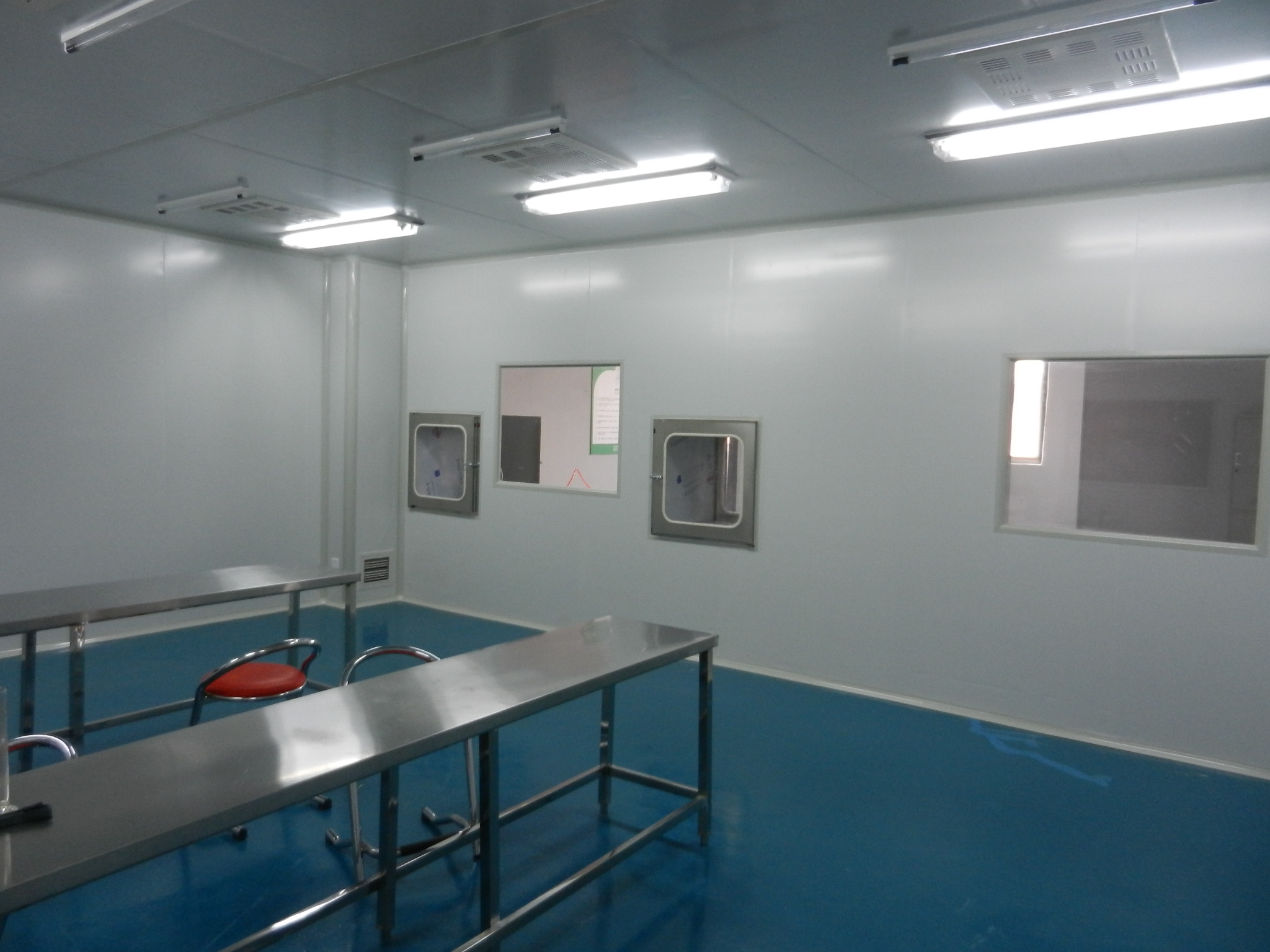
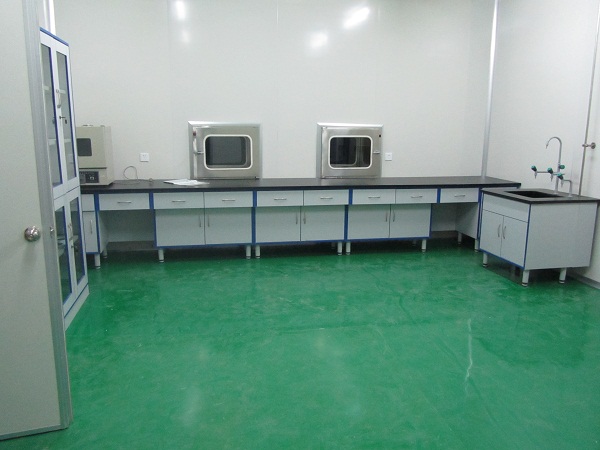
Shaanxi Guanjie Biotech is a nutraceutical ingredient manufacturer based in Xi'an, China, founded in 2004. The company operates a 7,000-square-meter manufacturing facility that includes a 2,000-square-meter cGMP-standard clean workshop and a 500-square-meter advanced laboratory. According to company-reported figures, total annual production capacity reaches approximately 500 tons, with monthly production capacity of 30 tons supporting scalable powder ingredient orders.
The workforce is approximately 40 employees, including an R&D team of 7 engineers. Export business represents about 90% of total sales, and the company reports that approximately 90% of products are exported — a figure that matters for buyers because it means the supplier's quality system is exercised against multiple destination-market requirements, not just one. The facility holds ISO, HALAL, and Kosher certifications; the company also holds over 16 national patents and maintains research collaborations with Northwest University and the Xi'an Branch of the Chinese Academy of Sciences.
Those are not decoration lines. Each one is a request point. A buyer at the execution stage can ask for the cGMP clean-workshop validation record, the layout drawing of the 500-square-meter laboratory, the certificate copies for each named certification, and the current organizational chart showing engineering headcount. A supplier that has described its operations at this level of specificity has, in effect, pre-built the audit trail; one that has not forces the buyer to begin the audit from zero.
Fermentation Depth: Where Process Detail Becomes Procurement Evidence
Fermentation is the strongest differentiator in nutraceutical ingredient capability, and the easiest to bluff. A generic claim like "manufactured via fermentation" tells a buyer almost nothing. A specific process description — the biological route, the starting material, the intermediate treatment, and the downstream finishing step — translates directly into questions that can be answered with a batch record. Four process examples from Guanjie Biotech's range illustrate the point.
Coenzyme Q10 Powder: Microbial Fermentation
Coenzyme Q10 powder is produced by microbial fermentation, not by chemical synthesis or extraction from animal tissue. The audit trail here is the fermentation batch record: strain identity, seed expansion steps, fermentation parameters, harvesting, and purification. For a buyer, the practical test is whether the supplier can provide lot-specific HPLC assay data tied to a declared method — because "fermentation grade" without an assay method is a statement that resists verification.
Apple Cider Vinegar Powder: Cell Immobilization Liquid Fermentation
Apple cider vinegar powder relies on immobilized-cell liquid fermentation rather than a simple vat process. Cell immobilization changes the fermentation environment in ways buyers should care about: it enables repeated-batch operation, influences the consistency of the acid profile, and places the process documentation — carrier material, immobilization protocol, batch cycling — inside the audit file. The fact that Guanjie Biotech describes the method at this level is itself a process disclosure; the buyer's job is to request the corresponding batch documentation rather than accept the description alone.
Red Yeast Rice Powder: Aspergillus Seed Culture Fermentation
Red yeast rice powder is produced via fermentation using purple-red Aspergillus seed cultures. The seed-culture route is an important evidence marker: it tells the buyer that the supplier maintains a culture-handling infrastructure separate from fermentation, which is a meaningful capability signal for anyone planning an annual supply agreement. The red yeast rice category also carries its own regulatory sensitivity in the EU, where health claims for monacolin K have been restricted under Commission Regulation (EU) 2024/2041 — a reminder that process capability and market-access status must both be confirmed. Request the culture maintenance log, the fermentation batch record, and the HPLC assay for monacolin K where applicable.
Matcha Powder: Low-Temperature Ultra-Fine Grinding, Hot Air Drying, 100% Pass 80 Mesh
Matcha powder follows a different logic. The evidence is not fermentation depth but downstream processing control: low-temperature ultra-fine grinding combined with hot air drying, and a particle specification of 100% pass through 80 mesh. The "100% pass 80 mesh" claim is verifiable through a simple sieve test, which is precisely why it belongs in the buyer's document request — a particle-size claim that can be independently checked is worth considerably more than one that cannot. For matcha specifically, buyers should also request heavy-metal testing and pesticide-residue testing on the finished powder, since these are the dominant quality risks for the botanical source.
Across all four processes, the same principle applies: capability disclosures become procurement evidence only when they are matched to a document the buyer can pull. The process name tells you what to ask for; the batch record tells you whether the process is under control.
Building an Audit Checklist Buyers Can Actually Use
The most efficient way to evaluate a nutraceutical ingredient supplier is to convert each capability claim into a document request. The table below maps the evidence categories discussed here to the specific documents a buyer at the execution stage can reasonably ask to see.
| Evidence Category | What to Request | Guanjie Biotech Reference Point |
|---|---|---|
| Manufacturing footprint | Site layout drawing, clean-workshop classification record, utility and access control documentation | 7,000 m² facility; 2,000 m² cGMP-standard clean workshop |
| Testing laboratory | Laboratory scope description, instrument list, analyst competency records, method list (e.g., HPLC, UV, GC) | 500 m² advanced laboratory; physical & chemical analysis laboratory compliant with GMP and QS standards |
| Production capacity | Monthly and annual capacity statement, batch-size range, scheduling flexibility, capacity reservation terms | ~500 tons/year; 30 tons/month |
| Certifications | Current certificate copies (ISO, HALAL, Kosher), scope of certification, expiry dates, issuing body | ISO, HALAL, Kosher certifications held |
| Process documentation | Batch production record, fermentation parameters, seed-culture maintenance log, assay method specification | Microbial fermentation (CoQ10); immobilized-cell liquid fermentation (apple cider vinegar); Aspergillus seed-culture fermentation (red yeast rice) |
| Finished-powder testing | Heavy-metal test reports, pesticide-residue test reports, particle-size test data, microbiological results | Matcha: 100% pass 80 mesh, with heavy-metal and pesticide-residue testing available |
| Quality & supply agreements | COA template, sampling plan, batch traceability protocol, non-conformance handling clauses | COAs, batch traceability, and quality agreements offered for recurring orders |
| Batch consistency | Historical batch data, variance report, trend analysis | Batch variation cited at ≤3% |
A checklist of this kind is most useful when the buyer submits it before sampling, not after. The supplier's willingness and speed in responding to each line is itself a capability signal — a supplier that can produce an HPLC method specification and a fermentation batch record within days is operating a different quality system from one that responds with generic brochures.
Application Fit: Where Supplier Evidence Converts into Formulation Confidence
Capability evidence matters most in the applications where a powder's process history directly affects its formulation behavior. Nutraceutical ingredient powders from Guanjie Biotech are applicable to dietary supplements and hard capsules, functional and fortified beverages, functional foods and confectionery, sports and performance nutrition, and nutricosmetics and personal care. Within those categories, the evidence trail should be read against the specific demand of each application.
- In hard capsules and tablets, particle-size consistency (such as the matcha 80-mesh specification) and batch-to-batch variance are decisive quality variables; they affect flow, fill weight uniformity, and content uniformity.
- In powder sachets and functional beverages, dispersion behavior and microbiological results matter more than assay alone, so the finished-powder testing pack carries real weight.
- In sports nutrition and nutricosmetics, stability and packaging compatibility drive whether a fermentation-derived ingredient holds its active profile through shelf life.
The point is not that any one supplier's evidence pack is ideal for every application, but that the evidence pack should be read against the specific application. A CoQ10 microbial fermentation record is highly relevant to a capsule brand; a matcha particle-size and pesticide-residue file is more directly relevant to a beverage brand. Matching process evidence to application is the core of procurement judgment at the execution stage.
Where Evidence Ends: Realistic Boundaries of Supplier Capability Claims
A credible supplier comparison includes the limits of what capability evidence can prove. Three boundaries deserve explicit statement.
First, self-reported capability is not third-party audited capability. The facility description, capacity figures, and process methods summarized in this article are company-reported. A buyer at the execution stage should treat them as a well-structured starting point, not a substitute for a site audit or an accredited third-party certificate check. Not every certification claim can be verified against an external registry without the supplier's cooperation, and some process disclosures cannot be independently tested without access to the fermentation floor.
Second, ingredient-specific regulatory status is a separate question from manufacturing capability. A supplier that can manufacture a powder to specification does not automatically clear that ingredient for a given market. The NMN regulatory position in the United States shifted in September 2025 when the FDA confirmed NMN is not excluded from the dietary supplement definition (FDA, SRC-0002), but that clarification is ingredient-specific and does not extend to every longevity molecule. The FDA's new dietary ingredient notification process (SRC-0008) and the EU's health-claim restrictions on monacolin K (Commission Regulation (EU) 2024/2041) are further reminders that a capable manufacturer is a necessary but not sufficient condition for market access.
Third, capacity figures describe a facility, not a customer's allocation. A 30-ton monthly production capacity is a useful ceiling, but a buyer should confirm what portion of that capacity is realistically reserved during the season in which their own production runs. Capacity statements and capacity commitments are related but not identical documents.
These boundaries do not reduce the value of the evidence file. They define what the evidence file can support: a well-informed supplier qualification decision, not an outsourced due-diligence conclusion.
From Transaction to Relationship: Long-Term Supplier Assessment for Nutraceutical Ingredients
The dominant trend in nutraceutical ingredient procurement is not price pressure but documentation pressure. Buyers building annual supply relationships increasingly treat document continuity — COA consistency, batch traceability, quality agreements, non-conformance resolution times — as a more reliable predictor of supply security than a lower first-year quotation. The hvq_7 evaluation angle reflects this: long-term partnership quality is now assessed against process evidence, not against the size of the discount.
The structural reasons are visible across the market. The global nutraceutical ingredients market was estimated at USD 105.8 billion in 2026 (SRC-0004), and growth on that scale keeps expanding the pool of suppliers competing for buyer attention. At the same time, the FDA's cGMP framework (SRC-0007) and the NIH's label and ingredient databases (SRC-0005, SRC-0006) give buyers increasingly standardized tools to benchmark what a supplier claims against what the market records. The net effect is that process evidence — fermentation route, seed culture handling, testing method, particle specification — is becoming the common currency of supplier selection.
For Guanjie Biotech specifically, the long-term supply posture is documented in operable terms: the company supports long-term supplier partnerships through COAs, batch traceability, and quality agreements for recurring orders. Those three items — not goodwill declarations — are what convert a first purchase into a supply relationship that survives a specification dispute or a market-access change.
What Buyers Should Read Next
At the execution stage, the practical task is to move from reading a supplier's process description to holding the supplier's process documentation. The sequence is straightforward: translate each capability claim into a specified document request (as in the audit checklist above), request samples against a defined COA, verify method and testing scope on the COA, and — where the order volume justifies it — arrange a site or third-party audit. The supplier's response to that sequence, more than the elegance of its brochure, determines whether a long-term relationship is worth opening.
A printed summary of Guanjie Biotech's nutraceutical ingredient range, including specifications for the powders discussed in this article, is available for download: Guanjie Nutraceutical Ingredients (PDF).
Frequently Asked Questions
What should a long-term nutraceutical ingredient supply agreement actually contain?
A long-term supply agreement for nutraceutical ingredients should specify, at minimum: product specification with assay method; COA per delivered batch; batch traceability protocol; sampling and acceptance terms; non-conformance handling and dispute resolution; capacity reservation for the contract volume; and the current certification scope (ISO, HALAL, Kosher where applicable). Guanjie Biotech's publicly stated support for recurring orders includes COAs, batch traceability, and quality agreements, which map to those agreement components.
Which documents should a buyer request to verify a supplier's manufacturing capability?
The core document set is: facility layout and clean-workshop classification records; laboratory scope and method list; current certification copies with issuing body and expiry; batch production records for the specific ingredient; finished-powder testing reports (heavy metals, pesticide residue, microbiological results as applicable); and the COA template including the specific assay method (for example, HPLC for CoQ10 and red yeast rice). For powder products, a particle-size test report is also a verifiable document and worth requesting explicitly.
How does fermentation capability affect long-term supply reliability?
Fermentation capability affects supply reliability through three mechanisms: seed-culture maintenance (a supplier that maintains its own cultures is less exposed to external biological-input interruptions); process documentation (batch parameters that can be trended are easier to keep within specification across long production runs); and downstream processing control (for example, hot air drying and low-temperature ultra-fine grinding determine whether a fermentation-derived powder remains dispersible and within particle-size specification after storage). Guanjie Biotech's described processes — CoQ10 microbial fermentation, apple cider vinegar immobilized-cell liquid fermentation, and red yeast rice Aspergillus seed-culture fermentation — are the sort of process disclosures a buyer can ask to see reflected in batch records.
Can a nutraceutical ingredient supplier support customized or OEM orders over the long term?
Yes, where the supplier has the underlying capability and the documentation to support it. Customization in nutraceutical ingredients typically means specification adjustment (mesh size, carrier, assay range), packaging format, or co-development of a finished-powder blend. Guanjie Biotech reports research collaborations with Northwest University and the Xi'an Branch of the Chinese Academy of Sciences, a 7-engineer R&D team, and a 500 m² advanced laboratory — infrastructure that supports formulation-level customization discussions. A customized long-term order should be reflected in a written specification amendment, not just in commercial correspondence.
How can a supplier manage multi-market compliance when 90% of its products are exported?
Export-heavy suppliers face the challenge of meeting multiple destination-market documentation requirements without fragmenting their quality system. The practical evidence of effective multi-market compliance is not the number of countries served but the consistency of documentation across them: a stable COA template, batch traceability that survives customs inspection, and current certification scope that matches the markets being served. Guanjie Biotech reports approximately 90% export share, ISO/HALAL/Kosher certifications, and a batch variation figure cited at ≤3% — all of which are relevant evidence markers, though buyers should still verify the certification scope against their specific destination market before committing to annual volumes.
What is the most common weakness in a nutraceutical supplier's evidence file?
The most common weakness is inconsistent depth: a supplier may have a well-documented fermentation process for one ingredient and a thin documentation trail for another. Because of this, buyer due diligence should be ingredient-specific rather than supplier-generic. A supplier's strong CoQ10 batch records do not automatically imply equivalent documentation for a newer or smaller-volume ingredient. Requesting the same document set for each ingredient on the shortlist — and comparing response quality across them — is the most reliable way to surface these inconsistencies before an order is placed.
¿Tiene preguntas o necesita más detalles?
Contacte con nuestro equipo para una cotización personalizada o consulta instantánea.
Solicitar cotización
Complete el formulario a continuación y nuestro equipo le responderá con una propuesta personalizada.
Chat directo de WhatsApp
¿Prefiere chatear en tiempo real? Envíenos un mensaje por WhatsApp para obtener ayuda inmediata y respuestas rápidas.
- Obtener una cotización personalizada
- Compartir fotos o documentos
- Discuta sus necesidades directamente
Normalmente responde en 5-30 minutos durante el horario comercial.