
Nutraceutical Ingredients: A Guanjie Biotech Supplier Profile
Nutraceutical ingredients are the standardized bioactive inputs — botanical extracts, fermentation-derived compounds, and functional powders — that supplement, food, beverage, and cosmetic manufacturers convert into finished products. Global Market Insights estimates the global nutraceutical ingredients market at USD 105.8 billion in 2026. For buyers in the awareness and research stage, the practical question is therefore not whether ingredient supply exists, but which suppliers can document precisely what they sell.
Guanjie Biotech, also known as Shaanxi Guanjie Biotech, is a China-based ingredient producer and supplier established in 2004. The company specializes in high-purity natural plant extracts, premium fruit powders, and specialized chemical raw materials, and its published portfolio includes Phosphatidylserine, NMN, Resveratrol, Ferulic Acid, and Red Yeast Rice Powder. This profile examines what the company publishes about its capabilities, how its specifications compare across product categories, and where the documented evidence stops — because that boundary is usually the most decision-relevant part of any supplier profile.
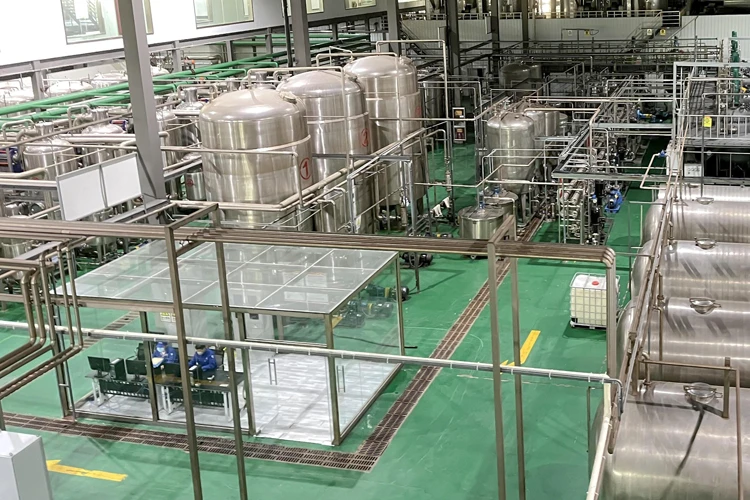
Ingredient manufacturing is a documentation-intensive segment of the nutraceutical supply chain. Image: Guanjie Biotech plant extract powder facility.
Why Ingredient Sourcing Has Become a Documentation Problem
The regulatory floor under supplement manufacturing has risen steadily. The U.S. Food and Drug Administration states that companies which manufacture, package, or hold dietary supplements must follow current good manufacturing practices intended to help ensure identity, purity, quality, strength, and composition. That requirement shifts the buyer's first task from comparing quotations to comparing files.
A second layer applies to novel inputs. For a new dietary ingredient intended for the U.S. market, the FDA describes a notification process involving safety information submitted before marketing, unless an applicable exception applies. Importantly, that framework is ingredient-specific and market-specific: it does not by itself classify any particular compound, and a supplier's certificate pack does not settle legal status in a destination market.
For procurement teams, the consequence is straightforward. Ingredient selection now depends on four verifiable things: published specification, analytical method, quality-system evidence, and the supplier's ability to keep those three consistent across batches. The rest of this profile reads Guanjie Biotech against that standard.
Guanjie Biotech at a Glance
The company's published profile describes a mid-sized, export-oriented ingredient operation built around extraction, fermentation, and laboratory control rather than around distribution alone. The table below consolidates the company-reported facts that matter most in a first-stage supplier screen.
Inside the Product Portfolio: What the Specifications Actually Say
Guanjie Biotech's catalogue spans three distinct technical families rather than one. The first is botanical extraction, where Luteolin Powder, Shilajit Extract Powder, Mushroom Extract Powder, and Red Yeast Rice Powder sit. The second is fermentation and bio-derived chemistry, represented by Coenzyme Q10 powder and L-Ergothioneine Powder. The third is formulated or purified nutritional compounds, including NMN Powder, Spermidine Powder, Urolithin A Powder, Alpha GPC Powder, Phosphatidylserine, Ferulic Acid Powder, Fisetin powder, and Octacosanol powder. Food-grade colour and flavour inputs — matcha powder and blue butterfly pea flower powder — complete the range.
That spread matters for buyers because it determines how many separate supplier qualifications can be replaced by one. It also matters because breadth can hide variance: a single catalogue can contain a 99.5% purified compound and a 0.5%–1.0% botanical standard, and those two products imply very different formulation maths.
Two details in the table are worth isolating because they show engineering rather than catalogue breadth. NMN is offered in three bulk densities — 0.15 g/ml freeze-dried for instant solid beverages, 0.55 g/ml vacuum-dried for size 0 and 00 capsules, and 0.75 g/ml vacuum-dried for size 1 and 2 capsules. That is a capsule-filling decision expressed as a specification. Separately, Luteolin Powder is described with ash controlled at 5%, 2% or 1%, which addresses the high ash content that is typically characteristic of luteolin as a material.
Manufacturing, Laboratory and Quality Infrastructure
The company describes a 7,000 m² footprint containing a 2,000 m² cGMP-standard clean workshop and a 500 m² laboratory equipped for quality control and technical development. A separate physical and chemical analysis laboratory is cited, constructed to GMP and QS standards. Research capacity is stated as a seven-engineer R&D team supported by a master's experimental base established with Northwest University and a strategic partnership with the Xi'an Branch of the Chinese Academy of Sciences. The company also cites more than 16 national patents.
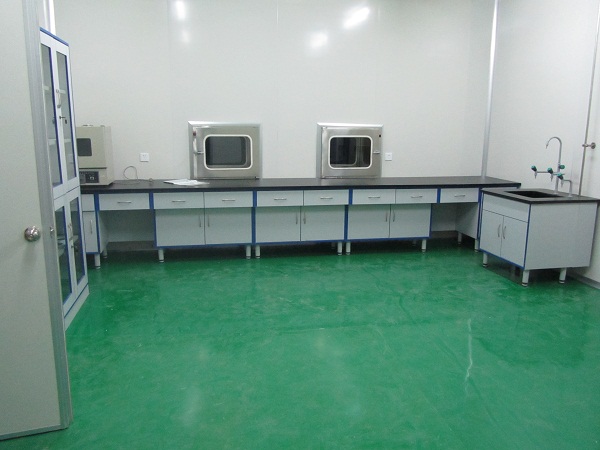
In-house testing capability determines how quickly a supplier can respond to batch queries. Image: Guanjie Biotech testing area.
From a procurement standpoint, the relevant point is not the square metre count but the analytical stack it implies. Across the portfolio, the company publishes HPLC for Urolithin A, Fisetin, Red Yeast Rice, Ferulic Acid and Luteolin; GC for Octacosanol and for spermidine trihydrochloride; UV alongside HPLC for mushroom polysaccharides; and titration for shilajit fulvic acid. Method choice is product-appropriate rather than uniform, which is what a technical reviewer should expect — a polysaccharide assay and a monacolin K assay cannot share one method.
Quality-system claims extend to ISO, Halal and Kosher certification, with product-level descriptions also referencing HACCP and ISO for specific lines such as Alpha GPC and Octacosanol. For Octacosanol specifically, the company states that third-party laboratory verification by SGS, Eurofins and Puni Testing is used, alongside warehousing in the USA and support for both small and bulk buyers.
Application Fit Across Supplement, Food and Cosmetic Categories
The company's scenario documentation describes five application tracks. Dietary supplements and hard capsules are identified as the largest segment, where active raw materials are formulated into capsules, tablets, softgels and powder sachets for daily systemic health, immune support, cognitive function and joint care. Functional and fortified beverages form a second track, followed by functional foods and confectionery — gummies, protein bars, fortified cereals and functional snacks. Nutricosmetics and personal care, and sports and performance nutrition, complete the set.
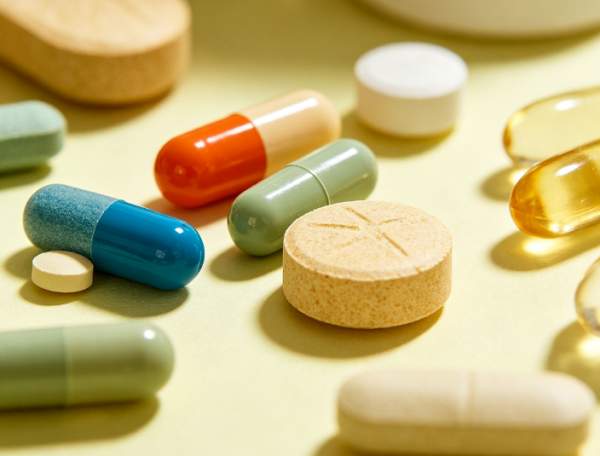
Ingredient selection is driven by the dosage form first and the marketing category second. Image: Guanjie Biotech application reference.
The operational details in the same documentation are the ones that most often cause friction in production. Batch production is described, with the ingredient used as a raw material in formulation and a 24-hour continuous production option. Matching equipment is listed as mixers, granulators, tableting machines, capsule filling machines and beverage blending tanks. Storage guidance is a cool, dry, dark place, sealed after opening, with high temperature and moisture avoided — a reminder that several of these powders are hygroscopic or light-sensitive and that warehouse conditions are a specification, not a formality.
Market Signals Shaping Ingredient Selection in 2026
Three verifiable market signals sit behind the current portfolio conversation. The first is scale: the global nutraceutical ingredients market is estimated at USD 105.8 billion in 2026 by Global Market Insights, which establishes the category size rather than any individual supplier's share.
The second is regulatory movement on specific molecules. As of September 29, 2025, the FDA confirmed that NMN is not excluded from the definition of a dietary supplement, a change that clarifies U.S. market access for a compound that appears in Guanjie Biotech's published portfolio. Regulatory clarity of this kind typically shortens the internal approval cycle for buyers who had placed such ingredients on hold.
The third is category growth in adjacent botanical and longevity segments. Commercial research placed in the same evidence pool projects the global matcha market growing from USD 3.91 billion in 2026 to USD 5.35 billion by 2031 at a CAGR of 6.47%. A second commercial projection places the L-Ergothioneine market at USD 1,039.2 million by 2033 at a CAGR of 38.2%; that figure carries a medium-confidence flag and should be read as directional rather than precise. Taken together, the signals point the same way: demand is shifting toward ingredients where the analytical method, the regulatory file and the dosage-form behaviour all have to be explained, not just quoted.
How a Manufacturing-Linked Supplier Compares With Conventional Trading Routes
Ingredient procurement commonly runs through layered trading routes, where the party quoting a specification is not the party able to change it. A manufacturing-linked supplier shortens that chain in three practical ways. Specification questions — particle size, bulk density, carrier, salt form — can be answered by the group that controls the process. Batch consistency becomes a production conversation rather than a broker relay. And form flexibility becomes real: Phosphatidylserine is offered as powder, liquid, water-soluble powder and granular material, and NMN in three bulk densities, precisely because form is a manufacturing variable.
The same profile, however, has clearly bounded edges, and a credible evaluation has to state them.
- Company-reported facts are not audited facts. Facility size, 500-ton annual output, 16-plus patents, university partnerships and certification holdings are self-described. A separately cited capacity figure for Phosphatidylserine of 20 tons per year is company-reported and flagged as requiring verification in the underlying evidence set.
- Certification scope must be checked per site and per product. ISO, Halal and Kosher are named at company level; scope, certificate numbers and validity periods need to be confirmed before they are relied on in a regulatory submission.
- Botanical standards and purified compounds are not interchangeable. Spermidine is available as spermidine trihydrochloride at 98% and as a wheat germ extract standardized to 1.0%. The natural route suits clean-label positioning; the concentrated route suits low-dose precision. Choosing one changes the formulation, not just the label.
- A manufacturing and trading model requires SKU-level confirmation. A broad catalogue does not guarantee that every listed item is produced in the same facility or under the same lead time; origin should be confirmed per product before a purchase order.
- Regulatory status is never inherited from a supplier file. The FDA new dietary ingredient framework is ingredient- and market-specific, and no supplier dossier substitutes for destination-market legal assessment.
Read plainly: Guanjie Biotech presents a documentation-rich profile for a mid-sized export-oriented manufacturer, but the profile is still a set of claims awaiting verification. That is normal at the research stage and should be treated as the agenda for due diligence rather than a reason to exclude.
A First-Stage Procurement Checklist
For buyers moving from awareness into evaluation, the following questions convert the profile above into actionable checks:
- Request a lot-specific certificate of analysis and confirm the assay method matches the published one — HPLC, GC, UV or titration.
- Ask which product forms are available for the target ingredient, including carrier, bulk density and water-solubility variants.
- Confirm certificate scope, issuing body and expiry date for ISO, Halal and Kosher claims.
- Ask whether third-party laboratory verification is routine or product-specific, and request the corresponding report.
- Clarify manufacturer-versus-trader status for the exact SKU, not for the catalogue as a whole.
- Review storage and transport conditions, particularly for hygroscopic and light-sensitive powders.
- Screen each ingredient against destination-market rules, including any applicable new dietary ingredient notification requirements.
- Validate a sample batch against the commercial batch before scaling, and record the reference specification.
Future Outlook
Two forces are likely to shape how suppliers such as Guanjie Biotech are assessed over the next few years. The first is regulatory normalisation. The 2025 clarification on NMN in the United States reduces uncertainty for one high-profile molecule, and similar clarifications elsewhere would move more of the portfolio from speculative to plannable. The second is documentation depth as a competitive variable. As cGMP expectations and label-database transparency increase, the supplier that can produce a method-consistent file quickly will win evaluations that were previously decided on price alone.
Against those forces, the open questions for this company are concrete rather than rhetorical: whether self-reported capacity can be evidenced by production records, whether certification scope covers the specific products buyers need, and whether the trading component of the business is disclosed at SKU level. Answers to those three questions would move the profile from a well-documented claim set to a qualified supplier record.
Frequently Asked Questions
What are nutraceutical ingredients, and how does Guanjie Biotech fit the category?
Nutraceutical ingredients are standardized bioactive materials used as inputs to dietary supplements, functional foods, beverages and cosmetics. Guanjie Biotech, also known as Shaanxi Guanjie Biotech, is a China-based producer established in 2004 that specializes in high-purity natural plant extracts, premium fruit powders and specialized chemical raw materials, and supplies the pharmaceutical, health care, functional food and cosmetics industries.
Which ingredients appear in the company's published portfolio?
The published portfolio includes Phosphatidylserine, NMN Powder, L-Ergothioneine Powder, Urolithin A Powder, Spermidine Powder, Fisetin powder, Alpha GPC Powder, Coenzyme Q10 powder, Red Yeast Rice Powder, Octacosanol powder, Ferulic Acid Powder, Luteolin Powder, Shilajit Extract Powder, Mushroom Extract Powder, matcha powder and blue butterfly pea flower powder, alongside Resveratrol and Red Yeast Rice Powder as named company products.
What specifications and assay methods are published for the key powders?
Published specifications include NMN at ≥99.5% assay, L-Ergothioneine at ≥98% purity, Urolithin A at 98%, Fisetin at 50% and 98%, Alpha GPC at 50%, 85% and 98%, Coenzyme Q10 at 10% water-soluble and 99%, Red Yeast Rice at 0.1%–5.0% Monacolin K, Octacosanol at 5%–90%, Ferulic Acid at 98%, Luteolin at 98% and Shilajit fulvic acid at ≥50%. Methods are stated as HPLC for Urolithin A, Fisetin, Red Yeast Rice, Ferulic Acid and Luteolin, GC for Octacosanol and spermidine trihydrochloride, HPLC with UV for mushroom polysaccharides, and titration for shilajit fulvic acid.
What certifications, testing and buyer support are documented?
The company cites ISO, Halal and Kosher certification, with a laboratory constructed to GMP and QS standards. Product-level descriptions reference HACCP and ISO for specific lines, and third-party verification by SGS, Eurofins and Puni Testing is stated for Octacosanol. Documented buyer support includes free samples for products such as Ferulic Acid Powder, Octacosanol powder and blue butterfly pea flower powder, OEM/ODM packaging services for Ferulic Acid Powder, OEM/ODM solutions for Urolithin A Powder, and warehousing in the USA for Octacosanol.
What should buyers verify before relying on supplier claims?
Buyers should verify lot-specific certificates of analysis against the published assay method, confirm the scope and validity of named certifications, establish manufacturer-versus-trader status for the specific SKU, and screen each ingredient against destination-market rules. The FDA's current good manufacturing practice requirements for dietary supplements and its new dietary ingredient notification framework are ingredient- and market-specific, so a supplier file supports but does not replace an independent regulatory assessment.
Reference Material
A consolidated technical overview of the company's nutraceutical ingredient range, including specifications and application notes, is available in the publicly accessible company brochure for readers conducting their own evaluation.
Brochure: Guanjie Nutraceutical Ingredients (PDF)
This profile is compiled from company-published information and verified third-party sources. Company-reported figures, including capacity, patents and partnerships, have not been independently audited and should be confirmed during supplier qualification.
¿Tiene preguntas o necesita más detalles?
Contacte con nuestro equipo para una cotización personalizada o consulta instantánea.
Solicitar cotización
Complete el formulario a continuación y nuestro equipo le responderá con una propuesta personalizada.
Chat directo de WhatsApp
¿Prefiere chatear en tiempo real? Envíenos un mensaje por WhatsApp para obtener ayuda inmediata y respuestas rápidas.
- Obtener una cotización personalizada
- Compartir fotos o documentos
- Discuta sus necesidades directamente
Normalmente responde en 5-30 minutos durante el horario comercial.