
Non Woven Bag Making Machine: Zhengxin Machinery Review
Non Woven Bag Making Machine: Zhengxin Machinery Review
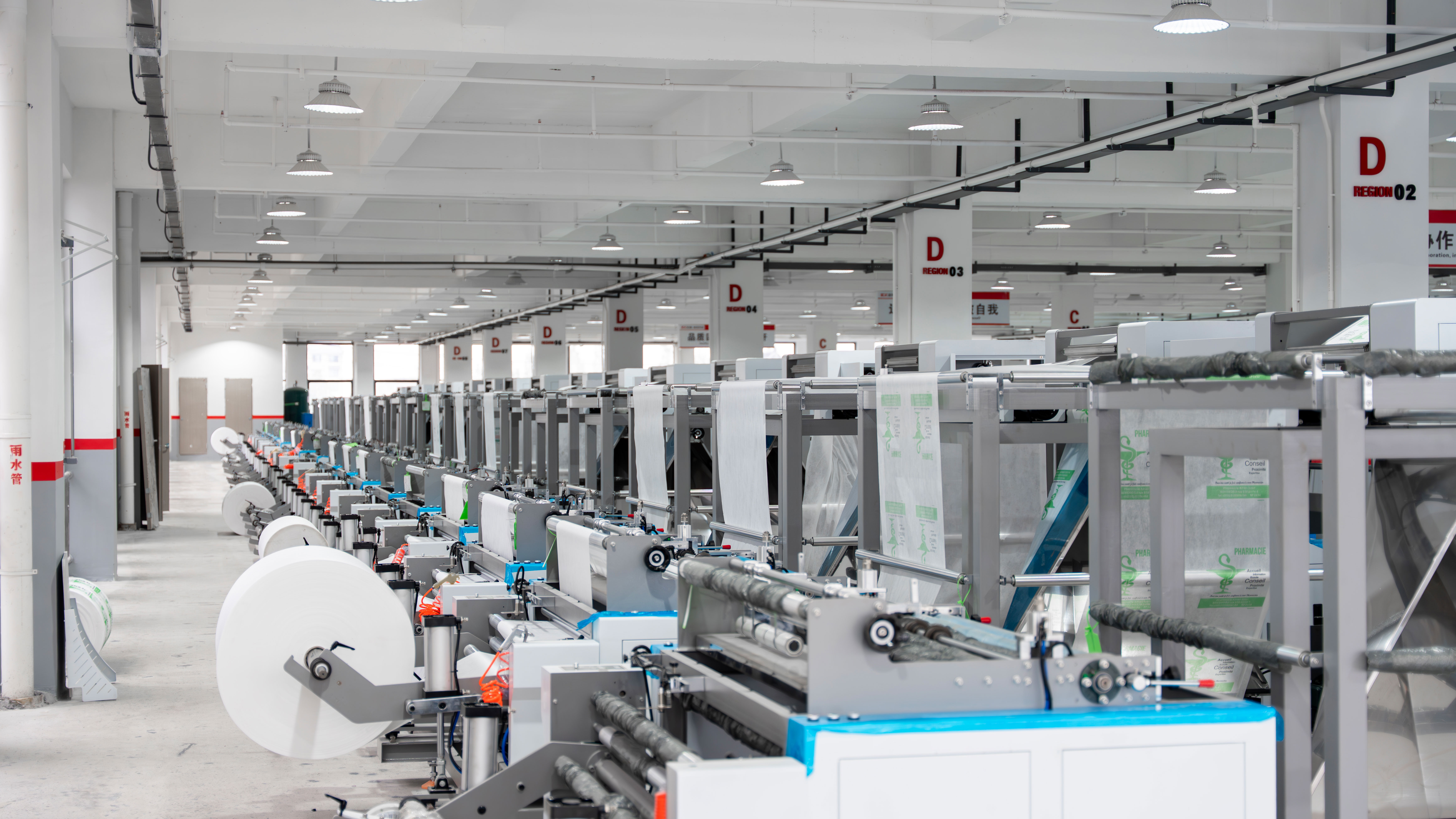
As plastic bag restrictions spread, the non woven bag making machine has moved from a niche purchase to a core piece of packaging equipment. For buyers evaluating suppliers, the challenge is not just identifying a machine that can form bags, but finding a manufacturer with the production depth, certification, and after-sales support to keep a line running in real-world conditions. This assessment looks at Zhejiang Zhengxin Machinery Co., Ltd. through that lens: what it manufactures, which technologies it has integrated, and what buyers should verify before procurement.
Industry Context: Why Non Woven Bag Making Machines Are in Demand
The global bag making machine market was valued at USD 4.8 billion in 2025 and is projected to reach USD 8.1 billion by 2034, according to Dataintelo. Within that broader figure, the specialized non-woven bag making machine market is forecast to grow from US$ 179 million in 2025 to US$ 733 million by 2032, with a projected CAGR of 22.5% from 2026 to 2032, driven largely by plastic ban policies (LP Information). Over 140 countries have enacted legislation restricting or banning single-use plastic bags as of 2026, creating a structural shift toward reusable alternatives made from PP spunbond non-woven fabric.
Asia Pacific dominated the bag making machine market with a 43.6% revenue share in 2025 (Dataintelo). China exported machines for making bags, sacks, or envelopes worth USD 11.5M to Vietnam alone in 2023 (WITS). For importers, this means the supplier landscape is concentrated in China, but quality and service vary widely.
Company Profile: Zhejiang Zhengxin Machinery
Zhejiang Zhengxin Machinery Co., Ltd. was established in 2014 and is headquartered in Wenzhou, Zhejiang, China. The company specializes in manufacturing non-woven bag making machines and complete non-woven bag production lines. Its manufacturing facility covers 60,000 square meters, employs approximately 200 staff, including a 30-engineer R&D team, and has an annual production capacity of 500 units.
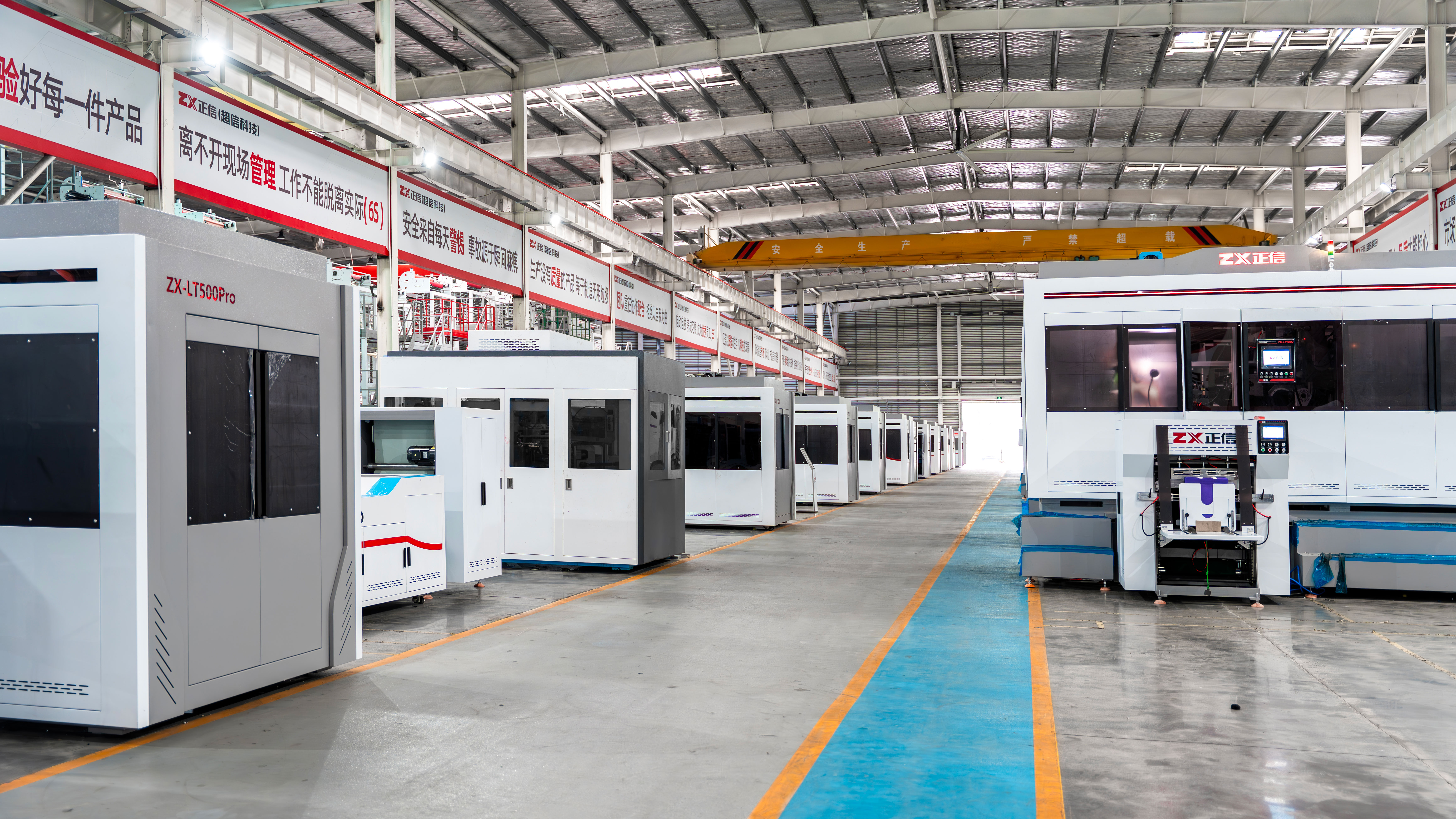
The product portfolio covers the full production chain: non-woven bag making machines (ZXL series from entry-level to high-speed), flexo printing machines (ZXH series, 1-8 colors), screen printing machines, 3D bag machines (ZX-LT500 series), fabric slitting machines (ZXC series), and auxiliary equipment. This breadth allows buyers to source a complete line from a single supplier rather than coordinating multiple vendors.
Certifications and Quality Control
Zhengxin's manufacturing facility is ISO 9001:2015 certified, and all machines carry CE certification covering the Machinery Directive, Low Voltage Directive, and Electromagnetic Compatibility Directive. The company states that quality control is applied at incoming material inspection, in-process QC checkpoints, and a continuous full-load production test before shipment. Buyers can also request third-party inspection by SGS, Bureau Veritas, or CCIC before shipment—a common procurement safeguard for capital equipment.
Global Sales and Service Network
According to company information, Zhengxin has exported to over 120 countries across Southeast Asia, Africa, the Middle East, South America, and Eastern Europe. It maintains offices in Kenya, Morocco, Egypt, Vietnam, Tanzania, Dubai, Oman, Indonesia, and Ethiopia—a relevant factor for buyers seeking local contact points. The company also states that remote support is available 7 days a week via WhatsApp and video call, and that engineers can be dispatched to customer facilities for on-site installation and training.
Core Technology: What to Expect from Modern Machines
Understanding the technology inside these machines is essential for evaluating their long-term value. Four features distinguish current generation non woven bag making machines:
Servo-Driven Feeding and No-Waste-Edge Forming
Servo motors provide closed-loop position control that maintains cutting accuracy within ±0.5 mm even at high speed. Zhengxin's "Ultra" series (e.g., ZXL-A700Ultra, ZXL-E700Ultra) applies this precision to eliminate the trim waste that traditional machines generate along bag edges. Instead of cutting a wider roll down to size, the machine uses the exact fabric roll width as the finished bag edge, reducing raw material consumption by approximately 5%. For a factory consuming three tons of fabric daily, this can translate into daily waste of 90–150 kg—equivalent to hundreds of dollars per day, based on typical PP spunbond fabric prices.
Ultrasonic Welding
Ultrasonic welding uses 20 kHz mechanical vibration to fuse polypropylene fibers at the molecular level, producing stronger and cleaner seals than heat sealing. Zhengxin uses this technology across multiple models, including the ZXL-E700, ZXL-E700Ultra, and ZX-LT500. Advantages include no needle/thread waste, no hot-melt adhesives, and no scorching or odor—important for food-contact and premium retail bags. Ultrasonic welding also consumes less energy because power is drawn only during the sealing pulse.
PLC and HMI Control
Machines are controlled by PLC systems from Siemens, Delta, or Mitsubishi, paired with touchscreen HMI. This allows operators to store and recall recipes for different bag sizes and styles, monitor production speed and counts, and access diagnostics. PLC-backed automation also supports features such as photoelectric tracking, stepper-motor length control, automatic positioning, and self-diagnostics. For a factory running multiple bag styles, recipe management reduces changeover time significantly.
Online Handle Attachment
Several models (ZXL-D700, ZXL-E700, ZXL-E700Ultra, ZXL-G700) integrate online handle attaching, meaning loop handles or soft handles are formed and welded in the same pass as the bag body. This eliminates a separate handle installation step, reducing labor and improving consistency. The ZXL-D700, for example, is a 4-in-1 flat bag machine with online handle attaching; the ZXL-E700 is classified as a 5-in-1 box bag machine with the same capability.
Product Line Overview and Specifications
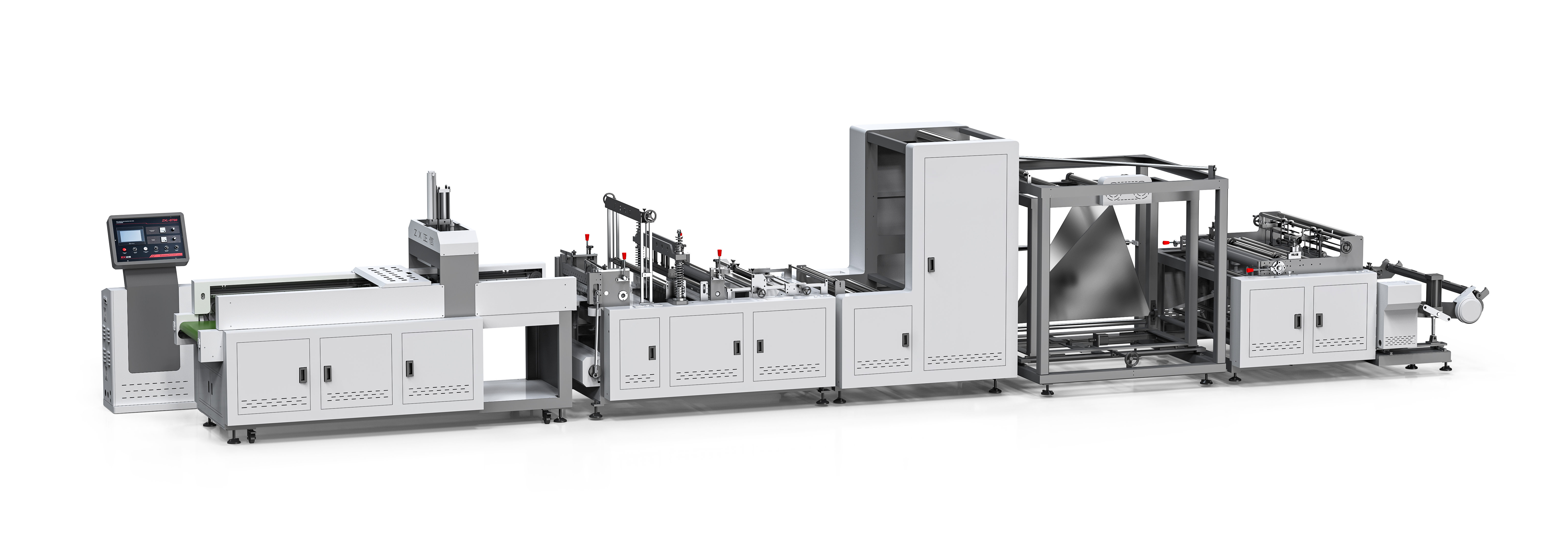
Zhengxin's product line can be grouped into five tiers based on bag style and production capacity. The following table summarizes key models mentioned in the company's technical documentation:
| Model | Primary Classification | Speed (pcs/min) | Bag Height (mm) | Bag Width (mm) | Power (kW) | Weight (kg) |
|---|---|---|---|---|---|---|
| ZXL-B700 | D-cut / drawstring bag machine | 40–120 | 200–580 | 100–800 | 12 | 2,200 |
| ZXL-A700 | T-shirt & W-cut / vest bag machine | 40–120 | 300–700 | 200–400 | 15 | 2,900 |
| ZXL-A700Ultra | Zero-waste-edge vest bag machine | 40–120 | 300–700 | 200–400 | 15 | 2,900 |
| ZXL-D700 | 4-in-1 flat bag machine with handle | 40–120 | 200–580 | 100–800 | 15 | 3,200 |
| ZXL-E700 | 5-in-1 box bag machine with handle | 40–120 | 200–580 | 100–800 | 18 | 4,000 |
| ZXL-E700Ultra | 5-in-1 box bag machine (zero-waste) | 40–120 | 200–580 | 100–800 | 18 | 4,000 |
| ZXL-G700 | Side gusset bag machine with online handle | 60–100 | 300–700 | 200–400 | 18 | 4,200 |
| ZX-LT500 | 3D / box bag machine | 60–100 | 200–450 | 110–550 | 50 | 9,500 |
| ZX-LT500Pro | High-speed 3D / box bag machine | 60–120 | 200–450 | 110–550 | 60 | 10,000 |
| ZX-LT500V | Vertical folding 3D bag machine | 60–80 | 200–450 | 110–550 | 50 | 12,000 |
Note: Specifications are based on published product parameters. Buyers should confirm exact configurations for their line voltage and local conditions.
Application Scenarios and Suitable Configurations
The choice of machine depends on the end customer and bag type. Zhengxin's application documentation highlights several common scenarios:
Retail / Supermarket & Grocery Chains
For supermarket supply, the requirement is mass production of customized shopping bags with printed logos, high speed (≥100 pcs/min), consistent ultrasonic/heat-sealing weld quality, and a low defect rate (target <0.5%). Recommended configurations in the company's documentation pair the ZXL-A700Ultra or ZXL-E700Ultra with a flexo printing unit (e.g., ZXH-C41200) and auxiliary equipment such as an automatic counting and bundling machine and voltage stabilizer.
Garment & Fashion Retail
Garment bags, dust covers, and suit covers require anti-static material compatibility, a soft handle feel, and wrinkle-free surfaces. The ZXL-A700 or ZXL-A700Ultra, combined with a flexo printing unit, is cited for 16-hour double-shift operation with 1–2 operators per machine.
Food & Beverage / Takeaway
Food takeaway bags need odorless and non-toxic printing, cleanroom-compatible production, and automatic stacking and batch coding. The ZX-LT500 series is highlighted for 3D standing bags used in premium food packaging, operating 24/7 with automated stacking.
Advertising & Promotional Products
Promotional bag production involves small-to-medium batches with quick changeovers and high print registration accuracy (±0.3 mm). A multi-color flexo printing station with die-cutting and handle attaching equipment is recommended.
Market Position and Competitive Landscape
Third-party market reports identify Zhejiang Zhengxin Machinery as a key global player in non-woven bag making machine reports (Dataintelo / LP Information). A Metoree listing of leading manufacturers includes Ounuo (Oyang), Wenzhou Ruizhi, and Zhejiang Zhengxin. Industry analysis often describes Zhengxin's machines as emphasizing mechanical simplicity for mid-range market entry and ease of operation.
Compared to some higher-priced machine groups, Zhengxin positions itself in the mid-range cost-effective segment. This has both strengths and limitations. On the positive side, the company offers a broad portfolio, direct factory support, and competitive pricing—especially relevant for first-time importers and growing bag producers in Africa, Southeast Asia, the Middle East, and Latin America. On the limitation side, mid-range positioning means that some extreme performance metrics—for example, the 220 bags/min maximum speeds quoted by some high-end manufacturers—are not the target of Zhengxin's standard models. Buyers requiring the absolute maximum throughput for 24/7 operations should evaluate the ZX-LT500Pro or the high-speed A800/E800 variants, which are engineered for sustained continuous production, but even these are positioned below the fastest ultra-premium machines on the market.
Comparison with Traditional Solutions
For a factory transitioning from manual or semi-automatic bag production, the jump to a fully automatic machine is substantial. Semi-automatic lines typically produce 15–20 pcs/min with 3–4 workers and a defect rate of 3–5%, while fully automatic machines reach 40–120 pcs/min with one operator and target defect rates below 0.5%. The upfront investment is higher, but the labor-cost savings usually pay back the difference within 12–18 months at production volumes above 30,000 bags/day.
Regarding sealing technologies, ultrasonic welding offers stronger bonds (15–20% higher peel strength), lower energy consumption (25–30% less), and cleaner edges than heat sealing. The trade-off is a 10–15% higher machine cost. For food-grade or premium retail bags, ultrasonic is effectively required; for basic shopping bags, heat sealing may be sufficient.
Buyer's Checklist for a First Purchase
Based on industry practice and supplier documentation, the following checklist helps de-risk a non-woven bag making machine purchase:
- Power compatibility: Confirm voltage, frequency, and 3-phase supply. Install a voltage stabilizer if grid power fluctuates.
- Bag style priority: Identify the primary bag types—D-cut, W-cut, vest, box, gusset—since this determines the machine family.
- Output target: Calculate daily production needs and plan at 80–85% of rated speed.
- Certification requirements: Verify CE, ISO, or destination-specific certifications (SONCAP, PVOC, SASO) before ordering.
- Factory inspection: Conduct a live video tour or visit; ask for reference customers in your region.
- Pre-shipment inspection: Reserve the right to hire SGS, Bureau Veritas, or CCIC before final payment.
- Auxiliary equipment: Budget for fabric slitter, air compressor, voltage stabilizer, and material handling.
Future Outlook
The non-woven bag making machine market will continue to benefit from plastic bans and the expansion of reusable packaging. As recycled PP (RPET) content grows, machine manufacturers are adapting with optimized feeding and tension control for RPET-specific properties. Zhengxin's ZX-LT500 series is described as RPET-compatible, and its servo-driven platforms are designed to handle recycled-material variations. Another trend is the integration of remote support and digital diagnostics. Zhengxin offers 7-day remote support via WhatsApp and video calls, stating that over 80% of issues are resolved without a site visit—a critical factor for buyers in emerging markets.
FAQ
1. What should I know before buying a non woven bag making machine?
Before ordering, confirm your local voltage (220V/380V/415V, 50/60Hz, must be 3-phase), required daily output, bag styles (D-cut, W-cut, vest, gusset, 3D), printing needs, and destination country certifications (CE, SONCAP, PVOC, SASO). Standard lead time is 25–35 working days for production plus 15–45 days sea freight. Payment terms are typically 30% deposit and 70% before shipment. It is advisable to conduct a video factory tour and arrange third-party pre-shipment inspection.
2. What is the difference between Zhengxin's machine models?
Models are grouped by bag type and output tier. The ZXL-B700 and ZXL-A700 handle D-cut, W-cut, and drawstring bags at 40–120 pcs/min. The ZXL-D700 adds online handle attachment for flat bags. The ZXL-E700 is a 5-in-1 box bag machine with handle attachment. The ZXL-G700 is specialized for side-gusset bags. The ZX-LT500 series is dedicated to 3D/box bags, with the LT500Pro offering higher speed and the LT500V adding vertical stacking. Choose based on your primary bag style and daily output target.
3. Should I buy a fully automatic or semi-automatic non woven bag making machine?
Fully automatic machines are recommended if daily output exceeds 30,000 bags. They produce 40–120 pcs/min with one operator per two machines and target defect rates below 0.5%. Semi-automatic machines are cheaper but produce only 15–20 pcs/min with 3–4 workers and higher defect rates. For most growing businesses, the labor cost savings of full automation pay back the higher investment within 12–18 months.
4. Ultrasonic welding vs heat sealing—which is better?
Ultrasonic welding is generally superior for non-woven bags: it produces stronger seals (15–20% higher peel strength), consumes 25–30% less energy, has zero warm-up time, and creates no scorching or odor. It is essential for food-grade and medical packaging. Heat sealing may be acceptable for budget projects where slight edge discoloration and lower seal strength are tolerable.
5. What auxiliary equipment is needed besides the main bag making machine?
A professional setup typically requires a fabric slitter, a screw-type air compressor (15–22 kW) with air dryer, a voltage stabilizer, and material handling equipment. Optional equipment includes automatic counting and bundling machines, inkjet date coders, and tension-controlled unwinding stands. Budgeting $8,000–15,000 for auxiliaries is prudent for a single-machine line.
Independent Assessment and Procurement Considerations
Zhejiang Zhengxin Machinery is a supplier worth shortlisting for buyers seeking a mid-range, fully automatic non-woven bag making machine with a complete production line capability. Its strengths are a 60,000 m² factory, ISO 9001 and CE certifications, a broad model range, and a documented emphasis on after-sales support. The main limitations are its mid-range performance focus and the fact that, as with any overseas machinery purchase, buyers must verify specifications, lead times, and local compliance requirements before payment.
For detailed technical documentation, including product brochures and specifications, refer to the company’s brochure: Zhengxin Machinery brochure (PDF).