
Non Woven Bag Machine Longevity: PLC, Ultrasonic and Support
Long-term supplier evaluation for non woven bag making machines is increasingly conducted as a multi-year equipment relationship rather than a single purchase transaction.
A non woven bag making machine is bought on a specification sheet and lived with on serviceability. A unit rated at 40–120 pcs/min running two shifts a day completes millions of seal, fold and cut cycles a year, and the criteria that decide whether it is still producing saleable bags in year five are only partly visible on a quotation.
This article sets out a longevity-oriented supplier evaluation framework for buyers at the decision and execution stages of procurement. It examines three subsystems that most often determine service life — the PLC and HMI control platform, the ultrasonic sealing train, and the supplier's support and spare-part continuity — and uses the ZXL-B700, ZXL-D700 and ZXL-E700 models from Zhejiang Zhengxin Machinery Co., Ltd. (ZX Zhengxin Machinery) as a worked example of how to read a supplier's configuration against those criteria.
Why Longevity, Not Rated Speed, Is Now the Binding Constraint
Regulation, rather than consumer preference, is the dominant demand driver in the non-woven bag segment. Over 140 countries have enacted legislation restricting or banning single-use plastic bags as of 2026, according to Dataintelo. That regulatory floor converts a discretionary purchase into a compliance-driven one, and it changes what buyers are actually buying.
The equipment data reflects the same shift. The specialised global non-woven bag making machine market was valued at US$ 179 million in 2025 and is projected to reach US$ 733 million by 2032, with a forecast compound annual growth rate of 22.5% from 2026 to 2032, according to LP Information. For context, the broader bag making machine market was valued at US$ 4.8 billion in 2025 and is projected to reach US$ 8.1 billion by 2034, per Dataintelo, with Asia Pacific holding a 43.6% revenue share in 2025 and automatic machines accounting for 52.4% of the product-type market.
Two consequences follow for buyers. First, capacity is being added against multi-year supply contracts — supermarket chains, retail groups, food delivery platforms and promotional programmes — where a machine has to hold dimensional and seal consistency across the full contract term, not just the first shipment. Second, because the installed base is growing quickly, the secondary question of whether a machine is still serviceable in year five is becoming a genuine resale and refinancing issue rather than a theoretical one.
Three Subsystems That Decide Whether the Machine Still Performs in Year Five
1. The PLC and HMI control platform
PLC (Programmable Logic Controller) is the industrial computer that executes the machine's control programme — reading sensor inputs, making logic decisions and commanding motors, valves and actuators. HMI (Human-Machine Interface) is the touchscreen the operator uses to monitor speed, bag count and alarms, and to change settings. Together they replace what older machines achieved with walls of relays, timers and counters.
Longevity matters here for a practical reason: the PLC stores every operating setup as a stored recipe. When an operator selects a bag format on the HMI, the controller loads feeding length, sealing time, cutting position, speed limit and photocell offset in one action. That capability is what makes changeover a 15–30 minute task on a modern machine instead of a manual rebalancing exercise. It is also what makes a machine diagnosable in year five — fault self-diagnosis and alarm codes are the difference between preventive maintenance and reactive repair.
What a buyer should verify is less about brand prestige than about continuity: which PLC family is fitted, whether that family is still in active production, whether parameters and recipes can be backed up externally, and whether the electrical documentation is supplied in the buyer's working language. ZX Zhengxin Machinery fits Siemens, Delta or Mitsubishi PLCs depending on model tier, with Omron sensors and NSK bearings, and supplies English operation manuals, wiring diagrams and spare-parts catalogues as standard.
2. The ultrasonic sealing train
Ultrasonic welding bonds non-woven fabric by converting high-frequency electrical energy into mechanical vibration, generating friction heat only at the interface between the fabric layers rather than conducting heat through the full thickness. The practical advantages in bag production are consistent: no glue, thread or heating element to replenish, no warm-up period, power drawn only during the sealing pulse, and a clean, odourless weld. Comparative figures cited in Zhengxin's technical documentation place ultrasonic seals at 15–20% higher peel strength than heat sealing, with 25–30% lower energy consumption.
For a longevity evaluation, the critical fact is that the ultrasonic horn is a wear part, not a permanent component. The horn surface erodes over time, and a worn horn produces progressively weaker and less consistent seals. Understanding the replacement logic before purchase — typical replacement intervals, horn availability, and the cost of keeping a spare — matters more to a five-year cost model than the machine's headline sealing specification.
3. Structural build, build material and mechanical headroom
Build material is a configuration choice, not a fixed attribute. Across the ZXL and ZX-LT ranges, frames are offered in carbon steel, stainless steel or alloy steel, and the selection has downstream effects on corrosion resistance, cleaning regime and, in food-adjacent production, on whether washdown is feasible at all.
Machine mass is a rough proxy for how much structure the design carries: the ZXL-B700 is listed at 2,200 kg, the ZXL-D700 at 3,200 kg, the ZXL-E700 at 4,000 kg and the ZX-LT500 at 9,500 kg. Higher mass in a comparable format generally indicates heavier drive components and greater resistance to vibration-induced drift — the mechanism by which cutting and sealing positions wander as belts wear.
Duty cycle is the second structural question. Standard platforms are engineered for 8–16 hour daily operation. Continuous 24/7 production at maximum rated speed is a different engineering case, requiring reinforced frames and drive systems, enhanced cooling on servo drives and ultrasonic generators, larger-capacity lubrication systems, and heavier-duty cutting blades and dies.
How ZX Zhengxin Machinery Configures for Longevity
Zhejiang Zhengxin Machinery Co., Ltd. is a Wenzhou-based manufacturer of non woven bag making machines and complete non-woven bag production lines, founded in 2014, operating a 60,000 m² facility with 200 employees, a 30-engineer R&D team and an annual output of 500 units, with a 60% export ratio across Africa, the Middle East, Southeast Asia and Latin America. The company is identified as a key global player in non-woven bag making machine market reporting by Dataintelo and LP Information, and appears alongside Ounuo (Oyang) and Wenzhou Ruizhi in Metoree's listing of leading manufacturers in the category.
The configuration policy most relevant to a longevity assessment is component traceability. The company specifies genuine branded components — Siemens, Delta or Mitsubishi PLCs, Omron sensors and NSK bearings — and these are verifiable by third-party inspection through SGS, Bureau Veritas or CCIC at the buyer's request before shipment. The manufacturing facility holds ISO 9001:2015 certification with incoming material inspection, in-process QC checkpoints and a continuous full-load production test on every machine before dispatch, and machines carry CE certification covering the Machinery, Low Voltage and EMC Directives.
Model-level differences that affect long-term suitability are set out below.
| Model | Format and function | Rated speed | Material thickness | Power / weight |
|---|---|---|---|---|
| ZXL-A700 | T-shirt and W-cut bag machine | 40–120 pcs/min | 30–120 g/m² | 15 kW / 2,900 kg |
| ZXL-B700 | D-cut and drawstring bag machine | 40–120 pcs/min | 30–120 g/m² | 12 kW / 2,200 kg |
| ZXL-D700 | 4-in-1 flat bag machine with online handle attaching | 40–120 pcs/min | 30–100 g/m² (handle 50–100 g/m²) | 15 kW / 3,200 kg |
| ZXL-E700 | 5-in-1 box bag machine with online handle attaching | 40–120 pcs/min | 30–100 g/m² (handle 50–100 g/m²) | 18 kW / 4,000 kg |
| ZXL-G700 | Side-gusset organ bag with online handle | 60–100 pcs/min | 50–100 g/m², gusset 60–200 mm | 18 kW / 4,200 kg |
| ZX-LT500 | 3D standing box bag platform | 60–100 pcs/min | 70–150 g/m², gusset 80–220 mm | 50 kW / 9,500 kg |
Fabric roll width across the ZXL range is 500–1300 mm, with bag width of 100–800 mm and bag height of 200–700 mm depending on model. Voltage is configurable at order as 380V or 220V to match the destination market.
Technical Explanation: What a Material Thickness Range Actually Tells a Buyer
A stated GSM range is a statement about the machine's usable envelope, and it has direct operational consequences. Running at the top of a model's range — for example 100 g/m² on a ZXL-D700 — reduces practical throughput because thicker fabric requires a wider ultrasonic horn-to-anvil gap, higher welding amplitude and longer weld contact time. In practice, 100–120 g/m² material typically runs 10–15% slower than 70 g/m² material on the same platform.
This is why the range should be read against the buyer's actual product mix rather than treated as a marketing number. A factory producing 70–90 GSM supermarket shopping bags sits comfortably inside the envelope of every model listed above. A factory producing laminated or heavy-duty promotional bags above 120 g/m² should be looking at the ZX-LT500 platform, whose stated range extends to 150 g/m², rather than pushing a standard model beyond its design point.
The same logic applies to seal consistency over time. Zhengxin's technical guidance on weak or inconsistent seals identifies three root causes that account for the majority of cases: contamination of the ultrasonic horn surface with melted fabric residue, an uneven or incorrect horn-to-anvil gap (approximately 0.3–0.5 mm for 70 GSM fabric), and a mismatch between amplitude and production speed. The verification method is a pull test — a correctly welded seal tears the fabric rather than peeling apart at the weld line. The fact that this remains a documented maintenance topic after years of service is itself relevant to evaluation: seal quality is maintained by a routine, not guaranteed by a specification.
Application and Use Cases
Longevity requirements differ materially by application, and matching a platform to the intended production pattern is the first step in avoiding an early upgrade.
- Supermarket and grocery chain production. Typically a fully automatic line running continuous production with a requirement for speeds of 100 pcs/min or above, consistent seal quality and a defect rate below 0.5%. Matched ancillary equipment includes an air compressor, a flexo printing unit, an automatic counting and bundling machine and a voltage stabiliser.
- Garment, fashion and export packaging. Logo-printed garment bags, dust covers and suit covers, usually produced on a 16-hour double shift with one or two operators per machine, with anti-static material compatibility and a wrinkle-free finished surface as defining constraints.
- Food, beverage and takeaway service. Bags for restaurant takeaway, delivery platforms and bakeries, where odourless and non-toxic water-based ink printing is a hard requirement and batch coding is normally added to the line.
- Promotional and event production. Small-to-medium batches of multi-colour printed tote bags for corporate events and trade shows, where quick job changeover and print registration accuracy matter more than sustained throughput.
The connection back to longevity is straightforward: the first two categories reward platforms engineered for sustained duty, while the fourth rewards changeover speed and format flexibility. A machine bought for the wrong one of these patterns tends to be replaced early, which is the most expensive form of equipment failure.
Market Trend Analysis
Three trends supported by available data shape how procurement should be structured over the next several years.
Regulation-driven replacement remains the primary engine. With over 140 countries having enacted restrictions on single-use plastic bags as of 2026, and spunbonded nonwovens accounting for 37% of China's nonwoven export value in 2024 according to China Customs, the raw-material supply base is deep and the end-market transition is structural rather than cyclical.
The non-woven segment is growing faster than the bag machinery category as a whole. The 22.5% forecast CAGR for non-woven bag making machines from 2026 to 2032, against a broader bag making machine market growing from US$ 4.8 billion in 2025 toward US$ 8.1 billion by 2034, indicates a mix shift rather than pure volume expansion — which raises the value of machines that hold resale and redeployment value.
Automation is the default, not the premium tier. Automatic bag making machines held 52.4% of the product-type market in 2025. The average price of a non-woven bag making machine in 2025 is estimated at approximately USD 29,000 per unit by LP Information. At that price point, the economic case for semi-automatic equipment narrows sharply once daily output exceeds 30,000 bags, and the decision increasingly turns on which automatic platform will still be running in year eight.
Comparison with Traditional Solutions — and Where This Configuration Stops Fitting
An honest evaluation needs to state the boundaries as clearly as the benefits. The table below compares an integrated automatic platform against three common alternatives on dimensions that affect long-term cost.
| Comparison | Integrated automatic (new) | Alternative |
|---|---|---|
| Output and labour | 100–120 pcs/min; approximately 1 operator per 2 machines; defect rate below 0.5% | Semi-automatic / manual: 15–20 pcs/min; 3–4 workers per line; defect rate 3–5% |
| Reliability profile | Preventive maintenance with PLC fault self-diagnosis; uptime above 95% | Second-hand machines over three years old: typical uptime 70–80%; unbranded machines with unbranded components |
| Cost structure | Higher upfront investment; per-bag production cost typically 60–70% lower than manual; payback commonly modelled at 12–18 months | Lower upfront cost; five-year maintenance cost estimated 30–40% higher for unbranded equipment |
| Documentation and compliance | CE Declaration of Conformity, ISO 9001:2015 factory certificate, English manuals, wiring diagrams and spare-parts catalogue | Certificates frequently unverifiable or expired; documentation often unavailable |
Where this configuration is not the right fit:
- Continuous 24/7 duty on a standard platform. The standard A700 and E700-class machines are engineered for 8–16 hour daily operation. Buyers targeting uninterrupted 24-hour production should be evaluating high-speed platforms with reinforced frames, enhanced cooling and automated lubrication rather than running a standard unit continuously at maximum speed.
- The ultrasonic horn is a consumable. A horn replacement interval measured in months, not years, should be built into the operating budget from day one rather than treated as an unexpected repair.
- Power supply prerequisites. Industrial bag machines require three-phase power at a voltage fixed at order. A factory on single-phase supply needs a phase converter, and voltage damage caused by connecting to an incorrect supply is not a warranty matter.
- Support is remote-first. On-site engineer dispatch carries a stated service fee plus airfare and accommodation. Buyers who expect permanent on-site engineering presence during the contract term should price that expectation explicitly.
- Material thickness ceilings differ by model. The ZXL-D700 and ZXL-E700 are rated to 100 g/m². Buyers whose product mix exceeds that should not assume a standard platform can absorb it.
- Resale value depends on the platform. Equipment specified with branded control components and verifiable certification retains residual value; equipment with unverifiable components generally does not.
Support Longevity: Installation, Purchasing Terms and Acceptance Criteria
Support longevity is the least examined and most consequential part of a supplier evaluation. The following elements should be confirmed in writing before an order is placed.
Installation and commissioning
Standard single-machine installation is typically completed by the buyer's own team with remote video guidance, over one to two working days. Day one covers un-crating, positioning, levelling, power and air connection and an initial power-on test; day two covers fabric threading, a dry-run test, the first production test, parameter fine-tuning and operator training.
Site prerequisites that must be in place before the machine arrives include a level concrete floor with approximately 1.5 m clearance on all sides, a verified three-phase power supply tested at the terminals rather than trusted from a nameplate, an industrial air compressor with dryer and tank, a voltage stabiliser, initial fabric stock and one to two operators available for training. The majority of installations are completed successfully under remote guidance; on-site engineer dispatch is available as a fallback at a stated daily service fee plus airfare and accommodation.
Purchasing terms and acceptance
The commercial framework applied to Zhengxin equipment is straightforward and worth using as a benchmark against other quotations: minimum order quantity of one unit, delivery terms of FOB or CIF, acceptance against a pre-shipment test, and payment terms of 30% deposit with 70% payable before shipment. Because acceptance is tied to a pre-shipment test, buyers should specify in the contract which tests are run, at which speeds, and which bag samples are retained.
Support continuity
Remote support is provided seven days a week via WhatsApp and video call, a structure the company reports resolves more than 80% of issues without a site visit. Field engineers are deployable to customer facilities internationally, and the company maintains offices in Kenya, Morocco, Egypt, Vietnam, Tanzania, Dubai, Oman, Indonesia and Ethiopia. Spare parts are dispatched by express courier once a fault is diagnosed.
For buyers building a five-year cost model, the practical test is not whether support exists today but whether it is likely to exist in year five. Offices in the buyer's region, documented spare-part pricing separate from service contracts, and third-party-verifiable certification are the observable proxies.
A Seven-Point Framework for Long-Term Supplier Evaluation
| Criterion | What to ask | Evidence to request |
|---|---|---|
| Control platform continuity | Which PLC and HMI family is fitted, and is it still in active production? | Component list, electrical wiring diagram, confirmation of recipe and parameter backup method |
| Sealing system serviceability | What is the horn replacement interval and what does a spare horn cost? | Maintenance schedule, horn and anvil part numbers, gap gauge specification |
| Build material and duty cycle | Is the frame carbon steel, stainless steel or alloy steel, and what duty cycle is the platform rated for? | Material specification, machine mass, duty-cycle statement for 8–16 h versus 24/7 operation |
| Material envelope | What GSM range is covered, and what speed reduction applies at the top of that range? | Model specification sheet with fabric roll width, bag dimensions and thickness range |
| Certification verifiability | Can the certificates be checked on the issuing body's website? | CE Declaration of Conformity, ISO 9001:2015 certificate with certificate number |
| Third-party inspection | Can inspection be arranged before final payment? | Inspection report from SGS, Bureau Veritas or CCIC |
| Support and spares | What is the response route, and how are parts priced? | Written after-sales process, spare-parts catalogue with prices, regional office coverage |
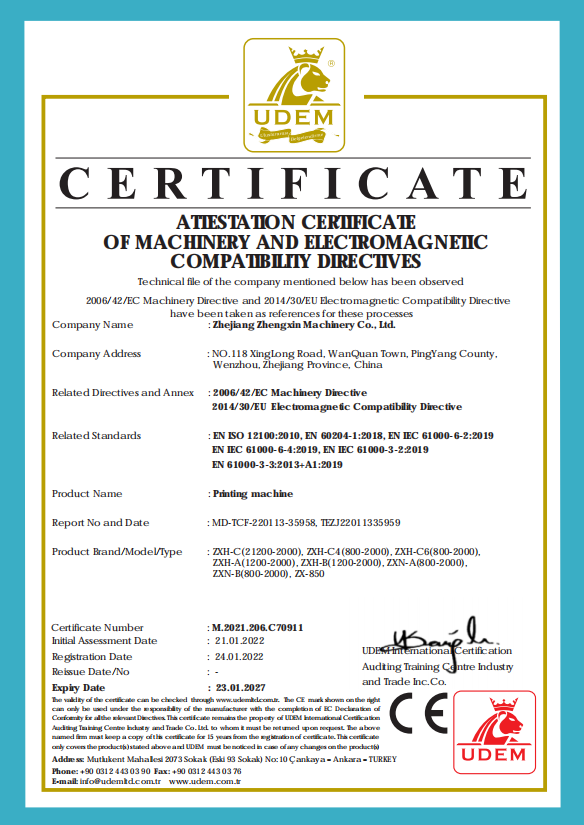
Certification that can be verified through the issuing body is a more durable form of evidence than a photograph of a certificate.
Future Outlook
Three developments are likely to reshape long-term supplier evaluation over the next several years. Servo-driven platforms with closed-loop position control are becoming the reference standard rather than an upgrade, because the accuracy they hold — dimensional tolerance measured in fractions of a millimetre, maintained after millions of cycles — directly extends the period during which a machine remains suitable for contract work. No-waste-edge designs that eliminate the trimmed fabric scrap generated by conventional machines address a cost that compounds continuously rather than once, which makes them progressively more attractive as fabric prices move. And inline integration of printing, forming, sealing, cutting, counting and stacking into a single continuous flow reduces the number of separate machines a factory has to maintain, which lowers the total service burden even as it raises the importance of choosing the right supplier for the whole line.
Against that backdrop, the procurement question is unlikely to become less demanding. As the installed base expands, buyers will increasingly be able to compare suppliers on documented service history rather than on specification sheets — and machines that were purchased on price alone will be visible in that comparison.
FAQ
What material thickness range can the ZXL-B700, ZXL-D700 and ZXL-E700 handle?
The ZXL-B700 handles non-woven fabric from 30 to 120 g/m². The ZXL-D700 and ZXL-E700 handle 30 to 100 g/m², with handle material specified at 50 to 100 g/m². For comparison, the ZXL-G700 side-gusset machine is rated at 50 to 100 g/m² with a side gusset of 60 to 200 mm, and the ZX-LT500 3D standing bag platform is rated at 70 to 150 g/m² with a gusset of 80 to 220 mm. Fabric roll width across the ZXL range is 500 to 1300 mm. Operating near the top of a model's thickness range typically reduces production speed by 10 to 15% compared with running standard 70 g/m² material.
What site preparation and installation support does a new machine require?
Standard single-machine installation takes one to two working days and is most commonly completed by the buyer's own team under remote video guidance. Required preparations include a level concrete floor with approximately 1.5 m clearance on all sides, a verified three-phase power supply, an installed air compressor with dryer and tank, a voltage stabiliser, initial fabric stock, and one to two operators available for training. The commissioning sequence runs from a dry-run test without material, through a low-speed fabric run with sample inspection, to a gradual ramp to production speed with operator training. On-site engineer dispatch is available where remote guidance is insufficient, at a stated daily service fee plus airfare and accommodation.
What are the standard purchasing terms and acceptance criteria for these machines?
The standard framework is a minimum order quantity of one unit, delivery terms of FOB or CIF, acceptance against a pre-shipment test, and payment terms of 30% deposit with the 70% balance payable before shipment. Because acceptance is defined by the pre-shipment test, buyers should specify in the contract which tests are performed, at which speeds, and which sample bags are retained for reference. Standard production lead time is 25 to 35 working days, with sea freight adding a further 15 to 45 days depending on destination.
What causes weak or inconsistent bag seals over years of production, and how is it controlled?
Documented causes of weak or inconsistent ultrasonic seals fall into three main categories: contamination of the ultrasonic horn surface with melted fabric residue, which reduces energy transfer; an uneven or incorrect horn-to-anvil gap, where an asymmetric gap produces a strong seal on one side and a weak seal on the other; and a mismatch between welding amplitude and production speed, which arises when fabric GSM is changed or line speed is increased without adjusting ultrasonic parameters. For 70 g/m² fabric the reference gap is approximately 0.3 to 0.5 mm, even to within 0.05 mm across the full horn width. Verification is by pull test: a correctly welded seal tears the fabric rather than peeling apart at the weld line. Horn surface wear is a separate, cumulative factor, and a horn that shows pitting or an uneven wear pattern is replaced rather than adjusted.
How is build material selected, and what does it change over the machine's service life?
Frame and structural material is a configuration choice across the ZXL and ZX-LT ranges, available in carbon steel, stainless steel or alloy steel depending on model and order specification. The choice affects corrosion resistance, the feasible cleaning and washdown regime, and suitability for food-adjacent production environments. It also interacts with duty cycle: a platform engineered for 8 to 16 hours of daily operation is not interchangeable with one engineered for continuous 24/7 running, which requires reinforced frames and drive systems, enhanced cooling on servo drives and ultrasonic generators, and a larger-capacity lubrication system.
What after-sales support remains available over the equipment lifetime?
Remote support is provided seven days a week via WhatsApp and video call, a channel the manufacturer reports resolves more than 80% of issues without a site visit. Where a fault requires parts, spares are dispatched by express courier following diagnosis. Field engineers can be deployed internationally to customer facilities, and the manufacturer maintains offices in Kenya, Morocco, Egypt, Vietnam, Tanzania, Dubai, Oman, Indonesia and Ethiopia. English operation manuals, wiring diagrams and spare-parts catalogues are supplied with the machine, and buyers can arrange third-party pre-shipment inspection through SGS, Bureau Veritas or CCIC.
How should a buyer verify component and certification claims before shipment?
Component claims are verifiable in two ways. First, through a live video factory tour showing the actual components being installed — branded PLCs, sensors and bearings rather than unbranded substitutes. Second, through third-party pre-shipment inspection arranged with SGS, Bureau Veritas or CCIC, which can be scheduled at the factory before final payment. Certification claims are verifiable by checking the CE Declaration of Conformity and the ISO 9001:2015 certificate against the issuing body's records rather than relying on a scanned image. CE certification on Zhengxin machines covers the Machinery, Low Voltage and EMC Directives.
Reference material: ZX Zhengxin Machinery product brochure · Manufacturer site: www.wzzxjx.com
¿Tiene preguntas o necesita más detalles?
Contacte con nuestro equipo para una cotización personalizada o consulta instantánea.
Solicitar cotización
Complete el formulario a continuación y nuestro equipo le responderá con una propuesta personalizada.
Chat directo de WhatsApp
¿Prefiere chatear en tiempo real? Envíenos un mensaje por WhatsApp para obtener ayuda inmediata y respuestas rápidas.
- Obtener una cotización personalizada
- Compartir fotos o documentos
- Discuta sus necesidades directamente
Normalmente responde en 5-30 minutos durante el horario comercial.