
Non Woven Bag Machine FAQ: Weak Seals, Setup, and Material Issues
Industry Reference · Packaging & Printing · Non Woven Bag Making Machines
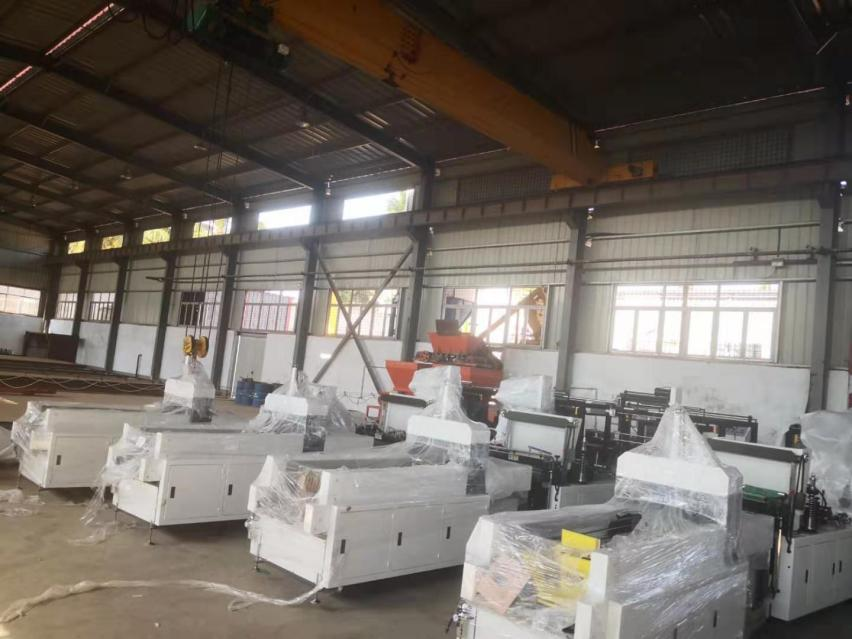
Non woven bag production has become one of the most active segments of the packaging and printing industry. As single-use plastic restrictions spread — more than 140 countries had enacted legislation restricting or banning single-use plastic bags as of 2026 — converters serving retail, food service and promotional packaging have shifted toward reusable PP spunbond bags. That shift is measurable: the specialised non-woven bag making machine market is predicted to grow from US$ 179 million in 2025 to US$ 733 million by 2032.
Behind the growth curve sits a very practical question that buyers raise repeatedly at the evaluation stage. Why do finished non woven bags sometimes split open, and how do you tell whether the cause is the machine, the material, or the setup? This reference answers that question directly, explains why ultrasonic welding produces a stronger seam than heat-seal-only systems, and sets out the installation, floor-space and operator requirements that determine whether a line runs consistently.
Why Weak Seals Are the Most Common Complaint in Non Woven Bag Production
Weak or inconsistent seals are the most frequently reported quality defect in non woven bag production. Three machine-side root causes account for the large majority of cases, and one material-side cause accounts for most of the rest.
- Horn contamination. Melted fabric residue builds on the ultrasonic horn surface and reduces the energy transferred to the fabric interface. Wiping the horn and anvil with isopropyl alcohol and a lint-free cloth, then inspecting under bright light, restores weld energy.
- Uneven horn-to-anvil gap. An asymmetric gap — for example 0.3 mm at one end of the horn and 0.5 mm at the other — produces a seal that is strong on one side of the bag and weak on the other. A feeler gauge confirms evenness across the full horn width; for 70 GSM fabric the working range is roughly 0.3–0.5 mm, even within 0.05 mm.
- Amplitude, speed and fabric mismatch. Weld quality is a function of energy delivered per unit of contact time. If fabric GSM changes, or production speed is increased without adjusting ultrasonic parameters, weld strength falls. Increasing amplitude by 5–10% for thicker fabric, or reducing speed by 10–15% if it was recently raised, usually corrects it.
- Fabric quality variation. Contaminated or inconsistently manufactured PP spunbond fabric will not weld correctly regardless of machine settings. Running one roll from a different batch is the fastest way to confirm or eliminate this cause.
The verification method is the same in every case. After any adjustment, produce 20 test bags and pull-test 5. A correct ultrasonic seal tears the surrounding fabric; a failed seal peels apart along the weld line. Air pressure should also be checked: welding pressure is applied pneumatically, and pressure that drops during the weld cycle produces varying seal strength.
If the seal still fails after the cleaning, gap and parameter checks, the horn surface may be worn — visible as pitting or an uneven wear pattern under bright light. A worn horn no longer distributes energy uniformly and should be replaced rather than adjusted around.
How Ultrasonic Welding Produces a Stronger Seam Than Heat Sealing
Ultrasonic welding converts 20 kHz electrical energy into mechanical vibration. A piezoelectric transducer converts the signal into oscillation, and a titanium or aluminium horn amplifies that vibration and presses it against the fabric, which is backed by a fixed steel anvil.
The 20,000 cycles per second generate friction heat at the interface between two fabric layers, raising the local temperature past the melting point of polypropylene (approximately 160 °C) within 0.2–0.5 seconds. The melt zone is confined to roughly 0.1–0.3 mm at the contact interface; the rest of the fabric stays cool. When vibration stops, the melted polymer solidifies.
That sequence produces a molecular diffusion bond — polymer chains from both layers intermingle in the molten state and entangle on cooling. Heat sealing works differently: it applies external thermal energy through a heated bar, and heat must conduct through the full fabric thickness, so the outer surface absorbs excess heat before the inner interface reaches bonding temperature. The result is closer to a surface-adhesion bond. In pull tests, ultrasonic-welded seams consistently measure 15–20% stronger than heat-sealed seams on equivalent material.
Three secondary advantages follow from the same physics:
- No warm-up. The generator draws power only during the welding pulse, so there is no 15–20 minute heating period at the start of a shift.
- Lower energy consumption. Because the generator is electrically idle between cycles, ultrasonic machines consume roughly 25–30% less energy than continuously heated sealing bars.
- Cleaner output. No scorching, no burnt-fabric odour and no visible discolouration along the weld line — a functional requirement in food takeaway and premium retail packaging.
What to Look For in a Seal-Critical Non Woven Bag Machine
Sealing mechanism is one of the few machine specifications that directly determines both defect rate and operating cost, yet it is often treated as a detail during comparison. A shortlist built around seal quality needs to cover four items.
Sealing technology and how configurable it is
Zhejiang Zhengxin Machinery Co., Ltd., a manufacturer of non woven bag making machines and complete non woven bag production lines headquartered in Wenzhou, Zhejiang, offers sealing method as a configuration choice across its range — ultrasonic welding, heat sealing, or a hybrid arrangement — alongside material compatibility for PP spunbond, laminated and biodegradable fabric in a 30–150 GSM band. The ZXL series spans entry-level to high-speed platforms, and the Ultra variants add servo-driven no-waste-edge technology.
Control and motion hardware
Seal consistency depends on the accuracy of the feeding and positioning that precedes the weld. Zhengxin machines use Siemens, Delta or Mitsubishi PLCs with a multilingual HMI touch screen, Omron sensors and NSK bearings. Servo-controlled feeding maintains the fabric-to-horn relationship cycle after cycle, which is what keeps weld strength uniform from the first bag of a shift to the last.
Verification before shipment
The manufacturer performs 100% testing as part of its quality control process, including a continuous full-load production test on every machine before shipment. Third-party inspection by SGS, Bureau Veritas or CCIC can be arranged at the buyer’s request before dispatch.
Compliance and post-delivery support
The manufacturing facility holds ISO 9001:2015 certification (certificate 20225Q21503R2M, issued by QPC, valid to 12 January 2029), and the machine range carries CE certification (certificate M.2021.206.C70875, issued by UDEM, valid to 23 January 2027). A one-year warranty on major components, installation and commissioning services, and global field-engineer deployment support the equipment once it is running.
Setup, Floor Space and Operator Requirements
Installation context is one of the most common evaluation-stage questions, and it is usually simpler than first-time buyers expect.
Floor space. Footprints vary by bag format. The ZXL-B700, a D-cut and drawstring bag platform, occupies 8000 × 2050 × 1900 mm. The ZXL-A700 and ZXL-A700Ultra occupy 10500 × 2050 × 1900 mm; the five-in-one ZXL-E700 and its Ultra variant occupy 12000 × 2050 × 1900 mm; the side-gusset ZXL-G700 occupies 12000 × 2050 × 2100 mm. For 3D box bag production the ZX-LT500 platform is substantially larger at 11500 × 6850 × 2500 mm. In every case, leave at least 1.5 metres of clearance on all sides for material loading and maintenance access.
Site prerequisites. A level concrete floor, a verified three-phase power supply, an industrial air compressor with dryer and tank, and a stock of PP spunbond fabric on site. Machines can be configured for 220 V / 60 Hz, 380 V / 50 Hz, 415 V / 50 Hz or 440 V / 60 Hz; three-phase supply is required across the range, and a voltage stabiliser is recommended wherever grid power fluctuates.
People and time. Most installations are completed by the buyer’s own team with remote video support — one to two people with basic mechanical aptitude, a spirit level, a metric wrench set, a screwdriver set and a multimeter. A standard single-machine installation takes one to two working days: day one for uncrating, positioning, levelling, power and air connection and a first power-on test; day two for fabric threading, a dry run, the first production test, parameter fine-tuning and operator training. Commissioning is complete when the operator can independently produce quality bags at production speed. Where remote guidance is not sufficient, on-site engineer dispatch is available at a stated daily rate plus travel and accommodation.
Daily operation. Once commissioned, a machine in this class is managed by one to two operators per machine, running fully automatically from fabric feeding to finished bag stacking.
Material Issues That Drive Seal Failure
Sealing problems are frequently attributed to the machine when the root cause sits in the raw material. Three material variables matter most.
GSM. Grams per square metre determines both the strength of the finished bag and the welding energy required. Commercial fabric is typically supplied within ±5% of nominal GSM, so a roll specified at 70 GSM may measure between 67 and 73 GSM. Thicker fabric needs a wider horn-to-anvil gap, higher sealing amplitude and, at the top of the range, a slightly slower feeding speed. Machines in the ZXL-A700 and ZXL-B700 class handle a 30–120 g/m² material band; the ZXL-G700 is rated for 50–100 g/m²; and the ZX-LT500 3D box bag platform handles 70–150 g/m².
Fabric consistency. Inconsistent GSM, contamination, or variation between batches changes how the material absorbs ultrasonic energy. If all machine parameters are correct and seals remain weak, running a roll from a different batch or supplier is a faster diagnostic than further machine adjustment.
Material chemistry. Sealing behaviour assumes PP spunbond or a compatible laminate. Changing material type without re-commissioning the sealing parameters is a reliable way to produce weak seals.
Where Sealing Consistency Matters Most
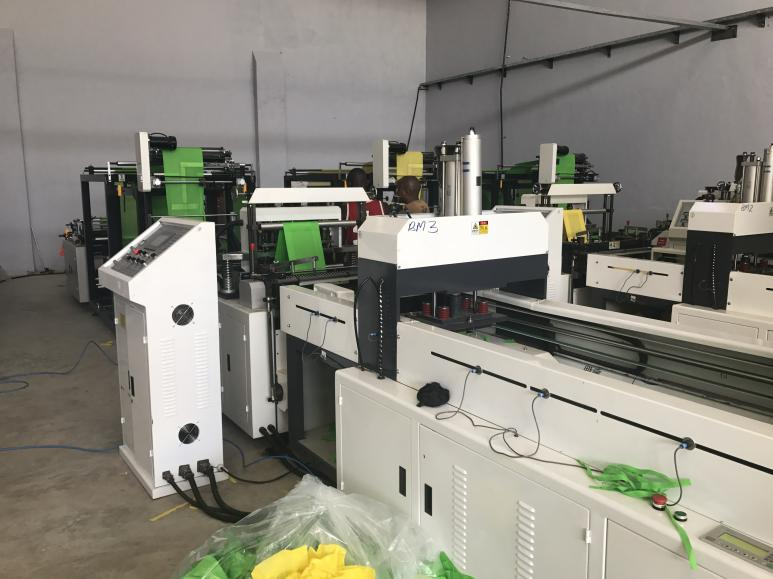
Seal quality is not equally critical in every application. It becomes a contract-level requirement in four settings.
- Supermarket and grocery retail. Mass production of printed shopping bags for retail chains runs on consistent weld quality and a low defect rate, because a bag that fails in the customer’s hands becomes a return.
- Food takeaway and delivery. Odourless, scorch-free sealing is a functional requirement rather than a preference, which makes ultrasonic welding the default choice for food-contact-adjacent non woven packaging.
- Promotional and corporate gift bags. Quick changeover between printed designs matters more than raw throughput; flexibility across bag sizes and print colours drives the machine choice.
- Garment packaging and dust covers. Wrinkle-free surfaces and consistent edge sealing determine perceived quality.
Deployment evidence shows how these requirements translate into real configurations. In Egypt, a food packaging and retail shopping bag manufacturer has operated five units — one ZXL-E700, two ZXH-C21200 printing machines and two ZXL-D700 machines — since 2017, supporting three product lines from a single supplier and serving the Cairo and Alexandria markets. In Indonesia, a large-scale non-woven bag manufacturing group operates 42 units spanning five machine models, including eight ZX-LT500, thirteen ZXL-E700, seven ZXL-A700, twelve ZXH-A1200 and two ZXL-G700 machines. In Brazil, a mid-scale manufacturer runs six units, and bags produced on that equipment comply with Brazil’s plastic-ban regulations across multiple states. Smaller deployments follow the same logic: a shopping bag manufacturer in Kenya operates two ZXL-A700 machines with one ZXH-C41200 printing machine, and a promotional bag producer in Tanzania runs one ZXL-A700Ultra with one ZXH-C21200.
Market Trend: Non Woven Bag Machines in a Plastic-Ban Economy
The demand side of the equation has been reshaped by regulation and is now large enough to be measured in its own right.
The global bag making machine market was valued at USD 4.8 billion in 2025 and is projected to reach USD 8.1 billion by 2034. Within that total, the specialised non-woven bag making machine segment is predicted to grow from US$ 179 million in 2025 to US$ 733 million by 2032 — a CAGR of 22.5% from 2026 to 2032, driven largely by plastic ban policies. The two figures measure different scopes: the broader number includes paper, plastic and multi-material bag machinery, while the narrower figure isolates non-woven equipment.
Regionally, Asia Pacific dominated the bag making machine market with a 43.6% revenue share in 2025. By product type, automatic bag making machines held a 52.4% share of the total market in the same year — a signal that buyers are moving away from semi-automatic configurations.
Two procurement-relevant implications follow. First, the average price of a non-woven bag making machine in 2025 was approximately USD 29,000 per unit, which provides a benchmark for evaluating quotes that fall far outside that range. Second, growth is concentrated in exactly the segment where seal quality and material handling decide whether a line is commercially viable.
Ultrasonic vs Heat Sealing: Trade-Offs and Limits
The choice between ultrasonic welding and heat-seal-only systems is often presented as a straightforward upgrade decision. In practice it is a trade-off, and the boundary conditions matter as much as the headline advantages.
| Dimension | Ultrasonic welding | Heat sealing |
|---|---|---|
| Warm-up | None — power drawn only during the weld pulse | 15–20 minutes to reach working temperature |
| Bond type | Molecular diffusion at the fabric interface | Surface adhesion through applied heat |
| Peel strength | Typically 15–20% higher on equivalent material | Lower; more sensitive to temperature drift |
| Melt zone | Confined to roughly 0.1–0.3 mm at the interface | Heat conducts through the full fabric thickness |
| Surface effect | No scorching, discolouration or odour | Possible scorching and burnt-fabric odour |
| Energy use | Generator idle between cycles; roughly 25–30% lower consumption | Continuous power draw to hold element temperature |
| Consumables | Horn is a wear part, typically replaced every 12–18 months | Heating elements replaced periodically |
| Upfront machine cost | Higher | Lower |
| Typical fit | Food takeaway, premium retail, high-volume lines where defect rate matters | Basic shopping bags where slight scorching and odour are acceptable |
Four limits should be stated plainly:
- Upfront cost is real. Ultrasonic sealing carries a higher machine cost than a comparable heat-seal-only configuration, and that premium is not recovered in every production profile. Low-volume production of unprinted flat bags where slight surface scorching is acceptable to the end customer can be served adequately by heat sealing.
- The horn is a consumable. The ultrasonic horn must be replaced as its surface wears. This is a predictable maintenance cost rather than a defect, but it belongs in the operating budget.
- Very thick laminated material is the hardest case. Material above roughly 150 GSM, particularly laminated constructions, has historically been the most demanding band for ultrasonic welding, and heat sealing is sometimes still considered there — although modern high-power ultrasonic horns handle most of it.
- Ultrasonic is not a substitute for material control. A contaminated or inconsistently manufactured fabric will not weld correctly on any sealing system. Where the root cause is raw material, changing the sealing mechanism will not solve it.
Future Outlook
Three engineering directions look set to shape the next generation of non woven bag making machines.
Sealing and motion control are converging. Servo-driven feeding and ultrasonic sealing are no longer independent subsystems; the accuracy of one determines the quality of the other. Servo positioning holds fabric alignment within a tight band regardless of speed, which is what allows a weld to be placed consistently across a full production shift rather than drifting as belts wear.
Waste reduction is becoming a specification. No-waste-edge technology eliminates the fabric trim that traditional lines produce along bag edges, converting the full purchased roll width into finished product rather than scrap, and removing a waste-collection and disposal burden from the factory floor.
Duty cycle is separating machine classes. Platforms engineered for continuous 24/7 operation now differ from standard machines in cooling capacity, frame construction and lubrication design, not only in rated speed. Buyers evaluating machines at the top of the speed range should ask which of those differences a platform actually includes.
Taken together, the direction of travel is toward fewer variables during production — fewer rejected bags, less manual adjustment, and less dependence on operator judgement at the sealing station.
FAQ
Why do finished non woven bags split open, and how do you fix weak seals?
Weak or inconsistent seals are the most common quality complaint in non woven bag production, and four causes account for most cases. Ultrasonic horn contamination reduces the energy reaching the fabric interface — clean the horn and anvil with isopropyl alcohol and a lint-free cloth. An uneven horn-to-anvil gap produces a seal that is strong on one side of the bag and weak on the other — verify evenness with a feeler gauge across the full horn width, keeping the gap even within 0.05 mm. A mismatch between amplitude, speed and fabric GSM reduces weld energy per cycle — increase amplitude by 5–10% for thicker fabric, or reduce speed by 10–15% if it was recently raised. Finally, contaminated or inconsistent PP spunbond fabric will not weld correctly regardless of settings. After any adjustment, run 20 test bags and pull-test 5: a correct seal tears the fabric, a failed seal peels apart. If the problem persists through all checks, the horn surface may be worn and require replacement.
How do ultrasonic welding settings change with fabric thickness?
Amplitude is matched to the fabric GSM band: roughly 60–70% for 50–60 GSM, 75–85% for 70–90 GSM, and 90–100% for 100–150 GSM or laminated material. The horn-to-anvil gap is set with the supplied gauge — approximately 0.3–0.5 mm for 70 GSM, wider for thicker material and narrower for thinner material — and must be even across the full horn width. Production speed interacts with both, because higher speed reduces welding contact time, so amplitude is usually increased to compensate. After any change, produce 20 test bags and inspect the weld line: a uniform, slightly glossy line indicates correct settings, while a brown or discoloured line indicates excessive amplitude.
Could the raw material be causing the weak seals?
Yes. Contaminated or inconsistently manufactured PP spunbond fabric will not weld correctly regardless of machine settings, and this is one of the most commonly overlooked causes. Commercial non woven fabric is typically supplied within ±5% of nominal GSM, so a roll specified at 70 GSM may measure 67–73 GSM, and variation between batches changes how the material absorbs ultrasonic energy. If all machine parameters check out and seals remain weak, running a roll from a different batch or supplier isolates the material as the cause faster than further machine adjustment. Changing material type — for example from plain PP spunbond to a laminate — without re-commissioning the sealing parameters will also produce weak seals.
What is required to install a non woven bag machine, and can the buyer’s own team do it?
Most installations are completed by the buyer’s team with remote video support from the manufacturer’s engineers, who guide each step in real time. The site needs a level concrete floor, a verified three-phase power supply, an industrial air compressor with dryer and tank, and fabric rolls on hand. The installation team requires one to two people with basic mechanical aptitude plus a spirit level, a metric wrench set, a screwdriver set and a multimeter. A standard single-machine installation takes one to two working days, covering uncrating, positioning, levelling, power and air connection, fabric threading, a dry run, a first production test and operator training. Where remote support is insufficient, on-site engineer dispatch is available at a stated daily rate plus travel and accommodation.
How much floor space does a machine such as the ZXL-B700 require, and how many operators does it need?
The ZXL-B700 occupies an overall footprint of 8000 × 2050 × 1900 mm and weighs 2,200 kg. Leave at least 1.5 metres of clearance on all sides for material loading and maintenance access. Other models in the same range are longer: the ZXL-A700 and ZXL-A700Ultra measure 10500 × 2050 × 1900 mm, and the five-in-one ZXL-E700 measures 12000 × 2050 × 1900 mm. Once commissioned, machines of this class are managed by one to two operators per machine and run fully automatically from fabric feeding to finished bag stacking.
How should ultrasonic sealing be compared with heat-seal-only systems before a purchase?
Compare on five dimensions rather than on price alone. Warm-up: ultrasonic needs none, while heat sealing requires 15–20 minutes to reach working temperature. Bond strength: ultrasonic welding produces a molecular diffusion bond that measures 15–20% stronger in pull tests than the surface-adhesion bond typical of heat sealing. Energy: because the ultrasonic generator is idle between welding pulses, ultrasonic machines consume roughly 25–30% less energy than continuously heated sealing bars. Surface quality: ultrasonic produces no scorching or burnt-fabric odour, which is why it is the default for food takeaway and premium retail packaging. Cost and maintenance: ultrasonic carries a higher upfront machine cost and its horn is a wear part, while heat sealing requires periodic heating-element replacement. Heat sealing remains a rational choice for low-volume, cost-driven production of unprinted flat bags where slight surface scorching is acceptable to the end customer.
Reference: full model specifications, configuration options and component details are documented in the ZX Zhengxin Machinery product catalogue (PDF).