
Non-Dairy Creamer Models Compared: FC22, S35, DT35, C960, 60A, K80
A non-dairy creamer model number is not a quality grade. In most supplier catalogues it is shorthand for a fixed combination of fat level, protein level, moisture limit, ingredient base and a declared application list. Those attributes — not the model name — determine whether a powder will work in a specific beverage, bakery or dessert system.
This article compares eight models from the Cograin non-dairy creamer range: FC22, S35, DT35, C960, 60A, K80, K60 and the cold-soluble creamer. Cograin is the brand of Jiahe Foods Industry Co., Ltd., a food ingredient manufacturer founded in 2001 and listed on the Shanghai Stock Exchange under stock code 605300, operating three production bases and five factories in Suzhou, Nantong and Singapore. The comparison below uses the manufacturer's published specifications and declared application lists only. It does not rank the models, because ranking would require independent laboratory data on solubility, foaming volume, acid stability and sensory performance that is not publicly available for this set.
Why buyers should compare models, not categories
Category words such as "foaming", "whipping", "vegan" or "cold-soluble" describe a functional job. They do not describe a numeric specification. Two powders sold under the same category label can differ materially in fat, protein and moisture, and those differences show up in the cup or on the line, not on the label.
The practical consequence for procurement is that category browsing narrows the field, but specification comparison decides the shortlist. A buyer specifying a milk tea system, a bakery filling and a vegan beverage may end up selecting three different models from the same supplier — which is exactly what the published application lists suggest.
The published specification set, side by side
The table below reproduces the declared nutritional and category data for each model. Figures are expressed per 100 g unless the manufacturer states a percentage limit.
| Model | Declared category | Fat (g/100 g) | Protein (g/100 g) | Other declared values | Stated applications |
|---|---|---|---|---|---|
| FC22 | Foaming creamer | 22.0 | 7.2 | Trans fat 0 g/100 g; moisture ≤6.0% | Milk tea, coffee, baking |
| S35 | Vegan creamer | 35.0 | 0 | Trans fat 0 g/100 g | Vegetarian products, alcoholic beverages, milk tea, coffee, baking |
| DT35 | Low sugar creamer | 35.0 | 2.5 | Carbohydrate 4.3 g/100 g | Milk tea, coffee, beverage, baking |
| C960 | Whipping creamer | 60.0 | 5.2 | Carbohydrate 28.8 g/100 g; moisture ≤6.0 g/100 g | Baking, beverage |
| 60A | High-fat creamer | 60.0 | 3.0 | Trans fat 0 g/100 g | Beverage, dessert, baking, animal feed |
| K80 | Kosher creamer | 32.0 | 2.5 | — | Beverage, dessert, milk tea, coffee |
| K60 | Standard creamer | 32.0 | 2.6 | Trans fat 0 g/100 g; moisture ≤5.0% | Milk tea, baking, coffee |
| Cold-soluble creamer | Cold-soluble creamer | 32.0 | 3.5 | Moisture ≤5.0 g/100 g | Coffee, milk tea, beverage |
Source: manufacturer-published product specifications for each Cograin model. Values are declared per 100 g unless a percentage or limit is stated. The 60A model is specified for the China market.
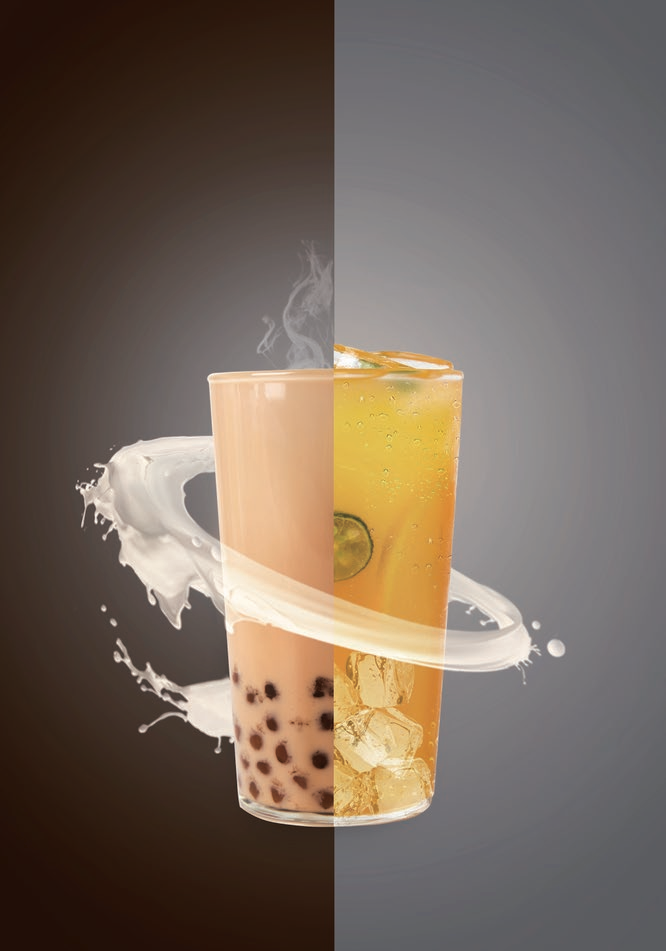
Cold-soluble creamer is one of eight specification sets compared in this article.
What each figure actually measures
Four numbers do most of the work in a creamer specification, and each answers a different question.
- Fat content is the primary driver of whitening power and creaminess in the finished product. The models here span 22.0 g/100 g (FC22) to 60.0 g/100 g (C960 and 60A) — roughly a threefold spread across one supplier's range.
- Protein content contributes body and, in foaming systems, structure. FC22 carries the highest declared protein at 7.2 g/100 g, while S35 declares 0 g — a deliberate formulation choice rather than a defect.
- Moisture limits describe how dry the powder is specified to be. Tighter limits (≤5.0%) appear on K60 and the cold-soluble creamer; looser limits (≤6.0%) appear on FC22 and C960.
- Trans fat is declared at 0 g/100 g on FC22, S35, 60A and K60. Absence of a declared value on a specification sheet is not evidence of presence — it simply means the figure was not published in the data reviewed here.
Category descriptions for non-dairy creamer production note that emulsification, spray drying and agglomeration are the process routes used to build highly dispersible instant powders. That matters when reading a "cold-soluble" claim: dispersibility is a process outcome, so the claim should be tested in the buyer's own liquid system at the buyer's own temperature rather than accepted from the model name alone.
Model by model: what each category label implies
FC22 — foaming, and the lowest fat in the set
FC22 is the only model in this comparison positioned as a foaming creamer, and it carries the lowest fat figure (22.0 g/100 g) alongside the highest protein figure (7.2 g/100 g). Its ingredient base includes milk powder, hydrogenated vegetable oil and glucose syrup, and its declared applications are milk tea, coffee and baking. For buyers, the relevant reading is that foaming performance here is not built on fat load; the protein level and the milk powder component are the distinguishing specification features. Trans fat is declared at 0 g/100 g and moisture at ≤6.0%.
S35 — vegan, with 0 g protein declared
S35 is declared as a vegan non-dairy creamer with 35.0 g/100 g fat, 0 g protein and 0 g trans fat. Its ingredient list — glucose syrup, hydrogenated vegetable oil, emulsifier, oxidized hydroxypropyl starch and anti-caking agent — does not include sodium caseinate, the milk-derived protein that appears in several other models' lists. That is consistent with a vegan positioning. Its declared application list is also the broadest in the set, spanning vegetarian products, alcoholic beverages, milk tea, coffee and baking. The alcoholic beverage entry is unusual and worth flagging: alcohol-containing systems impose stability demands that a specification sheet alone cannot confirm, so a trial is the appropriate next step.
DT35 — the "low sugar" claim is visible in the numbers
DT35 declares 35.0 g fat, 2.5 g protein and 4.3 g carbohydrate per 100 g. That carbohydrate figure is the most distinctive number in this comparison: C960 declares 28.8 g/100 g carbohydrate at the same fat level. Whatever else a buyer concludes, the low-sugar positioning of DT35 is supported by a materially lower declared carbohydrate value, not only by marketing language. Applications are milk tea, coffee, beverage and baking, and the ingredient list includes anti-caking agent (551) and food flavor.
C960 — whipping, 60 g fat, and the highest protein of the high-fat pair
C960 is the whipping creamer of the range. At 60.0 g/100 g fat and 5.2 g/100 g protein it sits at the top of the fat scale with the highest protein among the two 60-fat models. It also declares 28.8 g/100 g carbohydrate and moisture ≤6.0 g/100 g. Declared applications are baking and beverage. The whipping function implies aeration, which is a mechanical behaviour rather than a nutritional value — buyers should treat the fat and protein figures as the starting point and confirm whip behaviour under their own equipment conditions.
60A — high fat for beverage, dessert, baking and feed
60A is labelled high-fat at 60.0 g/100 g, with 3.0 g/100 g protein and 0 g/100 g trans fat. Its ingredient base is the shortest in the set: hydrogenated vegetable oil, glucose syrup, sodium caseinate, emulsifier and stabilizer. Declared applications are beverage, dessert, baking and animal feed, and the specification is marked for the China market. The animal feed application is the widest deviation from food-and-beverage use in this portfolio; buyers sourcing for feed should confirm the applicable regulatory pathway for their destination separately, because feed and food approvals are not interchangeable.
K80 and K60 — near-identical numbers, different positioning
K80 is the kosher-positioned model, declaring 32.0 g fat and 2.5 g protein, with applications in beverage, dessert, milk tea and coffee. K60 declares 32.0 g fat, 2.6 g protein, 0 g trans fat and moisture ≤5.0%, with applications in milk tea, baking and coffee. The nutritional difference between the two is marginal — 0.1 g of protein and a tighter moisture limit on K60. The practical conclusion is that a buyer selecting between them is choosing on positioning and documentation, not on nutrition: K80's kosher categorisation is a compliance attribute, while K60's tighter moisture limit is a handling and shelf-life attribute.
Cold-soluble creamer — dissolution behaviour as the specification
The cold-soluble creamer is designed for instant dissolution in cold liquids. It declares 32.0 g fat, 3.5 g protein and moisture ≤5.0 g/100 g, with coffee, milk tea and beverage applications. Its protein figure (3.5 g) is the highest of the three 32-fat models in this set, and its ingredient base uses refined vegetable oil rather than hydrogenated vegetable oil. For buyers formulating ready-to-drink or cold-brewed products, this is the model whose entire value proposition depends on a physical behaviour — dispersion without heat.
Application fit in one view
Mapping the declared application lists against each other shows where the portfolio overlaps and where it does not.
| Application | Models declaring fit | Buyer reading |
|---|---|---|
| Coffee | FC22, S35, DT35, K80, K60, cold-soluble | Broadest overlap in the range; specification, not availability, is the constraint. |
| Milk tea | FC22, S35, DT35, K80, K60, cold-soluble | Covers foaming, vegan, low-sugar, kosher and cold-soluble options. |
| Baking | FC22, S35, DT35, C960, 60A, K60 | Both 60-fat models and the foaming model are here, which matches typical fat-for-structure logic. |
| Beverage (general) | DT35, C960, 60A, K80, cold-soluble | Widest fat spread of any application, from 32.0 to 60.0 g/100 g. |
| Dessert | 60A, K80 | Narrowest food application in the set. |
| Vegetarian products | S35 | Single-model fit; no other model in the set declares a vegan position. |
| Alcoholic beverages | S35 | Single-model fit; stability validation is essential here. |
| Animal feed | 60A | Single-model fit, China market specification. |
Source: declared application lists published for each Cograin model. Overlap indicates declared suitability, not verified performance in a specific formulation.
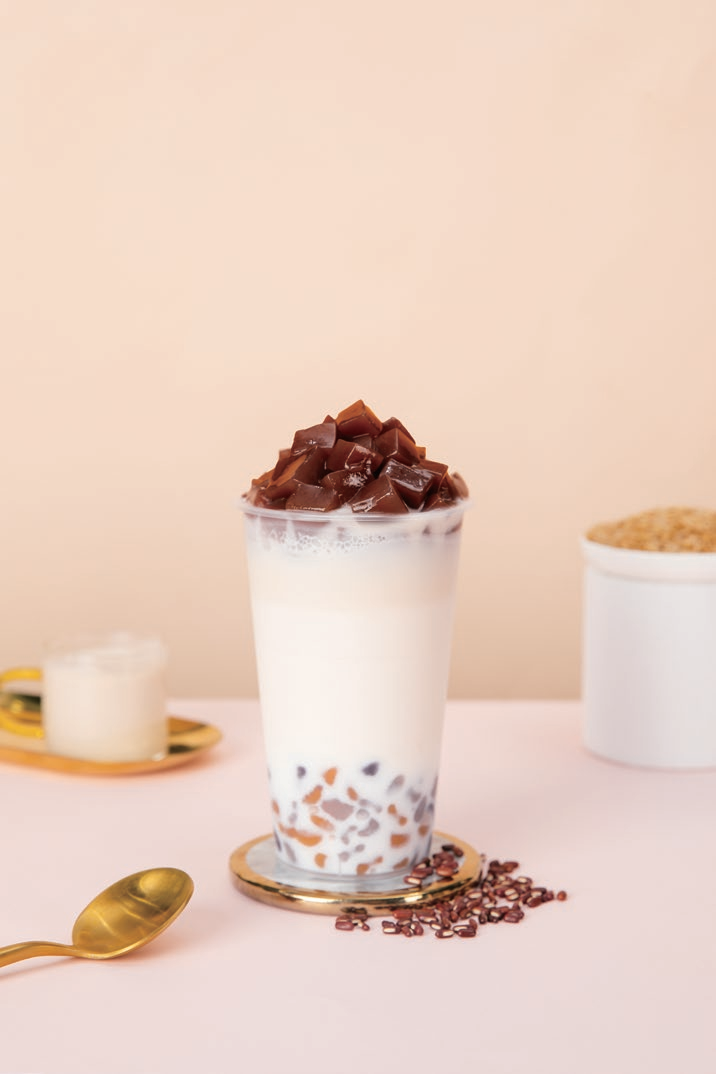
Milk tea is the application with the widest declared model overlap in this portfolio.
Where the published data stops
Three limits apply to everything above, and buyers should treat them as part of the comparison rather than as a footnote.
- The specifications are supplier-declared, not independently tested. No public comparative test data was located for solubility, foaming volume, acid resistance, whiteness, emulsion stability or sensory performance across these models. Fat, protein and moisture figures describe composition; they do not predict behaviour in a specific recipe.
- Certification claims require certificate-level verification. A model carrying a kosher category designation, or a model carrying a vegan designation, is positioned for that requirement — but the documents that satisfy an auditor are certificates and audit records, not catalogue labels. Halal, kosher, vegan, FDA and allergen claims should all be verified at document level before a purchase order is raised.
- Some "non-dairy" creamers contain milk-derived protein. Sodium caseinate appears in the ingredient lists of K80, 60A, C960, K60 and the cold-soluble creamer. Sodium caseinate is a milk-derived protein, so those models are lactose-free in practical terms but not dairy-free. S35's published list is the one in the set that does not include sodium caseinate. Any buyer whose requirement is allergen-driven rather than lactose-driven must read the ingredient list, not the category name.
Market context: what the published estimates support, and what they do not
Commercial research on the non-dairy creamer category is directionally consistent but numerically inconsistent. IMARC Group valued the global market at USD 2.00 billion in 2025. Market.us estimated about USD 2.4 billion in 2024, reaching about USD 4.4 billion by 2034 at a CAGR of 6.2%. Data Bridge Market Research estimated USD 2.88 billion in 2025 and USD 5.33 billion by 2033 at a CAGR of 8.00%, while Market Data Forecast estimated USD 2.61 billion in 2025 rising to USD 4.27 billion by 2034. These figures use different base years, different forecast endpoints and undisclosed product definitions.
The correct treatment is directional: the category is being forecast to grow, and the size estimates cannot be averaged or presented as a consensus range. Any buyer building a business case on a specific market value should review methodology rather than select the most convenient number.
On product mix, Market.us reported that medium-fat non-dairy creamer held a 43.6% share in 2024. The 32.0–35.0 g/100 g models in this comparison — S35, DT35, K80, K60 and the cold-soluble creamer — sit in the fat band that commercial research commonly classes as medium-fat, which is consistent with several of the portfolio's broadest application lists. On demand direction, the Good Food Institute reports that plant-based milk and creamer saw continued growth in U.S. foodservice and are established categories there — relevant context for S35's vegan position, though it is a qualitative statement rather than a volume measure.
Regulatory context also matters for cross-border buyers. The USDA Agricultural Marketing Service maintains a Commercial Item Description covering dry non-dairy creamer suitable for U.S. federal, state and local government use (document code indicated as AA-20043D in the published file, which should be confirmed against the current document). U.S. Customs has classified imported non-dairy coffee creamer from China under HTS subheading 2106.90.9975. Both facts point the same way: non-dairy creamer is treated as a defined, classified food product, so specification and documentation discipline belong in the sourcing plan, not in the afterthought column.
Non-dairy creamer versus dairy cream: the trade-off is functional, not nutritional
Compared with liquid dairy cream or milk powder, a non-dairy creamer is chosen for formulation control rather than for nutritional equivalence. The category is described in process literature as lactose-free liquid or granular products generally used as substitutes for milk or cream in hot beverages. In practice, buyers use non-dairy creamers to obtain a defined fat load independent of dairy market swings, ambient storage, and a powder format that doses consistently in dry blends.
The trade-off runs the other way too. A non-dairy creamer is a functional ingredient, not a dairy substitute in nutritional terms, and the models here declare protein from 0 g to 7.2 g per 100 g — a range that will not match dairy protein contribution in applications where protein is a claim. Where a product makes a dairy or protein claim, the creamer choice becomes a labelling decision as much as a formulation one.
A six-point buyer checklist
- Fix the fat target first. Choose between the 22.0, 32.0–35.0 and 60.0 g/100 g bands before looking at anything else; it is the largest single variable in the set.
- Then fix the functional job. Foaming, whipping, cold dispersion and standard whitening are different mechanical requirements and are not interchangeable across models.
- Read the ingredient list for allergen risk. Sodium caseinate presence or absence decides whether a model can serve a dairy-free brief.
- Check declared trans fat and moisture limits against your own labelling and shelf-life requirements rather than assuming portfolio defaults.
- Separate positioning from documentation. Kosher, halal, vegan and FDA positions need certificates and registration records, not category names.
- Trial before committing. Request application-specific samples for the declared use — coffee, milk tea, bakery, beverage, dessert or feed — and test in your own system.
Outlook
Three developments are likely to shape model-level comparison over the next few years. First, cold-soluble and instant-dispersion formats are becoming a specification a buyer asks for by name rather than a convenience feature, which pushes process capability — emulsification, spray drying and agglomeration — into the qualification conversation. Second, plant-based positioning continues to expand in foodservice, which strengthens the case for dedicated vegan specifications such as S35 rather than relying on standard models. Third, documentation pressure is rising: with customs classification, government purchasing specifications and certification requirements all touching this category, the supplier who can produce certificate-level evidence quickly will win comparisons that are decided on paperwork rather than price.
What is unlikely to change is the underlying rule. A model number tells you which specification set you are buying. The numbers inside it tell you whether it fits.
FAQ
What is non-dairy creamer?
Non-dairy creamer is a lactose-free liquid or granular product generally used as a substitute for milk or cream in hot beverages. In industrial supply it is most often a spray-dried powder built from glucose syrup, a vegetable oil, an emulsifier and a stabilizer, and it is used across beverages, bakery, desserts and food manufacturing.
What categories of non-dairy creamer does the Cograin range cover?
The published range covers foaming (FC22), vegan (S35), low sugar (DT35), whipping (C960), high fat (60A), kosher (K80), standard (K60) and cold-soluble creamer. Each is defined by its own fat, protein and moisture specification plus a declared application list, rather than by a shared base specification.
Which non-dairy creamer model is used for milk tea?
FC22, S35, DT35, K80, K60 and the cold-soluble creamer all declare milk tea among their applications. Because the fat content across those six ranges from 22.0 to 35.0 g/100 g and the functional categories differ, the choice within that group depends on the intended mouthfeel, sugar target, dietary positioning and whether the product is served hot or cold.
What does the fat figure tell a buyer, and what does it not tell them?
The fat figure, declared per 100 g, indicates the creamer's fat load and is the main compositional driver of whitening and creaminess. It does not predict foaming volume, whipping behaviour, dispersion speed, acid stability or sensory result in a specific recipe, because those depend on the full formulation and on process conditions that a specification sheet does not capture.
How should kosher, vegan or halal status be verified?
Through documents, not labels. A model may be positioned as kosher or vegan in a product range, but buyers should obtain the relevant certificate or registration record and confirm its scope, issuing body and validity period before qualification. Composition information such as a 0 g protein declaration or the absence of sodium caseinate from an ingredient list supports a dietary position but does not by itself constitute certification.
For buyers who need the full model-by-model documentation, the Cograin product brochure is available for download: 2025 Cograin Brochure (PDF).
¿Tiene preguntas o necesita más detalles?
Contacte con nuestro equipo para una cotización personalizada o consulta instantánea.
Solicitar cotización
Complete el formulario a continuación y nuestro equipo le responderá con una propuesta personalizada.
Chat directo de WhatsApp
¿Prefiere chatear en tiempo real? Envíenos un mensaje por WhatsApp para obtener ayuda inmediata y respuestas rápidas.
- Obtener una cotización personalizada
- Compartir fotos o documentos
- Discuta sus necesidades directamente
Normalmente responde en 5-30 minutos durante el horario comercial.