
Nitrogen Fertilizer Procurement FAQ: UAN 32 vs ASN 26-0-0+13S
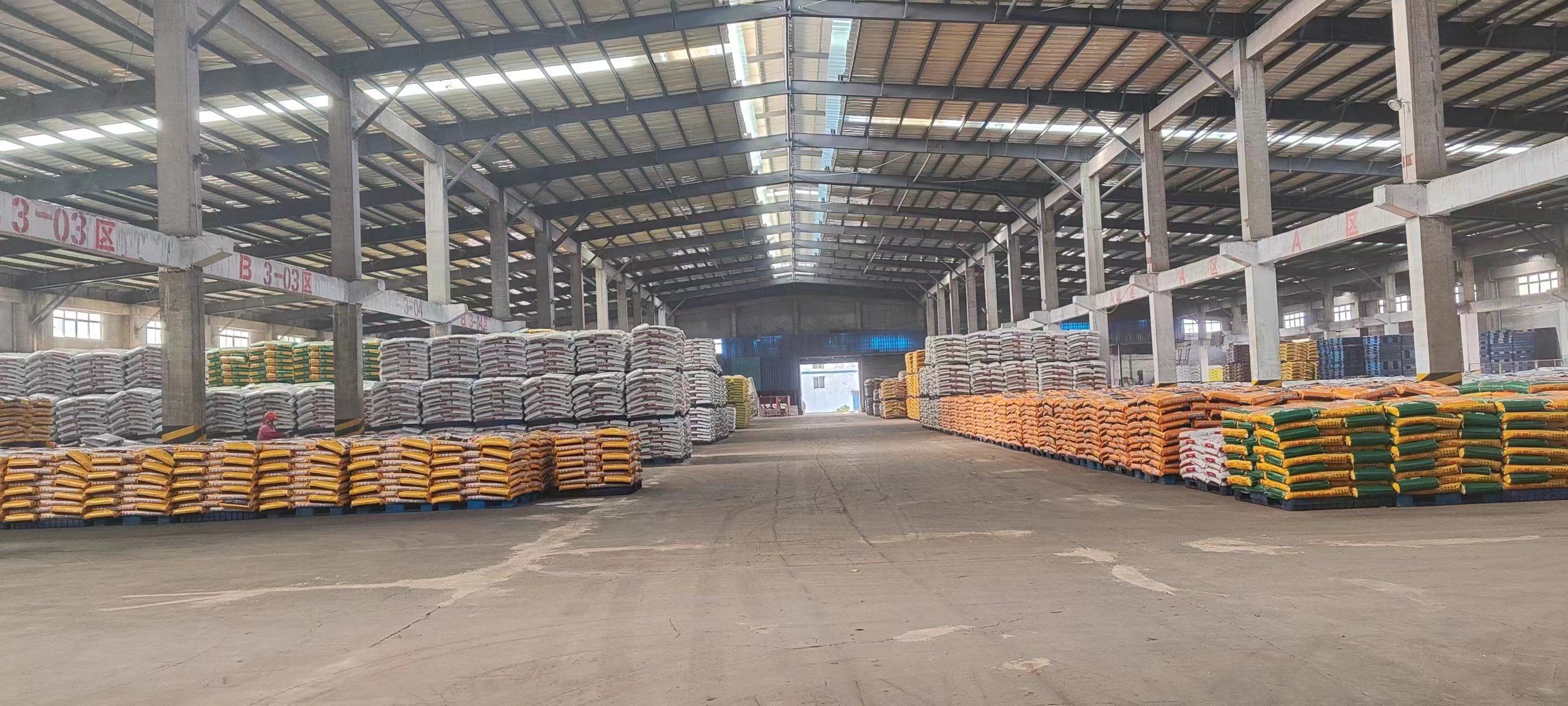
Finished-goods warehouse. Most nitrogen disputes are decided here, at goods-in inspection, not in the field.
Nitrogen fertilizer procurement rarely fails because the buyer chose the wrong nutrient. It fails because the purchase order says 'ASN' or 'UAN 32' and never states nitrogen content, moisture, granule size, density, or which documents must travel with each lot.
This reference collects the technical and commercial questions that recur when buyers evaluate a dual-source nitrogen programme built on liquid UAN 32 and granular ASN 26-0-0+13S, and answers them in the terms a specification, a contract and an inspection sheet actually require.
Risso Chemical (Taian Risso Chemical Co., Ltd.) is a fertilizer manufacturer founded in 2007 and based in the High-tech Development Zone, Taian City, Shandong Province, China. It produces NPK compound, water-soluble, polymer-coated and liquid fertilizers, including ASN and UAN 32, and its published capacity, certification and term figures are used here as supplier context. They are not a substitute for a buyer's own qualification process.
Why Specification Clarity Is the Real Procurement Constraint
A defensible nitrogen specification contains four parts: identity (which molecule, and in which nitrogen forms), numbers (concentration, moisture, granule size, density, pH, freezing point), evidence (certificates and per-lot documentation), and terms (quantity, packaging, lead time and dispute route). Cost and quality disputes usually trace back to one of these four being left implicit at the quotation stage.
Liquid and granular nitrogen are frequently bought together because they solve different problems. A liquid stream such as UAN 32 meters precisely into fertigation and side-dress systems. A granular stream such as ASN 26-0-0+13S moves through conventional mechanical spreading equipment and carries sulfur alongside nitrogen. Combining both forms in one programme improves agronomic flexibility, but it doubles the documentation burden: two physical states, two storage regimes, two acceptance routines.
The practical discipline is to buy on numbers and documents rather than on product names. 'ASN' and 'UAN 32' are category labels used across the market. Neither label, on its own, defines moisture, granule size distribution, packaging integrity or the certificate pack a supplier must hand over at loading.
The Two Reference Grades at a Glance
UAN 32 is a liquid nitrogen fertilizer containing 32% total nitrogen in three forms, urea nitrogen, ammonium nitrogen and nitrate nitrogen, with a density of approximately 1.32 to 1.34 g/cm3 at 20 degrees C, a pH typically between 7.0 and 8.0, and a freezing point of approximately minus 10 degrees C. ASN 26-0-0+13S is a granular ammonium sulfate nitrate fertilizer that typically provides 26% nitrogen and 13% sulfur, with moisture at or below 1.0% and a granule size typically between 2 and 4 mm.
| Parameter | UAN 32 | ASN 26-0-0+13S |
|---|---|---|
| Physical form | Liquid solution | Granular |
| Total nitrogen | 32% N | Typically 26% N |
| Sulfur | Not declared | Typically 13% S |
| Nitrogen forms | Urea, ammonium and nitrate nitrogen | Ammonium and nitrate nitrogen |
| Appearance | Clear to slightly yellow liquid | White to off-white granules |
| Density | Approx. 1.32 to 1.34 g/cm3 at 20 degrees C | Not applicable |
| pH | Typically 7.0 to 8.0 | Not declared |
| Freezing point | Approx. minus 10 degrees C | Not applicable |
| Granule size | Not applicable | Typically 2 to 4 mm |
| Moisture | Not declared | At or below 1.0% |
| Main composition | Urea, ammonium nitrate and water | Ammonium sulfate and ammonium nitrate |
| Typical application | Fertigation, foliar application, soil application | Base fertilization, top dressing, field crops |
The difference in nutrient density is the first commercial fact a buyer has to internalise. One tonne of UAN 32 carries 320 kg of nitrogen. One tonne of ASN 26-0-0+13S carries about 260 kg of nitrogen and about 130 kg of sulfur. Neither comparison is meaningful until both are converted into nutrient delivered per hectare.
What 26-0-0+13S Actually Means
The figure is read in N-P-K order with a sulfur declaration: 26% nitrogen, 0% phosphate, 0% potash, plus 13% sulfur. The sulfur is a declared nutrient, not a filler or a by-product line item. For crops and soils where sulfur is part of the requirement, that changes the calculation of what the product replaces.
ASN is an ammonium sulfate nitrate. Its nitrogen is supplied in ammonium and nitrate forms, and its sulfate component supplies the sulfur. The two nitrogen forms are commonly described as behaving differently in the soil: nitrate is immediately available to the crop, while ammonium is retained and converted over time. That is the practical argument for a dual-form granular product in base and top-dressing programmes.
ASN versus ammonium sulfate
ASN and ammonium sulfate are different fertilizer products. ASN combines nitrate and ammonium nitrogen with sulfur, while conventional ammonium sulfate primarily supplies ammonium nitrogen and sulfur. A buyer replacing one with the other should therefore recalculate the nitrogen and sulfur rates rather than substitute tonne for tonne, because the nitrogen form profile and the sulfur analysis per tonne are not equivalent.
Product guidance for ASN also notes that, compared with ammonium sulfate, continuous application of ASN carries a lower soil acidification risk, while still recommending rotation and combination with other fertilizers for long-term planting. Storage guidance is specific as well: keep ASN in dry, cool and ventilated warehouses, away from moisture and direct sunlight, seal packaging to prevent caking, and keep it separate from alkaline chemicals.
Is ASN Better Than Urea? A Decision Rule
Neither fertilizer is universally better. Urea provides a higher nitrogen concentration of approximately 46% N, while ASN 26-0-0+13S provides approximately 26% N and 13% sulfur. ASN can be more suitable where crops require both nitrogen and sulfur; urea is often preferred when high nitrogen concentration is the main priority.
The arithmetic behind that rule is simple. One tonne of ASN delivers roughly 260 kg of nitrogen. One tonne of urea at approximately 46% N delivers roughly 460 kg of nitrogen. Measured per unit of nitrogen, ASN therefore requires around 1.8 times the product mass, which shows up as freight, warehouse space, bag count and application passes. The offset is the 130 kg of sulfur carried in the same tonne, which would otherwise have to be sourced and spread separately.
- Choose ASN when sulfur forms part of the crop nutrient requirement and both nitrate and ammonium nitrogen are wanted in a granular programme.
- Choose urea when nitrogen concentration, nitrogen-only nutrition and simple solid storage are the dominant priorities.
- Never convert one into the other by weight. Convert the target kg N per hectare and kg S per hectare into product tonnes separately.
- Confirm the sulfur requirement with soil testing before paying a premium for a nutrient the field does not need.
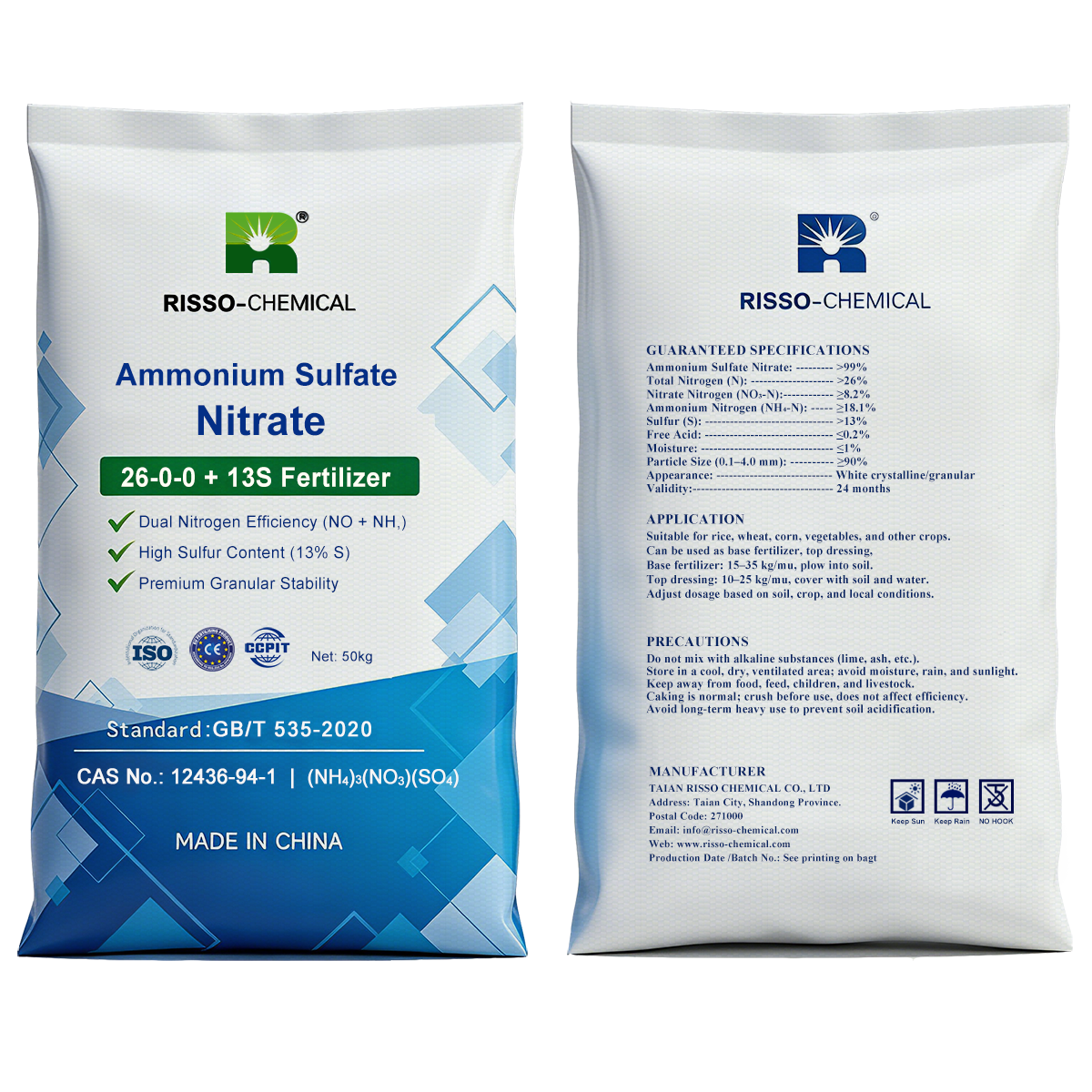
ASN 26-0-0+13S. Granule size range and moisture are the two physical parameters most often left out of first-draft purchase orders.
Acceptance Criteria to Write Into the Contract
Acceptance criteria convert a specification into something a warehouse can check on arrival. For nitrogen fertilizer, four groups matter.
1. Composition and physical parameters
| Check | ASN 26-0-0+13S | UAN 32 |
|---|---|---|
| Declared analysis | Typically 26% N and 13% S, ammonium and nitrate nitrogen | 32% N, urea, ammonium and nitrate nitrogen |
| Moisture | At or below 1.0% | Confirm with the lot datasheet |
| Particle size | Typically 2 to 4 mm, uniform granulation | Not applicable |
| Appearance | White to off-white, free-flowing granules | Clear to slightly yellow liquid |
| Physical constants | Not applicable | Density approx. 1.32 to 1.34 g/cm3 at 20 degrees C; pH typically 7.0 to 8.0; freezing point approx. minus 10 degrees C |
| Condition on receipt | No caking, no fines excess, no contamination | No crystallisation, no contamination, tank seal intact |
The published values are typical values. The contract is where the acceptance band belongs, together with the tolerance the buyer will accept and the method used to verify it. Leaving the tolerance to the supplier's discretion is the single most common source of goods-in disputes.
2. Packaging and handling
Liquid products are commonly transported in IBCs, drums and tankers, and are paired in use with irrigation and fertigation systems, storage tanks and bulk or packaging equipment. Granular product arrives bagged or in bulk and must be free-flowing and compatible with the spreader in use. Packaging format, closure integrity, lot marking and net weight should all be specified, because a packaging change can alter handling and storage behaviour without changing the chemical analysis.
3. Documents per shipment
At minimum, each lot should arrive with a certificate of analysis, the product technical datasheet and the safety documentation required by the destination market. Transport, storage and use of these products are subject to chemical and hazardous-materials regulations, and the specific hazards and packaging requirements should follow the product technical datasheet rather than a generic template.
4. Sampling and dispute route
State who samples, at what point in the chain, in what quantity, and what happens if the result falls outside the agreed band: re-test, price adjustment, replacement or rejection. This clause protects both sides and is the one most often absent from first-draft purchase orders.
Two questions the specification does not answer. Chloride content and tank-mix compatibility are not declared in the published product data. Where a buyer requires a chloride-free nitrogen input, or intends to combine UAN 32 with humic-acid products already in the programme, the requirement should be confirmed in writing for the specific lot and mix rather than inferred from the product category.
Certification: What the Documents Do and Do Not Prove
Risso's nitrogen fertilizer products are certified to the ISO 9001:2015 quality management system standard under certificate number 0891092R1M16Q8, issued by ZSBC and applicable to the global market. The certified scope covers research and development, production and service of NPK compound fertilizer, urea and special purpose fertilizer, excluding licensed products. The certificate was issued on 5 June 2019.
Separately, a Verification of Conformity for RoHS compliance, certificate number DPWD/03/0570/2025, was issued by Intercert Global Sp. z o.o. for the EU market and is valid from 5 March 2025 to 4 March 2030. It is issued against the harmonised standards EN 62321-4:2014+A1:2017, EN 62321-5:2014, EN 62321-7-1:2015, EN 62321-7-2:2017, EN 62321-6:2015 and EN 62321-8:2017, and covers NPK compound fertilizer, NPK water-soluble fertilizer, NPK blending fertilizers and NPK liquid fertilizer, including the liquid and granular nitrogen grades.
Both documents are useful, and both have boundaries a buyer should understand. A quality management system certificate evidences a controlled, auditable process; it is not a per-lot nutrient guarantee. A restricted-substance conformity verification addresses compliance with the named standards; it does not attest to agronomic performance. Certificates therefore belong in supplier qualification, while the delivered product should be judged on the lot certificate of analysis and the goods-in inspection.
Purchasing Terms: Capacity, MOQ, Lead Time and Customization
The evaluation stage usually turns on four commercial questions: whether the supplier can hold a programme across a season, how small a first order can be, how long the planning window is, and whether packaging or specification can be adapted to an existing application system. Risso's published terms give one reference point for each.
| Term | Published figure |
|---|---|
| Established | 2007 |
| Site and workforce | 500,000 m2 facility in Taian, Shandong; 350 employees, including 50 R&D engineers |
| Production base | 16 modern NPK fertilizer production lines |
| Annual output | 2 million tons |
| Monthly capacity | 30,000 tons |
| Minimum order quantity | 100 tons |
| Lead time | 30 to 45 days |
| Production mode | ODM, OEM and customizable specifications and packaging |
| Export footprint | More than 60 countries and regions; export ratio approximately 50% |
| Served markets | Australia, New Zealand, Mexico, Canada, Southeast Asia, wider Asia, South America and others |
Quality control runs through the whole process, from raw materials to finished fertilizer, and includes production monitoring, laboratory testing and finished-product inspection to keep quality and specifications consistent. Technical support and application guidance are provided after delivery, and customized specifications and packaging are available on inquiry, including options adapted to specific application systems, crop requirements and order volumes.
These terms answer the questions buyers ask during evaluation, but they do not answer the decisive one: whether the supplier's numbers match your written specification. That requires samples, lot-level certificates and a goods-in inspection that actually applies the acceptance criteria agreed in the contract.
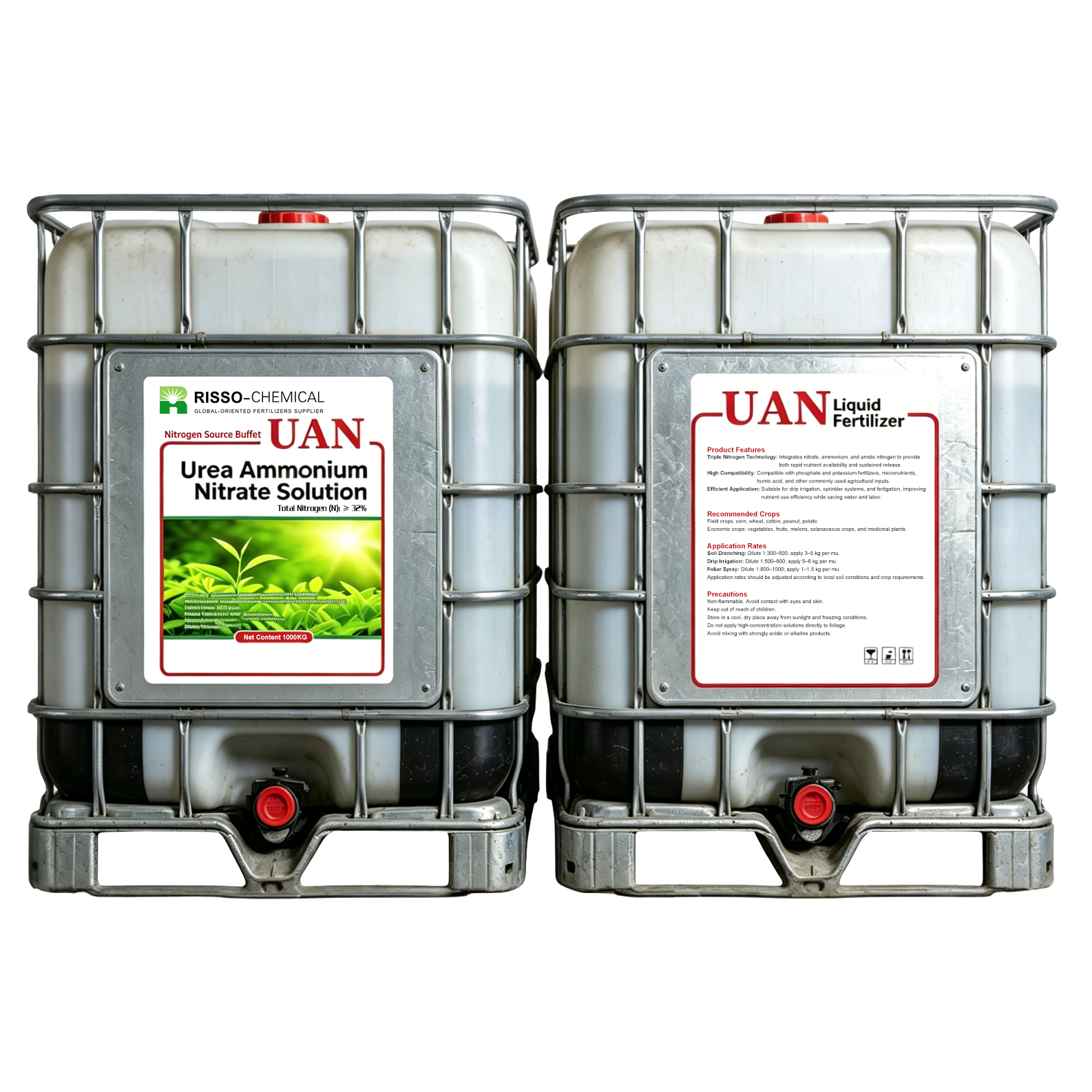
UAN 32 in IBC format. Packaging choice changes handling, storage and inspection routine even when the analysis is unchanged.
Application Fit: Which Grade Belongs Where
UAN 32 is used for fertigation, foliar application and soil application, and suits systems that meter liquid: irrigation injection, band application and precision nutrient management. Its value in a programme is uniform distribution, accurate metering and compatibility with modern application equipment, rather than a fixed efficiency gain over any other nitrogen source.
ASN 26-0-0+13S is applied as base fertilization and top dressing on field crops, and suits conventional tillage and mechanised spreading. Granulation matters here in a way it does not for liquids: a 2 to 4 mm range with moisture at or below 1.0% supports an even spread pattern and reduces caking in both the spreader and the store.
Both grades are used across field crops, orchards, vegetables, greenhouse and horticultural production, oilseeds, industrial crops, and turf and landscape. Risso's product guidance is explicit that yield outcomes depend on crop, soil conditions, application rate and farming practice, which is another way of saying that no nitrogen grade in this category carries a guaranteed result. Soil testing and local agronomic advice remain the inputs that decide the rate.
Market Context: Reading the Numbers Carefully
Two external data points are worth carrying into a supplier business case, both with caveats. First, SNS Insider valued the global liquid fertilizer market at USD 15.49 billion in 2025, with nitrogen the largest revenue contributor. That figure should not be used in isolation: Fortune Business Insights reports USD 3.01 billion for 2025 and Global Market Insights reports USD 18.6 billion. The spread is best explained by scope, specifically whether commodity UAN sits inside or outside the definition. A buyer building a volume case should choose the definition that matches the products actually being purchased.
Second, EU nitrogen policy targets a 20% reduction in chemical fertilizer use to meet Green Deal nutrient-loss goals by 2030. For buyers in Europe, or selling into it, that is a demand-side signal for efficiency, traceability and better documentation rather than a price forecast.
One cost point belongs in every dual-source evaluation: UAN infrastructure costs are approximately double those of dry storage in North America, driven by stainless-steel requirements. The absolute number should be tested in the buyer's own market, but the direction is consistent. The liquid half of the programme carries a capital cost that the granular half does not.
Limits and Trade-offs
Any credible procurement reference has to state where each product stops being the convenient choice.
- Cold-weather handling of UAN 32. The freezing point is approximately minus 10 degrees C. At low temperatures fertilizer salts can crystallise, so temperature management and proper storage procedures are required, and the exact crystallisation or salt-out temperature should follow the product specification rather than a rule of thumb.
- Capital intensity of liquid storage. Tanks, bunding and metering equipment carry a materially higher fixed cost than a dry store, which weakens the liquid case at low annual volumes.
- Nutrient density of ASN. At typically 26% N, ASN needs roughly 1.8 times the mass of 46% urea per unit of nitrogen, with corresponding effects on freight, storage and application logistics.
- Sulfur is only worth paying for when it is needed. On soils already adequately supplied with sulfur, the 13% S in ASN buys nothing, and a nitrogen-only source is the cheaper route to the same nitrogen rate.
- Storage discipline for granular product. ASN should be kept dry, cool and ventilated, away from moisture and direct sunlight, with packaging sealed against caking and separated from alkaline chemicals. Warehouses that cannot hold that standard will lose product quality regardless of the analysis on the certificate.
- No grade substitutes for timing and placement. Nitrogen use efficiency depends on application timing, placement, crop demand, soil conditions, weather and management practice, and any specific efficiency improvement should be quantified through field trials rather than assumed.
Future Outlook
Two forces are likely to shape nitrogen procurement over the next several seasons. The first is precision application: as fertigation and variable-rate spreading become standard on larger operations, the value of a liquid stream that can be metered and a granular stream that spreads uniformly rises relative to generic nitrogen sources. The second is documentation. Reduction targets of the kind set in the EU, together with restricted-substance conformity requirements, push buyers toward suppliers who can produce a clean certificate pack per lot rather than a single brochure certificate.
The missing piece is comparable efficiency data. Public datasets on nitrogen use efficiency for triple-source liquids against single-source granular products are not readily available, and published market research aggregates all nitrogen rather than isolating specialty formulations. Until lot-linked trial data becomes common, buyers will keep judging dual-source programmes on specification discipline, documentation quality and application fit rather than on headline efficiency claims.
FAQ
What is ASN fertilizer 26-0-0+13S?
ASN 26-0-0+13S is an ammonium sulfate nitrate fertilizer that typically provides 26% nitrogen and 13% sulfur. Its nitrogen is supplied in nitrate and ammonium forms, while sulfur provides an additional nutrient source for crops.
What is UAN 32 fertilizer?
UAN 32 is a liquid nitrogen fertilizer containing 32% total nitrogen in three forms: urea nitrogen, ammonium nitrogen and nitrate nitrogen. Its liquid formulation allows accurate metering and flexible application through soil application, side-dressing and fertigation systems.
What is the difference between ASN and ammonium sulfate?
ASN and ammonium sulfate are different fertilizer products. ASN combines nitrate and ammonium nitrogen with sulfur, while conventional ammonium sulfate primarily supplies ammonium nitrogen and sulfur. ASN is the appropriate choice when a combination of nitrate and ammonium nitrogen plus sulfur is desired.
Is ASN fertilizer better than urea?
Neither fertilizer is universally better. Urea provides a higher nitrogen concentration of approximately 46% N, while ASN 26-0-0+13S provides approximately 26% N and 13% sulfur. ASN can be more suitable where crops require both nitrogen and sulfur, while urea is often preferred when high nitrogen concentration is the main priority.
How should UAN 32 be stored?
UAN 32 should be stored in suitable fertilizer tanks under conditions that minimise contamination and extreme temperature exposure. At low temperatures, fertilizer salts can crystallise, so temperature management and proper storage procedures are important. The exact crystallisation or salt-out temperature should follow the product specification.
Does UAN 32 improve nitrogen use efficiency?
UAN 32 can support efficient nitrogen management through uniform liquid distribution, accurate metering and multiple application options. Actual nitrogen use efficiency depends on application timing, placement, crop demand, soil conditions, weather and nitrogen management practices. Field trials should be used to quantify any specific efficiency improvement.
Procurement Summary
A dual-source nitrogen programme is defensible when the contract states the analysis and physical parameters with tolerances, names the documents required per lot, fixes the sampling and dispute route, and matches each grade to the application system that will actually use it. Certification supports supplier qualification; the lot certificate of analysis supports acceptance. Neither replaces the other.
Risso Chemical's product catalogue, covering UAN 32 and ASN 26-0-0+13S specifications, packaging options and portfolio detail, is available for download: Risso product catalogue (PDF).
¿Tiene preguntas o necesita más detalles?
Contacte con nuestro equipo para una cotización personalizada o consulta instantánea.
Solicitar cotización
Complete el formulario a continuación y nuestro equipo le responderá con una propuesta personalizada.
Chat directo de WhatsApp
¿Prefiere chatear en tiempo real? Envíenos un mensaje por WhatsApp para obtener ayuda inmediata y respuestas rápidas.
- Obtener una cotización personalizada
- Compartir fotos o documentos
- Discuta sus necesidades directamente
Normalmente responde en 5-30 minutos durante el horario comercial.