
Nicotine Film Compliance Dossier: Decoding FDA and EU Proof
For a nicotine film buyer, the regulatory file is not paperwork that arrives after the commercial decision. It is the document set that determines whether the commercial decision is executable at all. A nicotine film regulatory dossier is the bundle of entity registrations, product filings, premarket applications, toxicology reports and safety data sheets that allows an importer, distributor or brand owner to place an oral thin film nicotine product into a named market — and to defend that placement during customs review, retailer onboarding or a post-launch audit.
This article maps the specific document layers behind SENO nicotine oral films: the FDA registration under the Bioterrorism Act (number 13242366294) issued by SHT Testing Technology Co., Ltd.; the OTC Drug Registration (number 510936020) issued by Shenzhen Deesev Testing International Corporation (DTI); three FDA PMTA certificate numbers (PM0010176, PM0010173, PM0010199) and their notification status; and the REACH and CLP-compliant Safety Data Sheets aligned to EN 14986 that support EU market entry. Each layer is described by what it is and where its scope ends. Nothing here extends regulatory coverage beyond those documents.
What a Nicotine Film Regulatory Dossier Actually Contains
A dossier is built in layers because no single certificate covers an entire market. Compliance officers reviewing an oral thin film supplier usually look for four distinct document families, each answering a different question.
- Entity and facility registration — confirms that the manufacturing entity is known to a regulator, and under which registration number.
- Product or drug registration — confirms that a specific product form has been filed through a defined pathway, with an assigned registration number issued by a named body.
- Premarket tobacco product applications (PMTA) — confirms that applications have been submitted and assigned certificate numbers, together with the notification status recorded for those numbers.
- Safety data documentation — Safety Data Sheets written to the chemical hazard-communication rules of the destination market, covering handling, storage and transport.
Underneath those four layers sits the technical evidence that makes them credible: toxicology testing, dose consistency data, stability data and batch traceability records. Regulators and buyers ultimately ask the same three questions regardless of jurisdiction — what is in the film, how much nicotine does each strip carry, and how does the product behave in storage and transit.
The manufacturer behind SENO is Xin Sino Technology (Shenzhen) Co., Ltd., a Shenzhen-based producer of nicotine film and oral film products. The company operates a 20,000 m² production facility, reports a 100% export orientation, and ships to Europe, the United States, Canada, Australia and the Middle East. Its public product information is published at seno-online.com. That entity definition matters at the dossier stage, because registration numbers are tied to a legal entity and a facility, not to a brand name alone.
Why the Compliance File Moved to the Front of the Buying Decision
Documentation has become a purchasing variable rather than an administrative afterthought, and the market data explains part of the reason. Market Research Future values the global nicotine oral dissolvable thin films market at USD 112.34 million in 2024, with a projected value of USD 174.18 million by 2035. Grand View Research, working from a broader definition that includes nicotine pouches, estimates the modern oral nicotine products market at USD 38.9 billion by 2033 at a 19.0% CAGR. These two figures are not in conflict; they measure different scopes, and a buyer comparing them should check which product categories each one counts before using either number in a business case.
What the growth trajectory implies operationally is that more distributors are entering more markets at the same time, and each market asks different questions at the border. A European importer may need a Safety Data Sheet before the product can be stored in a warehouse. A US-facing brand owner may need premarket application references before a retailer will list the product. A Middle East distributor may need both. When documentation is assembled late, it becomes a launch delay; when it is assembled early, it becomes part of the supplier evaluation itself.
This is the practical shift that matters for procurement teams: compliance evidence is now evaluated at the shortlisting stage, alongside price, capacity and lead time. A supplier that can hand over a structured dossier in the first round of discussion removes an entire category of downstream risk from the project.
The SENO Document Stack, Layer by Layer
The dossier described here is deliberately specific. It covers named registrations, named applications and named safety documentation — and it does not claim to cover anything else.
1. FDA Registration Under the Bioterrorism Act — Number 13242366294
The FDA registration under the Bioterrorism Act carries the number 13242366294 and was issued by SHT Testing Technology Co., Ltd. It sits at the entity and facility layer of the dossier: it identifies the manufacturing operation within a registration framework, and it is the first document a compliance officer typically checks when confirming that a supplier exists in a regulatory record at all. Its value in a supplier review is identification and traceability. Its scope is defined by the registration itself, and it should be read as that specific filing rather than as a substitute for product-level authorization in any market.
2. OTC Drug Registration — Number 510936020
The OTC Drug Registration is numbered 510936020 and was issued by Shenzhen Deesev Testing International Corporation (DTI). This is the product-layer document in the stack: it sits closer to the finished product form than an entity registration does. For a distributor, the practical function of an OTC drug registration number is that it gives the product a citable regulatory reference during retailer onboarding and import documentation. SENO Oral Films are further described in the US drug label database maintained by DailyMed under the National Institutes of Health, where the labeled nicotine concentration is recorded as 1.5%, with the product described as intended to relieve mental fatigue and alleviate withdrawal symptoms. Labeled concentration and registered pathway are two separate facts, and a dossier review should treat them as such.
3. FDA PMTA Certificate Numbers — PM0010176, PM0010173, PM0010199
Three FDA Premarket Tobacco Product Application certificate numbers appear in this dossier: PM0010176, PM0010173 and PM0010199. The available record describes these as first-round FDA PMTA registration numbers assigned as of September 2025. Their notification status is part of the dossier record, and that status is what a buyer should confirm when the certificates are handed over, because the number itself and the current status of the application are not the same piece of information.
In a commercial review, PMTA references matter most to partners preparing a US-facing launch, since retailers and distributors in that market increasingly ask for application references before committing shelf space. The certificates should be read as those three specific applications under the named numbers, and the coverage claim should stop there.
4. REACH and CLP-Compliant Safety Data Sheets Aligned to EN 14986
For EU market entry, the dossier includes Safety Data Sheets prepared to REACH and CLP requirements and aligned to EN 14986. A Safety Data Sheet is a different kind of document from a registration: it communicates hazard, handling, storage and transport information to everyone who touches the product after it leaves the factory — the freight forwarder, the customs broker, the warehouse team, the retailer. In practice, this is the document that most often blocks or unblocks an EU launch, because without a current, correctly formatted SDS, the product cannot be moved through normal commercial logistics channels.
Document map at a glance
| Document layer | Identifier | Issuing / source body | Primary use in a buyer review |
|---|---|---|---|
| FDA registration, Bioterrorism Act | 13242366294 | SHT Testing Technology Co., Ltd. | Entity and facility identification during supplier verification |
| OTC Drug Registration | 510936020 | Shenzhen Deesev Testing International Corporation (DTI) | Product-layer registration reference for import and retailer documentation |
| FDA PMTA certificates | PM0010176, PM0010173, PM0010199 | FDA application record, first-round registration as of September 2025 | Premarket application references for US-facing partners |
| Safety Data Sheets | REACH / CLP, aligned to EN 14986 | SENO documentation set | Handling, storage and transport compliance for EU market entry |
From Formulation to Paper Trail: The Technical Evidence Behind the Documents
A registration number without supporting product data is an empty reference. The technical layer is what gives a dossier its substance, and in oral thin films that layer starts with the film matrix itself. Oral nicotine thin films typically use hydrophilic polymers such as HPMC at roughly 40–50% of film weight, and are designed to dissolve within 15–30 seconds so that nicotine is absorbed through the oral mucosa rather than swallowed — bypassing first-pass hepatic metabolism (Global Research, oral thin-film delivery technology report). Dissolution speed is therefore not a comfort feature; it is the mechanism that makes the delivery route work.
SENO states its own film dissolution time as within 30 seconds, with no combustion and no vapor produced, and up to 90% less odor compared with smoking. Dose delivery is described as more consistent than vaping, because it does not depend on user technique. These are product-performance statements, and they are relevant to the dossier because they are the claims that a stability and consistency file must be able to support.
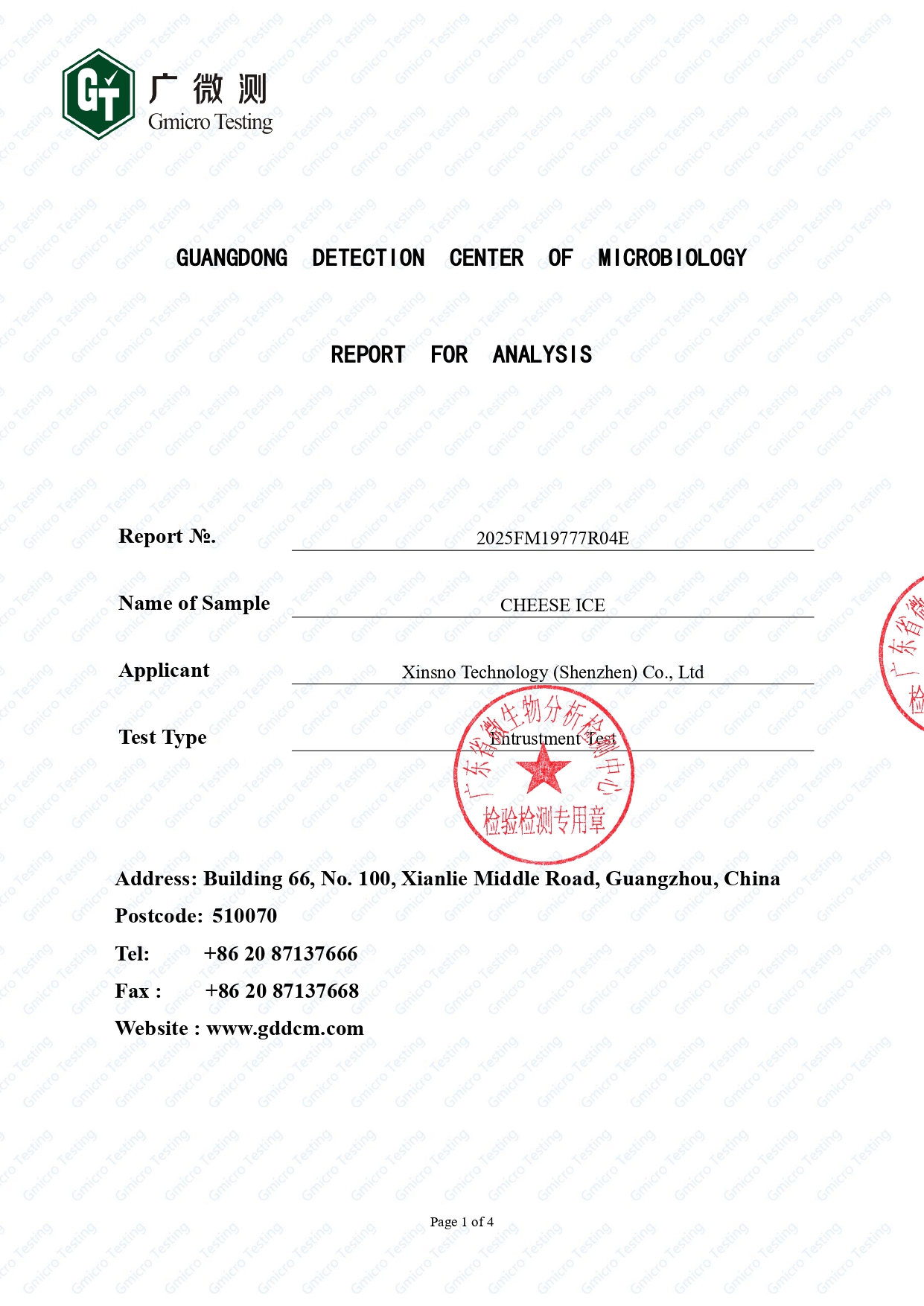
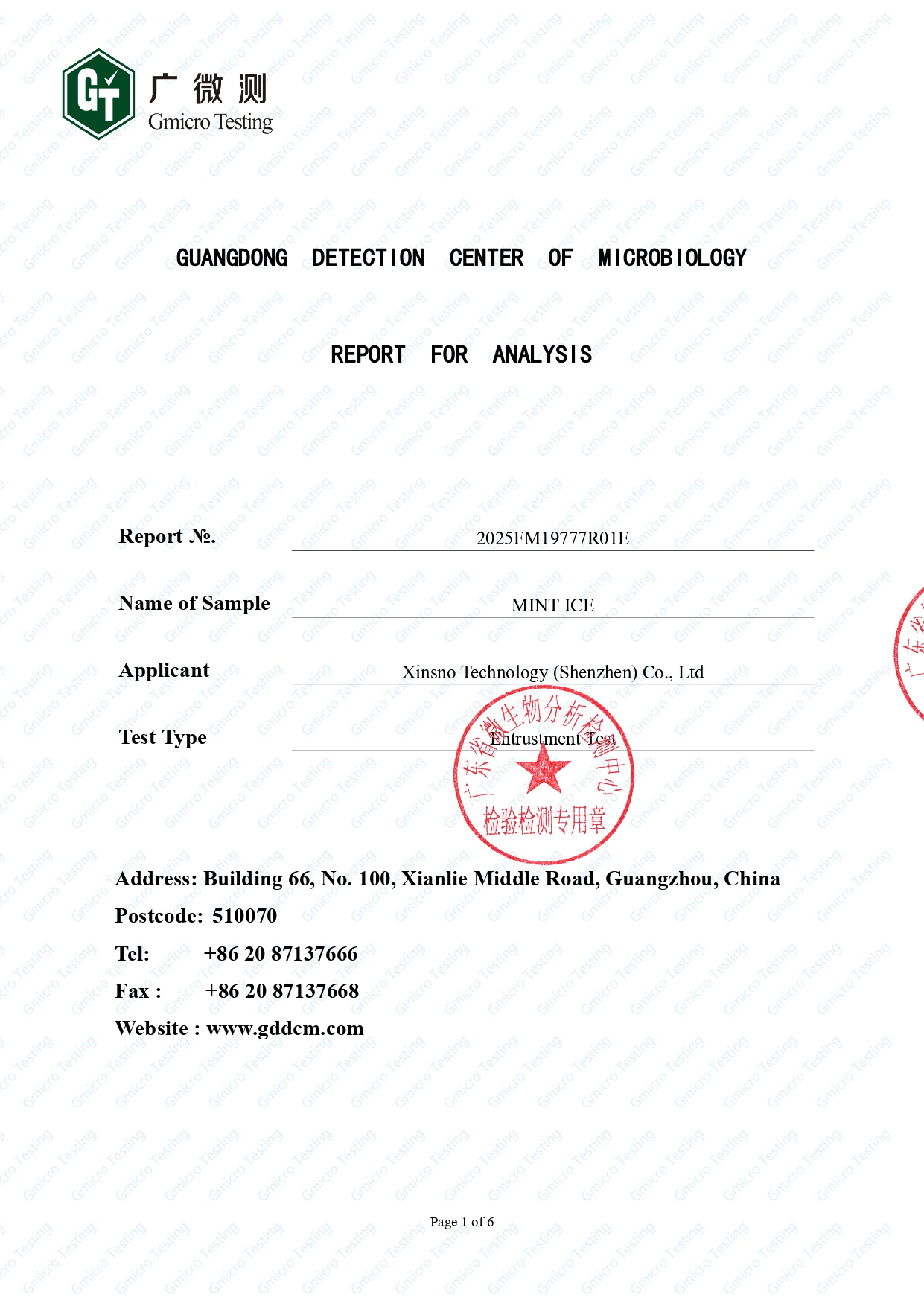
On the safety side, the documented testing programme includes in vitro cytotoxicity testing and quantitative IC50 toxicity assessment, conducted by a third-party testing institution, with each batch eligible for submission and data retention. The reference method is Health Canada T-502, and the wider safety framework includes a product safety assessment system based on toxicological screening.
On the dose control side, the documentation describes precise film quantification technology with milligram-level error control per sheet, batch consistency testing, child-resistant packaging, clear dosage labeling, moisture barrier packaging, and stability testing under high and low temperature conditions. Production is organised around a GMP-oriented process, with nicotine source traceability on raw materials, batch-level traceability, third-party laboratory verification and a pre-shipment compliance check. For a compliance officer, this is the part of the file that answers the question the certificates cannot: whether the number on the certificate still describes the product being shipped today.
Where a Structured Dossier Changes Execution
The dossier becomes commercially visible in four recurring buying scenarios.
- EU importer onboarding. The REACH and CLP-compliant Safety Data Sheets aligned to EN 14986 are the first documents requested, because warehouse and logistics partners cannot accept the product without them. Having them ready shortens the gap between purchase order and physical movement of goods.
- US-facing brand launch. PMTA certificate numbers PM0010176, PM0010173 and PM0010199, together with the OTC Drug Registration 510936020, give a brand owner concrete references to place in front of retail buyers and distributors during listing discussions.
- Distributor empanelment. The Bioterrorism Act registration 13242366294 allows a distributor's own compliance team to verify the manufacturing entity before contracts are signed, rather than after.
- Private label and OEM programmes. When a partner's own brand name goes on the pack, the underlying registrations and the safety documentation remain the anchor of the file, which is why the dossier is typically reviewed before artwork and formulation work begins.
In each case, the same logic applies: the documentation does not sell the product, but its absence stops the product from moving.
Market Trend: Documentation Depth as a Shortlisting Criterion
Two market signals point in the same direction. First, the nicotine oral dissolvable thin films category is projected to grow from USD 112.34 million in 2024 to USD 174.18 million by 2035 (Market Research Future), and the wider modern oral nicotine products market is estimated to reach USD 38.9 billion by 2033 at a 19.0% CAGR (Grand View Research). Second, that growth is occurring in markets whose regulatory frameworks are not harmonised with one another, which means every additional destination adds document requirements rather than reusing the same set.
The practical consequence is that documentation depth is becoming a shortlisting criterion in its own right. Buyers who compare suppliers only on unit price increasingly discover later that a cheaper offer carries a longer compliance path. The suppliers that reduce total project time are usually the ones whose files are already assembled, current and citable.
Comparison With Traditional Nicotine Formats — and the Boundary of That Comparison
Oral thin film sits alongside cigarettes, vaping devices and nicotine pouches rather than replacing them, and the comparison is worth stating precisely because it affects how the dossier is evaluated.
Against combustible cigarettes, nicotine film is smoke-free, produces no vapor and is associated with up to 90% less odor, with a lower long-term cost in regulated markets. Against vaping devices, it requires no hardware, no charging, no cartridges and no coil replacement, which removes an entire consumable supply chain from the buyer's inventory planning; dosage is also described as more consistent, since delivery does not depend on how the user draws on a device. Against pouches, the differentiating attribute is the film format itself — a strip that dissolves within seconds in the mouth rather than a pouch that is held in place.
The boundary matters as much as the comparison. Oral thin film is a younger product category than combustible tobacco, and market-specific regulatory precedent is thinner in some destinations. The dossier described in this article is document-specific: it covers the registrations, applications and safety sheets named above, and it does not extend to other SKUs, other markets or other claims. A buyer should confirm that the product intended for import is the product described in the documents being handed over.
There is also a straightforward commercial boundary. The minimum order quantity is 100,000 to 300,000 strips per SKU. Standard production lead time is 20–30 days, while OEM and custom orders require 30–45 days. For a partner running a small pilot launch, that combination is a planning constraint that belongs in the business case from the beginning, not a detail discovered at the purchase order stage.
What Buyers Still Need to Verify Themselves
Three verification steps remain with the buyer, and a well-structured dossier makes them faster rather than optional.
- Jurisdiction mapping. A REACH and CLP-compliant Safety Data Sheet supports EU handling and transport requirements; the US filings address a different market. The two sets are complementary, not interchangeable.
- Currency of the record. Registration numbers, application numbers and Safety Data Sheets should be confirmed as current with the issuing bodies at the time of the transaction.
- Scope alignment. Confirm that the documented product form, strength and packaging match the shipment being ordered.
Future Outlook
If the modern oral nicotine category continues on a 19.0% CAGR trajectory toward 2033 (Grand View Research), documentation will keep migrating from the back of a supplier conversation to the front of it. The most likely shift over the next few years is not stricter rules everywhere, but more paperwork per transaction: more markets asking for their own registrations, more retailers asking for application references, and more logistics partners asking for current Safety Data Sheets before accepting cargo.
Suppliers prepared for that shift will look different from suppliers that are not. They will be able to produce a registration number, an application number and a Safety Data Sheet in the same conversation, and they will be able to support the file commercially afterwards. SENO's stated support model follows that pattern: technical support covering both product and compliance questions, marketing material support, fast response on quality or logistics issues, and long-term partnership support. With monthly production capacity ranging from 1,000,000 to 5,000,000 strips, the operational side of a multi-market programme has room to scale alongside the paperwork.
FAQ
What documents should a distributor request before signing a nicotine film supply agreement?
A complete file normally includes four parts: an entity or facility registration, a product-level registration or drug registration, premarket application references for any market requiring them, and Safety Data Sheets prepared to the destination market's chemical communication rules. Supporting documents — toxicology reports, batch consistency records and stability data — are usually requested alongside these. A dossier is only useful if each document names the legal entity that will actually manufacture the shipment.
What is the FDA registration number under the Bioterrorism Act, and who issued it?
The FDA registration under the Bioterrorism Act is numbered 13242366294 and was issued by SHT Testing Technology Co., Ltd. It sits at the entity and facility layer of the compliance file, meaning it identifies the manufacturing operation within a registration framework. Its scope is defined by the registration itself.
What is the OTC Drug Registration number and which organisation issued it?
The OTC Drug Registration is numbered 510936020 and was issued by Shenzhen Deesev Testing International Corporation (DTI). It functions as the product-layer reference in the dossier. Separately, SENO Oral Films are recorded in the DailyMed drug label database maintained by the National Institutes of Health with a labeled nicotine concentration of 1.5%, described as intended to relieve mental fatigue and alleviate withdrawal symptoms.
What do the PMTA certificate numbers PM0010176, PM0010173 and PM0010199 indicate?
These are the three FDA Premarket Tobacco Product Application certificate numbers held in the dossier. The available record describes them as first-round FDA PMTA registration numbers assigned as of September 2025, and their notification status forms part of the same record. Buyers preparing a US-facing launch typically request both the certificate numbers and the current notification status together, since the two pieces of information are distinct.
What safety data supports EU market entry for SENO nicotine film?
For EU market entry, the dossier includes Safety Data Sheets prepared to REACH and CLP requirements and aligned to EN 14986. These cover the handling, storage and transport information that freight forwarders, customs brokers and warehouse operators require before the product can move through normal logistics channels. Because Safety Data Sheets are periodically updated, buyers should confirm they are working from the current version at the time of shipment.
What are the minimum order quantity, production lead time and monthly capacity?
The minimum order quantity is 100,000 to 300,000 strips per SKU. Standard production lead time is 20–30 days, while OEM and custom orders require 30–45 days. Monthly production capacity ranges from 1,000,000 to 5,000,000 strips. These three figures together determine how quickly a compliant dossier can be converted into a shipped order.
What commercial and after-sales support is provided to long-term partners?
After-sales support includes technical support for product and compliance questions, marketing material support, fast response for quality or logistics issues, and long-term partnership support. On the commercial side, delivery terms available are FOB, CIF and DDP depending on destination and client requirements. Acceptance practices include pre-shipment quality inspection as standard, third-party inspection on request, sample confirmation before mass production, and batch consistency verification reports. Standard payment terms are 30% deposit with 70% balance before shipment, by T/T, with other methods negotiable based on order volume.
This brief describes the registration, application and safety-document layers named above. It does not extend regulatory coverage beyond those documents, and buyers should verify current validity and scope directly with the issuing bodies and with the manufacturer before commercial commitments are made.