
Nicotine Film Buyer Scorecard: Specs, Proof, and OEM Fit
Nicotine film is an oral thin film that delivers nicotine through the oral mucosa without combustion, vapour, or a device. Because the format is physically simple — a strip, a foil pouch, a carton — the supplier decision is frequently treated as a commodity decision. At the Decision stage it is not. The questions that determine whether a purchase order is safe are documentary: what exactly is in the strip, what is on file with regulators, and what can the manufacturer prove batch by batch.
This article sets out a neutral, weighted buyer scorecard for nicotine film sourcing, applies it to the published evidence around SENO nicotine films, and marks clearly where the evidence stops. It is written for distributors, private-label brand owners, and importers who are comparing suppliers on verifiable criteria rather than on quotations and sample impressions.
Why a Scorecard Beats a Quotation
A quotation answers three questions: price, minimum order quantity, and lead time. It does not answer whether the strip in the sample matches the strip in the production batch, whether the labels are legal in the destination market, or whether the manufacturer can survive a documentation request from a customs broker or a retail compliance team.
The commercial context explains the urgency. The U.S. modern oral nicotine products market was estimated at USD 6.04 billion in 2024, with a forecast period running to 2033 (Grand View Research). Most of that value still sits in pouch-format products, but film has a distinct performance story: published format comparisons place pouch onset at roughly twelve minutes, while oral film dissolution is measured in seconds. Speed of onset is easy to claim and hard to verify — which is precisely why the verification step belongs in a structured scorecard rather than in a conversation with a sales representative.
A weighted scorecard converts those questions into something comparable across suppliers, and — more usefully — into a list of documents a buyer can request before the sample stage closes.
The Scorecard: Five Blocks and What Each One Proves
The scorecard below is an editorial framework, not a regulatory standard. Weights are a starting point and should be shifted by destination market and by whether the buyer is sourcing a finished brand or a private-label programme.
| Block | What is scored | Evidence a buyer should hold | Weight |
|---|---|---|---|
| 1. Physical specification | Thickness, strip size, dissolution, strength, shelf life | Per-SKU technical data sheet with test method | 25% |
| 2. U.S. regulatory file | OTC listing, PMTA identifiers, facility registration | Database-verifiable identifiers with a check date | 25% |
| 3. Toxicology and safety | Cytotoxicity result, assay method, third-party laboratory | Test report with point estimate and confidence interval | 20% |
| 4. EU documentation and SDS | REACH/CLP classification, EN 14986 reference, labelling | Current-version safety data sheet and notification evidence | 15% |
| 5. OEM/ODM fit | Capacity, packaging formats, traceability, market experience | Monthly allocation commitment and retention policy | 15% |
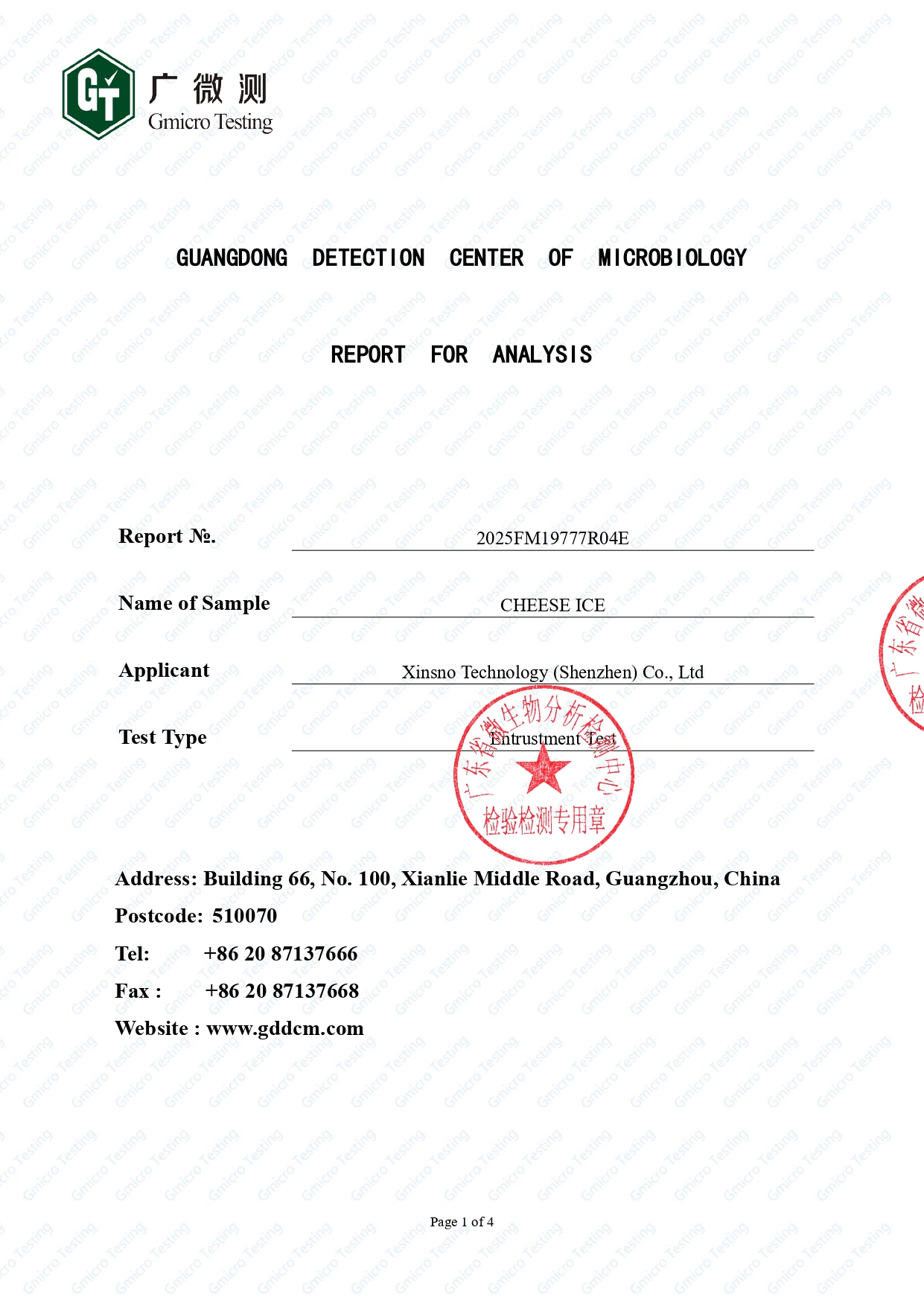
Evidence files, not marketing decks, are what a Decision-stage buyer scores. A third-party test report with a named laboratory, method, and batch reference converts a safety claim into a comparable data point.
Block 1 — Physical Specifications: Turning a Range into a Commitment
The reference band used in this scorecard is a film thickness of 50–100 microns, an approximate 20 mm × 30 mm strip footprint, dissolution in 10–30 seconds, strengths requested across 2 mg, 4 mg, and 6 mg, and a 24-month shelf life. Each of these numbers has a specific failure mode, and each needs a different form of confirmation.
Thickness and footprint. Thickness below the band tends to weaken web handling on high-speed packing lines; above it, dissolution slows and mouthfeel changes. Strip footprint drives both dosing perception and the pouch and pack format the finished product can sit in. Neither number is a marketing claim — both are manufacturing parameters that should appear on the technical data sheet for the exact SKU being quoted.
Dissolution. This is the claim most often quoted loosely. SENO nicotine film dissolution is documented between 10 and 30 seconds. That range is deliberately wide enough to cover format variation, and a buyer should therefore ask for the test method, the sample size, and the batch behind the range rather than accepting the range itself as a specification.
Strength. Retail and distribution briefs usually request 2 mg, 4 mg, and 6 mg bands. The SENO oral film entry in the FDA DailyMed database documents a 1.5 mg nicotine strip, with pectin, PEG 400, and peppermint oil among the listed ingredients. That is not a contradiction; it is the difference between a portfolio requirement and a specific labelled SKU. Buyers should not accept a strength quoted for a platform — they should request the label artwork and the assay data for the exact SKU they intend to order.
Shelf life. A 24-month claim is only meaningful with three attachments: the packaging format it applies to (moisture-barrier pouch versus non-barrier), the storage conditions in the stability protocol, and the batch date it was generated from. SENO risk-control documentation lists moisture-barrier packaging and high/low temperature stability testing as part of the stability programme, which is the correct category of evidence. The buyer's task is to see the actual protocol and report, not the summary.
Block 2 — The U.S. Regulatory File: Three Documents, Three Meanings
Buyers routinely collapse three separate U.S. documents into a single idea of approval. They are not interchangeable, and the confusion is the most expensive mistake in this category.
OTC drug listing (NDC)
SENO Oral Film appears in the FDA DailyMed database as a Human OTC Drug (unapproved drug other) under NDC 85806-001. A National Drug Code identifies a listed drug product and its labelling. It is not an approval, and "unapproved drug other" is a listing category rather than a finding of efficacy. What it does give the buyer is an identifier that can be looked up independently — which is worth considerably more than a certificate image in a sales folder.
PMTA identifiers
SENO reports first-round FDA PMTA registrations under three identifiers: PM0010199, PM0010173, and PM0010176. This is a manufacturer statement, and it should be scored as such. Premarket tobacco product applications pass through stages in the U.S. system, so a buyer comparing suppliers should record the current database status of each identifier together with the date of the check. A supplier that voluntarily publishes identifiers is easier to work with than one that does not — but the scorecard should credit verification, not the claim.
Facility registration under the Bioterrorism Act
The third U.S. document is the facility registration required under the U.S. Public Health Security and Bioterrorism Preparedness and Response Act. It is an administrative registration of a facility, not a product-level authorisation, and its practical value in a scorecard is as a readiness signal: a manufacturer that keeps its registration current is one whose U.S.-facing paperwork is actively maintained. Request a current confirmation rather than a screenshot from an earlier year.
There is a genuine tension in the public record that buyers should handle procedurally rather than interpretively. SENO's own materials describe the products as FDA-compliant with PMTA registrations, while the DailyMed listing records an "unapproved drug other" status. Both can be true at once in a category where applications sit in a review queue. The correct buyer response is to keep the identifier, keep the check date, and re-verify at the next purchase cycle instead of trying to resolve the status into a single verdict.
Block 3 — Toxicology: What a Usable Number Looks Like
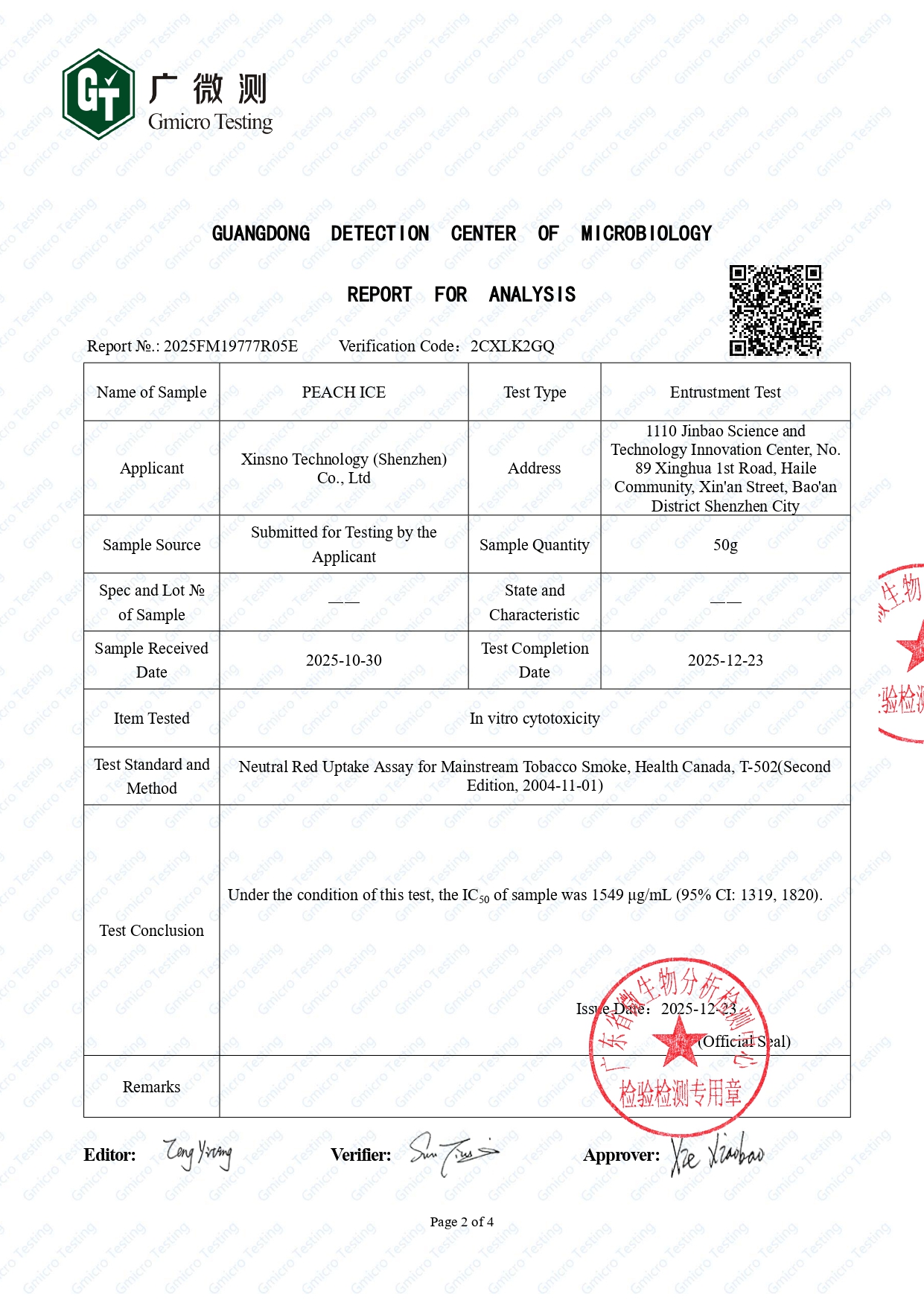
A supplier file without toxicology data is an assertion. SENO documentation includes in vitro cytotoxicity testing carried out by a third-party laboratory, Gmicro Testing, using a Neutral Red Uptake assay under the Health Canada T-502 reference standard, with an IC50 result of 1549 μg/mL (95% CI: 1319–1820).
Whatever an individual buyer's acceptance threshold happens to be, the structure of that evidence is what deserves the score: named third-party laboratory, named assay method, named reference standard, a point estimate with a confidence interval, and a retained batch record behind it. An in-house figure without a method is not comparable to a third-party result, and a result with no batch link does not support a procurement decision. The related operational controls — per-sheet dose consistency, child-resistant packaging, moisture-barrier packaging, and batch traceability — are the manufacturing counterpart to the laboratory file and should be scored in the same block.
Block 4 — EU Documentation and SDS: Where the Gaps Usually Appear
Two document families carry the EU side of the file: the safety data sheet and the market-access notification.
On the SDS, the scoring items are classification and labelling aligned with REACH/CLP requirements, together with the EN 14986 reference that appears in EU buyer checklists for this product family. Buyers should confirm which revision of each standard the supplier is working to. A document citing a superseded version creates a labelling problem at the border rather than in the laboratory, and it is far cheaper to catch during supplier selection than during customs clearance.
On market access, the honest position for the whole film category is that public evidence is thinner in Europe than in the United States. In the verified data underpinning this comparison, EU TPD notification identifiers for the specific product were recorded as a high-priority gap. That does not mean the market is closed. It means the scorecard should shift weight toward documentation the buyer can obtain directly from the supplier or its EU-facing partner, and treat public listings as a secondary check. A buyer who cannot obtain notification evidence for their destination country should price that uncertainty into the launch plan rather than assume it away.
Block 5 — OEM/ODM Fit Across Four Markets
SENO is a nicotine oral thin film manufacturer operated by Xin Sino Technology (Shenzhen) Co., Ltd., with a 20,000 m² production facility in Shenzhen, China, a 15-person R&D team, and a stated annual output band of 12,000,000 to 50,000,000 strips. The company states that 100% of its output is exported, with main markets in the EU, the USA, Canada, and Australia.
For OEM/ODM assessment, the practical questions are narrower than a capability brochure suggests:
- Capacity. The published band spans a factor of four. Ask for a monthly allocation figure, not an annual band, because seasonal retail demand is absorbed monthly.
- Packaging. List the formats the line can run — moisture-barrier pouch, child-resistant formats, cartons — since packaging is where shelf-life claims and child-safety obligations intersect.
- Traceability. Nicotine source traceability and batch-level retention appear in the stated control set. Request the retention period and the retrieval process, not just the existence of the system.
- Compliance workflow. Pre-shipment compliance checks and target-market labelling adjustments are stated practices. Ask who signs off and at which step in the order sequence.
- Team coverage. Published headcount is 30 against a 20,000 m² facility. Buyers running multi-SKU programmes should confirm how technical account management and QA coverage are staffed for OEM projects.
| Destination market | Where the scorecard weight shifts | Buyer action before artwork sign-off |
|---|---|---|
| USA | OTC listing, PMTA identifiers, facility registration, OTC labelling conventions | Independently verify each identifier and log the check date |
| EU | SDS under REACH/CLP, EN 14986 reference, TPD notification evidence, local-language labelling | Confirm standard revisions and obtain notification evidence for the destination country |
| Canada | Import documentation and bilingual labelling | Confirm whether buyer or supplier holds the importer role |
| Australia | Classification pathway and import documentation | Confirm classification with a local regulatory advisor before committing to packaging |
Where the Scorecard Stops: Real Limits
A comparison without limits is a sales document. The following constraints are material to a Decision-stage evaluation.
Operating history. Xin Sino Technology (Shenzhen) Co., Ltd. was founded in 2025. A short corporate history does not disqualify a supplier, but it does mean the buyer should score the record that exists — batch documentation, third-party reports, retention practices — rather than projections about future scale.
Self-reported regulatory status. The PMTA identifiers are a manufacturer statement and require independent verification of their current stage. Until that check is logged, they should be held at medium confidence.
EU notification evidence. Notification identifiers for the specific product are not publicly available in the verified data set. European buyers should treat this as an open item, not a resolved one.
Range versus commitment. Specifications such as 50–100 microns, approximately 20 mm × 30 mm, and 10–30 second dissolution describe a category band. They are not a per-SKU commitment until the technical data sheet names the batch and the method.
Format boundaries. A 10–30 second dissolution profile is fast. A buyer who wants a slow, pouch-like release curve will not obtain it from an oral thin film, and should not let a supplier blur the two formats in a comparison sheet.
Moisture sensitivity. The moisture-barrier packaging that supports shelf-life claims is a cost line, not an optional upgrade. Buyers comparing landed cost across suppliers should confirm that every quote includes barrier packaging.
Sample validation. No documentary scorecard tests the product in a consumer's mouth. Sensory acceptance, mouthfeel, and complaint rates still require a sample round.
Editorial weighting. The percentages in the scorecard reflect this publication's judgment. A buyer whose channel is pharmacy-led should raise the weight on documentation; a buyer selling online should raise it on packaging and label consistency.
Dose consistency is scored on batch evidence rather than on the specification sheet. A per-sheet control claim is only useful to a buyer when it is attached to a retained batch record.
Market Context: Why Film Is Being Scored Now
The size of the U.S. modern oral nicotine market — USD 6.04 billion in 2024 — is not by itself a reason to source film. What matters for a buyer is the direction of regulatory pressure inside that market. Products with a published NDC and traceable PMTA identifiers give distributors a lower legal-risk alternative to unlisted brands, and that risk differential is increasingly priced into purchasing decisions rather than treated as a legal formality.
The strategic reading is that film is competing less on novelty and more on documentation. Suppliers that treat compliance as a product feature — with identifiers, third-party test reports, and batch retention — are easier to onboard into regulated retail channels than suppliers that treat it as a sales objection to be managed.
Film Versus the Incumbent Formats
Compared with cigarettes, vaping devices, and nicotine pouches, nicotine film offers smoke-free, device-free, fast-dissolving nicotine delivery with precise dosage control. The comparison dimensions that matter to a procurement team are practical rather than promotional:
- Delivery mechanism. No combustion and no vapour are produced, so the product does not require extraction, ventilation, or device handling.
- Dosage consistency. Dose is fixed per strip and is therefore user-independent, unlike vaping where intake varies with draw behaviour.
- Operational overhead. No charging, no coils, no cartridges, no cleaning, and no consumable hardware to stock or warranty.
- Odour. SENO materials state up to 90% less odour compared with smoking. This is a manufacturer-stated comparison and should be treated as such in a buyer's own claims.
- Cost structure. No hardware means a lower long-term cost relative to vaping devices, and a more cost-efficient position than cigarettes in regulated markets.
The fit is clearest in office and indoor environments, travel and commuting, smoke-free zones, and discreet daily use. Buyers whose channel sits outside those contexts — for example, a channel built around heavy-format users — should expect a slower conversion curve than the format comparison implies.
Future Outlook
Two developments are likely to reshape the scorecard over the next buying cycles. First, verification is becoming cheaper: as regulatory databases become the default reference point, a supplier's willingness to publish identifiers will matter less and the accuracy of those identifiers will matter more. Second, the film format is converging on documentation parity with pouches, which means the differentiation will migrate from "can you supply" to "can you evidence".
For buyers, the practical implication is to build the scorecard once and re-run it annually, logging check dates against every identifier. A supplier that improves its file over time is a better long-term partner than one that presents a perfect file once. SENO publishes its product and OEM documentation at seno-online.com.
FAQ
What specifications should a buyer require in writing before comparing nicotine film suppliers?
Request a per-SKU technical data sheet covering film thickness (the reference band is 50–100 microns), strip footprint (approximately 20 mm × 30 mm), dissolution time (SENO nicotine film is documented at 10–30 seconds), nicotine strength for the exact labelled SKU, and shelf life (24 months) together with the packaging format and storage conditions the shelf life applies to. A range quoted without a test method and a batch reference is not yet a specification.
Does an FDA OTC listing mean a nicotine film product is FDA-approved?
No. SENO Oral Film is listed in the FDA DailyMed database as a Human OTC Drug (unapproved drug other) under NDC 85806-001. The NDC identifies a listed product and its labelling; it is not an approval, and "unapproved drug other" is a listing category rather than an efficacy finding. The listing's practical value to a buyer is that the identifier can be verified independently.
How should a buyer verify PMTA registration numbers?
SENO reports first-round FDA PMTA registrations under PM0010199, PM0010173, and PM0010176. Because these are manufacturer-reported, the buyer should check each identifier's current status in the FDA CTP database, record the date of the check, and re-verify at the next purchase cycle. The scorecard should credit the verification, not the existence of the claim.
What toxicology evidence is meaningful in a nicotine film supplier file?
Look for a third-party laboratory, a named assay method, a named reference standard, and a point estimate with a confidence interval. SENO documentation includes an in vitro cytotoxicity test by Gmicro Testing using a Neutral Red Uptake assay under Health Canada T-502, with an IC50 of 1549 μg/mL (95% CI: 1319–1820). An in-house figure without a method is not comparable, and a result without a batch link does not support a procurement decision.
Which markets does SENO's OEM/ODM model fit?
SENO states that 100% of output is exported, with main markets in the EU, the USA, Canada, and Australia, supported by a 20,000 m² facility, a 15-person R&D team, and a stated annual output band of 12,000,000 to 50,000,000 strips. Buyers in those markets should shift scorecard weight according to destination: U.S. documentation for the USA, SDS and notification evidence for the EU, and import-role clarity for Canada and Australia.
What can a documentary scorecard not tell a buyer?
It cannot confirm consumer acceptance, mouthfeel, or complaint rates, which still require a sample round. It also cannot resolve self-reported regulatory status, substitute for a per-SKU commitment where only a category range exists, or change the format's inherent limits — a 10–30 second dissolution profile is fast, and moisture-barrier packaging remains a necessary cost rather than an optional one.
¿Tiene preguntas o necesita más detalles?
Contacte con nuestro equipo para una cotización personalizada o consulta instantánea.
Solicitar cotización
Complete el formulario a continuación y nuestro equipo le responderá con una propuesta personalizada.
Chat directo de WhatsApp
¿Prefiere chatear en tiempo real? Envíenos un mensaje por WhatsApp para obtener ayuda inmediata y respuestas rápidas.
- Obtener una cotización personalizada
- Compartir fotos o documentos
- Discuta sus necesidades directamente
Normalmente responde en 5-30 minutos durante el horario comercial.