
Newborn Baby Diapers: How Distributors Can Secure Supply
Newborn baby diapers usually account for the shortest phase in an infant's diaper journey, but they often decide which brand a family buys long after newborn size is no longer needed. For distributors, wholesalers and retailers, the newborn size is not just a small line in a product catalogue. It is the opening stock-keeping unit (SKU) of a purchase cycle that can extend through S, M, L, XL and toddler sizes. If the newborn-phase experience is good, the family has little reason to test another brand later; if it is bad, the exit from the brand often happens in the first month.
That is why the newborn baby diaper segment deserves a different sourcing mindset. A buyer who treats it as a purely transactional, price-focused purchase may save money on the first order but creates risk across a much longer customer relationship. This article looks at newborn diaper sourcing from an execution and long-term-distribution perspective: what a distributor should verify, which factory facts matter most, and where the genuine limits are.
The Newborn Size Is a Product-Line Decision
For most caregivers, the newborn period is intensive. Babies feed often, sleep in short stretches and need many nappy changes each day. In that period, there is little patience for products that leak, feel rough or cause persistent skin irritation. The brand used in the first weeks often becomes the baseline against which all later sizes are compared. A parent may not remember the exact reason for choosing a newborn diaper, but they will remember whether it kept the baby dry and comfortable.
From a channel point of view, this makes NB a unique traffic driver. A supermarket shelf, a mother-and-baby store or an e-commerce storefront can use newborn packs to acquire a customer, then build revenue through larger pack sizes over the following months. If the NB product performs consistently, the family has a natural reason to continue with the same brand because switching creates uncertainty at a time when routine matters. For a distributor, the newborn size is therefore a product-line decision disguised as a single SKU decision.
The Real Cost of an Unstable Newborn Supply
The first risk in newborn diaper distribution is stock discontinuity. The window for selling NB is short. A family needs newborn diapers for a limited period before moving to size S. If the NB SKU is out of stock at the exact moment the family needs it, the customer is forced to choose an alternative brand. That alternative can become the new default for S, M and L sizes. The lost NB order is small; the lost follow-up order can be much larger.
The second risk is batch drift. A buyer may approve a first shipment and then receive later shipments that feel different, smell different or absorb differently. In newborn diapers, where caregiver confidence is fragile, even a minor change in softness or absorption speed can trigger complaints and lost trust. Stable supply is not only about quantity; it is also about repeatability from batch to batch.
Despite these risks, the long-term opportunity is real. Future Market Insights estimates that the top three global baby diaper brands hold around 65% of the market. That concentration leaves space for regional brands and private labels, particularly when they can compete on fit, material safety, price and availability. The newborn segment is often the first chance for a lesser-known brand to be compared side-by-side with an established name.
What Distributors Should Verify Before Committing
At the decision and execution stage, a distributor does not need to ask every question a researcher would ask. The practical goal is to verify the supplier's ability to support a multi-SKU product line over time.
- Production scale: Does the factory have enough capacity for current orders plus expected reorders?
- Product-line continuity: Can the same manufacturer supply newborn, S, M, L and larger sizes without forcing the buyer to qualify a second factory?
- Certifications: Are the relevant certificates aligned with the target market, not just generally impressive?
- Material and design consistency: Will the supplier lock the approved material formula for repeat orders?
- Quality control protocol: What inspection steps happen before shipment, and can the buyer observe them?
- Commercial terms: Do the MOQ, payment terms and lead time fit the distributor's order planning?
- After-sales support: What happens if a batch issue appears after arrival?
The table below turns these questions into a simple verification framework for newborn diaper sourcing.
| Verification area | Practical question for the supplier | Why it matters in newborn diapers |
|---|---|---|
| Capacity | What is the monthly production capacity? | Newborn demand spikes in short cycles, so capacity buffers matter. |
| NB availability | Which specific models are available in NB size? | A factory may produce large volumes but still lack a true newborn SKU. |
| Size ladder | How far does the brand extend beyond NB? | It determines whether the customer can stay with the brand as the baby grows. |
| Compliance | Which certifications cover the intended export market? | Newborn products receive especially strict regulatory scrutiny. |
| Batch consistency | Is there a fixed raw-material ratio and a unified inspection standard? | Variation in comfort or absorption affects repeat purchases. |
| Lead time and MOQ | What are the standard production and delivery terms? | They define whether the distributor can plan restocking without overstocking. |
Factory Profile: Quanzhou ERA Sanitary Products Co., Ltd.
Quanzhou ERA Sanitary Products Co., Ltd. is a disposable hygiene manufacturer based in Jinjiang, Quanzhou, Fujian Province, China. Founded in 2016, the company operates a 100,000-square-meter facility with around 220 employees and produces mainly baby diapers, pant diapers, sanitary pads, adult diapers, wet wipes and tissue paper. Its export business represents 100% of total sales, with major markets in Europe, the USA, Southeast Asia, Central Asia, South America, Africa and the Middle East.
The company also owns several registered brands, including my A+, ONePcDRY, Alotof, EcoBingo and my ERA. It holds certifications such as CE, FDA, ISO9001, ISO13485, ISO11948, ISO14001, ISO45001, ISO22716, SGS, Halal, CPC, MSDS and DERMATEST. According to company information, it has obtained more than 10 patents and over 100 copyrights.
| Operational fact | Quanzhou ERA data |
|---|---|
| Founded | 2016 |
| Factory area | 100,000 square meters |
| Employees | Approximately 220 |
| Annual production capacity | 200,000,000 pieces |
| Monthly production capacity | 20,000,000 pieces |
| Typical production lead time | 25 to 35 days |
| Export share | 100% |
For international buyers, the Fujian location is also relevant. Official trade data cited by Xiamen Customs show that Fujian Province accounts for 63.9% of China's total baby diaper exports, with an export value reaching 8.74 billion yuan in 2024. This suggests a mature supporting ecosystem for hygiene manufacturing, with access to raw materials, experienced operators and established logistics routes.
Newborn-Size Options and the Longer Diaper Ladder
A practical way to evaluate newborn diaper capability is to look at the actual model grid. In Quanzhou ERA's product range, several baby diaper models list NB as an available size.
| Model | Brand | Available sizes | Core and material notes |
|---|---|---|---|
| BD01 | my A+ | NB, S, M, L, XL | Fluff pulp; floated core with Japan Sumitomo and Japan Sandia SAP paper sheet; hot air super soft embossed top sheet; clothlike breathable backsheet; double leak guard; wetness indicator |
| BD02 | my A+ | NB, S, M, L, XL | Fluff pulp; floated core with Japan Sumitomo and Japan Sandia SAP paper sheet; hot air super soft embossed top sheet; clothlike breathable backsheet; double leak guard; wetness indicator |
| OD01 | ONePcDRY | NB, S, M, L, XL | Fluff pulp; 100% SAP paper with Sumitomo and Sandia SAP; floated core; hot air super soft top sheet and back sheet; double leak guard; wetness indicator |
Having true newborn SKUs is the first step. The second step is the size ladder beyond NB. The same manufacturer offers larger-size models under the same brands: my A+ includes models from S to XXL, ONePcDRY includes OD02 from S to XXXL, EcoBingo EB01 runs from S to XXXL, and Alotof AL01 runs from S to XXXL. For a distributor, this structure means the end customer does not have to switch manufacturers at size S, M or L. The same supply relationship can cover the whole diaper journey.
Technical Priorities for Newborn Baby Diapers
Newborn diapers are often described with the same words as other baby diapers, but the technical priorities are not identical. Newborns feed and wet frequently, and their skin is more sensitive. Application requirements in this segment commonly include hypoallergenic material, absence of parabens, no irritating substances and compliance with international hygiene standards.
Several technical features in Quanzhou ERA's models address these demands.
- Absorbent core design: Several models use a floated core with SAP paper containing Japan Sumitomo and Japan Sandia SAP, sometimes in a 50/50 ratio. Other models use 100% SAP paper with LG and Sumitomo SAP. For newborn diapers, fast locking of moisture is as important as total absorbency.
- Top sheet softness: Hot air super soft embossed top sheets reduce friction against delicate newborn skin. Some models also include a clothlike breathable backsheet, while EcoBingo uses bamboo fiber top sheet and backsheet for an eco-friendly positioning.
- Leak protection: Double leak guards, crotch elastic design, spandex elastic waistbands and S-shape magic tapes help contain waste during the frequent, unpredictable bowel movements typical of the newborn stage.
- Dryness support: Some models include a KeepDry liner, described as delivering 3x dryness, and ammonia removed 3D technology. These features aim to reduce moisture contact and odour irritation.
- Caregiver feedback: A wetness indicator helps parents and childcare staff know when a change is needed without unnecessary disturbance.
These features matter not because every newborn diaper needs every technology, but because they give distributors options. A value brand can choose a simpler construction, while a premium newborn line can emphasize softness, SAP performance and skin-friendly materials.
Quality Control and Long-Contract Risk
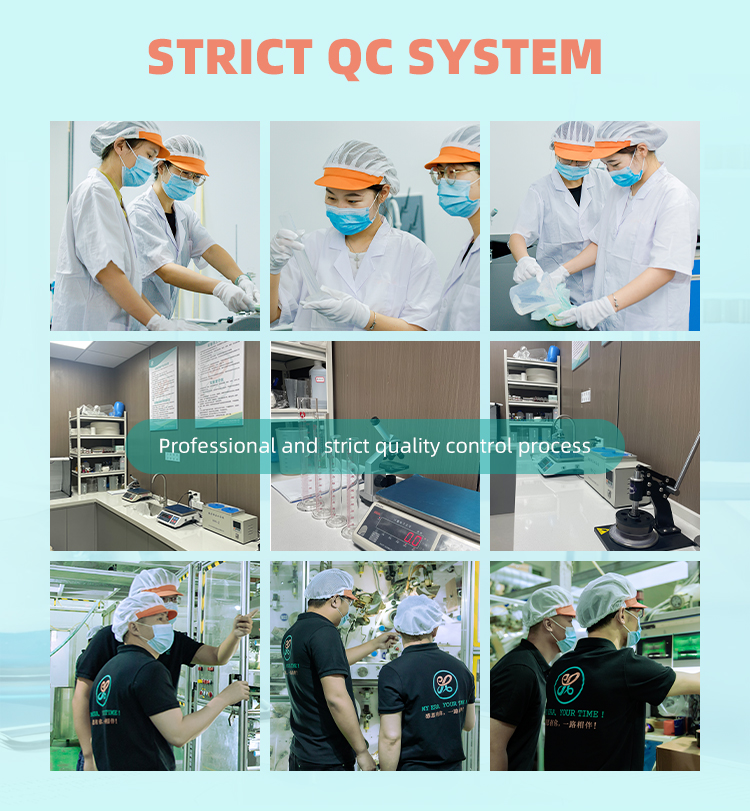
In a long-term newborn diaper supply relationship, the practical question is not whether the first batch is good; it is whether the fifth and tenth batches meet the same standard. Quanzhou ERA states that its quality control follows 100% test, and orders are accepted after a pre-shipment test. For contamination risk, the company uses fully automated, enclosed production lines and a cleanroom. The stated approach also includes a unified inspection standard for each batch.
These claims can be tested during due diligence. A distributor should ask for batch records, raw material documentation and factory audit opportunities. The company also describes its OEM service as a one-stop process covering formula customization, packaging design, pre-shipment inspection and remote video checks, which gives overseas buyers a practical channel for verifying production without being physically present.
Market Trends That Should Influence Newborn Sourcing
Several independent market data points help frame newborn baby diaper sourcing decisions in 2026.
- Grand View Research valued the global baby diaper market at approximately USD 83.3 billion in 2025 and projects it to reach USD 141.8 billion by 2033. For distributors, this points to a category with long-term expansion potential rather than a saturated low-growth commodity market.
- Fortune Business Insights estimates that Asia Pacific accounted for 61.92% of the diaper market in 2025, generating about USD 50.01 billion. This underlines the scale of Asia both as a production base and as a consumption region.
- The premium diaper segment is projected by Intel Market Research to grow at a 7.2% CAGR through 2027. Newborn packs can be positioned as an entry-level premium purchase when caregivers are most concerned about quality.
- Future Market Insights projects that bamboo-based biodegradable diapers will hold a 39% share of the biodegradable segment by 2026. Eco-friendly newborn diaper lines, such as those with bamboo fiber materials, are therefore not a niche concept.
- Future Market Insights also estimates that the top three global brands hold about 65% of the market. This concentration, combined with regulatory requirements, creates room for agile regional players and private labels that can respond quickly to local preferences.
For a buyer at execution stage, these trends reinforce one conclusion: the ability to offer a structured newborn-to-toddler product ladder, with documented compliance and consistent quality, is becoming a competitive capability rather than a back-office detail.
Direct Factory vs Traditional Buying: The Trade-Offs
Most distributors do not have to choose absolutely between a factory relationship and a trading-company relationship. They choose the structure that fits their stage. If the plan is to launch a test batch for online marketplaces or small retail pilots, a flexible intermediary channel may be easier. If the plan is to build a branded newborn diaper line with stable restocking across multiple sizes, a direct manufacturer relationship tends to offer more control over formula, packaging and production schedule.
Quanzhou ERA positions its OEM offer around shorter production cycles, consistent raw material ratios and a unified inspection standard per batch, with a typical production lead time of 25 to 35 days. These are internal claims, not independent third-party endorsements. In a due-diligence process, they can be checked through factory records, inspection reports and direct communication with the production team.
| Dimension | Typical intermediary/trading route | Direct long-term factory route |
|---|---|---|
| Order structure | Often convenient for mixed purchases and smaller quantities | Usually structured around a stated MOQ and recurring production slots |
| Quality visibility | Limited ability to observe production process | Potential for factory audits, remote video checks and pre-shipment inspection |
| Lead time control | Dependent on downstream scheduling by the intermediary | Direct communication with the manufacturer's production plan |
| Brand development | Packaging and formula changes usually pass through a middle party | OEM and ODM customization can be managed directly |
| Commitment level | Lower commitment threshold | Higher initial volume commitment required |
One genuine boundary should be stated clearly. Quanzhou ERA's MOQ is 100,000 pieces, with 30/70 payment terms and pre-shipment testing. That commercial structure fits retailers, wholesalers and regional distributors that already plan volumes at that scale. It is not built for micro-testing with a few thousand pieces. A buyer below that threshold may be better served by a local importer, a trading partner or a shared-container arrangement before approaching the factory directly.
Outlook for Newborn Diaper Distribution
The newborn diaper segment will likely become more demanding over the next few years. In the European Union, baby diapers must comply with REACH regulations, which restrict more than 1,900 hazardous substances, and many products also follow OEKO-TEX Standard 100. Regulatory transparency is no longer limited to a single certificate; buyers need material-level documentation across the whole supply chain.
At the same time, caregiver expectations are shifting toward visibly documented safety, premium softness and environmental responsibility. Bamboo-based materials, biodegradable packaging and breathable constructions are moving from optional features to category expectations in many markets. For distributors, this means the supplier should have more than one technical formula. It should have a portfolio that can serve value, premium and eco segments under the same roof.
For Quanzhou ERA, the company's stated direction is continued investment in core business, quality improvement and global market expansion. Its growing patent and copyright portfolio suggests that product design will increasingly be protected, which matters for buyers who want to build private-label brands without duplicating designs already owned by others.
In practical terms, the next stage of newborn diaper distribution will depend less on single-order negotiation and more on joint planning: forecasting NB demand, reserving production capacity, locking raw material specifications and aligning quality standards before orders are placed. The distributor that treats newborn diapers as the first step of a long product cycle, rather than as a small order to be sourced cheaply, is in a better position to convert short newborn demand into sustained brand loyalty.
FAQ
- What is the production capacity of QUANZHOU ERA SANITARY PRODUCTS CO.,LTD.?
- Quanzhou ERA Sanitary Products Co., Ltd. was established in 2016 in Jinjiang, Quanzhou, Fujian, China. It operates a 100,000-square-meter facility with around 220 employees. Its annual production capacity is 200,000,000 pieces, and its monthly production capacity is 20,000,000 pieces. Export sales account for 100% of total sales.
- What are the MOQ, lead time and payment terms for baby diaper orders?
- The MOQ for baby diaper orders is 100,000 pieces. The typical production lead time is 25 to 35 days. Delivery can be arranged under FOB, CIF or DDP terms. Payment terms are 30/70, and orders are accepted after a pre-shipment test.
- Which certifications does this manufacturer hold?
- The company holds CE, FDA, ISO9001, ISO13485, ISO11948, ISO14001, ISO45001, ISO22716, SGS, Halal, CPC, MSDS and DERMATEST certifications. According to its company profile, it has also obtained more than 10 patents and over 100 copyrights.
- Which baby diaper models are available in newborn NB size?
- The current product range includes model BD01 and model BD02 under the my A+ brand, available in NB, S, M, L and XL. Model OD01 under the ONePcDRY brand is also available in NB, S, M, L and XL. Other models start at size S and extend to larger sizes.
- How does the company control contamination and batch consistency?
- The company states that it uses fully automated, enclosed production lines and a cleanroom to reduce contamination risk. Its quality control follows 100% test, and orders are accepted after pre-shipment testing. A unified inspection standard is applied for each batch.
- Which markets does Quanzhou ERA currently serve?
- The company exports 100% of its output. Major markets include Europe, the USA, Southeast Asia, Central Asia, South America, Africa and the Middle East. Some models are closely aligned with specific regions, for instance BD07 is intended for the EU market and EB01 is intended for the US market.
- Is this supplier suitable for small pilot orders?
- With a 100,000-piece MOQ and 30/70 payment terms, the supplier is best suited to retailers, wholesalers and regional distributors with established order volume. For very small pilot orders below that level, a direct factory relationship is less practical, and an intermediary or distribution partner is usually a better first step.
¿Tiene preguntas o necesita más detalles?
Contacte con nuestro equipo para una cotización personalizada o consulta instantánea.
Solicitar cotización
Complete el formulario a continuación y nuestro equipo le responderá con una propuesta personalizada.
Chat directo de WhatsApp
¿Prefiere chatear en tiempo real? Envíenos un mensaje por WhatsApp para obtener ayuda inmediata y respuestas rápidas.
- Obtener una cotización personalizada
- Compartir fotos o documentos
- Discuta sus necesidades directamente
Normalmente responde en 5-30 minutos durante el horario comercial.