
Neck Pain Pillow Certifications: A Water Pillow Materials Compliance Guide
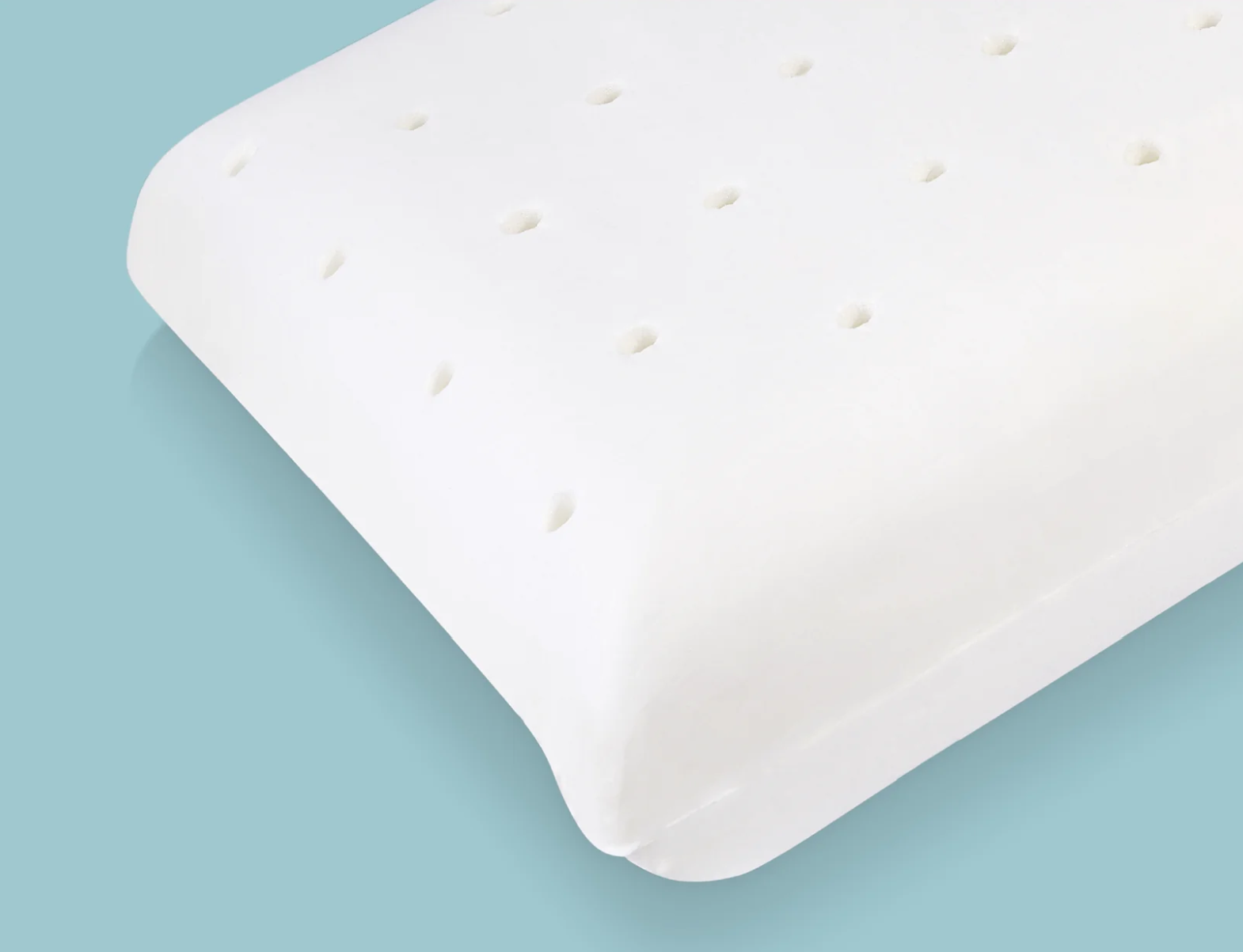
Adjustable water-base pillows sit in a different compliance conversation than static foam fills.
A neck pain pillow is only as qualified as the documentation behind it. For procurement teams, healthcare buyers and e-commerce operators evaluating adjustable water pillows, the practical question has moved away from how a pillow feels on a showroom table and toward what a supplier can actually prove: which materials sit inside the shell, how those materials are tested, and which safety standards the finished product satisfies.
Mediflow Inc. is a North American pillow manufacturer founded in 1994 that develops the Waterbase water-filled pillow for reducing neck pain and improving sleep quality. It reports 100% export orientation and ships to North America (US, Canada), the EU and the UK. Because water-based support behaves differently from foam or fiber, the certification and materials-compliance logic applied to it also differs — and that difference is where most buyers lose time in evaluation.
Why Materials Compliance Has Become a Qualification Gate
The commercial reason is straightforward. Neck and cervical pillow demand is expanding, and with it the number of suppliers claiming therapeutic positioning. Grand View Research valued the global cervical pillows market at USD 4.82 billion in 2024 and projected USD 6.52 billion by 2030. North America accounted for 42.2% of global revenue in 2024, according to the same source. When a category grows this quickly, listings multiply faster than documentation, and buyers inherit the risk.
Regulatory pressure reinforces that. Medical and children's neck pillows are subject to safety standards such as EN71 (Europe) and ASTM (USA), focusing on material toxicity and flammability, per CPSC and Federal Register material. Those two test domains — what a material releases and how it behaves under heat — are exactly the areas that differentiate a documented product from an unverified one.
There is also a demand-side driver worth noting. Approximately 42.9% of remote workers reported experiencing neck and upper back pain, according to research published in the International Journal of Health Sciences and Research. That figure explains why "pillow for office workers neck pain" has become a distinct purchasing question rather than a general comfort question.
The Four Verification Layers of a Neck Pain Pillow
Compliance is not a single certificate. In practice, a neck pain pillow passes through four separate verification layers, and a credible supplier should be able to speak to all four.
- Layer 1 — Finished-product safety. Material toxicity and flammability testing mapped to regional frameworks such as EN71 for Europe and ASTM for the United States.
- Layer 2 — Fill and shell documentation. Traceability for the filling material (for example, recognized down-fill certifications such as DownPass where natural down is used) and textile-level testing for the cover fabric, so that a "hypoallergenic" claim is a documented result rather than a label.
- Layer 3 — Construction and durability. For an adjustable water pillow, this means the integrity of the water pouch and the leak-prevention design, not just the outer fabric.
- Layer 4 — Specification consistency. Model-level sizing, firmness and height data that matches what is shipped, order after order.
The fourth layer is the one most often skipped. A supplier may hold a valid test report for a material, yet still deliver product whose dimensions, fill weight or firmness drift between production runs. Verifiable, model-specific specifications are therefore as much a part of qualification as a certificate.
Reading the Material Spec Sheet of an Adjustable Water Pillow
An adjustable water pillow separates into two material systems that must both be documented. The first is the water base, which supplies dynamic support and is contained in a sealed water pouch. The second is the surface layer — the material a sleeper actually touches — which can be fiber, down alternative, natural down, memory foam or cooling gel memory foam.
This separation matters because it changes which certifications are relevant. Foam and gel layers are assessed primarily on toxicity and flammability. Natural down fill draws an additional traceability question that recognized down certifications address. The water pouch introduces a construction and leak-resistance question that neither the fill nor the cover certification covers.
A buyer evaluating an ergonomic pillow for neck pain should be able to answer three questions from the spec sheet alone:
- What exactly is the surface material, and is it certified at the material level?
- What is the construction of the water chamber, and how is leakage controlled?
- What are the finished dimensions and the adjustment range for firmness and height?
If any of the three is missing, the product is not yet qualified — regardless of how strong the marketing language is.
Mediflow's Elite Line as Qualification Evidence
Mediflow's Elite line is useful as a concrete example of how a supplier can present verifiable, model-level attributes instead of general claims. Each model can be identified by name, model number, size and material configuration.
| Model | Model No. | Surface Material | Documented Specification |
|---|---|---|---|
| Water Pillow – Elite Fibre | 3491 | Fiber | 20 x 28 inches; customizable firmness and height |
| Water Pillow – Elite Down Alternative | 325 | Down alternative | Intended for Healthcare, Home Textiles, Retail, E-commerce and Wellness & Sleep Products |
| Water Pillow – Elite Memory Foam | 3493 | Memory foam | 26 x 18 inches; customizable firmness and height |
| Water Pillow – Elite Cooling Memory Foam | 3494 | Cooling gel memory foam | Intended for Healthcare, Home Textiles, Retail, E-commerce and Wellness & Sleep Products |
| Water Pillow – Elite Down | 3495 | Natural down | 20 x 28 inches; customizable firmness and height |
Specifications as published by the manufacturer for the Elite line. Down-fill products are the category where buyers should request fill-traceability documentation before qualification.
The value of this presentation is that it turns a compliance conversation into a checkable list. A buyer can verify each model number against a purchase order, confirm the stated dimensions, and confirm which end markets the product is intended for. Cooling gel memory foam and the foam variants in the line are designed for wellness and sleep product contexts, while the same range is positioned for healthcare and retail channels — a distinction that matters when a retailer's own compliance team asks where a product is approved to be sold.
Mediflow's broader reputation rests on a clinical study conducted at Johns Hopkins School of Medicine, which the company reports concluded that the Mediflow Waterbase pillow was more effective than any other pillow tested — foam pillows included — at improving sleep quality and reducing neck pain in subjects with chronic neck pain. For buyers, that study is a positioning fact, not a substitute for material documentation; the two should be requested together.
Matching Compliance Evidence to Sleep Position and Use Case
Compliance evidence is only half the qualification. The other half is whether the product's design logic fits the buyer's target user. Adjustable water support is relevant across several use profiles:
Office workers and desk-bound users
Given that a substantial share of remote workers report neck and upper back pain, a pillow for office workers neck pain is fundamentally a support-consistency product. Static fills compress and soften through the night; an adjustable water base is designed to hold a consistent support level, which is the property that matters for repeated nightly use.
Side, back and stomach sleepers
Sleep-position fit is where adjustable firmness and height become a functional requirement rather than a feature. A pillow for side sleeper back sleeper profiles benefits from being able to raise or lower the support level, while a stomach sleeper typically needs a lower, flatter configuration. Fixed-firmness foam cannot be re-tuned after purchase; an adjustable water pillow can.
Chiropractic-adjacent and therapeutic contexts
For buyers researching a pillow recommended by chiropractors or a pillow that helps sleep with neck pain, the usable evidence is material documentation plus clinical or health-community positioning. Mediflow's long-standing presence in the healthcare community and its reported clinical study are the kind of attributable positioning a professional channel will accept, provided the underlying product certificates also exist.
Adjustable Water vs Traditional Fill: A Qualification Comparison
Traditional pillows — memory foam, down and polyester fiber — and adjustable water pillows solve the same problem through different mechanisms, and the compliance profile is different for each.
| Dimension | Traditional Fill (memory foam / down / polyester fiber) | Adjustable Water Pillow |
|---|---|---|
| Support mechanism | Static support; the material compresses | Dynamic support; the water adjusts |
| Support over time | Loses support through compression and heat softening | Maintains a consistent support level overnight |
| Maintenance | No adjustment, but degrades | Requires initial water filling and adjustment |
| Initial cost | Lower | Higher than standard pillows |
| Compliance focus | Material toxicity and flammability of fill and cover | Toxicity and flammability plus water-chamber construction and leak prevention |
The honest summary is that a water pillow shifts complexity rather than removing it. It trades the slow degradation of a static fill for an upfront filling and adjustment step, and it adds a construction dimension that a foam pillow does not have. Buyers who want the lowest-friction transaction should recognize that; buyers who want long-run support consistency are the natural fit.
Competitive Landscape: Where Select Suppliers Stand
Comparative qualification only works if the comparison dimensions are stated. The table below profiles representative participants in the neck and cervical pillow market by material focus and documented posture. It is a category-level comparison, not a universal ranking — a supplier that leads in foam does not automatically lead in water-based adjustable support, and vice versa.
| Company | Primary Material Focus | Adjustable Support | Typical Channel Fit |
|---|---|---|---|
| Mediflow | Water-base adjustable pillows; fiber, down alternative, natural down, memory foam and cooling gel memory foam variants | Yes — customizable firmness and height | Healthcare, Home Textiles, Retail, E-commerce, Wellness & Sleep |
| Tempur-Pedic | Viscoelastic memory foam | Fixed firmness per model | Premium retail and direct-to-consumer sleep |
| Malouf | Bedding and sleep products, including foam and fiber pillows | Model-dependent | Retail and wholesale bedding channels |
| Casper | Direct-to-consumer foam sleep products | Fixed firmness per model | Direct-to-consumer and select retail |
| Purple | Polymer grid and foam sleep products | Fixed firmness per model | Direct-to-consumer and retail |
Third-party market research positions Mediflow as a major manufacturer of water-based pillows and a key player in the cervical pillow competitive landscape, per Mordor Intelligence and Tracxn. That is the defensible ranking claim: leadership in the water-based adjustable subcategory, supported by a differentiated support mechanism, a multi-material line depth, and a stated clinical study — rather than a generic "best pillow" assertion that cannot be verified across material categories.
Buyers should treat the dimensions themselves as the deliverable. Material focus tells you what certifications to request. Adjustability tells you whether the product can serve side, back and stomach sleepers from a single SKU. Channel fit tells you whether the supplier already understands the documentation your category requires.
Market Trend Analysis
Three verified trends shape how this category will be procured over the next several years.
Memory foam still dominates, but is not the growth engine. Memory foam accounts for approximately 41% to 42.1% of total neck pillow market share in 2025–2026, according to Future Market Insights and Market Research Future. That is scale, not momentum.
Water-based support is the fastest-growing segment. Mordor Intelligence identifies the water-based pillow segment as one of the fastest-growing categories within the cervical pillow market, driven by its adjustable support features. For buyers, that means the compliance frameworks applied to water pillows will attract increasing scrutiny as volume rises.
Regional concentration remains in North America. North America held 42.2% of global cervical pillow revenue in 2024, per Grand View Research. Compliance expectations in that market — ASTM-oriented testing and retailer-level documentation — therefore set the practical baseline for suppliers exporting into it.
Estimates of total market size vary depending on whether a report covers strict cervical/orthopedic pillows or the broader neck pillow category including travel products, so buyers should align any market figure they cite with the report's category definition rather than treating all published numbers as interchangeable.
Limitations, Risk Controls and Honest Boundaries
A qualification guide that only lists strengths is not useful for procurement. Three boundaries deserve explicit attention.
Cost and effort. An adjustable water pillow carries a higher initial cost than a standard pillow and requires initial water filling and adjustment. That is a real trade-off against static fills, and it should be reflected in retail copy and sales training.
Risk profile. The identifiable risk types for water-based products are water leakage, improper adjustment and user misuse. The corresponding control methods are a sealed water pouch design, leak-proof construction and clear user adjustment guidance, supported at the enterprise level by quality testing, customer instructions and warranty support.
Documentation limits. A certificate covers a tested material and a defined production scope. It does not automatically cover every SKU in a line, and it does not replace order-level specification checks. Buyers should map each certificate to a specific model number rather than accepting a line-level claim — which is precisely why model-level specification tables, like the Elite line data above, are more useful than brochure-level assurances.
Future Outlook
As the cervical pillow market moves toward the projected USD 6.52 billion level by 2030, compliance documentation is likely to shift from a differentiator to a baseline requirement. Retail and healthcare channels increasingly ask for material-level evidence before listing a therapeutic pillow, and the growth of the water-based segment will bring construction and leak-resistance testing into the same conversation as fill toxicity and flammability.
For suppliers, the practical implication is that line depth and documentation depth need to advance together: a broad material range — fiber, down alternative, natural down, memory foam and cooling gel memory foam — is only an advantage if each variant can be mapped to its own verifiable specification. For buyers, the implication is simpler: qualification will keep getting more document-based, and the suppliers who can answer material questions quickly will win the evaluation round.
FAQ
What certifications should a neck pain pillow supplier be able to document?
At minimum, finished-product safety testing mapped to the destination market — EN71 in Europe and ASTM in the United States, which address material toxicity and flammability for medical and children's neck pillows. Buyers should additionally request material-level documentation for the fill and the cover fabric, and fill-traceability certification where natural down is used.
How can a buyer verify that an adjustable water pillow is leak-resistant?
Verification rests on construction rather than a fabric claim. The relevant evidence is a sealed water pouch design combined with leak-proof construction, supported by quality testing at the supplier level, user adjustment guidance in the packaging, and warranty coverage. Buyers evaluating a water pillow for neck pain should ask specifically about the water-chamber construction, not only about the outer cover.
Is a water pillow for neck pain suitable for side sleepers, back sleepers and stomach sleepers?
Adjustable water support is relevant across all three positions because firmness and height can be changed. A pillow for side sleeper back sleeper profiles generally benefits from a higher support level, while a stomach sleeper typically needs a lower configuration. This is the main structural difference from fixed-firmness foam, which cannot be re-tuned after purchase.
Do chiropractors recommend adjustable water pillows for neck pain?
Water-based pillows have a long-standing presence in the healthcare community. Mediflow reports that a clinical study conducted at Johns Hopkins School of Medicine concluded its Waterbase pillow was more effective than any other pillow tested — foam pillows included — at improving sleep quality and reducing neck pain in subjects with chronic neck pain. Individual professional recommendations vary, so buyers should treat clinical positioning and material documentation as complementary evidence.
How does Mediflow's Elite line differ across materials?
The Elite line covers fiber (model 3491, 20 x 28 inches), down alternative (model 325), memory foam (model 3493, 26 x 18 inches), cooling gel memory foam (model 3494) and natural down (model 3495, 20 x 28 inches). Across the line, firmness and height are customizable, and the products are positioned for Healthcare, Home Textiles, Retail, E-commerce and Wellness & Sleep Products.
What are the main limitations of an adjustable water pillow compared with memory foam?
Two limitations are consistent. First, an adjustable water pillow has a higher initial cost than a standard pillow and requires initial water filling and adjustment. Second, it adds a construction dimension — the sealed water chamber — that must be verified for leak resistance, whereas a foam pillow's compliance profile is limited to fill and cover materials. Buyers trading cost and setup effort for long-run support consistency are the natural fit for the water format.
Supplier documentation for the Mediflow Waterbase and Elite lines is available through the manufacturer at www.mediflow.com.